
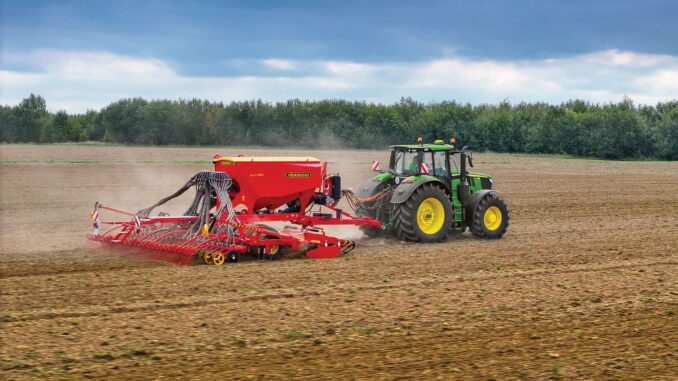
The John Deere 4840 is a large row-crop tractor from Deere’s Iron Horses/40 Series era, built for heavier field work rather than small-property mowing, with a 7.6L six-cylinder diesel engine, independent 1000 RPM PTO, closed-center hydraulics, and an 8-speed full powershift transmission on commonly listed configurations.
This guide is written in a practical, symptom-first format so owners can identify likely faults, find the right parts and manuals, and separate realistic DIY work from jobs that are better handled by a Deere dealer or an experienced farm mechanic.
For USA and Canada owners, the John Deere 4840 repair, troubleshooting and maintenance guide below focuses on the systems that most often drive downtime: engine and fuel delivery, cooling, hydraulics, PTO, steering, brakes, cab electrics, and transmission-related service items. It also includes common service parts, places to find diagrams and manuals, a maintenance schedule based on published service intervals, and a large FAQ section ready for publication as a WordPress post.
John Deere 4840 model overview
The John Deere 4840 sits near the top of the 40 Series row-crop lineup and was produced from 1978 to 1982 in Waterloo, Iowa. TractorData lists it as a row-crop tractor with estimated engine power around 200 hp and tested PTO output of 180.63 hp, which places it well above homeowner lawn tractors and firmly in full-size agricultural use.
In practical terms, this is a machine usually used for tillage, planting, grain-cart, hay, or other serious acreage work rather than finish mowing around a suburban property. That matters because repairs often involve heavier driveline, hydraulic, tire, and chassis components, so even straightforward service jobs can require more lifting capacity, better safety practices, and more workspace than owners expect.
General overview of the John Deere 4840
The key systems on the John Deere 4840 are the diesel engine and fuel system, the cooling system, the transmission and final drive, the hydraulic system, the PTO, the steering and brakes, and the electrical/cab-support systems. TractorData lists closed-center hydraulics with about 23 gpm pump flow, hydraulic wet disc brakes, power steering, and a Sound-Gard cab, all of which are major troubleshooting areas on older high-horsepower Deere tractors.
Several common service parts for the John Deere 4840 are regularly listed by Deere-focused parts suppliers, including engine oil filter AR43634, fuel filter AR50041, secondary air filter AR80653, hydraulic filter element AR80652, transmission/hydraulic oil filter AR94510 for 2WD 25-micron applications, AR98098 for certain PFWD/10-micron applications, cab fresh air filter R65450, recirculation filter RE12793 or RE67830, coolant filter RE11992 if equipped, and sealing washer R34733. Those are the kinds of parts owners typically buy during annual service, fluid changes, air-intake service, or hydraulic and cab maintenance work.
John Deere 4840 troubleshooting approach
A good troubleshooting routine starts with the symptom the owner actually sees: hard starting, low power, overheating, hydraulic weakness, PTO trouble, brake concerns, steering issues, charging problems, or fluid leaks. Starting from the symptom matters on an older tractor because one issue, such as low hydraulic oil, contaminated fuel, or weak battery supply, can create several related complaints at the same time.
Main symptom groups for the John Deere 4840 usually include starting issues, poor running or low power, overheating or coolant loss, hydraulic and steering problems, PTO problems, transmission/drive concerns, brake issues, vibration or unusual noise, and electrical or charging faults. Owners should verify basics first, then narrow the fault before ordering parts, especially where serial-number or transmission-version differences may affect fit.
Emergency John Deere 4840 repair needs
Some John Deere 4840 problems need immediate attention because they can quickly turn into expensive failures or create a safety risk during field work. The main red-flag categories are starting/electrical faults that leave the tractor stranded in unsafe locations, overheating and leaks, major vibration/noise, transmission or hydraulic pressure problems, and braking or steering faults.
Starting issues
On this tractor, a no-start or hard-start condition often shows up as slow cranking, air in the fuel system, weak battery performance, or contaminated fuel and sediment in the bowl or filters. It matters because repeated crank attempts can overwork the electrical system and can also hide a fuel-delivery issue that needs proper bleeding rather than endless starter use.
-
Common causes include weak batteries, dirty or loose battery connections, contaminated fuel, sediment or water in fuel filters, air in the lines, or restricted air intake.
-
Older wiring, poor grounds, or failing charging-system output can also contribute to repeat starting complaints.
-
Check battery condition, cable tightness, and visible corrosion at both ends.
-
Check the fuel sediment bowl and filters for water or debris, then drain as needed.
-
Confirm the tractor has clean diesel fuel and that the shutoff and supply path are open.
-
Inspect the air filter condition and intake path for severe restriction.
-
If air has entered the fuel system, follow proper bleeding procedures from the operator or technical manual before further diagnosis.
John Deere 4840 running and power problems
A John Deere 4840 that starts but lacks power, smokes excessively, or stumbles under load often points to fuel restriction, air-intake issues, or deeper engine-condition problems. Power complaints matter on a 180-plus PTO hp tractor because operators may keep pushing the machine, which can increase exhaust temperature and stress expensive engine or turbo-related components.
-
Common causes include dirty fuel filters, contaminated fuel, clogged air filtration, overdue maintenance, or internal engine wear.
-
Poor cooling-system condition can also make the tractor feel weak when it is actually running too hot.
-
Replace obviously overdue filters using known-correct part numbers.
-
Check for air restriction and clean or replace the secondary air filter as required.
-
Verify coolant level and look for signs of overheating under load.
-
Compare the symptom to whether it occurs only hot, only cold, or only under PTO/drawbar load.
-
Move to dealer-level diagnosis if power loss remains after basic air and fuel service.
Vibration and noise
Heavy vibration, knocking, driveline noise, or sudden new rattles on a John Deere 4840 should never be ignored because the tractor’s size and operating loads can turn a minor looseness into major component damage quickly. Noise may come from engine accessories, drivetrain components, front axle or wheel hardware, PTO driveline loads, or cab-related mounts and fittings.
-
Common causes include loose wheel hardware, worn bearings, belt issues, driveline wear, damaged hitch or PTO components, or internal transmission/hydraulic problems.
-
Cab mount and accessory wear can also create misleading noises that seem more serious than they are.
-
Stop the tractor and isolate whether the noise changes with engine speed, travel speed, PTO engagement, or hydraulic demand.
-
Inspect belts and visible rotating accessories for looseness or damage.
-
Check wheels, hitch hardware, and PTO coupler area for looseness or cracks.
-
Do not continue operating if the vibration is sudden, severe, or tied to braking, steering, or transmission behavior.
Overheating and leaks
Overheating, coolant loss, hydraulic leaks, engine-oil leaks, or fuel seepage should be treated as immediate repair items on the John Deere 4840. Deere-based maintenance instructions call for checking coolant level and checking for fuel sediment or water daily or every 10 hours, which shows how central those systems are to reliable operation.
-
Common causes include low coolant, restricted cooling passages, overdue maintenance, leaking hoses or seals, and neglected fluid checks.
-
Hydraulic leaks are especially important because this tractor relies heavily on its hydraulic system for steering, braking, and remote functions.
-
Check coolant level before use and investigate any repeated drop in level.
-
Inspect underneath the tractor and around hoses, filter housings, and pumps for fresh leaks.
-
Verify engine-oil and transmission/hydraulic oil levels before continuing work.
-
Shut the tractor down if temperature rises abnormally or if hydraulic function changes suddenly.
John Deere 4840 transmission and drive problems
Transmission or drive complaints on the John Deere 4840 can show up as delayed engagement, poor pulling power, abnormal shifting behavior, or hydraulic/transmission filter contamination. These are high-risk symptoms because published service guidance includes regular transmission-hydraulic filter replacement and eventual system draining and suction-screen cleaning, which signals how important clean oil is to long-term transmission life.
-
Common causes include low or degraded transmission-hydraulic oil, clogged filters, contaminated system oil, or internal wear.
-
Version differences matter because filter intervals differ between Quad-Range/SRT and Power Shift listings from Deere-focused parts sources.
-
Check transmission-hydraulic oil level on level ground.
-
Confirm the correct filter part and service interval for the tractor’s transmission configuration.
-
Review whether the tractor is overdue for a 200-hour or 600-hour filter service, depending on configuration listed by the supplier.
-
Escalate to dealer diagnosis when drive symptoms are persistent, load-related, or accompanied by metal contamination or abnormal noise.
Electrical problems
Electrical faults on an older John Deere 4840 often appear as weak cranking, low charging output, lighting problems, intermittent cab functions, or repeated battery trouble. TractorData lists a negative-ground system with an alternator and two 6-volt batteries, so both battery condition and charging performance are important baseline checks.
-
Common causes include poor cable connections, weak batteries, alternator-belt tension issues, charging faults, or worn wiring and grounds.
-
Deere-oriented maintenance guidance also specifically calls for battery service and alternator/compressor belt tension checks.
-
Inspect and clean battery connections.
-
Check battery electrolyte level if using serviceable batteries.
-
Inspect alternator belt condition and tension.
-
Test charging output if the tractor repeatedly needs charging or starts slowly after use.
DIY or dealer for a John Deere 4840?
The normal line on the John Deere 4840 is simple: routine service, basic inspection, filter changes, and light bolt-on repairs are reasonable DIY work for an owner with proper lifting gear and a manual, but hydraulic, transmission, steering, brake, internal engine, and advanced electrical diagnosis often cross into dealer or specialist territory. This tractor is not complicated in the same way modern electronics-heavy equipment is, but it is large, heavy, and powerful enough that mistakes can become expensive or dangerous quickly.
Good DIY jobs
-
Engine oil and oil filter service using the correct filter and oil grade references from the manual and maintenance guide.
-
Fuel filter inspection and replacement, then proper fuel-system bleeding.
-
Air filter service and routine cooling-system checks.
-
Battery cleaning, terminal service, and alternator-belt inspection.
-
Cab air filter replacement and basic leak inspection.
Advanced DIY or dealer jobs
-
Hydraulic pump or steering diagnosis, hydraulic-pressure testing, and internal hydraulic filter cleaning service.
-
Transmission troubleshooting, shifting complaints, clutch-pack or internal driveline work, and contamination diagnosis.
-
Brake, PTO, rear-end, differential, or major axle work.
-
Engine internal repairs, injection-system rebuilding, or deep electrical tracing on a machine with age-related harness issues.
Skill level guide
-
Beginner: daily checks, battery service, cab filters, visual leak inspections, and basic air-filter service.
-
Intermediate: engine oil and filter service, fuel-filter replacement, belt inspection/tension correction, minor hose or clamp replacement.
-
Advanced: fuel bleeding, heavier component removal, hydraulic and transmission service, PTO diagnosis, and repairs requiring lifting equipment, pressure testing, or special manual procedures.
John Deere 4840 parts needed and ordering information
Before ordering John Deere 4840 parts, gather the full model name, the tractor serial/PIN information, the engine model and serial details where applicable, and any transmission or front-drive configuration details that affect filters or related parts. That extra checking matters because some commonly listed service parts differ by drivetrain or transmission type, especially in the transmission-hydraulic filter category.
OEM parts are usually the safest choice for belts, seals, hydraulic and transmission filters, safety-related items, and any fit-sensitive component because tolerances and media specifications matter more on a large agricultural tractor. Aftermarket can be fine for some batteries, selected filters, and certain general service parts when the cross-reference is exact and the supplier is reputable, but owners should be cautious about cheap unknown-brand hydraulic or driveline parts.
John Deere 4840 manuals, diagrams, and parts lookup
The best places to look up John Deere 4840 diagrams and manuals are official Deere publications and established Deere-focused parts suppliers. Using more than one source is helpful because operator manuals explain servicing and capacities, while parts catalogs help confirm exploded views and serial-sensitive parts breakdowns.
-
Deere Technical Publications is referenced by TractorData as the official source for operator manuals for purchase or download.
-
John Deere Parts Catalog is Deere’s official parts-catalog portal, useful for diagrams and current part supersessions, though access paths can vary.
-
Green Farm Parts 4840 maintenance guide is useful for common service parts and maintenance interval references.
-
TM1183 technical manual listing is useful for locating the technical/manual identifier commonly associated with 4640 and 4840 service procedures.
How to find John Deere 4840 serial and engine numbers
These numbers matter because a tractor this old may have had repairs, updates, reman components, or configuration differences over time, and Deere-style parts fit is often serial-specific. TractorData says the John Deere 4840 serial-number plate is on the rear of the tractor above the PTO shaft, which is the first place most owners should check.
-
Park the tractor safely, lower attached equipment, shut the engine off, and let rotating parts stop completely.
-
Go to the rear of the tractor and look above the PTO shaft for the serial-number plate location identified by TractorData.
-
Record the full serial/PIN exactly as shown, including any prefixes or suffixes.
-
Check the engine itself for engine-model and serial identification tags or stamped information before ordering engine-specific parts.
-
If the tractor has unclear tags, compare your recorded numbers against official Deere literature or a dealer parts counter before buying expensive components.
Buying John Deere 4840 parts online and in stores
The best buying strategy is to start with the exact OEM part number or a verified diagram, then compare trusted Deere and aftermarket suppliers rather than shopping by keyword alone. That reduces the risk of ordering a filter, seal, or cab part that fits a related model but not your exact 4840 setup.
-
Online: use OEM numbers, confirm serial-sensitive fit, and compare notes against official Deere diagrams first.
-
Dealer counter: best for complex hydraulic, transmission, steering, brake, and serial-specific parts.
-
Retail stores: acceptable for common consumables such as batteries or selected filters only when the packaging clearly cross-references the John Deere 4840 or the exact OEM number.
Useful sources include Deere Technical Publications, John Deere Parts Catalog, and Green Farm Parts.
John Deere 4840 fitting guide for common parts
These are the most realistic owner-level service jobs on a John Deere 4840 because they directly address common no-start, low-power, charging, and comfort complaints without opening major systems. Always use the operator or technical manual for torque, bleeding, and fluid-capacity details before beginning work.
Replacing the John Deere 4840 engine oil filter
This job helps protect the engine and is a normal 200-hour service item on commonly listed maintenance schedules.
-
Warm the engine briefly so the oil drains more easily, then shut it off and secure the tractor on level ground.
-
Drain the engine oil using the proper drain points described in the operator literature.
-
Remove the old oil filter and make sure the old gasket comes off with it.
-
Lightly oil the new filter gasket, install the new AR43634 filter, and tighten it to the manual’s guidance.
-
Refill with the correct oil, start the tractor, check for leaks, then recheck the oil level after shutdown.
Replacing the John Deere 4840 fuel filter
This job often helps with hard starting, weak running, or contamination-related issues.
-
Shut the tractor down safely and clean the area around the fuel filter housing before opening the system.
-
Drain water or sediment from the bowl or filter area if present.
-
Remove the old filter, install the new AR50041 filter, and confirm seals are seated correctly.
-
Refill or prime as required by the manual, then bleed air from the fuel system before extended cranking.
-
Start the tractor and verify smooth running with no leaks.
Servicing the John Deere 4840 secondary air filter
Air-filter service helps restore power and protects the engine from dust ingestion.
-
Open the air-cleaner housing and inspect the filter elements for dust loading or damage.
-
Clean or replace the AR80653 secondary filter only as recommended by the maintenance guide and operator instructions.
-
Inspect the housing, seals, and intake path for cracks or loose clamps.
-
Reassemble carefully so unfiltered air cannot bypass the element.
-
Monitor engine response under load after service.
Checking batteries and alternator belt on the John Deere 4840
This is a high-value inspection because the tractor uses two 6-volt batteries and depends on good charging performance for reliable starting.
-
Disconnect and clean battery terminals, then inspect cables for corrosion or broken strands.
-
Check electrolyte level in serviceable batteries and top up with proper water if needed.
-
Inspect the alternator belt for cracking, glazing, or slack.
-
Adjust belt tension to published guidance and confirm the charging system is working after restart.
-
Replace weak batteries as a matched set when repeated starting problems continue.
Maintenance to prevent repeat John Deere 4840 problems
Regular maintenance matters on the John Deere 4840 because most expensive failures begin as ignored fluid, filtration, or belt issues rather than sudden catastrophic breakage. Deere-focused maintenance guidance repeatedly emphasizes daily fluid and contamination checks, 200-hour service items, and much larger interval hydraulic/transmission service, which gives owners a clear roadmap for prevention.
-
Starting reliability: keep batteries clean, cables tight, filters clean, and fuel free from water or sediment.
-
Engine performance: service air and fuel filters on time and respond quickly to smoke or low-power complaints.
-
Overheating prevention: check coolant before use and investigate any recurring loss immediately.
-
Hydraulic and transmission life: maintain correct oil level, replace filters on schedule, and do not ignore noise or sluggish response.
-
Electrical reliability: keep charging belts in spec and batteries serviced.
-
Cab comfort and airflow: replace fresh-air and recirculation filters annually or as needed.
John Deere 4840 maintenance schedule
The intervals below are drawn from the Deere-oriented maintenance guide and operator-manual references surfaced for the 4840. Owners working in unusual dust, mud, heat, or heavy load conditions should shorten intervals where contamination builds faster.
Daily / before each use
-
Check engine oil level.
-
Check coolant level.
-
Check the fuel sediment bowl and fuel filters for sediment or water.
-
Lubricate front axle pivot pins, steering spindles, and tie rods as listed in the 10-hour guidance.
-
Lubricate drawbar rollers if equipped with a wide-swing drawbar.
Every 10 hours
-
Continue the lubrication points listed for axle pivots, steering spindles, and tie rods.
-
Grease front wheel bearings only in extremely wet conditions until they can be cleaned and repacked properly.
-
Recheck for fuel contamination and coolant level.
Every 100 hours
-
Change engine oil using the operator-manual procedure.
-
Check all tires and repair cuts or breaks as soon as possible.
-
Adjust tire pressures to spec, using appropriate methods for liquid-ballasted tires.
John Deere 4840 200-hour service
-
Replace the engine oil filter AR43634.
-
Replace the transmission/hydraulic oil filter on listed Quad-Range and SRT applications, or follow the longer listed interval for Power Shift applications.
-
Inspect the fire extinguisher if equipped.
-
Check transmission-hydraulic oil level and wash the breather filter inside the filler cap.
-
Service batteries and check alternator/compressor belt tension.
-
Check cab fresh-air and recirculation filters; replace annually and as required.
-
Replace the coolant filter RE11992 if equipped, on the listed 200-hour/annual schedule.
Every 600 to 1200 hours
-
On listed Power Shift applications, replace the transmission/hydraulic oil filter at the 600-hour interval noted by the supplier.
-
At 1200 hours, have the dealer clean the filter in the main hydraulic pump.
-
Drain and refill the transmission-hydraulic system and clean the suction screen at the listed major service interval.
-
Clean and repack front wheel bearings as specified, except where configuration notes differ.
Seasonal checklist
-
Spring or pre-season: complete all overdue fluid and filter service, inspect batteries, and check for winter-related leaks or corrosion.
-
Mid-season: monitor fuel contamination, coolant level, tire condition, and belt tension more closely during heavy field use.
-
Fall or end-of-season: correct leaks, replace overdue filters, clean the tractor thoroughly, and park it with known-good batteries and fluids rather than postponing repairs.
Repair, upgrade, or replace the John Deere 4840?
For a John Deere 4840, repair usually makes sense when the tractor is structurally sound and the problem is isolated to normal service items, bolt-on components, or one major system with the rest of the machine still strong. Upgrade or replacement starts to make more sense when repeated hydraulic, transmission, engine, and electrical issues stack together, especially if the machine no longer matches the workload or parts support path you want.
Repair if…
-
The issue is limited to filters, belts, batteries, hoses, leaks, or other routine wear items.
-
The tractor still starts, pulls, and hydraulically performs well outside one known fault.
-
You have verified parts availability and the repair cost is modest compared with the tractor’s value and use.
Upgrade if…
-
You need better comfort, hydraulic flexibility, or easier parts support than your current setup provides.
-
Your tractor is usable but increasingly inconvenient because of repeated age-related minor failures.
-
You are already investing in major repairs and a newer machine would significantly improve uptime.
Replace if…
-
The tractor has simultaneous engine, transmission, hydraulic, and brake or steering issues.
-
Repair costs are approaching the value of a sound replacement tractor in your market.
-
Safety-critical systems are compromised and the machine has been neglected for too long to trust as a working unit.
John Deere 4840 troubleshooting FAQ
1. Why will my John Deere 4840 not start?
The most common starting checks are battery condition, cable cleanliness, fuel contamination, and air in the fuel system. On the 4840, daily guidance specifically calls for checking the fuel sediment bowl and filters for water or sediment, so contaminated fuel is not a minor issue. Also confirm the tractor is cranking at normal speed because weak battery supply can mimic fuel problems on an older diesel.
2. Why does my John Deere 4840 crank slowly?
Slow cranking usually points to battery condition, dirty terminals, poor grounds, or charging-system weakness. TractorData lists two 6-volt batteries and an alternator system, so both battery health and charging output matter. Check battery cables first before assuming the starter itself is bad.
3. Why does my John Deere 4840 start and then die?
A start-and-die complaint often comes from restricted fuel flow, water in fuel, sediment in the bowl, or air left in the system after service. Replace the fuel filter if it is overdue and follow proper bleed procedures from the manual. If the problem remains, move on to deeper fuel-delivery diagnosis rather than repeated cranking.
4. Why is my John Deere 4840 low on power?
Low power often means the engine is not getting clean fuel, clean air, or proper cooling. A dirty air filter, contaminated fuel filter, or overheating condition can all make the tractor feel weak under load. Start with basic service items before assuming major engine wear.
5. Why is my John Deere 4840 smoking more than normal?
Excess smoke can be tied to restricted air intake, fuel issues, poor combustion, or internal engine wear. Because this is a turbocharged/intercooled diesel according to spec listings, airflow and fuel condition are especially important baseline checks. If smoke is heavy and paired with low power, stop using the tractor hard until the cause is narrowed down.
6. Why is the John Deere 4840 overheating?
Check coolant level first because daily maintenance guidance specifically includes coolant inspection. If coolant is correct, look for a dirty cooling package, leak, or a service issue that only appears under load. Continued overheating should not be ignored because it can turn a manageable repair into major engine work.
7. Why does my John Deere 4840 keep losing coolant?
Repeated coolant loss means there is a leak or an internal cooling-system problem that has to be found, not topped off indefinitely. Start with hoses, clamps, radiator areas, and visible seepage after the tractor has reached operating temperature. If no external leak is obvious, escalate the diagnosis before field use continues.
8. Why are there bubbles or contamination in the fuel sediment bowl?
Water, debris, or air in the fuel path usually means the fuel system needs immediate attention. Deere-oriented service guidance highlights sediment and water checks as a daily or 10-hour routine for this tractor. Drain contamination, replace filters if needed, and bleed the system correctly before judging the result.
9. Why does my John Deere 4840 hydraulic system feel weak?
Weak hydraulics can come from low oil level, overdue filter service, contaminated oil, or internal hydraulic wear. Because the 4840 uses a closed-center hydraulic system, proper oil condition and pressure matter a great deal. Check the easy basics first, but do not guess at internal hydraulic faults without testing.
10. Why is the steering heavy on my John Deere 4840?
Heavy steering is often tied to the hydraulic system because the tractor uses power steering. Low transmission-hydraulic oil, contaminated filters, or internal hydraulic issues can all affect steering feel. Treat sudden steering changes as a priority repair item rather than a nuisance.
11. Why are the brakes on my John Deere 4840 weak or uneven?
The 4840 uses hydraulic wet disc brakes, so brake complaints may be linked to hydraulic-system condition as well as mechanical wear. Uneven braking, fade, or pedal feel changes deserve prompt diagnosis because this is a heavy tractor. Brake and hydraulic repairs beyond basic fluid checks are usually dealer or advanced-mechanic work.
12. Why is my John Deere 4840 PTO not working correctly?
PTO problems may show up as failure to engage, weak operation under load, or abnormal noises from the rear driveline area. Since the tractor uses an independent 1000 RPM PTO, diagnosis should separate control issues from internal PTO faults. Stop operation if the PTO slips or makes sharp new noises under load.
13. Why does my John Deere 4840 make a whining hydraulic noise?
A whining sound often points to oil-level issues, restriction, aeration, or internal wear in the hydraulic circuit. Check the transmission-hydraulic oil level first and inspect for leaks or contamination. If the noise changes with steering or remote use, that is useful information for further diagnosis.
14. Why does my John Deere 4840 have a transmission delay or slipping feeling?
Delayed engagement or slipping-type behavior can mean low oil, dirty filters, contaminated oil, or internal transmission wear. The published maintenance guidance stresses filter replacement and major-interval oil and suction-screen service for a reason. If the symptom is persistent, this is not a good place to guess with random parts.
15. Why does my John Deere 4840 leak hydraulic oil?
Common leak points include hoses, filter housings, fittings, seals, and areas disturbed during prior repairs. Even a moderate leak matters because the tractor depends on hydraulic oil for several critical functions. Clean the area first so you can identify the true source before ordering parts.
16. Which oil filter does a John Deere 4840 use?
A commonly listed engine oil filter for the John Deere 4840 is AR43634. Green Farm Parts lists that filter as the standard 200-hour engine oil filter for this model. Always confirm against your serial and current parts diagram before purchase.
17. Which fuel filter fits a John Deere 4840?
A commonly listed fuel filter for the 4840 is AR50041. The same maintenance guide says it should be checked daily or every 10 hours for contamination and replaced as required. That makes it one of the highest-priority service parts to keep on hand.
18. Which hydraulic filter does a John Deere 4840 use?
One commonly listed hydraulic filter element is AR80652, and Green Farm Parts notes it at a 1200-hour cleaning interval with dealer service guidance. Transmission-hydraulic oil filter listings also include AR94510 for certain 2WD applications and AR98098 for certain PFWD applications. Always verify your exact configuration before ordering.
19. Does the John Deere 4840 have different transmission filter options?
Yes, supplier listings show different transmission-hydraulic filter options depending on drivetrain or transmission-related configuration details. That is why serial information and tractor configuration matter before you buy. Do not assume a filter that fits another 40 Series tractor will automatically fit yours.
20. Where is the serial number on a John Deere 4840?
TractorData says the serial-number plate is on the rear of the tractor above the PTO shaft. That is the first location to inspect when confirming the machine for manuals or parts ordering. Clean the area carefully if years of grime make the plate hard to read.
21. How do I find the right manual for a John Deere 4840?
Start with Deere Technical Publications for the official operator manual path and then use the technical manual identifier TM1183 for deeper service literature references associated with the 4640/4840 family. The operator manual helps with service procedures, capacities, and routine adjustments, while the technical manual is more useful for in-depth repair work.
22. Is the John Deere 4840 a good DIY tractor?
It is a good DIY tractor for routine service and straightforward repairs, but not a casual DIY machine for major hydraulic, transmission, or brake work. Its age makes it mechanically approachable, yet its size and system complexity still demand respect. Owners with lifting equipment, a safe workspace, and a real manual can handle far more than owners working from guesswork.
23. Can I use aftermarket parts on a John Deere 4840?
Yes, but be selective. Aftermarket is usually less risky for some consumables and general service parts, while OEM is the safer route for fit-sensitive, hydraulic, and safety-critical parts. Exact cross-reference accuracy matters more than saving a few dollars.
24. How often should I change John Deere 4840 engine oil?
The surfaced maintenance schedule shows engine oil change service at 100 hours, with the engine oil filter AR43634 listed at 200 hours in the supplier guide. Because sources can summarize intervals differently, owners should confirm the exact oil-and-filter procedure in the operator manual they are using. Severe-duty use can justify shorter intervals.
25. How often should I service the John Deere 4840 transmission-hydraulic system?
The parts-based maintenance guide lists transmission/hydraulic filter replacement at 200 hours on certain Quad-Range and SRT applications, and 600 hours on listed Power Shift applications, with a larger drain-and-clean service around 1200 hours. That means interval planning depends on configuration, not just model number. Confirm your specific setup before buying oil and filters.
26. How often should I replace the cab air filters on a John Deere 4840?
The cab fresh-air filter R65450 and recirculation filters RE12793 or RE67830 are listed as checked every 200 hours and replaced annually or as required. In dusty field conditions, owners should expect to inspect them more often. Poor cab airflow and dust intrusion are common clues they are overdue.
27. Why does my John Deere 4840 battery keep going dead?
Repeated battery discharge usually points to weak batteries, poor cable connections, charging problems, or excessive parasitic loss. Since the maintenance guidance includes routine battery service and alternator-belt tension checks, both should be part of the diagnosis. Replace old batteries as a matched pair when one weak unit is dragging the system down.
28. Why does my John Deere 4840 alternator belt squeal?
Squeal usually means low belt tension, wear, contamination, or pulley misalignment. The maintenance guidance specifically calls for checking alternator and compressor belt tension, so this is a known service item rather than an unusual failure. Correct it early before charging problems follow.
29. What should I check before buying a used John Deere 4840?
Check starting behavior, smoke, hydraulic response, steering feel, braking, transmission behavior, PTO operation, visible leaks, and evidence of regular filter service. Also confirm serial identification and compare installed filters and parts against a known maintenance list. A tractor that looks tidy but has neglected hydraulic or transmission service can become expensive very quickly.
30. Is the John Deere 4840 still worth repairing?
Often yes, if the machine is fundamentally sound and the needed work is concentrated in normal wear areas or one major system. Market listings show 4840 values can still support meaningful repairs when the rest of the tractor is strong. It becomes harder to justify when engine, transmission, hydraulics, and safety systems are all failing together.
31. What are the most important daily checks on a John Deere 4840?
The surfaced guidance emphasizes engine oil, coolant, and fuel-sediment or water inspection as daily priorities. Those checks directly affect whether the tractor starts, stays cool, and avoids contamination-related downtime. On a machine of this age, skipping the basics is often what creates the bigger repair.
32. What horsepower is the John Deere 4840?
TractorData lists estimated engine power around 200 hp and tested PTO power of 180.63 hp. Those numbers help explain why this tractor is better thought of as a full agricultural row-crop unit than a homeowner machine. Owners should size implements and repair expectations accordingly.
33. What type of hydraulics does the John Deere 4840 use?
TractorData lists a closed-center hydraulic system with approximately 23 gpm pump flow and 16.5-gallon hydraulic capacity. That setup is central to steering, remotes, and other tractor functions. Any contamination or pressure issue can affect more than one symptom at once.
34. Where was the John Deere 4840 built?
TractorData says the John Deere 4840 was built in Waterloo, Iowa, USA. It was produced from 1978 to 1982 as part of Deere’s 40 Series row-crop line. That production window is useful when narrowing literature and serial-range context.
35. What is the safest way to troubleshoot a John Deere 4840 at home?
Start with visual inspection, fluid levels, filter condition, battery and cable checks, and only the routine service steps clearly covered in the operator literature. Stop before lifting heavy components, opening major hydraulic systems, or guessing on brake, steering, PTO, or transmission internals.