
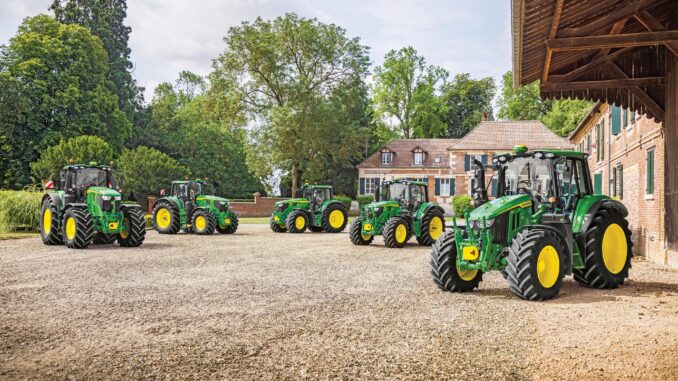
The John Deere 955 is a 33 hp compact utility tractor built from 1989 to 1998, with a Yanmar 1.4L 3-cylinder diesel engine, hydrostatic transmission, four-wheel drive, and independent rear and mid PTOs, making it a capable machine for mowing, loader work, light property maintenance, and small-acreage tasks. This guide is written for DIY owners in the USA and Canada and covers repair priorities, troubleshooting, maintenance, parts lookup, manuals, and a detailed FAQ in a practical, symptom-first format.
John Deere 955 model overview
The John Deere 955 sits in Deere’s compact utility tractor range and is part of the 55 Compact Series, positioned above the 855 with more power and hydraulic capacity for heavier homeowner and estate work. Key systems include the diesel engine and fuel system, hydrostatic drive, open-center hydraulics, electrical and safety interlock system, steering and brakes, and PTO-driven mower or implement systems.
Owners commonly deal with service items such as engine oil and filter, fuel filter, air cleaner elements, hydraulic filter, fan belt, fuses, bulbs, battery, and mower-related wear parts if a mid-mount deck is installed. Because many 955 tractors are still working with different decks and attachments, the exact part number often depends on the tractor serial number and the deck or attachment model fitted to it.
And See:
General overview of the John Deere 955
The John Deere 955 uses a Yanmar diesel rated at 33 hp, a hydrostatic transmission, open-center hydraulics with up to 2500 psi working pressure, and a Category I three-point hitch with 540 rear PTO and 2100 rpm mid PTO at 3200 engine rpm. Fuel capacity is 6.6 gallons, hydraulic/transmission capacity is 4.5 gallons, and MFWD front axle capacity is 2.6 quarts, which matters because fluid condition directly affects drive, steering, and hydraulic performance.
Common service parts owners regularly buy include oil filters, hydraulic filters, air filters, fuel filters, belts, fuses, bulbs, and mower deck blades or belts where applicable. Deere’s official parts catalog and technical publications store are the safest places to confirm fit before ordering because the 955 shared manual families with the 755 and 855, while actual installed options could vary by serial range and attachment package.
John Deere 955 troubleshooting approach
The best way to diagnose a John Deere 955 is to start with the symptom the owner sees, not the part they assume is bad, because old compact tractors can show the same symptom from fuel, electrical, hydraulic, or adjustment issues. The main symptom groups on this model are starting problems, poor running, overheating, hydraulic or drive complaints, mower cut-quality issues when deck-equipped, vibration/noise, and electrical or safety interlock faults.
A no-start, for example, may be caused by weak battery voltage, dirty terminals, a safety interlock issue, fuel restriction, or air in the fuel system rather than a failed major component. In the same way, poor mowing performance may come from deck setup, dull blades, or PTO-speed operation rather than a deeper engine problem.
Emergency John Deere 955 repair needs
Problems that need immediate attention are the ones that affect safe operation or can quickly damage expensive systems, especially overheating, hydraulic leaks, severe vibration, steering/brake faults, or hydrostatic drive issues. If the tractor is overheating, losing hydraulic oil, making sharp driveline noise, or no longer responding predictably to steering or braking, stop using it until the cause is identified.
John Deere 955 starting issues
A John Deere 955 starting problem usually shows up as no crank, slow crank, or cranks-but-will-not-start, and it matters because repeated attempts can drain the battery and hide the real cause. Common causes include low battery charge, corroded terminals, faulty safety interlock inputs, restricted fuel flow, or air in the diesel fuel system.
-
Weak or discharged battery.
-
Dirty or loose battery cables.
-
Blown fuse or wiring fault.
-
Safety interlock problem.
-
Dirty fuel filter or sediment bowl issue.
-
Air in fuel system after filter service or low fuel event.
-
Check battery voltage, terminal tightness, and visible cable corrosion.
-
Confirm PTO is disengaged and operator controls are in the correct start position.
-
Inspect fuses and obvious damaged wiring.
-
Check the sediment bowl and fuel supply.
-
If fuel service was done recently, bleed the fuel system as outlined in the operator’s manual.
John Deere 955 running issues
A John Deere 955 that starts but runs rough, lacks power, smokes excessively, or stalls under load often points to fuel or air restriction before anything more serious. Because this is a diesel compact tractor, dirty filters, stale fuel, clogged cooling surfaces, or incorrect operating habits can create symptoms that feel bigger than they are.
-
Dirty air cleaner elements.
-
Restricted fuel filter.
-
Fuel contamination.
-
Air in fuel lines.
-
Cooling system neglect causing heat-related power loss.
-
Inspect and service the air filter elements.
-
Replace the fuel filter if service history is unknown.
-
Check for water or debris in fuel.
-
Clean the grille, radiator screen, oil cooler, and radiator fins.
-
Verify the engine reaches proper operating speed under PTO work.
John Deere 955 vibration and noise
Unusual vibration on a John Deere 955 can come from engine mounting, mower deck issues, worn rotating parts, or attachment driveline faults, and ignoring it can damage bearings, belts, or shafts. Severe noise from the front axle, hydrostatic drive area, PTO driveline, or mower deck should be treated as an immediate inspection issue.
-
Damaged mower blade or unbalanced deck parts.
-
Loose hardware.
-
Worn bearings.
-
Failing belt or pulley.
-
Attachment driveline misalignment.
-
Shut down and inspect for loose or missing hardware.
-
Check deck blades and spindle areas if a mower is installed.
-
Inspect belts and pulleys for wobble or glazing.
-
Look at engine mounts and visible driveline couplers.
-
Do not continue operating if vibration increases with PTO speed.
Overheating and leaks
Overheating on the John Deere 955 is serious because it can damage the diesel engine and hydraulic system, especially on older machines used in dusty mowing conditions. Oil, coolant, or hydraulic leaks also need quick attention because low fluid levels can create secondary failures that cost much more than the original seal or hose problem.
-
Plugged radiator screen or fins.
-
Low coolant level.
-
Loose hose clamps.
-
Worn hydraulic filter or seals.
-
Fan belt tension problems.
-
Clean the grille and radiator screen first.
-
Check coolant level only when safe to do so.
-
Inspect hose condition and clamp tightness.
-
Check fan belt condition and tension.
-
Trace leaks before topping off and continuing work.
John Deere 955 transmission and drive issues
Drive complaints usually show up as weak travel, inconsistent hydro response, poor traction engagement, or front-wheel-drive concerns. Because the 955 uses a hydrostatic transmission and optional or engaged-on-the-go front drive operation, low fluid, dirty filters, linkage issues, or axle service neglect are common first checks.
-
Low hydraulic/hydrostatic oil level.
-
Restricted hydraulic filter.
-
Dirty suction screen.
-
Front axle oil neglect.
-
Linkage or pedal control issues.
-
Check hydraulic oil level.
-
Review when the hydraulic oil and filter were last changed.
-
Inspect for leaks at hoses, housings, and axle points.
-
Check MFWD oil level if equipped and used.
-
Escalate hydrostatic internal problems to a dealer or experienced compact tractor technician.
Electrical and safety switch problems
Electrical issues on the John Deere 955 often involve battery condition, cable corrosion, fuses, lamps, or safety interlock faults rather than major harness failure. These faults matter because they can create no-start conditions, lighting failures, or unsafe bypass temptations.
-
Dirty battery posts.
-
Blown fuse.
-
Aged battery.
-
Bad bulb.
-
Fault in safety interlock circuit.
-
Clean and tighten battery terminals.
-
Test battery condition under load.
-
Inspect fuses before replacing parts.
-
Check visible switch and connector condition.
-
Use the safety interlock checkout procedure in the operator’s manual rather than bypassing switches.
DIY or dealer guide
For the John Deere 955, the normal DIY line is routine servicing, basic electrical work, filters, fluids, belts, and mower-deck wear parts, while internal hydrostatic, injection, steering, and major axle or engine work are usually better left to a dealer or a skilled tractor repair shop. The machine is rugged and owner-serviceable in many areas, but age, diesel fuel-system sensitivity, and serial-specific differences mean deeper repairs can get expensive fast if diagnosis is poor.
Good DIY jobs
-
Engine oil and filter service.
-
Fuel filter replacement and bleeding.
-
Air filter service.
-
Hydraulic oil and filter service, if done carefully and cleanly.
-
Battery, fuse, and light bulb replacement.
-
Radiator screen and cooling-fin cleaning.
-
Mower blades and deck belt service on fitted mower decks.
Advanced DIY or dealer jobs
-
Hydrostatic transmission diagnosis or internal repair.
-
Fuel injection pump or injector work.
-
Front axle rebuilds or steering internal repair.
-
Clutch or PTO hydraulic internal work.
-
Full wiring-harness fault tracing.
-
Engine internal repairs.
Skill level guide
-
Beginner: battery service, filter checks, screen cleaning, fuse replacement.
-
Intermediate: fluid changes, fuel filter replacement and bleed, fan belt inspection, mower blade work.
-
Advanced: hydraulic screen service, electrical diagnosis, deck rebuilds, axle service.
-
Dealer-level: hydrostatic internals, injection components, engine teardown, complex PTO issues.
John Deere 955 parts needed, OEM vs aftermarket
Before ordering parts for a John Deere 955, gather the full model name, tractor Product Identification Number, engine serial number, and the exact mower deck or attachment model if fitted. This matters because filters may cross broadly, but belts, blades, switches, electrical items, and deck parts can vary by serial range or attachment setup.
OEM parts are the safest choice for belts, hydraulic filters, fit-sensitive seals, and safety-related electrical parts because correct dimensions and material quality matter. Aftermarket can be acceptable for some batteries, basic filters, bulbs, and blades, but only when the part clearly cross-references to the exact Deere number and attachment version.
Manuals and parts diagrams
The best official source for John Deere 955 manuals is Deere’s Technical Information Store, which is where owners can buy or download operator’s manuals, technical manuals, and parts catalogs. Deere’s online parts catalog is the best source for exploded diagrams and current OEM numbers once the model and serial are confirmed.
Useful sources:
-
John Deere Technical Information Store for operator’s manuals, technical manuals, and official publications.
-
John Deere Parts Catalog for diagrams and OEM part-number verification.
-
TractorData John Deere 955 page for quick spec checks, serial plate location, and publication references.
-
Operator’s manual mirror/reference PDF for maintenance interval structure and troubleshooting section overview.
John Deere 955 serial and engine numbers
These identification numbers matter because the John Deere 955 was built across multiple years, with publication changes and attachment combinations that can affect what actually fits. Even when two tractors are both called 955, the serial number and attached deck can change which belt, blade, switch, or manual applies.
-
Locate the tractor serial number plate on the rear of the tractor, below the PTO shaft.
-
Record the Product Identification Number exactly as shown, including any prefixes.
-
Find and record the engine serial number from the engine identification area noted in the operator’s manual.
-
If a mower deck or other attachment is installed, locate its model and serial tag separately.
-
Use all of that information when checking Deere diagrams or speaking to a dealer parts counter.
Buying John Deere 955 parts
The best buying strategy is to use Deere diagrams to identify the exact OEM number first, then compare dealer, official online, and reputable aftermarket sources second. That reduces the risk of buying the wrong part for a serial-sensitive tractor or the wrong belt or blade for the installed deck.
-
Online: use Deere’s Technical Information Store and Parts Catalog to confirm fit before purchase.
-
Dealer counter: best for serial-specific parts, hydraulic pieces, and obscure linkage or electrical parts.
-
Retail stores: acceptable for batteries, bulbs, and some filters if the package clearly cross-references the Deere number.
-
Reference source: TractorData 955 is useful for quick serial and publication checks before you order.
John Deere 955 fitting guide for common parts
These are four high-impact owner jobs that solve many common John Deere 955 complaints before they turn into larger repairs. Always park safely, lower attachments, remove the key, and let hot parts cool before starting work.
Change engine oil and oil filter
This job protects the diesel engine and is one of the highest-value routine services on the 955.
-
Warm the engine briefly so oil flows more easily, then shut it off safely.
-
Drain the engine oil into a suitable container.
-
Remove the old oil filter and install the new filter after lightly oiling the gasket.
-
Refill with the correct engine oil grade listed in the operator’s manual.
-
Start the engine, check for leaks, shut down, and recheck the level.
Replace the fuel filter and bleed the system
This job helps fix hard starting, stalling, and poor running caused by restricted diesel fuel flow.
-
Shut off fuel if applicable and place a container under the filter area.
-
Remove the old filter and install the correct replacement.
-
Check the sediment bowl and clean it if needed.
-
Bleed the fuel system using the manual’s procedure to remove trapped air.
-
Restart and monitor for leaks or uneven running.
Service the air cleaner elements
Air restriction is a common cause of power loss and smoke on compact diesel tractors used in dusty mowing conditions.
-
Open the air cleaner housing and remove the elements carefully.
-
Inspect both outer and inner elements and replace as needed.
-
Wipe out the housing without letting dirt fall into the intake.
-
Reassemble the housing correctly so it seals fully.
-
Check the restriction indicator after service.
Change hydraulic oil and hydraulic filter
This is a higher-value service for hydrostatic drive and hydraulic performance, especially if the tractor’s service history is unknown.
-
Warm the tractor briefly, then drain the transmission/hydraulic oil from the drain points listed in the manual.
-
Remove the housing and clean the hydraulic screen in safe cleaning solvent, then dry it thoroughly.
-
Replace the hydraulic filter.
-
Reinstall covers and plugs, then refill with the specified hydraulic fluid.
-
Run the tractor, cycle hydraulic functions, and recheck for leaks and proper level.
Maintenance to prevent repeat problems
Regular maintenance prevents most John Deere 955 failures by keeping dirt out of the diesel engine, heat out of the cooling system, water out of the fuel, and contamination out of the hydrostatic and hydraulic circuits. On older compact tractors, neglect usually shows up first as hard starting, weak hydraulics, poor mowing performance, or overheating.
Focus areas:
-
Starting reliability: battery condition, clean terminals, sound cables, clean fuel supply.
-
Running quality: fresh air and fuel filters, proper bleeding after service, correct engine speed under load.
-
Overheating prevention: clean grille, radiator screen, oil cooler, and cooling fins.
-
Drive performance: correct hydraulic oil level, timely hydraulic filter service, front axle oil checks.
-
Electrical reliability: fuse inspection, lamp replacement, and safety interlock checks.
John Deere 955 maintenance schedule
The operator’s manual for the 755/855/955 family includes service intervals organized as break-in, 10-hours or daily, 50-hours or weekly, 200-hours, 500-hours, every 2 years, and as necessary. That structure gives a strong maintenance template for the 955 even when owner usage varies between mowing, loader work, and general compact tractor duties.
Daily or before each use
-
Check engine oil level.
-
Check hydraulic oil level.
-
Check coolant level.
-
Clean grille and radiator screen.
-
Check sediment bowl.
-
Check safety interlock system.
Every 50 hours or weekly
-
Check battery electrolyte level where applicable.
-
Check wheel bolt torque.
-
Check MFWD oil level.
-
Grease fittings as specified.
-
Check tire pressure.
Every 200 hours
-
Change engine oil and filter.
-
Check or service fan belt condition and tension.
-
Clean fuel filter sediment bowl.
-
Clean oil cooler and radiator cooling fins.
Every 500 hours
-
Change hydraulic oil and filter.
-
Clean the hydraulic screen during service.
-
Change MFWD oil.
Every 2 years
-
Drain, flush, and refill the cooling system.
-
Replace fuel filter if due by calendar and condition.
Seasonal checklist
-
Spring: change engine oil if due, clean cooling surfaces, inspect mower deck setup if mowing season is starting.
-
Mid-season: watch radiator cleanliness closely, inspect air filtration, and monitor hydraulic response under heat.
-
Fall or off-season: fuel-system prep, full cleaning, storage steps, and correction of leaks before the tractor sits.
Repair, upgrade, or replace?
With the John Deere 955, repair usually makes sense because it is a durable compact utility tractor with strong parts and manual support, but the answer depends on whether the fault is a wear item, a major hydraulic issue, or a sign of multiple neglected systems. If the tractor is structurally solid and the engine, hydro, and axle systems are healthy, routine repair often beats replacement.
-
Repair if: the issue is filters, fluids, belts, battery, deck wear parts, cooling neglect, lights, or minor leaks.
-
Upgrade if: you need more attachment capability, loader capacity, or a better deck or implement setup than the current machine supports.
-
Replace if: the tractor has major hydrostatic failure, severe engine problems, extensive corrosion, or stacked repair needs that exceed its value for your use.
John Deere 955 FAQ
1. Why will my John Deere 955 not start?
A John Deere 955 no-start usually comes down to battery condition, dirty battery connections, safety interlock faults, or diesel fuel delivery problems rather than a major engine failure. Start with the battery, cables, fuses, PTO position, and fuel condition before assuming anything more serious.
2. Why does my John Deere 955 crank slowly?
Slow cranking often points to a weak battery, corroded cable ends, poor grounds, or an aging starter circuit. On an older diesel compact tractor, even a small voltage drop can make cold starts noticeably worse.
3. Why does my John Deere 955 crank but not fire?
If it cranks but will not fire, suspect fuel restriction, air in the fuel system, contaminated fuel, or a missed bleeding step after filter service. The 955 operator’s manual specifically includes a fuel system bleeding procedure because trapped air can stop normal starting.
4. Why is my John Deere 955 hard to start in cold weather?
Cold weather makes diesel starting more sensitive to battery strength, fuel condition, and proper starting procedure. The manual includes separate cold-weather operating guidance, so use the recommended procedure rather than extended cranking.
5. Why does my John Deere 955 lose power under load?
Power loss under load often comes from dirty air filters, restricted fuel flow, or overheating from clogged cooling surfaces. If the tractor is mowing or using a PTO attachment, verify it is being run at the proper engine speed as well.
6. Why is my John Deere 955 smoking?
Excess smoke can mean restricted air intake, poor fuel quality, overload, or an engine issue that needs deeper diagnosis. Start with air filter service and cooling-system cleanliness because those are common owner-serviceable causes.
7. Why does my John Deere 955 stall after starting?
A 955 that starts and then stalls may have fuel starvation, debris in the sediment bowl, a plugged filter, or air in the lines. It is usually smarter to inspect fuel supply first than to start replacing electrical parts.
8. Why does my John Deere 955 overheat?
Overheating is commonly caused by a clogged radiator screen, dirty radiator fins, low coolant, or fan belt problems. Compact tractors used for mowing in dusty grass can overheat quickly if cooling surfaces are not cleaned often.
9. Why is coolant leaking from my John Deere 955?
Coolant leaks usually come from hoses, clamps, radiator issues, or gasket failures. The first owner checks are hose condition, clamp tightness, coolant level history, and whether the engine was recently overheated.
10. Why is hydraulic oil leaking on my John Deere 955?
Hydraulic leaks can come from filters, hoses, housings, seals, or connection points in the steering and implement circuits. Because low hydraulic oil can affect drive and steering, leaks should be traced and repaired promptly.
11. Why does my John Deere 955 move weakly or hesitate?
Weak travel response often points to low hydraulic oil, overdue hydraulic service, filter restriction, or deeper hydrostatic wear. Check fluid level and service history first before assuming internal transmission failure.
12. Why is the John Deere 955 hydrostatic transmission noisy?
Hydro noise can be caused by low fluid, contamination, air ingestion, or internal wear. If the noise is new or severe, stop using the tractor until oil level and filter condition are checked.
13. Why is front-wheel drive not working on my John Deere 955?
MFWD complaints can come from engagement issues, front axle oil neglect, linkage faults, or internal axle wear. Since the manual allows engaging and disengaging front drive on the go, correct operator use also matters.
14. Why does my John Deere 955 steering feel heavy?
Heavy steering may be related to front axle issues, hydraulic condition, tire problems, or steering component wear. Start with tire condition, fluid level, and visible linkage inspection before deeper teardown.
15. Why do the brakes on my John Deere 955 feel weak?
Weak braking may come from adjustment issues, wear, contamination, or hydraulic/mechanical faults noted in the troubleshooting section. Because braking is a safety issue, persistent weak brakes are not something to postpone.
16. Why does my John Deere 955 vibrate while mowing?
If the tractor vibrates while mowing, the problem is often in the deck system rather than the tractor itself, especially bent blades, spindle trouble, or deck belt issues. Always inspect rotating deck parts before continued use.
17. Why does my mower deck cut unevenly on a John Deere 955?
Uneven cut usually comes from dull or bent blades, deck-level issues, worn deck parts, or incorrect tire pressure affecting deck attitude. A basic cut-quality check should include blade condition, deck setup, and PTO-speed operation.
18. Why are the blades on my John Deere 955 not spinning properly?
If the deck blades do not spin properly, suspect belt wear, PTO engagement issues, pulley trouble, or spindle drag. Confirm the PTO is engaging correctly and inspect the deck drive path before assuming a tractor-side fault.
19. Why does my John Deere 955 PTO not engage?
PTO issues can involve controls, hydraulics, linkage, or internal PTO clutch problems. Basic checks include control position, operator procedure, and whether the tractor is showing broader hydraulic symptoms at the same time.
20. Why does my John Deere 955 battery keep going flat?
A repeatedly flat battery may be old, undercharged, or affected by poor cable connections or charging-system problems. Because the tractor uses a 12-volt electrical system with alternator charging, both the battery and charging circuit deserve checking.
21. Why are the lights not working on my John Deere 955?
Lighting faults are commonly caused by blown bulbs, fuses, corroded connections, or wiring damage. The operator’s manual includes procedures for replacing fuses and multiple lamp bulbs, which makes this one of the more approachable DIY electrical jobs.
22. Why does the safety interlock stop my John Deere 955 from starting?
The safety interlock system is designed to prevent unsafe starting or operation, so a faulty switch or out-of-position control can create a no-start condition. Use the checkout procedure in the manual instead of bypassing the system.
23. Why is my John Deere 955 fuel filter clogging often?
Frequent fuel-filter issues usually point to contaminated fuel, tank debris, water ingress, or old stored diesel. Cleaning up the fuel source matters just as much as replacing the filter again.
24. Why should I clean the radiator screen so often on a John Deere 955?
The screen and cooling fins collect chaff and dust quickly during mowing and loader work, and restricted airflow is one of the easiest ways to overheat a compact diesel. Regular cleaning is basic prevention, not optional extra maintenance.
25. How often should I change John Deere 955 engine oil?
The official family maintenance chart groups service by intervals, with engine oil and filter service listed within the scheduled maintenance structure rather than as guesswork. If usage is dusty, heavy, or the history is uncertain, err on the cautious side and document future intervals carefully.
26. How often should I change John Deere 955 hydraulic oil and filter?
The manual places hydraulic oil and filter service in the 500-hour interval group for this family, along with cleaning the hydraulic screen during the process. On an older used tractor with unknown history, many owners inspect and baseline this earlier.
27. How often should I service the fuel system on a John Deere 955?
Fuel-system care is ongoing because the manual includes sediment bowl checks, cleaning, filter replacement, and bleeding procedures across routine and as-needed service sections. Diesels reward clean fuel and punish neglect faster than many owners expect.
28. What oil filter fits a John Deere 955?
A Deere parts catalog listing shows M806419 as an oil filter used in Deere applications, but owners should still confirm fit by serial number and engine details before ordering. That extra check matters more on older tractors and cross-listed parts.
29. What hydraulic filter fits a John Deere 955?
A Deere parts catalog listing shows LVA16054 as a hydraulic filter part number in Deere’s catalog system, but application should always be confirmed against the specific 955 and serial range. Never order a hydraulic filter on appearance alone.
30. Where can I find John Deere 955 parts diagrams?
The best source is Deere’s official online parts catalog, which provides exploded diagrams and part-number lookup. TractorData is useful for quick reference, but Deere’s own catalog should be the final fit-check before purchase.
31. Where can I get a John Deere 955 operator’s manual?
The official place to obtain manuals is Deere’s Technical Information Store. TractorData also references the correct operator’s manual families, including OMM95303 for 755, 855, and 955 tractors.
32. Where is the serial number on a John Deere 955?
The serial number plate is located on the rear of the tractor below the PTO shaft. That is the key number to record before looking up parts or manuals.
33. Is the John Deere 955 a good DIY tractor to own?
Yes, within reason, because the 955 has strong manual support, straightforward routine service access, and a durable compact utility design. It is a good DIY ownership tractor for filters, fluids, cooling service, and basic electrical work, but not every hydrostatic or injection-system repair is realistic at home.
34. Should I use OEM or aftermarket parts on a John Deere 955?
OEM is the safer choice for fit-sensitive, hydraulic, and safety-related parts, while aftermarket can be fine for some basic consumables if the cross-reference is exact. The older the tractor and the more serial-specific the part, the more valuable OEM confirmation becomes.
35. Is it worth repairing a John Deere 955 today?
In many cases, yes, because the 955 remains a desirable compact utility tractor with useful power, 4WD, hydrostatic drive, and broad attachment compatibility. Repair is usually worthwhile when the machine is structurally sound and the problem is maintenance-related rather than a major hydrostatic or engine failure.
John Deere 955 common engine troubleshooting steps
1. Basic pre‑checks for any John Deere 955 engine issue
Before chasing faults, have the owner run through the same quick checks every time.
-
Confirm fuel level and that the correct diesel is in the tank, not gasoline.
-
Check engine oil level and that the oil looks reasonably clean, not like tar or coolant-contaminated sludge.
-
Check coolant level in the radiator/overflow bottle only when cool enough to open safely.
-
Verify the air cleaner housing is intact and there is no obvious rodent nest or debris at the intake snorkel.
-
Ask when the fuel filter, air filter, and engine oil/filter were last changed.
If any of these are badly off, correct them first and re‑test before deeper diagnosis.
2. John Deere 955 engine: no‑start / hard‑start checklist
This is for “cranks but will not start” or “hard to start, especially cold.”
-
Check cranking speed
-
If the starter is slow, suspect weak battery, heavy oil grade, or poor connections.
-
Clean and tighten battery posts and grounds, and confirm oil viscosity is appropriate for the season.
-
-
Confirm basic starting procedure
-
Make sure PTO is disengaged and all safety switches are satisfied.
-
Follow the cold‑weather or normal start procedure from the operator’s manual (glow plugs, throttle position, etc.).
-
-
Fuel supply and air in fuel lines
-
Check that the tank actually has fuel and that the shutoff (if fitted) is not closed.
-
Inspect the fuel filter element and sediment bowl for water, dirt, or algae; replace or clean as needed.
-
If the tractor recently ran out of fuel or had the filter changed, bleed the fuel system to purge air as per the manual.
-
-
Filter and fuel quality
-
Replace a clogged fuel filter; Deere’s generic troubleshooting lists this as a primary cause of hard starting.
-
If the fuel is old or contaminated, drain, flush, refill with clean diesel, and bleed the system.
-
-
Cold‑weather specifics
-
In very cold conditions, use the recommended cold‑weather starting aids and fuel grade.
-
If cold cranking remains slow even with a good battery, consider oil grade and block or intake heaters where applicable.
-
If it still will not start after these steps, the next likely layer is dirty or faulty injectors, glow‑plug issues, or pump problems, which the official guidance pushes toward a dealer or diesel shop.
3. Rough running, stalling, or irregular idle
When a John Deere 955 starts but runs badly, focus on air, fuel, and temperature first.
-
Air restriction
-
Check and service the air cleaner; a clogged element is a common cause of smoke and rough running.
-
Replace any heavily soiled or damaged elements rather than trying to blow them out indefinitely.
-
-
Fuel delivery and contamination
-
Replace the fuel filter if there is any doubt about its age.
-
Drain water or sludge from the sediment bowl, then refill the system with clean diesel and bleed if needed.
-
-
Engine temperature and thermostat
-
Very low coolant temperature can cause irregular running and poor combustion on mechanical Deere engines.
-
If the gauge never comes up to normal, the thermostat may be stuck open and should be checked or replaced.
-
-
Persistent misfire / irregular running
-
If the tractor still runs rough with clean filters, good fuel, and proper temperature, suspect dirty or faulty injectors.
-
The generic Deere guidance is to have injectors tested and serviced by an authorized dealer or diesel injection specialist.
-
-
Stalling under light load
-
Re‑check that fuel cap venting is clear and the tank is not pulling vacuum.
-
Confirm there is no new restriction in the fuel line between tank and pump after recent work.
-
4. Smoke from the John Deere 955 engine
Use smoke color as a quick triage tool before diving into major work.
-
White smoke
-
Common causes: incorrect fuel type, low engine temperature, defective thermostat, or injector problems.
-
Steps: confirm correct diesel, warm the engine to proper temperature, then investigate thermostat and injectors if the symptom persists.
-
-
Black or gray smoke
-
Common causes: wrong fuel, clogged/dirty air cleaner, engine overload, or dirty injectors.
-
Steps: service the air cleaner, reduce load to see if smoke clears, and check fuel; if still present, suspect injector or pump work for a dealer.
-
-
Excessive fuel use with smoke
-
Symptoms of high fuel consumption plus smoke often indicate over‑fueling, restricted air, or incorrect operating technique.
-
Deere’s generic engine chart points to air cleaner service, load reduction, and injector/valve checks as the next steps.
-
5. Overheating or running too cold
Owners often notice “hot” or “never warms up” long before deeper engine damage appears.
-
Overheating basics
-
Clean radiator screen and fins; chaff and dust build‑up is a very common Deere overheating trigger.
-
Check coolant level and concentration, and look for leaks at hoses or the radiator.
-
Make sure the fan belt is in good condition and properly tensioned so the fan and water pump drive correctly.
-
-
Thermostat and low temperature
-
If the gauge never reaches normal, remove and check the thermostat for sticking open or wrong rating.
-
A defective thermostat prolongs warm‑up, promotes white smoke, and increases wear and fuel use.
-
-
If overheating persists
-
Once airflow, coolant, and belt condition are verified, suspect deeper cooling‑system issues (internal blockage, water pump, head gasket).
-
Those faults typically fall into dealer‑level diagnosis for most owners.
-
6. Knocking, oil consumption, and “bottom‑end” concerns
Use these checks to decide whether the owner is dealing with basic maintenance or the front end of an engine‑rebuild conversation.
-
Engine knock
-
Deere’s generic table flags low oil level, low coolant temperature, or overheating as first checks.
-
Top up oil, correct the cooling issue, and re‑test; if knock persists, deeper internal problems or injector timing issues are possible.
-
-
High oil consumption
-
Confirm the correct oil viscosity is being used.
-
Inspect for external leaks at gaskets, drain plug, and lines, and check that the crankcase breather/vent tube is not restricted.
-
-
When to stop running it
-
If there is a new, heavy knock, rapid oil loss, or mixing of oil and coolant, shut down and advise inspection before further operation.
-
7. Electrical side checks that look like engine faults
Some “engine” symptoms on a 955 actually trace to electrical problems that prevent proper cranking or starting.
-
If the starter will not crank: check PTO disengaged, main fuse, battery connections, and start‑circuit relay.
-
If the starter cranks slowly: check battery state, cable corrosion, and that engine oil is not overly heavy.
-
If the entire system is dead: inspect the main fuse and battery connections first.