
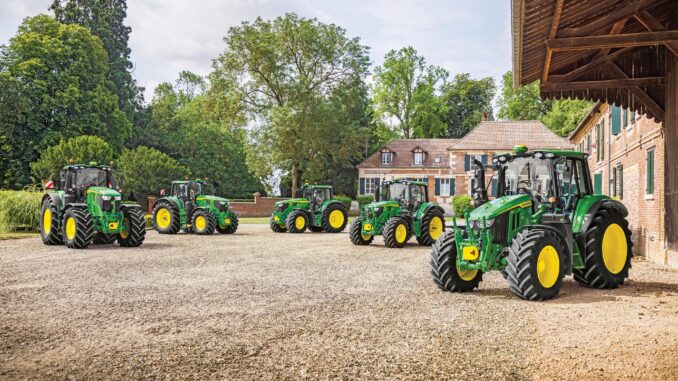
The John Deere 5045E is a utility tractor built for property work, mowing, loader jobs, light field work, and general small-farm use rather than simple suburban lawn care. This guide is written for DIY-minded owners in the USA and Canada who want a practical, symptom-first reference covering repairs, troubleshooting, maintenance, parts, diagrams, manuals, and realistic boundaries between home repair and dealer work.
John Deere 5045E model overview
The 5045E sits in John Deere’s 5E utility tractor range, alongside models such as the 5055E, 5065E, and 5075E covered in the same operator literature. On this tractor, the systems owners usually deal with most are the diesel engine and fuel system, cooling system, clutch/transmission and PTO components, hydraulic and power steering system, front axle and steering components, and the electrical starting and charging system.
For most owners, the biggest day-to-day concerns are reliable starting, clean fuel delivery, stable hydraulics, proper cooling, and keeping routine service items on schedule so small wear problems do not become expensive drivetrain or hydraulic repairs. Common service and repair parts regularly listed for the 5045E include engine oil filter RE519626, hydraulic oil filter RE45864, fuel filter R536698 on FT4 tractors or RE60021 on some earlier versions, primary air filter RE282286, secondary air filter RE282287, fan belt R216949, thermostat RE501052, ignition switch RE61717, and battery TY25272.
Troubleshooting the John Deere 5045E
The most useful way to diagnose a John Deere 5045E is to start with the symptom the owner actually sees, then narrow the issue to the system most likely involved. The main symptom groups on this tractor are starting problems, running and power-loss issues, hydraulic or steering complaints, overheating and leaks, clutch or transmission problems, and electrical or safety-related faults.
A symptom-first approach matters because several 5045E problems overlap. For example, hard starting can come from weak battery voltage, poor fuel delivery, contaminated fuel, dirty air filtration, or switch-related electrical faults rather than a single obvious failed part.
John Deere 5045E emergency repairs
Some faults should stop operation immediately because they can create a safety risk or cause fast secondary damage. On the 5045E, the urgent ones are severe hydraulic leaks, overheating, sudden steering problems, abnormal clutch or transmission noises, fuel leaks, and any electrical issue that causes intermittent starting, arcing, or loss of safety functions.
John Deere 5045E starting issues
If the tractor will not crank, cranks slowly, or starts and dies, deal with it early because repeated low-voltage starts and extended cranking can damage the battery, starter, and wiring while masking a fuel-side problem.
Common causes
-
Weak or failing battery TY25272.
-
Faulty ignition switch RE61717.
-
Dirty or restricted fuel filter, including R536698 on FT4 units or RE60021 on other listed versions.
-
Corroded battery terminals or poor ground connections.
-
Neutral-start or clutch-start adjustment issues noted in service checks.
Basic checks
-
Verify battery voltage, cable tightness, and clean terminal contact.
-
Confirm the tractor is in the proper starting condition and that clutch/neutral safety systems are satisfied.
-
Drain any water or sediment from the fuel system as called for in regular service.
-
Replace a restricted fuel filter if service history is unknown.
-
If the starter still does not engage consistently, inspect the ignition switch and related wiring before assuming a major starter fault.
John Deere 5045E running and power-loss problems
When a John Deere 5045E starts but runs rough, lacks power, smokes excessively, or stalls under load, the issue is often tied to fuel supply, air intake restriction, or overdue service. Ignoring these symptoms can increase soot loading, fuel consumption, and stress on the engine under PTO or loader work.
Common causes
-
Plugged primary or secondary air filter elements.
-
Restricted fuel filter or contaminated diesel.
-
Dirty cooling pack causing the engine to work hot and lose efficiency.
-
Loose or worn fan/alternator belt R216949.
Basic checks
-
Inspect the air cleaner and replace dirty primary or secondary elements as needed.
-
Replace the fuel filter if the interval is overdue or contamination is suspected.
-
Clean the grille, screens, radiator, and oil cooler fins.
-
Inspect the fan belt for looseness, glazing, or cracking.
-
If poor running continues after basic service, move to injector and pump diagnosis rather than guessing at parts.
John Deere 5045E hydraulic and steering problems
Slow hydraulics, weak loader response, heavy steering, or noisy hydraulic operation matter because hydraulic damage is expensive and contamination spreads through the system. A small leak or low oil level can turn into pump wear, steering complaints, or implement performance issues very quickly.
Common causes
-
Low transmission-hydraulic oil level.
-
Restricted hydraulic oil filter RE45864.
-
Contaminated oil or overdue transmission-hydraulic service.
-
Hydraulic pump wear or suction-side problems.
Basic checks
-
Check transmission-hydraulic oil level before operating.
-
Inspect for external leaks at hoses, fittings, and filters.
-
Replace the hydraulic filter if the service interval has been missed.
-
If hydraulics remain weak, stop before extended use and investigate pump or internal leakage issues.
John Deere 5045E overheating and leaks
A 5045E that runs hot, pushes coolant, smells of hot oil, or leaves fluid on the ground needs attention right away because heat and fluid loss can damage the engine, front axle, or hydraulic system.
Common causes
-
Low coolant level.
-
Blocked radiator, grille, screen, or oil cooler.
-
Failing thermostat RE501052.
-
Upper or lower radiator hose deterioration, including R218898 or R218899 as listed common parts.
-
Fan belt slip.
Basic checks
-
Check coolant level only when the engine is cool.
-
Clean the radiator area and screens thoroughly.
-
Inspect hoses, clamps, and the thermostat area for seepage.
-
Check fan belt condition and tension.
-
If overheating repeats, do not keep working the tractor until the root cause is corrected.
John Deere 5045E transmission, clutch, and PTO problems
Hard shifting, clutch slip, PTO engagement problems, or abnormal gearbox noises are not good candidates for “wait and see” operation because clutch and transmission repairs become far more expensive after internal damage starts. The service literature specifically includes clutch pedal free play checks and neutral-start system checks, which shows how important correct adjustment is on this platform.
Common causes
-
Clutch pedal free play out of adjustment.
-
Worn clutch components or release bearings.
-
Low or old transmission-hydraulic oil.
-
Internal transmission or PTO wear.
Basic checks
-
Check for obvious signs of clutch slip under load.
-
Verify clutch free play according to the operator/service literature.
-
Confirm transmission-hydraulic oil level and service status.
-
If shifting remains difficult or PTO noise is present, move to dealer-level diagnosis rather than continued use.
John Deere 5045E electrical problems
Lighting failures, no-crank complaints, intermittent gauges, and warning lights usually start as simple electrical faults but can become reliability and safety issues fast. The common parts list for this model includes headlight bulbs, warning-light bulbs, ignition switch RE61717, and battery TY25272, which reflects the sort of electrical items owners replace most often.
Common causes
-
Weak battery or poor cable connections.
-
Bad ignition switch RE61717.
-
Failed bulbs such as 54M7166, 57M7166, AD2062R, AR48041, or R136239.
-
Charging or wiring faults.
Basic checks
-
Test battery condition and charging output.
-
Inspect grounds, fuses, and visible harness damage.
-
Replace failed bulbs with the correct type.
-
If the same circuit keeps failing, stop replacing parts and trace the wiring fault.
DIY or dealer for a John Deere 5045E?
The normal line on a John Deere 5045E is simple: routine service, filters, belts, batteries, bulbs, and basic leak inspections are realistic DIY jobs, while hydraulic pump work, clutch splits, injector work, deep transmission repairs, and advanced electrical diagnostics usually make more sense as advanced-DIY or dealer jobs.
Good DIY jobs on a John Deere 5045E
-
Engine oil and filter service.
-
Fuel filter replacement.
-
Air filter service and replacement.
-
Battery, bulb, and ignition-switch replacement.
-
Cooling pack cleaning and hose inspection.
-
Fan belt inspection and replacement.
Advanced DIY or dealer jobs
-
Hydraulic pump replacement or internal hydraulic diagnosis.
-
Clutch replacement and transmission splitting.
-
Injector and injection-system repair.
-
PTO internal faults and driveline teardown.
-
Persistent wiring faults beyond basic switch or bulb replacement.
Skill level guide for John Deere 5045E repairs
-
Beginner: filters, fluids, battery, bulbs, visual inspections.
-
Intermediate: fan belt, thermostat, switch replacement, hose replacement, basic electrical testing.
-
Advanced: hydraulic pump work, clutch jobs, steering internals, injector diagnosis, transmission repairs.
John Deere 5045E parts, OEM numbers, and ordering info
Before ordering parts for a John Deere 5045E, gather the full model name, product identification number, engine identification details, and any configuration details that affect filters or emissions equipment. That matters because the 5045E appears in multiple manuals and parts listings, and consumables such as fuel and air filters can differ by emissions tier or build version.
For this tractor, OEM parts are usually the safest choice for filters, belts, ignition components, hydraulic parts, and any fit-sensitive or safety-related item. Aftermarket parts can be reasonable for some batteries, bulbs, hoses, and certain filters, but only when the cross-reference clearly matches the exact 5045E version and serial range.
John Deere 5045E parts diagrams and manuals
The best manual and diagrams strategy is to use one official operator source, one official Deere publications source, and one model-specific parts lookup so you can confirm both procedure and part fit before ordering.
-
John Deere operator’s manual / OM view for operation, service intervals, safety procedures, and many basic maintenance procedures.
-
Older Deere OM view page for 5045D/5045E family for additional operator and service-reference coverage across related tractors.
-
Green Farm Parts 5045E maintenance guide for quick service-part references and commonly purchased OEM numbers.
-
Jack’s Small Engines 5045E diagrams for exploded-view categories including engine, fuel, hydraulic, steering, clutch, brake, and cooling-system sections.
How to identify your John Deere 5045E
The serial and identification numbers matter because service parts can vary by production version, emissions setup, and equipment configuration. That is especially true on the 5045E where air and fuel filter listings differ between FT4, iT4, Tier 2, and pre-emission references shown in available parts guides.
-
Find the tractor Product Identification Number plate on the machine and photograph it before ordering anything.
-
Record the exact model designation as shown on the tractor, not just “5045E” from memory.
-
Record the engine identification details from the engine data label so you can match filters and engine-side parts correctly.
-
Note whether your tractor has configuration differences that affect service parts, such as cab-related filters or emissions-related equipment.
-
Match the recorded numbers against the manual and parts diagrams before ordering.
Buying John Deere 5045E parts online and in stores
For most owners, the best strategy is to identify the exact OEM number first, then compare official Deere sources with reputable aftermarket or dealer-backed sites. That reduces the risk of ordering the wrong filter or electrical part for a different emissions version or serial break.
-
Online: use the operator manual and model-specific diagram pages to confirm fit before checkout, especially for filters, switches, belts, and cooling parts.
-
Dealer counter: best for serial-sensitive items, hydraulic parts, drivetrain parts, steering parts, and anything unclear from catalog notes.
-
Retail stores: acceptable for common consumables such as batteries, bulbs, some belts, and some filters only when the packaging clearly cross-references the exact model/version.
Useful sources include John Deere manuals, Green Farm Parts, and Jack’s Small Engines diagrams.
John Deere 5045E fitting guide for common parts
These are four high-impact DIY jobs that solve a large share of ordinary 5045E maintenance complaints before they grow into expensive repairs.
Change the John Deere 5045E engine oil and filter
This job protects the engine and is one of the most important routine services in the official schedule.
-
Warm the engine briefly, park safely, shut down, and let the oil settle.
-
Drain the engine oil into a suitable container.
-
Remove the old oil filter and install the correct replacement, commonly listed as RE519626 for the 5045E guide.
-
Refill with the correct oil specification from the operator manual and check the dipstick.
-
Start the engine, inspect for leaks, then recheck the level.
Replace the John Deere 5045E fuel filter
A fresh fuel filter often helps with hard starting, low power, and rough running tied to restricted fuel flow.
-
Shut the tractor down safely and clean the area around the filter housing.
-
Remove the old filter element and note the part number from the old unit.
-
Install the correct replacement, such as R536698 on FT4 listings or RE60021 on other listed versions.
-
Prime or bleed the system as directed by the manual for your version.
-
Start the tractor and check carefully for leaks or air-entry symptoms.
Service the John Deere 5045E air filters
Air-filter service is a simple job that can restore power and reduce smoke or poor running caused by restricted intake flow.
-
Open the housing and remove the primary and secondary elements carefully.
-
Inspect for heavy dust, damage, or evidence of moisture or oil contamination.
-
Replace the elements with the correct set for your tractor version, such as RE282286 and RE282287, or SU29300 and SU29301 on listed pre-emission references.
-
Clean out the housing without forcing dirt into the intake tract.
-
Reassemble and verify the seal is seated correctly.
Replace the John Deere 5045E fan belt
A worn fan belt can contribute to overheating, weak charging, and squeal on startup.
-
Shut the engine down and allow all rotating parts to stop.
-
Inspect the existing belt for cracks, glazing, fraying, or looseness.
-
Remove the old belt and fit the listed replacement belt R216949 if it matches your tractor configuration.
-
Adjust the belt to the correct tension using the manual procedure.
-
Restart and confirm quiet operation and proper charging/cooling performance.
John Deere 5045E maintenance that prevents repeat failures
Most repeat problems on a John Deere 5045E come back to missed fluid and filter service, dirty cooling components, and delayed attention to small leaks or electrical issues. Following the schedule matters more than chasing symptoms after the tractor already starts hard, runs hot, or develops weak hydraulics.
-
Starting reliability: keep the battery clean and charged, drain water and sediment from fuel systems, and replace fuel filters on time.
-
Engine performance: service air filters and engine oil/filter at the correct intervals.
-
Cooling protection: clean the grille, radiator, and oil cooler, and inspect hoses, clamps, thermostat, and fan belt.
-
Hydraulic reliability: monitor oil level, replace the hydraulic filter, and do not ignore leaks or noisy operation.
-
Steering and front axle life: lubricate the pivot and steering points at the listed intervals and inspect for looseness.
-
Electrical reliability: keep terminals clean and address charging or switch faults early.
John Deere 5045E maintenance schedule
The operator literature for this tractor family lays out service intervals including every 10 hours, 50 hours, first 100 hours, 250 hours, 500 hours, 600 hours, 1000 or 1200 hours depending on source/version, annual tasks, and 2-year or 2000-hour cooling-system service. Always match the exact interval chart to your serial and tractor version, but the schedule below reflects the official Deere interval structure shown for the 5045E family.
Daily / before each use on a John Deere 5045E
-
Check engine oil level.
-
Check coolant level.
-
Drain water and sediment from the fuel tank and fuel filter.
-
Lubricate as necessary.
Every 50 hours
-
Check transmission-hydraulic oil level.
-
Check MFWD axle oil level if equipped.
-
Clean and check the battery.
-
Inspect all tires.
-
Lubricate front axle pivot pins and steering spindles.
-
Inspect the tractor for loose hardware.
First 100 hours
-
Change engine oil and filter.
Every 250 hours on a John Deere 5045E
-
Change engine oil and filter unless your oil program/manual version allows a different interval.
-
Service the air cleaner.
-
Inspect and adjust the alternator/fan belt.
-
Lubricate the 3-point hitch.
-
Check the neutral-start system.
-
Check and adjust clutch pedal free play.
Every 500 to 600 hours
-
Replace the fuel filter at 500 hours on listed versions.
-
Change oil in the MFWD axle at 600 hours if equipped.
-
Clean the engine crankcase vent tube.
-
Check hoses and hose clamps for tightness.
-
Check front axle pivot pin and lubricate related axle points as listed.
Every 1000 to 1200 hours or equivalent major service
-
Change transmission-hydraulic oil and filter.
-
Clean the transmission-hydraulic pickup screen.
-
Replace or service the water separator bowl on the listed higher-hour interval.
Annual and 2-year tasks
-
Replace air cleaner elements annually.
-
Flush the cooling system every 2 years or 2000 hours, whichever comes first.
Seasonal checklist for a John Deere 5045E
-
Spring / heavy-use start: inspect battery, replace overdue filters, clean the cooling pack, and check all fluid levels.
-
Mid-season: inspect fan belt, radiator hoses, front axle lubrication points, and fuel-system cleanliness.
-
Fall / low-use prep: complete overdue annual air-filter service, check coolant condition, and correct small leaks before storage or winter work.
Repair, upgrade, or replace a John Deere 5045E?
For a utility tractor like the 5045E, repair usually makes sense when the issue is confined to routine service parts or single external components, while upgrade or replacement becomes more logical when hydraulic, clutch, or driveline repairs stack up or the tractor no longer matches the workload. Because many 5045E problems start as basic maintenance issues, a proper service reset often solves more than owners expect.
Repair the John Deere 5045E if…
-
The issue is a filter, belt, hose, battery, bulb, switch, or thermostat-level repair.
-
The tractor is otherwise sound in the engine, hydraulics, and transmission.
-
You have a clear diagnosis and the repair will not require splitting the tractor or opening major hydraulic components.
Upgrade if…
-
You need better hydraulic capability, loader performance, comfort, or version-specific features rather than just a one-off repair.
-
Repeated minor failures come from under-spec use or a tractor that is working above its intended role.
Replace if…
-
The tractor needs major clutch, hydraulic pump, steering, and transmission work at the same time.
-
Structural wear, chronic neglected maintenance, and poor parts availability on your exact version make repair uneconomical.
-
The machine no longer fits the work and would still fall short after repair.
John Deere 5045E troubleshooting FAQ
1. Why will my John Deere 5045E not start?
The first checks are the battery, cable connections, ignition switch, and fuel condition. A weak battery TY25272, dirty terminals, or a blocked fuel filter can all produce a no-start or hard-start complaint. Also verify the tractor is meeting its neutral-start or clutch-start conditions before chasing more expensive parts.
2. Why does my John Deere 5045E crank slowly?
Slow cranking usually points to low battery voltage, dirty cable connections, poor ground contact, or starter-circuit resistance. Repeated short starts and storage without charging can make this worse. If voltage and connections test good, move to starter and switch circuit diagnosis.
3. Why does my John Deere 5045E start and then die?
That symptom often fits fuel restriction, contaminated diesel, or air entering the fuel system after filter service. Check for overdue fuel-filter replacement and any water or sediment in the system. If the problem remains, deeper fuel-system diagnosis is usually needed.
4. Why is my John Deere 5045E hard to start when cold?
Cold-start complaints usually get worse when battery condition is marginal or fuel delivery is restricted. Dirty filters and weak electrical connections reduce starting speed, and diesel tractors need strong cranking to light off cleanly. Start with the battery, terminals, and fuel service history.
5. Why is my John Deere 5045E losing power under load?
Loss of power commonly comes from restricted air or fuel flow, especially when service intervals are overdue. Inspect the air filters, fuel filter, and cooling pack first. If basic service does not restore power, injector or pump issues become more likely.
6. Why does my John Deere 5045E run rough?
Rough running often means uneven fuel delivery, poor air flow, or contamination in the fuel system. Start with filters because they are common, relatively inexpensive, and directly tied to the symptom. If roughness continues after service, move beyond guesswork and test the fuel system properly.
7. Why is my John Deere 5045E smoking more than normal?
Extra smoke often shows incomplete combustion from restricted air flow, fuel issues, or an engine working under stress. Dirty air filters and delayed maintenance are common first suspects. A cooling system that is packed with debris can also worsen performance and operating temperature.
8. Why is my John Deere 5045E overheating?
Overheating usually traces to low coolant, blocked screens or radiator fins, belt slip, hose problems, or thermostat trouble. The listed common cooling parts include thermostat RE501052 and radiator hoses R218898 and R218899. Stop using the tractor until the cause is corrected because heat can quickly create larger engine damage.
9. Why is coolant leaking on my John Deere 5045E?
Look first at hoses, clamps, the radiator area, and the thermostat housing. Small seepage can become a major overheating issue once the tractor is working hard. Replace aging hoses early rather than waiting for a roadside failure.
10. Why is my John Deere 5045E hydraulic system weak?
Weak hydraulics often start with low oil level, a restricted hydraulic filter, or overdue oil service. If you also hear noise or see foaming, stop and inspect for leaks or suction-side problems. Continued use can damage the pump and spread contamination.
11. Why is the steering heavy on my John Deere 5045E?
Heavy steering usually points toward hydraulic assistance issues, low system oil, or wear in steering/front-axle components. Check fluid level and look for leaks before assuming a steering box fault. If the symptom is sudden, treat it as a safety issue.
12. Why does my John Deere 5045E make hydraulic noise?
Hydraulic whining or growling often means aeration, low oil, restriction, or pump wear. Begin with oil level and filter condition because those are the easiest and most common checks. Do not keep operating it hard while the system is noisy.
13. Why is my John Deere 5045E leaking hydraulic oil?
External leaks often come from hoses, fittings, or service points, but any hydraulic leak deserves quick attention. Even a modest leak lowers oil level and invites dirt into the system. Clean the area first so you can identify the exact leak source instead of guessing.
14. Why is my John Deere 5045E hard to shift?
Hard shifting can point to clutch adjustment issues, linkage problems, or internal wear. The service schedule includes checking and adjusting clutch pedal free play, which is an important clue for diagnosis. If the symptom is getting worse, continued use is risky.
15. Why is the clutch slipping on my John Deere 5045E?
A slipping clutch may be out of adjustment or already worn internally. If the tractor revs rise without matching pull, stop heavy work and inspect free play first. Once a clutch is badly worn, repair usually moves beyond casual DIY work.
16. Why is the PTO on my John Deere 5045E not working correctly?
PTO trouble may come from clutch-related issues, linkage adjustment, or internal wear in the PTO drive path. Start with external adjustment and operating checks, then avoid further use if the PTO is noisy or inconsistent. Internal PTO repairs generally belong to experienced technicians.
17. Why does my John Deere 5045E have a battery drain?
Battery drain often comes from poor charging, bad cable connections, or a fault in an electrical circuit that stays live. Test charging output before replacing the battery again. If a fresh battery goes flat repeatedly, the real problem is elsewhere.
18. Why are the lights not working on my John Deere 5045E?
Start with the bulbs, fuse protection, switch function, and visible wiring condition. The common parts list includes several lighting bulbs used on this model, so bulb failure is not unusual. If replacement bulbs fail again quickly, trace the circuit instead of assuming bad bulbs.
19. Why does the ignition switch on my John Deere 5045E feel faulty?
The ignition switch RE61717 appears in common replacement listings for this model, which suggests it is a realistic wear item. Intermittent crank, inconsistent dash power, or a key position that feels erratic are typical clues. Confirm wiring and battery condition too, because low voltage can imitate switch problems.
20. Which fuel filter does a John Deere 5045E use?
It depends on the tractor version. The maintenance guide lists R536698 for FT4 tractors and RE60021 for some Tier 2 or iT4 references, so owners should confirm their exact build before ordering. This is one reason the serial and engine details matter so much.
21. Which air filter does a John Deere 5045E use?
That also depends on version. The 5045E guide lists RE282286 and RE282287 for one setup, and SU29300 and SU29301 for listed pre-emission tractors. Always match the filter set to your exact tractor instead of ordering by model name alone.
22. Which oil filter fits the John Deere 5045E?
The maintenance guide lists engine oil filter RE519626 for the 5045E. It is one of the most commonly serviced parts on the tractor. Confirm against your serial and current filter before purchase, especially if you are cross-shopping aftermarket options.
23. Which hydraulic filter fits the John Deere 5045E?
The service-parts guide lists hydraulic oil filter RE45864. Hydraulic filter fit is worth verifying carefully because poor fit or incorrect bypass characteristics can create expensive consequences. Use OEM when in doubt.
24. How often should I change the oil on a John Deere 5045E?
The operator literature shows an initial 100-hour oil and filter change, followed by regular interval service that appears as 250 hours in one Deere source, with some later filter-overview material noting that intervals may vary with oil program and version. The safest approach is to follow the exact manual for your serial and engine configuration. Do not assume every 5045E in the field has the same interval.
25. How often should I replace the fuel filter on a John Deere 5045E?
The Deere service schedule for the family shows fuel-filter replacement at 500 hours on listed versions. If fuel quality is poor or contamination is suspected, owners often replace it sooner. Hard starting and power loss are good reasons to check service history immediately.
26. How often should I replace the air filters on a John Deere 5045E?
The official schedule includes servicing the air cleaner at 250-hour intervals and replacing air cleaner elements annually. Dusty conditions can shorten that dramatically. A tractor used in loader work, dry mowing, or field dust may need much more frequent attention.
27. How often should I change hydraulic oil on a John Deere 5045E?
The Deere material for this tractor family shows major transmission-hydraulic oil and filter service at around 1000 to 1200 hours depending on source/version. Because this is a high-consequence system, use the exact chart for your tractor and do not stretch intervals casually. Filter condition and contamination matter just as much as oil age.
28. Can I use aftermarket parts on a John Deere 5045E?
Yes, but it is smarter to be selective. Aftermarket options can be fine for some bulbs, batteries, hoses, and certain cross-referenced filters, while OEM is safer for fit-sensitive, hydraulic, and safety-related parts. The more expensive the failure would be, the stronger the case for OEM.
29. Where can I find John Deere 5045E parts diagrams?
A practical combination is the Deere operator/manual pages for procedures and a model-specific diagram source such as Jack’s Small Engines for exploded categories. The Jack’s listing includes sections for engine, fuel, cooling, clutch, steering, hydraulics, and more. That makes it useful when you know the area of the tractor but not yet the exact part number.
30. Where can I find a John Deere 5045E manual online?
The Deere OM view pages are the best place to start because they provide official operator information and service interval structure for the model family. They are useful for maintenance, safety, identification, and basic service procedures. For parts-only lookup, pair them with a Deere-focused parts site.
31. Is a John Deere 5045E realistic for DIY maintenance?
Yes, for routine service and straightforward repairs. Filters, fluids, battery work, bulbs, hose inspection, and fan belt service are all realistic for owners with basic tools and safe lifting practices. Major clutch, hydraulic, or internal drivetrain work is a different category.
32. When should a John Deere 5045E go to the dealer?
Dealer-level help makes sense when the tractor has internal hydraulic faults, clutch or transmission issues, injector problems, persistent electrical faults, or repeat overheating after basic cooling checks. Those problems usually need special tools, test procedures, or teardown work. Taking it in early can be cheaper than continuing to run it damaged.
33. What John Deere 5045E problems should never be ignored?
Do not ignore overheating, fuel leaks, hydraulic leaks, steering changes, clutch slip, hard shifting, or electrical faults that affect starting and safety systems. Those are the kinds of issues that can either injure the operator or damage major components quickly. Fast diagnosis matters more than temporary workarounds.
34. Is the John Deere 5045E worth repairing?
Usually yes, when the problem is limited to service items or a single external repair. The answer changes when a tractor has stacked hydraulic, clutch, steering, and transmission repairs at the same time. In that case, total repair cost and the machine’s overall condition matter more than the badge on the hood.
Common John Deere 5045E engine performance issues to watch for
The most common John Deere 5045E engine performance issues owners see are hard starting, low power under load, excessive smoke, rough/irregular running, and overheating, usually tied to fuel, air, or cooling-system problems rather than catastrophic engine failure. Most of these are preventable or caught early if filters, fuel quality, and the cooling pack are kept on schedule and the tractor isn’t overloaded for its size.
Hard starting or slow crank
Owners and Deere’s own troubleshooting charts point to hard starting as one of the primary recurring complaints on 5E tractors, especially when batteries, fuel systems, or starting procedures are not ideal. Slow cranking and long crank times increase wear on the starter and can mask underlying fuel or air problems.
Typical causes:
-
Weak battery or poor cable/ground connections
-
Cold-weather starts with heavy oil or improper fuel grade
-
Air in the fuel system, water/dirt contamination, or a clogged fuel filter
-
Incorrect starting procedure or leaving the hand primer raised on some versions
What to watch for:
-
Crank speed noticeably slower than normal
-
Engine only firing after extended cranking or not at all
-
Need to repeatedly prime or crack lines after sitting
Low power and loss of pull under load
Operator manuals and Deere training material highlight low power as a classic diesel complaint, often caused by incorrect settings or basic maintenance issues instead of a “weak engine.” On a 5045E this often shows up as difficulty maintaining speed in field work, heavy loader tasks, or road travel.
Typical causes:
-
Restricted air cleaner or fuel filter, commonly cited as first checks
-
Poor-quality or contaminated diesel fuel
-
Overloaded implement, too-deep tillage settings, or improper ballast and tire pressures
-
Engine overheating or running too cold, affecting combustion efficiency
What to watch for:
-
Tractor bogging down or not holding gear where it used to
-
Power meter (where equipped) staying in the high load zone most of the time
-
Noticeable improvement after fresh filters or fuel, which points to maintenance rather than hardware
Rough running, surging, or stalling
The Deere engine troubleshooting section lists “runs irregularly or stalls frequently” as a standard problem, usually linked to fuel contamination or air in the system. Owner reports on 5E tractors also mention occasional surging or “missing” at certain RPMs when fuel or emission components are not behaving correctly.
Typical causes:
-
Water, dirt, or air in the fuel system causing misfire and stall
-
Restricted fuel or return lines
-
Dirty or faulty injectors requiring dealer-level testing
-
Issues with EGR or related emissions components on newer engines (reported on comparable Deere models)
What to watch for:
-
Engine speed “hunting” at steady throttle
-
Occasional hiccups or surges, especially at higher RPMs
-
Stalling when coming off load or during light work
Excessive smoke (white, black, or gray)
The operator troubleshooting tables specifically break out white and black/gray exhaust smoke as separate diagnostic paths. For a 5045E, smoke is usually a sign of combustion issues, air restriction, or temperature-related problems rather than an instant death sentence for the engine.
Typical causes:
-
White smoke: improper fuel, low engine temperature, defective thermostat, or injection-timing issues
-
Black/gray smoke: clogged or dirty air cleaner, overloaded engine, dirty injectors, or a non-functioning turbocharger
-
Smoke combined with knocking or unusual noises can indicate more serious timing or injector issues that need dealer attention
What to watch for:
-
Persistent white smoke once fully warmed up
-
Heavy black smoke under modest load (not just momentary puffs under heavy pull)
-
Smoke that appears with a change in sound (knock, rattle, or turbo whistle)
Overheating or running too cold
Deere documents engine overheating and below-normal temperature as separate problems because both hurt performance and reliability. On a 5045E, cooling problems are often tied to blocked radiator cores, belt issues, or coolant-level problems rather than internal engine defects.
Typical causes:
-
Dirty radiator core or grille screens, especially in dusty PTO or loader work
-
Low coolant level, faulty radiator cap, or deteriorated hoses
-
Loose/defective fan belt or neglected cooling-system flushing
-
Engine running too cool due to thermostat or gauge faults, leading to poor combustion and higher fuel use
What to watch for:
-
Temperature gauge creeping into high range under moderate load
-
Coolant loss or wet spots around radiator, pump, or hoses
-
Engine never reaching normal operating temperature, especially in cool weather
Knocking, hissing, and “not right” engine sounds
Owners of 5E tractors, including the 5045E, sometimes report odd engine or turbo noises that accompany performance changes. While some diesel clatter is normal, new noises with performance loss deserve quick attention.
Typical patterns:
-
Hissing from rubber hoses or boost leaks around turbocharger plumbing, often fixed by tightening hose clamps
-
Fuel knock, rattling above certain RPMs, or surging tied to EGR or injection behavior on similar Deere utility models
What to watch for:
-
New knock, hiss, or rattle that changes with RPM or load
-
Noise combined with smoke, power loss, or warning indicators
-
Leaks or loose clamps around turbo hoses and return lines