
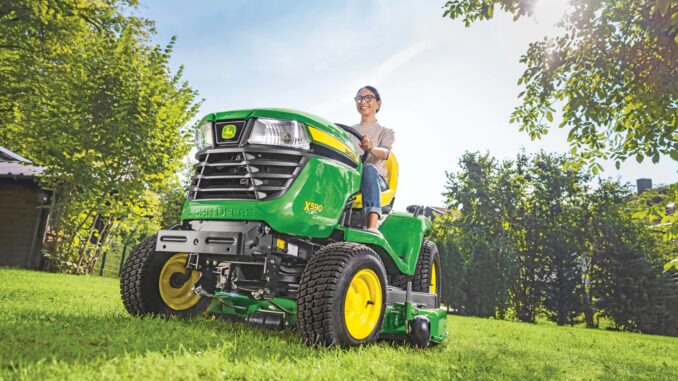
Introduction to the John Deere GX345
The John Deere GX345 is a premium lawn and garden tractor designed for larger home lawns and light estate work, sitting above basic lawn tractors in Deere’s lineup with more comfort and hydraulic features. It typically runs a liquid‑cooled Kawasaki V‑twin gasoline engine, hydrostatic transmission, and mid‑mount mower deck options around the 48–54 inch range, making it a strong choice for owners who mow regularly and tow light attachments.
This John Deere GX345 service and repair guide is written for homeowners and DIY users in the USA and Canada who want clear, symptom‑first troubleshooting, realistic DIY boundaries, and a practical parts and maintenance roadmap. You’ll find repair decision guidance, common parts and numbers, links to diagrams and manuals, step‑by‑step service jobs, and a deep troubleshooting FAQ.
John Deere GX345 general overview
In Deere’s product family, the John Deere GX345 sits in the legacy GX‑series of garden tractors, positioned between lighter lawn tractors (L/D/E series) and heavier X‑series garden tractors. It offers power steering, hydraulic deck lift, and a liquid‑cooled engine, so it is built for frequent use and demanding lawn conditions rather than occasional small‑yard mowing.
Key systems on the John Deere GX345 that owners need to understand are:
-
Engine and fuel system – liquid‑cooled Kawasaki V‑twin, carbureted, with mechanical fuel pump and inline fuel filter.
-
Mower system – mid‑mount deck (commonly 48″ or 54″), drive belt from engine PTO, spindles, blades, and gauge wheels.
-
Drive system – hydrostatic transaxle, hydraulic oil and filters, with pedal‑controlled forward/reverse and internal charge pump.
-
Electrical system – 12V starting and charging system, safety interlock switches, key switch, and dash indicators.
-
Cooling system – front radiator, coolant reservoir, hoses, and engine‑driven water pump.
Typical service parts that John Deere GX345 owners buy repeatedly include engine oil filters, fuel filters, hydraulic and transaxle filters, mower blades, deck drive belts, spark plugs, and common electrical pieces like headlight bulbs and ignition modules.
Troubleshooting approach for the John Deere GX345
Effective troubleshooting on the John Deere GX345 starts from the symptom the owner sees, not from guessing a part straight away. Look and listen to what the tractor is doing (or not doing), then work through basic checks before assuming a major failure.
For the John Deere GX345, the main symptom categories are:
-
Starting issues – turns over but will not start, no crank, starts then stalls.
-
Running issues – surging, loss of power, smoking, misfire, fuel starvation.
-
Cut quality problems – uneven cut, scalping, poor discharge, streaking.
-
Vibration and noise – deck shakes, loud bearing noise, rattling belts.
-
Overheating and leaks – engine running hot, coolant loss, oil leaks.
-
Transmission and drive – weak drive, no movement, jerky motion.
-
Electrical and safety switches – dead dash, intermittent shut‑off, PTO or starter not engaging.
Start with the simplest, safest checks in each category: fuel level, battery condition, obvious leaks, loose connectors, and blocked cooling or air intake screens, then move deeper into filters, belts, switches, and internal components where appropriate.
Emergency and immediate repair needs on a John Deere GX345
Some John Deere GX345 problems must be dealt with immediately because they either make the tractor unsafe to operate or can quickly destroy expensive components if ignored. The sections below break these down by symptom category so you can prioritise what needs attention right now.
John Deere GX345 starting issues that need urgent attention
A GX345 that will not start or suddenly refuses to crank is often frustrating but not always dangerous; however, repeated cranking with fuel flooding or electrical arcing can damage components. When starting issues follow burning smells, smoke, or clicking from the starter area, stop and investigate.
Common causes:
-
Weak or failing battery.
-
Corroded or loose battery cables or ground connections.
-
Faulty starter motor or solenoid.
-
Safety switch (seat, brake, PTO) stuck or misaligned.
-
Ignition switch failure or damaged wiring.
Basic checks:
-
Verify battery voltage with a multimeter and charge or replace if low.
-
Inspect battery terminals and ground strap, clean and tighten all connections.
-
Check that brake pedal is fully depressed and PTO is disengaged; sit firmly on the seat.
-
Listen for a click at the starter; if present but no crank, suspect starter or solenoid.
-
If wiring or terminals are hot, melting, or smoking, do not continue cranking – disconnect the battery and seek dealer service.
John Deere GX345 cut‑quality problems that must not be ignored
Poor cut quality on a John Deere GX345 can progress to safety hazards if blades are loose or deck components are failing. It can also cause heavy belt wear and spindle damage when the deck is badly out of level.
Common causes:
-
Dull, chipped, or bent mower blades.
-
Deck not level side‑to‑side or front‑to‑back.
-
Incorrect tire pressures affecting deck pitch.
-
Plugged deck underside with wet grass and debris.
-
Damaged or worn deck gauge wheels or anti‑scalp rollers.
Basic checks:
-
Park safely, remove the key, and use proper supports before working under the deck.
-
Inspect blades for damage, correct installation, and tight mounting bolts.
-
Check tire pressures to factory specs and adjust as needed.
-
Clean the underside of the deck, removing packed grass and debris.
-
Use the deck leveling procedure and gauge wheels to restore correct deck height and pitch.
John Deere GX345 vibration and noise issues needing immediate repair
Strong vibration or harsh grinding noises from the John Deere GX345 deck or driveline are signs that bearings or rotating parts are failing. Continued use in this condition can result in catastrophic spindle failure, thrown blades, or broken belts.
Common causes:
-
Worn or seized deck spindle bearings.
-
Damaged or twisted deck drive belt.
-
Loose or missing deck hardware and pulley bolts.
-
Foreign objects contacting blades or pulleys.
Basic checks:
-
Shut the engine off promptly when new vibration or noise appears and remove the key.
-
Inspect the deck belt for fraying, glazing, or missing chunks; replace if damaged.
-
Rotate each spindle by hand (with blades removed if needed) and feel for roughness or play.
-
Check pulleys and idlers for secure mounting and smooth rotation.
-
Remove any foreign objects lodged in the deck; if vibration persists, take the deck off for closer inspection.
John Deere GX345 overheating and leak problems to address right away
Because the John Deere GX345 uses a liquid‑cooled engine, cooling system problems can quickly lead to major engine damage. Any signs of overheating, steam, or coolant on the ground need immediate attention before the tractor is run again.
Common causes:
-
Low coolant level in the reservoir or radiator.
-
Blocked radiator fins or intake screens.
-
Loose or cracked coolant hoses and clamps.
-
Failing water pump or thermostat.
-
Oil leaks at the engine or transaxle.
Basic checks:
-
If the tractor overheats, shut it down and allow it to cool completely before opening any caps.
-
Check coolant level in the recovery tank and refill with correct 50/50 antifreeze mix if low.
-
Inspect radiator fins and side screens; clean debris with low‑pressure air or water.
-
Look for wet areas around hoses, clamps, and pump housing; tighten clamps or replace hoses as needed.
-
Do not run the tractor if coolant or oil is actively leaking; diagnose and repair first.
John Deere GX345 transmission and drive problems that are critical
Drive issues on the John Deere GX345 often relate to the hydrostatic transaxle or linkage, and ignoring them can result in losing drive completely or damaging internal components. Weak drive or no movement is a sign to stop towing heavy loads and investigate.
Common causes:
-
Low or contaminated hydraulic/transaxle oil.
-
Clogged hydraulic filters.
-
Misadjusted or damaged forward/reverse pedal linkage.
-
Internal transaxle wear or failure.
Basic checks:
-
Verify the free‑wheel valve is fully closed if the tractor was recently towed or pushed.
-
Check hydraulic/transaxle oil level and condition per the operator’s manual.
-
Inspect pedal linkage and control arms for bent parts or loose hardware.
-
Replace hydraulic and transaxle filters on schedule or sooner if drive performance changed gradually.
-
If drive suddenly fails under load with noises from the rear, stop and consult a dealer or experienced technician.
John Deere GX345 electrical and safety‑switch emergencies
Electrical and safety‑switch faults can cause sudden engine shut‑off or prevent starting, which is frustrating but also part of the tractor’s safety design. However, intermittent electrical problems and hot wiring can develop into failures or fire risk.
Common causes:
-
Failing seat, brake, or PTO safety switches.
-
Corroded harness connectors and ground points.
-
Damaged wiring insulation or rodent damage.
-
Weak battery or failing voltage regulator.
Basic checks:
-
Inspect visible sections of the wiring harness for abrasion, melted insulation, or rodent chew marks.
-
Clean battery posts and check main ground connections on the frame and engine.
-
Test safety switches for proper actuation and secure mounting.
-
If wires or components are hot to the touch or smoking, disconnect the battery and do not operate until inspected thoroughly.
-
Consider dealer diagnostics for complex intermittent electrical issues.
DIY or dealer? John Deere GX345 repair decision guide
For the John Deere GX345, most routine maintenance and straightforward bolt‑on repairs are realistic for a careful DIY owner with basic tools and good instructions. Anything involving internal engine work, hydrostatic transaxle internals, or complex electrical diagnostics is usually best left to a dealer or specialist due to the cost of mistakes and need for specialised tools.
Good DIY jobs on a John Deere GX345:
-
Engine oil and filter changes.
-
Air and fuel filter replacement.
-
Spark plug replacement and basic ignition checks.
-
Mower deck blade replacement and belt changes.
-
Deck cleaning and leveling.
-
Battery replacement and basic electrical checks.
Advanced DIY or dealer jobs on a John Deere GX345:
-
Cooling system flushing, hose replacement, and water pump work.
-
Internal engine repairs, carburetor overhauls, or valve adjustments.
-
Hydrostatic transaxle repairs beyond fluid and filter changes.
-
Deep electrical troubleshooting, harness repairs, and module replacement.
-
Steering or hydraulic lift system rebuilds.
Skill level guide:
-
Beginner – oil changes, blade swaps, air and fuel filter replacement, basic cleaning and inspections.
-
Intermediate – deck removal and reinstall, belt routing, battery and starter work, basic cooling system maintenance.
-
Advanced – internal engine and transmission work, complex electrical faults, hydraulic system repairs.
John Deere GX345 parts, OEM vs aftermarket, and required information
Before ordering parts for your John Deere GX345, gather the core identification information to ensure fit and compatibility. This avoids incorrect parts, returns, and wasted time.
You need:
-
Full model name: “John Deere GX345” plus deck size (e.g. 48″ or 54″ mower deck) if ordering deck parts.
-
Product Identification Number (PIN) from the tractor frame tag.
-
Engine model and serial, typically on a tag on the Kawasaki engine.
-
Any serial‑break information noted in parts listings (early vs late GX345 variants).
Key John Deere GX345 service and repair parts
OEM vs aftermarket guidance:
-
Use OEM parts for belts, safety‑critical items (brake components, steering parts), filters that are part of hydraulic or transaxle systems, and anything fit‑sensitive like deck spindles.
-
Aftermarket can be acceptable for engine oil and air filters, mower blades, batteries, and some ignition parts, as long as they cross‑reference specifically to the John Deere GX345 in the supplier’s catalog.
Where to find John Deere GX345 parts diagrams and service manuals
Several online resources provide parts diagrams, operator’s manuals, and technical publications for the John Deere GX345. These diagrams are essential when identifying components, understanding assemblies, and ordering parts correctly.
Useful links:
-
John Deere Manuals and Training – the official portal for operator’s manuals, quick reference guides, and technical publications for GX‑series tractors.
Example: search “GX345” on the John Deere manuals site. -
John Deere Technical Publications / JDParts – detailed parts diagrams for the John Deere GX345, showing exploded views of the engine, transmission, mower deck, steering, electrical, and more.
-
A reputable Deere‑focused parts site, such as GreenFarmParts or similar – many host model‑specific pages like “John Deere GX345 Garden Tractor Maintenance Guide & Parts List” with service kits and common wear parts.
-
Your local John Deere dealer’s website – often provides a parts lookup tool and PDF diagrams matched to your PIN.
Use the operator’s manual for regular maintenance schedules and basic procedures, technical or service manuals for in‑depth repair steps and specifications, and parts diagrams when you need to visually confirm part locations and relationships.
How to locate John Deere GX345 model, serial and engine numbers
Model and serial numbers matter because John Deere and parts suppliers frequently break parts listings by serial range or deck size. Having the correct identifiers ensures that belts, filters, and other components will actually fit your GX345.
Follow these steps:
-
Locate the tractor PIN plate on the John Deere GX345, usually on the frame near the rear of the tractor or under the seat area; it will show the model and serial number.
-
Check the mower deck for its own model or serial tag, typically on the top surface of the deck shell near one of the edges or by the discharge opening.
-
Find the engine identification label on the Kawasaki engine, often on the side of the engine block or near the fan shroud, showing engine model and serial.
-
Write these numbers down in a notebook or save them in your phone for reference when ordering parts.
-
Use the PIN and deck model when searching online parts catalogs and diagrams to match the correct serial‑break listings.
Buying John Deere GX345 parts online and in physical stores
A simple strategy works well for John Deere GX345 owners: use online sources for detailed diagrams and OEM part numbers, then choose between online ordering, dealer counters, and retail outlets based on part complexity and urgency.
Online:
-
Use official John Deere sites and established parts retailers to confirm OEM numbers.
-
Always cross‑reference your GX345 model, PIN, and deck size in the catalog.
-
Good examples include John Deere’s official manuals and parts sites and dedicated aftermarket sites with GX345 pages.
Dealer counter:
-
Best for complex hydraulic, transmission, or electrical parts.
-
Useful when a part has changed, superseded, or involves serial‑specific variations.
-
Staff can check your PIN and confirm current part numbers.
Retail stores:
-
Fine for common consumables like engine oil, grease, spark plugs, and sometimes universal batteries.
-
Only buy if the packaging clearly lists compatibility with the John Deere GX345 or the equivalent Kawasaki engine.
Include 2–3 concrete URLs in your own WordPress post, such as links to John Deere’s manuals page, JDParts, and a reputable GX345 parts retailer, using descriptive anchor text.
Step‑by‑step fitting guide for common John Deere GX345 DIY jobs
Below are several high‑impact DIY jobs for the John Deere GX345 that most owners can safely handle with basic tools. Each job improves reliability and performance and fits the “symptom‑first” approach.
Changing the engine oil and filter on a John Deere GX345
This job maintains engine health and prevents premature wear, especially important on a liquid‑cooled V‑twin that often runs for long periods.
Steps:
-
Park the GX345 on level ground, set the parking brake, shut the engine off, and let it cool.
-
Place a drain pan under the engine’s oil drain valve and, if present, attach the drain hose.
-
Open the drain valve to let old oil flow into the pan; allow it to drain completely.
-
Wipe dirt from around the oil filter area and remove the old filter using an appropriate wrench.
-
Lightly oil the gasket on the new OEM oil filter (such as AM107423), then install it until the gasket seats and tighten an additional half‑turn by hand.
-
Close the drain valve, refill with the recommended quantity and grade of engine oil, reinstall the dipstick, then start and idle the engine briefly to check for leaks and verify oil level.
Replacing the air filter on a John Deere GX345
Air filter service improves starting, power, and engine life by preventing dirt ingestion.
Steps:
-
Park safely, shut off the engine, and open the hood to access the air cleaner housing.
-
Release the air cleaner cover fasteners and remove the cover.
-
Pull out the paper air filter element and any foam pre‑cleaner, noting orientation.
-
Inspect the pre‑cleaner; clean with warm soapy water and dry thoroughly if reusable, or replace if damaged.
-
Install the new paper element and pre‑cleaner, ensuring proper seating and sealing.
-
Refit the air cleaner cover and secure it, then close the hood.
Changing the mower deck drive belt on a John Deere GX345
A fresh deck drive belt restores proper blade speed and cut quality and prevents belt failure that can strand you mid‑mow.
Steps:
-
Lower the deck fully, park on level ground, remove the key, and, if needed, remove the deck from the tractor per the manual.
-
Note the existing belt routing around the engine PTO pulley, deck spindles, and idlers; take photos for reference.
-
Release belt tension by moving the belt tensioner arm and remove the old belt from all pulleys.
-
Route the new OEM belt (matched to your deck size) along the same path, ensuring it sits correctly in all pulley grooves.
-
Re‑engage the tensioner and verify the belt is tensioned properly and not twisted.
-
Reinstall the deck on the GX345, connect linkages, and test run at low throttle to confirm smooth operation.
Replacing spark plugs on a John Deere GX345
New spark plugs help with starting, smooth running, and fuel efficiency on the V‑twin engine.
Steps:
-
Access each spark plug by opening the hood and locating the plug caps on the sides of the engine.
-
Pull off the plug boots carefully and use a spark plug socket to remove each plug.
-
Check and set the gap on the new plugs to the specification in the operator’s manual.
-
Thread new plugs in by hand to avoid cross‑threading, then snug them down with the socket to the recommended torque.
-
Reinstall the plug boots securely and start the engine to confirm smooth running.
Maintenance to prevent John Deere GX345 problems recurring
Regular maintenance on the John Deere GX345 is the best way to keep starting, running, cutting, and drive systems from developing repeated issues. Focus on a few key areas and stick to hour‑based intervals.
Focus areas:
-
Starting reliability – keep the battery charged and terminals clean, replace spark plugs and fuel filters at reasonable intervals, and store the tractor with treated fuel.
-
Cut quality – maintain sharp blades, clean the deck underside regularly, and check deck level and tire pressures.
-
Overheating and fire prevention – clean radiator fins and engine cooling screens, maintain coolant level, and remove dry debris from around the engine and exhaust.
-
Drive performance – follow hydraulic and transaxle filter and fluid change intervals, and avoid towing loads beyond the GX345’s rating.
-
Electrical reliability – inspect wiring for chafing, keep grounds tight and corrosion‑free, and test safety switches if intermittent shut‑off occurs.
John Deere GX345 maintenance schedule and year‑round checklist
Base your GX345 maintenance schedule on the official chart in the operator’s manual, then organise tasks by interval and season so they become routine.
Daily / before each use
-
Check engine oil level and look for fresh leaks.
-
Verify coolant level in the recovery tank.
-
Inspect tires for correct pressure and obvious damage.
-
Do a quick walk‑around to check for loose hardware, debris buildup, or hanging wires.
After roughly 8 hours of operation
-
Clean the radiator fins and intake screens to maintain cooling efficiency.
-
Brush or blow off grass and debris from the deck and engine area.
-
Visually inspect the mower belt and blades for wear.
Every 25 hours (or as specified)
-
Grease mower deck spindles and steering/front axle points.
-
Check battery terminals and cables, cleaning and tightening as needed.
-
Inspect safety switches and linkages for proper function.
Every 50 hours or yearly
-
Change engine oil and filter following the recommended intervals.
-
Inspect and, if necessary, replace hydraulic and transaxle oil filters.
-
Check and adjust mower deck level and overall height settings.
-
Inspect coolant hoses and clamps for cracks or looseness.
Every 200 hours (where applicable)
-
Replace fuel filter and air filter elements.
-
Flush and refill the cooling system with fresh coolant mix if recommended.
-
Inspect and potentially replace transaxle oil depending on usage and conditions.
Seasonal checklist for the John Deere GX345
Spring:
-
Perform a full service: oil and filter change, air and fuel filters, blade sharpening or replacement, battery check, and general cleaning.
-
Confirm deck level and cutting height before the mowing season begins.
Mid‑season:
-
Recheck belt condition, blade sharpness, and cooling system cleanliness.
-
Address minor issues like vibrations or uneven cut before they become major.
Fall / end of mowing season:
-
Clean the tractor thoroughly, including deck and engine compartment.
-
Stabilise fuel or drain tank if storing for winter, and charge the battery.
-
Review wear items (belts, blades, filters) and plan off‑season replacements.
John Deere GX345 – repair, upgrade, or replace?
For the John Deere GX345, the decision to repair, upgrade, or replace depends on the tractor’s overall condition, hours of use, and the cost of upcoming repairs versus the value of a newer unit. Because the GX345 is a higher‑spec garden tractor, it often remains worth repairing if the frame, engine, and transaxle are sound.
Repair if:
-
Problems are limited to wear parts such as belts, blades, filters, basic electrical components, or minor leaks.
-
The engine and hydrostatic drive are generally healthy and the tractor still meets your mowing and towing needs.
-
You have access to parts diagrams and are comfortable with the required DIY work.
Upgrade if:
-
You want improved cut quality through better blades, mulch kits, or gauge wheel kits.
-
You need more comfort or capability, and accessories or attachments (mulch kit, snowblower, bagger system) will deliver that.
-
Lighting, seating, or tire upgrades would make the GX345 more usable in your conditions.
Replace if:
-
The engine or transaxle needs major internal work that approaches the cost of a newer or good used tractor.
-
Structural components like the frame or deck are badly rusted, cracked, or beyond practical repair.
-
Your property size or workload has grown to where the GX345 no longer fits your needs and a newer X‑series or compact tractor would be more appropriate.
Expanded troubleshooting FAQ – John Deere GX345
1. Why will my John Deere GX345 not start?
A GX345 that refuses to start may have issues with fuel delivery, ignition, battery, or safety switches. Begin by confirming you have fresh fuel in the tank and the choke and throttle are set correctly. Check that the battery is charged and that brake, PTO, and seat safety switches are all in their proper positions. If the engine cranks but does not fire, suspect a fuel or ignition issue and inspect the fuel filter and spark plugs.
2. Why does my John Deere GX345 only click when I turn the key?
A single click from the starter area usually points to low battery voltage or a failing starter solenoid. Test the battery with a multimeter and charge or replace it if the voltage is low. Inspect battery cables and grounds for corrosion or looseness and clean them thoroughly. If the battery and connections are healthy but the tractor still only clicks, the starter motor or solenoid may need replacement.
3. Why does my John Deere GX345 crank but not fire?
If the GX345 cranks strongly but will not start, the most likely causes are a lack of fuel, a flooded engine, or weak spark. Verify that the fuel shutoff valve (if fitted) is open and that fuel is reaching the carburetor. Pull a spark plug and check for spark while cranking, replacing plugs if they are fouled or worn. Ensure the choke is used correctly for cold starting and avoid excessive cranking that can flood the engine.
4. Why does my John Deere GX345 start then stall after a few seconds?
Starting and stalling quickly often points to fuel starvation or a safety switch issue. Check the fuel filter and lines for blockages and ensure there is adequate fuel in the tank. Inspect the seat and PTO safety switches; if they are loose or intermittent, vibration can cause the tractor to shut down. Water or debris in the carburetor bowl can also cause this symptom and may need attention from a technician.
5. Why does my John Deere GX345 run rough or surge?
Rough running and engine surging are commonly caused by dirty fuel, clogged filters, or carburetor issues. Replace the fuel filter and use fresh fuel with a suitable stabiliser. Check the air filter; a restricted filter can upset the mixture and cause surging. If the problem persists, the carburetor may require cleaning and adjustment, which is an intermediate‑to‑advanced job best done with proper documentation.
6. Why is my John Deere GX345 down on power when mowing?
Loss of power under load may be due to dull blades, a slipping mower belt, or engine performance issues. Make sure the blades are sharp and properly installed, as dull blades increase load. Inspect the deck drive belt for glazing or slipping and replace if worn. Check the engine for full throttle operation, clean air filter, and correct fuel delivery; low compression or deeper engine problems may require professional diagnosis.
7. Why does my John Deere GX345 blow white or blue smoke?
White smoke can indicate coolant entering the combustion chamber, while blue smoke usually means oil burning. For a GX345, brief smoke at start‑up can be normal if a little oil entered the cylinder, but persistent smoke suggests worn rings, valve seals, or head‑gasket issues. Check engine oil level and look for coolant loss; if both are abnormal, have the tractor assessed by a dealer as major engine work may be needed.
8. Why is my John Deere GX345 leaving an uneven cut?
Uneven cut is typically caused by an unlevel deck, incorrect tire pressures, or damaged blades. Verify that all tires are inflated to the specified pressures and then level the deck side‑to‑side and front‑to‑back using the adjusters and a suitable gauge. Inspect blades for bends or damage and replace them if needed. Make sure gauge wheels and anti‑scalp rollers are correctly set for your typical mowing height.
9. Why is my John Deere GX345 scalping the lawn?
Scalping occurs when the deck sits too low or the terrain is uneven relative to deck height. Raise your cutting height one or two positions and adjust gauge wheels to just skim the turf in uneven areas. Avoid mowing at high speed over rough ground and consider mowing in a different pattern. If the front of the deck is pitched too far down, adjust deck height linkage to restore proper pitch.
10. Why is my John Deere GX345 not discharging grass properly?
Poor discharge or clumping is often due to packed grass under the deck, dull blades, or mowing in unsuitable conditions. Clean the underside of the deck thoroughly to remove built‑up grass and debris. Sharpen or replace blades so they create a clean cut and strong airflow. Try mowing when the grass is drier and avoid mowing too fast or too high if your deck struggles with heavy growth.
11. Why does my John Deere GX345 deck vibrate badly?
Severe deck vibration indicates a problem with blades, spindles, or belt routing. Confirm that blades are correctly matched, installed, and tightened, and that no blade is bent. Spin each spindle by hand with the engine off and feel for roughness or play in the bearings. Inspect the deck belt for damage and ensure it is routed correctly around pulleys and idlers. Replace worn bearings or belts promptly to avoid further damage.
12. Why is my John Deere GX345 making a grinding noise from the deck?
Grinding noises typically come from failing spindle bearings or foreign objects contacting rotating parts. Stop the tractor and shut the PTO off immediately when you hear grinding. Check for sticks, stones, or metal caught in the deck and remove them. If the noise persists, inspect each spindle and idler pulley; rough or loose bearings require replacement. Do not continue mowing until the source is found and fixed.
13. Why does the belt keep slipping or burning on my John Deere GX345?
A slipping or burning belt is usually worn, misadjusted, or contaminated. Inspect the deck drive belt for glazing, cracks, or oil contamination and replace if worn. Check that belt tensioners and springs are intact and operating correctly. Make sure pulleys are aligned and spinning freely; seized or misaligned pulleys can quickly ruin a new belt. Avoid mowing in conditions that overload the deck beyond its design.
14. Why does my John Deere GX345 overheat during mowing?
Overheating on a GX345 often results from blocked radiator fins, low coolant, or excessive load. Ensure the radiator and intake screens are clean and free of grass and dust. Check coolant level and top up with a proper antifreeze mix if needed. Verify that engine oil level is correct and that the cooling fan is unobstructed. If the tractor continues to overheat under normal load, the thermostat or water pump may require attention.
15. Why is my John Deere GX345 losing coolant?
Coolant loss can arise from hose leaks, a faulty radiator cap, or internal engine problems. Look for wet areas around hoses, clamps, water pump, and radiator, and tighten or replace components as needed. Check the recovery tank and cap for cracks or poor sealing. If you see coolant in the engine oil or persistent white smoke from the exhaust, suspect head‑gasket or internal engine damage and seek professional repair.
16. Why is there oil leaking from my John Deere GX345?
Oil leaks may originate from the engine, transaxle, or hydraulic system. Clean the suspected area and run the tractor briefly to pinpoint the leak source. Common spots include oil filter sealing surfaces, drain plugs, and gasket lines. Replace gaskets, filters, or seals as necessary and retorque fittings to specification. Avoid operating the tractor with low oil levels, as this can cause major component failure.
17. Why will my John Deere GX345 not move when I press the pedals?
If the GX345 does not move, the free‑wheel valve may be open, or the hydrostatic system may be low on oil or suffering internal problems. Confirm that the free‑wheel control is set to the operating position, not tow. Check the transaxle/hydraulic fluid level and look for obvious leaks. Inspect the pedal linkage for broken or disconnected parts. If the tractor still refuses to move, the hydrostatic unit may require dealer diagnosis.
18. Why is my John Deere GX345 drive weak or jerky?
Weak or jerky drive often comes from restricted hydraulic filters, old or contaminated oil, or worn hydrostatic components. Replace hydraulic and transaxle filters according to the maintenance schedule or sooner if drive concerns appear. Refresh hydraulic/transaxle oil if it is old or appears dirty. Check for correct tire pressures, as low pressure can make drive feel sluggish. Persistent weakness after maintenance may indicate internal wear in the transaxle.
19. Why does my John Deere GX345 roll freely when parked?
If the GX345 rolls when parked, the parking brake may not be fully engaging, or the free‑wheel valve may be open. Verify that the parking brake lever is fully locked and adjust linkage if necessary. Check the free‑wheel control and ensure it is closed so the hydrostatic unit can hold the tractor. If it still moves too easily, have the brake system inspected and repaired to maintain safe holding on slopes.
20. Why does my John Deere GX345 shut off when I engage the PTO?
Sudden shut‑off when engaging the PTO usually indicates an issue with safety interlocks or an overloaded deck. Confirm that you are seated properly and that the seat switch is functioning. Check that the brake pedal is in the correct position and that all safety switches are working. Inspect the deck for obstructions or seized spindles that cause a heavy load. Engage the PTO at lower engine speed and increase gradually.
21. Why are the lights not working on my John Deere GX345?
Non‑functioning headlights or dash lights may be caused by blown bulbs, fuses, or poor connections. Inspect the headlight bulbs and replace them if the filaments are broken. Check the relevant fuse in the electrical block and replace if blown. Examine connectors and wiring for corrosion or looseness. If lights flicker intermittently, clean grounds and consider testing the voltage regulator.
22. Why does my John Deere GX345 battery keep dying?
Repeated battery discharge can result from a failing battery, dirty terminals, parasitic draw, or charging system issues. Test the battery with a load tester and replace it if it cannot hold charge. Clean and tighten all connections at the battery, starter, and ground points. With the engine running, measure charging voltage at the battery; low voltage suggests alternator or regulator problems. Avoid leaving attachments or lights on when the tractor is off.
23. Why does my John Deere GX345 cut out on bumps?
Cutting out on bumps is often a sign of a loose seat switch, intermittent wiring, or poor battery connections. Check that the seat switch is securely mounted and the connector is tight. Inspect wiring harness sections that pass near moving parts or sharp edges for damage. Tighten battery terminals and grounds so vibration does not interrupt power. If the problem persists, trace the fault with a wiring diagram and continuity tests.
24. How often should I change the oil on my John Deere GX345?
Oil change intervals for the GX345 depend on hours of use and operating conditions, but many owners follow the 50‑hour or annual guideline. Check your operator’s manual for the exact schedule that applies to your tractor. In dusty, hot, or heavy‑load conditions, shortening intervals is advisable. Always use the recommended oil type and capacity and replace the oil filter at the same time.
25. How often should I replace the fuel filter on my John Deere GX345?
Fuel filters on the GX345 are commonly replaced around 200‑hour intervals or sooner if performance issues arise. If you run in dirty environments or use fuel from questionable sources, consider more frequent replacement. A partially blocked fuel filter can cause surging, loss of power, or hard starting. When changing the filter, make sure the flow direction arrow matches the original orientation.
26. How often should I sharpen or replace blades on my John Deere GX345?
Blade sharpening frequency depends on mowing conditions, but many homeowners sharpen blades at least once per season and more often on sandy or rocky soil. Inspect blades regularly for nicks, bends, or thinning. If blades are badly worn or damaged, replacement is safer and yields a better cut. Always balance blades after sharpening to reduce vibration and spindle stress.
27. What coolant should I use in my John Deere GX345?
Use an ethylene glycol‑based coolant mixed 50/50 with distilled or deionised water, as specified in the operator’s manual. The GX345’s liquid‑cooled engine benefits from coolant with corrosion inhibitors suited to aluminium and mixed metals. Avoid using straight water or coolants with stop‑leak additives. Maintain coolant level between the “low” and “high” marks on the recovery tank.
28. What hydraulic oil should I use in my John Deere GX345?
John Deere specifies particular hydraulic and transaxle oils, such as Low‑Vis Hy‑Gard, for the GX series. Check your manual for the exact product and specifications required. Using the correct oil helps maintain drive performance, protect seals, and avoid foaming or overheating. Do not mix incompatible oils and always change filters when switching to fresh fluid.
29. How do I level the mower deck on my John Deere GX345?
Leveling the deck involves adjusting side‑to‑side and front‑to‑back height using the deck lift links. Park the GX345 on a flat surface and set the deck to a standard cutting height. Measure blade tip height on both sides and adjust linkages until they match within the recommended tolerance. Check that the front of the deck sits slightly lower than the rear, as specified in the manual, for best cut quality.
30. How do I winterise my John Deere GX345?
To winterise a GX345, clean the tractor thoroughly and remove built‑up grass and debris. Change engine oil and filter if due, and ensure coolant mixture is adequate for expected minimum temperatures. Add fuel stabiliser to the tank and run the engine briefly to circulate it, or drain the fuel system if storing for a long period. Charge the battery fully and either disconnect it or use a maintainer. Store the tractor in a dry, sheltered location.
31. How do I prepare my John Deere GX345 for spring mowing?
For spring, begin with a full inspection and fluid check on your GX345. Change oil and filter if due, and replace air and fuel filters as needed. Sharpen or replace mower blades and check deck belt condition and tension. Verify tire pressures and deck level. Test‑run the tractor to confirm smooth starting, proper PTO engagement, and good discharge before tackling the first full mow.
32. Can I use aftermarket blades on my John Deere GX345?
You can use aftermarket blades if they are specifically cross‑referenced to your GX345 deck size and model. Ensure length, hole design, and lift profile match the OEM blades. Poorly matched blades can cause vibration, uneven cut, and reduced discharge. When in doubt, choose OEM blades, especially if you rely on mulch kits or specific cutting performance.
33. Is it safe to tow with my John Deere GX345?
The GX345 can tow light loads, such as small trailers or yard carts, within the limits described in the operator’s manual. Do not exceed the recommended towing weight, particularly on slopes. Use proper hitch points and avoid sudden starts or stops. Excessive towing beyond design limits can overheat the hydrostatic transaxle and shorten its life.
34. When should I consider replacing my John Deere GX345 instead of repairing it?
Consider replacement when major components like the engine or transaxle need extensive internal work that approaches the cost of a newer machine. Factor in the overall condition of the frame, deck, and systems, as well as your current property size and workload. If a newer tractor would better match your needs and the GX345 requires multiple expensive repairs, replacement may be the more economical long‑term choice.
35. Where can I find reliable parts and diagrams for my John Deere GX345?
Reliable parts and diagrams are available from John Deere’s official manuals and parts portals and from established Deere‑focused parts retailers. Use your GX345’s model and PIN to search operator’s manuals, technical manuals, and exploded parts diagrams. Many aftermarket sites also host model‑specific maintenance guides and parts lists. When ordering, always confirm compatibility using the OEM part number, deck size, and serial information.