
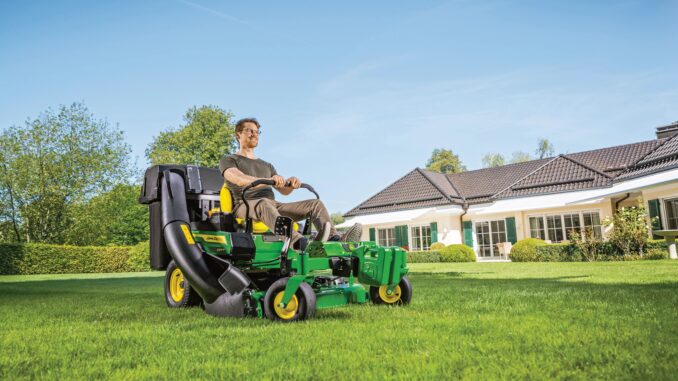
The John Deere Z330R is a residential ZTrak zero-turn mower built for homeowners who want faster mowing, strong maneuverability around obstacles, and a more comfortable step up from basic lawn tractors. This guide is written for DIY owners in the USA and Canada and covers the John Deere Z330R from a symptom-first perspective, including common faults, realistic repairs, maintenance routines, parts ordering tips, and a large troubleshooting FAQ ready for WordPress publication.
John Deere Z330R model overview
The John Deere Z330R sits in Deere’s residential Z300 Series lineup and is covered in the same North American operator’s manual family as the Z315E, Z325E, Z320M, Z330M, and Z320R. It uses the typical zero-turn layout of twin motion-control levers, a mower engagement switch, hour meter, throttle, key switch, height-of-cut dial, and fuel tank access arranged around the operator station.
For most owners, the John Deere Z330R is used on medium residential lawns where speed and trimming performance matter more than towing or ground-engaging work. In practice, that means the machine’s engine, mower deck, belt drive, electrical interlocks, battery, and transaxles matter far more in day-to-day ownership than heavy chassis work or attachment hydraulics.
This article focuses on the issues owners actually run into: no-start complaints, rough running, weak cutting performance, vibration, belt trouble, overheating from debris buildup, and safety-switch or battery problems. It also shows where routine DIY work ends and where dealer-level diagnosis usually starts.
General overview of the John Deere Z330R
The John Deere Z330R is a Residential ZTrak mower, so its main working systems are the engine and fuel system, mower deck and blade drive, twin hydrostatic drive units, electrical starting and interlock system, and operator controls. Deere’s manual also identifies the product identification number, engine serial number, and separate left and right transaxle serial numbers as key references for service and parts support.
Owners usually spend most of their money on routine service items and wear parts rather than major assemblies. Common parts and consumables associated with this platform include the home maintenance kit LG265, oil filter AM125424, John Deere Turf-Gard 10W-30 oil TY22029, leveling gauge AM130907, mower blades, mower drive belt, fuel filter, spark plugs, steering filters, battery service items, and deck-related wear parts.
John Deere Z330R troubleshooting approach
The best way to troubleshoot a John Deere Z330R is to start with the exact symptom the owner sees, not with a random list of possible parts. Deere’s own manual separates service and troubleshooting around systems like engine, transmission, mower, electrical, and general operating checks, which matches the way most real faults show up in the yard.
Main symptom groups for this model include:
-
Starting issues, such as cranking slowly, not cranking, or not firing.
-
Running issues, such as surging, stalling, smoking, or loss of power.
-
Cut-quality problems, such as uneven cut, streaking, clumping, or poor discharge.
-
Vibration and noise, especially after blade impact or belt wear.
-
Overheating and leak concerns, often linked to blocked cooling areas, dirty deck zones, or fuel/oil leaks.
-
Drive and steering problems involving traction, tracking, or transaxle response.
-
Electrical and safety-switch problems, including seat, brake, PTO, battery, or wiring faults.
Emergency John Deere Z330R repair needs
Some John Deere Z330R problems should be fixed before the mower is used again because they create a direct safety risk or can quickly turn a small repair into an expensive one. Deere specifically warns about damaged blades, missing guards, fuel leaks, debris buildup near hot parts, and unsafe operation on slopes or with faulty safety devices.
John Deere Z330R starting issues
If the mower will not crank, cranks slowly, or starts and dies, stop using guesswork and check the operating conditions first. Many apparent “bad engine” complaints on residential zero-turns are actually low battery, interlock, fuel delivery, or stale-fuel problems.
Common causes:
-
Weak or dirty battery connections.
-
Faulty seat, brake, or PTO interlock conditions.
-
Old fuel or a restricted fuel filter.
-
Dirty air cleaner or fouled spark plug.
-
Loose wiring near the battery or under-seat harness area.
Basic checks:
-
Confirm the mower is parked safely, PTO is off, and controls are in the correct start position.
-
Check battery terminals for corrosion and tightness, then inspect the battery condition.
-
Verify fuel is fresh and the fuel filter is not restricted.
-
Inspect the air filter and spark plugs if the engine cranks but runs poorly.
-
Look under the seat for loose wiring or debris around the battery and harness.
John Deere Z330R cut-quality problems
Poor cut quality usually shows up as uneven height, strips of uncut grass, clumping, or a ragged finish. On this model, deck level, blade condition, tire pressure, and deck cleanliness matter more than many owners realize.
Common causes:
-
Dull, bent, or mismatched blades.
-
Incorrect tire pressure affecting deck attitude.
-
Deck out of level side-to-side or front-to-rear.
-
Grass packed under the deck or around spindle/belt areas.
-
Wrong ground speed for grass conditions.
Basic checks:
-
Inspect blades for edge wear, bends, or impact damage.
-
Set all tires to the correct pressure before adjusting anything else.
-
Recheck deck level; Deere specifies no more than 3 mm (1/8 in.) side-to-side difference and 3–6 mm (1/8–1/4 in.) front-to-rear blade tip variation.
-
Clean the top and underside of the deck, including belt and spindle areas.
-
Slow down in heavy growth so the deck can discharge properly.
John Deere Z330R vibration and noise
Sudden vibration is one of the most important warning signs on a John Deere Z330R because it often means a blade strike, bent blade, loose hardware, or belt problem. Continuing to mow can damage spindles, pulleys, or deck structure.
Common causes:
-
Bent or unbalanced mower blade.
-
Loose blade hardware or deck hardware.
-
Damaged mower drive belt or pulley.
-
Debris wrapped in spindle or pulley areas.
Basic checks:
-
Shut the machine down and remove the key before inspecting the deck.
-
Check both blade condition and blade bolt security.
-
Inspect the mower drive belt for fraying, glazing, or rollover.
-
Clear debris from spindle, pulley, and belt-shield areas.
-
Do not continue mowing if vibration remains after blade and belt inspection.
Overheating and leaks on the John Deere Z330R
Heat-related trouble on a residential zero-turn is often caused by dirt and grass buildup rather than a catastrophic engine defect. Deere highlights the muffler area, cooling fins, intake screens, top of deck, transaxle areas, and the space under the seat as critical cleanout zones.
Common causes:
-
Packed cooling fins or blocked intake screens.
-
Debris around muffler or exhaust components.
-
Grass buildup on top of the deck near belt and spindle areas.
-
Oil or fuel leaks that attract debris and increase fire risk.
Basic checks:
-
Let the mower cool completely before cleaning.
-
Clean engine cooling fins, intake screens, muffler area, and deck top.
-
Check beneath the machine for fresh oil or fuel signs.
-
Inspect around transaxles and under the seat for debris accumulation.
-
Repair fuel leaks immediately before using the machine again.
John Deere Z330R transmission and drive problems
Drive complaints usually show up as weak hill response, poor tracking, one side slower than the other, or jerky control feel. Because this mower uses separate drive units, one-side behavior often tells you where to focus first.
Common causes:
-
Incorrect tire pressure affecting tracking.
-
Debris buildup around belt-drive or transaxle cooling areas.
-
Worn steering-related filters or drive-related components at service interval.
-
Internal transaxle issues beyond normal DIY repair.
Basic checks:
-
Verify tire pressures match side to side.
-
Inspect the machine for drag, wrapped debris, or belt-related damage.
-
Check service history, especially if steering filters or related maintenance is overdue.
-
Compare left-versus-right behavior in an open flat area.
-
Treat persistent loss of drive or major hydro noise as dealer-level diagnosis.
Electrical problems on the John Deere Z330R
Electrical faults on this mower usually affect cranking, PTO engagement, hour-meter behavior, or shutoff/interlock operation. Because the battery and harness live in debris-prone areas, corrosion and contamination are common starting points.
Common causes:
-
Dirty or weak battery.
-
Loose harness connections under seat or near controls.
-
Failing safety interlock switch.
-
Dirty area around steering switches.
Basic checks:
-
Clean and tighten battery terminals.
-
Inspect seat area and wiring harness for rubbing, corrosion, or looseness.
-
Confirm the safety interlock system works correctly before mowing.
-
Clean debris from control and switch areas.
-
Move to dealer testing if switches or PTO circuits behave inconsistently.
DIY or dealer?
The John Deere Z330R is very workable for a homeowner who is comfortable with basic service, but the realistic DIY line is still important. Routine maintenance, blades, filters, plugs, battery care, deck cleaning, and basic deck-level corrections are good owner jobs, while hydro drive diagnosis, complex electrical testing, internal engine work, and transaxle replacement usually belong with a Deere dealer or an experienced mower shop.
Good DIY jobs on a John Deere Z330R
-
Engine oil and oil filter changes.
-
Air filter, fuel filter, and spark plug replacement.
-
Blade inspection, sharpening, and replacement.
-
Deck cleaning and deck-level adjustment.
-
Battery cleaning and terminal service.
-
Tire pressure correction and routine inspections.
Advanced DIY or dealer jobs
-
Mower drive belt replacement if access or routing is unfamiliar.
-
Electrical fault tracing beyond obvious battery or connector issues.
-
PTO clutch or safety-switch diagnostics.
-
Transaxle or steering-control issues that persist after basic checks.
-
Internal engine repairs or valve-clearance work.
Skill level guide for John Deere Z330R owners
-
Beginner: Cleaning, tire pressure, battery terminal care, air filter checks, visual blade inspection.
-
Intermediate: Oil and filter service, spark plugs, fuel filter, blade replacement, deck leveling.
-
Advanced: Belt replacement, electrical diagnosis with a meter, deeper drive-system troubleshooting.
Parts for the John Deere Z330R: what you need before ordering
Before ordering John Deere Z330R parts, gather the full model name, product identification number, engine serial number, and if relevant the transaxle serial numbers. Deere specifically tells owners that the dealer needs these identification numbers for accurate parts support, and that the engine serial is located on the engine blower housing while transaxle serial tags are on the forward side of each transaxle housing.
The John Deere Z330R is also sold within a model family that can share manuals and some service items but differ in deck and configuration details, so verifying exact fit still matters. This is especially important for belts, blades, deck parts, and serial-sensitive components.
OEM parts are the safest choice for belts, deck-drive items, safety switches, and other fit-sensitive or safety-related components. Aftermarket parts can be acceptable for selected filters, blades, batteries, and basic consumables, but only when the cross-reference clearly matches the John Deere Z330R and the exact engine or deck configuration.
John Deere Z330R manuals and parts diagrams
Owners should keep four resources bookmarked because each one solves a different problem.
-
Official operator’s manual: Best source for safety, controls, service intervals, deck leveling, cleanout points, and troubleshooting basics.
-
John Deere owner support page: Good starting point for maintenance, owner support navigation, and Deere parts categories tied to the model.
-
JDParts / Parts Catalog: Deere’s official online parts-ordering and lookup route referenced in the manual.
-
Green Farm Parts lookup: A Deere-focused parts lookup site useful for illustrated parts searching and cross-checking part numbers.
How to locate John Deere Z330R model, PIN, and engine numbers
These numbers matter because the wrong serial break or engine spec can lead to ordering the wrong belt, blade, filter, or electrical part. Deere explicitly tells owners to record the product model and identification numbers when contacting an authorized service center.
-
Locate the Product Identification Number on the mower frame tag and record it exactly as shown.
-
Find the engine serial number on the engine blower housing.
-
Locate the left and right transaxle serial tags on the forward side of each transaxle housing.
-
Record the date of purchase and dealer information with those numbers for future parts and warranty support.
-
Use those exact numbers whenever ordering serial-sensitive parts online or at the dealer counter.
Buying John Deere Z330R parts online and in stores
The smart buying strategy is simple: identify the symptom first, confirm the exact machine and engine details second, and only then order parts. That cuts down on the common mistake of buying “fits Z300 series” parts that do not match the exact John Deere Z330R configuration.
-
Online: Use Deere’s JDParts catalog and the owner support page to verify numbers before checkout.
-
Dealer counter: Best option for serial-specific belts, electrical items, deck hardware, and any part where the parts book shows multiple revisions.
-
Retail stores: Fine for oil, batteries, spark plugs, and some filters if the packaging clearly cross-references the exact mower or engine specification.
-
Deere-focused aftermarket source: Green Farm Parts is useful for illustrated lookup and cross-checking before you buy.
Step-by-step John Deere Z330R fitting guide for common parts
These are four high-impact DIY jobs that solve a large share of real homeowner complaints on the John Deere Z330R. Always park safely, remove the key, and disconnect the battery negative cable or spark plug wires where the manual calls for it before servicing around blades or moving parts.
Changing the John Deere Z330R engine oil and filter
This service helps prevent hard starting, overheating, and premature engine wear.
-
Warm the engine briefly, park safely on a level surface, and shut it down.
-
Route the drain hose into position, remove the drain cap, and drain the oil into a pan.
-
Remove the old oil filter and lightly oil the gasket on the new filter before installation.
-
Install the new filter hand-tight, refit the drain cap, and refill with the correct oil.
-
Start the engine, check for leaks, shut down, and recheck the oil level.
Replacing the John Deere Z330R air filter
A clean air filter improves starting, fuel mixture stability, and power under load.
-
Open the air cleaner housing and loosen the retaining clamp or fastener as required.
-
Remove the old element carefully so dirt does not fall into the intake.
-
Clean loose debris from the housing.
-
Install the new filter correctly in the housing and secure the cover.
-
Service more often in dusty mowing conditions.
Replacing the John Deere Z330R fuel filter
This is a common fix for fuel starvation, surging, or start-and-die complaints on stored machines.
-
Work in a ventilated area away from ignition sources and clamp or manage fuel spillage safely.
-
Move the hose clamps away from the filter nipples and remove the old filter.
-
Check the arrow on the new filter and install it in the correct fuel-flow direction.
-
Reposition the clamps securely on the hose ends.
-
Start the engine and inspect carefully for leaks before mowing.
Sharpening or replacing John Deere Z330R blades
Blade service is one of the quickest ways to improve cut quality and reduce vibration.
-
Park safely, prevent accidental starting, and wear gloves before working near blades.
-
Inspect each blade for bends, cracks, edge wear, and impact damage.
-
Replace worn or damaged blades and bolts in sets where required.
-
Reinstall hardware securely and confirm no debris remains around the deck.
-
Recheck cut quality after mowing a short test area.
Maintenance that prevents John Deere Z330R problems
Most expensive John Deere Z330R repairs start as neglected routine maintenance. Cleanout, blade condition, filter service, oil changes, deck leveling, and battery care are the practical basics that prevent many no-start, poor-cut, and overheating complaints.
Focus areas:
-
Starting reliability: Maintain battery condition, fresh fuel, clean plugs, and clean air filtration.
-
Cut quality: Keep blades sharp, deck level, tire pressure correct, and deck underside/top clear.
-
Fire and overheating prevention: Clean muffler, cooling fins, intake screens, transaxle zones, and under-seat debris pockets.
-
Drive performance: Keep tire pressures matched and inspect for debris or overdue service in drive areas.
-
Electrical reliability: Keep battery terminals clean and inspect safety-switch and harness areas regularly.
John Deere Z330R maintenance schedule and year-round checklist
The best maintenance schedule is the one in Deere’s official service intervals section for this mower family. Operating in heat, dust, or severe conditions can require more frequent service than the base intervals.
Daily or before each use on the John Deere Z330R
-
Check engine oil.
-
Clean muffler area, air intake screens, and mower deck.
-
Check brake system.
-
Check fuel level.
-
Check under the machine for leaks.
-
Check safety interlock system and tire pressures.
After the first 25 hours
-
Change engine oil and filter.
-
Check and tighten loose hardware.
-
Check transmission oil level.
-
Check and clean air cleaner elements.
After the first 50 hours
-
Change engine oil and filter.
Every 25 hours
-
Check mower blades.
Every 50 hours on the John Deere Z330R
-
Check and adjust tire pressure.
-
Clean or service air cleaner elements, more often in dust.
-
Clean area around steering switches.
Every 100 hours or annually
-
Check and clean battery.
-
Change engine oil and filter.
-
Inspect and regap spark plugs.
-
Clean cooling fins.
-
Check mower drive belt.
Every 100 hours or every two years
-
Replace steering filters.
Every 200 hours or every two years
-
Replace fuel filter.
Annually
-
Check and tighten loose hardware.
-
Sharpen mower blades.
-
Inspect belts and replace as needed.
Seasonal John Deere Z330R checklist
-
Spring: Change oil if due, sharpen blades, level deck, inspect battery, inspect belt condition.
-
Mid-season: Clean cooling areas more often, inspect blades, correct tire pressure, service air filter in dusty conditions.
-
Fall or end of mowing season: Clean the entire machine thoroughly, address leaks, replace overdue fuel filter, and store only after debris is removed from hot areas.
Repair, upgrade, or replace?
For the John Deere Z330R, repair usually makes sense when the engine, frame, and drive system are fundamentally sound and the problem is limited to normal wear parts, maintenance neglect, or minor deck issues. Upgrade makes more sense when your lawn size, comfort expectations, or attachment needs have changed, while replacement becomes easier to justify when multiple major systems are worn at the same time.
Repair the John Deere Z330R if…
-
The problem is a belt, blade, battery, filter, plug, switch, or deck-level issue.
-
The machine starts and drives well once overdue maintenance is brought up to date.
-
The frame, transaxles, and engine are otherwise healthy.
Upgrade if…
-
You need more deck width, more comfort features, or heavier-use capability than a residential Z300-series machine is meant to provide.
-
You routinely mow larger areas where a higher-tier mower would reduce time and wear.
Replace if…
-
The machine has severe engine, transaxle, and deck wear at the same time.
-
Safety-related damage, chronic wiring problems, and major structural wear are stacking up together.
-
Repair cost is approaching the value of a sound replacement mower.
John Deere Z330R troubleshooting FAQ
1. Why will my John Deere Z330R not start?
The most common causes are an interlock condition, weak battery, stale fuel, dirty fuel filter, dirty air filter, or spark-plug issues. Start by confirming PTO is off, controls are in the proper start position, and the battery connections are clean and tight. Then move to fuel, filter, and spark checks before assuming a major engine failure.
2. Why does my John Deere Z330R crank but not fire?
If it cranks normally but does not fire, focus on fuel quality, fuel delivery, spark-plug condition, and air restriction. A restricted fuel filter or fouled plug can produce this exact symptom. Old fuel after storage is also a common cause on homeowner mowers.
3. Why does my John Deere Z330R start and then die?
A start-and-die complaint often points to a partially restricted fuel filter, stale fuel, or an air/fuel delivery problem. It can also be caused by an interlock-related issue if the mower thinks the operator or control position is unsafe. Check the simple fuel and interlock items first.
4. Why is my John Deere Z330R battery always dead?
The battery may be weak, dirty, poorly connected, or the machine may be sitting long enough between uses to lose charge. Debris and corrosion around under-seat battery areas can also contribute to poor contact and charging complaints. Start with cleaning terminals and evaluating battery condition before chasing wiring faults.
5. Why does the John Deere Z330R click but not crank?
A click with no crank usually means the starter circuit is trying to engage but does not have enough battery strength or clean current flow. Corroded terminals, weak battery output, or an interlock issue are common first suspects. Check battery condition and cable cleanliness before replacing parts.
6. Why does my John Deere Z330R run rough?
Rough running often comes from dirty air filtration, stale fuel, spark-plug wear, or partial fuel restriction. Service the air filter, inspect the plugs, and replace the fuel filter if due or contaminated. Also confirm cooling and cleanout areas are not packed with debris.
7. Why is my John Deere Z330R surging?
Surging is commonly related to inconsistent fuel delivery or air restriction on small mower engines. A dirty air filter, old fuel, or a partially blocked fuel filter can all create unstable rpm. Start there before considering carburetion or deeper engine work.
8. Why does my John Deere Z330R lose power in tall grass?
Tall, wet, or dense grass increases load on both the engine and deck discharge system. If blades are dull, the deck is dirty, or ground speed is too high, the mower can bog down quickly. Sharp blades, a clean deck, and slowing down are the first fixes to try.
9. Why is my John Deere Z330R cutting unevenly?
Uneven cutting usually comes from incorrect tire pressure, deck mislevel, or blade problems. Deere gives clear deck-level specs, including no more than 3 mm side-to-side difference and 3–6 mm front-to-rear blade tip variation. Always correct tire pressure before adjusting the deck.
10. Why does my John Deere Z330R leave strips of uncut grass?
This usually points to dull blades, clogged deck discharge, excessive speed, or deck-level issues. Packed grass under the deck can disrupt airflow and leave streaks. Clean the deck, inspect blade edges, and retest at a slower pace.
11. Why is the cut from my John Deere Z330R ragged instead of clean?
A ragged cut usually means the blades are dull rather than sharp enough to slice cleanly. Blade edge wear becomes more obvious in dry or tougher grass conditions. Sharpen or replace the blades and confirm they are not bent.
12. Why does my John Deere Z330R clump grass?
Clumping happens when the deck cannot move material cleanly through the housing. Wet grass, packed deck surfaces, dull blades, and mowing too fast are common causes. Cleaning and adjusting mowing pace usually helps immediately.
13. Why is my John Deere Z330R vibrating badly?
Bad vibration should be treated seriously because it often follows a blade strike, bent blade, loose hardware, or belt problem. Continuing to use the mower can damage spindles or pulleys. Shut it down, inspect blades and the mower drive belt, and do not keep mowing just to finish the yard.
14. Can a bent blade damage my John Deere Z330R?
Yes. A bent blade can create vibration that transfers load into spindle bearings, deck hardware, and pulleys. Even if the mower still cuts, the vibration can make the next repair more expensive. Replace damaged blades promptly rather than trying to “run it for a while.”
15. Why does my John Deere Z330R make belt squeal?
Belt squeal can come from wear, glazing, contamination, misrouting after service, or pulley issues. It may also show up when the deck is loaded heavily with wet or overgrown grass. Inspect the belt condition and surrounding pulley area before assuming the belt alone is at fault.
16. When should I replace the John Deere Z330R mower drive belt?
Deere lists mower drive belt checks at the 100-hour or annual interval and annual belt inspection thereafter. Replace the belt when it shows cracking, fraying, glazing, rollover, or repeated slippage symptoms. Fit is important, so verify by exact deck and machine details.
17. Why won’t the blades engage on my John Deere Z330R?
If the blades will not engage, think electrical and interlock first. PTO switch issues, safety-switch problems, weak electrical supply, or wiring faults can all prevent engagement. Check the interlock system and battery condition before replacing deck parts.
18. Why does my John Deere Z330R stall when I engage the PTO?
That can happen if the deck is overloaded with debris, the blades are obstructed, or the engine is already running weak from tune-up issues. It can also indicate a PTO-related problem, but basic deck and engine checks come first. Clean the deck thoroughly and confirm the engine is running properly at operating speed.
19. Why does my John Deere Z330R overheat?
Overheating is often caused by blocked cooling fins, dirty intake screens, or heavy debris around the engine and muffler zones. Deere identifies these as primary cleanout areas because debris buildup can reduce cooling and increase fire risk. A thorough cleanout is usually the first corrective step.
20. Why does my John Deere Z330R smell hot after mowing?
A hot smell often means debris is collecting near the muffler, engine cooling areas, or top of the deck. Oil or fuel leaks can also trap debris and worsen the heat/fire risk. Stop and inspect before the machine is used again.
21. Why is there grass packed on top of my John Deere Z330R deck?
The manual specifically identifies the top of the deck, under shields, and belt/spindle areas as debris zones that need regular cleanout. Grass buildup there can hold heat, wear belts faster, and increase fire risk. It is not just cosmetic dirt and should be removed routinely.
22. Why is my John Deere Z330R leaking fuel?
Any fuel leak should be handled immediately because fuel is flammable and the machine has hot exhaust and engine components nearby. Check lines, cap, fittings, and filter connections for wetness or cracking. Do not keep mowing until the leak is fixed.
23. Why does my John Deere Z330R pull to one side?
The simplest cause is mismatched tire pressure. If tire pressures are correct, compare left and right drive response and inspect for drag, debris, or hydro-related issues. Persistent one-side drive behavior often needs more advanced diagnosis.
24. Why is one side of my John Deere Z330R weaker than the other?
Because the mower uses separate left and right drive units, a one-sided complaint often narrows the problem effectively. Start with tire pressure, debris inspection, and service history before suspecting internal transaxle trouble. If the weak side remains after those checks, dealer-level diagnosis is sensible.
25. Why does my John Deere Z330R feel jerky or hard to control?
Jerky response can come from control adjustment issues, operator technique, tire pressure mismatch, or deeper hydro concerns. Dirty areas around controls and steering-switch zones should also be cleaned during routine service. If the controls feel inconsistent rather than simply sensitive, inspection is warranted.
26. Why won’t my John Deere Z330R charge the battery properly?
Start by ruling out a bad battery or poor terminal connection before assuming a charging-system failure. Corrosion, loose cables, and dirty battery areas create many charging complaints. If a known-good battery still goes flat quickly, move to electrical testing.
27. How often should I change oil in a John Deere Z330R?
Deere’s interval for this mower family includes an early oil and filter change after the first 25 hours, another at the first 50 hours, and then every 100 hours or annually. Severe dust, heat, or harsh use can justify more frequent service. Sticking to the hour meter is more reliable than guessing by calendar alone.
28. How often should I replace the fuel filter on a John Deere Z330R?
The official service interval lists fuel-filter replacement at 200 hours or every two years. Replace it sooner if fuel contamination, storage issues, or running symptoms suggest restriction. It is a small part that can cause big drivability headaches.
29. How often should I service the air filter on a John Deere Z330R?
Deere calls for air-cleaner service at 50-hour intervals and notes it should be serviced more frequently in dusty conditions. If the mower works in dry summer dust, do not wait for the full interval if performance starts to drop. Visual inspection during routine cleanout is worthwhile.
30. How often should I inspect the blades on my John Deere Z330R?
The official schedule includes blade checks every 25 hours and annual sharpening. In real homeowner use, inspect sooner any time cut quality changes or the mower strikes an object. Blade condition has an outsized effect on finish quality and vibration.
31. Can I use aftermarket parts on a John Deere Z330R?
Yes, but use judgment. Aftermarket filters, blades, and batteries can work if they are accurately cross-referenced, while OEM remains the safer choice for belts, safety-sensitive items, and fit-critical parts. The closer the part is to safety, drive, or exact deck fit, the more OEM makes sense.
32. Where is the serial number on a John Deere Z330R?
Deere tells owners to locate and record the Product Identification Number for the mower, the engine serial on the blower housing, and the transaxle serial tags on the forward side of each transaxle housing. Those numbers are the foundation for accurate service support and parts ordering.
33. Can I level the deck on a John Deere Z330R myself?
Yes, many homeowners can do it with care, correct tire pressures, and careful measurement. Deere provides side-to-side and front-to-rear procedures in the operator’s manual, and it even lists a dedicated leveling gauge accessory. Just follow the safety steps before working around blades.
34. What maintenance matters most if I only do the basics on my John Deere Z330R?
If you only stay on top of the essentials, prioritize cleanout, oil and filter changes, blade care, tire pressure, air filtration, and battery condition. Those items prevent a large share of the no-start, poor-cut, overheating, and vibration complaints owners actually experience. Neglecting them usually creates the “bigger repair” later.
35. Is the John Deere Z330R a realistic DIY mower to own?
Yes, for routine service and straightforward wear-part repairs, it is very realistic for an owner with basic tools and reasonable mechanical care. The line is crossed when diagnosis moves into hydro drives, advanced electrical faults, or internal engine repair. That balance makes it a good homeowner machine, but not one that eliminates dealer work entirely.
How to troubleshoot John Deere Z330R cutting quality issues
For Z330R cut-quality issues, work through tires → deck → blades → deck cleanliness → mowing technique in that order; most uneven or ugly cuts are fixed before you ever touch “mysterious” parts.
Below is a concise, owner-friendly checklist you can use or adapt straight into site content.
1. Confirm the symptom
Cut problems usually show up as:
-
Uneven height (high/low patches, “scalping”).
-
Strips or rows of uncut grass.
-
Ragged or torn tips.
-
Clumping or bad discharge, especially in wet or tall grass.
Knowing exactly which of these you see helps you focus the diagnosis.
2. Start with tire pressures
Tire pressure changes deck attitude; if one tire is low, that corner of the deck cuts low even if the deck “measures” level to the frame.
-
Set all tires to the PSI in the operator’s manual, not the max PSI on the sidewall.
-
Do this on level ground before any deck-level measurements.
If tire pressures are off, you will chase your tail trying to level the deck.
3. Level the deck correctly
Once tire pressures are correct, check deck level front‑to‑back and side‑to‑side.
-
Side‑to‑side: Measure blade tip height on the right and left outer tips; they should match within a few millimetres.
-
Front‑to‑back: On most JD decks you want the front blade tip slightly lower (about 3–6 mm / 1⁄8–1⁄4 in) than the rear to improve lift and reduce drag.
-
Make small link/adjuster changes and re‑measure after each change.
A deck that is level to the tractor frame but not by blade-tip height will still cut poorly.
4. Inspect and correct blades
Damaged or wrong blades are a huge source of striping and ragged cuts.
Check:
-
Edge condition: Dull, rounded edges tear instead of cutting.
-
Bends or nicks: Even slight bends can cause stripes and vibration.
-
Orientation: Make sure blades are not upside‑down; the lift “wings” should face up towards the deck.
Fix:
-
Sharpen lightly damaged OEM blades, maintaining the original bevel and balance.
-
Replace heavily damaged or cheap aftermarket blades with good‑quality or OEM blades; poor‑quality blades often fail quickly and cut badly.
5. Clean the underside of the deck
Impacted clippings under the deck destroy airflow and discharge, causing clumping, streaking, and a fuzzy cut.
-
Safely support the mower or use the washout/tilt procedure from the manual.
-
Scrape packed grass from baffles and shell; focus behind the blades and near the discharge opening.
-
Avoid gouging the deck surface to reduce rust risk.
Check again after mowing wet or very tall grass; it can re‑pack quickly.
6. Check your mowing technique
Even with a perfect mower, technique can create quality issues.
-
Throttle: Run at full operating rpm; low throttle reduces lift and can damage the engine over time.
-
Ground speed: Slow down in dense or wet grass so the deck can process clippings.
-
Overlap: Make sure each pass overlaps the previous cut enough; misjudged overlap is a very common cause of missed strips.
If you borrow or upgrade to a wider deck, re‑learn your overlap visually and check a few passes before mowing the whole yard.
7. When to look for damage or deeper faults
If you have:
-
Correct tire pressure.
-
Proper deck level.
-
Sharp, correct blades installed the right way up.
-
A clean deck underside.
-
Good technique (full throttle, sensible speed, proper overlap).
…and the cut is still bad, look for:
-
Bent deck hangers, brackets, or shell (from impacts).
-
Damaged spindles (play, noise, or obvious wobble).
-
Severe frame or caster damage.
Those are the cases where dealer inspection or a more advanced teardown starts to make sense.
Common John Deere Z330R engine performance problems
On a Z330R, most engine performance issues fall into the same buckets: fuel quality/delivery, air restriction, ignition (plugs), load/technique, and basic mechanical/overheating problems.
Here’s a concise checklist of common problems to check, phrased the way a homeowner will experience them.
Hard starting or won’t stay running
Most no‑start / start‑and‑die issues are fuel, filter, or spark related rather than “blown engine.”
Common things to check:
-
Old or contaminated fuel in the tank (especially after storage).
-
Clogged or partially plugged fuel filter or fuel line.
-
Dirty or oil‑soaked air filter choking airflow.
-
Fouled or worn spark plugs, or plugs not gapped correctly.
If the engine dies while driving or under load, restricted fuel flow, stale fuel, or a weak ignition system are prime suspects.
Loss of power under load
“Bogging” in grass is usually a mix of tune‑up and loading:
-
Dirty air cleaner limiting airflow.
-
Stale/low‑octane or incorrect fuel causing poor combustion and varnish.
-
Plugged fuel filter or dirt in carb/fuel system restricting flow at higher demand.
-
Travel speed too fast for conditions, trying to cut too much at once.
Owners should slow ground speed, keep rpm at full throttle, and only remove about one‑third of grass height per pass to avoid overload.
Surging, hunting, or uneven running
If the Z330R is “hunting” up and down in rpm:
-
Look for stale or dirty fuel, often from multi‑week storage.
-
Check for partial blockage in fuel filter or tank vent.
-
Inspect and clean the air filter if dirty.
-
Suspect carburetor contamination if fresh fuel and filters don’t help.
Surging under steady load is almost always air/fuel metering rather than a deep mechanical failure.
Smoking, burning smell, or overheating
Smoke colour and smell help narrow this down:
-
Blue or white smoke: often oil‑related (overfilled crankcase, oil leaks burning off, or more serious internal issues).
-
Black smoke: typically too‑rich fuel mixture or heavily restricted air filter.
-
Hot/burning smell: debris packed around the muffler, engine cooling fins, or under deck trapping heat.
Check oil level for overfill/underfill, clean cooling fins and intake screens, and clear debris from the muffler and deck area to prevent overheating.
Backfiring, popping, or misfire
Backfire and popping in small engines are usually:
-
Stale or poor‑quality fuel and dirty carburetor passages.
-
Incorrect choke position or a sticky choke/throttle cable.
-
Faulty or marginal spark plug(s) or incorrect plug gap.
-
More advanced cases: valve‑clearance or valve issues on some engines.
Rule out the simple fuel/air/plug causes first before chasing valve or ignition‑module problems.
General “engine sounds strained” complaints
When owners say the engine “sounds like it’s working too hard”:
-
Confirm blades are sharp and deck is clean; dull blades and packed decks load the engine heavily.
-
Make sure cutting height isn’t set so low you’re taking more than one‑third of the grass in a pass.
-
Verify engine is at full throttle; mowing at partial throttle increases load and heat.
A quick deck service plus basic tune‑up parts (air filter, fuel filter, plugs, oil) resolve a large share of Z‑turn “weak engine” complaints.