
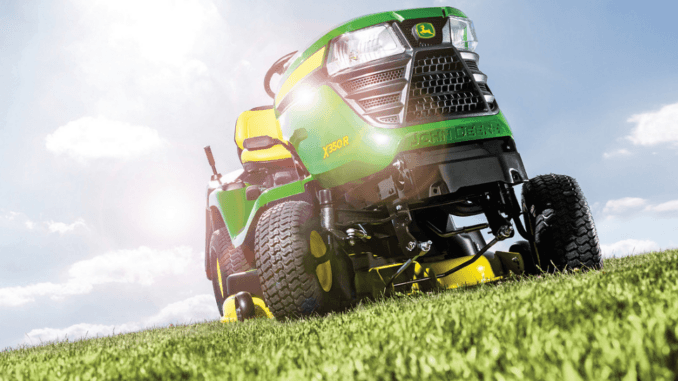
Yes, lawn tractor deck width does affect resale value, but not in a simple “bigger deck = always more money” way. Instead, it acts as a probability multiplier for how much the right buyer is willing to pay, interacting strongly with yard size, brand, condition, and era‑specific demand.
1. How deck width ties into buyer demand
At its core, resale value is driven by match‑up: how well the tractor’s specs fit what a typical buyer wants. Deck width is one of the most visible specs, second only to brand and engine size.
-
Small lawns (up to 0.5 acre): Buyers often prefer 38–42 inch decks because they are lighter, more maneuverable, and easier to store. A 54–60 inch deck here can actually hurt resale because it feels oversized and awkward around flower beds, fences, and driveways.
-
Medium to large lawns (1–3 acres): 48–54 inch decks become the sweet spot. They cut fewer passes, reduce mowing time, and still fit most residential gateways and garages, so well‑kept tractors in this range tend to sell at or near “typical” used values for their age and brand.
-
Very large lawns / light commercial use (3+ acres or professional grounds): 54–60+ inch decks become more desirable because productivity jumps. A same‑year John Deere or Toro with a 60‑inch deck will often command a small premium over an identical machine with a 48‑inch deck, if the rest of the tractor is in good condition.
In other words, deck width amplifies or dampens perceived utility, which directly influences how many qualified buyers you attract and how urgently they bid.
2. The “right‑size” premium vs. “too big” penalty
The “right‑size” premium
Research‑style guidance from dealers and rental shops notes that mowers with appropriately sized decks (e.g., 48–54 inch for 1–2 acre yards) tend to turn faster and hold value better than mismatched setups. On used‑equipment sites, you’ll often see:
-
Similar‑age residential tractors shifted from 42–44 inch to 48–54 inch decks for no‑extra‑cost “upgrades” that buyers pay more for.
-
Commercial or semi‑pro models listed with bigger decks (52–60 inch) priced a few hundred dollars higher than otherwise‑identical units with smaller decks, even if price‑per‑inch is slightly lower.
This “right‑size” premium is most noticeable when:
-
The deck is original‑equipment, not swapped.
-
The deck is in good condition (no rust‑through, intact welds, decent blades).
-
The engine and transmission are strong enough to carry the extra load without obvious strain.
The “too big” penalty
Conversely, there are situations where a wider deck actively reduces resale:
-
Small urban or suburban yards: If your property is under 0.5 acre with tight corners, narrow driveways, or low‑hanging branches, a 54–60 inch deck turns into a liability. Buyers will often discount the machine or walk away, preferring a narrower deck or a different model altogether.
-
Older, lower‑power tractors: Slapping a 60‑inch deck on a 12‑ or 14‑HP sub‑compact without a robust deck drive can make the tractor feel sluggish or underpowered, which telegraphs poorly in listings and videos.
-
Storage and transport issues: Larger decks add length and width, which matters for garages, trailers, and public‑road transport. Buyers who know they’ll struggle to fit or haul the machine will knock the price down.
In these cases, a narrower original deck (e.g., 42–48 inch) can actually improve resale versus a later‑installed wide deck.
3. How deck width interacts with other major value drivers
Deck width never acts alone; it modulates the impact of:
-
Brand and model prestige
-
Engine condition and hours
-
Deck condition and type
-
Market expectations for that era
Brand and model
High‑pedigree brands (e.g., John Deere, Toro, Kubota, Husqvarna) tend to see wider decks treated more favorably because:
-
Buyers expect larger decks as part of their lineup evolution.
-
Aftermarket decks (e.g., 54/60 inch) are often engineered to match the tractor well, so they don’t scream “Frankenstein rebuild.”
By contrast, budget or generic‑badge tractors may see less value lift from a wider deck, since buyers are more price‑sensitive and may worry about part availability for oversized decks.
Hours, engine, hydro‑stat, and tires
A dealer‑style pricing video explains that a sensible used‑mower price is typically ~50–60% of the current comparable new price, adjusted for age, hours, and condition. Within that framework:
-
A 54‑inch deck on a low‑hour, clean machine can nudge the valuation up within that band because it increases utility for a broader buyer pool.
-
A 54–60 inch deck on a high‑hour, worn‑out tractor adds little or no extra value—and may even hurt if it draws more power from an already weak engine or hydro‑stat.
Tyres, steering, and brake condition also matter: a wide‑deck tractor with bald tyres or sloppy steering will be discounted regardless of deck size, because buyers associate instability with larger decks.
Deck condition and style
Buyers care not just about width, but deck quality:
-
Wear and rust: A 54‑inch deck with rust‑through, bent baffles, or wobbly spindles will be valued more like a 48‑inch deck or less, because it implies costly repairs.
-
Deck type:
-
Side‑discharge decks are common on budget tractors and often remove less value.
-
Mulching or high‑lift “3‑in‑1” decks, especially if they are OEM and in good shape, can add a modest premium because they improve versatility.
-
So a well‑preserved 48‑inch OEM deck can sometimes out‑value a beat‑up 54‑inch deck, even on the same model.
4. Time and market trends: how demand for deck sizes has shifted
Market studies and dealer‑recommended deck‑size‑by‑yard‑size guides show that expectations have shifted over the past 15–20 years.
-
2000s – early 2010s: Many residential tractors came with 42–46 inch decks as standard; 48‑inch was the “big” option.
-
Late 2010s – today: 48–54 inch has become the expected norm for many mid‑range tractors, and 42‑inch residential decks are now sometimes seen as “small.”
This means that for older tractors, a 48‑inch or 54‑inch deck can feel surprisingly modern and desirable, which can inflate perceived value relative to a same‑year model stuck with a 42‑inch deck.
Conversely, on current‑model tractors, a 54‑inch deck may be “just standard” rather than a premium, so its resale‑value bump is smaller than on older models where it feels like an upgrade.
5. Conversion vs. OEM: what matters to buyers
Many owners swap decks to “upgrade” to a wider cut, but buyers often distinguish:
-
OEM wide deck (factory‑spec or dealer‑option 54/60 inch): Usually valued most favorably, provided it’s in good condition.
-
Aftermarket or swapped deck:
-
If it’s a reputable brand (e.g., Bercomac, Woods, Great Plains) and fits well, it can still carry value, but often at a discount to a true OEM deck.
-
Poorly fitted decks, mismatched gauge wheels, or visibly hacked frames quickly become a red flag and can knock the price down.
-
Buyers also worry about parts availability; a rare aftermarket deck with no spindle or bearing support will be discounted more than a mass‑produced OEM deck for which blades and parts are easy to find.
6. Practical examples of how deck width changes value
To make this concrete, here are simplified examples (figures are illustrative, not official):
In practice, a well‑matched, good‑condition wide deck shifts the machine up the “buyer‑desirability curve,” while a mismatched or worn‑out wide deck can drag it down.
7. How to optimize resale value with deck width
If you’re planning to sell in the future, here are actionable strategies:
-
Match deck width to typical yard size
-
If your property is 1–2 acres, keep a 48–54 inch deck if possible.
-
If you’re under 0.5 acre, consider staying at 42–46 inch unless you’re targeting a buyer who already knows they’ll benefit from the extra width.
-
-
Prioritise deck condition over raw width
-
A solid, straight 48‑inch deck with intact welds and bearings will usually beat a rusty 54‑inch deck.
-
Fix rust, replace bent or rubbing blades, and service the spindles before listing.
-
-
Keep OEM or reputable‑aftermarket decks
-
If you do swap decks, use OEM‑style or reputable brands rather than unknown or poorly engineered ones.
-
-
Price strategically by audience
-
For a 1‑acre‑plus yard: highlight efficiency and passes‑saved, and price at the higher end of the band for that HP/brand.
-
For a small yard: emphasise maneuverability and compact storage, and avoid over‑inflating the price just because the deck is “big.”
-
8. When deck width becomes a secondary factor
There are cases where deck width matters less than you might think:
-
Very low‑hour, pristine machines: Buyers focused on brand and condition will still pay well even if the deck is slightly smaller than “ideal.”
-
High‑hour or neglected tractors: Buyers care more about engine health, transmission wear, and frame condition; deck width mostly just defines usability, not the base price.
-
Collectible or niche models: Some tractors are valued for their rarity or aesthetics (e.g., classic John Deere, rare colours), so a standard‑size deck rarely changes the equation.
In these situations, deck width still influences who will buy (and how quickly), but it doesn’t dramatically alter the valuation band.
9. Summary for listing and shopping
For anyone selling or buying used lawn tractors:
-
Deck width affects resale value primarily by changing buyer demand and perceived utility, not by adding a fixed “width premium.”
-
Optimal resale often comes from pairing a “right‑size” deck (48–54 inch for 1–3 acre yards) with good overall condition, strong engine, and clean presentation.
-
Larger decks can boost value when they match the machine’s capability and typical buyer use; they can hurt value when they feel oversized, mismatched, or poorly supported by the drivetrain.
If you tell me your specific machine (brand, model, current deck width, and yard size), I can walk through a more tailored “should I keep this deck or swap it before selling?” decision.
What deck sizes hold value best for John Deere tractors
For John Deere lawn and garden tractors, 48–54 inch decks tend to hold their resale value best overall, with 42 inch also doing very well in the “small yard” segment. Which size is optimal depends heavily on model series, horsepower, and typical yard size.
Below is a breakdown you can use when buying or selling.
1. Best‑value deck sizes by typical use
John Deere’s own guidance and dealer‑style sizing charts suggest:
-
Under ≈0.5 acre: 30–42 inch decks are “right‑size” for S100, 100, 200, and some X300‑series tractors.
-
≈0.5–2 acres: 42–54 inch decks are the sweet spot for X300, X500, and similar lawn tractors.
-
2+ acres or large‑acreage / light‑commercial: 54–60+ inch decks (often on Z‑series or larger X‑series) are preferred.
Within this framework, 48–54 inch decks generally hold the strongest resale, because they:
-
Fit a wide range of typical home yards (1–2 acres).
-
Match the original design intent of many X‑series and Z‑series mowers.
-
Are large enough to feel productive, but not so big that they scare off residential buyers.
2. Why 48–54 inch decks hold value on John Deere
Market‑size “goldilocks” zone
Dealers and parts sites pricing John Deere decks show:
-
A 48‑inch Accel‑Deep deck is a common factory option on X300/X500‑series tractors, and second‑hand listings for these models often feature 48‑inch decks as the majority.
-
54‑inch decks are marketed as the “step‑up” residential size and are especially popular on X500/X700 and Z300/Z500 tractors, where they align with yards around 1–3 acres.
Because so many buyers are hunting for that 1–2‑acre machine, a clean 48 or 54‑inch John Deere deck usually sells faster and at a higher price than the same tractor with a 38–42 inch deck, assuming comparable condition.
Owner feedback and deck‑size preference
Owners discussing X485/X500‑series machines often note that the 54‑inch deck is the “best cutting deck” for mixed‑terrain 1–2 acre yards, but that 48‑inch decks are very close in performance and slightly easier to handle around tight landscaping.
This suggests:
-
54‑inch can carry a small premium versus 48‑inch on powerful X‑series tractors.
-
48‑inch still holds value very well and may even be preferred where maneuverability or gate clearance is tight.
3. Where 42‑ and 38‑inch decks still hold value
Even though 48–54 is the “core” band, 42‑inch decks can hold excellent value in specific niches:
-
S100/100/early 200 series: These lower‑HP tractors are often sold with 42‑inch decks as standard. Because buyers expect that size, a 42‑inch deck on a 100/200‑series unit does not usually hurt value; in fact, it can be more desirable than a swapped‑on 48‑inch deck that strains the engine.
-
Small yards under 0.5 acre: Many owners explicitly state they don’t want a 48‑inch deck because it’s too wide for gates or flower beds.
Likewise, 38–40 inch decks still have value:
-
As OEM or early‑model options on 100‑series and S‑series tractors.
-
For buyers with very tight spaces or heavily obstructed lawns, where compactness trumps productivity.
4. 54–60+ inch decks: when they add value and when they don’t
Where big decks add value
-
Adequately powered X500/X700 or Z‑series tractors: A factory‑fitted 54–60 inch deck on a suitably sized X500/X700 or Z‑series mower is often seen as an upgrade and can push the resale price up versus an identical machine with a 48‑inch deck.
-
2+ acre yards or light‑commercial use: Buyers who need to cover more ground quickly will pay more for a 54‑inch or 60‑inch deck, especially if the tractor is in good condition.
Where big decks can hurt value
-
Lower‑HP residential tractors: Slapping a 54–60 inch deck onto a modest‑HP S‑series or light X‑series tractor can make it feel underpowered, which worries buyers and can reduce resale.
-
Very small yards: If the property is under 0.5 acre with tight turns, a 54‑inch deck may become a negative, and buyers will often prefer a 42–48 inch unit.
5. Deck condition and OEM‑ness matter more than raw width
Even on John Deere, condition and whether the deck is original often matter more than the exact inch mark:
-
A 48‑inch OEM Accel‑Deep deck in good shape will usually out‑value a rusty 54‑inch deck on the same model.
-
A factory‑original 54‑inch deep deck on a strong X500/X700 or Z‑series machine will often carry a small premium over 48‑inch, because it matches the tractor’s intended role.
Aftermarket or swapped‑on decks can still hold value, but buyers discount them if:
-
The deck is not a recognised John Deere‑compatible brand (e.g., Woods, Bercomac).
-
There are visible frame mods, strange mounting, or spindles showing wear.
6. Practical “best‑value” deck sizes by John Deere segment
Here is a simple guide for what generally holds the best resale on different John Deere lines:
7. How to maximise resale on your John Deere tractor
If you’re planning to sell or resell:
-
Aim for 48–54 inch if your tractor and yard support it (especially X300/X500‑series and Z‑series).
-
Keep OEM or reputable‑aftermarket decks in good condition; avoid poorly fitted or very rare 54–60 inch decks that scare buyers.
-
Prioritise deck condition: Fix rust, straighten bent pans, and service spindles; a solid 48‑inch deck will usually beat a worn 54‑inch deck in value.