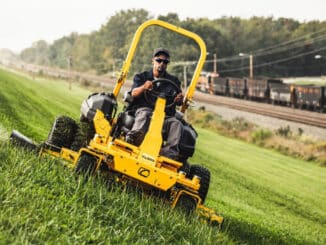
Worth thinking in hours of mowing, not calendar time – for a large-deck mower, aim to sharpen every 20–25 hours in residential use, or every 8–10 hours in commercial, high‑output work, then adjust based on what the grass is telling you.
Why sharpening frequency matters on a large deck
A large deck (say 54–72 inches, zero turn or garden tractor) processes a huge volume of grass each hour, so the edges lose bite faster than on a small homeowner push mower. Dull blades don’t just look bad; they literally tear the grass, increasing disease risk and stressing the turf.
With a big deck you also typically mow faster and cover rougher ground, so impacts with sand, molehills, sticks, and stones are more frequent. That combination means you cannot rely on “once a year” advice that’s written for small, light‑duty mowers.
Core guidelines: how often to sharpen
Most manufacturers and turf pros converge around a baseline of every 20–25 hours of mowing for residential conditions.
For a large-deck machine, use this as your starting point:
-
Light residential use (big home lawn, 1–3 acres)
-
Sharpen every 20–25 hours of mowing.
-
In practice this is usually 1–2 times per main growing season if you mow weekly.
-
-
Heavy residential / “prosumer” use (estate, hobby farm, multiple properties)
-
Sharpen every 15–20 hours.
-
If you’re mowing 2–3 hours at a time, that’s every 6–10 cuts.
-
-
Commercial or near‑commercial use (daily route, large contracts, sports fields)
-
Sharpen every 8–10 operating hours as a rule of thumb.
-
Many lawn services effectively touch blades 2–3 times per week because they accumulate 30–40 hours in a week of full‑time mowing.
-
If you prefer “season-based” rather than hours‑based:
-
Typical homeowner with a big lawn: at least twice per season (start of season and mid‑season).
-
If you mow a lot of acreage or in harsh conditions, three or more sharpenings per season is completely normal and not overkill.
How deck size changes the equation
Deck size itself doesn’t change the physics of how quickly the metal dulls, but it changes how fast you hit your hour targets.
-
A 21‑inch walk‑behind might take 1.5–2 hours to cut a 1‑acre lawn.
-
A 60‑inch zero‑turn may do the same area in 30–40 minutes.
If the recommendation is to sharpen every 25 hours:
-
With the 21‑inch, that could be 12–16 cuts to reach 25 hours.
-
With the 60‑inch, you may hit 25 hours in fewer calendar weeks because each “job” often covers more area and you’re willing to mow more acreage.
For large‑deck tractors and ZTRs that are used for multiple properties, it’s very common to hit 25 hours in a month or less during peak season, so you’re realistically looking at monthly sharpening if you want top cut quality.
Conditions that demand more frequent sharpening
The “20–25 hours” rule assumes reasonably clean, average turf. Several factors push you toward shorter intervals:
-
Sandy soil or dusty conditions
-
Sand acts like sandpaper on the cutting edge; many pros cut their interval by 30–50% in sandy regions.
-
In very gritty soil, think 10–15 hours instead of 20–25.
-
-
Coarse or aggressive grass species
-
Thick, tough warm‑season grasses (Bermuda, Zoysia, St. Augustine) dull blades faster than fine fescues and similar cool‑season grasses.
-
If you’re in a warm‑season area with dense turf, err toward 10–15 hours.
-
-
Debris, stones, and roots
-
Hitting rocks, old molehills, or exposed roots can roll the edge instantly; that may require immediate sharpening.
-
Large decks cover more width, so the odds of hitting something on each pass are higher.
-
-
Spring flush and overgrown grass
-
Rapid spring growth and first cuts of overgrown turf are hard on blades.
-
Many operators sharpen right before this period and again midway through it because the load is so high.
-
In short, if you see any of these conditions routinely, tightening your schedule to the low end (or below) of the standard intervals will pay off in cut quality and fuel savings.
Visual and performance signs it’s time
Even with a schedule, trust what the lawn and machine are telling you. Turf and machine feedback is especially important on a large deck where minor dullness has a big visual footprint.
Key signs:
-
Ragged, brown grass tips after mowing
-
Healthy cuts look clean and the tips stay green; tearing leaves them frayed and browning.
-
Check the blades of grass the day after a mow—if they look shredded, it’s time.
-
-
Uneven cut and stragglers
-
You see “hairs” of uncut grass or uneven height across passes; this is often the first thing customers complain about.
-
Large decks exaggerate this: a slightly dull edge becomes obvious streaking or scalping.
-
-
Clumping and poor discharge (in normal, dry conditions)
-
If you’re not in wet or extremely tall grass, but the deck is leaving clumps or windrows, dull blades can be part of the problem because they don’t create clean airflow and lift.
-
-
Engine working harder
-
You need to slow down more than usual; the engine bogs in modest grass that it used to handle at higher speed.
-
Fuel use creeps up because the mower is forcing torn cuts instead of slicing.
-
-
Vibration or noise after a strike
-
After hitting an obstacle, if you notice new vibration, the blade may be both dulled and bent or out of balance.
-
That’s not just a sharpening issue; it can become a spindle‑life issue if ignored.
-
If you see two or more of these symptoms, don’t wait for your “scheduled” sharpening; service the blades immediately.
Practical schedules for common scenarios
Here are realistic schedules tailored to different large‑deck use cases.
1. Large homeowner lawn, cool‑season grass
Say you’re in a temperate climate with Kentucky bluegrass/rye/fescue, running a 48–60 inch garden tractor or ZTR on 1–2 acres.
-
Mowing once a week at 1–1.5 hours per cut:
-
April–October = roughly 25–30 cuts = 25–45 hours.
-
Sharpen at start of season, then once again around mid‑summer.
-
-
If spring growth is intense, add an extra sharpening just before or after the spring flush.
This is essentially the “twice per season” guidance that many lawn care sites endorse, adjusted with hours so you can sanity‑check it.
2. Small‑scale commercial or side business
You’re running a 52–60 inch zero‑turn on multiple residential contracts, 3–5 hours a day, several days a week.
-
You might accumulate 15–25 hours in a week during peak season.
-
Use an 8–10 hour sharpening interval, which equates to touching blades roughly twice a week in heavy periods.
-
Many operators in this bracket keep at least two full sets of blades and swap mid‑week, then sharpen in the shop when time allows.
3. Full commercial crew
Crew mowers often run 6–8 hours daily.
-
At 8–10 hour intervals, you’re looking at blade work virtually every day or two, especially in early season.
-
Fleet operators often put sharpened blades on at the start of the day and pull them at the end, with one person dedicated to sharpening and balancing after hours.
Building your own sharpening routine
The goal is to turn sharpening from a reactive chore into a predictable part of maintenance, just like oil changes.
A robust routine for a large deck might look like this:
-
Track hours
-
Use the machine’s hour meter; note the hour reading on each sharpening date.
-
Aim for the interval that matches your use (e.g., 20 hours residential, 10 hours commercial) and see how the cut looks at that point.
-
-
Combine with other service tasks
-
Pair blade sharpening with deck scraping, greasing spindles, and checking belts, since you already have the machine lifted.
-
On a big deck, those tasks are similar in effort, so batching saves time.
-
-
Keep spare sets of blades
-
Having a second (or third) set lets you swap in minutes and sharpen later.
-
This is especially helpful on a large deck where removal/installation is more involved.
-
-
Inspect monthly during the season
-
Even if your hours say “not yet,” a quick underside inspection once a month will show you nicks, rolled edges, or gouges that justify an earlier sharpening.
-
Over a season or two, you’ll dial‑in an interval that fits your specific combination of grass, soil, operator, and machine.
How sharp is “sharp enough” on a mower blade?
Unlike knives, mower blades are not supposed to be razor‑knife sharp. A razor edge on a heavy rotary blade would fold or chip the first time it contacted gritty soil.
Best practice:
-
Aim for a clean, consistent bevel with a slightly blunt edge—sharp enough to slice cleanly, not so thin that it’s fragile.
-
Remove just enough material to restore a straight edge and proper bevel, avoiding excessive thinning.
-
Balance the blade after sharpening; unbalanced blades on a large deck put real stress on spindles and can create noticeable vibration.
This balance point is important on big decks, because you often have 2–3 blades spinning; an imbalance in any one of them is magnified across the deck width.
When to replace instead of sharpen
Even with good technique, a blade has a finite life.
Replace blades rather than sharpening again when:
-
The cutting edge is deeply scalloped or heavily pitted, so restoring a straight edge would remove too much material.
-
You see cracks, severe bends, or missing chunks from impacts.
-
The sail (lift section at the back of the blade) is badly worn or uneven, which will hurt airflow and cut quality.
Many residential users can get several sharpenings from a blade, while commercial operators may prefer to replace more often and treat blades as a consumable.
Quick reference table by usage
Here’s a concise table you can adapt.
Use this as a starting template, then adjust up or down based on what you see in your turf and on your edges.
Example : If you mow 10 plus hours weekly on warm season grass
Running 10+ hours a week on warm‑season grass puts you firmly in “commercial” territory, so you should plan to sharpen blades roughly every 8–10 hours of mowing and be ready to go even tighter if conditions are sandy or debris‑heavy.
Recommended sharpening interval for your use
At 10+ hours weekly on Bermuda/Zoysia/St. Augustine–type turf, you’re putting a lot of abrasive load on the edges. Industry guidance is:
-
General rule: 20–25 hours for average homeowners.
-
With thick warm‑season grasses and heavy use: shorten to about 10–15 hours.
-
Full commercial crews often sharpen daily or every 8–12 hours because they run all day in exactly the conditions you’re describing.
Given your 10+ hours per week on warm‑season turf, an every‑week sharpening (or blade swap) is a sensible baseline, with the aim of never exceeding about 8–10 hours on a set of blades in peak season.
How to structure your routine
A practical way to run this:
-
Keep at least two full sets of blades for your large deck so you can swap quickly and sharpen later.
-
Swap blades once a week (or every 8–10 engine hours) during the main growth period; if you notice tearing, clumping, or brown frayed tips before then, swap sooner.
-
If your soils are sandy or you hit a lot of small debris, expect to be closer to 6–8 hours per sharpen rather than 10–12.