
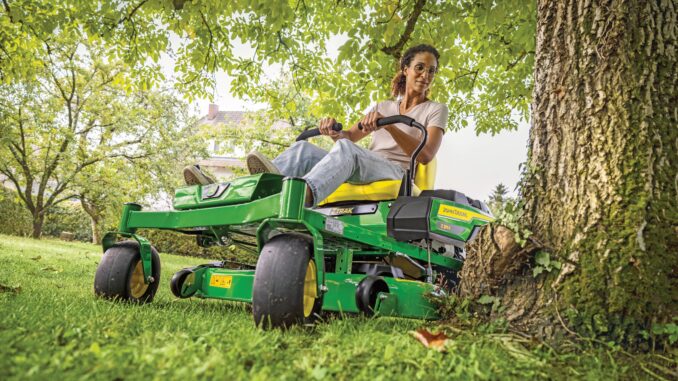
The John Deere Z330M is a residential zero-turn mower in Deere’s Residential ZTrak lineup, covered in the same operator’s manual family as the Z315E, Z325E, Z320M, Z330M, Z320R, and Z330R models. For homeowners in the USA and Canada, it is designed as a mowing machine rather than a ground-engaging tractor, with a gasoline engine, dual transaxle drive, and mower decks in the 42A, 48A, or 54A family covered in the official manual.
This guide is written for owners who want practical, symptom-first help with John Deere Z330M repair, troubleshooting, routine maintenance, and parts planning before a small issue turns into an expensive one. It focuses on realistic DIY jobs, the checks that matter first, and the points where dealer diagnosis is usually the safer choice.
And See:
John Deere Z330M model overview
The John Deere Z330M sits in Deere’s residential zero-turn range, aimed at homeowners who want faster mowing and tighter maneuvering than a lawn tractor typically offers. The official manual groups it with Deere’s Residential ZTrak models and identifies the machine as a zero-turn mower with mower, engine, electrical, and transmission service sections rather than tractor-style PTO and ground-engaging systems.
In practical use, the Z330M is best suited to medium residential lawns where speed, trimming around trees, and compact storage matter more than towing or heavy-duty estate work. Owners usually care most about starting reliability, clean cutting, belt and blade wear, safety switches, and whether a vibration or steering issue is mower-related, engine-related, or transaxle-related.
General overview of the John Deere Z330M
From a service standpoint, the John Deere Z330M revolves around four systems: the engine and fuel system, the mower deck and blade drive, the dual transaxle drive system, and the electrical/safety interlock system. The manual also highlights machine cleanout, battery and wiring condition, tire pressure, and mower leveling as routine factors that affect reliability and cut quality.
Common service parts owners buy for this platform include the John Deere home maintenance kit LG265 or LG276 depending on engine/deck configuration, blade drive belts such as GX26422 for certain 48A/54A applications, traction drive belt GX26401, and 42-inch deck belt GX25628 for select 42-inch zero-turn applications listed by Deere retailers. A deck leveling gauge AM130907 is also specifically referenced in the manual as a convenient Deere tool for deck setup.
Troubleshooting approach for the John Deere Z330M
The best way to diagnose a John Deere Z330M is to start with the exact symptom the owner sees: cranks but will not start, starts then dies, leaves strips, vibrates, creeps poorly, or shuts blades off unexpectedly. That approach is more reliable than replacing parts based on guesswork, because several Z330M problems can share the same visible symptom.
The main symptom groups on this mower are starting issues, running issues, cut-quality problems, vibration and noise, overheating or burning-smell complaints, transmission and drive complaints, and electrical or safety-interlock faults. A clean diagnosis usually starts with fuel, battery state, interlock status, belt condition, deck cleanliness, blade condition, and obvious loose hardware before moving to deeper mechanical checks.
Emergency John Deere Z330M repair needs
Some Z330M problems should not be left for later because they can create a safety hazard or quickly damage expensive parts. The operator’s manual repeatedly emphasizes stopping operation for blade, guard, leak, fire-risk, and safety-device issues rather than continuing to mow until failure becomes worse.
1. John Deere Z330M starting issues
A no-start or crank-no-start problem matters immediately if it strands the machine in an unsafe position, points to a fuel leak, or suggests an electrical short. It can also be a simple interlock problem, so the goal is to separate basic setup errors from a real fault fast.
Common causes
-
Weak battery or poor terminal connection.
-
Safety interlock not satisfied, including lever position or brake status.
-
Fouled spark plug or failed ignition component.
-
Restricted fuel flow or stale fuel.
-
Plugged air filter reducing starting quality.
Basic owner checks
-
Confirm both motion control levers are in the start/shutdown position and the mower engagement switch is off.
-
Check battery terminals for looseness or corrosion and verify the battery is not discharged.
-
Inspect fuel level, fuel age, and the inline fuel filter area for restriction or leakage.
-
Remove and inspect spark plugs for fouling, wear, or incorrect gap condition before replacing them.
-
Check that the air filter is not packed with dust or debris.
2. John Deere Z330M cut-quality problems
Poor cut quality usually shows up as stragglers, scalping, uneven height, clumping, or a weak discharge pattern. These problems matter because they often point to blade wear, deck setup errors, or buildup around spindles and baffles that can also shorten belt and bearing life.
Common causes
-
Dull, bent, or mismatched blades.
-
Deck not level side-to-side or incorrect front-to-rear pitch.
-
Tire pressures not set correctly before deck adjustment.
-
Packed grass on top of the deck or under shields.
-
Worn or slipping deck belt.
Basic owner checks
-
Inspect blades for damage and replace in matched sets if badly worn or bent.
-
Set tire pressure correctly before checking deck level.
-
Measure side-to-side level and then front-to-rear pitch; Deere specifies the front blade tips should be 3-6 mm lower than the rear tips.
-
Clean the underside and top of the deck, especially around spindle and belt areas.
-
Inspect the deck belt for glazing, cracking, or slack.
3. John Deere Z330M vibration and noise
Strong vibration is never a “keep mowing and watch it” problem on a zero-turn. It can indicate a bent blade, damaged spindle area, loose hardware, or a belt issue that may quickly damage bearings or deck parts.
Common causes
-
Bent or unbalanced blade.
-
Blade bolt looseness or spindle damage.
-
Debris wrapped around spindle or pulley areas.
-
Damaged deck belt or pulley.
-
Loose machine hardware after impact.
Basic owner checks
-
Stop mowing immediately and inspect for a recent impact with a stump, rock, or hidden obstacle.
-
Check blades and blade bolts with the machine safely shut down and spark plug wires disconnected.
-
Remove wrapped debris from spindles, pulleys, and belt paths.
-
Inspect deck pulleys and belt surfaces for wobble, cracking, or burning.
-
Do not continue operating until the source of vibration is identified.
4. John Deere Z330M overheating, smoke, or burning smells
Heat-related complaints need quick attention because Deere specifically warns that grass, leaves, and debris around hot or moving parts can cause fires. Burning smells can come from belt slip, packed cooling fins, oil leaks collecting debris, or buildup around the muffler area.
Common causes
-
Debris around muffler, engine screens, deck top, or transaxles.
-
Engine cooling fins or intake screens blocked.
-
Oil or fuel leak collecting dust and grass.
-
Slipping deck or traction belt.
Basic owner checks
-
Shut the mower down and allow it to cool before cleaning.
-
Inspect muffler components, engine cooling fins, intake screens, top of deck, transaxle areas, and under-seat battery/wiring area for buildup.
-
Look for fresh oil or fuel wetness rather than assuming all smells are belt-related.
-
Clean debris thoroughly before restarting the mower.
5. John Deere Z330M transmission or drive problems
If the mower loses drive, pulls unevenly, or feels weak on one side, stop using it on slopes immediately. A residential zero-turn depends on both transaxles working predictably, and traction or control issues raise rollover risk on uneven ground.
Common causes
-
Traction drive belt wear or damage.
-
Low tire pressure affecting tracking and control.
-
Debris buildup around transaxles and cooling fins.
-
Internal transaxle issue requiring dealer diagnosis.
Basic owner checks
-
Check both rear tires for equal, correct pressure before assuming a hydraulic fault.
-
Inspect around the transaxles for packed debris and overheating signs.
-
Inspect the traction drive belt area for obvious damage.
-
If one side remains weak or noisy, treat it as an advanced repair rather than a casual DIY job.
6. John Deere Z330M electrical problems
Electrical complaints often look random to owners: intermittent cranking, blades not engaging, or a mower that dies when the operator shifts position. On this platform, battery condition, harness cleanliness, and safety-switch function should be checked before replacing switches or modules.
Common causes
-
Corroded or weak battery connections.
-
Debris or contamination around electrical and switch areas.
-
Faulty seat or interlock switch.
-
Damaged wiring under the seat or near battery.
Basic owner checks
-
Check and clean battery terminals.
-
Inspect under-seat wiring harness routing and look for chafing or melted insulation.
-
Clean around steering switch/control areas as listed in Deere service intervals.
-
Test interlock-related symptoms methodically instead of bypassing switches.
DIY or dealer? John Deere Z330M repair decision guide
The practical DIY line on the John Deere Z330M is this: routine maintenance, blade service, deck cleaning, belt inspection, deck leveling, battery service, and basic filter and spark plug work are realistic for most owners, but transaxle faults, persistent electrical faults, internal engine issues, and structural deck or spindle damage often justify dealer-level diagnosis.
Good DIY jobs
-
Engine oil and filter service using the correct kit.
-
Air filter, fuel filter, and spark plug replacement.
-
Blade removal and replacement in sets.
-
Deck cleanout, belt inspection, and deck leveling.
-
Battery cleaning and terminal service.
Advanced DIY or dealer jobs
-
Traction drive belt replacement.
-
Spindle replacement or pulley repair.
-
Safety-switch diagnostics with intermittent symptoms.
-
Transaxle diagnosis or replacement.
-
Engine internal work, valve adjustments, or compression-related diagnosis.
Skill level guide
-
Beginner: cleanout, battery checks, air filter, deck washing, visual belt checks.
-
Intermediate: oil and filter service, spark plugs, fuel filter, blade replacement, deck leveling.
-
Advanced: drive-belt work, spindle repairs, electrical tracing, transaxle-related repairs.
Parts needed for John Deere Z330M repairs
Before ordering parts for a John Deere Z330M, collect the full model name, the Product Identification Number, the engine serial number, and the mower deck size or version. Deere’s official documentation states that dealers need the serial number or PIN for the machine or attachment, and the manual specifically tells owners to record machine, engine, and transaxle serial numbers.
Because the Z330M platform can be paired with different mower deck sizes and there are different Deere maintenance kits, ordering by model name alone is not always enough. Belt, blade, and tune-up part numbers must be matched to the actual machine configuration shown in the parts catalog or owner support system.
OEM parts are usually the safer choice for belts, safety switches, fit-sensitive deck parts, and anything tied to guarding or interlock function because fit and routing matter as much as basic dimensions. Aftermarket parts can be acceptable for some filters, blades, batteries, and tune-up items if the cross-reference is exact and the supplier clearly lists the Z330M configuration you own.
Manuals and parts diagrams for the John Deere Z330M
The most useful official source is the John Deere Z330M owner support page, which acts as a hub for owner support and related parts categories. For actual operating, safety, service interval, mower setup, and troubleshooting instructions, the Residential ZTrak operator’s manual OMUC31576 is the key document.
For parts diagrams and serial-sensitive ordering, Deere’s official Parts Catalog / JDParts portal is the correct place to look up assemblies and confirm supersessions, as stated in the manual. For technical publications such as the parts catalog or technical manual, Deere directs owners to the John Deere Technical Information Store.
How to locate John Deere Z330M numbers
These identification numbers matter because they separate a basic maintenance order from a wrong-parts problem. On machines with multiple deck options and serial-based changes, the PIN and engine information can save time and prevent returns.
-
Find the Product Identification Number (PIN) on the machine and record it from the product identification area referenced in the operator’s manual.
-
Find the engine serial number on the engine blower housing; the manual explicitly lists that location.
-
Find the left and right transaxle serial numbers on the forward side of each transaxle housing.
-
Confirm the deck family and cutting width on the machine or in the parts system, because the manual covers 42A, 48A, and 54A deck procedures.
-
Keep these numbers with your purchase date and dealer details for future ordering and warranty support.
Buying John Deere Z330M parts online and locally
The best buying strategy is to identify the exact symptom first, confirm the exact machine configuration second, and only then order the part number that matches your PIN and deck setup. That matters most for belts, blades, maintenance kits, switches, and any item where Deere has multiple versions across the residential zero-turn range.
-
Online: use official or Deere-focused sources where you can verify OEM numbers, such as Deere Owner Support, JDParts / Parts Catalog, and the Technical Information Store.
-
Dealer counter: best for serial-sensitive parts, safety interlock parts, transaxle-related items, and any repair where a parts diagram is needed to avoid ordering mistakes.
-
Retail stores: acceptable for common consumables such as oil, spark plugs, batteries, filters, and some belts only when the packaging clearly lists your exact Z330M configuration.
Step-by-step fitting guide for common John Deere Z330M parts
Change the John Deere Z330M air filter
A restricted air filter can make the Z330M harder to start, reduce power, and increase rich-running symptoms.
-
Park safely, remove the key, and let the engine cool.
-
Open the air cleaner housing and remove the old filter element.
-
Wipe dust from the housing so debris does not fall into the intake.
-
Install the new filter squarely in the housing and secure the cover.
-
Recheck that the housing is fully sealed before restarting.
Replace John Deere Z330M spark plugs
Fresh plugs help with hard starting, rough running, and poor combustion under load.
-
Park safely and disconnect the spark plug wires or battery negative cable before service near blades or moving parts.
-
Pull the plug boots off carefully and remove each spark plug with the correct socket.
-
Compare old plugs for fouling, oiling, or excessive wear that may point to a deeper problem.
-
Check and set the plug gap to the engine specification before installation.
-
Install the new plugs carefully, tighten correctly, and refit the boots.
Replace John Deere Z330M mower blades
Blade replacement fixes poor cut quality, ragged grass tips, and vibration caused by damage or imbalance.
-
Park safely, remove the key, and disconnect spark plug wires or the battery negative cable.
-
Raise access safely and wear gloves before handling blades.
-
Remove the blade hardware and inspect the blades and mounting surfaces.
-
Replace worn or damaged blades in matched sets, not one at a time if the others are badly worn.
-
Tighten the hardware correctly and recheck for clear rotation before mowing.
Check and adjust John Deere Z330M deck level
A level deck is one of the biggest cut-quality improvements an owner can make without replacing parts.
-
Park on a level surface and set tire pressures correctly first.
-
Set the mower to your usual cutting height and lower it into mowing position.
-
Measure side-to-side blade tip height; the two outside blade tips should be within 3 mm (1/8 in).
-
Adjust side-to-side level with the deck adjustment hardware, then measure front-to-rear pitch.
-
Set front blade tips 3-6 mm (1/8-1/4 in) lower than the rear tips, then tighten hardware securely.
Maintenance to prevent John Deere Z330M problems returning
Most recurring Z330M complaints trace back to skipped cleanout, worn blades, overdue engine service, neglected battery connections, or an out-of-level deck rather than one dramatic failure. Deere’s own service structure supports that view by putting routine checks, cleanout, air cleaner service, oil changes, and spark plug inspection at regular intervals.
Focus areas that prevent repeat failures include:
-
Starting reliability: keep the battery clean, maintain fresh fuel, and service air filter and spark plugs on schedule.
-
Cut quality: keep blades sharp, deck level correct, tire pressures equal, and the deck clean above and below.
-
Fire and overheating prevention: clean muffler areas, engine screens, cooling fins, deck tops, transaxle areas, and under-seat debris.
-
Drive performance: inspect traction belt condition, keep tires properly inflated, and remove debris around transaxles.
-
Electrical reliability: keep battery terminals clean and inspect harness areas under the seat.
John Deere Z330M maintenance schedule
The official service interval section for this residential ZTrak family lists routine maintenance by time period, including 25 hours, 50 hours, 100 hours or annually, and annual checks. The daily operating checklist also calls for oil, leak, safety, tire, and cleanout checks before each use.
Daily / before each use
-
Check engine oil.
-
Clean muffler area, air intake screens, and mower deck.
-
Check brake system.
-
Check fuel level and look under the machine for leaks.
-
Check safety interlock system and tire pressures.
-
Clean mower deck using the washout port after use.
After first 25 hours
-
Change engine oil and filter.
-
Check and tighten loose hardware.
-
Check transmission oil level.
-
Check and clean air cleaner elements.
Every 50 hours
-
Clean or service air cleaner elements, more often in dusty conditions.
-
Clean area around steering switches.
Every 100 hours or yearly
-
Change engine oil and filter.
-
Inspect and regap spark plugs.
Annually
-
Check and tighten loose hardware.
-
Review overall machine condition, safety devices, and deck setup as part of seasonal service.
Seasonal checklist
Spring / start of mowing season
-
Change oil and filter if due by time rather than hours.
-
Inspect spark plugs, filters, battery condition, and belt condition before first heavy use.
-
Level the deck and confirm blade condition for clean early-season growth.
Mid-season
-
Clean the machine more frequently in dry or dusty conditions.
-
Recheck blades, deck level, and belt wear if cut quality drops.
-
Check for packed debris around the muffler, deck top, and transaxles during hot weather.
End of season
-
Remove all dry grass and debris before storage to reduce fire risk and corrosion.
-
Repair leaks, replace damaged blades or belts, and note part numbers before the next season.
-
Store only after the machine has cooled and been cleaned thoroughly.
Repair, upgrade, or replace the John Deere Z330M?
For most owners, a John Deere Z330M is worth repairing when the problem is limited to routine wear items, deck setup, blades, filters, belts, battery service, or one straightforward component failure. Upgrade decisions make more sense when your mowing needs have outgrown the machine’s deck size, speed, or comfort features, while replacement is easier to justify when the mower has repeated transaxle, engine, electrical, and deck problems at the same time.
Repair if…
-
The issue is isolated to maintenance parts, blades, belts, battery service, or deck adjustments.
-
The engine and both transaxles still operate normally.
-
The frame, deck shell, and spindle mounting areas are sound.
Upgrade if…
-
You regularly mow more acreage than the machine was bought for.
-
You want a different deck width or feature set rather than solving a fault.
-
Your current mower is reliable but no longer the best fit for your property layout.
Replace if…
-
The mower has major engine or transaxle trouble plus deck and electrical issues.
-
Repair cost starts stacking across several systems instead of one wear item.
-
Structural damage or neglect has made reliability poor even after routine repairs.
John Deere Z330M troubleshooting FAQ
1. Why will my John Deere Z330M not start?
The first things to check are the safety interlock setup, battery condition, and basic fuel/ignition items. Make sure the mower engagement switch is off, the controls are in the correct start position, and the battery terminals are clean and tight. Then check fuel freshness, air filter condition, and spark plug condition before assuming the starter or ignition system has failed.
2. Why does my John Deere Z330M crank but not fire?
A Z330M that cranks but does not fire usually points to fuel delivery, spark, or air restriction rather than the battery itself. Check for stale fuel, a blocked fuel filter, fouled spark plugs, or a badly restricted air filter. If those basics are in order and there is still no start, dealer-level ignition testing may be needed.
3. Why does my John Deere Z330M start and then die?
This often happens when fuel flow is restricted, an interlock circuit cuts operation, or the engine is running poorly because of a service item. Check the fuel filter orientation and condition, inspect the seat and control-related interlock symptoms, and look for an air filter that is plugged enough to upset running.
4. Why is my John Deere Z330M hard to start when cold?
Cold-start complaints usually come down to weak battery performance, old fuel, spark plug wear, or an air/fuel setup issue rather than a major mechanical failure. Start with battery health, plug condition, and whether the fuel in the tank has been sitting too long. A routine maintenance kit often solves more cold-start complaints than random parts swapping.
5. Why does my John Deere Z330M run rough at full throttle?
Rough running under load can be caused by dirty air filtration, poor fuel quality, fouled plugs, or an engine issue that needs deeper diagnosis. Service the normal tune-up items first and inspect for debris around cooling areas, since overheating and restricted airflow can worsen running quality.
6. Why does my John Deere Z330M lose power in tall grass?
Tall or wet grass can overload the mower, but poor blade condition, a slipping deck belt, or heavy deck buildup will make the problem much worse. Check that the blades are sharp, the underside of the deck is clean, and the belt is not glazed or slipping.
7. Why is my John Deere Z330M leaving strips of uncut grass?
Striping from missed grass is usually a blade or deck setup issue, not an engine problem. Dull blades, uneven tire pressure, an out-of-level deck, or deck buildup that disrupts airflow are the main suspects. Recheck the side-to-side level and front pitch after setting tire pressure correctly.
8. Why does my John Deere Z330M scalp parts of the lawn?
Scalping usually means the cutting height is too low for the terrain, deck wheels are not adjusted correctly, or the deck is not leveled properly. Deere notes that deck wheels should not carry deck weight, and wheel position should be checked when cutting height changes.
9. Why is my John Deere Z330M cut uneven side to side?
An uneven cut from one side to the other almost always sends you back to tire pressure, blade condition, and side-to-side deck level. The official spec allows no more than 3 mm (1/8 in) difference between the outside blade tip measurements.
10. Why does the John Deere Z330M leave ragged grass tips?
Ragged tips point to dull blades more than anything else. If the mower is also vibrating, inspect for bent blades rather than just sharpening them. Replace badly worn or damaged blades in sets so the deck stays balanced.
11. Why is my John Deere Z330M vibrating so much?
Serious vibration means stop and inspect immediately. A bent blade, loose blade hardware, debris wrapped around rotating parts, or spindle and pulley damage are common causes. Continuing to mow can damage bearings and deck components.
12. Why does my John Deere Z330M make a squealing belt noise?
A squeal usually points to a slipping or worn belt, contaminated pulley path, or a component dragging enough to overload the belt. Check for glazing, cracking, and debris in the belt path before replacing parts.
13. Why does my John Deere Z330M smell hot after mowing?
Deere specifically warns that dry grass and debris around hot or moving parts raise fire risk. Inspect the muffler area, cooling fins, intake screens, top of deck, transaxle area, and under-seat zone for packed clippings or oily buildup.
14. Why is my John Deere Z330M smoking?
Smoke can come from oil burning, fuel issues, or debris contacting hot components. Shut the machine down, let it cool, and inspect for leaks or debris accumulation before restarting. If smoke continues after cleaning and basic checks, move to dealer diagnosis.
15. Why does my John Deere Z330M battery keep going flat?
Repeated battery discharge can be caused by a weak battery, poor terminal contact, charging issues, or a machine left sitting too long between uses. Start with terminal cleaning and battery condition before chasing more complex electrical faults.
16. Why won’t the blades engage on my John Deere Z330M?
Begin with the interlock system and operator controls rather than the clutch alone. A seat/interlock issue, switch fault, or wiring problem can stop blade engagement even when the deck itself is fine. Inspect switch-related symptoms and the wiring harness before replacing expensive parts.
17. Why do the blades shut off unexpectedly on my John Deere Z330M?
Unexpected blade shutdown often points to an interlock issue, operator-position issue, or electrical interruption. If it happens over bumps or when shifting body position, inspect the seat switch and related wiring closely.
18. Why is my John Deere Z330M pulling to one side?
A zero-turn that tracks unevenly may only have a tire-pressure mismatch, but belt or transaxle issues can also contribute. Always equalize tire pressures first before assuming one transmission is failing.
19. Why does one side of my John Deere Z330M feel weak?
If one side loses strength, check for debris around the transaxle, tire issues, and obvious belt problems first. If the symptom stays on one side after the basics, dealer diagnosis is sensible because internal transaxle work is not a casual repair.
20. Why does my John Deere Z330M lose traction on slopes?
The manual stresses slope safety and recommends mowing across slopes, not up and down. Loss of traction can come from wet grass, speed, poor tire condition, or operating beyond the safe limit. If the tires lose traction, disengage the PTO and proceed slowly off the slope.
21. What slope is too steep for a John Deere Z330M?
In basic configuration, Deere states not to mow or operate this ride-on mower on slopes greater than 13 degrees. With attachments such as collection systems or enclosures, the maximum recommended slope drops to 10 degrees.
22. Why does my John Deere Z330M backfire or pop?
Popping can be linked to fuel quality, ignition condition, or engine tune issues. Start with fresh fuel, proper tune-up items, and spark plug inspection before looking for deeper engine causes.
23. How often should I change oil in a John Deere Z330M?
The official interval for this manual family includes an oil and filter change after the first 25 hours and then at 100 hours or annually. The manual also includes a daily engine oil check before operation.
24. How often should I service the air filter on a John Deere Z330M?
Deere’s service interval calls for checking and cleaning the air cleaner elements at 25 hours, then cleaning or servicing them every 50 hours, more often in dusty conditions. A dirty air filter can affect both starting and running quality.
25. How often should I replace spark plugs on a John Deere Z330M?
The manual calls for inspecting and regapping spark plugs at 100 hours or annually. Replacement timing depends on condition, but many owners replace them during yearly service if starting or running quality has declined.
26. What maintenance kit fits a John Deere Z330M?
John Deere lists maintenance kits including LG265 and LG276 for Z330M-related applications, but the correct choice depends on the exact machine configuration. Always confirm with your model and serial information before ordering a kit.
27. What deck belt fits a John Deere Z330M?
That depends on deck size. Deere lists GX26422 as a blade drive V-belt for certain 48A/54A applications, while retailers list GX25628 for select 42-inch zero-turn applications. Match the belt to the actual deck, not just the mower model name.
28. How do I level the deck on a John Deere Z330M?
Start by setting tire pressures correctly, placing the caster wheels forward, and setting the desired cutting height. Then measure side-to-side blade tip height, adjust as needed, and set front blade tips 3-6 mm lower than the rear tips.
29. Why are my John Deere Z330M deck wheels rubbing the ground?
The anti-scalp wheels should not support the deck’s weight during normal mowing. If they are rubbing constantly, recheck deck height, wheel position, and overall deck adjustment according to Deere’s wheel-position chart.
30. Why does my John Deere Z330M throw clumps of grass?
Clumping usually comes from wet growth, mowing too much height at once, or poor deck airflow caused by buildup or dull blades. Cleaning the deck, sharpening or replacing blades, and mowing more often usually help.
31. Why does my John Deere Z330M cut fine at first and then worsen?
That pattern often points to deck buildup increasing during the job, a belt that slips more as it heats up, or blades that are already marginal. Inspect the deck top and underside, not just the visible belt cover area.
32. Can I use aftermarket parts on a John Deere Z330M?
Yes, for some consumables and common wear items, but only when the aftermarket supplier clearly cross-references the exact Deere number and Z330M configuration. OEM is still the safer route for belts, interlock parts, and fit-sensitive items.
33. When should I stop DIY repair and take my John Deere Z330M to a dealer?
Move to dealer help when the problem involves the transaxles, persistent electrical faults, internal engine work, repeated belt failures caused by alignment problems, or any repair where the root cause is still unclear after basic checks. Dealer support also makes sense when the correct part depends on serial breaks or parts-catalog interpretation rather than a simple visual match.
Common Z330M deck leveling and blade replacement steps
For a John Deere Z330M, deck leveling and blade replacement follow the same basic pattern as other residential ZTrak models: set tire pressures and deck height first, measure off the blade tips, adjust the lift links, and handle blades safely from a fully supported mower.
Common John Deere Z330M deck leveling steps
These steps assume the mower is on a flat surface and you’re using a tape measure or a Deere-style deck-leveling gauge.
-
Park and prepare
-
Park on level ground, lower the deck, set the parking brake, shut off the engine, remove the key, and disconnect spark plug wires for safety.
-
Rotate the front caster wheels into the forward (driving) position so the deck sits normally.
-
-
Set tire pressures and cutting height
-
Use a tire gauge to bring all tires to the pressures listed in the operator’s manual; uneven tire pressure causes false measurements.
-
Set the height-of-cut knob or lever to your usual mowing height (the Deere “quick leveling” method often uses a specific notch, such as 2.5 in).
-
-
Level side-to-side
-
Rotate the blades so the cutting edges point out to the left and right sides; you always measure at the blade tips, not the deck shell.
-
Place a deck gauge or tape measure at the left outside blade tip and note the distance from ground to tip, then repeat on the right outside blade tip.
-
Use the rear lift-link nuts (left and right) to raise or lower the deck until both measurements match within about 3 mm (1/8 in); Deere suggests adjusting both sides alternately if you need a big change.
-
-
Set front-to-rear pitch
-
Rotate a blade so it points front‑to‑back and measure the front tip and rear tip height.
-
Adjust the front deck hanger linkage so the front blade tip sits about 3–6 mm (1/8–1/4 in) lower than the rear tip; this “nose-down” pitch improves cut quality and discharge.
-
Tighten the jam nuts/locknuts after adjustment and recheck all three points (left rear, right rear, front).
-
-
Verify transport latch and test cut
-
Raise the deck into the transport position and confirm it latches; if it does not, lower the rear adjustment points slightly until the latch engages properly.
-
Perform a short test mow and check for even cut; fine‑tune side‑to‑side and pitch if you still see striping or scalping.
-
Common John Deere Z330M blade replacement steps
Always follow the Z330M operator’s manual for jacking and support points, and use proper PPE (gloves, eye protection).
-
Secure the mower safely
-
Park on level ground, set parking brake, shut off engine, remove key, and disconnect spark plug wires.
-
Safely raise and support the front of the mower or deck per your manual (e.g., with an approved lift or jack stands) so you can access the blades.
-
-
Block the blade and remove bolts
-
Place a block of wood between the blade and deck shell to stop the blade from turning.
-
Use the correct-size socket or wrench (and, if needed, a breaker bar or impact) to remove the blade bolt and washer from each spindle.
-
-
Inspect old blades and spindle area
-
Compare blade edges and look for bending, cracks, or chunks missing; badly damaged blades should be replaced, not sharpened.
-
Check spindle shafts and mounting surfaces for burrs or damage and clean off packed debris.
-
-
Install new blades in correct orientation
-
Mount each new blade with the “lift” (curved trailing edge) pointing up toward the deck and the cutting edge facing the direction of rotation.
-
Reinstall the factory washer and bolt, hand‑tightening while the blade is still blocked with the wood to keep it from turning.
-
-
Tighten to proper torque and check
-
Torque each blade bolt to the specification in the Z330M manual (typical Deere zero‑turn blades are often around 50 ft‑lb, but always confirm for your model).
-
Remove all blocks and supports, lower the mower safely, reconnect spark plugs, then briefly run the mower and engage blades to check for abnormal noise or vibration.
-