
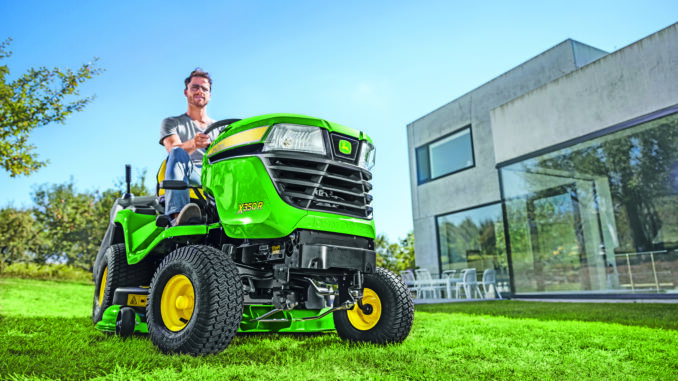
The John Deere GT235 is a garden tractor aimed at homeowners who want more capability than a basic lawn tractor, with support for multiple mower deck sizes and a hydrostatic drive that makes it suitable for larger properties and regular mowing work. This guide is written for USA and Canada owners and focuses on practical repairs, symptom-first troubleshooting, routine maintenance, parts identification, and clear boundaries between realistic DIY work and dealer-level jobs.
The GT235 operator information covers machine identification, safety systems, service intervals, engine, transmission, mower, electrical service, and troubleshooting, which makes it a strong base model for owner maintenance when the machine is still structurally sound. For most owners, the biggest wins come from staying ahead of belt wear, blade condition, fuel delivery problems, dirty cooling fins, battery issues, and safety-switch faults before they turn into no-start, poor-cut, or no-drive complaints.
General overview of the John Deere GT235
The GT235 sits in Deere’s garden tractor range and the operator’s manual for this version covers GT235 and GT245 machines with PIN 110001 and up. It was designed as a heavier-duty homeowner machine than entry lawn tractors, with features such as hydrostatic travel control, PTO operation, cruise control, mower lift, and compatibility with 42-, 48-, and 54-inch Edge mower decks.
The main systems owners deal with most often are:
-
Engine and fuel system, including engine oil, air cleaner, spark plugs, fuel filter, carburetion, and cooling fins.
-
Mower system, including PTO operation, primary and secondary deck belts, spindle lubrication, blade service, deck leveling, and bent blade checks.
-
Drive system, including hydrostatic transmission oil level, free-wheeling lever, cruise control adjustment, and brake function.
-
Electrical and safety system, including battery, fuses, headlight and indicator bulbs, park brake switch, PTO switch, seat switch, and reverse implement option testing.
Several service parts show up repeatedly for GT235 owners, including inline fuel filter AM116304, Kawasaki spark plug TY6081, Kawasaki oil filter AM107423, battery TY25881, and deck-related parts such as the 48C secondary deck belt AM131841 and 48-inch deck belt M140502 used on GT235 applications.
John Deere GT235 Troubleshooting approach
Diagnosis should always start with the symptom the owner actually sees, not the first part someone wants to replace. On the GT235, the most useful symptom groups are starting issues, running issues, cut-quality problems, vibration and noise, overheating or leaks, transmission and drive complaints, and electrical or safety interlock faults.
A practical troubleshooting flow is to first confirm fuel, spark, air, battery condition, and operator-control settings, then move to belts, switches, linkage adjustment, or deck condition based on the symptom. This avoids common wasted spending on random parts when the real problem is stale fuel, a weak battery, a blocked air intake screen, a bad seat or PTO switch, or a worn mower belt.
John Deere GT235 Emergency and immediate repair needs
4.1 John Deere GT235 Starting issues
A GT235 that suddenly will not crank or starts intermittently can leave the operator stranded and may also point to a safety-switch or battery problem that should not be bypassed. If the machine cranks slowly, clicks, or only starts under certain pedal or PTO positions, treat it as a control or electrical fault until proven otherwise.
Common causes:
-
Weak battery or dirty battery terminals.
-
Faulty PTO, seat, or park brake switch.
-
Dirty or worn spark plugs.
-
Restricted fuel flow from a clogged fuel filter.
-
Stale fuel or carburetor issues.
Basic owner checklist:
-
Confirm PTO is off and park brake is fully applied.
-
Check battery terminals for corrosion and verify the battery is charged.
-
Inspect the inline fuel filter and fuel condition.
-
Inspect spark plug condition and gap.
-
Test the safety systems in the order shown in the operator’s manual before replacing parts.
4.2 John Deere GT235 Cut-quality problems
Poor cut quality usually shows up as streaks, uneven height, uncut strips, clumping, or scalping, and it often gets worse fast if blades, deck level, or belts are ignored. On the GT235, these issues are often maintenance-related rather than major failures.
Common causes:
-
Dull, bent, or unbalanced blades.
-
Deck not level side-to-side or front-to-rear.
-
Worn or slipping deck belts.
-
Underside deck buildup.
-
Mower gauge wheels out of adjustment.
Basic owner checklist:
-
Clean the underside of the mower deck with the machine parked safely.
-
Check blade sharpness, balance, and bend condition.
-
Verify deck level in both directions.
-
Inspect primary and secondary belts for glazing, cracks, or stretching.
-
Recheck tire pressures before final deck-level adjustments.
4.3 John Deere GT235 Vibration and noise
New vibration, rattling, or rumbling should be treated as urgent because it can quickly damage spindles, belts, pulleys, or the engine crankshaft area if a blade or rotating part is loose or bent. Owners should stop mowing until the source is found.
Common causes:
-
Bent mower blades or blade damage from impact.
-
Unbalanced blades after sharpening.
-
Worn spindle bearings or pulley issues.
-
Debris wrapped around spindles or lodged in the deck.
-
Loose wheel or deck hardware.
Basic owner checklist:
-
Shut the engine off and remove the key before inspection.
-
Check blades for bends, cracks, and tight mounting.
-
Spin pulleys and spindles by hand with the belt removed if needed.
-
Inspect deck shell and baffles for impact damage.
-
Tighten visible loose hardware before using the tractor again.
4.4 John Deere GT235 Overheating and leaks
Overheating or fuel and oil leaks should be handled immediately because they can shorten engine life and create a fire risk. Deere specifically includes air intake screen and engine fin cleaning, safe fuel handling, and fire prevention in the service and safety material for this machine.
Common causes:
-
Blocked air intake screen or cooling fins.
-
Low or dirty engine oil.
-
Leaking fuel line, filter, or cap area.
-
Overfilled crankcase or failed gasket/seal.
-
Heavy debris packed around the engine or muffler area.
Basic owner checklist:
-
Check engine oil level before further use.
-
Clean the cooling screen and external fins.
-
Inspect around the fuel filter, lines, tank, and cap.
-
Look for fresh oil around the filter, drain point, and engine base.
-
Do not continue mowing if raw fuel or heavy smoke is present.
4.5 John Deere GT235 Transmission and drive problems
A GT235 that loses ground speed, creeps poorly, or will not drive correctly may have a basic oil-level or linkage issue, but internal hydrostatic problems can become expensive quickly. That makes early checking important.
Common causes:
-
Low transmission oil level.
-
Binding or misadjusted travel or cruise linkage.
-
Free-wheeling lever not fully engaged for drive.
-
Worn drive components or internal hydrostatic wear.
-
Brake drag or tire-related issues.
Basic owner checklist:
-
Confirm the free-wheeling lever is in the correct operating position.
-
Check transmission oil level per the operator’s manual.
-
Inspect linkage motion at the pedals and cruise control.
-
Check for obvious external leaks.
-
Escalate persistent weak-drive complaints before continued use damages the hydro unit.
4.6 John Deere GT235 Electrical problems
Electrical issues on the GT235 often show up as no-crank, blown fuse, dead lights, battery not staying charged, or safety-system cutout complaints. Because the machine depends on interlocks for safe PTO and start operation, bypassing switches is not a proper repair.
Common causes:
-
Corroded battery terminals.
-
Weak battery electrolyte level or aged battery.
-
Blown fuse.
-
Failing seat, PTO, or brake switch.
-
Damaged wiring near moving linkages or heat.
Basic owner checklist:
-
Clean and tighten battery terminals.
-
Check battery condition and electrolyte level if applicable.
-
Inspect the fuse before replacing switches.
-
Run the manual’s safety-system tests in sequence.
-
Repair damaged wiring properly rather than twisting wires together.
John Deere GT235 DIY or dealer? Repair decision guide
The GT235 is owner-serviceable for many routine jobs, but the sensible line is between external maintenance and internal engine, hydrostatic, or complex electrical diagnosis. If the repair needs splitting components, special pullers, detailed electrical tracing, valve adjustment, carburetor calibration, or hydro transmission work, dealer or experienced small-engine help is usually the better path.
Good DIY jobs
-
Engine oil and filter service.
-
Air cleaner service.
-
Spark plug inspection and replacement.
-
Fuel filter replacement.
-
Blade sharpening or replacement.
-
Deck cleaning, leveling, and belt inspection.
-
Battery cleaning and fuse replacement.
Advanced DIY or dealer jobs
-
Primary or secondary mower belt replacement if the owner is comfortable with routing and pulley layouts.
-
Carburetor diagnosis and adjustment.
-
Valve-clearance checks and adjustment.
-
Hydrostatic transmission oil service and persistent no-drive diagnosis.
-
Safety-switch circuit tracing or charging-system diagnosis.
Skill level guide
-
Beginner: oil, air filter, spark plugs, battery cleaning, deck washout, blade inspection.
-
Intermediate: fuel filter, blades, deck leveling, deck belt replacement, switch replacement after testing.
-
Advanced: carburetor work, valve adjustment, hydrostatic diagnostics, wiring repairs beyond a simple connector or fuse.
John Deere GT235 Parts needed, OEM vs aftermarket, and what information you need
Before ordering parts, gather the full model name, tractor PIN, engine model and serial number, and the exact mower deck size fitted to the tractor. That matters because GT235 tractors can appear with different deck sizes and different engine applications, and deck belts, blades, and some engine service parts can vary by setup.
OEM parts are usually the safest choice for belts, safety switches, and fit-sensitive items because exact belt length, cross-section, and switch geometry matter more than many owners expect. Aftermarket parts are usually more acceptable for batteries, some filters, blades, and basic tune-up parts when the supplier clearly cross-references the GT235, the engine specification, and the deck size correctly.
John Deere GT235 Where to find parts diagrams and service manuals
Use the official operator’s manual first because it gives the service intervals, deck service procedures, safety-system test flow, and machine identification details for GT235 and GT245 PIN 110001 and up. Use Deere’s technical publications and parts sources next when you need exploded diagrams, exact routing, or serial-number-sensitive parts confirmation.
Useful sources:
-
Official operator’s manual for operating, maintenance, deck service, electrical service, troubleshooting, storage, and specifications.
-
Official service intervals page for hour-based maintenance timing such as oil, air cleaner, spark plug, fuel filter, and transmission checks.
-
Shop.Deere fuel filter example as an OEM confirmation page for a commonly used GT235 service part.
-
Green Farm Parts GT235 maintenance guide for a model-focused list of common maintenance parts and intervals, useful as a cross-check rather than a replacement for the official manual.
John Deere GT235 How to locate model, serial and engine numbers
These numbers matter because the GT235 family can appear with different engines and deck setups, and the manual specifically includes a product-identification section for recording machine numbers. Correct numbers reduce the risk of ordering the wrong belt, filter, blade, or electrical part.
-
Park the tractor safely, remove the key, and let hot parts cool.
-
Find and record the tractor product identification information from the machine identification area referenced in the operator’s manual.
-
Record the mower deck model information separately because deck parts often depend on 42-, 48-, or 54-inch deck configuration.
-
Locate the engine model and serial tag on the engine itself and record both before ordering tune-up or fuel-system parts.
-
Match all numbers against the parts diagram or dealer lookup before you place the order.
John Deere GT235 Buying parts online and in physical stores
The best strategy is to confirm the OEM number first, then compare dealer and aftermarket options only after the part identity is certain. That is especially important on GT235 deck belts, blades, and engine service parts because deck size and engine fitment matter.
-
Online: best for price checking and OEM number verification, but confirm PIN, engine, and deck fit before ordering.
-
Dealer counter: best for serial-specific parts, switch issues, odd hardware, and anything where superseded numbers may apply.
-
Retail stores: acceptable for oil, spark plugs, batteries, and some filters if the packaging clearly lists the GT235 or the exact engine/deck application.
Useful links:
John Deere GT235 Step-by-step fitting guide for common parts
John Deere GT235 Replacing the fuel filter
This job often fixes fuel starvation, hard starting, and poor running caused by restricted flow.
-
Park safely, shut off the engine, and close off fuel flow if equipped or clamp the line gently.
-
Note the direction of flow on the old inline filter before removal.
-
Remove the line clamps, pull the old filter free, and inspect the hose ends for cracking.
-
Install the new filter in the same flow direction and secure the clamps.
-
Check carefully for leaks after restarting.
John Deere GT235 Servicing the air cleaner
A dirty air cleaner can cause rich running, hard starting, black smoke, and power loss. Deere includes air cleaner service as a regular maintenance item on this tractor.
-
Park safely and open the air cleaner housing.
-
Remove the element carefully so dirt does not fall into the intake.
-
Replace dirty or damaged elements rather than trying to save them when heavily contaminated.
-
Clean the housing and sealing surfaces.
-
Reassemble correctly so the element seats evenly and unfiltered air cannot bypass it.
John Deere GT235 Replacing spark plugs
Fresh plugs can restore easier starting, smoother running, and cleaner combustion when old plugs are fouled or worn.
-
Let the engine cool fully and remove the plug leads.
-
Remove each plug and compare its condition for signs of fouling, oiling, or overheating.
-
Check and set the gap on the new plugs to the engine specification in the manual.
-
Thread plugs in by hand first to avoid cross-threading.
-
Tighten correctly and refit the leads firmly.
John Deere GT235 Inspecting or replacing mower blades
Blade condition has a direct effect on cut quality, vibration, and spindle life. A bent or cracked blade should not be reused.
-
Park safely, remove the key, and block the deck securely before working underneath.
-
Remove the blade and inspect for bends, cracks, and severe edge wear.
-
Sharpen only if the blade is structurally sound.
-
Balance the blade before reinstalling.
-
Refit it securely and verify all blades match in condition and orientation.
John Deere GT235 Replacing a mower deck belt
A worn deck belt often causes weak blade speed, poor cut, squealing, or a deck that stops under load.
-
Remove the mower deck if needed, following the operator’s manual procedure.
-
Sketch or photograph the old routing before removal.
-
Inspect idlers and pulleys while the belt is off.
-
Route the new belt exactly as shown in the manual or deck diagram.
-
Recheck belt seating in every pulley groove before restarting.
John Deere GT235 Maintenance to prevent problems reoccurring
Regular maintenance prevents most repeat GT235 complaints because the common failures on this model often start as neglected filters, dirty cooling passages, worn belts, dull blades, low battery condition, or overdue lubrication. Owners who follow the hour-based schedule usually spend less on repair parts than owners who wait until a no-start or no-cut complaint appears.
Focus areas:
-
Starting reliability: fresh fuel, clean battery terminals, good spark plugs, clean air cleaner, and working safety switches.
-
Cut quality: sharp balanced blades, correct deck level, clean underside, healthy deck belts, and proper tire pressure.
-
Fire and overheating prevention: clean engine screen and fins, remove debris from engine and muffler area, repair fuel leaks promptly.
-
Drive performance: check transmission oil level on schedule and watch for leaks or linkage problems early.
-
Electrical reliability: inspect battery, fuse, wiring condition, and switch operation rather than bypassing faults.
John Deere GT235 Maintenance schedule and year-round checklist
The official GT235 schedule includes an initial break-in period, then recurring 50-hour, annual, 200-hour, 250-hour, and 500-hour items depending on the system involved. The list below follows the official chart and Deere service sections for this machine.
Daily or before each use
-
Check engine oil level.
-
Check fuel level and look for leaks.
-
Inspect the mowing area and machine condition for safe operation.
-
Check tire condition and general hardware visually.
After first 5 hours
-
Lubricate front wheel spindles.
After first 25 hours
-
Check and tighten loose hardware.
-
Change engine oil and filter.
-
Check transmission oil level.
After first 50 hours
-
Change engine oil and filter.
Every 50 hours
-
Check transmission oil level.
-
Lubricate front wheel spindles.
-
Lubricate mower gauge wheels.
-
Lubricate mower blade spindles.
-
Check and service air cleaner elements.
Every 100 hours or yearly
-
Check and tighten loose hardware.
-
Check battery electrolyte level.
-
Change engine oil and filter.
-
Inspect spark plugs and check gap.
Every 200 hours or two years
-
Replace fuel filter.
Every 250 hours
-
Change transmission oil.
Every 500 hours
-
Dealer check carburetor adjustment.
-
Dealer check and adjust valve clearance.
John Deere GT235 Seasonal checklist
-
Spring: change oil if due, inspect spark plugs, service air cleaner, sharpen blades, level deck, check battery condition.
-
Mid-season: clean cooling fins, inspect belts, lubricate spindles and gauge wheels, check transmission oil level.
-
Fall or storage prep: clean machine thoroughly, stabilize or manage fuel for storage, prepare engine and machine for storage as outlined in the manual.
John Deere GT235 Repair, upgrade, or replace?
For a GT235, repair usually makes sense when the tractor is structurally sound, the hydro drives properly, and the needed work is mostly wear items, tune-up parts, blades, belts, switches, or deck service. Upgrade or replace becomes more sensible when the machine needs stacked repairs in the engine, hydrostatic system, deck shell, and electrical system at the same time, especially if parts costs approach the value of a cleaner used replacement.
Repair if…
-
The engine has normal compression and no serious smoking or knocking.
-
The hydrostatic drive still performs well.
-
Problems are limited to consumables, deck service, or basic electrical faults.
Upgrade if…
-
You need heavier towing, better attachment support, or newer features than the GT235 offers.
-
The tractor still works but repeated downtime no longer suits your property size.
Replace if…
-
The machine has severe hydro problems, major engine wear, and deck damage together.
-
The frame, steering, and mower system all need significant work at once.
-
Safe operation would require more than routine repair to restore.
John Deere GT235 Troubleshooting FAQ
1. Why will my John Deere GT235 not start?
The first checks are always battery charge, terminal condition, PTO position, park brake engagement, and the safety interlock switches. On this model, a no-start can be caused by a weak battery, dirty terminals, bad PTO or seat switch, dirty spark plugs, stale fuel, or a restricted fuel filter. Start with the operator-control setup and battery before replacing fuel or ignition parts.
2. Why does my GT235 click but not crank?
A clicking sound usually points to low battery voltage, poor terminal contact, or a solenoid or starter circuit issue. Corroded battery connections are common and should be cleaned before deeper diagnosis. If the battery and cable ends are sound, the next checks are the interlock circuit and starter-current path.
3. Why does my GT235 crank but not fire?
If it cranks normally but does not fire, think fuel, spark, and air in that order. Old fuel, a clogged inline filter, fouled spark plugs, or an air cleaner issue can all stop the engine from starting cleanly. This is usually a better starting point than assuming the carburetor must be rebuilt immediately.
4. Why does the engine start and then die?
That pattern often suggests fuel starvation, carburetor contamination, venting issues, or an interlock-related shutdown. Check the fuel filter, fuel quality, and whether the seat or PTO switch is causing cutout under vibration or movement. A partially blocked filter can allow start-up fuel flow and then fail as demand rises.
5. Why is my GT235 hard to start when hot?
Hot-start problems can come from weak spark, marginal battery condition, carburetor issues, or fuel percolation after shutdown. Begin with plug inspection, battery condition, and fuel-system checks before assuming internal engine wear. Dirty cooling fins can also make heat-related running complaints worse.
6. Why is my GT235 running rough?
Rough running is usually linked to stale fuel, restricted air flow, fouled plugs, partial fuel restriction, or carburetor mixture issues. The GT235 maintenance schedule includes air cleaner service, plug inspection, and fuel filter replacement because neglect in those areas often shows up as rough running first. Fix the basic tune-up items before chasing rare failures.
7. Why does the GT235 surge at idle or mowing speed?
Surging often points to fuel delivery inconsistency or carburetor contamination. Check the fuel filter, fuel condition, and air cleaner, then inspect for any obvious intake or linkage issues. If those checks do not help, carburetor service may be moving into advanced DIY or dealer territory.
8. Why is my GT235 blowing black smoke?
Black smoke usually means the engine is running too rich. A dirty air cleaner, choke issue, carburetor problem, or over-fueling condition is more likely than a major mechanical failure. Check the air cleaner and control linkage first because those are common and accessible causes.
9. Why is the GT235 low on power?
Low power can come from dirty cooling fins, airflow restriction, poor ignition, fuel restriction, dull blades increasing load, or belt problems at the deck. A tractor that feels weak only while mowing may have a mower-system load issue rather than an engine problem. Inspect both engine tune-up items and deck condition before buying engine parts.
10. Why is my mower cutting unevenly?
Uneven cutting on the GT235 is commonly caused by incorrect deck level, uneven tire pressures, worn blades, or gauge wheel misadjustment. Deere includes side-to-side and front-to-rear deck leveling procedures because these issues have a major effect on finish quality. Always set tire pressure first, then level the deck.
11. Why does the deck leave streaks or strips?
Streaking usually means one blade path is not cutting cleanly. Dull blades, a slowing deck belt, packed grass buildup, or a deck running out of level are common causes. Owners often blame the engine when the real problem is blade tip speed and deck condition.
12. Why does the GT235 scalp my lawn?
Scalping is usually setup-related rather than a broken part. Deck height selection, deck level, gauge wheel adjustment, and ground contour all matter. Recheck the deck setup before changing blades or belts.
13. Why does my grass clump badly under the deck?
Clumping often comes from wet grass, too much growth at once, slow blade speed, or a dirty deck underside. A worn belt or dull blades can make discharge quality much worse even if the engine sounds normal. Cleaning and blade service usually help more than changing mowing speed alone.
14. Why does the deck squeal when I engage the PTO?
A squeal usually points to belt slip, pulley drag, or belt wear. Check the primary and secondary mower belts, pulley condition, and whether grass buildup is making the deck harder to turn. Continued use can turn a minor belt issue into pulley or spindle damage.
15. Why are the mower blades not spinning fast enough?
Low blade speed usually means the deck belt is worn, stretched, glazed, or routed incorrectly after prior service. It can also mean spindle or pulley drag is loading the system. Inspect belt condition and pulley freedom before assuming the PTO itself has failed.
16. Why does my GT235 vibrate while mowing?
The most common causes are bent blades, unbalanced blades, debris packed around rotating parts, or spindle wear. Deere specifically provides blade bend checks and blade balancing guidance because vibration quickly leads to more damage. Stop mowing until the source is found.
17. Why does the whole tractor shake at higher RPM?
If vibration changes with engine speed rather than blade engagement alone, inspect both the engine area and the mower system. Debris around the engine, loose hardware, blade issues, and rotating deck parts can all contribute. Start by separating whether the vibration appears with PTO off or only with PTO on.
18. Why do I keep breaking or throwing deck belts?
Repeated belt failure usually means an alignment, pulley, spindle, routing, or debris problem rather than just a bad belt. On GT235 deck setups, exact routing and correct belt specification matter. Replacing the belt without checking pulleys and spindle drag often leads to another failure quickly.
19. What causes premature blade wear on the GT235?
Frequent impact with stones, roots, and soil will wear blades quickly, but mowing with dull blades and buildup under the deck also raises load and heat. Poor deck setup can make one blade work harder than the others. Regular inspection prevents a blade-maintenance issue from becoming a spindle or vibration issue.
20. Why does my GT235 overheat?
The manual emphasizes cleaning the air intake screen and engine fins because debris buildup is a common cause of overheating on air-cooled garden tractors. Low oil level and heavy debris around the engine area can add to the problem. Overheating should be corrected before more mowing because it shortens engine life.
21. Why is there oil around the engine?
Oil around the engine can come from overfilling, a loose filter, leaks at seals or gaskets, or spilled oil from prior service. Check the oil level first, then inspect the filter and surrounding area carefully. Persistent fresh oil after cleaning usually means you need a more exact leak diagnosis.
22. Why does my GT235 smell like gas?
A fuel smell usually means a leak, over-fueling condition, or venting issue. Inspect the fuel filter, lines, cap area, and carburetor region before using the tractor again. Because the manual stresses fire prevention and safe fuel handling, raw fuel smell should not be ignored.
23. Why will my GT235 not move or moves weakly?
Start by confirming the free-wheeling lever is in the correct drive position and the transmission oil level is correct. Weak drive can also come from linkage issues or hydrostatic wear. If the oil level and controls are correct but performance remains poor, deeper transmission diagnosis may be needed.
24. Why does the tractor creep badly or not respond smoothly?
That usually points to control linkage adjustment, hydro response issues, or brake drag. The manual includes cruise-control adjustment and transmission service sections because linkage and control setup matter on this platform. Check the easy external items before assuming internal transmission failure.
25. Why does reverse or forward feel inconsistent?
Inconsistent travel response can come from worn linkage, poor hydro oil condition, or a machine that has not been serviced on schedule. Check oil level and linkage motion first. If the complaint is worsening quickly, stop heavy use until the cause is found.
26. Why does the battery keep going dead?
A recurring dead battery can be caused by age, dirty terminals, low electrolyte level, poor charging, or a tractor stored for long periods without maintenance charging. Start with battery condition and terminal cleaning because that is simple and often effective. If the battery tests good but still goes flat, the charging circuit needs checking.
27. Why do my headlights or indicators not work?
The first checks are the fuse, bulb, and wiring connections. Deere includes bulb and fuse replacement procedures because these are normal service items on the GT235. If replacements fail again quickly, inspect the wiring rather than continuing to fit bulbs or fuses.
28. Why does my PTO stop the engine or refuse to engage?
That often points to a safety-interlock problem, especially a seat, brake, or PTO switch issue. The manual includes safety-system test procedures specifically because these complaints should be diagnosed logically rather than bypassed. A failed switch can mimic a larger electrical problem.
29. How often should I change the oil on a GT235?
The official schedule calls for oil and filter service after the first 25 hours, again after the first 50 hours, after the first 100 hours, and then every 100 hours or annually thereafter depending on use and timing. Owners working in high heat, dust, or heavy mowing conditions may need more frequent attention, as aftermarket maintenance guidance also notes. Always check oil level before use even when the change interval is not yet due.
30. How often should I replace the fuel filter?
The official service interval lists fuel filter replacement every 200 hours or two years, whichever comes first. If fuel quality has been poor or the machine sat with old gasoline, replacement earlier than that can still be reasonable as troubleshooting rather than scheduled maintenance. It is a low-cost part that can cause major running complaints when restricted.
31. How often should I inspect spark plugs?
The GT235 schedule calls for spark plug inspection and gap check every 100 hours or annually. Owners with hard-start or rough-run complaints should inspect them sooner as part of diagnosis. Plug condition can also tell you whether the engine is running rich, oily, or unusually hot.
32. How often should I service the air cleaner?
The official schedule calls for checking or servicing the air cleaner elements every 50 hours. In dusty mowing conditions, that interval may need to be shorter because clogged elements affect starting, power, and mixture quality quickly. This is one of the most important low-cost maintenance tasks on the GT235.
33. Is it worth repairing a John Deere GT235?
It usually is when the tractor still has a sound engine, usable deck shell, and healthy hydrostatic drive, and the repair list is mostly wear items and routine service parts. It becomes harder to justify when engine, hydro, deck, steering, and electrical work all stack up together. Owners should look at total repair cost, parts availability, and the machine’s overall condition rather than one failed part in isolation.
34. When should I take my GT235 to a dealer?
Dealer help is the better choice for valve adjustment, carburetor calibration, persistent hydrostatic drive complaints, complex electrical diagnosis, and repairs that require detailed technical procedures or special tools. It is also the right move when the machine has safety-system problems you cannot verify cleanly with the manual’s test sequence. Routine service and many deck jobs remain realistic DIY work for most owners.
35. What is the smartest way to keep a GT235 reliable?
Follow the official interval chart, keep the cooling system clean, inspect belts and blades regularly, and correct small fuel or electrical issues early. The GT235 is generally straightforward to live with when maintenance is done before symptoms become failures. Most repeat no-start and poor-cut complaints are preventable with basic routine service.
Which parts fit the GT235 48C and 54C decks
For the GT235, most of the “deck‑side” wear parts are shared across the 42C, 48C and 54C Edge decks, but belt and blade part numbers do differ between the 48C and 54C decks.
Below is a concise breakdown of what fits each deck and what is common.
Parts common to both 48C and 54C decks
These parts are used across the GT235 tractor and its C‑series decks, so they apply whether you have a 48C or 54C fitted.
-
Spark plugs (engine‑dependent):
-
M78543 for Briggs engines; TY6081 for Kawasaki.
-
-
Air filters (engine‑dependent):
-
LG272490S / LG394018JD for Briggs; MIU10955 / M137556 for Kawasaki.
-
-
Engine oil filter:
-
AM125424 (Briggs) or AM107423 (Kawasaki).
-
-
Fuel filter:
-
AM116304 inline fuel filter.
-
-
Traction drive belt (tractor drive):
-
M127523 belt – traction drive.
-
-
Battery:
-
TY25881 battery.
-
-
Headlight bulb:
-
AD2062R.
-
-
Deck hardware and accessories used on C‑decks generally:
-
AM125172 gauge wheel kit, M113955 roller, AM123507 fuel cap, TY130907 deck‑level gauge, TY26183 grease gun.
-
48C deck – GT235‑specific parts
From the GT235 with 48C Deck maintenance sheet and deck parts diagram.
-
Blades (48C):
-
M145476 standard blades (3 required).
-
M127673 mulching blades (3 required, with mulch kit BM19868).
-
-
Belts (48C):
-
M143019 primary belt (engine to mower) – used on 42C, 48C and 54C.
-
M154958 secondary belt (mower spindles) – specifically listed for 48C secondary on GT235; also sold as “48C secondary” or “48‑inch secondary deck drive belt” across many models.
-
Some aftermarket catalogs also flag M110313 as a 48‑inch secondary belt for GT235 48C decks, cross‑referenced against M154958, but Deere’s own sheet uses M154958.
-
In short: for a GT235 with a 48C deck, the correct OEM secondary belt is M154958, primary belt is M143019, and blades are M145476 (standard) or M127673 (mulch).
54C deck – GT235‑specific parts
The 54C deck uses many of the same tractor‑side parts as the 48C, but deck belts and blades change. Deere’s replacement‑parts table for 42C/48C/54C confirms the primary belt is still M143019 on all three, but the secondary belt and blades are 54C‑specific.
The GT235 54C PDF is more compressed, but combined with Deere’s generic C‑deck parts tables and 54C lists, the pattern is:
-
Primary belt (engine to deck):
-
M143019 – same primary belt as 48C.
-
-
Secondary belt (deck spindles):
-
A different secondary belt number from the 48C; Deere’s generic C‑deck parts page lists unique secondary belt PNs per 42C, 48C, 54C, so the 54C will not use M154958 even though the 48C does.
-
Because the GT235‑54C PDF snippet is truncated, confirm the secondary belt part number against your deck serial in the Deere parts catalog or the GT235 with 54C Deck maintenance sheet before ordering.
-
-
Blades (54C):
-
The 54C uses three longer blades with their own part number set; they are not interchangeable with 48C blades.
-
Exact PN depends on whether you use standard or mulch blades; use your deck serial on the Deere parts lookup to choose the correct 54C blade set.
-
Shared vs different – quick table
Practical ordering advice
-
For 48C decks you can safely use the Deere sheet: M143019 primary, M154958 secondary, M145476 / M127673 blades.
-
For 54C decks, treat the primary belt as M143019 but always pull the secondary belt and blade numbers from the Deere parts catalog with your deck serial, because the 54C deck uses its own longer blade and secondary belt set.
-
If you are unsure which deck is actually on the tractor, confirm the “48C” or “54C” stamping on the shell and the deck serial tag before using any part lists.