
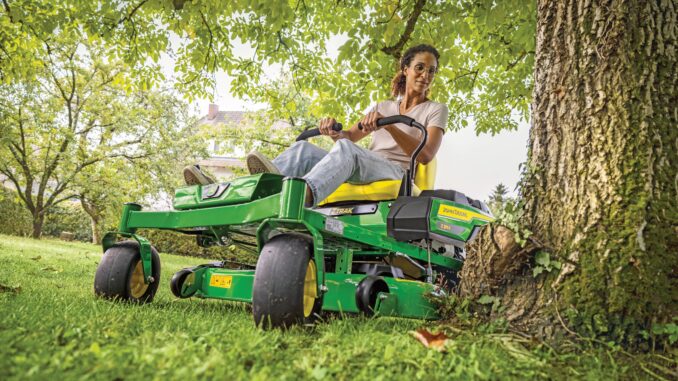
The John Deere Z930A is a commercial ZTrak zero‑turn mower commonly paired with a 60‑inch 7‑Iron PRO side‑discharge deck and a Kawasaki commercial twin‑cylinder engine. It is built for larger residential properties, commercial lawn care, and municipal or groundskeeping work where long mowing sessions and rougher terrain are normal.
In use, most John Deere Z930A problems cluster around starting and fuel, deck cut quality, drive/hydro traction issues, and electrical or safety switch faults. This guide is written for owners in the USA and Canada who want clear symptom‑first troubleshooting, common DIY repairs, realistic limits on what should be left to a dealer, plus parts and maintenance references you can actually use.
General overview of the John Deere Z930A
Within the Deere lineup, the John Deere Z930A sits in the commercial ZTrak family above residential Z300/Z500 units and below the biggest Z900 diesel and R‑series machines. It uses a gasoline air‑cooled Kawasaki V‑twin engine (varies by spec), a hydrostatic dual‑pump/dual‑motor drive system, heavy‑duty welded 7‑Iron PRO deck, and a full commercial frame with ROPS.
The key systems you’ll interact with on a John Deere Z930A are:
-
Engine and fuel system: Kawasaki V‑twin engine, fuel pump, fuel filter, carburetor or EFI (depending on spec), fuel tank and lines.
-
Mower deck system: 7‑Iron PRO deck, spindle assemblies, blades, idlers, deck drive belt(s), gauge wheels, anti‑scalp rollers, discharge chute.
-
Drive system: Twin hydrostatic pumps and wheel motors, drive belt from engine to pumps, motion control levers, park brake and linkage.
-
Electrical and safety system: Battery, starter and solenoid, seat switch, park brake switch, control lever switches, PTO switch, fuses and relays.
Common service parts owners buy regularly for the John Deere Z930A include:
-
Engine oil filter and engine air filter elements.
-
Spark plugs (usually two standard plugs for the Kawasaki twin).
-
Primary and secondary fuel filters.
-
Deck drive belt and engine‑to‑hydro drive belt.
-
Mower blades (standard, high‑lift, or mulching, depending on deck).
-
Spindle assemblies or bearings when vibration is severe.
-
PTO switch, seat switch, or key switch when starting/engagement is intermittent.
-
Battery (typical U1 or commercial lawn/utility format, depending on spec).
Troubleshooting approach for a John Deere Z930A
Always begin from the symptom, not by guessing a part. When something isn’t right on a John Deere Z930A, start by describing exactly what you see, hear, or feel: “cranks but won’t start,” “cuts fine but leaves a strip,” “runs then dies hot,” “left side weak,” or “mower shakes badly when PTO is on.”
For the Z930A, the main symptom categories are:
-
Starting issues: No crank, slow crank, cranks but won’t fire, only starts with choke.
-
Running issues: Surging, loss of power, runs for a while then dies, smoking.
-
Cut‑quality problems: Unlevel cut, scalping, stragglers, poor discharge or clumping.
-
Vibration and noise: Deck shake, rattling at full PTO speed, squealing belts.
-
Overheating and leaks: Engine running hot, oil leaks, fuel smell, hydraulic leaks.
-
Transmission/drive issues: One side weak, creeps in neutral, poor hill holding.
-
Electrical/safety switch problems: PTO won’t engage, engine dies when levers moved, intermittent shutoff.
Work through basic checks first (fuel, filters, obvious damage, safety switches) before assuming the worst. If the symptom indicates a deeper engine, hydro, or electrical fault that requires teardown or special tools, that’s usually the point to pause and consider dealer support.
Emergency and immediate repair needs on a John Deere Z930A
Some John Deere Z930A problems need to be handled immediately because they can cause major damage or create unsafe conditions. If you see any of the symptoms below, stop and investigate before continuing to mow.
Starting issues on the John Deere Z930A
When the Z930A will not crank at all, cranks extremely slowly, or only clicks, you’re dealing with a no‑start that can leave you stranded on a customer’s property or in the middle of your yard. If it cranks fine but never fires, that points toward fuel, spark, or safety interlock problems.
Common causes:
-
Dead or weak battery.
-
Loose or corroded battery cables and ground connection.
-
Faulty seat, brake, or control lever safety switch.
-
Bad PTO switch stuck “on” keeping it from cranking.
-
Fuel shut‑off valve closed or filter plugged.
-
Faulty starter, solenoid, or blown fuse.
Basic owner checks:
-
Confirm the park brake is on, PTO is off, and control levers are in neutral.
-
Check battery connections for corrosion and tightness, clean if needed.
-
Try jumping from a known good battery to isolate a weak battery.
-
Listen for a click at the solenoid; if no click, inspect fuses and safety switches.
-
Verify fuel level and that any in‑line fuel shut‑off valve is open.
Cut‑quality problems on the John Deere Z930A
Poor cut quality shows up as uncut strips, ragged grass tips, scalping, or clumping and bad discharge in heavy or wet grass. Left unchecked, running dull blades or a failing spindle can escalate into deck damage.
Common causes:
-
Dull, bent, or mismatched blades.
-
Deck not leveled correctly or sagging on one side.
-
Clogged deck shell packed with wet grass.
-
Worn spindle bearings or bent spindles.
-
Incorrect deck height or mowing too fast for conditions.
Basic owner checks:
-
Park on a level surface and inspect blades for sharpness, bends, or damage.
-
Remove built‑up grass under the deck with the engine off and key removed.
-
Use a tape measure to verify deck pitch and side‑to‑side level.
-
Slow your ground speed and try again in a small test area.
-
If you feel wobble when turning blades by hand (engine off), plan spindle inspection or replacement.
Vibration and noise on the John Deere Z930A
Excessive vibration, banging, or squealing from the deck or engine area on a John Deere Z930A usually means something is out of balance, loose, or failing. Running through heavy vibration can quickly destroy bearings, belts, and brackets.
Common causes:
-
Bent or unbalanced blades.
-
Damaged or loose spindle assembly.
-
Worn idler pulley bearings.
-
Deck drive belt badly worn or missing chunks.
-
Loose engine mounting bolts or exhaust components.
Basic owner checks:
-
Shut down, remove key, and let everything stop completely.
-
Inspect blades for straightness and confirm all blade bolts are tight.
-
Spin idlers and spindles by hand to feel for roughness or grinding.
-
Check belt routing for misalignment, fraying, or glazing.
-
If vibration persists after blade replacement, consider spindle replacement or dealer inspection.
Overheating and leaks on the John Deere Z930A
Overheating or fluid leaks on a Z930A can lead to engine damage, fire risk, or loss of drive.
Common causes:
-
Engine cooling fins clogged with debris.
-
Engine oil level too low or too high.
-
Fuel line seepage at clamps or filter.
-
Hydraulic oil leaks at hoses or wheel motors.
-
Oil filter or drain plug not sealed correctly.
Basic owner checks:
-
Stop the mower and let it cool if you smell burning or see smoke (not just dust).
-
Inspect around the engine for oil leaks, fuel drips, or wet spots.
-
Clean debris from engine cooling fins and air intake screens.
-
Verify engine oil level is within the correct range.
-
If hydraulic oil is leaking or heat is coming from wheel motors, plan dealer service.
Transmission and drive problems on the John Deere Z930A
Drive issues on the John Deere Z930A show up as one side being weak, the machine pulling to one side, creeping forward or backward in neutral, or poor holding on slopes.
Common causes:
-
Hydro drive belt worn, slipping, or broken.
-
Motion control linkage out of adjustment.
-
Low or overheated hydraulic oil.
-
Internal hydrostatic pump or motor wear.
Basic owner checks:
-
Inspect the engine‑to‑hydro drive belt for wear and tension with engine off.
-
Verify rear tires are correctly inflated and match side‑to‑side.
-
Check for obvious hydraulic leaks or wet spots under the frame.
-
Try the mower on flat ground and see if neutral creep is present.
-
If creep or side‑to‑side power differences remain, dealer adjustment or hydro work is recommended.
Electrical problems and safety switches on the John Deere Z930A
Electrical issues often appear as intermittent shutoffs, PTO drop‑outs, or complete loss of power to the dash on a John Deere Z930A. Many of these are related to safety interlocks.
Common causes:
-
Faulty seat switch, brake switch, or motion control lever switch.
-
PTO switch failure.
-
Corroded or loose connectors.
-
Blown fuses or bad relays.
-
Worn ignition key switch.
Basic owner checks:
-
Wiggle the seat, control levers, and PTO switch with the engine off and inspect wiring for loose plugs.
-
Check the fuse block for blown fuses and replace with correct ratings.
-
Inspect the battery ground connection on the frame.
-
Try starting with the seat occupied and unoccupied (following safety procedures) to see if the symptom changes.
-
If you are not comfortable testing 12‑volt circuits with a meter, this is a good point to involve a dealer.
DIY or dealer? Repair decision guide for the John Deere Z930A
On a John Deere Z930A, most routine maintenance and bolt‑on replacements (filters, belts, blades, switches) are realistic for a careful DIY owner. Once you get into hydrostatic teardown, engine internals, or complex electrical diagnosis requiring a wiring diagram and meter work, dealer support is usually more efficient and safer.
Good DIY jobs:
-
Engine oil and filter changes.
-
Air and fuel filter replacement.
-
Spark plug replacement.
-
Blade sharpening and replacement.
-
Deck level adjustments and anti‑scalp roller setup.
-
Deck and hydro drive belt replacement.
-
Battery replacement and basic electrical checks.
-
Seat switch and PTO switch replacement.
Advanced DIY or dealer jobs:
-
Carburetor rebuild or EFI fuel system diagnosis.
-
Hydrostatic pump and wheel motor repairs or replacements.
-
Major wiring harness repairs.
-
Internal engine repairs (valve adjustment, head gasket, short block).
Skill level guide:
-
Beginner: Oil changes, air filter, fuel filter, basic cleaning, checking tire pressures.
-
Intermediate: Blade changes, deck belt replacements, deck leveling, battery and switch replacement, reading basic wiring diagrams.
-
Advanced: Hydro adjustments and repairs, EFI diagnostics, valve clearance adjustments, major engine or wiring work.
Parts needed for a John Deere Z930A: OEM vs aftermarket and key information
Before you order parts for a John Deere Z930A, collect:
-
Full model designation: “John Deere Z930A.”
-
Product Identification Number (PIN): On the frame tag.
-
Engine model and serial: On the Kawasaki engine label.
-
Deck size and type: Commonly 60‑inch 7‑Iron PRO, but confirm your deck width.
These details matter because belts, blades, and some filters vary by deck width, engine spec, and serial number break.
John Deere Z930A common service parts table
Use this table as a starting point, then cross‑check the OEM numbers against your serial and engine code in the official parts catalog:
Treat these part numbers as starting points and always confirm them using your PIN and engine code in the official parts lookup or with a dealer.
For OEM vs aftermarket:
-
Use OEM parts for: Belts, safety‑critical parts (PTO and seat switches, ROPS hardware), and any fit‑sensitive component like deck rollers and spindle assemblies.
-
Aftermarket is generally acceptable for: Engine oil and air filters from reputable brands, blades (if they match length, center hole, and offset), and batteries, as long as they cross‑reference correctly and meet or exceed OEM specifications.
Where to find John Deere Z930A parts diagrams and service manuals
For the John Deere Z930A, the most useful diagrams and manuals are:
-
Official operator’s manual: Available via the John Deere “Owner Information” or “Manuals & Training” pages by searching “Z930A operator’s manual.” This covers controls, safety, basic maintenance, and the official service interval chart.
-
John Deere online parts catalog: Use the Deere Parts or JDParts site, then enter “Z930A” and your PIN to open exploded diagrams of the deck, frame, engine accessories, and hydraulics. These diagrams are the best way to confirm part numbers.
-
ZTrak technical manual (TM109119, Z910A–Z970A family): This detailed technical manual contains in‑depth troubleshooting trees, test procedures, wiring diagrams, and step‑by‑step repair instructions for the Z930A and its siblings.
-
Reputable John Deere parts retailers: Large online parts houses with model‑specific Z930A pages often provide quick part lists, belt routing diagrams, and common wear items grouped together.
Use the operator’s manual and service interval charts to plan your maintenance, and use the parts catalog diagrams whenever you are ordering belts, blades, or any component where there are multiple versions.
How to locate model, serial and engine numbers on a John Deere Z930A
Model and serial numbers are essential for getting the right parts for a John Deere Z930A, especially around serial number breaks and deck sizes.
Follow these steps:
-
Locate the tractor PIN plate: On most Z930A units, the product identification tag is on the main frame, often near the right‑hand side of the machine, below or beside the operator’s seat area. Clean it with a rag to read the numbers.
-
Note the full model and PIN: Copy the model as “Z930A” plus the full PIN (serial number); take a clear smartphone photo for future reference.
-
Find the deck ID tag: The mower deck has its own model/serial decal, often on the top of the deck shell or near the discharge side. This confirms deck size (for example, 60‑inch 7‑Iron PRO) and deck model code.
-
Locate the engine tag: Look on the Kawasaki engine shroud or valve cover area for a label or metal plate showing the engine model (for example, FX‑series) and serial; write these down.
-
Store the information: Keep these numbers in your maintenance notebook and in a note on your phone so you can quote them when ordering parts or checking online diagrams.
Buying John Deere Z930A parts online and in stores
For a John Deere Z930A, an efficient strategy is to use online sources for planned maintenance parts and common wear items, and keep the dealer counter in reserve for complex, serial‑specific, or urgent issues.
Approach:
-
Online: Start with the official John Deere parts catalog to confirm OEM numbers, then buy either from Deere’s online store or reputable aftermarket suppliers. Always match the OEM number and verify compatibility with your PIN and deck size.
-
Dealer counter: Best when you’re unsure of the part, when your PIN falls in a serial range with multiple options, or when you need parts urgently mid‑season. Take photos of your machine and parts in question.
-
Retail stores: Big‑box and farm stores can be convenient for generic items like engine oil, grease, and sometimes cross‑referenced filters and blades. Only use parts whose packaging explicitly lists “Z930A” or the correct engine and deck model, or matches the OEM number.
Useful starting URLs to keep on hand:
-
John Deere official parts search: https://partscatalog.deere.com
-
John Deere manuals search: https://manuals.deere.com
-
Example aftermarket Deere‑focused parts site: a major online retailer that supports model‑specific lookup for “John Deere Z930A.”
Step‑by‑step fitting guide for common John Deere Z930A DIY jobs
Below are several high‑impact maintenance and repair tasks that typical Z930A owners can handle themselves.
Changing the engine oil and filter on a John Deere Z930A
Changing engine oil and the oil filter at the recommended intervals is the single most important job for engine life on a Z930A.
-
Park the mower on level ground, set the park brake, shut off the engine, and remove the key.
-
Place an oil drain pan under the engine drain point, then open the drain valve or remove the drain plug as specified in the operator’s manual.
-
Allow the oil to drain fully; while it drains, remove the old oil filter using an oil filter wrench.
-
Lightly oil the gasket of the new OEM‑spec oil filter, spin it on by hand until the gasket contacts, then tighten per the filter instructions (usually 3/4 turn more).
-
Close the drain, refill with the correct weight and quantity of oil, then start the engine briefly to circulate and check for leaks; shut down and recheck oil level.
Replacing the air filter on a John Deere Z930A
A dirty air filter causes loss of power and poor running; the Z930A’s air filter is easy to service and should be checked frequently in dusty conditions.
-
Park safely and remove the key; allow the engine to cool.
-
Open or remove the air cleaner cover by releasing the clips or screws holding it in place.
-
Carefully remove the primary air filter element (and the inner safety element if equipped), trying not to knock dust into the intake.
-
Inspect and replace with new elements that match the engine model; do not attempt to blow out and reuse paper elements.
-
Clean the housing with a dry cloth, refit the filters in the correct order, and secure the cover firmly.
Changing mower blades on a John Deere Z930A
Fresh, balanced blades on a John Deere Z930A dramatically improve cut quality and reduce deck vibration.
-
Park the mower on level ground, set the brake, shut off and remove the key; if possible, use a lift or ramps rated for the Z930A to access the deck safely.
-
Block the blades from turning using a wood block against the deck shell, then use the correct size socket and breaker bar or impact wrench to loosen each blade bolt.
-
Remove each blade, noting its orientation (cutting edge direction and any offset).
-
Install sharpened or new blades that match the OEM design and length; ensure the cutting edge faces the correct rotation direction.
-
Torque blade bolts to the specified value in the operator’s manual and double‑check that all blades spin freely without contacting the deck shell.
Replacing the deck drive belt on a John Deere Z930A
A worn or slipping deck belt causes poor cutting, noise, and excessive heat; replacing it is a strong intermediate‑level DIY job on a Z930A.
-
Park safely with the deck lowered, engine off, and key removed.
-
Remove any belt guards and shields over the deck pulleys as described in the operator’s manual.
-
Carefully release belt tension by moving the spring‑loaded idler away from the belt, then slip the old belt off the pulleys.
-
Route the new OEM‑spec belt around the spindles and idlers following the belt routing decal on the deck or diagram from the manual; avoid twisting the belt.
-
Reapply tension by returning the idler to position, spin pulleys by hand to confirm correct routing, reinstall belt guards, and test briefly at idle before mowing.
Maintenance to prevent John Deere Z930A problems reoccurring
Regular, structured maintenance on a John Deere Z930A is the best way to prevent breakdowns and expensive repairs. Focus on keeping air, fuel, lubrication, and cooling clean and unobstructed, and dealing with vibration or noise early.
Key focus areas:
-
Starting reliability: Maintain a healthy battery, clean terminals, and fresh fuel; replace fuel and air filters at or before schedule.
-
Cut quality: Keep blades sharp and balanced, clean the deck frequently, verify deck level, and monitor spindle and idler bearings.
-
Fire and overheating prevention: Clean debris from engine cooling fins and around the engine compartment; fix oil and fuel leaks immediately.
-
Drive performance: Inspect and replace hydro drive belts before they fail; keep tire pressures even and within spec; listen for changes in hydro noise.
-
Electrical reliability: Periodically check seat and safety switch wiring for chafing, and keep moisture and debris away from fuse blocks and relays.
John Deere Z930A maintenance schedule and year‑round checklist
The official schedule in the operator’s manual should always be your primary reference, but the following structure gives a practical way to think about John Deere Z930A maintenance across the season.
Daily / before each use
-
Check engine oil level and top off if needed.
-
Walk around the mower to inspect for leaks, loose parts, or damaged components.
-
Check tire pressures and overall tire condition.
-
Clear grass and debris from the deck, engine intake screens, and around pulleys.
After roughly 8 hours of use
-
Inspect mower blades for damage and dullness; touch up or plan sharpening.
-
Check the deck drive belt condition and tension.
-
Inspect the hydro drive belt and pulleys for wear or glazing.
-
Grease easy‑access lubrication points if the manual calls for frequent greasing.
Every 25 hours
-
Clean or inspect the air filter; replace if heavily soiled.
-
Inspect the fuel filter for dirt or water; replace if needed.
-
Check battery terminals and clean corrosion.
-
Inspect all safety switches and wiring for secure connections.
Every 50 hours or yearly
-
Change engine oil and filter (more frequently in severe or dusty conditions).
-
Thoroughly inspect blades, spindle housings, and idler pulleys; replace worn parts.
-
Grease all deck and chassis grease fittings per the lubrication chart.
-
Check deck level and pitch; adjust as necessary.
Every 200 hours or per extended interval
-
Replace air filter elements (primary and safety, if equipped) if not already done.
-
Replace fuel filter on schedule.
-
Inspect hydrostatic drive for leaks and check fluid condition; follow manual instructions on service intervals (some units are “sealed,” others require fluid and filter changes).
-
Check ROPS hardware torque and frame fasteners.
Seasonal checklist for a John Deere Z930A
Pre‑season (spring):
-
Perform oil/filter change and replace fuel if stored over winter.
-
Charge and test the battery.
-
Verify blades are sharp and balanced; replace any questionable ones.
-
Check all belts and purchase spares for the season.
Mid‑season:
-
Deep clean the deck and engine compartment.
-
Reinspect blades and belt condition.
-
Address any emerging vibration or minor leaks.
End‑of‑season (fall):
-
Clean entire machine thoroughly to remove corrosive grass sap and debris.
-
Change oil and filter before storage.
-
Stabilize fuel or drain the system per your storage preference.
-
Store indoors if possible with the battery disconnected or on a maintainer.
John Deere Z930A: repair, upgrade, or replace?
Because the John Deere Z930A is a commercial‑grade machine, it is usually worth repairing as long as the frame, deck shell, and hydrostatic system are fundamentally sound. However, there is a point where upgrading or replacing is more sensible, especially if you rely on the mower for income.
Repair if:
-
Issues are limited to wear items: belts, blades, filters, switches, batteries, minor leaks.
-
The engine has good compression and oil consumption is normal.
-
The deck shell is intact and not rusted through or bent beyond practical repair.
Upgrade if:
-
You need better discharge, mulching, or collection (consider blade upgrades or a mulching kit).
-
You want improved lighting, seating comfort, or tires better suited to your terrain.
-
You’re still mowing within the size range that suits a Z930A but want incremental improvements.
Replace if:
-
The hydrostatic system or engine requires major, repeated repairs and hours are very high.
-
The deck shell is badly rusted or structurally compromised.
-
Your mowing needs have outgrown the Z930A (significantly larger contracts, steeper slopes needing a different configuration, etc.).
Expanded troubleshooting FAQ – John Deere Z930A (30–35 questions)
1. Why will my John Deere Z930A not start at all?
If the Z930A does nothing when you turn the key, check that the park brake is on, PTO is off, and control levers are in the neutral/start position. A dead battery, loose battery cables, or a failed seat or brake switch frequently cause a complete no‑crank situation on these mowers. Inspect fuses and the PTO switch as well, because a PTO switch stuck “on” can prevent starting.
2. Why does my John Deere Z930A crank but not fire?
When the Z930A cranks normally but never starts, suspect fuel delivery or ignition. Old fuel, a clogged fuel filter, or a stuck carburetor float can prevent fuel reaching the engine. On the ignition side, worn spark plugs or a loose ignition module connection can prevent spark. Verify fresh fuel, check that the fuel shut‑off is open, and consider replacing the fuel filter and plugs as first steps.
3. Why does my John Deere Z930A only run on choke?
If the Z930A only runs smoothly with the choke partially or fully on, the fuel mixture is likely too lean. This often indicates a partially clogged carburetor main jet or idle circuit, or a vacuum leak in the intake system. Cleaning or rebuilding the carburetor is the long‑term fix, but you can try running fresh fuel with a quality fuel system cleaner to see if marginal deposits clear before committing to a rebuild.
4. Why does my John Deere Z930A stall after mowing for a while?
Stalling after running for some time often points to fuel delivery problems or overheating. As the mower heats up, a restricted fuel cap vent, clogged fuel filter, or failing fuel pump can starve the engine. Check that the fuel cap vent is clear, replace the fuel filter, and confirm that engine cooling fins and screens are free of debris. If the engine feels excessively hot or smells like burning oil, address cooling immediately.
5. Why does my John Deere Z930A backfire when shutting off?
Backfires at shutdown are often related to excess fuel in the exhaust or abrupt engine stop. Running the engine at full throttle and immediately killing it can cause a pop in the muffler. Let the mower idle for 30–60 seconds before shutting off to reduce the chance of backfire. If backfiring is frequent and loud, also check carburetor mixture settings and exhaust leaks.
6. Why is my John Deere Z930A blowing blue or white smoke?
Blue smoke usually indicates oil burning, while white smoke can be oil or coolant in liquid‑cooled engines (the Z930A is air‑cooled, so coolant isn’t a factor). On a Z930A, blue smoke at startup can be normal for a worn engine, but heavy continuous smoke suggests issues with valve stem seals, rings, or crankcase overfilling. Verify that the oil level is not over the full mark and that the mower is not parked on a steep incline when checked.
7. Why is my John Deere Z930A blowing black smoke?
Black smoke indicates a rich fuel mixture. On a Z930A, this can be caused by a stuck choke, a dirty air filter restricting airflow, or carburetor issues. Verify that the choke fully opens once warm and inspect or replace the air filter. If the air filter is new, the carburetor may need a thorough cleaning and adjustment.
8. Why does my John Deere Z930A lose power in tall grass?
Loss of power under load can come from dull blades, a slipping deck belt, or engine performance issues. Start by sharpening or replacing blades and checking deck belt condition and tension. If mechanical components are sound, look at engine basics: clean air filter, fresh fuel, correct spark plug gap, and proper governor linkage operation. In very tall or wet grass, reduce ground speed to avoid overloading the deck.
9. Why is the cut uneven on my John Deere Z930A?
Uneven cuts, with one side lower than the other, typically result from a deck that is out of level or a bent blade on one side. Park on a level surface and measure blade tip heights side‑to‑side and front‑to‑back, adjusting deck hangers as described in the manual. Replace any bent blades, and make sure tire pressures match side‑to‑side, as a low tire can mimic a deck level problem.
10. Why does my John Deere Z930A scalp the lawn?
Scalping happens when the deck or anti‑scalp rollers dig into high spots. On a Z930A, it is often caused by running the deck too low for the terrain, or having the anti‑scalp rollers set in a high position instead of closer to the ground. Raise the cutting height, adjust the anti‑scalp wheels downward within the guidance of the manual, and reduce speed over rough ground.
11. Why is my John Deere Z930A leaving stragglers and uncut strips?
Stragglers and narrow uncut strips between blade paths usually indicate dull blades, mismatched blades, or an incorrectly installed center blade. Make sure all blades are the correct OEM or equivalent part and are installed in the correct orientation. Examine the deck undershell for caked‑on grass that disrupts airflow and clean it thoroughly. Also confirm that deck belt tension is adequate so all spindles maintain full speed.
12. Why does my John Deere Z930A clog and clump in wet grass?
The Z930A’s 7‑Iron deck moves a lot of grass, but wet or lush growth can still overwhelm it. Clogging and clumping are exacerbated by dull blades, low engine speed, and a packed deck. Always mow at full throttle and reduce ground speed in heavy conditions. Keep the deck cleaned out and consider high‑lift blades to improve discharge in difficult conditions.
13. Why is my John Deere Z930A deck vibrating badly?
Severe deck vibration is often due to bent blades or a damaged spindle assembly. Start by removing and inspecting the blades; replace any that are bent or heavily nicked. If vibration persists with new, balanced blades, spin each spindle by hand to feel for roughness or looseness. Replace worn spindles or bearings promptly, as running with excessive vibration can lead to cracks in the deck shell.
14. Why does my John Deere Z930A make a squealing noise when engaging the PTO?
Squealing when the PTO engages suggests a slipping or misrouted belt, a seized idler pulley, or a failing spindle bearing. Inspect the deck belt for glazing or cracks and check that all idlers spin freely. Verify that the belt is routed correctly and that the tensioner spring is intact. If squeal occurs only under heavy load, consider replacing the belt and checking all driven components.
15. Why is the belt burning or smoking on my John Deere Z930A?
A smoking belt means it is slipping against a pulley or rubbing on a guard. On a Z930A, this can result from a seized pulley, incorrect belt routing, or extreme wear. Stop immediately, let everything cool, then remove shields and inspect for seized idlers or spindles. Replace any suspect pulleys and the belt, and recheck tension.
16. Why does my John Deere Z930A creep forward or backward in neutral?
Neutral creep happens when motion control linkages or hydro controls are slightly out of adjustment. The Z930A has linkages that can be fine‑tuned so that with the control levers centered, the machine stays still. Refer to the operator’s manual or technical manual for neutral adjustment procedures, or have a dealer set it if you’re not comfortable working around exposed hydraulics.
17. Why is one side of my John Deere Z930A weaker than the other?
If one drive wheel feels weak or sluggish, check tire pressures first; a low tire changes effective radius and power transfer. Then inspect the hydro drive belt for uneven wear, and ensure linkages to both pumps are synchronized. If the belt and linkages are correct and one side is still weak, internal pump or motor wear is possible, which is typically a dealer‑level repair.
18. Why won’t my John Deere Z930A move at all?
A Z930A that doesn’t move but still runs may have a failed or broken hydro drive belt, or the transport bypass valves opened (used for pushing the mower by hand). Inspect the belt between the engine and hydro pumps, and ensure the bypass valves are in the operating position according to the manual. If the belt is intact and bypasses are closed, hydro failures or linkage issues become likely and should be inspected professionally.
19. Why does my John Deere Z930A roll on hills more than it used to?
Loss of hill‑holding can result from worn hydro components, contaminated hydraulic oil, or low tire traction. Check tire condition and pressure, and inspect for hydro leaks that might have led to low fluid levels. If the machine struggles to hold on moderate slopes it previously handled easily, have a dealer evaluate the hydro system before continuing to operate on steep ground.
20. Why does my John Deere Z930A battery keep dying?
Frequent dead batteries point to a charging system issue or parasitic draw. Clean and tighten terminals and load‑test the battery to confirm it is healthy. With the engine running at full throttle, measure battery voltage; it should show charging above resting voltage. If not, the alternator or voltage regulator may be faulty. Also ensure accessories are not wired in a way that drains power with the key off.
21. Why does my John Deere Z930A shut off when I engage the blades?
If the engine dies immediately when you pull the PTO switch, safety interlocks may be detecting an unsafe condition or a heavy mechanical load. Confirm you are seated properly, the park brake is off, and control levers are in the operating position. Then inspect the deck for seized spindles, foreign objects, or grass packed so heavily that it locks the blades.
22. Why does my John Deere Z930A randomly shut off while mowing?
Intermittent shutoffs frequently trace back to loose electrical connections, failing safety switches, or a faulty ignition switch. Wiggle the key, seat, and control levers to see if you can reproduce the problem stationary. Inspect wiring harnesses where they pass over frame edges for chafing. If the problem persists and is difficult to trace, a dealer with the wiring diagram and test equipment can save time.
23. Why won’t the PTO engage on my John Deere Z930A?
A PTO that will not engage at all can result from a bad PTO switch, blown fuse, wiring problem, or a failed PTO clutch. Start by checking the PTO fuse and confirming power at the switch if you are equipped to do basic 12‑volt tests. If fuses are good and the switch feels loose or intermittent, replacing the PTO switch is a common and relatively simple repair.
24. Why is my John Deere Z930A fuel tank venting or collapsing?
If you hear hissing when opening the fuel cap or notice the tank sides flexing, the fuel cap vent or tank vent system may be clogged. A blocked vent can create vacuum in the tank and starve the engine. Inspect the cap and replace it if necessary; this is a small part that can cause big symptoms, so it is often worth trying a new OEM cap when diagnosing fuel starvation.
25. Why is there fuel smell around my John Deere Z930A?
A persistent fuel smell is a serious safety issue. Inspect the fuel lines, clamps, and filter for seepage or cracks. Look closely at connections to the carburetor or fuel pump and at the tank outlet. Replace brittle lines and use proper clamps. Never ignore fuel odors, especially if they worsen after hot operation or when parked in a garage.
26. Why is my John Deere Z930A hard to steer smoothly?
Jerky or overly sensitive steering can come from tight control levers, stiff linkage, or imbalanced hydro response. Grease all specified pivot points, inspect the control linkages for binding, and verify tire pressures are equal. If the machine is still difficult to control smoothly, a dealer can adjust lever centering and damper settings where applicable.
27. Why is my John Deere Z930A so noisy at full throttle?
Commercial ZTraks are loud by design, but unusual noise or new sounds merit inspection. Check that the muffler and heat shields are intact and that no hardware has loosened. Make sure the deck is balanced and free of foreign objects. If noise seems to come from the engine itself (knocking, metallic sounds), stop and have the engine evaluated before major damage occurs.
28. How often should I change oil on a John Deere Z930A?
Most Z930A engines have recommended oil change intervals around every 50 hours or yearly, whichever comes first, with more frequent changes in dusty or severe conditions. Always verify the exact interval and oil specifications in your operator’s manual. For commercial use, many owners adopt a conservative interval to reflect long, hot operating days.
29. How often should I sharpen blades on a John Deere Z930A?
Blade sharpening frequency depends on your conditions, but many commercial owners touch up blades every 10–25 hours, and at least every few mows in sandy or rough terrain. Inspect blades regularly and sharpen or replace when the cutting edge looks rounded, chipped, or bent. Keeping spare sets of balanced blades on hand helps you swap quickly and minimize downtime.
30. What tire pressure should I use on a John Deere Z930A?
Correct tire pressures are listed in the operator’s manual and on tire sidewalls, but the key is to match side‑to‑side pressure to maintain level cutting and predictable traction. Overinflated tires lead to rough ride and poor hill‑holding; underinflated tires cause squirm and uneven cuts. Use a quality gauge and check before big mowing days.
31. Can I run mulching blades on my John Deere Z930A?
Yes, the Z930A can often use mulch‑specific blades and, ideally, a proper mulching kit with baffles designed for the deck. Make sure blades are designed for your deck width and mount pattern. Mulch blades may require slower ground speed and shorter grass heights to perform well, but they can leave a cleaner finish and reduce clippings.
32. What fuel should I use in my John Deere Z930A?
Use fresh, clean unleaded gasoline meeting or exceeding the octane rating specified in the operator’s manual, usually regular unleaded is acceptable. Avoid fuel with high ethanol content, and never store fuel for months before use. For seasonal machines, consider using ethanol‑free fuel or stabilizer, especially before winter storage.
33. How should I store my John Deere Z930A over winter?
For long‑term storage, clean the mower thoroughly, change the engine oil and filter, and either stabilize the fuel and fill the tank or drain the fuel system per your preferred method. Disconnect the battery or use a maintainer, and store the mower under cover. Avoid parking on bare soil to reduce moisture exposure and tire flat‑spotting.
34. How do I know if my John Deere Z930A needs hydrostatic service?
Signs that hydrostatic service is due or issues are developing include loss of pulling power, increased noise from the pump area, inconsistent response between left and right, and reduced hill‑holding. Check the operator’s manual to see whether your hydro system is field‑serviceable or considered lifetime fill; if service is due, follow the recommended intervals or have a dealer perform the fluid and filter change.
35. When should I take my John Deere Z930A to a dealer instead of fixing it myself?
Take the Z930A to a dealer when you encounter persistent hydraulic issues, internal engine problems, repeated electrical faults you cannot isolate, or when repairs would require special tools or safety procedures beyond your comfort level. Also consider dealer help when breakdowns affect business‑critical mowing schedules and diagnostic time is at a premium.