
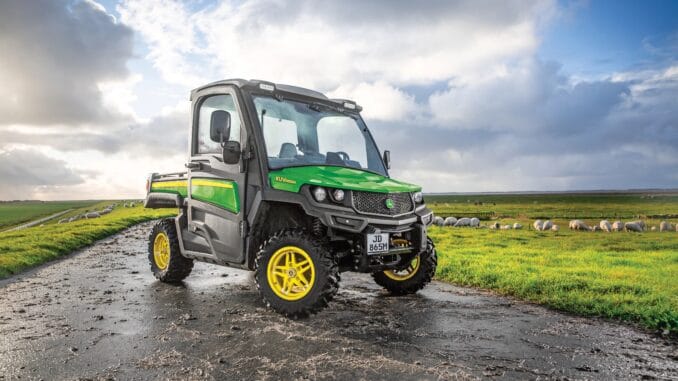
John Deere Original Traditional Gator Models, Maintenance, and Troubleshooting Guide
The original traditional John Deere Gator family is the practical, low-speed utility-vehicle side of the wider Gator lineup. These machines are built primarily for moving people, tools, feed, fencing supplies, turf equipment, and materials around farms, estates, campuses, construction sites, golf facilities, parks, and large residential properties.
Unlike the faster four-wheel-drive XUV crossover Gators, traditional Gators generally emphasize compact dimensions, a straightforward cargo box, stable low-speed hauling, and simple work-oriented operation. The family includes gasoline, diesel, and electric machines, along with two-wheel-drive four-wheel models and six-wheel work Gators that drive the rear wheels. Many remain common in the used market, so owners frequently need help identifying legacy versions, sourcing maintenance information, diagnosing drive issues, and assessing used-machine condition.
About the John Deere Original Traditional Gator Series
Traditional Gators are John Deere’s core work utility vehicles: compact, cargo-focused machines designed to travel repeatedly over relatively moderate terrain while carrying useful loads. They occupy a different role from larger XUV crossover Gators, sport-oriented RSX machines, and specialized commercial turf vehicles. A traditional Gator is usually chosen because it is easy to operate, narrow enough for many gates and paths, stable when loaded, and well suited to repeated short-distance transport.
The North American traditional range has included small gasoline models such as the TS and TX, quiet electric models such as the TE, and higher-capacity six-wheel TH models in gasoline and diesel form. Most use a two-person seating layout with a rear cargo box. Their work is typically based around hauling, towing, spraying, feeding livestock, transporting grounds staff, moving tools, handling fence repairs, collecting debris, and carrying supplies around a site.
Gasoline traditional Gators have generally used air-cooled four-cycle engines, from smaller single-cylinder engines in lighter-duty models to V-twin engines in larger work models. The TH 6×4 family has also been offered with a liquid-cooled three-cylinder diesel engine for operators who need fuel economy, strong low-speed pulling characteristics, and substantial cargo capacity. The TE uses a 48-volt electric system, making it particularly useful where low noise and no tailpipe emissions are important, such as campuses, equestrian facilities, resorts, enclosed work areas, and grounds-maintenance operations.
Many traditional Gators use a continuously variable transmission (CVT) and gear-driven transaxle arrangement. The TX and TH models use mechanical differential-lock systems to improve traction when operating in mud, snow, loose gravel, or loaded work conditions. However, a TH 6×4 should not be confused with a conventional four-wheel-drive XUV: its driven wheels are at the rear, with the two front wheels used for steering.
Cargo capacity and towing ratings vary substantially by model and year. A TS is a lighter-duty property machine, while the TH 6×4 models are intended for heavy hauling and can carry much larger loads. Current John Deere information identifies the TH 6×4 Gas as a 15.5-hp, 675 cc gasoline model and the TH 6×4 Diesel as an 18.2-hp, 854 cc three-cylinder diesel model; both use CVT drivetrains and mechanically activated differential locks. Deere currently lists 1,000-lb cargo capacity for the gasoline TH and 1,200 lb for the diesel TH, with 1,400-lb towing capacity for each.deere+1
For owners, the key distinction is simple: traditional Gators are primarily work machines. They are best judged by their cargo-box condition, drivetrain operation, brake performance, steering wear, engine or battery health, and whether the machine can repeatedly perform the job it was bought to do.
John Deere Original Traditional Gator Models
And See:
| Repair Guide | Serial Number Lookup | Winter Maintenance |
| Gator 6 x 4 Diesel | ||
| Gator 4 x 2 Electric Gator ( E-Gator) | ||
| 4 x 2 Trail Gator | ||
| 6 x 4 Trail Gator | ||
| 6 x 4 Worksite Gator | ||
| Turf Gator | ||
| M-Gator A1 | ||
| M-Gator A2 | ||
| M-Gator A3 | ||
| R-Gator | ||
The TX 4×2 remains the gasoline conventional four-wheel traditional work model in Deere’s published lineup. Deere lists a 15.5-hp, 675 cc gasoline V-twin, CVT transmission, mechanically activated differential lock, 600-lb cargo-box capacity, and 1,000-lb towing capacity for the current configuration.deere
The TE 4×2 Electric remains the low-noise electric traditional Gator. Deere identifies a 48-volt system using eight Trojan T-105 batteries, a direct-drive electric motor, a 600-lb cargo-box rating, a 600-lb towing rating, and a 900-lb payload rating.deere+1
The table intentionally separates broad legacy families from current published versions. John Deere revised equipment, engines, capacities, tire packages, braking systems, and option availability over time. Confirm the machine’s model number, serial number, operator’s manual, and parts catalog before ordering components or applying a maintenance specification from a different production year.
Original Traditional Gator Maintenance Guides
Traditional Gators tend to be mechanically simple compared with larger crossover UTVs, but their practical work role means they often receive harder use than their compact appearance suggests. A machine that repeatedly hauls feed, carries wet grass, pulls a trailer, runs a sprayer, or travels through mud may need service more frequently than an occasional-use property vehicle.
Routine Service and Inspection
Follow the operator’s manual for the exact service interval, lubricant, capacity, torque value, and procedure for the specific serial-number range. Engine type, transmission design, brake configuration, and electrical system differ between a TS, TX, TE, and TH Gator.
Routine owner checks should include:
-
Check engine-oil level before use and change engine oil and filters at the published interval for gasoline or diesel models.
-
Inspect the air cleaner more often in dusty fields, dry paddocks, gravel yards, mowing areas, and construction environments.
-
Use clean, appropriate fuel and avoid storing gasoline units for long periods with stale or untreated fuel.
-
Inspect gasoline-engine spark plugs, plug wires, ignition connections, throttle linkage, and fuel-filter condition as applicable.
-
Check radiator cleanliness, coolant level, hose condition, fan operation, and signs of coolant leakage on liquid-cooled diesel models.
-
Service diesel fuel filters and water separators at the specified interval, especially where fuel contamination or cold-weather operation is a concern.
-
Inspect battery terminals, cables, grounds, charging output, and starter connections on gasoline and diesel Gators.
-
Keep TE electric battery terminals clean and dry, inspect cables for heat damage or corrosion, and use the correct charging procedure and charger.
-
Check tire pressure, wheel fasteners, tire damage, steering joints, suspension components, brake operation, and chassis fasteners.
-
Inspect cargo-box hinges, latch hardware, tailgate pivots, bed supports, and any manual or assisted lifting equipment.
-
Remove grass, chaff, manure, mud, leaves, and packing debris from cooling areas, underbody surfaces, brake areas, and driveline guards.
Original Traditional Gator service interval checklist, DIY maintenance for John Deere Original Traditional Gators, John Deere Gator fluids, filters, and grease-point guide, and Pre-season inspection checklist for Original Traditional Gator owners.
CVT, Drivetrain, and Suspension Care
Most gasoline TX and TH traditional Gators use a continuously variable transmission system combined with a gear-driven transaxle. The TS and older Gator generations can differ, so verify the drive layout before assuming that a procedure or replacement belt applies.
The basic drivetrain inspection should include:
-
Inspect the CVT belt for glazing, cracking, frayed edges, excessive width loss, oil contamination, and signs of overheating.
-
Clean belt-dust accumulation from clutch and ventilation areas while avoiding compressed-air practices that force debris into seals or bearings.
-
Investigate belt squeal, burning odor, sluggish launch, reduced pulling power, or high engine speed with low travel speed before a belt failure strands the machine.
-
Check transaxle, gearcase, or differential fluid levels and change fluids at the stated service interval.
-
Inspect driven rear-wheel components, axle shafts, hubs, wheel bearings, chains where fitted on older six-wheel models, and seals for leakage or play.
-
Test differential-lock engagement only in conditions where traction assistance is needed, then confirm the mechanism disengages correctly when normal turning resumes.
-
Examine steering linkage, rack-and-pinion components, tie-rod ends, ball joints, bushings, shocks, and front suspension arms.
-
Check brake-pedal feel, stopping distance, brake drag, parking-brake operation, and hydraulic-brake condition where fitted.
The TE electric Gator does not have a gasoline-style CVT belt system. Its maintenance focus shifts toward the transaxle, motor/controller wiring, battery system, charging equipment, brake system, and the condition of electrical connections. Deere’s current TE specification describes a geared transaxle and direct-drive 48-volt electric motor rather than a belt-drive CVT arrangement.deere
CVT belt and clutch maintenance for Original Traditional Gators, 4WD, differential, and axle service on Original Traditional Gator models, Suspension and steering maintenance for John Deere Gators, and How to inspect a Gator drivetrain before costly repairs.
Cargo Box, Towing, and Work Equipment
A traditional Gator’s cargo box is central to its value, so it deserves attention beyond basic cleaning. Bent bed floors, cracked mounting points, loose tailgates, damaged hinges, and worn latches are common on heavily used examples. Repeated overloading can damage the cargo box, frame, suspension, wheels, and transaxle even when the machine still appears to drive normally.
For work-equipped Gators:
-
Make sure the cargo box latches fully and remains secure when travelling over rough ground.
-
Inspect bed-lift hardware, hinges, pivot points, retaining clips, gas-assist components, and hydraulic lift components where fitted.
-
Use the receiver hitch only within the machine’s published towing limit and ensure the trailer, coupler, safety chains, lights, and load distribution are appropriate.
-
Inspect winch rope or cable, fairlead, hook, mounting plate, wiring, and remote controls before every recovery or pulling job.
-
Secure sprayers, spreaders, seeders, toolboxes, and field-service equipment so they cannot shift in the bed.
-
Clean chemical residue from spraying equipment and avoid allowing corrosive fertilizer or salt to remain in the cargo bed.
-
Remove packed mud and vegetation from the underbody, wheel wells, cooling surfaces, and brake areas after wet or high-debris work.
-
Recheck tire pressure, wheel nuts, and hitch hardware after towing or carrying unusually heavy loads.
Traditional Gator cargo-box and towing inspection guide, How to set up a John Deere Gator for property maintenance, and John Deere Gator towing and cargo safety guide.
Original Traditional Gator Troubleshooting Guides
A good troubleshooting hub should direct the owner toward symptoms, not simply parts. The same complaint—such as “will not start” or “will not move”—can have very different causes on a gasoline TS, a diesel TH, and a 48-volt TE electric Gator.
Model-specific guides should provide wiring diagrams, test locations, diagnostic sequences, torque values, approved fluids, and parts information for the exact model and serial-number range. For example, TX 4×2 common problems and fixes, TH 6×4 Diesel starting troubleshooting, and TE 4×2 Electric battery-system guide should not be treated as interchangeable.
Starting, Battery, and Electrical Problems
Common symptoms include no crank, slow cranking, clicking from the starter solenoid, intermittent starting, dead lights, blown fuses, low battery voltage, and accessories that work inconsistently.
Start diagnosis with the basics:
-
Confirm battery state of charge and inspect terminals for corrosion, looseness, damaged cable ends, and poor ground connections.
-
Check fuses, relays, connectors, ignition-switch function, starter-solenoid operation, and visible harness damage.
-
Verify that the gear selector, brake pedal, neutral or park interlock, and other safety systems are in the required position before starting.
-
Inspect starter and charging-system operation on gasoline and diesel models.
-
Check for voltage drop across battery cables and grounds rather than relying only on an open-circuit battery-voltage reading.
-
Investigate repeated battery discharge for faulty charging output, parasitic accessory draw, corroded wiring, poor grounds, or a battery that no longer holds capacity.
-
On TE electric Gators, inspect the battery pack, charger operation, charger connection, battery-cable condition, controller indicators, and signs of heat damage or electrolyte-related battery problems.
Original Traditional Gator won’t start: diagnostic steps and fixes, John Deere Gator battery and charging-system problems, Electrical troubleshooting for Original Traditional Gator models, and Safety-switch and no-crank problems on John Deere Gators.
Engine, Fuel, and Performance Problems
Gasoline and diesel traditional Gators often show their developing problems under load. A machine may start and idle acceptably, then lose power with a loaded bed, trailer, uphill travel, or heavy terrain.
For gasoline models, investigate:
-
Stale fuel, water contamination, blocked fuel filters, restricted fuel lines, or fuel-pump problems.
-
Carburetion, throttle-body, injection, or throttle-linkage issues depending on the engine generation.
-
Dirty air filters, worn spark plugs, ignition faults, vacuum leaks, or restricted exhaust systems.
-
Rough idle, hesitation, misfires, stalling, hot-start problems, and loss of power under load.
-
Overheating caused by blocked cooling fins, restricted airflow, low coolant on liquid-cooled models, cooling-fan issues, or oil-related maintenance neglect.
For diesel TH models, investigate:
-
Fuel-filter restriction and water contamination.
-
Air leaks or air trapped in the fuel system after servicing.
-
Glow-plug or cold-start faults.
-
Low cranking speed, poor battery condition, and cable resistance in cold weather.
-
Reduced power caused by restricted fuel delivery, intake restriction, overheating, or a mechanical fault.
For electric TE Gators, investigate:
-
Reduced run time, reduced speed, low-power operation, batteries that will not charge fully, overheating connections, charger faults, controller faults, and worn or unbalanced battery packs.
-
Improper charging practices, extended storage without battery management, or one weak battery affecting the performance of the series-connected pack.
Engine and fuel-system problems on Original Traditional Gators, John Deere Gator overheating causes and fixes, Loss of power under load on John Deere Gator utility vehicles, and Diesel Gator starting and fuel-delivery troubleshooting.
Drive, CVT, Differential, and Steering Problems
A Gator that starts normally but will not move, slips under load, jerks when taking off, loses hill-climbing ability, or produces a burning belt smell needs prompt investigation. Continuing to operate it can turn a belt, clutch, axle, or transaxle issue into a much more expensive repair.
Common drive and handling symptoms include:
-
The machine will not move in forward or reverse.
-
Delayed engagement after shifting.
-
Belt squeal, clutch vibration, sudden engagement, engine revving without expected vehicle movement, or a burning odor.
-
Reduced pulling force when carrying a full box or towing.
-
Differential lock that will not engage, remains engaged, or makes turning difficult.
-
Clicking, grinding, clunking, vibration, or noise from axles, wheels, transaxle components, chains on applicable legacy models, or wheel bearings.
-
Wandering steering, excessive steering-wheel play, heavy steering, uneven tire wear, or poor return-to-center behavior.
-
Brake drag, weak brakes, poor parking-brake holding ability, or brake noise after mud and water exposure.
On TH 6×4 models, remember that the driven wheels are the four rear wheels. Deere describes the current TH system as four driven rear wheels with two non-driven front steering wheels, rather than a four-wheel-drive front-and-rear axle arrangement. This matters when diagnosing traction, tire mismatch, rear-wheel damage, and differential-lock operation.deere+1
Original Traditional Gator drive and CVT problems, 4WD and differential-lock troubleshooting for John Deere Gators, Steering and suspension problems on Original Traditional Gator models, and Why a John Deere Gator loses drive under load.
Attachments, Accessories, and Work Setups
Traditional Gators are often more useful because of their work setup than because of their base specification. A simple TX, TE, or TH can become a daily property-management machine with the right cargo, towing, lighting, and weather-protection equipment.
Common useful setups include:
-
Cargo-bed dividers, bed extenders, tool holders, side extensions, liners, and tailgate protection.
-
Front and rear receiver hitches for utility trailers, small implements, and recovery equipment.
-
Winches with properly rated mounting systems, fairleads, switches, circuit protection, and recovery hardware.
-
Sprayer systems for weed control, pasture work, fence lines, tree rows, and grounds maintenance.
-
Broadcast spreaders for seed, fertilizer, salt, or other appropriate materials.
-
Front-mounted blades, snow equipment, and winter lighting packages where vehicle compatibility permits.
-
Roofs, windshields, rear panels, doors, soft enclosures, mirrors, heaters, and ventilation accessories.
-
Work lights, beacon lights, hazard-warning equipment, accessory switches, and charging outlets.
-
Gun holders, chainsaw holders, toolbox systems, first-aid equipment, fire extinguishers, and field-service racks.
-
Turf, all-terrain, mud, snow, and work-oriented tires selected for the actual surface and load conditions.
Compatibility should be checked before purchase. A work accessory can change axle loading, visibility, cooling airflow, electrical demand, braking distance, cargo-box clearance, and steering effort. Oversized tires can alter effective gearing, reduce available pulling power, increase steering loads, interfere with bodywork, and place extra stress on driveline components. A winch must be attached to an approved structural mounting point, not merely a cosmetic bumper or light-duty accessory bracket.
Choose the setup based on the machine’s role:
Attachments and accessory options for Original Traditional Gators, How to set up a John Deere Gator for property maintenance, Choosing tires for Original Traditional Gator work and trail use, and Towing and cargo safety for John Deere Gator utility vehicles.
When identifying a used traditional Gator, begin with the decal model name and serial number, then verify engine type, wheel arrangement, drive configuration, cargo-box style, and equipment fitted. This avoids applying TS information to a TX, treating a TH 6×4 as a conventional 4WD model, or using gasoline-engine procedures on a diesel or electric Gator.