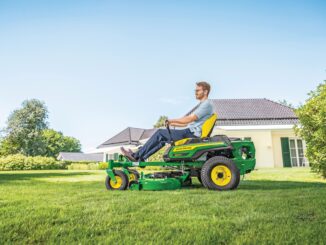
John Deere 3R Series Compact Tractor Models and Maintenance Guide
The John Deere 3R Series is John Deere’s premium compact utility tractor range for owners who need more capability, comfort, hydraulic performance, and implement flexibility than a sub-compact or entry-level compact tractor can provide. These tractors suit larger residential properties, estates, small farms, equestrian yards, contracting support work, and acreage owners who regularly use a front loader, mower, rear implements, snow equipment, or PTO-driven attachments.
This page is an across-time directory for North American John Deere 3R Series tractors. It brings together the current and known legacy 3R models sold in the United States and Canada, while routing readers toward model-specific maintenance, repair, buyer’s, and troubleshooting content. Use it alongside the General John Deere Compact Tractor Guide for broader information on John Deere compact tractor families, attachments, servicing practices, and model selection.
The present 3R lineup consists of the 3033R, 3039R, and 3046R. Earlier North American 3R-family machines included the 3038R and 3045R, while the older 3000 Twenty Series tractors—such as the 3120, 3320, 3520, and 3720—are important practical predecessors for owners researching used compact tractors, shared attachment fitment, and related service procedures. John Deere’s current 3R models span roughly 32 to 45 engine horsepower, use four-wheel drive, and are positioned as premium compact utility tractors with open-station or cab configurations.manuals.deere+2
About the John Deere 3R Series Compact Tractor Series
John Deere 3R Series tractors are premium compact utility tractors built around a relatively heavy, capable compact chassis rather than a light sub-compact platform. The current North American range covers approximately 32.2 to 45.3 gross engine horsepower, with the 3033R at the lower end, the 3039R in the middle, and the 3046R at the top. These machines are large enough for regular loader work, ground-engaging implements, mowing, snow clearance, material handling, property maintenance, and light agricultural duties, yet still compact enough to work around buildings, paddocks, orchards, yards, and established landscaping.deere+1
The 3R Series sits above the simpler 3E and 3D tractor groups in equipment level, operator comfort, transmission sophistication, and available options. A 3E or 3D model can be a practical value choice for straightforward mowing, loader work, and basic three-point-hitch jobs, but the 3R range targets operators who spend more time in the seat or need greater control for repeated professional-style work. John Deere positions the 3R and 4 Series as machines for serious land management, including heavy material handling, grading, brush work, farm support, and larger-property maintenance.deere+1
Current 3R tractors use standard four-wheel drive and a Category 1 three-point hitch. The 3033R and 3039R can be specified with either a three-range eHydro hydrostatic transmission using Twin Touch pedals or a 12-forward/12-reverse PowrReverser transmission. The 3046R is normally offered with the three-range eHydro transmission. Cab and open-station configurations are available, allowing buyers to choose between lower cost and simpler access or the year-round comfort of heating and air conditioning.deere+1
Important 3R features include electronic hydrostatic transmission control, cruise functions, LoadMatch, MotionMatch, SpeedMatch, four-wheel drive, rear differential lock, power steering, and premium operator controls. Exact specifications and feature availability vary by model year, transmission, serial-number range, cab configuration, and country-market specification, so parts purchases and repair procedures should always be checked against the tractor’s identification number and operator’s manual.
Typical 3R work includes:
-
Front-loader lifting, carrying, spreading, and pallet handling.
-
Mid-mount mowing and estate maintenance.
-
Rotary cutting and pasture topping.
-
Box-blade, rear-blade, landscape-rake, and driveway-grading work.
-
Tillage with a suitable rotary tiller or light-duty soil-working implement.
-
Snow blowing, snow pushing, rear-blade work, and loader-mounted snow removal.
-
Post-hole digging, backhoe work where compatible, and general smallholding tasks.
-
PTO-driven equipment such as finish mowers, rotary cutters, spreaders, generators, and certain wood-processing attachments.
Compared with the smaller 1 Series, the 3R has a substantially heavier-duty role and more capability for sustained implement work. Compared with the 2 Series, it offers more power, a larger overall platform, greater loader and hitch capacity, and cab availability. Compared with 4 Series compact tractors, the 3R remains more maneuverable and generally lighter, while the 4 Series extends into heavier compact and utility-style work with more horsepower and larger implement potential.deere+1
John Deere 3R Series Compact Tractor Models
The table below is designed as an across-time North American index. “Current” refers to models presently represented in John Deere’s current 3R Series product lineup; “legacy” or “discontinued” identifies earlier models that remain relevant to used-equipment owners, parts research, attachment compatibility, and troubleshooting work.
The current North American 3R lineup includes the 3033R, 3039R, and 3046R, listed at approximately 32.2, 38.8, and 45.3 horsepower respectively. The current models use four-wheel drive and Category 1 hitches; the 3033R and 3039R are available with either eHydro or PowrReverser transmission choices, while the 3046R is listed with hydrostatic transmission.deere+1
The 3038R and 3045R should not be omitted from a serious 3R index. John Deere’s Final Tier 4 documentation, service material, power-beyond compatibility information, and parts guides identify the 3033R, 3038R, 3039R, 3045R, and 3046R as 3R Series models. The 3038R was approximately 37 hp, and the 3045R was approximately 44.6 gross hp.deere+3
The older 3120, 3320, 3520, and 3720 were marketed as 3000 Twenty Series compact utility tractors rather than as 3R-branded machines. However, they are highly relevant legacy predecessors in the same broad North American John Deere premium compact-tractor lineage. They are especially useful cross-reference machines for readers researching used equipment, comparable sizes, compatible implements, backhoe applications, and evolution of John Deere compact tractor systems. John Deere compatibility material lists the 3120, 3320, 3520, and 3720 alongside the later 3033R, 3038R, 3039R, 3045R, and 3046R for the 375A/385A backhoe family.manuals.deere+2
3R Series Compact Tractor Maintenance Guides
Routine Service and Checks
A sound 3R maintenance routine starts with the operator’s manual for the exact model and serial-number range. The broad service categories are similar across the 3R range, but oil capacities, filter part numbers, emission-system requirements, transmission configuration, cab equipment, and service intervals can differ between early 3033R/3038R/3045R tractors and later current-production 3033R, 3039R, and 3046R machines.
For routine ownership, inspect the tractor before use and carry out scheduled maintenance by both engine hours and calendar time. A tractor that only does seasonal work can still accumulate moisture, contaminated fuel, battery deterioration, rodent damage, corrosion, and hydraulic-hose wear while it is parked.
Key regular checks include:
-
Engine-oil level, oil condition, oil-filter service, and correct diesel-rated engine oil.
-
Fuel quality, fuel-water separator drainage, fuel-filter replacement, and clean fuel storage practices.
-
Air-cleaner restriction indicator, outer filter condition, and intake-hose security.
-
Coolant level, radiator and grille cleanliness, fan-belt condition, and hose condition.
-
Hydraulic/transmission fluid level, fluid condition, filter intervals, coupler cleanliness, and leak inspection.
-
Front-axle oil level and service interval on four-wheel-drive machines.
-
Grease points on loader pivots, steering linkage, three-point hitch joints, pedal linkages, and attachment shafts.
-
Tyre pressure, wheel-nut security, tread damage, ballast condition, and correct front/rear tyre matching.
-
Battery terminals, starter connections, fuses, relays, lights, safety switches, and wiring protection.
-
Cab air filters, HVAC performance, door seals, wiper condition, and condenser/radiator cleaning on cab tractors.
A practical maintenance cluster for this site should include the 3R Series compact tractor service interval checklist, DIY maintenance for 3R Series compact tractors, John Deere 3R engine oil, filters, and fluid capacities guide, John Deere 3R fuel-system maintenance guide, and 3R Series winter storage and seasonal recommissioning checklist.
John Deere’s 3R quick-reference information shows that service needs differ even within the range. For example, published FT4 material identifies different engine-oil capacities for the lower- and higher-output models, while listing a 25.7 L transmission/hydraulic capacity and a 4.8 L front-axle capacity for the covered 3R tractors. The same information specifies a 400-hour or annual fuel-filter replacement interval for certain models. Always use the quick-reference guide and operator’s manual specific to the tractor before ordering service parts or adding fluids.deere+2
Hydraulics, Loader, and 3-Point Hitch
The 3R Series is often bought for hydraulic work, so clean oil, clean couplers, correct ballast, and regular greasing are central to long service life. A loader that feels weak or slow may be suffering from a simple issue such as low hydraulic oil, cold fluid, clogged filtration, improperly connected quick couplers, a damaged hose, incorrect engine speed, excessive load, or poor rear ballast. It may also point to a more serious hydraulic, relief-valve, pump, cylinder, or control-valve fault.
Keep the loader parked safely before inspecting it. Lower the attachment to the ground, shut the engine off, move hydraulic controls to relieve residual pressure where the procedure permits, and never search for a high-pressure hydraulic leak with bare hands. Hydraulic injection injuries are medical emergencies.
Regular loader and hitch work should include:
-
Greasing every loader pivot at the correct interval.
-
Checking loader-mounting hardware, frame fasteners, pivot pins, retainers, and bushings.
-
Inspecting hydraulic hoses for abrasions, cracking, wetness, crushed sections, and poor routing.
-
Keeping quick couplers clean and fully seated.
-
Checking bucket cutting edges, teeth, wear strips, and attachment-locking points.
-
Lubricating three-point-hitch linkages and checking stabilizers, lift arms, ball ends, pins, clips, and sway control.
-
Confirming that a rear implement or ballast box is correctly matched to loader work.
Useful supporting content includes Hydraulic maintenance and leak diagnosis on 3R Series tractors, Loader and 3-point hitch maintenance for 3R Series, John Deere 3R loader grease-point guide, and 3R Series hydraulic quick-coupler troubleshooting guide.
Transmission and Drivetrain
A 3R transmission complaint is not always a transmission failure. Incorrect range selection, cold hydraulic oil, brake linkage drag, four-wheel-drive operation on high-traction surfaces, tyre mismatch, a safety-interlock problem, or a failed pedal/linkage sensor can all produce symptoms that feel like poor drive performance.
For eHydro models, check the hydrostatic pedals, neutral return, range selector, cruise functions, parking brake, transmission fluid, filters, electrical connections, and operator-presence/safety circuits before assuming that the hydrostatic unit itself has failed. Models with PowrReverser transmissions require attention to clutch and directional-control operation, linkage condition, electrical controls, correct fluid level, and any fault indications.
On all four-wheel-drive tractors, inspect front-axle oil, driveshaft guards, universal joints where fitted, front differential components, tyre condition, wheel fasteners, and the relationship between front and rear tyre rolling circumference. Use four-wheel drive as intended for loose, slippery, or working surfaces; prolonged use on dry high-grip pavement can cause driveline wind-up and unnecessary wear.
A useful internal guide structure would include Transmission and driveline maintenance across 3R Series compact tractors, eHydro operating and diagnostic guide for John Deere 3R tractors, and 4WD, front axle, and tyre maintenance on 3R Series tractors.
3R Series Compact Tractor Troubleshooting Guides
The best 3R troubleshooting content should begin with a clear symptom, identify the specific tractor configuration, and then move from basic external checks to model-specific diagnostic steps. This matters because a 3033R with a PowrReverser transmission, a 3039R eHydro cab tractor, and a legacy 3045R can share certain systems but use different components, controls, serial-number breaks, and fault-diagnosis procedures.
Starting, Engine, and Fuel Problems
Starting and engine complaints often appear after cold weather, long storage, irregular use, contaminated fuel, or battery deterioration. Common owner-reported symptoms include slow cranking, a no-crank condition, cranking without firing, hard cold starts, stalling, uneven running, warning indicators, excessive smoke, or loss of power under PTO or loader load.
Start with the simple checks:
-
Confirm the parking brake, PTO, range selector, hydrostatic pedals, seat switch, and other safety interlocks are in the required positions.
-
Check battery voltage, battery-terminal cleanliness, ground cables, starter connections, fuses, relays, and ignition-switch operation.
-
Make sure there is clean diesel in the tank and that the fuel shut-off, fuel filter, water separator, and supply lines are not restricted.
-
Inspect the air intake, air filter, exhaust path, and cooling pack.
-
Check engine-oil level, coolant level, and warning messages before continued running.
-
Consider temperature, fuel gelling risk, glow-plug/preheat operation, and battery condition in cold weather.
-
Avoid repeated uncontrolled cranking, which can flatten the battery and obscure the original fault.
Core pages should include 3R Series compact tractor starting problems – diagnostics and fixes, Engine and fuel system issues across 3R Series models, John Deere 3R cold-start troubleshooting guide, and individual content such as 3039R no-start diagnosis or 3046R power-loss-under-load guide.
Hydraulic and Loader Performance Issues
Slow loader movement, poor lift strength, jerky operation, excessive noise, an implement that will not raise, or an attachment that drifts down can originate in the hydraulic oil supply, filters, couplers, controls, cylinders, hoses, relief system, or implement itself. The tractor must also be operated at suitable engine speed: low rpm will reduce available hydraulic flow and can make a healthy system feel slow.
Before deeper diagnosis, confirm that:
-
Hydraulic/transmission oil is at the correct level and has the right specification.
-
The oil is warm enough for normal operation in cold conditions.
-
Filters are not overdue and no service warning applies.
-
Quick couplers are clean, fully connected, and not under trapped pressure.
-
The implement is within the tractor’s lift and hydraulic capability.
-
Loader and hitch controls are not locked, misadjusted, or being obstructed.
-
Rear ballast is present when undertaking loader work.
-
Hoses, fittings, and cylinders show no obvious leakage or damage.
Build this hub around Hydraulic performance problems on 3R Series compact tractors, Loader won’t lift or is slow on 3R Series models, 3-point hitch will not raise on John Deere 3R tractors, and individual model posts such as 3033R hydraulic troubleshooting guide or 3045R loader problems and fixes.
Transmission, Drive, and PTO Problems
Drive and PTO symptoms should be separated carefully. A tractor may move normally while the PTO will not engage, or the PTO may operate while the tractor has poor traction or no travel. Likewise, poor climbing performance can be caused by the wrong hydrostatic range, an overloaded implement, brake drag, low hydraulic oil, engine power loss, wheelspin, or a genuine transmission fault.
Common drive and PTO symptom groups include:
-
Tractor will not move in forward or reverse.
-
Tractor moves weakly, slowly, or only in one direction.
-
Poor hill performance or loss of drive under load.
-
Hydrostatic pedal does not return to neutral.
-
PowrReverser direction change is delayed or abnormal.
-
Four-wheel drive will not engage or disengage correctly.
-
PTO will not engage, stops under load, or drops out intermittently.
-
PTO turns but the implement does not perform correctly.
-
Safety interlock, switch, relay, sensor, or wiring fault prevents engagement.
Do not bypass safety switches or protective systems to make a tractor move or run an implement. A proper diagnostic sequence should confirm the operator controls, safety interlocks, fuses, warning codes, electrical connectors, oil level, linkage adjustment, and attachment condition first.
Recommended content includes Drive and transmission problems on 3R Series compact tractors, PTO won’t engage or drops out across 3R Series models, eHydro troubleshooting for 3033R, 3039R, and 3046R tractors, and model-specific posts such as 3038R transmission problems and fixes or 3720 PTO troubleshooting guide.
Attachments and Implements for the 3R Series Compact Tractor Series
A principal advantage of the 3R Series is its ability to operate a broad range of front, mid, and rear attachments. The correct attachment choice depends on engine and PTO horsepower, tractor weight, wheelbase, tyre type, hydraulic capacity, hitch capacity, available hydraulic remotes, operator experience, and the type of ground being worked.
Common attachment categories include:
-
Front loaders with general-purpose, material, manure, snow, pallet-fork, grapple, and light-duty specialty buckets.
-
Mid-mount mower decks for estate mowing and maintained grass.
-
Rear finish mowers for larger lawns, paddocks, and parkland.
-
Rotary cutters for rough grass, field edges, overgrown ground, and light brush within the implement’s rating.
-
Box blades, rear blades, landscape rakes, land planes, and grading scrapers for driveways and site maintenance.
-
Rotary tillers, cultivators, ploughs, and other light-to-medium ground-engaging equipment.
-
Post-hole diggers and compatible backhoes.
-
Broadcast spreaders, sprayers, seeders, and utility carriers.
-
Front and rear snow blowers, rear blades, loader-mounted snow pushers, and ballast equipment.
-
Pallet forks, bale spears, grapples, and other material-handling tools matched to loader and ballast capacity.
Compatibility should never be judged by horsepower alone. A 3046R may have the engine output to run a particular implement, but the attachment must also match its PTO rating, driveline length, hitch category, lift requirement, hydraulic demand, width, weight, and intended use. A mower that is too wide may overload the tractor in heavy growth. A loader attachment that is too heavy can reduce usable lift. An inadequately ballasted tractor can become unstable even when the loader’s rated capacity has not been exceeded.
For loaders, the rear of the tractor normally needs appropriate ballast. This might be a correctly matched rear implement, ballast box, wheel weights, or liquid ballast where suitable. Follow the operator’s manual and loader manual for ballast requirements, tyre pressures, travel speeds, slope limits, transport position, and approved attachment combinations.
Useful internal content should include Attachments and implement options for 3R Series compact tractors, Setting up and using loaders and rear implements on 3R Series, John Deere 3R Series mower and rotary-cutter selection guide, 3R Series snow-removal attachment guide, and Loader ballast and safe lifting guide for John Deere compact tractors.
John Deere’s published 3R information identifies AutoConnect mid-mount mower compatibility on the 3033R and identifies optional cab equipment, four-wheel drive, Category 1 hitch fitment, and premium transmission choices across the current range. Specific attachment availability changes by model year, region, loader specification, and serial number, so owners should confirm compatibility through the tractor’s operator documentation and the relevant attachment manual.