
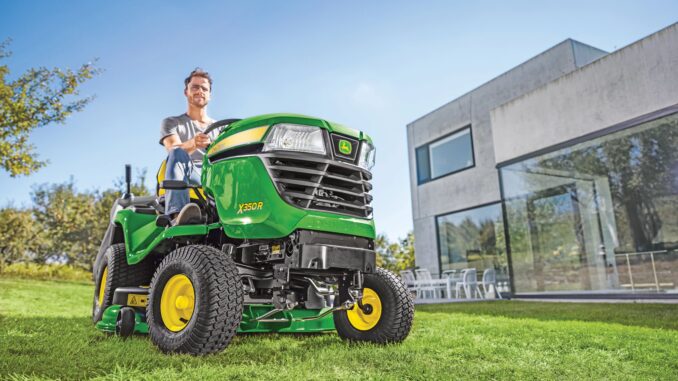
The John Deere d125 is a homeowner lawn tractor in Deere’s D100 Series, commonly sold with a 42-inch mower deck, a 20 HP V-twin gasoline engine, and hydrostatic transmission for easy pedal-controlled operation. It is designed mainly for routine residential mowing rather than heavier ground-engaging work, so most owners use it for regular lawn care on small to medium properties.
This guide covers practical repair advice, symptom-first troubleshooting, maintenance tasks, service parts, and a large FAQ tailored to DIY owners in the USA and Canada. The aim is to help owners handle realistic home repairs while drawing a clear line between straightforward maintenance and jobs better left to a dealer or experienced repair shop.
General overview of the John Deere d125
The John Deere d125 sits in the D100 Series homeowner tractor lineup and uses the core systems most owners end up servicing: engine and fuel system, mower deck and blade drive, hydrostatic drive system, steering and chassis, and the electrical and safety-interlock system. For most repair decisions, those are the systems that explain starting issues, rough running, poor cut quality, weak drive, and intermittent electrical faults.
Common service parts owners regularly buy for the John Deere d125 include the 42-inch mower blades, 42-inch deck belt, engine oil, oil filter, air filter, fuel filter, and spark plugs. Deere quick-reference material lists common service numbers including mower blade GY20850, mower deck belt GY20072, oil filter GY20577, engine oil TY22029, fuel filter GY20709, and air filter GY21435.
Troubleshooting approach for the John Deere d125
The best way to diagnose a John Deere d125 is to start with the symptom the owner actually sees, hears, or feels before guessing at parts. On this model, the main symptom groups are starting problems, running problems, cut-quality issues, vibration or unusual noise, overheating or leaks, transmission or drive complaints, and electrical or safety-switch faults.
That matters because the same complaint can come from several different causes. A no-start could be a battery problem, a fuel issue, a spark problem, or an interlock fault, while uneven mowing might be caused by dull blades, poor deck level, belt slip, or grass packed under the deck rather than one failed component.
Emergency and immediate repair needs
Some John Deere d125 faults need immediate attention because they affect safe operation or can quickly damage other parts. Stop using the tractor immediately if the mower vibrates heavily, fuel is leaking, wiring is overheating, belts are smoking, blades do not stop properly, or dry grass and debris have built up around the engine or muffler area.
4.1 Starting issues
Starting problems on a John Deere d125 usually show up as no crank, a single click, slow cranking, or normal cranking with no fire. Repeated cranking without checking the basics can flatten the battery and make diagnosis more confusing.
Common causes:
-
Weak or failed battery.
-
Dirty or loose battery terminals.
-
PTO engaged, brake not set, or seat/interlock issue.
-
Bad spark plugs or ignition-related trouble.
-
Fuel delivery restriction or stale gasoline.
Basic owner checks:
-
Confirm the brake is locked, PTO is off, and the seat/interlock conditions are correct.
-
Inspect battery terminals for looseness or corrosion.
-
Check the fuel supply and inspect the inline fuel filter.
-
If it cranks well but will not fire, inspect the spark plugs and air filter next.
4.2 John Deere d125 cut-quality problems
Poor cut quality usually appears as stragglers, uneven height, scalping, clumping, or strips of uncut grass. Owners often assume there is a serious deck fault when the real cause is simply dull blades, wrong deck setup, heavy grass conditions, or belt wear.
Common causes:
-
Dull, bent, or unbalanced blades.
-
Deck out of level.
-
Worn or slipping deck belt.
-
Grass buildup under the deck.
-
Ground speed too fast for conditions.
Basic owner checks:
-
Clean the underside of the mower deck safely with the engine off and key removed.
-
Inspect both blades for wear, bends, or cracking.
-
Check the deck belt for glazing, fraying, or slack.
-
Verify side-to-side level and front-to-rear deck pitch.
4.3 Vibration and noise
Heavy vibration on a John Deere d125 is usually tied to rotating components and should never be ignored. Continuing to mow with sudden vibration can damage spindle bearings, deck hardware, and in severe impact cases possibly the engine crankshaft.
Common causes:
-
Bent blade.
-
Loose blade hardware.
-
Worn spindle or idler bearing.
-
Debris wrapped around pulleys.
-
Loose engine, deck, or hanger hardware.
Basic owner checks:
-
Stop mowing immediately after impact or sudden vibration starts.
-
Inspect blades and blade bolts first.
-
Check pulleys and spindles for roughness if safe access is possible.
-
Look for looseness in deck brackets and hangers.
4.4 John Deere d125 overheating and leaks
Overheating often shows up as power loss, hot smells, smoking debris, or shutdown after a period of use. Fuel and oil leaks need quick action because Deere warns about fire risk when leaks combine with dry grass or debris near hot engine parts.
Common causes:
-
Grass packed around engine screens or muffler.
-
Low oil level or delayed oil service.
-
Fuel line or filter leakage.
-
Restricted air filter causing poor combustion and extra heat.
Basic owner checks:
-
Let the tractor cool fully before inspection.
-
Clean debris from the engine, muffler, and top of deck areas.
-
Check engine oil level and service status.
-
Inspect hoses, fuel filter connections, and the air filter assembly.
4.5 Transmission and drive problems
Drive complaints on the John Deere d125 usually show up as weak climbing power, sluggish response, poor forward or reverse movement, or performance that drops as the tractor gets hot. Because the tractor uses hydrostatic drive, belt problems, linkage issues, and transaxle wear can all feel similar from the operator’s seat.
Common causes:
-
Worn or slipping drive belt.
-
Linkage adjustment issue.
-
Hydrostatic transaxle wear.
-
Brake drag or rolling resistance.
Basic owner checks:
-
Confirm the freewheel or bypass setting is fully back in drive mode after any pushing or towing.
-
Inspect the drive belt area for visible damage or contamination.
-
Compare cold performance with hot performance.
-
Move to dealer-level diagnosis if belt and linkage checks do not explain the problem.
4.6 John Deere d125 electrical problems
Electrical faults can look random, with symptoms like no click, no crank, blades not engaging, or intermittent shutoff. On this tractor, battery condition and interlocks should be checked before replacing switches or chasing wiring deeper into the machine.
Common causes:
-
Weak battery.
-
Corroded cable ends.
-
Faulty PTO, brake, or seat switch.
-
Blown fuse or wiring damage.
Basic owner checks:
-
Clean and tighten both battery terminals.
-
Check the fuse and inspect visible wiring.
-
Confirm PTO-off and brake-set conditions.
-
Test safety-switch operation only after the battery and cables are ruled out.
John Deere d125 DIY or dealer? Repair decision guide
The John Deere d125 is one of the easier Deere tractors for owners to maintain at home, but the normal boundary is simple: if the job is external, clearly accessible, and part of routine wear service, it is often realistic DIY; if it involves internal engine work, hydrostatic transmission repair, major electrical tracing, or safety-critical adjustment you cannot verify properly, dealer service is the safer route.
Good DIY jobs:
-
Oil and filter changes.
-
Air filter, fuel filter, and spark plug replacement.
-
Blade sharpening or blade replacement.
-
Deck cleaning, deck leveling, and many deck belt replacements.
Advanced DIY or dealer jobs:
-
Spindle replacement where hardware is seized or deck damage is present.
-
Major electrical diagnosis beyond battery, fuse, and basic interlock checks.
-
Hydrostatic transmission removal or internal repair.
-
Valve-clearance service, which Deere marks as dealer service at 200 hours.
Skill level guide:
-
Beginner: Battery cleaning, air filter replacement, fuel filter replacement, blade inspection.
-
Intermediate: Oil and filter service, spark plugs, blades, deck belt replacement.
-
Advanced: Spindle repair, deep electrical diagnosis, hydrostatic work, valve adjustment.
Parts needed, OEM vs aftermarket, and what information you need for a John Deere d125
Before ordering John Deere d125 parts, gather the full model name, the tractor Product Identification Number, the engine model and serial number, and the deck size. Deere’s operator’s manual specifically tells owners to record the machine PIN and engine serial number because service parts and specifications can vary by configuration.
OEM is the better choice for belts, safety-related parts, and items where exact fit matters. Aftermarket is often acceptable for selected filters, blades, and batteries as long as the cross-reference is exact for your John Deere d125 configuration and engine specification.
Where to find John Deere d125 parts diagrams and service manuals
The most useful starting points are Deere’s own operator information and parts references, then one reputable Deere-focused parts supplier for quick cross-checking. Together they cover service intervals, safety procedures, identification details, and common service-part references for the John Deere d125.
Useful sources:
-
Official D100 Series operator’s manual for safety, operating controls, maintenance schedules, identification, and troubleshooting basics.
-
Deere Technical Information Store for Deere manual lookup and official publication access.
-
Green Farm Parts D125 maintenance guide for common maintenance parts and part-number cross-references.
-
Home Depot D125 product page for broad retail specs and consumer-facing model details.
How to locate model, serial, and engine numbers on a John Deere d125
These numbers matter because blades, belts, filters, and engine-service parts can differ by exact configuration. Using only the words “John Deere d125” is often enough for simple browsing, but not always enough for confident parts ordering.
Steps:
-
Find the tractor Product Identification Number on the frame location shown in the D100 Series operator’s manual.
-
Record the full PIN exactly as stamped.
-
Find the engine serial number on the engine identification label; Deere shows separate examples for single-cylinder and V-twin locations.
-
Confirm the mower deck size before ordering deck belts, blades, or spindle parts.
-
Keep the tractor and engine numbers with your service notes for future repairs.
Buying John Deere d125 parts online and in stores
The smartest buying strategy is to identify the OEM part number first and only then compare sellers, price, and availability. That reduces the chance of buying a belt, filter, or blade that looks right but is not the correct match for your exact tractor and engine setup.
-
Online: use official references and Deere-focused suppliers first, including Deere Technical Information Store, Green Farm Parts, and Deere manual resources.
-
Dealer counter: best for serial-sensitive parts and unclear fitment questions.
-
Retail stores: fine for common consumables such as oil, spark plugs, batteries, and some filters when packaging clearly matches the exact application.
Step-by-step fitting guide for common John Deere d125 parts
These are the highest-impact DIY service jobs because they directly affect starting, running quality, and mowing performance.
Air filter replacement
Replacing the air filter helps restore normal airflow and can improve hard starting, rough running, and smoky operation.
-
Park safely, remove the key, and let the engine cool.
-
Open the air cleaner housing and remove the old filter and precleaner if fitted.
-
Clean loose debris from the housing without pushing dirt into the intake.
-
Install the new filter in the same orientation as the old one.
-
Refit the cover securely before restarting.
John Deere d125 spark plug replacement
Fresh spark plugs can help with hard starting, poor idling, and weak running under load.
-
Let the engine cool fully and remove one plug wire at a time.
-
Remove the old spark plug and inspect its condition.
-
Compare the replacement plug number to your engine specification before fitting.
-
Install the new plug carefully to avoid cross-threading.
-
Reattach the plug wire firmly and repeat for the second cylinder if fitted.
John Deere d125 blade service
Blade service is one of the fastest ways to improve cut quality on this model.
-
Park on level ground, remove the key, and make sure accidental starting cannot occur.
-
Gain safe access to the deck and remove the blade hardware.
-
Inspect the old blades for bends, cracks, and uneven wear.
-
Sharpen and balance serviceable blades or replace them as a matched set.
-
Reinstall in the correct orientation and tighten securely.
John Deere d125 deck belt replacement
A deck belt replacement helps when the mower squeals, slips, or loses blade speed under load.
-
Lower the deck, remove the key, and study the current belt routing first.
-
Release belt tension and remove the old belt from the pulleys.
-
Check idlers and pulley grooves for roughness or debris buildup.
-
Route the new belt exactly for the 42-inch deck layout.
-
Confirm the belt is seated correctly before mowing.
Maintenance to prevent John Deere d125 problems from coming back
Routine maintenance prevents most John Deere d125 complaints before they turn into full repair jobs. The biggest gains come from clean airflow, correct oil service, sharp blades, correct deck setup, and regular debris removal around the engine and mower deck.
Focus areas:
-
Starting reliability: keep battery terminals clean, use fresh fuel, and stay on top of spark plugs and air-filter service.
-
Cut quality: sharpen or replace blades, keep the deck underside clean, and inspect the deck belt routinely.
-
Fire and overheating prevention: clean debris from the engine, muffler, screens, and deck surfaces.
-
Drive performance: inspect belts and basic linkage issues before assuming the transaxle is failing.
-
Electrical reliability: deal with weak batteries, corrosion, and interlock problems early.
John Deere d125 maintenance schedule and year-round checklist
Deere quick-reference material for the John Deere d125 lists service work after 8 hours, every 25 hours, every 50 hours or yearly, and every 200 hours. The operator’s manual adds the broader maintenance context for mower service, lubrication, inspection, and storage.
Daily / before each use
-
Check for loose, missing, or damaged parts.
-
Inspect for fuel or oil leaks.
-
Remove excess grass and debris from the machine.
-
Verify guards and safety devices are in place.
After 8 hours
-
Change engine oil and replace the oil filter.
-
Check and adjust mower deck belt tension.
-
Check and adjust mower deck spindle brakes.
-
Lubricate mower spindles, pivot points, and front axle wheel spindles and bushings.
Every 25 hours
-
Check and adjust mower deck spindle brakes.
-
Lubricate mower spindles.
Every 50 hours or yearly
-
Change engine oil and replace the oil filter, more often in dusty conditions.
-
Clean or replace the air-filter precleaner and element, more often in dusty conditions.
-
Replace the fuel filter.
-
Sharpen or replace mower blades.
-
Check or replace the mower drive belt and recheck deck-belt tension.
Every 200 hours
-
Lubricate pivot points.
-
Lubricate front axle wheel spindles and bushings.
-
Check and adjust valve clearance; Deere marks this as dealer service.
Seasonal checklist
-
Spring: oil service, air-filter inspection, battery check, blade inspection, full deck cleanup.
-
Mid-season: sharpen blades, inspect the deck belt, clear engine-area debris, and inspect the fuel filter.
-
Fall: clean the tractor thoroughly, fix leaks, and prepare the machine carefully for storage.
Repair, upgrade, or replace a John Deere d125?
A John Deere d125 is usually worth repairing when the engine is sound, the frame and deck are still solid, and the problem is limited to wear parts or straightforward electrical faults. Owners should think more seriously about upgrading or replacing when the tractor has weak drive, repeated electrical trouble, and multiple major wear issues at the same time.
Repair if:
-
The fault is limited to normal wear items like blades, belts, filters, battery, or switches.
-
The deck shell and chassis are still structurally good.
-
The tractor still drives normally after basic checks.
Upgrade if:
-
You need more durability, stronger towing tolerance, or a machine intended for heavier long-term use than the D100 Series homeowner class.
-
Your mowing conditions regularly push the tractor beyond light residential duty.
Replace if:
-
The tractor has major transmission weakness, serious deck wear, and engine issues together.
-
Repair cost is approaching the value of a better-condition replacement machine.
Expanded John Deere d125 troubleshooting FAQ
1. Why will my John Deere d125 not start?
Start with the basics: battery condition, cable connections, brake position, PTO position, and seat/interlock status. If it cranks but does not fire, move next to fuel supply, air filter condition, and spark plugs before assuming a serious engine problem.
2. Why does my John Deere d125 click but not crank?
A click usually means weak battery power, poor cable contact, or starter-circuit resistance rather than a major internal engine issue. Clean and tighten the terminals first, then test the battery properly before replacing other parts.
3. Why does the John Deere d125 crank but not fire?
If the engine cranks normally but never starts, check fuel quality, inline fuel flow, spark plugs, and the air filter. This is often a maintenance issue rather than a catastrophic failure.
4. Why is my John Deere d125 hard to start when cold?
Cold-start trouble often points to weak spark plugs, marginal battery condition, stale fuel, or restricted airflow. Routine tune-up parts solve many of these complaints.
5. Why does my John Deere d125 start and then die?
That pattern often suggests restricted fuel flow, stale fuel, or an intermittent electrical or interlock issue. Check the inline fuel filter and visible wiring first.
6. Why is my John Deere d125 running rough?
Rough running usually comes from air, fuel, or ignition problems rather than from the mowing system itself. Dirty air filters, old spark plugs, and poor fuel delivery are common causes on this model.
7. Why is my John Deere d125 losing power while mowing?
Power loss under load can come from dull blades, grass buildup under the deck, restricted airflow, or overheating due to debris buildup. Clean and service the basics before assuming deeper engine damage.
8. Why does the John Deere d125 blow black smoke?
Black smoke usually points to an over-rich condition or restricted air intake. Check the air filter first because it is one of the most common and easiest fixes.
9. Why is my John Deere d125 using more fuel than usual?
Higher fuel use can be caused by a dirty air filter, rough running, deck drag, or mowing conditions that overload the tractor. If fuel use rises with rough operation, start with service items.
10. Why does my John Deere d125 leave uncut strips?
Uncut strips usually mean dull blades, incorrect deck level, or a slipping deck belt. Inspect the mowing system before blaming the engine.
11. Why is the John Deere d125 cutting unevenly?
Uneven cut is often caused by deck-level issues, tire-pressure differences, or blade wear. Simple setup corrections are more common than major deck failure.
12. Why is my John Deere d125 scalping the lawn?
Scalping usually comes from the deck being too low for the ground shape, or from deck leveling and pitch issues. Slowing down and correcting deck setup are often the real fix.
13. Why does the John Deere d125 clump grass?
Clumping is commonly caused by wet grass, overgrown turf, packed deck undersides, dull blades, or mowing too fast. Cleaning the deck and adjusting mowing speed usually help immediately.
14. Why does my John Deere d125 mower deck vibrate?
Deck vibration usually points to bent blades, loose blade hardware, or spindle problems. Stop using the mower until the rotating parts have been inspected.
15. Why is the John Deere d125 making a knocking noise from the deck?
Knocking often means a loose blade, damaged pulley, worn spindle, or debris hitting a rotating part. Inspect the deck externally before running it again.
16. Why does my John Deere d125 squeal when I engage the blades?
A squeal at blade engagement often indicates belt slip, pulley problems, or debris interfering with the belt path. The deck belt is a common wear point and should be checked closely.
17. Why do the blades on my John Deere d125 stop in heavy grass?
That usually points to deck-belt slip, overloaded mowing conditions, or dull blades. Check the belt and blade condition before assuming a more expensive fault.
18. How often should I change the oil on a John Deere d125?
Deere quick-reference material lists an oil and filter change after 8 hours and then every 50 hours or yearly, with more frequent service in dusty conditions. That is the safest baseline for homeowner use.
19. How often should I replace the air filter on a John Deere d125?
Deere’s quick schedule says to clean or replace the air-filter precleaner and element every 50 hours or yearly, and sooner in dusty conditions. Frequent dusty mowing justifies extra inspection between scheduled services.
20. What spark plug does the John Deere d125 use?
Green Farm Parts lists spark plug M78543 for USA applications and MIU11020 for Canada/ROW applications in its D125 maintenance guide. Confirm the exact engine specification before ordering, especially on older used tractors.
21. What oil filter fits a John Deere d125?
Deere quick-reference material lists GY20577, while Green Farm Parts lists AM125424 in its D125 maintenance guide. Check current supersessions and engine details before purchase.
22. What fuel filter fits the John Deere d125?
Deere quick-reference material lists GY20709, while Green Farm Parts lists AM116304 in its D125 maintenance guide. Confirm the correct replacement against your machine and engine details.
23. Why does my John Deere d125 keep throwing or wearing deck belts?
Repeated belt trouble usually means pulley wear, misrouting, bad idlers, debris buildup, or alignment and tension problems. Replacing only the belt without checking the pulley system often leads to another failure.
24. Why does my John Deere d125 have weak uphill drive?
Weak uphill pull usually points to drive-belt issues, transaxle wear, or a drive system that loses efficiency as it heats up. Compare performance cold and hot before deciding what to repair.
25. Why will my John Deere d125 not move forward or reverse?
First confirm the freewheel or bypass setting is fully returned to drive mode and that the drive-belt system is intact. If those checks do not explain it, move toward linkage or hydrostatic diagnosis.
26. Why does my John Deere d125 lose drive when hot?
Heat-related drive loss often points more toward hydrostatic wear than to a simple setup problem. Once basic external checks are done, this is usually beyond beginner DIY work.
27. Is the John Deere d125 transmission serviceable?
The transmission can be inspected externally and related belts and linkage can be checked at home, but internal hydrostatic repair is not a routine DIY task for most owners. In practical terms, most deeper transmission work belongs in advanced DIY or dealer territory.
28. Why won’t the blades engage on my John Deere d125?
If the engine runs but the blades do not, start with belt condition, PTO-related components, and safety interlocks. External inspection usually tells you more than replacing random electrical parts.
29. Why does my John Deere d125 overheat?
Overheating often comes from debris packed around engine cooling areas and the muffler rather than from complex internal damage. Deere specifically stresses debris removal as a fire-prevention and reliability issue.
30. Why does my John Deere d125 smell hot after mowing?
A hot smell can come from slipping belts, grass buildup on hot surfaces, or leaks near engine heat. Clean the tractor thoroughly and inspect for leaks before using it again.
31. Why is my John Deere d125 leaking fuel?
Fuel leaks usually come from hoses, clamps, filter connections, or related fuel-system joints. Stop using the tractor until the leak is found because fire risk rises quickly around hot engine parts.
32. Why is my John Deere d125 battery always dead?
Repeated battery discharge can come from old battery condition, poor cable contact, charging issues, or long storage without battery care. Start with cleaning and proper testing before replacing other parts.
33. Why does the John Deere d125 blow a fuse?
A blown fuse usually points to a short, rubbed wire, or failing electrical component. Inspect visible harness routing first, especially near hot or vibrating areas.
34. Can I use aftermarket parts on a John Deere d125?
Yes, for many consumables, but only when the cross-reference is exact for your model and engine setup. OEM parts remain the safer choice for belts, fit-sensitive deck components, and safety-related items.
35. When should I stop trying to fix my John Deere d125 myself?
Stop when safe diagnosis requires special tools, internal hydrostatic work, engine internal adjustment, or repairs that affect blade safety or safe control of the tractor. Deere’s 200-hour valve-clearance service is one example of work it flags as dealer service.