
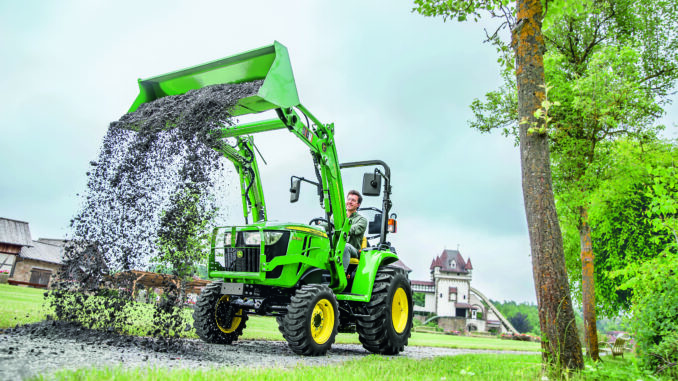
The John Deere 5090E is a 5E Series utility tractor built for property work, loader jobs, mowing, material handling, and general farm use in North America, with a John Deere PowerTech diesel engine, FT4 emissions equipment, standard 12F/12R PowrReverser transmission, and MFWD-only drivetrain. This John Deere 5090E repair guide is written for DIY-minded owners in the USA and Canada who want practical help with troubleshooting, maintenance, parts lookup, diagrams, and knowing when a repair has moved beyond sensible home workshop territory.
If your tractor is hard to start, losing power, showing hydraulic or transmission issues, or simply due for routine service, symptom-first diagnosis saves time and prevents guesswork. The sections below follow the same owner-focused structure most Deere users need: what the John Deere 5090E is, which systems matter most, what parts commonly wear out, where to find manuals and diagrams, and which jobs are realistic DIY repairs versus dealer-level work.
John Deere 5090E overview and where it fits
The John Deere 5090E sits in Deere’s 5E utility tractor family, aimed at owners who need more capability than a lawn and garden tractor but still want a straightforward machine for mowing, transport, loader work, light tillage, and acreage maintenance. In North America, Deere lists the 5090E with a PowerTech diesel engine, Final Tier 4 emissions compliance, MFWD, and a 12F/12R PowrReverser transmission as standard equipment.
For repair and maintenance purposes, the key systems on the John Deere 5090E are the engine and fuel system, air intake and emissions components, transmission and hydraulics, MFWD axle, PTO driveline, brakes and steering, and the electrical/charging system. Owners most often end up buying service parts such as engine oil filters, fuel filters, air filters, hydraulic and transmission filters, cab air filters on cab models, batteries, alternators, and belt-drive components.
General systems on the John Deere 5090E
From a repair standpoint, the engine side of the John Deere 5090E includes the oil filter, primary and secondary fuel filters, primary and secondary air filters, open crankcase ventilation filter, diesel particulate filter support components, and DEF dosing unit filter. These items matter because many common complaints such as hard starting, reduced power, excessive regen-related concerns, smoke, or rough running begin with restricted fuel or air flow, contaminated fluids, or overdue service.
The drivetrain side includes the PowrReverser transmission, transmission/hydraulic oil, transmission oil filter, MFWD axle lubrication points, PTO clutch-related hardware, and steering linkage parts. The electrical side includes the battery, alternator, switches, wiring, and operator-presence or start-permission circuits, while cab tractors also add recirculation and fresh-air filters that affect comfort and HVAC performance rather than drivability.
Common John Deere 5090E service parts owners frequently search for include:
-
Engine oil filter RE504836.
-
Hydraulic oil filter RE197065.
-
Primary fuel filter DZ115389.
-
Secondary fuel filter DZ115390.
-
Primary air filter SU20768.
-
Secondary air filter RE253519.
-
OCV filter DZ105100.
-
DEF dosing unit filter DZ114640.
-
Transmission oil filter SJ10672 on earlier Deere replacement guides for 5090E applications.
-
Battery TY25879 and alternator RE554568 or DZ123153 depending on configuration.
Troubleshooting the John Deere 5090E by symptom
The best way to diagnose a John Deere 5090E is to start with the exact symptom the owner sees, not the part they assume has failed. A crank-no-start tractor, a low-power tractor, a tractor that moves poorly, and a tractor that throws a warning light may all involve different systems even if the machine “just doesn’t run right.”
The main symptom groups on this model are starting issues, poor running or low power, hydraulic or transmission problems, vibration and noise, overheating or fluid leaks, PTO issues, and electrical or warning-light faults. That symptom-first approach is important on the John Deere 5090E because service intervals and filter part numbers differ by engine and configuration, so guessing can lead to wrong parts orders and missed root causes.
Emergency John Deere 5090E repair needs
Some John Deere 5090E problems should be addressed immediately because continued use can create larger failures or unsafe operation. Stop using the tractor if it has major hydraulic leaks, brake problems, steering looseness, severe driveline vibration, repeated overheating, active warning faults tied to engine protection, or a charging system failure that risks stalling or electrical shutdown.
John Deere 5090E starting issues
When a John Deere 5090E will not start, starts hard, or starts and then dies, the issue commonly involves fuel delivery, air in the system, battery/charging weakness, contaminated fuel, or an electrical interlock rather than a major engine failure. On modern diesel utility tractors, repeated cranking without proper diagnosis can drain the battery quickly and make the original fault harder to isolate.
Common causes:
-
Weak battery or poor cable connections.
-
Plugged primary or secondary fuel filters.
-
Air in the fuel system after filter service.
-
Contaminated diesel or water in fuel.
-
Fault in a start-permission or electrical circuit.
Basic checks:
-
Confirm the battery is fully charged and both terminals are clean and tight.
-
Check when the fuel filters were last replaced and inspect for obvious contamination.
-
Verify there is clean diesel in the tank and not stale or water-contaminated fuel.
-
If filters were recently changed, follow the operator’s manual priming or bleed procedure exactly.
-
If the tractor still will not start, move to dealer diagnosis for electrical or fuel-system testing.
John Deere 5090E low power and running problems
If the John Deere 5090E runs but feels weak, smokes, hesitates, or struggles under load, look first at service items that restrict airflow or fuel flow. Power complaints often come from overdue air or fuel filters, poor-quality fuel, or emissions-related service needs rather than internal engine damage.
Common causes:
-
Dirty primary or secondary air filter.
-
Restricted primary or secondary fuel filter.
-
OCV or emissions-related service overdue.
-
Poor fuel quality.
-
Sensor or engine-management fault requiring scan tools.
Basic checks:
-
Inspect and service the air filters if restriction is suspected.
-
Replace fuel filters if the service interval is due or fuel quality is questionable.
-
Check for visible hose issues, loose clamps, or intake leaks.
-
Review whether the tractor is overdue for OCV or DEF-related service items.
-
If warning lamps or derate symptoms are present, schedule dealer diagnostics before continued heavy use.
Vibration and noise on the John Deere 5090E
A new vibration or metallic noise on the John Deere 5090E should never be ignored because it can point to belt-drive issues, steering linkage wear, brake or axle trouble, driveline problems, or loose mounted components. A vibration that gets worse with engine speed is different from one that appears only when moving or when the PTO is engaged, so isolate the condition carefully before replacing parts.
Common causes:
-
Loose or worn belt-drive components.
-
Steering linkage or tie-rod wear.
-
Brake or driveline component wear.
-
Wheel or axle hardware looseness.
-
PTO-related imbalance or attached implement issue.
Basic checks:
-
Inspect the fan belt drive and visible pulleys for wear or looseness.
-
Check front axle, wheels, and tie-rod hardware for play.
-
Test whether the noise changes with engine rpm, vehicle speed, or PTO engagement.
-
Stop operation immediately if the vibration is severe or affects steering/braking.
-
Use dealer support for driveline, brake, or internal transmission noise.
John Deere 5090E overheating and leaks
Overheating and fluid leaks on the John Deere 5090E can damage the engine, transmission, hydraulic system, or axle quickly if ignored. Because the tractor uses multiple fluid systems, identifying which fluid is leaking matters before topping off and continuing work.
Common causes:
-
Low coolant level or cooling system leak.
-
Engine oil leak or overdue oil service.
-
Hydraulic or transmission leak.
-
Axle seal or hub leak.
-
Debris buildup affecting cooling airflow.
Basic checks:
-
Park safely and identify whether the leak is coolant, engine oil, hydraulic oil, or fuel.
-
Check levels against the operator’s manual before restarting.
-
Clean debris from cooling areas if external blockage is obvious.
-
Do not continue operating with active overheating or significant hydraulic leakage.
-
Escalate seal, hose, pump, or internal leak repairs if the source is not obvious.
John Deere 5090E transmission and drive problems
If the John Deere 5090E hesitates to move, shifts poorly, feels weak under load, or shows hydraulic performance changes, include both transmission and hydraulic checks in the diagnosis. Because the machine shares transmission and hydraulic service requirements, overdue filter changes or fluid issues can show up as broader driveability complaints.
Common causes:
-
Low or degraded transmission/hydraulic fluid.
-
Restricted hydraulic or transmission oil filter.
-
Linkage adjustment issues.
-
Internal clutch or transmission wear.
-
MFWD axle lubrication or component issues.
Basic checks:
-
Verify the correct fluid level and service history.
-
Check whether the initial or scheduled hydraulic/transmission filter changes were missed.
-
Note whether the issue affects all gears, one range, reverser operation, or hydraulic functions too.
-
Inspect externally accessible linkage before assuming internal failure.
-
Leave internal transmission testing and pressure diagnosis to a Deere-capable shop.
Electrical faults on the John Deere 5090E
Electrical issues on the John Deere 5090E usually show up as no-crank complaints, dim lighting, warning lamps, charging problems, blown fuses, or intermittent starting behavior. The battery and alternator are common service items, but wiring, grounds, connectors, and safety/start circuits can produce the same symptoms.
Common causes:
-
Weak or failing battery TY25879 equivalent.
-
Alternator fault on RE554568 or DZ123153 applications.
-
Corroded terminals or bad grounds.
-
Blown fuse or damaged connector.
-
Switch or interlock problem.
Basic checks:
-
Load-test the battery before replacing other electrical parts.
-
Confirm charging output if the battery repeatedly goes flat.
-
Inspect main grounds and visible harness connectors.
-
Check fuses and relays before deeper diagnosis.
-
Use dealer testing for persistent CAN-bus, controller, or warning-light faults.
DIY or dealer for the John Deere 5090E
The line on a John Deere 5090E is usually straightforward: routine service, accessible filters, battery work, simple belt replacement, and basic inspections are realistic DIY jobs, while fuel-system diagnosis, emissions faults, internal transmission work, hydraulic pressure testing, and electronic troubleshooting are usually dealer or experienced technician jobs.
Good DIY jobs
-
Engine oil and filter service.
-
Primary and secondary fuel filter replacement.
-
Air filter service and replacement.
-
Cab air filter service on cab tractors.
-
Battery replacement and terminal cleaning.
-
Basic belt inspection and some external belt replacement.
Advanced DIY or dealer jobs
-
Fuel system bleeding after contamination or repeated no-start problems.
-
DEF and emissions-related diagnosis beyond filter replacement.
-
Hydraulic leak tracing when the source is hidden or pressure-related.
-
Internal clutch, reverser, transmission, or PTO repair.
-
Alternator circuit diagnosis beyond simple voltage checks.
Skill level guide
-
Beginner: filters, fluid checks, battery service, cab filter replacement.
-
Intermediate: engine oil service, fuel filter replacement with proper priming, belt inspection, accessible external electrical testing.
-
Advanced: hydraulic leak diagnosis, charging system testing, linkage adjustment, and any repair requiring torque specs, special tools, or service-manual procedures.
John Deere 5090E parts needed, OEM vs aftermarket, and what to collect before ordering
Before ordering John Deere 5090E parts, gather the full model name, Product Identification Number, engine details, and whether the tractor is a cab or open operator station machine. This matters because Deere replacement guides show different intervals and, in some cases, configuration-sensitive parts for North America edition tractors beginning at specific serial ranges such as 5090E (JK100001-).
You should also confirm whether the tractor is the North America FT4 version and whether you are ordering engine, hydraulic, cab, axle, or electrical parts. For routine service parts, OEM is usually the safest choice for filters, emissions-related parts, and fit-sensitive items, while reputable aftermarket options can be acceptable for batteries and some common consumables if the cross-reference is exact.
Where to find John Deere 5090E diagrams and manuals
The most useful official source is Deere’s manuals and training portal, which is the central place to view or purchase operator’s manuals, technical manuals, and parts catalogs. For owners doing routine maintenance, the operator’s manual is the first document to use because it covers service intervals, safe procedures, capacities, and normal operating checks.
Useful links:
-
John Deere Manuals and Training for official operator, technical, and parts publications.
-
John Deere 5090E operator manual page for 5075E/5078E/5085E/5090E tractor operating and service guidance.
-
John Deere 5090E replacement parts guide PDF for service part numbers and intervals on North America edition tractors.
-
John Deere parts search for JDParts access and parts catalog lookup.
How to locate the John Deere 5090E model, PIN, and engine details
These numbers matter because the John Deere 5090E uses serial-sensitive and configuration-sensitive parts, especially when comparing cab and open-station tractors or older and FT4-era service guides. Always match the tractor’s identification details before ordering filters, electrical parts, or drivetrain components.
-
Find the tractor Product Identification Number plate on the machine and record it exactly as shown in the operator literature.
-
Confirm the full model designation is 5090E and note whether it is a North America FT4 tractor or another market/version.
-
Record the engine identification information from the engine data label so filter and emissions parts can be matched correctly.
-
Check whether the tractor is cab or open operator station, since Deere lists specific cab air filters and some configuration differences.
-
Use those numbers together when checking JDParts, dealer counters, or aftermarket cross-reference sites.
Buying John Deere 5090E parts online and in stores
The safest strategy is to identify the exact OEM number first, then compare pricing and availability across Deere and reputable agricultural parts sellers. For the John Deere 5090E, that approach matters because many filters look similar across the 5E family but do not always share the same part number or service interval.
-
Online: use Deere’s manuals and parts portals first, confirm the OEM number, then compare reputable sellers using the exact part code rather than the model name alone.
-
Dealer counter: best for serial-specific electrical, transmission, hydraulic, and emissions parts where the PIN determines fit.
-
Retail stores: acceptable for batteries and some fluids or filters only when the packaging clearly cross-references the Deere OEM part number.
Useful URLs:
John Deere 5090E fitting guide for common parts
The highest-value DIY jobs on the John Deere 5090E are usually filter service, battery replacement, and other basic maintenance tasks that directly affect starting, power, and reliability. Always park safely, lower implements, shut off the engine, and follow the operator’s manual before starting work.
Replacing the John Deere 5090E engine oil filter
This service helps protect the engine from wear and is one of the core maintenance jobs owners can handle at home.
-
Warm the engine briefly, park safely, and shut the tractor down.
-
Drain the old oil into a suitable container following the manual’s safety steps.
-
Remove the old oil filter and confirm the old gasket comes off with it.
-
Lubricate the new RE504836 filter gasket, install the filter, and refill with the correct oil type and quantity from the manual.
-
Start the engine, check for leaks, shut down, and recheck the oil level.
Replacing John Deere 5090E fuel filters
Fresh fuel filters help prevent hard starting, rough running, and power loss on diesel tractors.
-
Clean the area around the filter housings before opening the fuel system.
-
Remove the old primary and secondary filters and compare them to DZ115389 and DZ115390 before installation.
-
Install the new filters carefully, following flow direction and sealing instructions.
-
Prime or bleed the fuel system exactly as the operator manual specifies.
-
Start the tractor and monitor for leaks, air-entry symptoms, or stalling.
Servicing the John Deere 5090E air filters
Air filter service is one of the first checks to make when a tractor feels sluggish or works in dusty conditions.
-
Open the air cleaner housing and inspect the primary and secondary elements.
-
Replace SU20768 and RE253519 if restriction, contamination, or the service interval calls for it.
-
Clean the housing carefully without forcing debris into the intake tract.
-
Reinstall the covers and seals correctly so unfiltered air cannot bypass the elements.
-
Test the tractor under load and confirm power has improved.
Replacing the John Deere 5090E battery
Battery replacement often cures slow cranking and intermittent starting complaints, especially on tractors used seasonally.
-
Shut the tractor off and remove the ground cable first.
-
Remove the old battery and clean the tray and cable ends.
-
Install the correct-size replacement such as TY25879 equivalent, observing terminal orientation.
-
Reconnect the positive cable first, then the ground cable, and secure the hold-down.
-
Start the tractor and verify the charging system is working correctly.
John Deere 5090E maintenance to prevent repeat failures
Regular maintenance prevents most owner-level John Deere 5090E problems from turning into expensive repairs. On this tractor, the biggest gains come from staying current on filters, watching fluid levels, keeping the cooling and air intake systems clean, and replacing service items before performance drops become obvious.
Focus areas:
-
Starting reliability: maintain the battery, clean terminals, and replace fuel filters on schedule.
-
Engine performance: service air and fuel filters before restriction causes low power complaints.
-
Fire and overheating prevention: keep debris away from hot engine areas and maintain proper fluid levels.
-
Drive performance: monitor transmission and hydraulic fluid condition plus scheduled filter changes.
-
Electrical reliability: address charging issues early and keep grounds clean and tight.
John Deere 5090E maintenance schedule and year-round checklist
The official maintenance schedule should always take priority for the exact serial range and configuration of your John Deere 5090E. The intervals below are based on Deere’s operator and replacement-parts materials for North America edition tractors and should be cross-checked against your own manual before ordering parts or fluids.
Daily or before each use on the John Deere 5090E
-
Check engine oil level.
-
Check coolant level and look for leaks.
-
Inspect fuel level and watch for contamination concerns.
-
Check for obvious hydraulic, engine oil, or fuel leaks.
-
Inspect tires, steering response, brakes, and lighting before work.
Initial 100-hour John Deere 5090E service
-
Replace the engine oil filter at the initial service interval listed by Deere.
-
Replace the hydraulic oil filter at the initial 100-hour interval.
-
Replace fuel-related filters where the guide specifies an initial 100-hour change on earlier materials.
-
Review all fluid levels and inspect for seepage after early break-in hours.
Every 300 to 500 hours on a John Deere 5090E
-
Replace engine oil filter according to the engine/application interval shown by Deere.
-
Replace primary and secondary fuel filters according to the engine/application interval shown by Deere.
-
Replace the DEF dosing unit filter at the long interval when due, not at every service.
-
Inspect charging system and battery condition if starting speed has slowed.
Every 600 hours or yearly on the John Deere 5090E
-
Replace hydraulic oil filter at the 600-hour interval in Deere’s FT4 guide.
-
Clean recirculation and fresh-air cab filters on cab tractors.
-
Clean the OCV filter and replace it annually as instructed.
-
Inspect the belt drive, hoses, and visible wiring for wear.
Every 1200 hours on the John Deere 5090E
-
Service the primary air filter.
-
Service the secondary air filter.
-
Replace the hydraulic oil filter again at the 1200-hour interval in Deere’s guide.
-
Review broader driveline and hydraulic condition if the tractor is heavily used.
Seasonal checklist
-
Spring: inspect battery condition, fluid levels, and all filters before field or mowing season.
-
Mid-season: clean debris from cooling and intake areas and monitor for low-power symptoms in dusty conditions.
-
Fall or storage prep: replace overdue service parts, clean the tractor thoroughly, and correct leaks before downtime.
Repair, upgrade, or replace a John Deere 5090E?
For most owners, repairing a John Deere 5090E makes sense when the issue is confined to service parts, accessible electrical items, hoses, filters, or isolated wear components. Upgrading or replacing becomes more realistic when repeated driveline, emissions, hydraulic, or cab-system failures push total repair cost beyond the value of a reliable older utility tractor.
Repair if:
-
The problem is clearly tied to filters, battery, belts, hoses, or a known maintenance item.
-
The tractor is otherwise sound and the fault is isolated.
-
OEM parts are still easy to source through Deere channels.
Upgrade if:
-
You need more hydraulic capability, PTO flexibility, or cab comfort than your current setup provides.
-
Repair costs are stacking up across several non-catastrophic systems.
-
Newer equipment features would materially improve your work efficiency.
Replace if:
-
The tractor has major engine, transmission, and hydraulic problems at the same time.
-
You are facing repeated downtime plus high dealer labor on serial-specific faults.
-
The estimated repair spend is no longer sensible versus the tractor’s condition and usage needs.
John Deere 5090E troubleshooting FAQ
1. Why will my John Deere 5090E not start?
Most no-start complaints come from battery weakness, fuel delivery issues, contaminated fuel, or air in the fuel system after service rather than internal engine damage. Start with the battery, terminals, fuel condition, and recent filter history before assuming a more serious fault. If the tractor still will not fire after these basics, dealer-level electrical or fuel-system diagnosis is the sensible next step.
2. Why does my John Deere 5090E crank slowly?
Slow cranking usually points to a weak battery, poor cable connections, or charging-system trouble. A battery can appear good enough to power lights but still fail under starter load, so load testing matters more than guesswork. If charging voltage is low, inspect the alternator circuit as well.
3. Why does my John Deere 5090E start and then stall?
A 5090E that starts then dies often has a fuel restriction, air in the fuel system, or poor-quality diesel. Recent fuel filter replacement without correct priming is a common trigger for this symptom. Recheck filter installation and the priming procedure before moving to deeper diagnosis.
4. Why is my John Deere 5090E low on power?
Low power commonly comes from restricted air or fuel filters, overdue service, poor fuel, or an emissions-related derate condition. Inspect the air intake side first because dusty operating conditions can load filters quickly. If warning lamps are present, scan-tool diagnosis is usually required.
5. Why does my John Deere 5090E smoke under load?
Smoke under load can indicate restricted air supply, poor combustion, fuel quality issues, or engine-management problems. Check the air filters and fuel filters first because they are common service items with direct impact on combustion quality. Persistent smoke needs proper diagnosis before heavy use continues.
6. Why is my John Deere 5090E hard to start when cold?
Cold-start complaints often become worse when battery condition is marginal or fuel filters are partly restricted. Diesel tractors are less tolerant of weak cranking speed than many owners realize, so battery and cable health are critical. Use the manual’s correct starting procedure rather than extended cranking.
7. Why does my John Deere 5090E lose prime after changing filters?
This usually means air has entered the fuel system or a filter seal is not seated correctly. Compare the installed parts to the correct Deere numbers and repeat the priming process exactly as described in the manual. If it still loses prime, inspect for upstream suction leaks.
8. Which fuel filters fit the John Deere 5090E?
The FT4 North America replacement guide lists primary fuel filter DZ115389 and secondary fuel filter DZ115390 for the 5090E. Earlier Deere replacement materials show other 5090E-associated fuel filter numbers in some applications, which is why the PIN and engine details must be checked before ordering.
9. What is the engine oil filter part number for the John Deere 5090E?
Deere’s FT4 North America guide lists RE504836 as the engine oil filter for the 5090E. Always verify by serial number because Deere documentation can vary by market and engine family.
10. What hydraulic filter does a John Deere 5090E use?
The FT4 North America replacement guide lists hydraulic oil filter RE197065 for the 5090E. That same guide also shows an initial 100-hour replacement followed by later scheduled intervals, so it is worth checking whether the early service was ever done.
11. Why is my John Deere 5090E hydraulic system weak?
Weak hydraulics can result from low fluid level, a restricted hydraulic filter, fluid condition problems, or an internal hydraulic fault. Start with service history and fluid level because those are the easiest owner checks. If hydraulic weakness appears along with transmission issues, professional diagnosis becomes more important.
12. Why will my John Deere 5090E not move properly?
Poor movement or hesitation can point to transmission/hydraulic fluid issues, filter restriction, linkage trouble, or internal transmission wear. Note whether all gears are affected or only one operating mode because that changes the likely fault path. Internal diagnosis is usually not a casual DIY job on this tractor.
13. What transmission does the John Deere 5090E use?
Deere lists the North American 5090E with a standard 12F/12R PowrReverser transmission and MFWD only. That matters for troubleshooting because reverser complaints should be considered separately from basic engine-power complaints.
14. Why does my John Deere 5090E have a warning light on?
A warning lamp can represent anything from routine service attention to an engine or emissions fault that may trigger reduced performance. The safe approach is to consult the operator’s manual immediately and avoid assuming it is minor. Persistent warning conditions usually justify dealer scanning and fault-code retrieval.
15. Why is my John Deere 5090E overheating?
Overheating can come from low coolant, leaks, debris restricting airflow, or a deeper cooling-system fault. Shut the tractor down and identify the cause before continuing because overheating can escalate quickly. Never rely on repeated top-offs without finding the leak source.
16. Why is my John Deere 5090E leaking hydraulic oil?
Hydraulic leaks may come from hoses, fittings, seals, filters, or other hydraulic components. Because the tractor shares hydraulic and transmission service concerns, fluid loss can affect multiple functions. Large or hidden leaks should be repaired before the tractor returns to work.
17. Why is my John Deere 5090E battery going flat?
A repeated flat battery usually means the battery itself is weak, the charging system is underperforming, or the tractor has a parasitic electrical draw. Start with battery load testing and charging-voltage checks before replacing alternator parts on assumption alone. Corroded terminals can also mimic a bad battery.
18. What battery fits a John Deere 5090E?
Deere’s replacement guide lists TY25879 as a 12V dry-charged battery for the 5090E. Equivalent aftermarket batteries can work if dimensions, terminal layout, and performance specifications all match correctly.
19. Why does my John Deere 5090E have charging problems?
Charging issues can stem from the alternator, wiring, grounds, or the battery itself. Deere lists alternator options RE554568 and DZ123153 in 5090E materials, so confirmation by serial and equipment level is important before ordering. Simple voltage tests can narrow the problem quickly.
20. Which alternator fits the John Deere 5090E?
The 5090E replacement guide lists RE554568 and DZ123153 as alternator-related part numbers depending on application. Because alternator fit can vary by equipment level, always verify by PIN before purchase.
21. Why does my John Deere 5090E vibrate while running?
Vibration can come from belt-drive problems, loose hardware, steering or axle wear, brake issues, or PTO-related imbalance. The pattern matters: vibration at idle points in a different direction than vibration only when moving or only with PTO load. Severe vibration should stop operation until the source is found.
22. Why is the steering loose on my John Deere 5090E?
Loose steering often points to wear or play in tie-rod assemblies or related steering linkage parts. Deere lists tie-rod assemblies and ends in the 5090E replacement guide, which supports steering wear as a real service area on this model. Steering-related looseness is a safety issue, not a cosmetic one.
23. What air filters does the John Deere 5090E use?
The FT4 guide lists primary air filter SU20768 and secondary air filter RE253519 for the 5090E. Cab tractors also use recirculation air filter RE195491 and fresh-air filter RE198488 for HVAC service.
24. When should John Deere 5090E air filters be changed?
Deere’s FT4 replacement guide says the primary and secondary engine air filters are serviced after every 1200 hours. In real-world dusty work, owners should still inspect them earlier because restriction can appear well before the maximum interval.
25. What is the DEF filter part number for the John Deere 5090E?
Deere lists DEF dosing unit filter DZ114640 for the 5090E. The same guide gives it a long 4500-hour replacement interval, so it is not a frequent service item but it still matters for emissions-system upkeep.
26. What is the OCV filter on a John Deere 5090E?
The OCV filter is listed by Deere as part number DZ105100 and is associated with DPF-equipped FT4 systems on the 5090E. Deere instructs owners to clean it at 600-hour intervals and replace it annually. That makes it an important preventive item on emissions-equipped tractors.
27. Where can I get a John Deere 5090E operator’s manual?
The best source is Deere’s manuals and training portal, which provides access to official operator, technical, and parts publications. Deere also hosts an operator manual page covering the 5090E in the 5E family literature.
28. Where can I find John Deere 5090E parts diagrams?
Use Deere’s parts portal and JDParts-linked resources for the most accurate diagrams and superseded part information. Model-name searches alone are less reliable than PIN-based lookup when diagrams differ by serial range.
29. Should I buy OEM or aftermarket John Deere 5090E parts?
OEM is usually the safer choice for filters, emissions parts, electrical fitments, and other components where exact specification matters. Aftermarket can be acceptable for some batteries and basic consumables when the cross-reference is precise and the supplier is reputable.
30. Can I service a John Deere 5090E myself?
Yes, most owners with basic tools can handle routine service such as oil, fuel, and air filters, battery work, and visual inspections. The limit comes when diagnostics require electronic tools, hydraulic pressure testing, emissions work, or internal transmission repair.
31. When should I take my John Deere 5090E to a dealer?
Dealer service is the smart move for active warning lamps, repeated no-start faults, hydraulic weakness without an obvious external cause, transmission issues, and emissions-related problems. Those repairs usually depend on technical publications, test procedures, and tooling beyond normal home workshop capability.
32. How much fluid does a John Deere 5090E hold?
Deere’s FT4 North America guide lists approximate capacities of 112.6 L fuel tank, 12.1 L crankcase with filter, 43.5 L transmission and hydraulic system, and 12 L DEF. Cooling-system capacity varies by cab versus open operator station configuration in the same guide.
33. Is the John Deere 5090E MFWD only?
Yes, Deere’s current Canadian product page lists the 5090E as MFWD only. That is useful when troubleshooting axle or front-drive issues because there is no 2WD version in that listing.
34. What PTO option does the John Deere 5090E have?
Deere notes that a 1000 RPM PTO field-installed option is available for the 5090E. PTO driveline complaints should be considered in light of the tractor’s actual installed PTO setup rather than the base specification alone.
35. Is the John Deere 5090E a good candidate for long-term maintenance?
Yes, the 5090E remains a strong long-term ownership candidate when service parts are changed on schedule and faults are handled early. Deere still supports the model with manuals, parts guides, and catalog access, which is one of the main signs a tractor is worth maintaining rather than abandoning after the first major repair bill.