
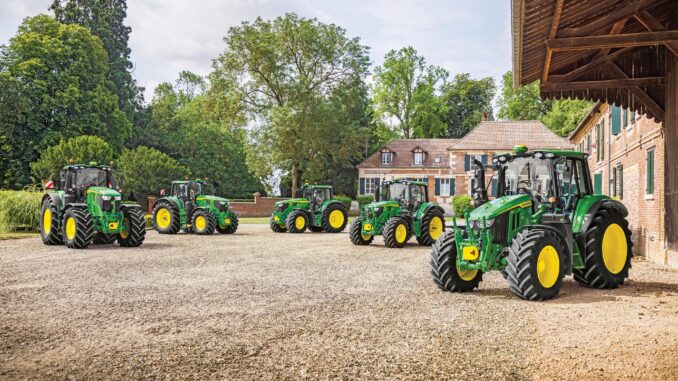
John Deere 2030 model overview
The John Deere 2030 is a utility tractor aimed more at acreage, livestock, loader, mowing, and light field work than at simple suburban lawn care, so owners in the USA and Canada usually care most about starting reliability, hydraulics, brakes, steering, PTO function, and general drivability rather than mower-deck issues. TractorData lists it as a 68 hp-class John Deere tractor, while the operator’s manual shows multiple RU, HU, and LU configurations plus both gasoline and diesel service references, so exact parts and procedures depend on the tractor version and serial range.
This guide covers practical repair decisions, symptom-based troubleshooting, common service parts, parts-diagram sources, manual links, maintenance intervals, and a large FAQ so owners can separate realistic DIY jobs from repairs that are better handled by a John Deere dealer or an experienced tractor shop.
And See:
General overview of the John Deere 2030
The John Deere 2030 sits in Deere’s older utility tractor range rather than the later compact or residential lineup, and the factory parts catalog shows just how many subsystem variations were used across production and configuration changes. That matters because one John Deere 2030 can differ from another in fuel system, front axle, wheel equipment, PTO arrangement, hydraulic setup, and electrical components.
The main systems owners most often deal with are:
-
Engine and fuel system, including air cleaner, fuel filter, injection system or carburetor, cooling system, and oil filter.
-
Transmission and drive system, including clutch, gear/range shifting, optional Hi-Lo or Reverser arrangements, brakes, differential, and PTO components.
-
Hydraulic system, including pump, transmission-hydraulic oil, selective control valves, remote couplers, and rockshaft/3-point hitch parts.
-
Electrical system, including battery, starter, alternator, ignition switch, warning lights, wiring, and on gasoline models the ignition/distributor components.
Common service and repair items owners regularly buy for a John Deere 2030 include:
-
Engine oil filter.
-
Fuel filter element.
-
Air cleaner element.
-
Spark plugs for gasoline versions only.
-
Fan/alternator belt.
-
Battery, cables, starter, and alternator parts.
-
Hydraulic/transmission filter and Hy-Gard-compatible fluid where the machine specification calls for it.
-
Brake, clutch, steering, and hydraulic coupler parts for higher-hour machines.
John Deere 2030 troubleshooting approach
The best way to troubleshoot a John Deere 2030 is to start with the symptom the owner actually sees: hard starting, weak hydraulics, poor braking, gear-shift trouble, overheating, charging faults, or PTO problems. The operator’s manual includes dedicated troubleshooting and service sections, while the parts catalog helps confirm which assemblies and subassemblies are actually fitted to the tractor.
Main symptom categories for this model include:
-
Starting issues.
-
Running and power issues.
-
Hydraulic and 3-point hitch problems.
-
Transmission, clutch, and drive problems.
-
Brake and steering problems.
-
Electrical and charging problems.
-
Overheating, leaks, and abnormal noise.
John Deere 2030 emergency and immediate repair needs
Some John Deere 2030 faults should be addressed immediately because they can create a safety issue or turn a moderate repair into a very expensive one. The biggest red-flag areas are brakes, steering, transmission/hydraulic oil loss, overheating, major fuel leaks, and PTO or driveline guarding issues.
4.1 John Deere 2030 starting issues
When a John Deere 2030 will not start, the problem may be as simple as poor battery condition or as serious as fuel delivery or injection trouble, and repeated cranking can flatten the battery or overheat the starter. Gasoline models also add ignition-system faults such as points, coil, timing, or spark-plug issues.
Common causes:
-
Weak or discharged battery.
-
Dirty or loose battery cables.
-
Faulty starter or starter circuit.
-
Restricted fuel filter.
-
Air in diesel fuel system.
-
Ignition trouble on gasoline models.
-
Bad key switch or wiring fault.
Basic owner checks:
-
Check battery charge level and cable tightness.
-
Confirm there is clean fuel in the tank.
-
Inspect the fuel filter and look for obvious restriction or contamination.
-
On diesel tractors, check whether the system may need bleeding after filter service or fuel starvation.
-
On gasoline tractors, inspect spark plugs, wires, cap, rotor, and point condition before assuming carburetor failure.
4.2 John Deere 2030 running and power problems
A John Deere 2030 that starts but runs rough, smokes, lacks power, or stalls under load usually has an air, fuel, ignition, cooling, or timing issue rather than a deep internal engine failure. Owners should rule out service items first because clogged filters and overdue tune-up parts are common on older tractors that sit seasonally.
Common causes:
-
Dirty air cleaner.
-
Plugged fuel filter.
-
Water or stale fuel.
-
Carburetor issues on gas versions.
-
Injection or nozzle issues on diesel versions.
-
Ignition timing or weak spark on gas versions.
-
Overheating reducing performance.
Basic owner checks:
-
Inspect and service the air cleaner.
-
Replace overdue fuel and oil filters.
-
Check fuel quality and tank cleanliness.
-
Verify cooling system level and airflow through grille/radiator screens.
-
If the tractor still runs poorly, move to professional fuel-system testing rather than guessing with parts.
4.3 John Deere 2030 hydraulic and hitch problems
Weak steering, slow loader function, poor remote performance, or a 3-point hitch that will not lift are high-priority issues on a John Deere 2030 because the hydraulic and transmission systems are closely tied together on this tractor. Low or contaminated fluid can affect several functions at once and should be corrected quickly.
Common causes:
-
Low transmission-hydraulic oil.
-
Clogged hydraulic/transmission filter.
-
Worn hydraulic pump.
-
Internal leakage.
-
Sticking selective control valve.
-
Air or leakage in remote cylinder plumbing.
Basic owner checks:
-
Check fluid level and condition.
-
Inspect for external leaks at hoses, couplers, cylinders, and pump area.
-
Replace overdue hydraulic/transmission filter.
-
Confirm the issue affects all hydraulic functions or only one circuit.
-
If steering, brakes, hitch, and remotes all weaken together, stop using the tractor until hydraulic pressure and pump condition are checked properly.
4.4 John Deere 2030 transmission and drive problems
Hard shifting, clutch drag, slipping, poor movement, or trouble with Hi-Lo/Reverser-equipped tractors can escalate fast if the tractor is kept in service while the problem is worsening. The operator’s manual specifically warns against towing certain Hi-Lo or Reverser tractors for starting because clutch damage can happen in a very short distance.
Common causes:
-
Incorrect clutch adjustment or clutch wear.
-
Low or contaminated transmission-hydraulic oil.
-
Internal clutch or transmission wear.
-
Linkage problems.
-
Hi-Lo or Reverser faults.
-
Brake drag making the tractor feel weak.
Basic owner checks:
-
Confirm the tractor shifts only when fully stopped if that is required by the transmission arrangement.
-
Check clutch pedal feel and free movement.
-
Check transmission-hydraulic oil level and condition.
-
Note whether the tractor loses drive in all gears or only certain ranges.
-
If the tractor slips under load or metallic noise is present, stop and get a drivetrain diagnosis before further use.
4.5 John Deere 2030 brake and steering problems
Brake and steering faults on a John Deere 2030 are not “use it until winter” issues because they directly affect control and safety, especially with a loader, on slopes, or on the road. Older utility tractors often develop multiple small issues at once here, including leaks, wear, and hydraulic weakness.
Common causes:
-
Air in brake system.
-
Hydraulic leakage.
-
Worn brake components.
-
Power steering valve or steering gear wear.
-
Low hydraulic pressure.
-
Loose front-end components.
Basic owner checks:
-
Check for visible leaks around brake and steering components.
-
Inspect front axle, steering linkage, and wheel-bearing condition.
-
Confirm both brakes respond evenly.
-
Do not road the tractor if braking is poor or inconsistent.
-
Have pressure and internal wear checked if the issue is more than a simple bleed or external leak repair.
4.6 John Deere 2030 overheating and leaks
An overheating John Deere 2030 can quickly become a head-gasket, cracked-head, or major engine-wear problem, so temperature rise, coolant loss, and oil contamination need immediate attention. The operator’s manual covers radiator, thermostat, coolant service, and valve-clearance references, showing cooling-system maintenance is a core part of routine ownership.
Common causes:
-
Low coolant.
-
Blocked radiator fins or grille screens.
-
Worn fan belt.
-
Faulty thermostat.
-
Water pump issues.
-
Oil or hydraulic leaks reducing fluid level or creating fire risk.
Basic owner checks:
-
Let the tractor cool fully before opening the system.
-
Check coolant level and visible hose/radiator condition.
-
Inspect the fan belt.
-
Clean screens and external radiator blockage.
-
If coolant disappears repeatedly or oil looks contaminated, treat it as a workshop-level repair.
4.7 John Deere 2030 electrical problems
Electrical faults on a John Deere 2030 usually show up as weak cranking, no-crank, no-charge, dim lights, or intermittent starting, and on gasoline tractors they can also show up as ignition misfire. Because of the tractor’s age, corroded connections and tired wiring are often more likely than a single failed switch.
Common causes:
-
Weak battery.
-
Dirty grounds.
-
Failing alternator or regulator.
-
Starter issues.
-
Ignition switch faults.
-
Brittle or corroded wiring.
-
Faulty ignition components on gas models.
Basic owner checks:
-
Clean and tighten battery terminals and grounds.
-
Load-test the battery.
-
Check charging output after start-up.
-
Inspect visible wiring for heat damage or green corrosion.
-
On gasoline models, include points, coil, cap, rotor, and plug leads in the inspection.
DIY or dealer? John Deere 2030 repair decision guide
The realistic DIY line on a John Deere 2030 is usually routine service, external bolt-on parts, and straightforward troubleshooting, while internal transmission, hydraulic pressure diagnosis, injection-pump work, and major brake or steering repairs are usually better left to an experienced tractor technician. Age increases the difficulty because seized fasteners, prior-owner modifications, and serial-dependent changes are common on older Deere utility tractors.
Good DIY jobs
-
Engine oil and filter changes.
-
Fuel filter replacement.
-
Air cleaner service.
-
Battery and cable replacement.
-
Fan/alternator belt replacement.
-
Coolant service.
-
Basic spark plug and ignition tune-up on gasoline versions.
-
External hose and light repairs.
Advanced DIY or dealer jobs
-
Clutch replacement.
-
Injection pump diagnosis or overhaul.
-
Hydraulic pump diagnosis.
-
Internal transmission or PTO repairs.
-
Brake internal repairs.
-
Steering gear or valve rebuilds.
-
Head-gasket or major engine work.
Skill level guide
-
Beginner: filters, fluids, battery service, visual inspections, spark plugs on gasoline models.
-
Intermediate: belt replacement, coolant service, brake bleeding, minor wiring repairs, fuel-system bleeding on diesel versions.
-
Advanced: clutch, hydraulic pressure diagnostics, internal brake work, steering rebuilds, injection-system repairs.
John Deere 2030 parts needed, OEM vs aftermarket, and what information you need
Before ordering parts for a John Deere 2030, gather the full model name, tractor serial or chassis number, engine identification, fuel type, and any relevant configuration details such as RU/HU/LU layout or special transmission/hydraulic options. The parts catalog itself is split by serial range and equipment variation, so ordering by “2030 only” is often not specific enough for an old utility tractor.
Information to collect before ordering
-
Full model: John Deere 2030.
-
Product identification or chassis serial number.
-
Engine model and serial number.
-
Fuel type: gasoline or diesel.
-
Transmission and option details, such as Hi-Lo or Reverser if fitted.
-
Front axle/wheel configuration where relevant.
John Deere 2030 service parts table
OEM versus aftermarket guidance is fairly simple on a John Deere 2030: use OEM or high-quality OEM-equivalent parts for filters where hydraulic cleanliness matters, ignition or charging parts when fit is uncertain, and all safety-critical or serial-sensitive items. Aftermarket can be fine for some consumables such as batteries, selected filters, hoses, lights, and tune-up parts, but only when the cross-reference clearly matches the exact tractor configuration.
Where to find John Deere 2030 parts diagrams and service manuals
The best John Deere 2030 documentation setup combines an operator’s manual, a factory-style parts catalog, and the Deere manuals portal or official parts catalog search. That combination gives owners service intervals, operating guidance, parts diagrams, and the terminology needed to ask a dealer the right questions.
Useful sources:
-
John Deere Manuals and Training for official manual access and publication lookup.
-
John Deere Parts Catalog for OEM diagrams and part-number confirmation when the exact machine record is available.
-
Jensales John Deere 2030 Operator’s Manual for a readable manual copy covering operation, lubrication, service, storage, troubleshooting, and specs.
-
Jensales John Deere 1830/2030 Parts Manual for a structured parts-book view by system and section.
How to locate John Deere 2030 serial and engine numbers
These numbers matter because the John Deere 2030 changed by serial range and configuration, and older tractors are often already repaired with mixed or superseded parts. Without the right identification details, it is easy to order the wrong filter, ignition part, hydraulic component, or clutch-related item.
Steps to locate identification numbers:
-
Find the tractor chassis or serial identification plate on the tractor and record it exactly as stamped.
-
Record the engine serial number from the engine tag or stamped location before ordering engine internals or tune-up parts.
-
Note whether the tractor is gasoline or diesel, because the manual and parts sections differ significantly between those versions.
-
Check for option-specific equipment such as Hi-Lo, Reverser, PTO arrangement, axle type, or special operator-platform configuration.
-
Take photos of tags, old parts, and the tractor overall before buying online.
Buying John Deere 2030 parts online and in stores
The best strategy is to start with OEM diagrams, confirm the part number against the tractor serial and configuration, then cross-check whether a quality aftermarket equivalent really matches the same application. On older tractors, the extra five minutes spent verifying numbers usually saves the cost of returns and downtime.
-
Online: use the official Deere manuals and parts resources first, then match with a reputable tractor-parts supplier.
-
Dealer counter: best for serial-sensitive hydraulic, brake, steering, clutch, and transmission items.
-
Retail stores: acceptable for batteries, fluids, some filters, and common electrical consumables if the package clearly cross-references the John Deere 2030 application.
Useful URLs:
John Deere 2030 fitting guide for common parts
These are the most realistic owner-level jobs on a John Deere 2030, and they address many of the “won’t start,” “runs rough,” “weak charging,” and “overheats” complaints owners see first.
Change the engine oil and filter
This job helps protect an older John Deere 2030 from internal wear and is one of the most important baseline services.
-
Warm the tractor briefly so the oil drains more completely, then shut it down safely on level ground.
-
Drain the engine oil into a suitable pan.
-
Remove the old oil filter and confirm the old gasket came off with it.
-
Install the correct replacement filter after confirming fit by serial/application.
-
Refill with the correct oil specification and quantity, then check for leaks and proper oil pressure indication.
Replace the fuel filter on a diesel John Deere 2030
This job often fixes poor running, hard starting, or power loss caused by restriction or contamination.
-
Shut off fuel if the tractor setup allows it and clean the area around the filter housing.
-
Remove the old filter element and seal carefully.
-
Install the new filter and correct seals.
-
Prime or bleed the diesel fuel system as required by the manual after service.
-
Start the tractor and check for leaks before returning it to work.
Service the air cleaner on a John Deere 2030
A restricted air cleaner can make a John Deere 2030 smoke, lose power, and use more fuel.
-
Open the air cleaner housing and inspect the element and pre-cleaner components.
-
Replace the element if damaged, oil-soaked, or heavily restricted.
-
Clean out dust and debris from the housing.
-
Reassemble carefully so the system seals correctly.
-
Recheck engine response after service.
Replace spark plugs on a gasoline John Deere 2030
On gas models, spark plug service can cure hard starting, misfire, and rough running.
-
Remove debris from around each plug before removal.
-
Remove the old plugs and inspect condition for fouling, wear, or cracking.
-
Install the correct plug type and set gap to the manual specification where required.
-
Use new gaskets if specified and tighten to the torque range in the manual.
-
Refit leads securely and confirm smooth running.
Replace the fan/alternator belt on a John Deere 2030
A worn belt can lead to charging problems and overheating, so it is a high-value preventive repair.
-
Inspect the belt for cracking, glazing, or frayed edges.
-
Loosen the adjustment at the alternator or relevant mounting point.
-
Remove the old belt and match the replacement exactly.
-
Install and tension the new belt correctly.
-
Run the engine and check charging and cooling operation.
Maintenance to prevent John Deere 2030 problems returning
Regular maintenance prevents a large share of John Deere 2030 failures because older tractors react badly to dirty fuel, overdue filters, weak batteries, contaminated hydraulic oil, and neglected cooling systems. The operator’s manual specifically covers lubrication, periodic service, fuel and lubricant guidance, storage, and troubleshooting, which shows Deere intended routine service to be the first line of repair prevention.
Focus areas:
-
Starting reliability: battery health, clean terminals, fuel quality, timely filter changes.
-
Running quality: air cleaner service, clean fuel system, tune-up parts on gasoline models.
-
Overheating prevention: coolant level, radiator cleanliness, thermostat and belt condition.
-
Drive performance: correct clutch use, proper transmission-hydraulic fluid level, no towing shortcuts on Hi-Lo/Reverser tractors.
-
Hydraulic reliability: clean oil, correct filter, leak checks, prompt attention to weak steering or hitch response.
John Deere 2030 maintenance schedule and year-round checklist
The John Deere 2030 operator’s manual includes a dedicated lubrication and periodic service section, and owners should treat that chart as the final authority for the exact tractor version. The schedule below follows the manual’s maintenance structure and adapts it into a simple owner checklist.
Daily / before each use
-
Check engine oil level.
-
Check coolant level.
-
Check transmission-hydraulic fluid level.
-
Inspect for fuel, oil, coolant, or hydraulic leaks.
-
Check tires, brakes, steering response, and lights before road or loader use.
After the first service period / early ownership baseline
-
Replace all unknown fluids and filters if service history is uncertain.
-
Inspect belts, hoses, battery cables, and radiator condition.
-
Check brake function and steering play.
Every 25 hours
-
Grease all applicable fittings and linkage points listed in the lubrication chart.
-
Inspect the air-cleaner system and pre-cleaner condition.
-
Check battery condition and visible wiring.
Every 50 hours or seasonally
-
Inspect fan/alternator belt tension and wear.
-
Clean radiator/grille screens and cooling passages externally.
-
Recheck wheel hardware, front axle condition, and steering linkage wear.
Every 200 hours or yearly
-
Change engine oil and filter based on use pattern and manual guidance.
-
Replace fuel filter(s).
-
Service cooling system as needed and check thermostat/water-pump condition.
-
Inspect brakes, clutch operation, and PTO function.
Every 500 hours or as condition requires
-
On gasoline tractors, inspect distributor and spark plugs at the interval stated in the manual.
-
Review charging and starting system performance.
-
Check valve-clearance and deeper service items if the tractor shows symptoms or the manual interval calls for it.
Seasonal checklist
-
Spring / busy season: fresh fuel, battery test, hydraulic leak check, cooling-system inspection.
-
Mid-season: clean radiator/screens often, inspect filters, watch belt and hose condition closely.
-
Fall / off-season: fix leaks before storage, stabilize storage conditions, and follow the manual’s tractor storage guidance.
Repair, upgrade, or replace?
For a John Deere 2030, repair usually makes sense when the tractor is structurally sound, parts remain available, and the problem is limited to service items, hydraulics, brakes, electricals, or one major subsystem rather than several at once. Upgrade or replace becomes more sensible when repeated failures, poor parts support for a specific configuration, or expensive drivetrain work pile onto an already tired machine.
Repair if…
-
The engine, hydraulics, and driveline are basically sound.
-
The issue is external, wearable, or maintenance-related.
-
The tractor still matches your acreage and implement needs.
Upgrade if…
-
You need better hydraulics, easier parts access, safer operator features, or more loader comfort than the 2030 offers.
-
The tractor works, but downtime is becoming costly.
Replace if…
-
It has major engine, transmission, hydraulic, and brake problems at the same time.
-
Structural corrosion, severe neglect, or missing parts make a proper repair unrealistic.
-
You depend on the machine commercially and need more dependable year-round support.
John Deere 2030 troubleshooting FAQ
1. Why will my John Deere 2030 not start?
Start with the basics: battery charge, cable condition, fuel supply, and whether the starter is actually turning the engine properly. On diesel tractors, air in the fuel system and restricted filters are common after sitting or after filter changes, while gasoline tractors may also have spark, points, coil, or timing faults.
2. Why does my John Deere 2030 crank but not fire?
If it cranks strongly but will not fire, think fuel delivery or ignition rather than the battery. Diesel versions often need fuel-system bleeding after air entry, while gas versions may have weak spark, fouled plugs, or distributor issues.
3. Why is my John Deere 2030 hard to start when cold?
Cold-start trouble often comes from weak battery output, poor cable connections, marginal compression, or fuel-system issues that are less obvious in warm weather. Diesel versions are especially sensitive to fuel condition and air leaks, while gas models can be affected by tune-up condition and carburetor settings.
4. Why does my John Deere 2030 start and then stall?
That pattern often points to restricted fuel flow, tank contamination, venting problems, or ignition faults on gasoline models. Start by checking the fuel filter, fuel quality, and any signs of sediment before moving to deeper pump or carburetor work.
5. Why does my John Deere 2030 run rough?
Rough running usually comes from dirty air or fuel filters, poor fuel, injector or carburetor issues, or ignition faults on gas versions. Because this is an older tractor, do the overdue maintenance items first before assuming a serious internal engine problem.
6. Why is my John Deere 2030 low on power?
A restricted air cleaner, plugged fuel filter, weak fuel delivery, overheating, or poor ignition performance can all reduce power noticeably. If the engine revs but the tractor does not pull, the problem may instead be clutch, brake drag, or drivetrain related.
7. Why is my John Deere 2030 smoking?
Smoke color matters: black often suggests overfueling or restricted air, blue points more toward oil burning, and white can suggest incomplete combustion or coolant-related trouble. Because exact causes vary by diesel versus gasoline version, start with filters, tune-up condition, and cooling before drawing conclusions.
8. Why does my John Deere 2030 overheat?
Low coolant, a dirty radiator or screen, a worn fan belt, thermostat trouble, or water-pump issues are common causes. Stop early rather than continuing to run hot, because older engines can quickly turn a small cooling problem into a head-gasket or head repair.
9. Why is my John Deere 2030 leaking coolant?
Look first at hoses, clamps, radiator seams, water pump area, and overflow behavior. Repeated coolant loss with no obvious leak can mean a deeper internal issue, and that moves the repair out of routine DIY territory.
10. Why does my John Deere 2030 have low oil pressure?
Low oil pressure can come from low oil level, the wrong oil, a restricted filter, internal wear, or sensor/indicator problems. Do not keep running the tractor until you confirm whether it is a true pressure loss or only a gauge/light issue.
11. Why are the hydraulics weak on my John Deere 2030?
Weak hydraulics usually point to low transmission-hydraulic oil, a clogged filter, pump wear, or internal leakage. If steering, remotes, and hitch are all weak together, suspect a supply or pressure issue rather than one isolated valve.
12. Why won’t the 3-point hitch lift on my John Deere 2030?
Start with fluid level, filter condition, linkage setting, and whether other hydraulic functions are normal. If the remotes and steering are also weak, a broader hydraulic supply problem is more likely than a hitch-only fault.
13. Why does the 3-point hitch drift down?
Drift-down usually indicates internal leakage in the hitch circuit or wear in valves or cylinder-related components. External linkage adjustment rarely fixes true internal leakage for long.
14. Why is the steering heavy on my John Deere 2030?
Heavy steering can come from low hydraulic pressure, front-end wear, tire issues, or steering-valve/gear problems. Check front axle condition and fluid level first, especially if the tractor carries a loader.
15. Why are the brakes poor on my John Deere 2030?
Poor brakes may mean air in the system, leakage, worn internal components, or hydraulic weakness affecting brake operation. Because brake repair is safety-critical, avoid road use until braking is even and dependable.
16. Why does my John Deere 2030 pull to one side when braking?
Uneven braking usually points to adjustment differences, contamination, trapped air, leakage, or wear on one side. It is not something to ignore, especially when towing or using a loader.
17. Why is my John Deere 2030 hard to shift?
Check whether you are following the correct stop-and-shift procedure for the tractor’s transmission setup first. If it still resists, look at clutch release, linkage issues, or internal transmission wear rather than forcing the lever.
18. Why does my John Deere 2030 slip under load?
If engine speed rises without matching pull, suspect clutch, Hi-Lo/Reverser, brake drag confusion, or internal drivetrain issues. Continued use can make the repair more expensive, so diagnose early.
19. Why won’t my John Deere 2030 move in gear?
A no-move condition can come from severe clutch issues, transmission faults, range/gear engagement problems, or hydraulic-related drive issues on equipped tractors. Check simple external causes first, but avoid repeated forcing or towing assumptions.
20. Why is the PTO not working on my John Deere 2030?
PTO problems may be caused by linkage, clutch issues, internal wear, or configuration-specific components shown in the parts catalog. Because the 2030 was offered with varying PTO-related components, confirm the exact setup before ordering parts.
21. Why does my John Deere 2030 battery keep going flat?
Old batteries, poor grounds, parasitic drain, or weak charging output are all common on vintage tractors. Clean connections first, then test battery condition and alternator performance before replacing parts at random.
22. Why is my John Deere 2030 not charging?
If the charge light stays on or voltage never rises after starting, suspect the alternator, regulator, belt, or wiring. Check belt condition first because a loose or worn belt can mimic a charging-system failure.
23. Why does my John Deere 2030 just click when I turn the key?
A click with no crank usually points to low battery voltage, bad cables, poor ground, starter-solenoid trouble, or a failing starter motor. Start with voltage-drop checks and cable cleaning before condemning the starter.
24. Why are the lights dim on my John Deere 2030?
Dim lights often indicate weak charging, poor grounds, corroded connectors, or tired wiring rather than just bad bulbs. On older machines, cleaning connections can make a noticeable difference.
25. What oil should I use in my John Deere 2030?
Use the operator’s manual as the final authority for engine oil and transmission-hydraulic fluid specification for your version and climate. The manual includes dedicated fuels and lubricants guidance, and using the wrong fluid can affect both wear and hydraulic performance.
26. How often should I change the oil in a John Deere 2030?
Follow the official periodic service chart in the operator’s manual and shorten intervals if the tractor works hard, sits a lot, or has an uncertain service history. On an older tractor, fresh baseline service is often more important than waiting for the perfect hour mark.
27. How often should I replace the fuel filter on a John Deere 2030?
Replace it according to the manual and sooner if contaminated fuel, algae, water, or power loss is suspected. A cheap filter change is far better than stressing the fuel system with restricted flow.
28. Does the John Deere 2030 have different parts for diesel and gasoline versions?
Yes, and this is one of the most common ordering mistakes. The operator’s manual includes separate references for gasoline ignition/carburetor service and diesel fuel-system service, so fuel type must be confirmed before buying tune-up or fuel-system parts.
29. Are John Deere 2030 parts still available?
Many routine maintenance, filtration, ignition, electrical, and general repair parts are still available through Deere channels, aftermarket suppliers, and reproduction/manual vendors, though exact availability varies by subsystem and serial range. The older and more configuration-specific the part, the more important it is to verify the number from a catalog diagram first.
30. Where can I find John Deere 2030 parts diagrams?
The best starting point is Deere’s parts catalog plus a factory-style parts manual that breaks the tractor down by system and section. That combination helps owners identify both the assembly and the likely terminology the dealer will use.
31. Where can I get a John Deere 2030 operator’s manual?
You can use Deere’s manuals portal for official publication lookup, and there are also online manual copies such as the Jensales operator’s manual PDF. The operator’s manual is especially useful for lubrication, periodic service, troubleshooting, storage, and specifications.
32. Is the John Deere 2030 a good DIY tractor?
It can be a good DIY tractor for owners comfortable with older mechanical machines, provided the work is limited to maintenance, external repairs, and methodical diagnosis. It becomes much less beginner-friendly once the job involves hydraulics testing, clutch splits, injection equipment, or internal brake and transmission work.
33. When should I stop and call a dealer or tractor mechanic for my John Deere 2030?
Call for help when the tractor has poor brakes, steering loss, overheating with coolant loss, slipping drivetrain problems, severe hydraulic weakness, repeated no-start after basic checks, or signs of internal engine damage. Those are the failures most likely to turn costly or unsafe if pushed too long.
34. Is it worth repairing a John Deere 2030?
Often yes, if the tractor fits your jobs, starts from a sound core, and mainly needs normal age-related service or one major repair rather than several. The decision gets weaker when transmission, hydraulics, brakes, and engine issues all arrive together.
35. What is the best first step after buying an unknown John Deere 2030?
Start with a full baseline service: engine oil and filter, fuel filters, air cleaner inspection, battery and cable checks, coolant inspection, hydraulic/transmission fluid check, brake check, and leak inspection. That gives you a reliable starting point before chasing more specific repair symptoms.