
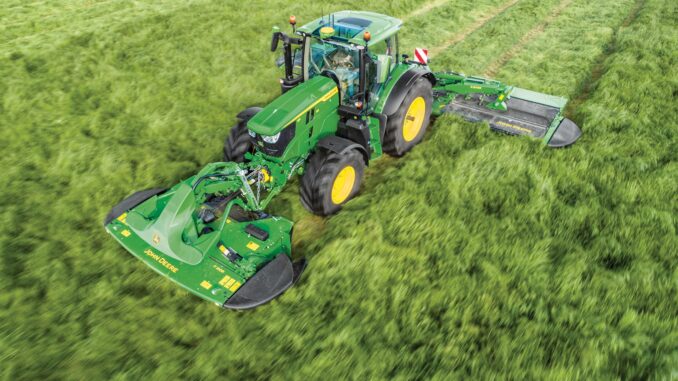
The John Deere 4620 is a classic New Generation row-crop tractor built for heavier field work, loader work, PTO jobs, and general farm use rather than suburban lawn care. Deere built the 4620 in Waterloo, Iowa, and the model is best known for its 6.6L six-cylinder diesel engine, strong PTO output, and simple but durable mechanical layout compared with newer electronically managed tractors.
For owners in the USA and Canada, the biggest value in a John Deere 4620 repair guide is knowing what can realistically be diagnosed at home, which parts are commonly replaced, and when a fault is serious enough to stop using the tractor immediately. This guide covers repair, troubleshooting, maintenance, parts identification, manual sources, and a practical FAQ in the same owner-focused format used for Deere service content.
John Deere 4620 overview
The John Deere 4620 sits in Deere’s early 20 Series lineup as a high-horsepower row-crop tractor from the early 1970s, aimed at field work where strong drawbar and PTO performance mattered. TractorData lists total production at 6,928 units, with both Syncro-Range and Power Shift versions offered, which is important because transmission-specific parts and service procedures are not always interchangeable.
Key systems on the John Deere 4620 include:
-
Engine and fuel system: 6.6L six-cylinder diesel, fuel tank, filters, injection components, air intake, and cooling system.
-
Drive system: 8-speed partially synchronized Syncro-Range or 8-speed full Power Shift transmission, final drives, differential lock, and PTO driveline.
-
Hydraulic system: closed-center hydraulics, wet disc brakes, steering, remote outlets, and hitch functions.
-
Electrical system: negative-ground charging system, alternator, two 6-volt batteries, starter, wiring, and gauges.
Common service parts owners often look for on a John Deere 4620 include engine oil and fuel filters, air filters, coolant hoses, belts, batteries, hydraulic filters, PTO seals, brake and steering linkage parts, light switches, and seat or platform hardware. Deere also publishes fluid capacities showing about 17 qt. coolant, 28 qt. crankcase oil, and 64 qt. transmission oil for the 4620, which is useful when planning service parts orders.
Troubleshooting a John Deere 4620 by symptom
The best way to diagnose a John Deere 4620 is to start with what the owner actually sees: hard starting, weak pulling power, hydraulic lag, overheating, smoke, abnormal noise, or a transmission complaint. Symptom-first troubleshooting is especially important on older tractors because several faults can create similar behavior, and replacing parts too early often wastes both money and time.
The main symptom groups for this model are:
-
Starting issues.
-
Running and power loss issues.
-
Hydraulic and steering problems.
-
Transmission and drive complaints.
-
Overheating and leaks.
-
Electrical and charging faults.
-
Vibration, brake, and PTO-related noise.
Emergency John Deere 4620 repair issues
Some faults on a John Deere 4620 need immediate attention because they can quickly damage expensive systems or make the tractor unsafe to operate. Shut the tractor down if you see low oil pressure, major coolant loss, severe hydraulic leakage, brake failure, fire risk around fuel or wiring, or heavy knocking from the engine or drivetrain.
1. John Deere 4620 starting issues
A no-start or hard-start condition usually shows up as slow cranking, no cranking, white smoke without firing, or the engine starting only with extended cranking. On an older diesel tractor, that can point to battery weakness, bad cables, restricted fuel supply, starter problems, air in the fuel system, or low compression.
Common causes:
-
Weak or mismatched batteries.
-
Corroded battery cables or bad grounds.
-
Failing starter or solenoid.
-
Dirty fuel filters.
-
Air leaks on the suction side of the fuel system.
-
Poor injector spray or compression issues.
Basic owner checklist:
-
Confirm both batteries are fully charged and cable ends are clean and tight.
-
Check for fuel in the tank and inspect fuel shutoff position.
-
Replace dirty fuel filters and bleed the fuel system if needed.
-
Watch exhaust smoke while cranking; no smoke often points to fuel delivery issues.
-
If cranking speed is low even with known-good batteries, test starter draw and cable voltage drop.
2. John Deere 4620 running and power loss
Power loss matters because it can be caused by simple restrictions or by expensive internal engine trouble. If the tractor smokes heavily, falls on its face under PTO load, or runs unevenly, stop and rule out air and fuel restrictions before assuming injector or engine damage.
Common causes:
-
Plugged air cleaner.
-
Restricted fuel filters.
-
Dirty tank sediment or contaminated fuel.
-
Turbocharger or intake leak issues.
-
Injector problems.
-
Incorrect valve settings or low compression.
Basic owner checklist:
-
Inspect the air intake and service the air cleaner.
-
Replace fuel filters and drain contaminated fuel if needed.
-
Check for collapsed hoses or loose intake connections.
-
Compare smoke color under load; black smoke suggests overfueling or air shortage, while white smoke can indicate incomplete combustion.
-
Move to injector or compression testing only after the basic supply checks are complete.
3. John Deere 4620 vibration and noise
Vibration or knocking can come from engine imbalance, driveline wear, PTO issues, loose wheel hardware, or worn final drive components. Because the John Deere 4620 is a heavy tractor, a “keep using it and watch it” approach can let a manageable repair become a very expensive one.
Common causes:
-
Loose wheel fasteners.
-
Damaged PTO driveline components.
-
Worn U-joints or couplers on attached equipment.
-
Engine mount or accessory drive issues.
-
Internal transmission or final drive wear.
Basic owner checklist:
-
Isolate whether the noise changes with engine rpm, ground speed, or PTO engagement.
-
Check wheel and rim hardware for looseness or cracks.
-
Run briefly with the PTO disengaged to see whether the noise changes.
-
Inspect visible driveline parts and shields.
-
Stop using the tractor if the noise is heavy, rhythmic, or accompanied by metal in drained oil.
4. John Deere 4620 overheating and leaks
Overheating and fluid leaks should never be ignored on a John Deere 4620 because coolant, engine oil, and transmission oil all protect expensive components. A tractor of this age may suffer from restricted radiators, failing hoses, weak belts, water pump problems, or seepage that becomes a major leak under load.
Common causes:
-
Dirty radiator core.
-
Low coolant.
-
Loose or worn fan belt.
-
Failing water pump.
-
Old hoses or clamps.
-
Engine or hydraulic oil leaks from seals and fittings.
Basic owner checklist:
-
Check coolant level only when the engine is cool.
-
Clean debris and dirt from the radiator and front screens.
-
Inspect belt condition and tension.
-
Look for fresh fluid tracks around hoses, pump bodies, and filter bases.
-
Pressure-test or dye-test recurring leaks rather than guessing.
5. John Deere 4620 transmission and drive problems
Transmission complaints usually show up as poor engagement, slipping, abnormal noise, weak pulling power, or hesitation under load. Since Deere offered both Syncro-Range and Power Shift versions, correct diagnosis starts with identifying which transmission the tractor has before ordering parts or following service procedures.
Common causes:
-
Low or contaminated transmission/hydraulic oil.
-
Plugged hydraulic or transmission filter.
-
Internal clutch or gear wear.
-
Linkage adjustment problems.
-
PTO or differential lock engagement issues.
Basic owner checklist:
-
Confirm transmission type and serial details before doing research.
-
Check oil level and condition on level ground.
-
Inspect for metal particles during fluid or filter service.
-
Verify linkage travel and external adjustments.
-
Escalate to dealer or transmission specialist if the tractor slips under load or makes internal grinding noises.
6. John Deere 4620 electrical problems
Electrical faults on a John Deere 4620 often come from age, corrosion, poor grounds, cracked insulation, and charging problems rather than from complex modules. Because the tractor uses a negative-ground electrical system with an alternator and two 6-volt batteries, battery condition and wiring integrity should be checked before replacing switches or the alternator.
Common causes:
-
Bad battery cables or grounds.
-
Weak batteries.
-
Faulty alternator or regulator circuit.
-
Corroded light and ignition switch connections.
-
Damaged wiring near hot or vibrating areas.
Basic owner checklist:
-
Load-test batteries as a pair.
-
Clean frame and engine ground points.
-
Check alternator output with the engine running.
-
Inspect harness sections near the starter, alternator, and dash.
-
Replace brittle or heat-damaged wiring before chasing minor accessory issues.
DIY or dealer for John Deere 4620 repairs
The normal line on a John Deere 4620 is that routine service, visual diagnosis, filter changes, fluid changes, battery work, belts, hoses, light electrical repair, and many external adjustments are realistic DIY jobs for a mechanically confident owner. Engine teardown, injection pump work, internal hydraulic diagnosis, brake system overhaul, clutch packs, Power Shift faults, and major rear-end or PTO repairs are usually advanced jobs where dealer-level literature, heavy tools, and experience matter.
Good DIY jobs
-
Engine oil and filter service.
-
Fuel filter replacement and bleeding.
-
Air cleaner service.
-
Cooling system hose and belt replacement.
-
Battery and cable replacement.
-
Basic lighting and wiring repairs.
-
External leak repair at hoses and clamps.
Advanced DIY or dealer jobs
-
Injection system diagnosis.
-
Turbocharger replacement and intake pressure diagnosis.
-
Power Shift internal repair.
-
Syncro-Range internal transmission repair.
-
PTO clutch or internal hydraulic work.
-
Brake overhaul and steering hydraulic diagnosis.
-
Differential, final drive, or engine internal rebuilds.
Skill level guide
-
Beginner: batteries, air cleaner service, basic lubrication, visual checks.
-
Intermediate: filters, belts, hoses, fluid changes, minor wiring repair, cooling system service.
-
Advanced: fuel system bleeding and testing, hydraulic pressure checks, steering and brake diagnosis, clutch and transmission work.
John Deere 4620 parts, OEM numbers, and ordering details
Before ordering John Deere 4620 parts, gather the full model name, the tractor serial number, and any engine identification details available on the engine itself. This matters because Deere used serial breaks across many older tractors, and transmission version or production changes can affect filters, seals, and linkage-related parts.
Below is a practical service-parts table for the John Deere 4620. Some numbers vary by serial range or by whether the part is sourced as Deere OEM or a cross-reference, so buyers should always confirm fit against the tractor serial number and parts diagram before checkout.
OEM vs aftermarket guidance:
-
Use OEM for belts, hydraulic components, brake parts, seals, fit-sensitive hoses, and safety-related switches or controls.
-
Good-quality aftermarket can be acceptable for batteries, common filters, some lighting parts, and certain hoses if the cross-reference is exact.
-
Avoid “close enough” parts on older Deere tractors because serial-break fit issues are common.
John Deere 4620 diagrams and manuals
The most useful manual sources are Deere’s own technical publications and parts catalog tools, followed by reputable model-reference sites and established tractor manual sellers. TractorData specifically points owners to Deere technical publications, while aftermarket manual sellers confirm that operator and repair manuals are available for the 4620.
Useful sources:
-
Deere Technical Publications for official operator and technical manuals.
-
JD Parts / Deere Parts Catalog for exploded parts diagrams and serial-sensitive part lookups.
-
TractorData John Deere 4620 page for model overview, capacities, serial range, and transmission summary.
-
Jensales 4620 operator’s manual listing for an aftermarket copy source when official print copies are harder to obtain.
What each is best for:
-
Official operator manual: routine service intervals, safe operation, lubrication, capacities, and daily checks.
-
Parts catalog: exploded diagrams, serial-break part numbers, hardware stacks, and assembly order.
-
Technical/service manual: teardown, specifications, adjustments, and repair procedures.
-
Reference site: quick confirmation of drivetrain, PTO, production, and capacity basics.
How to find John Deere 4620 serial and ID numbers
These identification numbers matter because Deere parts fitment on older agricultural tractors often depends on serial breaks and transmission version. TractorData lists the 4620 serial number range starting at 10001 in 1971 and ending at 16967, which helps owners sanity-check whether a tag appears original and where the tractor falls in production.
Use this process:
-
Find the tractor serial number plate on the tractor chassis area specified in the operator or parts literature.
-
Clean the tag carefully and photograph it before ordering parts.
-
Record transmission type, since the 4620 came in Syncro-Range and Power Shift versions.
-
Check the engine for any separate identification plate or stamped number.
-
Match all numbers against the Deere parts catalog before ordering filters, seals, and internal drivetrain parts.
Buying John Deere 4620 parts online or in-store
The best strategy is to identify the part in the Deere catalog first, then use that number to compare OEM and reputable aftermarket offers. For an older tractor like the John Deere 4620, online buying works well for common service items, while the Deere dealer counter is still the safest option for serial-sensitive hydraulic, transmission, steering, and brake components.
Buying routes:
-
Online: verify OEM part numbers first, then compare seller listings and return policies.
-
Dealer counter: best for complex parts, serial-break questions, and assemblies where diagrams matter.
-
Retail stores: acceptable for batteries, fluids, generic lighting, and some filter cross-references if fit is clearly listed.
Useful links:
-
JD Parts Catalog for diagrams and Deere numbers.
-
Deere Technical Publications for manual lookup.
-
Cross Creek Tractor 4620 parts for aftermarket and replacement part browsing.
John Deere 4620 fitting guide for common parts
These are the highest-value DIY service jobs because they address common starting, running, and overheating complaints without opening major assemblies. Always park on level ground, lower implements, remove the key, and allow hot components to cool before working.
Change the fuel filters on a John Deere 4620
This job often fixes hard starting, poor running, and fuel starvation caused by restriction or contamination.
-
Shut the tractor down and close any fuel shutoff if equipped.
-
Clean the area around the filter housings before removal.
-
Remove the old filters and check for dirt, water, or sludge in the fuel.
-
Install the new filters with clean fuel or according to manual instructions.
-
Bleed the fuel system until air is removed and restart the engine.
-
Recheck for leaks after the engine runs smoothly.
Service the air cleaner
A restricted air cleaner can reduce power and increase smoke.
-
Open the air cleaner housing and remove the element carefully.
-
Inspect the housing for dust buildup, rodent debris, or damaged seals.
-
Replace the element if it is dirty, oil-soaked, or damaged.
-
Clean the housing and dust outlet.
-
Reassemble carefully so the seal seats evenly.
Replace batteries and clean cables
Weak cranking on the John Deere 4620 is often caused by battery or cable condition rather than by the starter alone.
-
Disconnect the ground connection first.
-
Remove both old 6-volt batteries and inspect trays and hold-downs.
-
Clean all cable ends and ground contact points to bright metal.
-
Install matched replacement batteries with correct polarity.
-
Tighten connections securely and coat terminals lightly against corrosion.
-
Test cranking speed and charging voltage after startup.
Replace upper or lower radiator hoses and inspect belts
Cooling-system service prevents overheating and roadside failures.
-
Let the engine cool fully and drain enough coolant below hose level.
-
Remove old clamps and twist hoses free carefully.
-
Clean the necks on the radiator and engine fittings.
-
Install new hoses and quality clamps, then inspect the fan belt at the same time.
-
Refill coolant to the proper level and run the engine to check for leaks.
-
Recheck coolant level after the tractor cools again.
Maintenance for John Deere 4620 reliability
Regular maintenance prevents the most expensive John Deere 4620 failures by keeping dirt out of the fuel and air systems, maintaining proper lubrication, and catching leaks early. On older tractors, neglect usually shows up first as hard starting, poor power, overheating, weak hydraulics, or fluid contamination rather than as a single obvious “broken part.”
Focus areas:
-
Starting reliability: keep batteries, cables, and fuel filters in good condition.
-
Engine life: change oil on time, watch coolant level, and keep the air cleaner serviced.
-
Overheating prevention: clean the radiator and inspect belts, hoses, and coolant condition.
-
Hydraulic and transmission performance: maintain correct fluid level and investigate leaks early.
-
Electrical reliability: repair corroded connections and brittle wiring before intermittent faults spread.
John Deere 4620 maintenance schedule
For the John Deere 4620, use the official operator’s manual as the final authority, because interval details can depend on operating conditions and transmission configuration. Still, the overall pattern follows typical Deere agricultural service logic: daily fluid checks, regular lubrication, scheduled filter changes, and seasonal inspection before heavy field use.
Daily / before each use
-
Check engine oil level.
-
Check coolant level when the engine is cold.
-
Inspect for fuel, oil, coolant, and hydraulic leaks.
-
Check tire condition and visible wheel hardware.
-
Verify brake, steering, and lights are operating normally.
Every 25 hours
-
Lubricate grease points noted in the operator’s manual.
-
Inspect battery cables and charging condition.
-
Clean debris from radiator and cooling air paths.
-
Check belt condition and tension.
Every 50 hours or seasonal use period
-
Inspect fuel system for seepage and cracked hoses.
-
Check transmission/hydraulic oil condition and level.
-
Clean or service the air cleaner as required by conditions.
-
Inspect PTO area, hitch hardware, and hydraulic couplers.
Every 200 hours or yearly
-
Change engine oil and filter according to the operator’s manual and usage conditions.
-
Replace fuel filters if interval or condition requires.
-
Flush or refresh coolant if condition is poor or service timing calls for it.
-
Inspect brake and steering function more closely before heavy seasonal work.
Seasonal checklist
-
Spring: full fluid and leak inspection before tillage or mowing season.
-
Mid-season: clean cooling system thoroughly and inspect belts and hoses.
-
Fall: service filters, correct leaks, and prepare for storage or winter starts.
-
Storage period: maintain batteries, keep fuel clean, and protect the air intake and exhaust from moisture and pests.
Repair, upgrade, or replace the John Deere 4620?
A John Deere 4620 is usually worth repairing when the tractor remains structurally sound, starts well, and only needs external service parts, hoses, wiring, steering work, or manageable hydraulic leak repairs. Replacement becomes more likely when the tractor needs major engine, transmission, hydraulic, and brake work all at once, especially if parts availability, labor costs, and downtime outweigh the value of keeping an early 1970s machine in service.
Repair if:
-
The engine has good oil pressure and acceptable starting behavior.
-
Problems are limited to filters, leaks, hoses, batteries, wiring, belts, or external adjustments.
-
The transmission works correctly and hydraulics are still strong.
Upgrade if:
-
The tractor is sound but needs better lighting, improved seat comfort, or refreshed wiring and hoses.
-
You want safer and more reliable seasonal use without replacing the machine.
-
PTO or hydraulic usage demands better tires, maintenance catch-up, and updated service parts.
Replace if:
-
The tractor has severe engine wear, recurring overheating, transmission slip, weak hydraulics, and major brake issues together.
-
It has been poorly repaired in the past and needs multiple major systems rebuilt.
-
You need 4WD, a modern cab, or parts support that better fits current commercial use.
John Deere 4620 troubleshooting FAQ
1. Why will my John Deere 4620 not start?
A John Deere 4620 that will not start usually has a cranking-speed problem, fuel-delivery issue, or air in the diesel fuel system. Start with the batteries, cable ends, grounds, and starter performance, then move to fuel filters and bleeding. If the engine cranks well but never tries to fire, inspect fuel supply and injection-side issues before assuming major engine damage.
2. Why does my John Deere 4620 crank slowly?
Slow cranking is commonly caused by weak batteries, poor cable connections, bad grounds, or a tired starter. The 4620 uses two 6-volt batteries, so one weak unit can drag the whole starting system down. Load-test both batteries and clean every high-current connection before replacing the starter.
3. Why does my John Deere 4620 start hard when cold?
Cold hard-starting often points to reduced cranking speed, restricted fuel filters, or injector and compression wear. Older diesel tractors need strong battery performance to build enough heat through compression. If fuel and cranking speed are good, the next step is deeper diesel diagnosis rather than more random parts replacement.
4. Why does the John Deere 4620 lose power under load?
Power loss under load usually comes from restricted air or fuel flow before it comes from internal engine failure. A dirty air cleaner, plugged filters, contaminated diesel, or intake leak can all reduce performance. If the tractor smokes heavily and still lacks power, the fuel system and injectors need closer testing.
5. Why is my John Deere 4620 blowing black smoke?
Black smoke generally means the engine is getting more fuel than the available air can burn cleanly. Check the air cleaner, intake hoses, and turbo or intake plumbing first, then look at injector condition and fuel settings. Working the tractor hard with persistent black smoke can increase engine temperatures and carbon buildup.
6. Why is my John Deere 4620 blowing white smoke?
White smoke often suggests incomplete combustion, which can happen from cold operation, weak compression, injector issues, or fuel delivery problems. If it clears quickly as the engine warms, the cause may be minor. If it persists and the engine runs rough, investigate injectors, timing, and cylinder health.
7. Why does my John Deere 4620 overheat?
Overheating usually comes from a dirty radiator, low coolant, belt slippage, restricted airflow, or water pump trouble. The 4620 holds a substantial cooling volume, so recurring coolant loss should be treated as a real leak rather than normal use. Always clean the cooling stack and inspect hose and belt condition before assuming a major internal problem.
8. Why is my John Deere 4620 leaking coolant?
Coolant leaks often come from aged hoses, clamps, radiator seams, or the water pump area. On an older tractor, dried hoses and minor seepage can suddenly become a major leak under load. Pressure testing is the cleanest way to confirm the exact source before replacing parts.
9. Why is my John Deere 4620 leaking hydraulic oil?
Hydraulic oil leaks commonly appear at hoses, couplers, filter bases, steering lines, and seals around heavily used components. Because the 4620 uses a closed-center hydraulic system, leaks can affect steering, remotes, and brake response if fluid level drops too far. Clean the area first so you can tell fresh leakage from old oily buildup.
10. Why does the steering feel weak on my John Deere 4620?
Weak steering can be caused by low hydraulic oil, air intrusion, worn steering components, or deeper hydraulic pressure problems. Start with the basics: fluid level, visible leaks, and any recent hose or filter work. If steering remains weak along with other hydraulic complaints, system pressure testing is usually the right next step.
11. Why are the hydraulics slow on my John Deere 4620?
Slow hydraulics often point to low oil, restricted filtration, internal wear, or pump-related issues. If remotes, hitch, and steering all act weak together, think central hydraulic supply rather than one isolated valve. Continuing to operate with weak hydraulics can lead to more expensive pump and control-system damage.
12. Why does my John Deere 4620 transmission slip?
Transmission slipping is a serious fault and should not be ignored. It can be caused by low or contaminated oil, internal clutch or hydraulic problems, or wear that differs by whether the tractor is Syncro-Range or Power Shift. Confirm fluid condition first, but plan for advanced diagnosis if the slip continues under real load.
13. How do I know whether my John Deere 4620 has Syncro-Range or Power Shift?
The John Deere 4620 was offered with an 8-speed partially synchronized transmission or an 8-speed full Power Shift transmission. The shifter layout, operator controls, and serial-based parts lookup will help identify which version you have. This distinction matters because troubleshooting steps and parts are not automatically interchangeable.
14. Why does my John Deere 4620 make a knocking sound?
A knocking sound can come from the engine, PTO driveline, transmission, or attached equipment, so the first job is to isolate when the noise occurs. If it changes with engine rpm, suspect engine-side causes; if it changes with ground speed or PTO engagement, look at driveline sources. Shut the tractor down immediately for any heavy metallic knock.
15. Why does my John Deere 4620 vibrate at higher rpm?
High-rpm vibration may be caused by engine imbalance, loose mounting hardware, accessory drive issues, or PTO-related vibration. Older tractors also develop vibration from worn wheels, driveline wear, and loose sheet metal that masks deeper faults. Check external hardware first, but do not ignore vibration that is getting worse.
16. Why are my brakes weak on the John Deere 4620?
Weak brakes can come from hydraulic problems, worn brake components, contamination, or linkage-related issues. Since the 4620 uses hydraulic wet disc brakes, brake performance depends on healthy hydraulic function as well as sound brake internals. Poor brakes are a safety issue, so this is not a “use it and see” fault.
17. Why does the PTO on my John Deere 4620 not work properly?
PTO problems may show up as failure to engage, slipping under load, abnormal noise, or seal leakage. Start by checking the engagement controls and any obvious oil or linkage problems. If the PTO slips under load or makes internal noise, internal service is usually required.
18. Why is my John Deere 4620 using too much fuel?
High fuel use often comes from poor maintenance, restricted air flow, injector problems, or working the tractor below its best efficiency point. If the machine smokes more than normal or lacks power, fuel consumption will usually rise with it. Correcting filter, intake, and tune issues often improves both performance and economy.
19. Why does my John Deere 4620 run rough at idle?
A rough idle can be caused by dirty fuel, uneven injector delivery, air in the fuel system, or engine wear. Begin with clean filters and good fuel quality before moving into injector testing. Rough idle plus white smoke usually deserves faster diagnosis than rough idle alone.
20. How often should I change oil on a John Deere 4620?
The safest answer is to follow the official operator’s manual for your exact tractor and usage pattern. For older working tractors, oil service should be treated as preventive maintenance rather than stretched for convenience, especially if the machine sees dusty or seasonal use. Use the published 28 qt. crankcase capacity as a planning reference when ordering oil and filters.
21. What oil capacity does the John Deere 4620 have?
Deere’s agricultural fluid capacity guide lists the John Deere 4620 crankcase at 28 qt., coolant at 17 qt., and transmission oil at 64 qt. Those figures are very useful when ordering service supplies, but always confirm the exact service procedure and fill/check method in the manual before refilling.
22. How much transmission/hydraulic oil does a John Deere 4620 hold?
The Deere capacity guide lists 64 qt. for the John Deere 4620 transmission oil, while TractorData shows hydraulic system capacity of 16 gal. for Syncro and 18 gal. for Powershift configurations. Use the official manual and the exact transmission type to reconcile service fill procedure and dipstick reading.
23. What batteries does a John Deere 4620 use?
TractorData lists the John Deere 4620 as using two 6-volt batteries in a negative-ground electrical system. When replacing them, match battery type, terminal orientation, and cranking performance rather than mixing whatever is available locally. Battery cable condition matters nearly as much as the batteries themselves.
24. Where can I get a John Deere 4620 operator’s manual?
The best starting point is Deere Technical Publications, which TractorData links as the official manual source. After that, established manual sellers such as Jensales and other tractor-manual suppliers list operator and repair manuals for the 4620. Official publications are usually the safest choice for service intervals and correct procedures.
25. Where can I find John Deere 4620 parts diagrams?
The Deere online parts catalog is the best source for exploded diagrams and part-number verification. It is especially useful on a model like the 4620 because older tractors often have serial-break changes that are not obvious from generic parts-store listings. Always compare your serial number before ordering.
26. Should I buy OEM or aftermarket parts for a John Deere 4620?
OEM is the safer choice for belts, hydraulic components, transmission parts, seals, and anything safety-critical or serial-sensitive. Aftermarket can work well for batteries, some filters, lighting parts, and selected wear items if the cross-reference is exact. On an older Deere tractor, poor-fit aftermarket parts often cost more in time than they save in purchase price.
27. Why does my John Deere 4620 keep clogging fuel filters?
Repeated fuel-filter plugging usually means the tank has sediment, water contamination, or deteriorating fuel system components upstream. Replacing filters without cleaning the contamination source only gives a temporary fix. Drain and inspect the tank and check for rust, sludge, or water before blaming the injection system.
28. Can I repair John Deere 4620 wiring myself?
Yes, many wiring repairs are reasonable DIY work if the issue is limited to corroded terminals, bad grounds, damaged lighting wires, or brittle harness sections. Use proper gauge wire, correct terminals, and clean grounds rather than twisting wires together. Charging-system diagnosis and starter-circuit problems may still need meter-based testing.
29. Is a John Deere 4620 a good candidate for restoration and continued use?
Yes, many owners still value the 4620 because it combines strong PTO output with a classic mechanical design and broad recognition in Deere’s older row-crop lineup. TractorData reports nearly 6,928 units built, which helps ongoing owner interest and parts demand. The real question is condition, especially engine, transmission, hydraulics, brakes, and serial-correct parts availability.
30. When should I stop using my John Deere 4620 and call a dealer or specialist?
Stop using it when you have transmission slipping, severe hydraulic weakness, low oil pressure, recurring overheating, brake failure, major coolant or hydraulic leaks, or heavy internal knocking. Those faults can quickly turn a repairable tractor into a much more expensive project. A skilled independent diesel or Deere specialist is often the right move for older high-horsepower tractors.
31. What is the PTO horsepower of the John Deere 4620?
TractorData reports the John Deere 4620 at 135 hp claimed PTO and 135.76 hp tested PTO. That level of output is a big part of why the model remains useful for heavier PTO-driven work today. It also means cooling, fuel, and driveline maintenance matter more than on a smaller utility tractor.
32. Is the John Deere 4620 2WD or 4WD?
TractorData shows the 4620 was offered in standard 4×2 2WD form and also in 4×4 HFWD configuration. That matters for steering, front axle, and drivetrain parts lookup because front-drive components obviously differ from the two-wheel-drive tractor. Always identify axle type before ordering front-end parts.
33. What kind of PTO does the John Deere 4620 use?
The John Deere 4620 uses an independent rear PTO with a 1000 rpm PTO type, with 1000 rpm reached at 1900 engine rpm according to TractorData. That makes correct driveline matching and PTO troubleshooting especially important on heavy implements. Noise or slippage under load should be addressed quickly.
34. What is the fuel capacity of the John Deere 4620?
TractorData lists fuel capacity at 50 gallons, which is consistent with the tractor’s role as a higher-horsepower field machine. A larger tank is helpful for work duration, but it also means contaminated or stale fuel can become a bigger cleanup job if maintenance is neglected. Keep storage practices and filter service in mind.
35. Is the John Deere 4620 suitable for homeowner use?
For most homeowners, no; the John Deere 4620 is a farm tractor, not a residential mowing tractor. It makes more sense for acreage owners, hobby farms, collectors, and operators who genuinely need a large older row-crop machine with around 135 PTO horsepower. For that audience, a good repair guide helps decide what is sensible DIY work and what belongs with a dealer or specialist.