
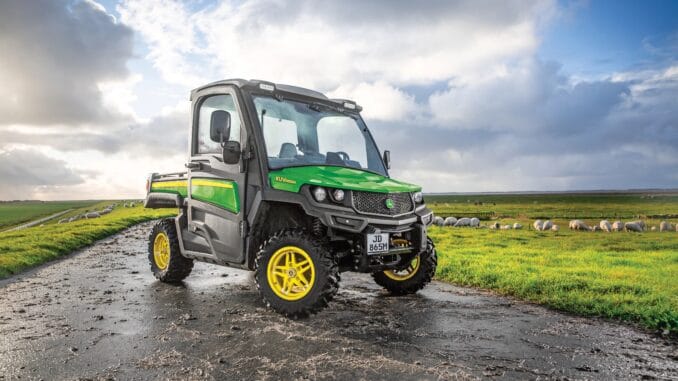
John Deere Electric Gator Models, Maintenance, and Troubleshooting Guide
John Deere Electric Gators are quiet, low-emission utility vehicles designed for the daily movement of people, tools, supplies, and materials around farms, estates, campuses, parks, nurseries, warehouses, sports facilities, and large private properties. They fill a different role from high-speed XUV and recreational Gator models: electric Gators emphasize low noise, simple operation, predictable low-speed work, and reduced routine engine maintenance.
This directory is a hub for model-specific ownership information, service schedules, battery and charging guidance, electrical troubleshooting, used-Gator buying advice, and accessory setup. It covers the main electric Gator models known to have been marketed in the United States and Canada, including the long-running lead-acid-battery TE 4×2 Electric and the newer lithium-ion-powered GX and GX Crew models. For broader information across all gasoline, diesel, electric, work, crossover, and recreational machines, see the conceptual General John Deere Gator Guide.
About the John Deere Electric Gator Series
The John Deere Electric Gator family is primarily a work-oriented utility-vehicle group rather than a high-speed recreational side-by-side range. These machines are intended for places where quiet operation, low local emissions, turf-friendly operation, and regular stop-and-go work matter more than trail speed or extreme off-road capability.
The traditional member of the group is the TE 4×2 Electric Gator. It uses a 48-volt electric system, eight deep-cycle batteries, a separately excited DC motor, a rear-drive transaxle, and regenerative braking. It is a two-passenger, 2WD work vehicle with a steel cargo box and a practical layout suited to groundskeeping, feeding animals, moving maintenance crews, hauling landscaping supplies, and supporting institutional or commercial sites. Current TE specifications identify a 900-pound payload capacity, a 600-pound cargo-box capacity, and towing capacity up to 600 pounds, although owners should always use the rating and operator’s manual applicable to their exact year and configuration.deere+1
The newer GX Electric and GX Crew Electric represent a more modern electric-Gator direction. Both use a 51.2-volt nominal lithium-ion battery system rated at 5.376 kWh nominal, an electric drive system, regenerative braking, and onboard charging. The GX is a two-seat work vehicle with an aluminum tilting cargo box rated at up to 800 pounds and a published towing capacity of up to 1,500 pounds. The GX Crew adds four-passenger seating, with rear seating that folds to form a cargo platform for larger items.deere+3
Electric Gators should not be treated as direct replacements for every diesel, gasoline, 4WD, or XUV model. They are generally best suited to maintained lanes, turf, gravel, hard surfaces, barns, nurseries, campuses, warehouses, and controlled work sites. The TE is a rear-drive traditional work Gator, while GX and GX Crew models are also 2WD rather than selectable-4WD crossover UTVs. A buyer who regularly works in mud, deep snow, steep off-road terrain, loose rock, or heavy pulling conditions may be better served by a 4WD XUV, diesel work Gator, or gasoline work model.
Electric Gators can nevertheless be exceptionally useful machines. Their immediate electric-motor torque suits repeated starts with moderate loads, their quietness can be valuable around livestock and residential properties, and the absence of an internal-combustion engine eliminates routine oil, spark-plug, exhaust, and fuel-system service. In exchange, owners must take battery condition, charging habits, connector condition, electrical protection, controller diagnostics, and cold-weather battery performance seriously.
John Deere Electric Gator Models
The TE 4×2 Electric remains the core legacy-to-current electric Gator model line. Deere describes it as a 48-volt, two-seat electric work machine using eight Trojan batteries, with a 600-pound cargo-box capacity, 900-pound payload capacity, and towing capacity up to 600 pounds. Published TE specifications vary by model year, including battery type, quoted motor rating, maximum speed, and some capacity details, so a serial-number-specific manual and parts catalog should always take priority over a general specification table.deere+3
The GX and GX Crew are newer lithium-ion electric Gators. Deere identifies the GX as a two-seat model with a 13-cubic-foot aluminum cargo box and up to 800 pounds of box capacity, while the GX Crew provides four seats plus a fold-down rear seating area that can be used as a cargo platform.deere+3
Electric Gator Maintenance Guides
Electric Gators eliminate engine oil changes, fuel filters, spark plugs, radiators, diesel water separators, and many other internal-combustion maintenance tasks. They do not eliminate maintenance. In fact, battery care, electrical inspection, brake condition, chassis lubrication, tire condition, cargo-box hardware, and drivetrain inspection become even more important because these machines often receive frequent stop-start use.
Routine Service and Inspection
Exact maintenance intervals vary by model year, battery technology, operating environment, and hours of use. A TE with lead-acid batteries requires different routine attention from a lithium-ion GX or GX Crew. Always use the operator’s manual and technical manual for the specific model and serial-number range.
Core routine-service areas include:
-
Inspect the vehicle before operation for damaged cables, loose battery hold-downs, leaking batteries, damaged battery cases, worn tires, loose wheel nuts, and fluid leaks from the transaxle or brake system.
-
Keep the battery compartment clean, dry, and free of grass, manure, hay, fertilizer residue, loose metal objects, and other conductive debris.
-
Inspect battery terminals, cable ends, main connectors, grounds, fuse holders, relays, and charger connections for corrosion, heat damage, looseness, or damaged insulation.
-
On TE lead-acid battery models, follow the correct battery manufacturer and John Deere procedures for electrolyte inspection, watering, charging, equalization where specified, terminal cleaning, and corrosion prevention. Do not overfill cells or add water before charging unless the relevant battery instructions specifically direct it.
-
On GX and GX Crew lithium-ion models, inspect the battery enclosure, charging port, charger cable, seals, and warning indicators. Do not open, modify, pierce, bypass, or attempt cell-level repair of a lithium-ion battery pack.
-
Verify that the charging arrangement is suitable for the charger and electrical supply. Use a properly grounded outlet and do not operate with damaged extension cords, plug ends, or charger cables.
-
Check tire pressures when cold, using the tire label and owner’s manual rather than a generic UTV pressure figure. Uneven pressure affects steering effort, braking, stability, ride quality, carrying capacity, and turf damage.
-
Inspect brakes, park-brake operation, steering joints, rack-and-pinion components, suspension bushings, ball joints, shocks, wheel bearings, and chassis fasteners.
-
Check the cargo-box hinge area, latch operation, tailgate pins, bed-prop hardware, box fasteners, and any manual-lift or assisted-lift components.
-
Wash dirt, corrosive fertilizer residue, salt, manure, grass, and debris from the chassis, wheels, brake areas, cargo box, and battery-compartment surroundings. Avoid directing high-pressure water at electrical connectors, controllers, charging ports, battery enclosures, or sealed electronic components.
Electric Gator service interval checklist, DIY maintenance for John Deere Electric Gators, John Deere Gator battery, charging, and electrical-system guide, and Pre-season inspection checklist for Electric Gator owners.
Battery, Charging, and Electrical-System Care
The central maintenance difference between the TE and newer GX/GX Crew models is battery technology.
The TE is a 48-volt lead-acid electric Gator. Deere’s published information identifies eight Trojan deep-cycle batteries, but the referenced battery designation differs across years and documents. Earlier documentation identifies T-145 batteries, while current Deere specifications identify T-105 batteries. Owners should therefore match replacement batteries, cable layout, battery quantity, charging method, and maintenance procedures to the original machine documentation rather than ordering parts solely by the TE name.deere+2
For lead-acid TE machines:
-
Recharge promptly after use rather than repeatedly running the battery pack to a deeply discharged state.
-
Keep electrolyte levels within the battery manufacturer’s stated limits where the batteries are serviceable flooded lead-acid types.
-
Use distilled water when the battery manufacturer requires water addition.
-
Charge in a ventilated area because lead-acid batteries can release gas during charging.
-
Keep sparks, cigarettes, flames, and metal tools away from the battery compartment.
-
Replace batteries as a matched set when pack performance has declined substantially, unless a qualified technician confirms a different repair approach is appropriate.
-
Check for a weak individual battery, incorrect cable routing, corroded terminals, or charger faults before assuming the entire pack has failed.
The GX and GX Crew use a 51.2-volt nominal lithium-ion battery rated at 5.376 kWh nominal. Their battery system is designed around onboard charging and electronic management rather than owner-added battery water. Lithium-ion systems generally require less routine battery maintenance than flooded lead-acid packs, but damage, charging faults, moisture intrusion, overheating, impact damage, and unauthorized modifications are more serious concerns.deere+2
For GX and GX Crew models:
-
Keep the charging connector, charge-port cover, and charger lead clean and dry.
-
Charge with approved equipment and according to Deere’s specified charging procedure.
-
Do not substitute unapproved chargers, bypass safety systems, or modify the battery-management system.
-
Investigate warning lights, diagnostic indicators, reduced-power operation, charging interruptions, abnormal heat, or damaged battery housings promptly.
-
Consider reduced range and slower battery performance during cold weather, especially when the machine is stored outdoors or used for short trips without sufficient charging time.
-
Arrange dealer or qualified-service support for high-voltage battery, controller, and traction-motor faults.
TE 4×2 Electric battery maintenance and watering guide, GX Electric charging and lithium-ion battery guide, John Deere Gator electrical connector inspection guide, and How to store an electric Gator during winter.
Drivetrain, Brakes, and Suspension Care
Electric Gators use electric-drive systems rather than gasoline or diesel engines with CVT belt transmissions. Therefore, a traditional CVT-belt inspection routine does not apply to the TE, GX, or GX Crew in the same way it applies to many XUV Gator models.
The TE uses an electric motor and rear transaxle arrangement. Deere identifies the current TE with a fully enclosed oil-bath transaxle with helical gearing, regenerative braking, a rear-drive layout, and mechanical rear drum brakes. Its front suspension uses an independent A-arm arrangement, while rear suspension design and exact details should be verified by model year.deere+1
The GX and GX Crew use electric drive, regenerative braking, enclosed final-drive components, drum brakes, and suspension systems designed for work use rather than aggressive recreational driving. Published information indicates the GX platform is 2WD and does not include four-wheel drive or traction assist.deere+1
Routine drivetrain and chassis tasks include:
-
Check transaxle, final-drive, or gearcase fluid where applicable to the specific model.
-
Watch for leaks around axle seals, gearcase housings, drive-shaft areas, brake backing plates, and wheel hubs.
-
Inspect drive shafts, U-joints, CV boots, axle boots, couplings, and related hardware where fitted.
-
Check for clicking, grinding, whine, vibration, or a change in regenerative-braking behavior.
-
Inspect steering play, tie-rod ends, steering-rack boots, ball joints, shocks, suspension pivots, bushings, and mounting bolts.
-
Test service brakes and the park brake on a safe, level area before working on slopes or towing.
-
Keep tires matched by size and construction on the same axle unless Deere specifically approves an alternate setup.
Electric Gator transaxle and final-drive service guide, Suspension and steering maintenance for John Deere Gators, Brake inspection and park-brake adjustment for work Gators, and How to inspect a Gator drivetrain before costly repairs.
Cargo Box, Towing, and Work Equipment
The TE is designed around a traditional work cargo box, while the GX uses an aluminum tilting box. Deere identifies the GX cargo box as 13 cubic feet with an 800-pound capacity, and describes the GX Crew’s fold-down rear seating as a platform for up to 250 pounds of larger cargo. Those figures are model-specific; they should never be used to estimate the TE’s ratings or the capacity of an older vehicle.deere+2
For all electric Gators:
-
Keep cargo within the applicable cargo-box and total-payload limits.
-
Secure loads so they cannot shift under acceleration, braking, cornering, or travel over uneven ground.
-
Inspect latches and tailgate hardware after carrying loose stone, soil, feed bags, fencing supplies, tools, or corrosive products.
-
Do not overload a trailer simply because the electric motor provides strong low-speed torque.
-
Use the correct hitch pin, clip, safety chains, trailer-light connection, and trailer tongue weight for the machine and trailer combination.
-
Confirm that a winch, blade, sprayer pump, beacon, work-light kit, or other electrical accessory does not exceed approved electrical-system limits.
-
Clean mud, grass, feed, manure, and debris from under the machine before it traps moisture around electrical connectors, brakes, battery areas, or moving suspension components.
Electric Gator Troubleshooting Guides
This troubleshooting section is intended as an ownership hub, not a substitute for the appropriate service manual, electrical safety procedures, or professional diagnosis. Electric Gators contain high-current circuits, and newer lithium-ion models contain a managed battery system that should not be bypassed or disassembled by owners.
TE 4×2 Electric common problems and fixes, GX Electric battery and charging guide, and GX Crew Electric maintenance and troubleshooting guide.
Starting, Battery, and Electrical Problems
A “no-start” electric Gator problem can mean several different things. The machine may have no display response, may power up but not move, may fail to charge, may have a weak battery pack, or may have a safety-interlock or controller-related fault.
Common symptoms and diagnostic directions include:
-
No response when the key or power control is turned on may point to a discharged battery pack, disconnected main cable, failed fuse, faulty key switch, poor ground, charger-related interlock issue, damaged connector, or controller fault.
-
A machine that powers up but will not move may have a direction-selector issue, park-brake or brake-pedal interlock condition, failed relay or contactor, controller fault, motor-circuit problem, or battery voltage that drops excessively under load.
-
Repeatedly dead TE batteries may indicate aged batteries, an unbalanced pack, a failed individual battery, corrosion, incorrect electrolyte level, charger malfunction, parasitic draw, poor cable connection, or storage without regular charging.
-
Reduced GX or GX Crew range may result from cold temperatures, heavy payloads, hills, tire condition, frequent high-load acceleration, battery state of health, charger interruption, battery-management protection, or a diagnostic condition requiring dealer attention.
-
A charger that will not begin charging can be caused by outlet issues, a damaged cord, poor plug contact, blown protection device, pack-voltage conditions, connector contamination, charger failure, or an onboard system fault.
-
Lights, warning indicators, displays, work lights, winches, and accessory sockets may fail because of a fuse, relay, connector, ground, switch, wiring damage, or an accessory installation issue.
Start diagnosis with the simplest safe checks: inspect charge level, charger operation, battery terminals or charge connection, visible fuses, connector security, and obvious cable damage. Do not short terminals, bypass fuses, bridge contactors, or defeat interlocks to “test” an electric Gator.
Electric Gator won’t start: diagnostic steps and fixes, John Deere Gator battery and charging-system problems, Electrical troubleshooting for TE, GX, and GX Crew Gators, and Safety-switch and no-drive problems on John Deere Gators.
Battery, Range, and Performance Problems
Electric Gators do not have gasoline fuel problems, carburetor faults, diesel fuel restrictions, glow plugs, or engine overheating in the normal sense. Their comparable ownership issues involve battery state, charging quality, electrical resistance, controller protection, motor performance, drivetrain drag, and workload.
Typical symptoms include:
-
Shorter-than-normal operating time between charges.
-
Slow acceleration or reduced hill-climbing performance.
-
Reduced speed when carrying cargo or towing.
-
Intermittent power loss.
-
The machine running normally when cold but losing performance later.
-
Excessive battery heat, a hot connector, melted terminal cover, or burning electrical smell.
-
Abnormal warnings, beeps, display alerts, or a limited-power mode.
-
A charge cycle that ends unusually quickly or never completes.
For TE models, check the full battery pack rather than focusing only on the battery that appears worst. A weak battery can pull down the pack under load, but cable corrosion, poor electrolyte level, inadequate charging, or an incorrect replacement battery can create similar symptoms. Use appropriate safety equipment and follow lead-acid battery procedures because the system has high current and battery acid hazards.
For GX and GX Crew models, do not assume that a range or power issue is simply a “bad battery.” The battery-management system, charging system, motor controller, temperature conditions, diagnostic system, brakes, tire pressure, payload, and terrain can all affect performance. A persistent warning, charging fault, or reduced-power mode should be documented and evaluated with model-appropriate diagnostic equipment.
John Deere Electric Gator reduced range causes and fixes, TE 4×2 Electric battery-pack testing guide, GX Electric charging faults and warning indicators, and Why an electric Gator loses power under load.
Drive, Brakes, Steering, and Handling Problems
Because electric Gators do not use a conventional gasoline-engine CVT system, owners should not automatically diagnose a loss-of-drive problem as a “bad belt.” On these models, the likely causes are more often battery voltage drop, direction-control faults, electrical connection problems, controller issues, motor-circuit faults, transaxle or final-drive trouble, brake drag, or excessive load.
Common drive and handling symptoms include:
-
The Gator will not move in forward or reverse.
-
It moves briefly, then cuts out under load.
-
It has poor hill-climbing performance despite a full charge.
-
Regenerative braking feels weaker, stronger, or different from normal.
-
There is clicking, whining, grinding, clunking, or driveline vibration.
-
The machine pulls to one side, wanders, or has excessive steering play.
-
Brakes drag, the parking brake will not hold, or braking performance is poor.
-
The machine rides unevenly or has unusual tire wear.
Practical inspection steps include:
-
Confirm the battery pack is sufficiently charged and the charger has completed its normal cycle.
-
Check for hot terminals, loose cables, damaged insulation, or moisture in connectors.
-
Verify that the park brake fully releases and that wheels rotate normally when safely lifted and supported.
-
Inspect tire pressures and tire condition before diagnosing steering or suspension faults.
-
Check visible transaxle, final-drive, axle, steering, and brake components for leaks, damage, loose fasteners, or worn joints.
-
Do not continue operating if there is grinding from the drivetrain, severe electrical heat, brake failure, a damaged battery enclosure, or uncontrolled loss of power.
Electric Gator drive and transaxle problems, TE 4×2 Electric loss-of-drive troubleshooting, GX Electric steering and suspension problems, and Brake and regenerative-braking troubleshooting for John Deere Gators.
Attachments, Accessories, and Work Setups
Electric Gators are often most productive when configured for a specific work route rather than treated as general-purpose recreational UTVs. The right setup can turn a quiet two-seat vehicle into a mobile maintenance cart, feed vehicle, nursery support machine, grounds crew carrier, property-inspection vehicle, or event-support unit.
Common useful setups include:
-
Cargo-box mats, bed extenders, dividers, liners, and tool-organizer systems.
-
Front or rear receiver hitches where approved for the exact vehicle.
-
Small utility trailers for tools, feed, fencing material, waste, landscaping materials, and maintenance equipment.
-
Winches for controlled recovery, light pulling, gates, loading assistance, and utility work within approved limits.
-
Front blades, snow-management equipment, and winter lighting where supported by the machine and local attachment program.
-
Spot sprayers, boomless sprayers, granular spreaders, and grounds-maintenance equipment.
-
Roofs, windshields, mirrors, doors, enclosures, ventilation accessories, and weather-protection equipment.
-
Beacon lights, work lights, warning flags, reflective markings, mirrors, and slow-moving-vehicle equipment where applicable.
-
Tool holders, gun or equipment holders where lawful and appropriate, storage boxes, service racks, and first-aid or field-maintenance kits.
-
Tire choices tailored to turf, gravel, hard surfaces, all-terrain use, snow, or low-impact property work.
Compatibility matters more with an electric Gator than many owners expect. A heavy winch, multiple LED work lights, a sprayer pump, heater, beacon, and other accessories can increase electrical load or reduce usable operating time. Large tires can alter effective gearing, increase steering effort, reduce range, affect brake performance, and add load to drivetrain components. Heavier accessories can also consume payload capacity before people, tools, and cargo are added.
A TE’s rear-drive 2WD layout makes it well suited to maintained turf, pavement, gravel, barns, yards, and modest slopes, but less suitable for deep mud or demanding off-road recovery work. GX and GX Crew models offer newer battery technology and more modern work layouts, but they remain 2WD work vehicles rather than selectable-4WD crossover machines. Deere’s published GX Crew material specifically identifies no four-wheel-drive or traction-assist system.jldlague
Attachments and accessory options for John Deere Electric Gators, How to set up a John Deere Gator for property maintenance, Choosing tires for Electric Gator work and turf use, Towing and cargo safety for John Deere Gator utility vehicles, and Electric Gator winter-work setup guide.
For used buyers, the most important distinction is whether the machine is a lead-acid TE or a lithium-ion GX/GX Crew. The TE’s condition depends heavily on battery age, charging history, corrosion, pack balance, and charger operation. A used GX or GX Crew should be inspected for charging behavior, warning indicators, battery and enclosure damage, software or diagnostic faults, accessory modifications, drivetrain noise, brake condition, and proof of correct maintenance.