
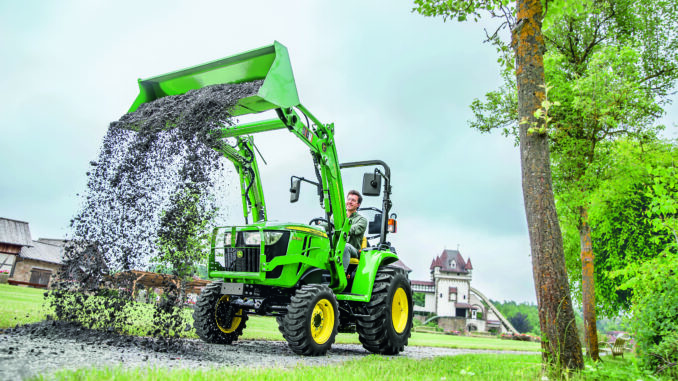
The John Deere 6400 is a 6000 Series utility tractor built for loader work, mowing, light tillage, transport, and general farm or acreage jobs, and Deere groups support for it through its ag parts, manuals, and technical publication systems. This guide is written for DIY owners in the USA and Canada who want a practical, symptom-first reference covering repairs, troubleshooting, maintenance, service parts, parts diagrams, manuals, and realistic limits between home repair and dealer work.
John Deere 6400 model overview
The John Deere 6400 sits in Deere’s 6000 Series tractor family, alongside models such as the 6200 and 6300, and official Deere publication support groups the 6400 with those tractors for manuals, filter overviews, and service information. For most owners, it fills the role of a midsize utility tractor that is more capable than a lawn or compact garden tractor but still common on mixed-use properties, livestock operations, and small farms.
A John Deere 6400 owner usually deals with four major systems: the diesel engine and air-fuel system, the transmission and hydraulics, the cooling system, and the electrical and starting system. Those are the same systems that drive most real-world problems, from hard starting and weak charging to hydraulic filter restrictions, overheating, and loss of drive performance.
General overview of the John Deere 6400
For repair planning, the most useful John Deere 6400 service parts are the engine oil filter T19044, fuel filter RE62419, hydraulic oil filter AL118036, transmission oil filter AL156625, engine main air filter AL78223, and engine safety air filter AL78224. Cab-equipped tractors may also use cab filter elements such as L101786 and recirculation air filters L101794, which matter for operator comfort and HVAC airflow rather than engine operation.
These part numbers are important because Deere’s own maintenance overview ties them to actual replacement intervals, including first-service and ongoing service points, rather than treating them as generic consumables. That makes the John Deere 6400 easier to maintain accurately when you have the tractor PIN and confirm whether your machine has MFWD, cab air conditioning, or other configuration-specific equipment.
John Deere 6400 troubleshooting approach
Start every diagnosis with the symptom, not the part. If the John Deere 6400 will not crank, overheats, loses hydraulic response, or shows weak engine performance, the first job is to narrow the fault by system before ordering parts or taking the tractor apart.
The main symptom groups on this tractor are starting issues, running or power-loss issues, overheating and coolant problems, hydraulic or transmission performance issues, vibration or unusual noise, and electrical or charging faults. A simple symptom-first approach reduces wasted money on filters, sensors, or switches that were never the real cause.
John Deere 6400 emergency repair needs
Some faults on the John Deere 6400 should stop work immediately because they can damage expensive components or create a safety hazard. The big ones are overheating, major oil or hydraulic leaks, charging failures that leave safety systems unreliable, severe vibration, and any braking or steering problem.
Starting issues on the John Deere 6400
When the tractor cranks slowly, clicks, or will not start at all, the problem often sits in the battery, connections, charging system, fuel delivery, or intake restriction rather than in one single “bad starter” diagnosis.
Common causes:
-
Weak or discharged battery.
-
Dirty or loose battery cable connections.
-
Restricted fuel filter RE62419 or contamination in the sediment bowl.
-
Air restriction from a dirty primary filter AL78223.
-
Charging system weakness after prolonged operation.
Basic owner checks:
-
Check battery voltage and cable tightness before deeper diagnosis.
-
Inspect and clean battery posts and grounds.
-
Check the fuel filter and sediment bowl for contamination or water.
-
Check the air restriction indicator and inspect the primary air filter.
-
Confirm the tractor is receiving routine oil and filter service at the correct intervals.
John Deere 6400 running and power-loss issues
A John Deere 6400 that starts but feels weak, smokes excessively, or struggles under load usually points to service neglect in the air and fuel system first. Dirty filters, restricted intake flow, and overdue fuel service are much more common than major internal engine failure.
Common causes:
-
Dirty engine main air filter AL78223.
-
Overdue fuel filter RE62419.
-
Contaminated fuel or sediment buildup.
-
Valve clearance or injector issues that Deere flags as dealer-level checks at longer intervals.
Basic owner checks:
-
Inspect the air filter system and the dust unloading valve.
-
Replace the fuel filter if service history is unknown or overdue.
-
Drain contamination from the fuel system where applicable.
-
Check service records before assuming an engine rebuild is needed.
Vibration and noise on the John Deere 6400
Sharp new vibration, rattling, belt squeal, or driveline noise should be treated quickly because continued use can turn a simple repair into damage across mounts, pulleys, couplers, or rotating assemblies. Deere’s service schedule specifically calls for belt inspection and tension checks, which makes belt condition one of the first places to look.
Common causes:
-
Loose or worn alternator belt.
-
Loose hardware after previous service or wheel work.
-
Restricted cooling pack causing fan-related noise or overheating load.
-
Driveline or axle issues beyond routine owner service.
Basic owner checks:
-
Inspect belt condition and tension.
-
Look for loose fasteners around shields, brackets, and wheel hardware.
-
Stop using the tractor if vibration is severe or changes suddenly.
-
Move to dealer diagnosis for internal transmission, axle, or engine knock concerns.
Overheating and leaks on the John Deere 6400
Overheating matters immediately because diesel engines and hydraulic systems can become very expensive when a tractor is run hot. On the 6400, cooling-system neglect often starts with blocked screens, dirty fins, low coolant, or hose problems rather than with a failed major component.
Common causes:
-
Low coolant level.
-
Dirty grille, side screens, or radiator cooling screen.
-
Dirty cooling fins.
-
Loose radiator hoses or aging clamps.
Basic owner checks:
-
Check coolant before operation.
-
Clean grille, side screens, and radiator screens.
-
Inspect radiator hoses and clamps for leaks or weakness.
-
Stop the tractor before it overheats badly enough to risk head-gasket or engine damage.
John Deere 6400 transmission and hydraulic problems
If the John Deere 6400 loses hydraulic response, feels weak in transmission performance, or shows dirty oil, think filters, oil level, and overdue service before assuming internal failure. Deere’s maintenance documentation gives specific first-change and repeating intervals for hydraulic and transmission filters, which makes service history critical to diagnosis.
Common causes:
-
Overdue hydraulic oil filter AL118036.
-
Overdue transmission oil filter AL156625.
-
Low transmission oil level.
-
Dirty transmission suction screen on applicable service intervals.
Basic owner checks:
-
Verify transmission oil level.
-
Review the last filter and fluid service date or hours.
-
Replace filters using the correct interval guidance for the tractor’s service history.
-
Escalate to dealer diagnosis for slipping, grinding, or pressure-related faults after fluid and filter checks.
Electrical problems on the John Deere 6400
Electrical faults often show up as weak cranking, dim lighting, poor charging, intermittent gauges, or unexplained no-start complaints. In many cases the owner should start with battery health, cable condition, and belt-driven charging checks before suspecting deeper wiring problems.
Common causes:
-
Weak battery.
-
Corroded terminals or grounds.
-
Alternator belt tension problems.
-
Charging-system issues requiring testing beyond basic hand tools.
Basic owner checks:
-
Clean and tighten battery and ground connections.
-
Inspect alternator belt condition and tension.
-
Test battery state before replacing electrical parts.
-
Use dealer support for persistent charging or wiring faults.
DIY or dealer for a John Deere 6400 repair
The normal DIY line on a John Deere 6400 is straightforward: routine service, filter changes, inspections, and basic bolt-on items are realistic for a careful owner, while internal transmission, hydraulic-pressure, injector, valve-train, and advanced electrical diagnosis usually fit dealer or experienced agricultural mechanic work better.
Good DIY jobs
-
Engine oil and filter service using T19044.
-
Fuel filter replacement using RE62419.
-
Main and safety air filter service using AL78223 and AL78224.
-
Cooling-pack cleaning, screen cleaning, and hose inspection.
-
Battery cleaning and connection checks.
Advanced DIY or dealer jobs
-
Transmission and hydraulic troubleshooting after filter and fluid service do not fix the problem.
-
Injector inspection and engine valve clearance work, which Deere specifically ties to dealer-level service.
-
Deeper charging, wiring, or ECU-related diagnosis where test equipment is needed.
-
Major front axle or MFWD service.
Skill level guide
-
Beginner: engine oil, fuel filter, air filter, battery cleanup, cooling screen cleaning.
-
Intermediate: hydraulic and transmission filter service, belt inspection and adjustment, hose replacement, recurring overheating diagnosis.
-
Advanced: hydraulic pressure faults, charging-system tracing, injector and valve work, transmission internal repairs.
John Deere 6400 parts, OEM numbers, and ordering info
Before ordering John Deere 6400 parts, gather the full model name, tractor PIN, engine model and serial number, and any configuration details that affect fit, such as MFWD, cab equipment, or HVAC setup. This matters because Deere parts support is organized around exact machine identification, and some maintenance parts differ by configuration.
Use OEM parts first for filters tied to published service intervals, fit-sensitive filters, and any safety-critical or serial-specific item. Aftermarket parts can make sense for batteries or some common maintenance items, but only when the supplier clearly cross-references the exact John Deere 6400 application and OEM number.
John Deere 6400 diagrams and manuals
For manuals, diagrams, and official publications, the strongest starting points are Deere’s Manuals & Training portal, Deere’s parts portal, Deere’s online parts catalog, and a model-specific maintenance guide from a Deere-focused parts seller.
-
John Deere Manuals & Training for operator manuals, technical manuals, and parts catalogs.
-
John Deere Parts for official Deere parts support and maintenance resources.
-
John Deere Parts Catalog for illustrated diagrams and exploded views by model and subsystem.
-
Green Farm Parts John Deere 6400 Maintenance Guide for a quick model-specific list of common service items and intervals.
The official Deere sources are best when you need exact publication access, serial-sensitive parts information, and the most reliable cross-check for fit. Third-party Deere-focused sites are most useful when you already know the part number and want a faster path to common maintenance items.
How to locate John Deere 6400 serial and engine numbers
Your tractor identification details matter because Deere organizes parts, publications, and dealer support around exact machine identity rather than model name alone. If the seller, previous owner, or old paperwork is missing, physically confirming the number plates on the tractor is still the safest way to avoid buying the wrong part.
-
Park the tractor safely, lower attachments, switch off the engine, and let hot components cool.
-
Find the tractor Product Identification Number plate on the machine chassis or frame area identified in the operator literature for your configuration.
-
Record the full John Deere 6400 model designation exactly as shown on the tag.
-
Locate the engine model and serial information on the engine data plate before ordering fuel, intake, or engine-related components.
-
Photograph every tag so you can compare numbers while buying online or at the dealer counter.
Buying John Deere 6400 parts online and in stores
The best buying strategy is simple: use the tractor PIN and OEM number first, then choose the seller. That reduces mistakes on configuration-specific parts and keeps common service items easy to source.
-
Online: best for planned maintenance orders when you can verify OEM numbers and confirm fit by model or PIN; start with deere.com parts, partscatalog.deere.com, or Green Farm Parts.
-
Dealer counter: best for serial-specific filters, hydraulic parts, or anything unclear after checking diagrams.
-
Retail stores: acceptable for batteries and some consumables only when the packaging clearly lists the correct cross-reference for the 6400 or the exact Deere OEM number.
Step-by-step fitting guide for common John Deere 6400 parts
The jobs below are high-value owner maintenance tasks because they solve many common reliability complaints before those complaints turn into larger repairs.
Replacing the engine oil filter on a John Deere 6400
Fresh oil and a correct T19044 filter protect starting, lubrication, and long-term engine life.
-
Warm the engine briefly, park safely, and shut it off.
-
Drain the old oil into a suitable container.
-
Remove the old T19044 oil filter and check that the old gasket came off with it.
-
Lubricate the new filter gasket with clean oil and install the new filter by hand.
-
Refill with the correct oil, start the tractor, and check for leaks.
Changing the John Deere 6400 fuel filter
Replacing RE62419 is one of the first jobs to do when a tractor starts poorly, runs rough, or feels starved under load.
-
Shut the tractor down and clean the area around the filter housing first.
-
Remove the old filter and inspect for water or debris.
-
Fit the new RE62419 filter and confirm the seal seats properly.
-
Prime or bleed the system as required by the operator procedure for your tractor version.
-
Start the engine and watch for leaks or air-related stumble.
Servicing the John Deere 6400 air filters
Air filter service protects power output and reduces the risk of black smoke and restricted intake performance.
-
Open the air cleaner housing and inspect the primary and safety elements.
-
Clean the primary AL78223 only within Deere’s stated limits, and never wash or over-clean it.
-
Replace the safety element AL78224 instead of trying to clean it.
-
Check the dust unloading valve and intake hoses while the housing is open.
-
Reassemble carefully so unfiltered air cannot bypass the seals.
Replacing hydraulic and transmission filters on the John Deere 6400
Hydraulic and transmission filter service is a high-impact job when performance feels weak or service history is unknown.
-
Confirm the tractor is due for AL118036 and AL156625 service by hours or unknown history.
-
Park safely, lower implements, and relieve system pressure as outlined in the operator information.
-
Drain fluids as required and remove the old filters cleanly.
-
Install the new filters, refill with the correct fluids, and inspect for leaks.
-
Recheck oil level after running the tractor and cycling the hydraulic functions.
Maintenance to prevent John Deere 6400 problems
Routine maintenance prevents most of the recurring complaints owners see on older utility tractors, especially hard starting, loss of power, overheating, and hydraulic sluggishness. The key is sticking to interval-based service and not waiting for obvious failure before dealing with filters, fluids, and cooling-system cleanliness.
-
Starting reliability: keep battery connections clean, replace fuel and air filters on schedule, and monitor charging belt condition.
-
Engine performance: service the air intake and fuel filter before restriction causes smoke or power loss.
-
Overheating prevention: clean screens, fins, and the cooling pack regularly; inspect hoses and coolant level before heavy work.
-
Hydraulic and drive performance: track transmission and hydraulic filter intervals and watch oil level closely.
-
Electrical reliability: deal with corrosion and weak charging early rather than after repeated no-start episodes.
John Deere 6400 maintenance schedule
The most reliable John Deere 6400 maintenance schedule comes from Deere’s service-interval documentation and filter overview for the 6000 Series group that includes the 6400. Exact intervals can vary by oil choice, configuration, and service conditions, so owners should always cross-check with the operator manual for their serial range.
Daily or before each use
-
Check transmission oil level.
-
Check air filter rubber dust unloading valve.
-
Check air restriction indicator.
-
Check radiator coolant level.
-
Check fuel filter sediment bowl.
-
Check and clean grille, side screens, and radiator cooling screen.
After first 50 to 100 hours
-
Change engine oil and filter after first 100 hours according to Deere’s filter overview, while the service-interval page also highlights first 50-hour break-in service in related Deere schedules, so owners should confirm the exact publication for their tractor and oil program.
-
Replace hydraulic and transmission filters after first 100 hours.
-
Check alternator belt tension.
-
Check hoses, clamps, and loose or damaged parts.
Every 250 hours
-
Change engine oil and filter if the tractor is not operating under Deere’s extended 500-hour oil conditions.
Every 500 hours or yearly
-
Replace fuel filter RE62419.
-
Inspect fuel injectors through dealer service.
-
Adjust engine valve clearance through dealer service.
-
Check coolant freeze point and clarity.
-
Check primary air filter element and intake hoses.
Every 750 hours
-
Replace hydraulic oil filter AL118036 after the first 100-hour change and every 750 hours thereafter.
-
Replace transmission oil filter AL156625 after the first 100-hour change and every 750 hours thereafter.
Every 1500 hours or 2 years
-
Replace engine main air filter AL78223.
-
Replace engine safety air filter AL78224 according to Deere’s stated limits.
-
Replace cab filter elements L101786 and L101794 where fitted.
Seasonal checklist
-
Spring or pre-work season: change overdue filters, inspect hoses and belts, clean the full cooling pack, and verify battery condition.
-
Mid-season: recheck screens, coolant level, and sediment bowl more often during dusty or heavy-use periods.
-
Fall or off-season: complete any due oil and filter service, clean the tractor thoroughly, and note the current hour reading for the next service cycle.
Repair, upgrade, or replace a John Deere 6400?
For most owners, repair makes sense when the John Deere 6400 has a sound engine, transmission, and hydraulic system but is suffering from normal wear items, service neglect, leaks, or electrical issues. Upgrade or replacement becomes more realistic when recurring high-cost faults stack up across multiple systems and the tractor no longer matches the work you need it to do.
-
Repair if the problem is mainly filters, fluids, hoses, battery, cooling-system cleanup, or overdue scheduled service.
-
Upgrade if the tractor is usable but needs better hydraulics, more comfort, or a different capability level for your current workload.
-
Replace if major engine, transmission, hydraulic, and electrical faults are all present together and the repair bill approaches the value of a better machine.
John Deere 6400 troubleshooting FAQ
1. Why will my John Deere 6400 not start?
The most common starting causes are weak battery condition, dirty or loose battery connections, restricted fuel delivery, or an air intake problem rather than an immediate major engine failure. Start by checking battery voltage, terminals, grounds, the fuel filter, and the air restriction indicator before moving deeper.
2. Why does my John Deere 6400 crank slowly?
Slow cranking usually points to battery weakness, cable resistance, poor ground contact, or charging-system trouble. Belt condition also matters because Deere specifically calls for alternator belt inspection and tension checks in service intervals.
3. Why does my John Deere 6400 start then die?
A start-and-die complaint often fits fuel restriction, contaminated fuel, or air entering the fuel system after service. Check the sediment bowl, fuel filter condition, and whether the filter change procedure was completed correctly.
4. Why is my John Deere 6400 low on power?
Low power often comes from a restricted main air filter, overdue fuel filter, or general service neglect in the intake and fuel systems. Deere’s published intervals make those two filters the first items to verify.
5. Why is my John Deere 6400 blowing black smoke?
Black smoke typically means the engine is getting more fuel than clean air, so a restricted intake is a leading suspect. Inspect the main air filter, safety element condition, and intake hoses before assuming injector failure.
6. Why does my John Deere 6400 overheat?
Overheating usually starts with blocked screens, dirty cooling fins, low coolant, or hose and clamp issues. Deere’s maintenance schedule repeatedly emphasizes cooling-screen and coolant checks because they are common failure points in dirty working conditions.
7. Why is coolant disappearing from my John Deere 6400?
Coolant loss can come from loose clamps, hose leaks, or a more serious internal fault if no external leak is visible. Check hoses and clamps first because Deere lists them among the routine inspection items.
8. Why is my John Deere 6400 hydraulic system weak?
Weak hydraulics often trace back to overdue hydraulic or transmission filter service, low oil level, or dirty oil. Verify the service history for AL118036 and AL156625 before assuming pump failure.
9. Why does my John Deere 6400 transmission feel sluggish?
Transmission sluggishness can reflect low transmission oil, overdue filters, or more serious internal wear. The sensible first step is to check fluid level and service status, then escalate if performance does not improve.
10. Why is my John Deere 6400 leaking hydraulic oil?
Leaks should be taken seriously because low oil can quickly affect hydraulic response and transmission performance. Clean the area first, identify whether the leak is from a hose, fitting, seal, or filter area, and stop using the tractor if the leak is significant.
11. Why is my John Deere 6400 battery not charging?
A non-charging battery often points to poor cable connections, a slipping alternator belt, or an alternator/regulator issue. Belt inspection is a realistic owner task, but persistent charging faults usually need meter-based testing.
12. Why are the lights or gauges acting intermittently on my John Deere 6400?
Intermittent electrical behavior usually starts with connection quality, grounds, and battery health. Check for corrosion and loose terminals before replacing switches or instruments.
13. Why does my John Deere 6400 vibrate more than usual?
New vibration should never be ignored because it can escalate from a loose or worn external component into wider damage. Start with belts, visible hardware, shields, and any recent service areas.
14. Why is there a squealing belt on my John Deere 6400?
A squeal usually indicates belt wear, contamination, or incorrect tension. Deere’s maintenance information specifically calls for belt inspection and tension checks, so that is the logical first repair path.
15. Why does my John Deere 6400 use more fuel than normal?
Higher fuel use often follows restricted airflow, overdue maintenance, or heavy operation with a cooling or drag problem. Checking air filter condition and basic service status is usually more productive than chasing complex fuel-system theories first.
16. How often should I change the oil on a John Deere 6400?
Deere’s filter overview says the engine oil filter is changed after the first 100 hours, then every 250 hours in normal conditions, or up to 500 hours/annually when Deere’s specified oil, filter, and low-sulfur fuel conditions are met. That means owners should follow the exact oil program documented for their tractor rather than assuming one universal interval.
17. How often should I change the fuel filter on a John Deere 6400?
The fuel filter RE62419 is listed for replacement every 500 hours. If fuel quality is questionable or service history is unknown, replacing it earlier is often sensible during troubleshooting.
18. How often should I service the hydraulic filter on a John Deere 6400?
The hydraulic oil filter AL118036 is replaced after the first 100 hours, then after 750 hours, and every 750 hours thereafter. That interval makes it one of the key parts to verify on any newly purchased used 6400.
19. How often should I service the transmission filter on a John Deere 6400?
The transmission oil filter AL156625 follows the same first-100-hour and then 750-hour repeating pattern in Deere-focused maintenance sources. Confirm the exact publication for your serial range if records are unclear.
20. Can I clean the John Deere 6400 air filter instead of replacing it?
The main air filter AL78223 can be cleaned only within Deere’s stated limits, while the safety element AL78224 should never be cleaned. If either element is damaged, oil-soaked, or overdue by interval, replacement is the safer choice.
21. What oil filter fits a John Deere 6400?
The common engine oil filter listed for the John Deere 6400 is T19044. Always cross-check by tractor identification details before ordering because service literature and supplier catalogs should agree.
22. What fuel filter fits a John Deere 6400?
The commonly listed engine fuel filter is RE62419. It is one of the first part numbers worth confirming when you set up a maintenance kit for a used tractor.
23. What hydraulic filter fits a John Deere 6400?
A commonly listed hydraulic oil filter for the 6400 is AL118036. Use the tractor PIN to verify fit, especially if the machine has configuration differences or prior modifications.
24. What transmission filter fits a John Deere 6400?
A commonly listed transmission oil filter for the 6400 is AL156625. As with hydraulic filters, serial and configuration checks matter before ordering.
25. Where can I find John Deere 6400 parts diagrams?
The best official source is Deere’s online parts catalog at partscatalog.deere.com, supported by Deere’s parts portal. That is the right place to confirm exploded views and subsystem-level diagrams before buying parts.
26. Where can I get a John Deere 6400 manual?
Deere’s Manuals & Training page is the main official route for operator, technical, and parts publications. It is the best first stop when you want a manual tied to the correct model family and publication system.
27. Is an aftermarket filter okay for a John Deere 6400?
Aftermarket can be acceptable for some maintenance items, but fit and cross-reference quality matter. OEM is the safer choice for serial-sensitive, fit-critical, or heavily loaded systems where a wrong filter or poor seal can create bigger problems.
28. What should I check before ordering John Deere 6400 parts online?
Check the full model name, tractor PIN, engine details, and the exact OEM part number you intend to replace. That one step prevents most ordering mistakes.
29. Should I buy John Deere 6400 parts from a dealer or online?
Online buying works well for known service parts with verified OEM numbers, while the dealer counter is usually better for serial-specific or uncertain items. The choice depends less on price than on how certain you are about fit.
30. When is a John Deere 6400 repair too big for DIY?
A repair is usually beyond normal DIY when it involves internal transmission work, hydraulic pressure diagnosis, injector service, valve adjustment, or complex electrical tracing. Deere’s own service materials and intervals make clear that some tasks belong with dealer tools and experience.
31. Is the John Deere 6400 still worth repairing?
It usually is when the tractor mainly needs routine service parts, cooling-system cleanup, hoses, filters, and other wear items. It becomes harder to justify when multiple major systems are failing at once and repair costs start overtaking the value of a better replacement tractor.
32. Why should I check the air restriction indicator on a John Deere 6400?
Because Deere includes it in routine checks, and it gives an early warning that intake restriction is hurting performance. Catching that early can prevent low power, smoke, and unnecessary fuel use.
33. Why should I inspect the fuel sediment bowl on a John Deere 6400?
Deere includes the sediment bowl in regular checks because water and debris in fuel can quickly create hard-start and running complaints. It is a simple inspection that often saves time in troubleshooting.
34. Why should I clean the radiator screen so often on a John Deere 6400?
Deere’s daily checks specifically call for cleaning the grille, side screens, and radiator cooling screen. That is because dust, chaff, and debris can build quickly and cause overheating even when the rest of the system is mechanically sound.
35. What is the best first step when troubleshooting a John Deere 6400?
Start with the exact symptom and the related basic checks for that system rather than replacing random parts. On this tractor, service history, filter condition, oil level, cooling cleanliness, and battery connection quality solve a large share of owner complaints.