
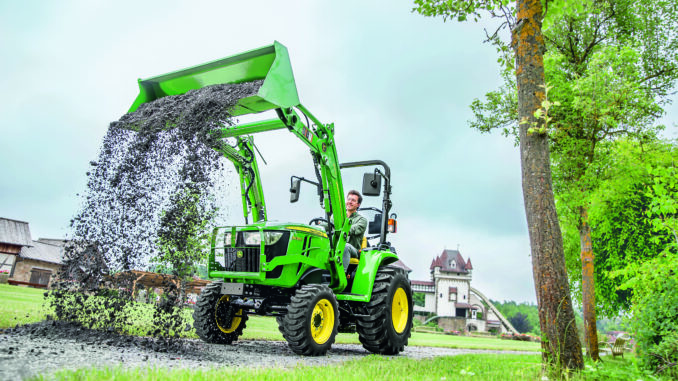
The John Deere 1050 is a compact utility tractor from Deere’s 50 Compact Series, built by Yanmar in Japan from 1980 to 1989. In North America, it was sold as a 37 hp diesel tractor with an 8-speed sliding-gear transmission, live 540 rear PTO, Category I three-point hitch, and either two-wheel drive or four-wheel drive depending on configuration.
For homeowners, acreage owners, and small property users in the USA and Canada, the John Deere 1050 is still a practical machine for mowing larger areas, pulling implements, light loader work, grading, and general maintenance around a rural property.
This guide focuses on the repairs and maintenance topics owners run into most often, with a symptom-first troubleshooting approach, realistic DIY boundaries, parts-ordering advice, and an expanded FAQ written for real-world ownership.
John Deere 1050 overview
The John Deere 1050 sits in Deere’s older compact utility tractor range rather than the later lawn tractor or residential riding mower families. It was positioned above the John Deere 950 in the same series and delivered more power for heavier mowing, tilling, blade work, loader jobs, and PTO-driven attachments.
At the heart of the John Deere 1050 is a Yanmar 3T90T 1.7 L three-cylinder liquid-cooled diesel engine rated at 37 gross hp, with approximately 33 PTO hp claimed. Core systems owners should understand include the fuel and air system, cooling system, clutch and transmission, hydraulic system, PTO driveline, brakes, steering, and electrical starting/charging system.
Common service-related items owners frequently deal with on an older John Deere 1050 include engine oil and filters, fuel filters, air cleaner elements, coolant, hydraulic/transmission fluid, battery and cables, glow or starting-system components where applicable, fan belts, hoses, and wear items tied to any installed mower deck, loader, or other attachment. Because this tractor spans multiple years and can differ by serial number and installed equipment, exact part selection should always be confirmed against the tractor PIN and the engine identification details before ordering.
John Deere 1050 troubleshooting approach
The best way to diagnose a John Deere 1050 is to start with the symptom the owner actually sees, not the part they think is bad. On older compact tractors, the same symptom can come from several systems, so it helps to narrow the problem by asking whether the issue is related to starting, running, power delivery, hydraulics, PTO operation, overheating, fluid loss, noise, or electrical function.
Main symptom groups for the John Deere 1050 usually include:
-
Hard starting or no-start.
-
Engine runs rough, smokes, or lacks power.
-
Overheating or coolant loss.
-
Clutch, transmission, or drive problems.
-
Hydraulic lift or loader performance issues.
-
PTO engagement or implement-drive problems.
-
Electrical and charging faults.
-
Excess vibration, rattles, or leaks.
That symptom-first method matters because a no-start problem could be battery-related, fuel-related, compression-related, or a safety/connection issue, while weak PTO performance could be an engine-power issue, clutch issue, or implement issue rather than a PTO shaft failure.
John Deere 1050 immediate repair needs
Some faults on the John Deere 1050 should be addressed right away because they affect safety or can damage expensive components quickly. If the tractor shows sudden oil loss, coolant loss, brake problems, abnormal driveline noise, major hydraulic leaks, overheating, or clutch/PTO slippage under load, it is smarter to stop and inspect before continuing to work the machine.
John Deere 1050 starting issues
If the John Deere 1050 cranks slowly, does not crank, or fires and dies, the problem often becomes worse if the owner keeps cycling the starter or ignores weak battery connections. Repeated hard starting can damage the starter, drain the battery, and mask the real cause.
Common causes:
-
Weak or failing 12-volt battery.
-
Corroded battery terminals or poor ground path.
-
Fuel delivery restriction.
-
Dirty dual-element air cleaner.
-
Aged cables or poor starter connections.
-
Internal engine or compression-related issues on a high-hour machine.
Basic owner checks:
-
Check battery voltage and cable tightness.
-
Inspect both battery terminals and the ground connection for corrosion.
-
Confirm there is clean diesel fuel in the tank.
-
Inspect the air cleaner for severe restriction.
-
Check whether fuel is reaching the filter and injection side.
-
If cranking remains slow or smoke/power symptoms are severe, move toward dealer or diesel-specialist diagnosis.
John Deere 1050 running and power issues
A John Deere 1050 that starts but feels weak, smokes, surges, or struggles under PTO load needs attention before the issue spreads into overheating, injector problems, or clutch abuse. Owners often notice this first when mowing, using a rotary cutter, or climbing a grade.
Common causes:
-
Restricted air intake.
-
Dirty fuel filter or contaminated diesel.
-
Cooling system problems reducing performance.
-
Old engine oil or overdue service.
-
Dragging implement or overloaded attachment.
-
Internal fuel-system wear on an older tractor.
Basic owner checks:
-
Inspect the air cleaner elements.
-
Replace dirty fuel filters if service history is unknown.
-
Confirm engine oil and coolant are at the correct level.
-
Reduce implement load and retest.
-
Watch for smoke color changes, which can help separate fuel, air, and mechanical causes.
-
If the tractor still lacks power, get deeper diesel-system testing done.
John Deere 1050 overheating and leaks
Overheating on a diesel compact tractor should never be treated as minor because heat can shorten engine life fast. On the John Deere 1050, overheating may show up as coolant smell, rising temperature, visible seepage, or loss of power as the engine gets hot.
Common causes:
-
Low coolant level.
-
Dirty radiator screen or radiator fins.
-
Worn belt, hose, or clamp.
-
Water pump or thermostat issues.
-
External coolant or oil leaks.
-
Heavy PTO load combined with restricted airflow.
Basic owner checks:
-
Let the engine cool fully before inspection.
-
Check coolant level and inspect for obvious leakage.
-
Clean debris from the radiator area carefully.
-
Inspect hoses and belt condition.
-
Look for milky oil, coolant contamination, or signs of repeated heat stress.
-
If overheating returns quickly, stop using the tractor until repaired.
John Deere 1050 transmission and drive problems
The John Deere 1050 uses an 8-speed sliding-gear transmission and a live PTO with a two-stage foot clutch, so clutch adjustment and driveline condition matter more than on a hydrostatic lawn tractor. Grinding shifts, poor engagement, creeping, weak pull, or PTO performance complaints can all point to clutch wear or driveline setup issues.
Common causes:
-
Clutch wear or clutch free-play problems.
-
Linkage issues.
-
Low or degraded transmission/hydraulic fluid.
-
Internal transmission wear.
-
Brake drag.
-
Implement load beyond what the tractor can comfortably handle.
Basic owner checks:
-
Verify the complaint with the tractor safely parked or lightly loaded.
-
Check fluid level and condition if accessible through the normal service points.
-
Inspect clutch pedal free play and linkage movement.
-
Compare behavior in different gears and with/without PTO load.
-
Rule out a dragging implement or seized attachment.
-
For grinding, slipping, or internal noise, step up to dealer-level diagnosis.
John Deere 1050 hydraulic and PTO problems
Hydraulic or PTO problems on the John Deere 1050 matter because they directly affect lift performance, loader function, and implement operation. Weak hitch lift, slow hydraulic response, or PTO trouble can turn a usable tractor into a machine that wastes time and risks damaging implements.
Common causes:
-
Low hydraulic oil level.
-
Old or contaminated hydraulic/transmission fluid.
-
Internal leakage.
-
Clutch-related PTO issues due to the live PTO design.
-
Hydraulic pump wear.
-
Control linkage or attachment driveline faults.
Basic owner checks:
-
Check hydraulic/transmission fluid level and condition.
-
Test the hitch or loader with and without load.
-
Confirm the implement driveline is installed correctly.
-
Listen for pump strain, chatter, or abnormal noise.
-
Verify whether the issue changes with engine speed.
-
If the hitch will not hold or the PTO slips, move beyond basic DIY.
John Deere 1050 electrical problems
Electrical faults on an older John Deere 1050 are often simple at first but frustrating in practice. A weak connection, tired battery, or charging issue can look like a starter fault or fuel problem if diagnosis starts in the wrong place.
Common causes:
-
Weak battery.
-
Dirty terminals.
-
Poor ground strap.
-
Failing starter or solenoid.
-
Charging-system fault.
-
Aged wiring or damaged connectors.
Basic owner checks:
-
Load-test the battery if possible.
-
Clean and tighten cable ends.
-
Inspect visible wiring for rubbed insulation or broken terminals.
-
Confirm the tractor is charging after startup.
-
Check for voltage drop on suspect cables.
-
If wiring repairs are extensive, dealer or auto-electrical help is sensible.
DIY or dealer?
On a John Deere 1050, the line between DIY and dealer work usually comes down to whether the job involves normal service access and basic hand tools, or whether it requires split-tractor work, clutch setup, injection-system diagnosis, or internal hydraulic/transmission repair. Owners with good mechanical sense can handle a fair amount, but this is still a heavier compact utility tractor with systems that get expensive when guessed at.
Good DIY jobs
-
Engine oil and filter changes.
-
Air cleaner inspection and replacement.
-
Fuel filter replacement.
-
Coolant checks and hose inspection.
-
Battery replacement and cable cleaning.
-
Greasing, basic inspection, and fluid-level checks.
-
Replacing obvious worn hoses, clamps, or belts when access is straightforward.
Advanced DIY or dealer jobs
-
Clutch adjustment beyond basic free-play checks.
-
PTO clutch or driveline diagnosis.
-
Internal hydraulic leaks or weak three-point lift issues.
-
Injection pump or injector work.
-
Transmission grinding, internal noise, or gear engagement faults.
-
Steering, brake, or axle work on worn machines.
-
Splitting the tractor for clutch or transmission service.
Skill guide
-
Beginner: Filter changes, fluid checks, battery service, air cleaner service.
-
Intermediate: Fuel-system service, hose and belt replacement, cooling-system cleanup, linkage adjustments.
-
Advanced: Clutch diagnosis, hydraulic troubleshooting, driveline repair, engine or transmission tear-down.
John Deere 1050 parts and part-number strategy
Before ordering John Deere 1050 parts, gather the exact model name, the tractor serial number or PIN, and the engine identification details. This matters because older Deere compact tractors can have serial-range differences, and installed equipment such as a mower deck, loader, or snowblower changes what service parts you need.
The serial-number plate for the John Deere 1050 is located at the rear of the tractor below the PTO shaft. That is the first thing to verify before ordering any fit-sensitive parts.
OEM parts are the safer choice for belts, cooling-system items, hydraulic parts, clutch-related parts, and anything tied to safety or exact fit. Aftermarket parts can make sense for batteries and some routine filters if the supplier provides a clear cross-reference to the John Deere 1050 and, ideally, the engine model as well.
John Deere 1050 manuals and diagrams
These are the most useful sources when working on a John Deere 1050:
-
John Deere Technical Publications for operator and technical manuals referenced by TractorData.
-
Deere Parts Catalog entry for 850 (016001-), 950 (020001-) and 1050 (011001-) Compact Utility Tractors, useful for exploded diagrams and PIN-sensitive part verification.
-
TractorData John Deere 1050 page for verified overview specs, serial-number location, and model context.
-
The John Deere technical manual family reference commonly identified as TM1192 for 850/900HC/950/1050 tractors, useful for deeper repair procedures once the right edition is confirmed.
Use Deere publications first for service procedures and torque-sensitive work. Use the parts catalog to confirm exact diagrams and serial-range differences before spending money on parts.
How to find John Deere 1050 numbers
These numbers matter because they separate the exact tractor from all the similar-looking machines and protect you from ordering the wrong part. On an older diesel compact tractor, that step saves time and usually saves money.
-
Park the tractor safely, lower any attachment, shut it off, and let hot components cool.
-
Go to the rear of the tractor and look below the PTO shaft for the serial-number plate.
-
Record the serial number exactly as shown, including any prefixes or formatting.
-
Find the engine identification tag on the engine itself and record that as well before ordering engine-service parts.
-
If the tractor has a mower deck, loader, or other attachment installed, record that attachment model separately because those parts do not cross by tractor model alone.
Buying John Deere 1050 parts
The best buying strategy is to start with the Deere diagram, identify the correct part description, and then compare that against the exact PIN before ordering. That keeps an older machine from getting sidelined by returns and mismatched parts.
-
Online: Best for routine service items, provided the listing clearly cross-references the John Deere 1050 and the correct engine or serial range.
-
Dealer counter: Best for hydraulic, clutch, PTO, steering, brake, and serial-sensitive parts.
-
Retail stores: Acceptable for fluids, batteries, and some filters only when the packaging clearly lists the exact application and cross-reference.
Useful sources include John Deere Technical Publications, the Deere Parts Catalog, and model-category aftermarket suppliers such as Tractor Parts ASAP where cross-reference details are stated clearly.
John Deere 1050 fitting guide
These are high-impact service jobs many owners can handle safely with normal workshop care and the correct manual.
Change the John Deere 1050 engine oil and filter
This job helps protect the 1.7 L Yanmar diesel and is one of the first things to do when service history is unknown.
-
Warm the engine briefly, then shut it down and park safely on level ground.
-
Drain the old oil into a suitable container.
-
Remove the old oil filter and check that the old gasket comes off with it.
-
Install the correct replacement filter after confirming the exact part by PIN/engine.
-
Refill with the correct amount and grade of oil specified for the tractor and climate.
-
Start the engine, check for leaks, then recheck the oil level.
Service the John Deere 1050 air cleaner
A restricted air cleaner can cause hard starting, smoke, and power loss on the John Deere 1050.
-
Open the air cleaner housing carefully.
-
Remove the outer element and inspect it for dirt loading or damage.
-
Inspect the inner safety element as well; replace it if dirty or damaged rather than trying to “save” it.
-
Wipe the housing clean without pushing debris into the intake path.
-
Reassemble with correctly seated elements.
-
Test run the tractor and confirm improved airflow and response.
Replace the John Deere 1050 fuel filter
Fuel restriction is a common cause of poor running on older diesel tractors, especially if fuel quality or storage is uncertain.
-
Shut the tractor down and close any shutoff if fitted.
-
Remove the old filter carefully and catch any spilled diesel.
-
Clean the sealing area before fitting the new filter.
-
Install the correct replacement filter after verifying application.
-
Bleed or prime the system as required by the manual.
-
Start the engine and check for leaks or air-related stumbling.
Check and clean the John Deere 1050 cooling system area
Cooling-system neglect causes repeat overheating and shortens engine life.
-
Let the tractor cool completely.
-
Inspect coolant level in the proper service point.
-
Clean debris from the radiator screen and radiator fins carefully.
-
Inspect hoses, clamps, and the belt for cracks or looseness.
-
Look for any wet spots or residue that suggest leaks.
-
Run the tractor under light load and monitor temperature behavior.
John Deere 1050 maintenance focus areas
Regular maintenance on the John Deere 1050 prevents most of the expensive failures owners complain about later. The key is staying ahead of contamination, heat, and neglected adjustments.
Focus on:
-
Starting reliability: Battery condition, cable cleanliness, and fuel-system service.
-
Engine power: Clean air filter, fresh fuel filter, and proper cooling airflow.
-
Overheating prevention: Coolant level, belt condition, hose inspection, and radiator cleanliness.
-
Hydraulic and PTO performance: Correct fluid level and early attention to weak lift or slipping behavior.
-
General longevity: Fix leaks early and investigate abnormal noises before they become teardown jobs.
John Deere 1050 maintenance schedule
The available verified sources confirm the machine type, engine family, fluid capacities, and Deere manual references, but they do not provide the complete official hour-by-hour service chart text directly in the accessible material here. For that reason, the checklist below is written as a safe owner-use framework and should be matched against the official operator’s manual for the exact tractor serial range before publication as a strict interval chart.
Before each use
-
Check engine oil level.
-
Check coolant level and look for leaks.
-
Check fuel level and watch for contamination.
-
Inspect tires, steering feel, and brakes.
-
Look for hydraulic, oil, or coolant leaks.
-
Clear debris from the radiator area.
Regular service points
-
Inspect and service the dual-element air cleaner as conditions require.
-
Replace fuel and oil filters on schedule using the official manual for the tractor serial range.
-
Check battery condition and cable cleanliness.
-
Inspect belts, hoses, and clamps.
-
Monitor hydraulic/transmission fluid condition and level.
-
Grease loader, steering, and implement points according to the installed equipment’s schedule.
Seasonal checklist
-
Spring: Change overdue fluids, inspect the cooling system, and service filters before mowing or field work.
-
Mid-season: Clean the radiator area often and watch for reduced power under load.
-
Fall: Repair leaks, inspect the battery and charging system, and prepare fuel storage properly.
-
Winter storage or off-season: Store with clean fuel, a maintained battery, and any needed repairs completed before the next work cycle.
Repair, upgrade, or replace?
For a John Deere 1050, the answer usually depends on the condition of the engine, clutch, hydraulics, and driveline rather than the tractor’s age alone. These tractors remain useful when structurally sound, but repeated major failures can outweigh the value of another repair.
Repair if…
-
The engine starts reasonably well and holds good power.
-
Problems are limited to routine service items, leaks, hoses, filters, or wiring.
-
The clutch, PTO, and hydraulics are basically functional.
-
The tractor fits your current jobs well.
Upgrade if…
-
You need easier operation than an 8-speed gear tractor offers.
-
You want more hydraulic performance for loader work.
-
You use many modern attachments and need broader parts support.
-
You want power steering, improved ergonomics, or newer safety features.
Replace if…
-
The tractor has major engine, clutch, and hydraulic problems at the same time.
-
Parts chasing has become constant because the machine was poorly maintained.
-
Structural wear, driveline wear, and neglected repairs make it unreliable.
-
Downtime now costs more than moving into a newer compact tractor.
John Deere 1050 troubleshooting FAQ
1. Why will my John Deere 1050 not start?
A John Deere 1050 that will not start usually has a battery, cable, fuel-delivery, or air-intake problem before it has a catastrophic engine problem. Start with battery condition, terminal corrosion, ground quality, fuel supply, and filter condition. If it still cranks slowly or refuses to fire after those basics, move toward starter, compression, or diesel-system diagnosis.
2. Why does my John Deere 1050 crank slowly?
Slow cranking often points to weak battery output, aged battery cables, poor grounds, or starter drag on an older tractor. Because this model uses a 12-volt electrical system, voltage drop matters more than many owners expect. Clean connections first, then test the battery under load rather than relying on appearance alone.
3. Why does my John Deere 1050 start and then die?
That pattern often suggests fuel restriction, air in the fuel system, or a contaminated fuel supply. It can also happen if a recently changed filter was not primed or bled properly. Check fuel flow and filter condition before assuming an internal injection fault.
4. Why is my John Deere 1050 hard to start when cold?
Cold starts on older diesel tractors become harder when battery performance drops, the air intake is restricted, or fuel delivery is weak. A tractor that starts fine warm but struggles cold is often telling you that the basic service items need attention. Start with the battery, filter condition, and fuel quality.
5. Why is my John Deere 1050 low on power?
Low power is usually tied to restricted air flow, dirty fuel filters, overheating, or a load that is too heavy for the tractor and implement setup. Since the John Deere 1050 has about 33 PTO hp claimed, performance will drop quickly if a mower or other attachment is oversized. Rule out maintenance issues before blaming internal engine wear.
6. Why does my John Deere 1050 blow smoke?
Smoke color matters. Black smoke often points to too much fuel or too little air, while white or persistent abnormal smoke may suggest fuel-delivery or internal engine issues. Start by checking the air cleaner, fuel quality, and whether the tractor is being overloaded.
7. Why is my John Deere 1050 overheating?
Overheating commonly comes from low coolant, dirty radiator passages, weak belt drive, hose problems, or repeated heavy load with poor airflow. On an older compact tractor, debris buildup around the radiator is a very common cause. Stop and correct the issue early, because repeated overheating shortens engine life.
8. Why is my John Deere 1050 losing coolant?
Coolant loss can come from hoses, clamps, radiator seepage, water-pump issues, or an internal engine problem if the loss is severe. Look for residue and dampness after the engine cools. If you cannot find an external leak and coolant disappears repeatedly, deeper diagnosis is justified.
9. Why does my John Deere 1050 have oil leaks?
On an older diesel tractor, oil leaks often come from filter seals, hoses, gaskets, or aged seals rather than one dramatic failure. Clean the area first so you can identify the true source. Then repair it early, because leaks attract dirt and can hide more serious problems.
10. Why is the John Deere 1050 hydraulic lift weak?
Weak lift often means low fluid, contaminated hydraulic oil, pump wear, or internal leakage in the hydraulic system. It can also be attachment-related if the implement is too heavy or badly adjusted. Check the basics before assuming the pump is bad.
11. Why is my John Deere 1050 three-point hitch slow?
A slow hitch is usually a fluid, filter, internal leakage, or pump-output issue. Cold oil can also slow response temporarily. If the hitch improves with engine speed but still feels weak, that points you toward hydraulic-system diagnosis rather than linkage alone.
12. Why does my John Deere 1050 PTO slip?
Because the tractor uses a live rear PTO with a two-stage foot clutch, PTO slippage can be related to clutch condition or adjustment rather than the PTO shaft itself. If the implement slows under load while engine speed remains up, stop using it until the clutch side is checked properly. Continued slipping can damage more parts.
13. Why won’t the John Deere 1050 PTO run my mower properly?
The tractor may be down on engine power, the attachment may be too demanding, or the clutch/PTO system may not be transferring full power. Check engine performance first, then clutch feel, then implement condition. A dragging mower or seized driveline can mimic a tractor fault.
14. Why is my John Deere 1050 hard to shift?
This tractor uses an 8-speed sliding-gear transmission, so clutch adjustment and full disengagement matter. Hard shifting or grinding can mean the clutch is not fully releasing or there is internal wear. If simple clutch free-play checks do not help, do not force the transmission.
15. Why does my John Deere 1050 grind going into gear?
Gear grinding usually points to incomplete clutch release, poor clutch adjustment, or wear inside the clutch or transmission system. It can also show up more when the oil is cold. Repeated grinding is a sign to stop and diagnose, not just “work around it.”
16. Why does my John Deere 1050 feel weak pulling uphill?
Weak pull can come from engine power loss, clutch slip, brake drag, or traction limits depending on tire setup and conditions. Compare performance in several gears and with different loads before deciding what system is at fault. That helps separate power loss from driveline slip.
17. Why is my John Deere 1050 battery always dead?
A battery that repeatedly goes flat may be old, undercharged, or being drained by poor charging performance or bad cable connections. Start with a load test and charging-voltage check after startup. Many tractors get unnecessary starters when the real issue is the battery or charging system.
18. Why is my John Deere 1050 not charging?
Charging faults usually come from the belt drive, alternator/generator side, wiring, or bad battery connections. If the battery is known good but voltage does not rise after startup, test the charging circuit rather than replacing parts at random. Belt condition and tension matter here too.
19. Why does my John Deere 1050 vibrate more than normal?
New vibration often comes from engine misfire, loose hardware, driveline wear, or an attached implement that is out of balance. If the vibration changes with PTO engagement, look at the implement and PTO driveline first. If it is present at idle with no implement load, check the engine side.
20. Why is my John Deere 1050 noisier under load?
Noise under load can point to belt slip, fan or pump issues, clutch problems, driveline stress, or internal gear wear. A change in sound is often more important than the exact sound itself. If the noise is growing quickly, stop and inspect before running longer.
21. Why does my John Deere 1050 smoke more when mowing?
That usually means the engine is under heavy load, the air cleaner is restricted, or the mower/implement is demanding more than normal. Check the deck or attachment for drag and service the air filter first. If smoke remains abnormal after that, check fuel service history.
22. Why is my John Deere 1050 using more fuel than usual?
Higher fuel use often accompanies restricted air flow, poor combustion, overloaded PTO work, or dragging drivetrain components. The fix is usually in maintenance and load management before it is in major engine repair. Watch for smoke and power changes at the same time.
23. Why is diesel leaking around my John Deere 1050 filter area?
Fuel leaks near the filter are often caused by an old seal, loose fitting, damaged line, or poor installation after service. Clean the area and confirm exactly where the leak starts. Because diesel attracts dirt, repair it early to avoid contamination and future troubleshooting confusion.
24. Why does my John Deere 1050 stall under PTO load?
Stalling under PTO load usually means the engine is not making full power, the attachment is overloaded, or the clutch/PTO system is not transferring power smoothly. Compare behavior with and without the implement engaged. That helps decide whether the problem is engine-side, clutch-side, or attachment-side.
25. Why is the John Deere 1050 air filter getting dirty so fast?
Fast air-filter loading usually reflects dusty conditions, poor storage, intake leaks, or an element that was already overdue. The engine uses a dual paper-element setup, so both elements need inspection. In dusty mowing or grading work, service intervals naturally shorten.
26. Why should I verify the serial number before buying John Deere 1050 parts?
Because Deere’s parts support for this tractor is tied to the exact model and serial range, and attachments add another layer of variation. The serial plate is at the rear below the PTO shaft, making it easy to confirm before ordering. That step reduces wrong-part purchases significantly.
27. Are aftermarket John Deere 1050 filters okay?
They can be acceptable when the supplier provides a trustworthy cross-reference for the John Deere 1050 and the engine application. For routine service items, aftermarket can make sense, but fit-sensitive parts should still be checked carefully. For critical hydraulic, clutch, belt, or cooling parts, OEM is usually the safer route.
28. Should I buy OEM John Deere 1050 belts and hoses?
For belts and cooling-system parts, OEM is often worth it because exact fit matters and a near-match can waste a lot of time. Older compact tractors are less forgiving of wrong-length belts and poor hose fit. If you do buy aftermarket, cross-reference carefully.
29. Can a homeowner do John Deere 1050 maintenance at home?
Yes, many owners can handle fluid checks, filter changes, air cleaner service, battery maintenance, visual inspections, and basic leak repairs with normal tools. The tractor is owner-serviceable in many routine areas. The limit usually appears when the job moves into clutch, hydraulic, transmission, or diesel injection work.
30. When should I stop DIY work on a John Deere 1050?
Stop when the repair requires split-tractor work, internal hydraulic diagnosis, clutch/PTO teardown, transmission disassembly, or specialized diesel-system testing. Those jobs get expensive if the diagnosis is wrong. A good rule is simple: if access is poor and the consequences of guessing are high, hand it off.
31. Is the John Deere 1050 still worth repairing?
Often yes, if the engine, clutch, and hydraulic system are fundamentally sound and the tractor still matches your property’s workload. These are durable compact utility tractors, not disposable lawn riders. But if several major systems are failing at once, replacement may be the smarter financial decision.
32. What is the John Deere 1050 best used for?
The John Deere 1050 is best suited to acreage and property-maintenance work such as heavier mowing, blade work, small-loader jobs, snow work with the right attachment, and general PTO implement use. It is more of a compact utility tractor than a simple mower. That is why drivetrain, hydraulics, and PTO condition matter so much when buying or maintaining one.
33. Where is the serial number on a John Deere 1050?
The serial-number plate is located on the rear of the tractor below the PTO shaft. That is the number to record before buying parts, researching production year, or checking serial-range fit. It is one of the most important owner-reference details on this model.
34. What engine is in the John Deere 1050?
The John Deere 1050 uses a Yanmar 3T90T turbocharged 1.7 L three-cylinder liquid-cooled diesel engine. Verified engine details also include dual paper air cleaner elements, a rated speed of 2400 rpm, and approximately 7 quarts oil capacity. Those details are useful when planning routine service.
35. Does the John Deere 1050 have a live PTO?
Yes. The John Deere 1050 has a live rear 540 PTO operated through a two-stage foot clutch. That design is one reason PTO complaints should not be diagnosed as “just an implement problem” without checking clutch behavior. It also shapes the DIY-versus-dealer decision for driveline repairs.
Common troubleshooting steps for the 1050 1.7L diesel engine cooling system
For the John Deere 1050’s 1.7 L Yanmar 3T90T diesel, cooling-system troubleshooting is mostly about airflow, coolant level/quality, belt/drive condition, and leaks. Below is a concise set of common checks you can turn into a reusable “cooling” subsection in your guides.
Safety and initial checks
Before doing anything hot side:
-
Let the engine cool fully before opening the radiator or cap, to avoid scalding.
-
Park on level ground, set brake, and lower any implements.
Initial owner checks that catch most problems:
-
Verify coolant level in the correct fill point once the engine has cooled.
-
Inspect the radiator screen and radiator fins for grass, chaff, or dirt; clean carefully from the fan side out.
-
Check the fan/alternator belt for cracks, glazing, or slack that could reduce pulley speed.
-
Look around the engine, radiator, hoses, water pump area, and block for wet spots, dried coolant residue, or oil contamination.
Airflow and debris issues
On compact utility tractors like the 1050, blocked airflow is a primary cause of overheating under load.
Common steps:
-
Remove and clean any removable radiator screen or grill mesh to restore airflow.
-
Blow dirt out of radiator fins with low-pressure air from the fan side, supporting the fins if necessary.
-
Clear debris from around the fan shroud and front of the engine.
-
Re-test under load and watch the temperature; if overheating only occurs in heavy dust and improves after cleaning, airflow was a likely factor.
Coolant level, hoses, and leaks
Low coolant or hose failure is the next likely fault area.
Steps:
-
With the engine cold, top up coolant to the specified level if low, using the correct antifreeze mix for corrosion protection.
-
Inspect upper and lower radiator hoses for soft spots, bulges, cracking, or oil-soaked rubber that signals replacement time.
-
Check hose clamps and radiator connections for seepage; tighten or replace clamps as needed.
-
Look for coolant tracks on the radiator core or end tanks, and for tell-tale stains around the water pump or block drain.
If coolant continues to drop with no clear external leak, consider internal problems (head gasket, etc.) and move the tractor to professional diagnosis rather than guessing.
Belt, fan, and water-pump drive
The 1050 relies on correct belt tension to drive the fan and water pump effectively.
Checks:
-
Inspect the fan belt for glazing, cracking, or frayed edges; replace if suspect.
-
Check belt tension and adjust according to the operator’s manual so it neither slips nor overloads bearings.
-
Rotate the fan by hand (engine off) to feel for roughness or play in the water-pump bearings.
-
If the belt squeals under load or you see wobble or coolant seepage at the pump, treat it as a near-term repair rather than a “watch it later” issue.
Load and operating conditions
Sometimes the cooling system is marginal but only shows it under high load:
-
Note whether overheating happens only when mowing heavy grass, brush hogging, or climbing long grades, especially in hot weather.
-
If temperature climbs mainly during those tasks, reduce ground speed, lighten PTO load, and ensure airflow and coolant are perfect before assuming deeper faults.
-
Check that the front grill, weights, or homemade screens are not further restricting airflow.
When to stop DIY and escalate
Stop DIY and move to dealer/diesel specialist when:
-
The tractor overheats quickly even after basic cleaning and coolant checks.
-
You suspect internal coolant loss (coolant disappearing with no external leak, or milky oil).
-
There is clear water-pump failure or bearing noise you are not equipped to replace.
-
You need thermostat, head-gasket, or deeper engine work that requires torque specs and procedures from the technical manual
How to safely service the 8-speed sliding gear transmission on a John Deere 1050
On the John Deere 1050, “servicing” the 8‑speed sliding‑gear transmission safely means staying in the owner‑service zone: fluid checks, fluid changes, external inspection, and linkage checks, while leaving internal gear, bearing, and clutch work to a shop with the correct Deere technical manual and tools.
The transmission is a mechanically shifted gear box with a live PTO driven through a two‑stage clutch, so procedure discipline and cleanliness matter more than on a lawn tractor transaxle.
Safety principles before transmission service
-
Always park on level ground, set the parking brake, lower implements, and stop the engine before working underneath.
-
Support the tractor securely if you must work under it; never rely on a jack alone.
-
Let the transmission/hydraulic oil cool to a safe temperature before draining to avoid burns.
-
Do not start or run the tractor if the transmission is drained or significantly low on oil; running without oil can cause rapid internal damage.
Basic owner-level service tasks
For the 1050’s sliding‑gear transmission, safe owner tasks usually include:
-
Checking transmission/hydraulic fluid level through the specified check point in the operator’s manual.
-
Inspecting for external leaks at case joints, axle seals, and lines.
-
Performing scheduled oil and filter changes if the drain/fill points and filters are accessible without splitting the tractor.
-
Checking and lubricating external shift linkages or levers where accessible.
Anything involving internal gears, bearings, synchronizers (where fitted on other models), or clutch packs belongs with a dealer or transmission specialist using Deere’s TM1192 technical manual for 850/950/1050 tractors.
Typical safe transmission fluid service flow
Exact plug locations, capacities, and intervals must be taken from the John Deere 1050 operator’s manual or TM1192 for your serial range, but the high‑level process is:
-
Confirm fill and check points first
Locate the official drain plug, fill/inspection plug, and any level plug according to the manual so you are sure you can refill before you drain. -
Prepare tools and containment
Use a suitable drain pan with enough capacity for the transmission/hydraulic sump and wear gloves and eye protection when handling oil. -
Drain the oil
With the tractor off and cooled, remove the drain plug and allow the oil to drain completely, watching for metal particles or water contamination that would justify professional inspection. -
Service any specified filter or screen
If the operator’s or parts manual shows a replaceable filter or cleanable suction screen for the shared transmission/hydraulic system, follow the Deere procedure for removal, cleaning or replacement, and correct sealing. -
Reinstall plugs and components correctly
Clean threads and sealing surfaces, install new washers or seals where specified, and tighten drain/fill plugs to the torque in the Deere manual to avoid stripping or leaks. -
Refill with the specified oil
Use only the lubricant grade and type specified for the John Deere 1050 transmission/hydraulic system, and refill with the amount called for in the manual rather than guessing. -
Check level and function
After refilling, run the tractor briefly (if the transmission and hydraulics share oil), operate the controls, then shut down and re‑check the oil level using the official level method.
Sliding‑gear–specific operating and adjustment tips
Because the 1050 uses an 8‑speed sliding‑gear box with a two‑stage clutch for live PTO, the way it is used and adjusted strongly affects transmission life.
-
Always depress the clutch fully and pause briefly when shifting between gears to reduce grinding and gear‑edge wear.
-
Avoid forcing the shifter into gear; grinding or refusal to engage is a sign to check clutch free play and linkage (per the manual) rather than “pushing harder.”
-
If hard shifting, grinding, or gear jump‑out persist after basic clutch adjustment and lubrication of external linkages, treat that as a dealer‑level problem, not a DIY internal repair.
When not to DIY on the 1050 transmission
Stop at basic service and call in a dealer or specialist if:
-
You hear internal transmission noise (whine, growl, or clunk) that changes with gear or load.
-
The tractor jumps out of gear, grinds badly on engagement, or shows metal in the drained oil.
-
Repairs involve splitting the tractor to access the clutch, input shaft, or internal gears.
-
You need torque specs and assembly sequences that only appear in the Deere technical manual.