
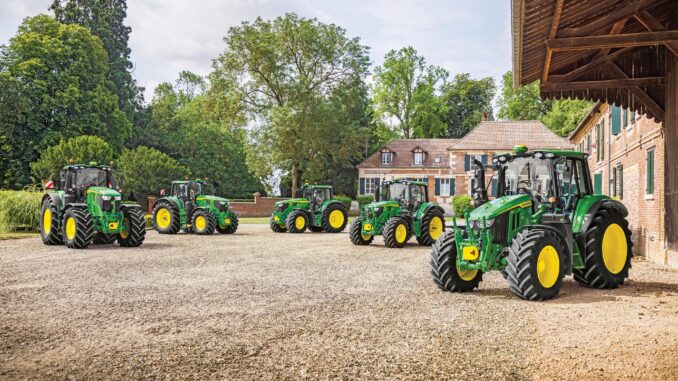
The John Deere 4630 is a large row-crop tractor from Deere’s Generation II line, built from 1973 to 1977 with a turbocharged 6-cylinder 404 cu. in. diesel engine, closed-center hydraulics, independent 1000-rpm PTO, and several transmission options including Syncro-Range, Quad-Range, and Power Shift. For owners in the USA and Canada, this guide is designed to help with practical repair decisions, common troubleshooting, maintenance planning, parts lookup, and knowing when a job is realistic at home versus better handled by a Deere dealer or a specialist diesel and transmission shop.
Many John Deere 4630 tractors are still used for hay, loader work, auger duty, light tillage, and general farm support, so the most useful repair information usually centers on starting problems, fuel delivery faults, hydraulic weakness, PTO issues, transmission behavior, leaks, and electrical faults rather than cosmetic work. This article follows a symptom-first format so owners can start with what the tractor is doing, narrow likely causes, and then match the issue to the right parts diagrams, operator information, or technical manual section before ordering parts.
General overview of the John Deere 4630
The John Deere 4630 sits near the top of the 30 Series row-crop lineup of its era, above the 4430 and below the later 4640 in Deere’s model progression. It was built in Waterloo, Iowa, offered in 2WD and HFWD configurations, and commonly equipped with a Sound-Gard cab, planetary final drives, hydro-mechanical differential lock, and Deere’s closed-center hydraulic system.
The key systems that matter most in repair work are the turbocharged diesel engine and fuel system, the dry air-cleaner and intake system, the charging and starting circuits, the PTO and clutch arrangements, the transmission family fitted to the tractor, the brake and steering hydraulics, and the rockshaft/SCV hydraulic functions. On older John Deere 4630 tractors, many real-world faults come from age, contamination, adjustment drift, wiring deterioration, hydraulic wear, and neglected filters or fluids rather than from one dramatic part failure.
Common service parts owners regularly look for include air filters AR79679 and AR79680, plus access to OEM catalog lookup for serial-specific items through Deere’s online parts catalog. On machines still in active field use, additional high-demand items often include batteries, fuel filters, oil filters, radiator hoses, belts, lighting components, PTO seals, SCV couplers, hydraulic filters and transmission-related seals, though exact OEM numbers should be confirmed by serial number before ordering.
John Deere 4630 troubleshooting approach
The best way to diagnose a John Deere 4630 is to start with the symptom the owner actually sees, such as hard starting, weak hydraulics, no crank, excessive smoke, poor PTO performance, slipping transmission behavior, steering loss, or brake issues. That approach matters because several systems overlap on this tractor, and one root cause such as low battery voltage, restricted fuel flow, dirty oil, or low hydraulic pressure can create multiple symptoms at once.
Main symptom groups for the John Deere 4630 include:
-
Starting and no-crank issues.
-
Hard starting, low power, smoke, and rough running.
-
Hydraulic weakness, slow steering, brake problems, and SCV performance faults.
-
Transmission, clutch, PTO, and driveline problems.
-
Overheating, coolant leaks, and oil-pressure concerns.
-
Electrical and lighting faults, especially in older harnesses and cab circuits.
John Deere 4630 emergency repair needs
Some faults on a John Deere 4630 need immediate attention because they can quickly damage expensive components or make the tractor unsafe to operate. The biggest red flags are loss of brakes or steering assist, major hydraulic leaks, low oil pressure, severe overheating, fuel leaks near hot engine parts, and drivetrain noises that suggest clutch, PTO, or transmission damage.
John Deere 4630 starting issues
If the tractor will not crank, cranks slowly, or starts only with difficulty, stop repeated cranking until the battery, cable, starter, and fuel-side basics are checked. Long crank sessions on an old diesel can flatten batteries, overheat cables, and hide the original cause.
Common causes:
-
Weak or mismatched batteries; the 4630 uses two 6-volt batteries in the original electrical setup.
-
Dirty, loose, or corroded cable connections.
-
Starter or solenoid faults in the Delco-Remy or Deere starting circuits covered in the technical manual.
-
Air in the fuel system after filter service or sediment/water contamination.
-
Restriction in the air intake or starting-aid issues.
Basic checks:
-
Check battery condition, cable tightness, and grounds first.
-
Inspect for water or sediment in the fuel system and drain if needed.
-
If fuel-side service was done, bleed air using the hand primer procedure outlined in the technical manual.
-
Inspect the air cleaner element and dust valve for restriction.
-
If the tractor still will not crank or the starter drags badly, move to electrical testing rather than continued cranking.
John Deere 4630 running issues
A John Deere 4630 that starts but lacks power, smokes heavily, misses, or dies under load can have problems in the air intake, fuel delivery, injector, turbo, or linkage systems. On a turbo diesel of this age, poor performance is often a buildup problem or a fuel-supply problem before it becomes an internal engine failure.
Common causes:
-
Restricted primary or secondary air filter.
-
Fuel contamination, poor fuel flow, or air leaks on the suction side.
-
Injection-pump or nozzle wear.
-
Turbocharger or intercooler/intake issues described in the fuel-system section of TM-1172.
-
Speed control or shutoff linkage faults.
Basic checks:
-
Check the air cleaner and intake path first.
-
Drain water or sediment from the fuel side and confirm clean fuel supply.
-
Prime and bleed the system if filters were disturbed.
-
Watch for smoke color and whether the fault occurs only under load; that helps separate fuel, air, and engine issues.
-
If power is still poor, injector and pump testing is usually a specialist job.
John Deere 4630 vibration and noise
Unusual vibration or mechanical noise should be taken seriously because this tractor has expensive rotating assemblies in the engine, PTO, clutch, transmission, final drives, and front axle areas. A new knock, growl, or driveline chatter is often cheaper to diagnose early than after a hard failure.
Common causes:
-
Loose wheels, worn tires, or front-end wear.
-
PTO driveline or clutch problems.
-
Transmission or planetary issues, especially on tractors with shifting complaints.
-
Engine-related issues such as injector imbalance or damper wear.
Basic checks:
-
Identify whether the noise changes with engine rpm, ground speed, PTO engagement, or steering input.
-
Inspect wheel hardware, visible driveline parts, and PTO area for looseness or oil leaks.
-
Do not continue heavy load work with a transmission or PTO noise.
-
Use the technical manual section that matches the transmission fitted to the tractor before teardown.
John Deere 4630 overheating and leaks
Overheating on a John Deere 4630 can damage the head, pistons, turbo system, and cooling components, while oil or hydraulic leaks can starve major systems or create fire risk. Any tractor showing heat rise with coolant loss should come out of service until the cause is found.
Common causes:
-
Low coolant level or external leaks.
-
Dirty radiator core or airflow restriction.
-
Thermostat or water-pump faults.
-
Engine oil cooler or hydraulic oil cooler problems.
-
Aged hoses, seals, and gaskets.
Basic checks:
-
Inspect coolant level and look for wet spots around hoses, pump, radiator, and manifold areas.
-
Clean debris from the cooling stack and screens.
-
Verify oil level with the tractor level and engine stopped as described in Deere service literature.
-
If oil pressure is low or coolant is being pushed out, stop and investigate before further operation.
John Deere 4630 transmission and drive problems
Transmission complaints on the John Deere 4630 matter because Deere offered multiple transmission types, and the correct diagnosis depends on whether the tractor has Syncro-Range, Quad-Range, or Power Shift. Slipping, delayed engagement, weak pull, no movement in one range, or abnormal shift behavior usually points to clutch, hydraulic pressure, adjustment, or internal transmission wear.
Common causes:
-
Low hydraulic pressure or poor hydraulic supply to clutch circuits.
-
Worn clutch packs or internal transmission wear.
-
Linkage and adjustment issues.
-
Contaminated oil or neglected filter service.
Basic checks:
-
Confirm the exact transmission type before ordering parts or following repair instructions.
-
Check fluid condition and recent service history.
-
Note whether the problem affects all gears or only certain ranges.
-
Use Deere hydraulic pressure testing procedures before assuming a hard-part failure.
-
Internal Power Shift and Quad-Range work is usually advanced DIY at best.
John Deere 4630 electrical problems
Electrical issues on older tractors are often a mix of battery, alternator, switch, relay, harness, and connection faults rather than one bad component. On Sound-Gard cab machines, lighting, blower, wiper, and accessory circuits also add age-related wiring trouble points.
Common causes:
-
Weak batteries or charging faults.
-
Corroded grounds and terminals.
-
Key-switch, relay, or starter-solenoid faults.
-
Damaged lighting or cab harness sections.
Basic checks:
-
Verify battery state and charging performance first.
-
Clean and tighten grounds before replacing components.
-
Separate engine-start faults from lighting and accessory faults.
-
Use the wiring diagrams in TM-1172 for cab and chassis circuit tracing.
DIY or dealer?
The realistic repair line on a John Deere 4630 is usually between external service work and internal powertrain, hydraulic, or injection-system work. Owners with good tools can handle filters, fluid service, battery and cable work, basic leak repairs, some linkage adjustment, lighting fixes, and external inspections, but internal transmission, hydraulic pressure diagnosis, injection work, and major engine teardown are better left to experienced Deere technicians or qualified farm-equipment repair shops.
Good DIY jobs on the John Deere 4630
-
Engine oil and filter service.
-
Air-cleaner inspection and filter replacement.
-
Draining water or sediment from the fuel system and bleeding air after service.
-
Battery replacement, cable cleaning, and terminal repair.
-
Basic lighting and harness repairs where damage is visible and localized.
-
Replacing obvious hoses, clamps, and some external seals.
Advanced DIY or dealer jobs
-
Injection-pump and nozzle diagnosis or repair.
-
Power Shift, Quad-Range, PTO clutch, or Perma-Clutch internal repair.
-
Closed-center hydraulic pressure diagnosis and pump repair.
-
Brake and steering hydraulic faults beyond simple leakage inspection.
-
Engine internal work, head removal, liner or piston work, and crankshaft service.
Skill level guide
-
Beginner: batteries, filters, fluid checks, simple hose replacement, visible wiring repairs.
-
Intermediate: fuel bleeding, cooling-system service, minor linkage adjustment, starter or alternator replacement.
-
Advanced: hydraulic diagnosis with gauges, transmission testing, PTO clutch work, engine teardown, injector and pump work.
John Deere 4630 parts needed, OEM vs aftermarket, and what information you need
Before ordering parts for a John Deere 4630, gather the full model name, the tractor serial number or PIN equivalent used for this generation, the engine information where applicable, and the exact transmission type because the tractor was sold with multiple drivetrain configurations. On older Deere tractors, small serial breaks can change filters, wiring details, transmission parts, seals, and service procedures, so ordering by model alone is risky.
Use this quick-reference parts table as a starting point, but confirm fitment against the official Deere catalog before checkout.
OEM parts are the safer choice for belts, hydraulic components, safety-related switches, fit-sensitive seals, transmission parts, steering and brake components, and anything tied to serial-number breaks. Aftermarket parts can make sense for some batteries, lights, basic filters, and selected tune-up items, but only when the seller cross-references the exact Deere number and the tractor configuration has been verified first.
John Deere 4630 parts diagrams and service manuals
The most useful places to find John Deere 4630 diagrams and manuals are Deere’s own parts and publications systems, supported by reputable Deere-focused aftermarket parts sites and manual sellers. For an older tractor like this, the best workflow is usually operator information first, illustrated parts catalog second, and technical manual third if diagnosis goes beyond routine service.
Key sources:
-
JDParts / John Deere Parts Catalog for illustrated breakdowns, serial-specific part confirmation, and OEM number lookup.
-
John Deere technical publications portal for official operator and technical publication access referenced by TractorData.
-
Jensales John Deere 4630 operator’s manual listing for an easy overview of operator-manual topics if an original Deere copy is unavailable.
-
Green Farm Parts Deere parts lookup for Deere-focused catalog use once the OEM number is known.
How to locate John Deere 4630 serial and engine numbers
These numbers matter because the John Deere 4630 spans multiple production years and option combinations, and Deere parts support often depends on serial-specific identification. The tractor serial number plate is located on the rear right side of the tractor above the PTO shaft according to TractorData.
-
Park the tractor safely, shut it down, and clean dirt from the rear right-hand transaxle area.
-
Look above the PTO shaft on the right side rear of the tractor for the serial number plate.
-
Record the full serial exactly as stamped, not just the year range.
-
Confirm the tractor’s transmission type by inspection and paperwork because serial alone does not tell the whole service story.
-
Record engine tag information if present before ordering fuel or engine components.
Buying John Deere 4630 parts online and in stores
The smartest buying strategy for a John Deere 4630 is to identify the part from a diagram first, confirm the serial break, and only then compare price and availability. That reduces the risk of buying the wrong filter base, harness piece, hydraulic part, or transmission component for an older machine with several variants.
-
Online: best for OEM number verification, exploded diagrams, and comparing stock status, especially through JDParts, Green Farm Parts, and manual sellers such as Jensales.
-
Dealer counter: best for serial-sensitive parts, updated substitutions, hydraulic components, and transmission parts.
-
Retail stores: acceptable for common batteries, universal lights, some hoses, and selected cross-referenced maintenance items if packaging clearly matches the Deere number or exact fitment.
Step-by-step John Deere 4630 fitting guide for common parts
These are the most realistic high-impact DIY jobs on a John Deere 4630 because they address common reliability issues without opening major assemblies. Always use safe support, shut the engine off, remove the key, and allow hot systems to cool before service.
Replacing the John Deere 4630 primary and secondary air filters
A restricted air cleaner can cause hard starting, black smoke, and poor power, so air-filter service is one of the first checks on a tired 4630.
-
Open the air-cleaner housing and remove the outer primary element first.
-
Inspect the housing for dust buildup and clean it without forcing debris into the intake.
-
Remove and inspect the secondary safety element only if replacement is needed.
-
Check the dust unloading valve and replace it if cracked or plugged.
-
Install the new elements carefully so the seals seat squarely.
-
Recheck the housing clamps and intake path before starting the tractor.
Bleeding the John Deere 4630 fuel system after service
If the tractor runs out of fuel, has filter work done, or develops air intrusion, bleeding the system can restore normal starting and running.
-
Close up any drain points and make sure clean fuel is in the tank.
-
Inspect the sediment bowl area and fuel filter drains for contamination.
-
Loosen the hand primer and pump until most air is cleared from the system as described in the service literature.
-
Tighten components and check carefully for leaks.
-
Start the tractor and monitor idle quality and throttle response.
Replacing John Deere 4630 batteries and cleaning cables
Slow cranking on an older diesel often starts with battery condition and cable resistance rather than with the starter itself.
-
Confirm the tractor uses the correct two 6-volt battery arrangement or a properly engineered equivalent setup.
-
Disconnect grounds first and remove battery box covers and batteries safely.
-
Clean cable ends, grounds, and tray areas before installing replacements.
-
Inspect cables for corrosion under insulation, hard spots, or broken strands.
-
Reinstall batteries, tighten terminals correctly, and test cranking speed.
Checking John Deere 4630 engine oil and basic leak points
Oil level and leak control matter because low oil pressure or oil loss can damage a 4630 very quickly.
-
Park on level ground and shut the engine off for at least 10 minutes before checking the dipstick.
-
Remove, read, and reseat the dipstick evenly, then top up only if the oil is at the lower marks.
-
Inspect around the filter housing, cooler area, hoses, and visible gaskets for fresh leaks.
-
Check for oil contamination around the engine and under the tractor after operation.
-
Investigate any active leak before returning the tractor to heavy work.
Maintenance to prevent John Deere 4630 problems reoccurring
Regular maintenance prevents many John Deere 4630 failures because the tractor depends on clean fuel, clean air, sound electrical connections, correct oil level, and healthy hydraulic circuits. On older tractors, preventive work is often more important than strict restoration because small neglect issues quickly multiply into expensive repairs.
Focus areas:
-
Starting reliability: keep batteries strong, cables clean, and fuel free from water and sediment.
-
Engine performance: service air-cleaner elements and monitor fuel-system condition.
-
Overheating prevention: clean the cooling package and fix coolant leaks early.
-
Drive performance: monitor clutch feel, shift quality, PTO behavior, and hydraulic response for early change.
-
Electrical reliability: address brittle wiring, poor grounds, and charging problems before they create no-start faults.
John Deere 4630 maintenance schedule and year-round checklist
Official maintenance charts for this exact tractor are less conveniently surfaced online than for newer Deere equipment, but the Deere technical manual and operator-manual references clearly support routine checks of lubrication, fuel-system cleanliness, air-cleaner condition, cooling system, batteries, and broader after-sale service inspections. Because many John Deere 4630 tractors now operate in seasonal or occasional farm use, a practical checklist built around those official service categories works well for owners in the USA and Canada.
Daily / before each use
-
Check engine oil level on level ground.
-
Look for coolant, fuel, engine-oil, and hydraulic leaks.
-
Check batteries and visible cable condition.
-
Inspect air-cleaner condition and dust valve if operating in dusty conditions.
-
Confirm brakes, steering response, lights, and PTO controls are operating normally.
Every 25 hours
-
Clean around the engine, radiator area, and screens to maintain airflow.
-
Inspect belts, hoses, and clamps for age or looseness.
-
Check for sediment or water in the fuel system.
Every 50 hours or seasonally during use
-
Reinspect battery cables, grounds, and charging performance.
-
Check external linkage adjustment and obvious wear points.
-
Inspect tires, wheel hardware, PTO area, and drawbar/hitch hardware.
Every 100 to 250 hours or yearly
-
Change engine oil and filter based on your operator-manual interval and actual use conditions.
-
Service the air-cleaner system as needed by restriction and condition, not just by calendar.
-
Perform a broader hydraulic, brake, and steering inspection before peak work periods.
Seasonal checklist
-
Spring: inspect batteries, fluids, cooling system, and hydraulic response before field work.
-
Mid-season: monitor air-cleaner condition, leaks, and transmission behavior under load.
-
Fall or storage prep: clean the tractor thoroughly, correct active leaks, service fuel concerns, and store with a charged battery system.
Repair, upgrade, or replace?
For a John Deere 4630, repair usually makes sense when the tractor is structurally sound, starts well, and only needs external service, moderate hydraulic attention, or routine age-related parts. Upgrade makes more sense when the tractor is still useful but needs recurring comfort, lighting, electrical, or convenience improvements, while full replacement becomes easier to justify when the machine needs major engine, transmission, hydraulic, and cab work all at once.
Repair if…
-
The engine is fundamentally healthy and the issue is external, service-related, or limited to one system.
-
Hydraulics, PTO, and transmission mostly work and faults are isolated.
-
Parts support through Deere diagrams is still straightforward for your serial range.
Upgrade if…
-
You rely on the tractor often and need better lighting, seat, wiring refresh, or monitoring accessories.
-
The tractor is mechanically good but operator comfort or reliability can be improved with modest investment.
Replace if…
-
The tractor has serious internal engine wear plus transmission or hydraulic problems at the same time.
-
Structural, cab, brake, and electrical issues are all stacked on one machine.
-
The repair estimate exceeds the tractor’s realistic value in your operation.
John Deere 4630 troubleshooting FAQ
1. Why will my John Deere 4630 not start?
The most common starting causes are weak batteries, poor cable connections, starter-circuit faults, air in the fuel system, or fuel contamination. Start with battery voltage and cable condition, then check for water or sediment in the fuel side and confirm the hand-prime and bleed procedure if filters were recently serviced. If the engine cranks well but will not fire, move toward fuel and air diagnosis before replacing electrical parts.
2. Why does my John Deere 4630 crank slowly?
Slow cranking usually points to battery condition, dirty terminals, poor grounds, high-resistance cables, or a failing starter. Because the original system uses two 6-volt batteries, weak performance from one battery can drag the whole setup down. Clean and test the complete battery and cable set before condemning the starter.
3. Why does my John Deere 4630 start and then die?
That symptom often suggests restricted fuel flow, air entering the fuel system, water or sediment contamination, or shutoff-linkage issues. Check whether the problem started after filter service, low fuel level, or long storage because those clues often point directly to the fault. Re-prime the system and inspect for leaks on the suction side.
4. Why is my John Deere 4630 hard to start when cold?
Cold starting gets harder when battery speed drops, the fuel system drains back, or the air/fuel side is not in good condition. Clean batteries and cables matter more on an older diesel because cranking speed strongly affects starting quality. Also check air restriction and fuel cleanliness before assuming an internal engine problem.
5. Why is my John Deere 4630 blowing black smoke?
Black smoke usually indicates too much fuel for the available air, so begin with the air-cleaner system and intake restriction checks. A dirty filter, intake problem, turbo issue, or injector fault can all contribute. If smoke appears mainly under load, air-side restriction is a strong early suspect.
6. Why is my John Deere 4630 low on power?
Low power can come from restricted air flow, weak fuel delivery, injector wear, turbo problems, or engine wear. The best first steps are checking the air filters, fuel condition, and whether the tractor is reaching normal operating rpm. Power complaints that remain after those checks usually need fuel-system testing.
7. Why does my John Deere 4630 miss or run rough?
Rough running often points to uneven fuel delivery, injector problems, air in the fuel system, or contamination. If the issue appeared after maintenance, suspect air intrusion or incomplete bleeding first. If it developed gradually, injector or pump wear becomes more likely.
8. Why does my John Deere 4630 overheat?
Overheating commonly comes from low coolant, blocked airflow, radiator contamination, thermostat problems, or water-pump faults. On older tractors, external cooling-stack dirt is still one of the most overlooked causes. Stop using the tractor under load until coolant loss and airflow are checked.
9. Why is my John Deere 4630 losing coolant?
Coolant loss may be from hoses, clamps, the radiator, pump area, manifold points, or an internal problem. Start with external inspection because many age-related leaks are visible once the system is warm and pressurized. Do not keep topping off and working the tractor without finding the source.
10. Why is my John Deere 4630 leaking engine oil?
Older tractors commonly seep from seals, gaskets, cooler areas, filter housings, and hose connections. The real concern is not just the mess but whether oil level is falling or oil is reaching hot surfaces. Clean the area first so you can identify the active leak rather than chasing old residue.
11. Why is my John Deere 4630 hydraulic system weak?
Weak hydraulics can show up as slow SCVs, poor steering assist, weak hitch lift, or brake issues because the closed-center system feeds several functions. Low supply pressure, pump wear, leakage, contamination, or internal transmission-side issues can all play a role. Pressure testing is often needed before parts are replaced.
12. Why is the steering on my John Deere 4630 hard?
Hard steering often means hydraulic pressure is low, the steering circuit has an internal problem, or there is a broader hydraulic-system issue. Since steering is safety-critical, treat this as an immediate repair need. Check oil condition and leaks, but do not keep operating the tractor if steering assist is failing.
13. Why are the brakes on my John Deere 4630 weak?
Brake weakness can be caused by hydraulic faults, internal brake wear, leakage, or related system pressure problems. Because the brakes are tied into the tractor’s hydraulic support systems, this is not a problem to postpone. Dealer or advanced hydraulic diagnosis is usually justified here.
14. Why does my John Deere 4630 PTO not engage correctly?
PTO problems may involve the clutch circuit, hydraulic pressure, linkage, adjustment, or internal PTO components depending on transmission setup. Check whether engagement is delayed, slipping, noisy, or completely absent because each pattern points a different direction. Internal PTO clutch work is usually not a casual DIY repair.
15. Why does my John Deere 4630 transmission slip?
Transmission slip can come from low hydraulic pressure, worn clutch elements, oil issues, or internal wear in the specific transmission fitted to the tractor. Since Deere offered Syncro-Range, Quad-Range, and Power Shift choices, diagnosis must match the actual unit. Testing pressure before teardown is the smart move.
16. Why will my John Deere 4630 not move in one range or gear?
A no-move condition in only one range or gear often suggests a transmission-specific clutch, selector, linkage, or internal damage problem. Note exactly which positions fail because that helps narrow the section of the transmission involved. Continued use can turn a repairable issue into a major overhaul.
17. Why is my John Deere 4630 hard to shift?
Hard shifting can come from clutch adjustment issues, linkage wear, internal transmission problems, or operator technique that does not suit the specific transmission design. First confirm whether the tractor has Syncro-Range, Quad-Range, or Power Shift because the expected shift feel differs. If the behavior changed suddenly, look for linkage or hydraulic causes before assuming gear damage.
18. Why is my John Deere 4630 making a whining hydraulic noise?
A whining sound often points to aeration, restriction, low oil level, pump wear, or pressure regulation problems. The important clue is whether the noise changes with steering, hitch use, SCV use, or temperature. Avoid heavy use until the hydraulic side is checked properly.
19. Why do my John Deere 4630 lights not work?
Lighting faults usually come from bad grounds, wiring deterioration, switch faults, blown protection devices, or damaged cab harness sections. Sound-Gard cab tractors have multiple lighting and accessory circuits, so troubleshooting is easier with the wiring diagrams from TM-1172. Start with grounds and visible harness damage first.
20. Why is my John Deere 4630 battery not charging?
Charging problems usually involve the alternator, wiring, regulator-related faults, poor grounds, or battery condition itself. Test charging output before replacing batteries, because weak charging can mimic bad batteries quickly on a diesel tractor. Clean terminals and inspect belt condition as part of the check.
21. Why does my John Deere 4630 starter click but not crank?
A clicking starter often means low available current, dirty battery connections, weak batteries, or a failing starter/solenoid. Since cable resistance is common on older machines, voltage-drop testing is often more useful than swapping parts blindly. Check grounds as carefully as positive cables.
22. Why is my John Deere 4630 using too much fuel?
Excess fuel use can come from heavy loading, air restriction, injector wear, poor combustion, or an engine that is not delivering full efficiency. Start with basic service items because a restricted intake or poor fuel condition can hurt fuel economy and power together. Smoking under load is another clue that efficiency is down.
23. Why does my John Deere 4630 have white or gray smoke?
White or gray smoke can indicate incomplete combustion, cold operation, injector issues, or fuel-system air problems. If it clears as the engine warms, diagnosis may differ from smoke that persists hot. Recheck fuel condition and starting quality before moving deeper.
24. Why is there water or sediment in my John Deere 4630 fuel system?
Water and sediment usually come from storage, poor fuel handling, tank contamination, or condensation over time. Deere’s service literature specifically calls for checking the fuel filters and sediment bowl for water or sediment during service. Draining and bleeding the system early can prevent much larger injection-system problems.
25. How do I bleed the fuel system on a John Deere 4630?
The technical manual describes using the hand primer after fuel-side service or draining contamination. In practice, make sure the fuel source is clean, close drains, loosen the hand primer, pump until air is mostly cleared, and then check for leaks. If the tractor still will not run correctly, look for an air leak or restriction rather than endless re-bleeding.
26. How do I find the serial number on a John Deere 4630?
The serial number plate is on the rear of the tractor on the right side above the PTO shaft. Clean the area thoroughly because old paint, grease, and dirt often hide the plate. Record the complete number before ordering parts or manuals.
27. What transmission does a John Deere 4630 have?
The 4630 could be fitted with an 8-speed partially synchronized transmission, a 16-speed partial power shift Quad-Range, or an 8-speed full Power Shift depending on configuration. That matters because repair parts, testing procedures, and operating behavior differ significantly across those units. Always identify the transmission before starting diagnosis.
28. Does the John Deere 4630 have closed-center hydraulics?
Yes, TractorData lists the John Deere 4630 with a closed-center hydraulic system. That system design is important because pressure and flow diagnosis work differently than on simpler open-center tractors. It also means several complaints can overlap across steering, brakes, SCVs, and hitch performance.
29. What kind of PTO does the John Deere 4630 use?
The John Deere 4630 has an independent rear PTO with a 1000-rpm specification according to TractorData. That makes PTO troubleshooting especially important for augers, mowers, and other heavy driveline implements. Any slipping or delayed engagement should be investigated early.
30. What engine is in a John Deere 4630?
The tractor uses a John Deere 6-cylinder turbocharged diesel with 404 cubic inches of displacement, equivalent to about 6.6 liters. TM-1172 lists it as a valve-in-head diesel with a 4.25-inch bore and 4.75-inch stroke. That engine is durable, but fuel, cooling, and air-intake neglect can still create expensive failures.
31. How much power does a John Deere 4630 have?
TractorData lists 150 hp claimed at the PTO and 150.66 hp tested PTO output, while the technical manual also shows 150.66 hp for the 4630. That places it firmly in the large row-crop class for its era. Power complaints should be judged against the tractor’s ability to maintain load rather than sound alone.
32. Where can I get a John Deere 4630 operator’s manual?
You can start with Deere’s technical publications portal referenced by TractorData, and aftermarket manual sellers such as Jensales also list the operator’s manual for this tractor. If you want official Deere literature, use Deere sources first whenever possible. Aftermarket reprints are still useful for basic operation and routine maintenance.
33. Where can I find John Deere 4630 parts diagrams?
The best source is Deere’s official parts catalog at JDParts, which provides illustrated diagrams and part lookup. Green Farm Parts also explains how to use the Deere illustrated catalog and then cross-check or order using the Deere number. That workflow is especially helpful on serial-sensitive older tractors.
34. Are John Deere 4630 repairs still worth doing?
They often are, especially when the tractor is structurally sound and the needed work is limited to service items, moderate hydraulic diagnosis, electrical refresh, or isolated repairs. A John Deere 4630 is still a useful machine for many operations, so repair decisions should be based on total condition and repair stacking rather than age alone. Major engine, transmission, and hydraulic rebuilds all at once are where replacement math becomes harder to ignore.
35. What repairs on a John Deere 4630 should go straight to a dealer?
Dealer-level or specialist work usually includes injection-pump repair, injector bench testing, internal Power Shift or Quad-Range work, clutch-pack repairs, hydraulic pressure diagnosis requiring Deere procedures, brake hydraulic failures, and major engine teardown. Those jobs are more complex because the tractor’s systems overlap and the wrong diagnosis can waste a lot of money. For most owners, the smart DIY boundary is external service and straightforward component replacement.
Common John Deere 4630 transmission problems and fixes
John Deere 4630 transmission problems usually come down to low clutch/charge pressure, worn Quad‑Range or Power Shift components, jumping out of gear, or no‑move conditions caused by pump, clutch‑pack, or linkage issues. Many basic checks (oil level, screen, filters, linkage and detents) are realistic DIY, but internal repairs nearly always require splitting the tractor and should be left to an experienced Deere shop.
1. Know which 4630 transmission you have
The 4630 was offered with several transmissions, and diagnosis depends heavily on which one is fitted.
-
8‑speed partially synchronized (Syncro‑Range–style): 8 forward, 2 reverse, hydraulic wet clutch.
-
16‑speed Quad‑Range: partial powershift with four synchronized ranges and a two‑speed powershift in each range.
-
Full Power Shift: 8 forward, 4 reverse, fully powershift with hydraulic control.
Before chasing parts or manuals, confirm which box you have by the shift pattern and documentation; many “common fixes” apply only to Quad‑Range or only to Power Shift.
2. Common symptoms and root causes
A. Tractor will not move, or moves weakly in all gears
Typical causes:
-
Very low clutch/charge pressure feeding the transmission clutch packs (common to Quad‑Range/Power Shift).
-
Failed or damaged transmission pump or broken pump drive (especially if sump screen is plugged with metal).
-
Severe internal clutch‑pack or shaft damage (splines, Perma‑Clutch, etc.).
Owner‑level checks and first fixes:
-
Check transmission/hydraulic oil level and condition; burnt smell or metal suggests internal damage.
-
Drain and pull the suction/sump screen; if it is clogged with debris or brass shavings, clean it and change the oil and filters as a baseline.
-
Install a pressure gauge at the clutch/charge‑pressure test port and compare to spec (owners commonly report seeing ~100 psi where ~155 psi is expected on a healthy system).
-
If pressure is very low and the screen shows metal, plan on professional diagnosis; you are probably looking at pump, valve, or clutch‑pack work that requires splitting the tractor.
DIY vs dealer:
-
DIY: oil and filter change, cleaning sump screen, verifying pressure with a gauge.
-
Dealer: any repair that needs tractor splitting, pump replacement, or internal clutch‑pack work.
B. No drive in some ranges/gears only (others OK)
Typical causes:
-
Specific Quad‑Range top‑shaft or planetary damage from years of hard on‑the‑go shifting (especially on grain cart work).
-
Worn or broken internal snap rings, gears, or shafts that allow excessive end‑play and loss of drive in one section.
-
Fault in one clutch pack or one hydraulic circuit on a Power Shift, affecting certain gears only.
Owner‑level checks:
-
Map exactly which ranges/gears fail and which still pull; this pattern often points the tech to a particular shaft or clutch pack.
-
Confirm clutch/charge pressure is in spec so you are not chasing a hydraulic supply problem when the real issue is internal wear.
In most cases, selective no‑drive in one range with good oil and pressure means the box has to come apart; it is not a linkage adjustment issue.
C. Jumps out of gear or “kicks you out” of range
This is a classic complaint on older Quad‑Range machines.
Likely causes:
-
Worn detent “pointer” pins and weak springs in the side of the transmission case, so the range does not stay firmly engaged.
-
Worn shift linkage under the cab, especially broken or weak springs that allow the lever to drift.
-
In more serious cases, internal wear on the gears or collars so they will not hold under load.
Owner‑level fixes that have worked for others:
-
Inspect the external shift linkage under the right side of the cab; replace broken springs or badly worn joints.
-
Locate the detent plugs on the side of the transmission case near the shift linkage. Inside each is a pointer and a spring; owners have successfully “tightened” old detents by adding a small lock‑washer behind the spring to increase pressure.
-
If it still jumps out, assume internal wear; continuing to run it can damage gears and shafts and will likely end in a full top‑shaft/gearbox repair.
D. Harsh, lazy, or erratic shifting (Quad‑Range / Power Shift)
Common causes:
-
Low or borderline clutch pressure (again, the 155‑psi vs 100‑psi scenario owners often see in troubleshooting videos).
-
Problems in the Perma‑Clutch control valve or similar clutch‑control valves that prevent full engagement.
-
Contaminated oil, restricted filters, or internal leakage reducing pressure rise.
Owner‑level steps:
-
Check and change oil and filters if service history is unknown, and clean the suction screen.
-
Check clutch/charge pressure at the correct test port with the oil at operating temperature.
-
If pressure is low but there is no major metal, a failed or sticking control valve is sometimes the cheapest fix and can be replaced without a full teardown, but it is still an advanced DIY job.
If normal pressure cannot be restored by simple fixes, the next step is usually pump and clutch‑pack inspection, which requires splitting the tractor.
E. Transmission/hydraulic warning, weak hydraulics plus drive issues
Because the 4630 uses a common hydraulic supply, transmission issues often show up together with steering, SCV, or hitch problems when charge pressure is poor or the transmission pump is damaged.
Owner‑level checks:
-
Always pull and inspect the sump screen if hydraulics and transmission start misbehaving together; owners have found brass and metal indicating differential or pump failure that physically broke the transmission pump.
-
Do not keep running the tractor with weak steering or drive; you risk destroying expensive components if the pumps are starved or damaged.
3. Repair strategy and when to stop
Practical rule of thumb for a home mechanic on a 4630:
-
Do at home:
-
Oil and filter service, screen cleaning, pressure testing with a gauge on the external ports.
-
External linkage and detent work, basic adjustments, and inspection.
-
-
Think carefully:
-
Replacing a clutch‑control valve or similar “bolt‑on” hydraulic components if you are comfortable working from a technical manual and keeping the work clean.
-
-
Send to a pro:
-
Any job that involves splitting the tractor, rebuilding the Quad‑Range/Power Shift internals, replacing the transmission pump, or addressing major shaft/snap‑ring/gear damage shown in teardown videos.
-
A good example from real‑world cases: one owner with low pressure and no drive on a 4630 was able to prove, with a gauge and screen inspection, that the fix was going to be internal—saving time guessing at external parts and going straight to a planned teardown.