
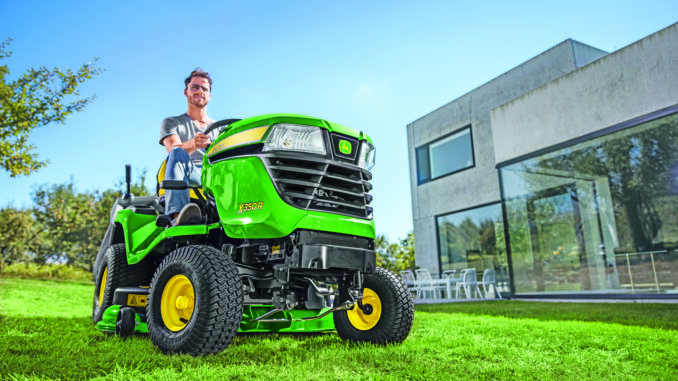
The John Deere X530 is a Select Series lawn and garden tractor built for homeowners who want more durability, stronger hillside traction, and heavier-duty mowing capability than an entry-level lawn tractor typically offers. This guide is written for USA and Canada owners who want a practical, symptom-first reference covering repairs, maintenance, common parts, diagrams, manuals, and realistic DIY limits.
Although the requested title uses “X530M,” the published Deere operator literature and most parts references identify this machine as the John Deere X530, part of the X500 Select Series family. That matters when searching diagrams, manuals, belts, filters, blades, and serial-number-specific components online.
John Deere X530M model overview
The John Deere X530 is a gasoline-powered garden tractor in the X500 Select Series, commonly equipped for 54-inch mowing and designed for larger home properties, frequent mowing, and attachments that need a stronger chassis and drive system than basic lawn tractors provide. Deere’s operator manual groups the X530 with the X500, X534, and X590, which helps owners identify where it sits in the lineup and which service information overlaps.
For most owners, the X530’s key systems are the engine and fuel system, mower deck and blade drive, hydrostatic drive system, steering and chassis, and the electrical/safety-interlock system. When one of these systems starts acting up, diagnosis is easier when you begin with the symptom you can see, hear, or feel rather than jumping straight to one suspected part.
General overview of the John Deere X530M systems
The engine side of the John Deere X530 uses a V-twin layout with routine service items such as oil filters, air filters, fuel filters, and spark plugs listed in Deere-oriented maintenance references. On commonly referenced X530 maintenance lists, owners regularly buy engine oil filters AM107423 or AM125424, fuel filter AM116304, foam air filter M140295 or MIU12554, paper air filter M150949 or MIU12555, and spark plug M805853.
On the mower and chassis side, commonly purchased X530 parts include 54-inch side-discharge blade M143520, 54-inch mulching blade M145516, 54-inch high-lift blade M152726, traction drive belt M151276, mower secondary belt M154960, and mower primary belt M172924. Other parts owners often replace include ignition switch AM133597, headlight bulb AD2062R, key GY20680, gauge wheel M111489, front roller M113955, and battery TY25876 for listed 54-inch deck applications in that guide.
John Deere X530M troubleshooting approach
A useful way to troubleshoot the John Deere X530 is to sort problems into starting issues, poor running, cut-quality complaints, vibration or noise, overheating or leaks, transmission/drive concerns, and electrical or safety-switch faults. This avoids replacing parts at random and keeps the repair focused on what the machine is actually doing.
For example, a no-start problem usually points you first toward battery condition, fuel delivery, spark, PTO/brake/seat safety inputs, or ignition-switch related faults before you think about deeper engine work. A poor cut or noisy deck, by contrast, usually starts with blades, deck level, spindle condition, belt wear, buildup under the deck, or gauge wheel issues.
Emergency John Deere X530M repair needs
Some faults on the X530 should be handled immediately because they create a safety risk or can turn a small repair into a very expensive one. Shut the tractor down and investigate promptly if you have severe vibration, fuel leakage, hot electrical smells, smoke, loss of steering response, or a belt shredding inside the mower drive.
John Deere X530M starting issues
A starting problem matters most when the engine cranks slowly, only clicks, starts and dies, or refuses to crank at all because repeated attempts can flatten the battery and mask the original fault. On this model, common causes include a weak battery, dirty cable connections, stale fuel, clogged fuel filter, fouled spark plugs, or an open safety circuit at the brake, PTO, or seat switch.
-
Weak or failing battery.
-
Corroded battery terminals or ground connections.
-
Plugged fuel filter AM116304.
-
Worn or fouled spark plugs M805853.
-
Ignition switch AM133597 failure.
-
PTO, brake, or seat switch not satisfied.
-
Confirm the PTO is off and the brake or park function is fully engaged.
-
Check battery cable tightness and visible corrosion before charging or replacing the battery.
-
Inspect fuel age and flow through the inline filter.
-
Remove and inspect both spark plugs for fouling, damage, or incorrect gap condition.
-
If it still will not crank or loses power to the dash, test the ignition switch and safety circuit instead of guessing.
John Deere X530M cut-quality problems
Cut-quality issues show up as ragged grass tips, strips of uncut grass, uneven height, or clumping, and they usually mean the deck setup or rotating parts need attention. Continued mowing with dull blades, a stretched belt, or poor deck leveling also increases strain on the spindle and belt system.
-
Dull, bent, or wrong blade type fitted.
-
Worn deck belt, including M154960 or M172924 where applicable.
-
Deck out of level.
-
Grass packed under the shell.
-
Damaged gauge wheel M111489 or front roller M113955.
-
Clean the underside of the deck and inspect blades for edge wear and bends.
-
Confirm the blade style matches the job, side-discharge, mulching, or high-lift.
-
Check belt condition and routing before assuming spindle failure.
-
Measure deck level side-to-side and front-to-rear with a leveling gauge such as AM130907.
-
Replace visibly bent blades or worn belt components before mowing again.
Vibration and noise on the John Deere X530M
Heavy vibration is never normal on the X530 and should be treated as an immediate stop-work issue because it can damage spindle bearings, deck housings, pulleys, and engine mounts. Noise complaints often trace back to bent blades, debris wrapped around spindles, failing bearings, loose hardware, or damaged belt idlers.
-
Bent or unbalanced blades.
-
Debris wrapped on shafts or pulleys.
-
Bad spindle or idler bearing.
-
Loose deck hardware.
-
Failing primary or secondary mower belt.
-
Shut the tractor off, remove the key, and inspect blades and pulleys by hand only when safe.
-
Check for missing blade hardware or fresh metal marks around the deck shell.
-
Inspect belts for fraying, glazing, or cord separation.
-
Spin idlers and spindles by hand to feel for roughness or play.
-
Do not continue mowing until the source is identified.
Overheating and leaks
Overheating on a lawn and garden tractor often starts with restricted cooling airflow rather than an internal engine problem. Oil leaks, fuel seepage, or debris buildup around hot engine components should be corrected quickly because they raise fire risk and can shorten engine life.
-
Cooling fins or screen packed with grass and dust.
-
Low or dirty engine oil.
-
Fuel line or cap leakage.
-
Oil filter looseness or seal issue.
-
Operating in extreme dust or heat without increased service frequency.
-
Clean engine air inlets, screens, and visible cooling areas.
-
Check oil level and inspect around the oil filter for seepage.
-
Inspect the fuel cap and lines for wetness or cracking.
-
Remove dry grass buildup from engine and deck areas before further use.
John Deere X530M transmission and drive problems
Drive complaints usually show up as weak hill-climbing, slow response, slipping feel, or poor traction under load. On the X530, owners should think first about the traction drive belt, transmission fluid and filter service status, and tire condition before assuming major transaxle failure.
-
Worn traction drive belt M151276.
-
Overdue transaxle filter MIA881446 service.
-
Low or degraded hydraulic oil in listed 54-inch deck references using Low Viscosity Hy-Gard TY22035.
-
Tire pressure mismatch or worn tread.
-
Linkage adjustment issues.
-
Inspect the traction drive belt for glazing, cracks, and loss of width.
-
Review whether the transaxle filter and hydraulic oil have been serviced on schedule.
-
Check tires for equal inflation and visible damage.
-
If the machine still lacks drive power, move to dealer-level diagnosis of the hydrostatic system.
Electrical problems
Electrical faults on the X530 often appear as dead dash lights, intermittent starting, no-headlight complaints, or sudden shutdown linked to an interlock fault. Because Deere tractors use several safety inputs, random parts swapping can get expensive quickly.
-
Weak battery or poor ground.
-
Ignition switch AM133597 fault.
-
Burned headlight bulb AD2062R.
-
Loose connector in the safety circuit.
-
Failing seat, brake, or PTO switch.
-
Start with battery voltage and cable condition.
-
Verify whether the fault affects cranking, lights, charging, or PTO operation.
-
Replace simple consumables such as bulbs only after checking power and connection condition.
-
Use a meter for switch and continuity testing before replacing multiple parts.
DIY or dealer for the John Deere X530M?
The normal line for X530 owners is simple: routine service, blades, belts, filters, plugs, and basic deck adjustments are realistic DIY jobs, while internal hydrostatic work, deep electrical diagnosis, engine teardown, and major steering or transmission repairs are usually dealer territory.
Good DIY jobs
-
Engine oil and oil filter changes using listed filters such as AM107423 or AM125424.
-
Air filter, fuel filter, and spark plug replacement.
-
Blade changes and deck cleaning.
-
Primary and secondary mower belt replacement if routing is documented first.
-
Battery and headlight bulb replacement.
Advanced DIY or dealer jobs
-
Hydrostatic drive diagnosis beyond belt and service checks.
-
Electrical troubleshooting involving multiple switches or harness faults.
-
Spindle rebuilds, steering linkage wear diagnosis, or engine leak tracing.
-
Any repair requiring tractor splitting, internal transmission work, or special Deere test procedures.
Skill level guide
-
Beginner: air filter, spark plugs, battery, blades, deck cleaning.
-
Intermediate: fuel filter, mower belts, deck leveling, ignition switch replacement.
-
Advanced: electrical tracing with a meter, spindle work, drive-system diagnosis, hydraulic service verification.
John Deere X530M parts, OEM numbers, and ordering information
Before ordering parts, gather the full model name, product identification number, deck size, and engine model information because Deere parts can vary by serial number, deck setup, and engine application. This is especially important when a guide lists more than one possible oil filter or air filter for the X530.
For this tractor, OEM parts are usually the safest choice for belts, safety switches, ignition components, and fit-sensitive deck-drive items because exact length, profile, and connector match matter. Aftermarket parts are more acceptable for some filters, blades, batteries, and tune-up items when the supplier clearly cross-references the X530 and the correct engine or deck setup.
John Deere X530M diagrams and manuals
The official Deere operator’s manual is the first place to start for controls, safety checks, service intervals, and basic maintenance procedures for the X500/X530/X534/X590 family. Deere’s technical publications and parts systems are then more useful for exploded diagrams, part supersessions, and serial-number-specific ordering.
Recommended sources:
-
John Deere operator’s manual for operating instructions, maintenance basics, safety procedures, and model-family service information.
-
John Deere Technical Publications for official publications lookup and purchase/download options referenced by TractorData.
-
John Deere Parts or regional Deere parts portal for OEM parts lookup and dealer-backed ordering support.
-
Green Farm Parts X530 maintenance guide for quick-reference maintenance part numbers and common wear items.
How to find John Deere X530M serial and engine numbers
These numbers matter because John Deere and engine suppliers may use different parts across production changes, deck options, and engine variants, even within one model name. Taking photos of every tag before ordering parts saves a lot of guesswork.
-
Park the tractor safely on level ground, remove the key, and let hot components cool.
-
Find the tractor Product Identification Number tag on the machine frame in the location described by the operator literature for your unit.
-
Record the exact model designation, PIN, and any deck identification tag information before searching diagrams.
-
Find the engine model and serial number on the engine shroud or engine identification label before buying tune-up or fuel-system parts.
-
Photograph the tags so the dealer or online seller can confirm fitment if a part number has changed.
Buying John Deere X530M parts online and in stores
The smartest buying strategy is to identify the OEM number from the manual or diagrams first, then compare dealer, Deere-focused aftermarket, and local retail availability. That approach cuts down on returns, especially for belts, blades, and serial-specific electrical parts.
-
Online: best for price checking and part-number cross-reference, but confirm PIN and engine details before ordering.
-
Dealer counter: best for superseded part numbers, switchgear, wiring parts, and anything with serial-number breaks.
-
Retail stores: acceptable for oil, grease, batteries, and some filters or spark plugs when the packaging clearly lists the X530 application or the exact cross-reference number.
Useful sources include Deere parts support, Green Farm Parts, and Weingartz parts lookup.
John Deere X530M fitting guide for common parts
These are among the highest-impact DIY jobs because they directly affect starting reliability, cut quality, and belt life on the X530. Always remove the key, disconnect the spark plug leads where appropriate, and work on a cool machine.
Replacing the John Deere X530M air filter
A fresh air filter helps the engine breathe correctly and reduces rich running, plug fouling, and power loss.
-
Open the engine cover and locate the air cleaner housing on the engine.
-
Remove the cover carefully so dirt does not fall into the intake.
-
Replace the foam and paper elements with the correct listed set for your engine version, such as M140295/M150949 or MIU12554/MIU12555 after verification.
-
Wipe the housing clean and check the seal surfaces before refitting the cover.
-
Restart the engine and confirm smooth idle and throttle response.
Changing spark plugs on the John Deere X530M
New spark plugs often fix hard starting, misfire under load, and rough running on V-twin tractors. Deere-linked specifications list a 0.030-inch spark plug gap and 15 lb-ft torque in the referenced family specification page.
-
Let the engine cool fully and remove both plug leads.
-
Remove the old plugs and compare them for fouling, oiling, or heavy carbon deposits.
-
Check the new M805853 plugs and set gap to the published specification if needed.
-
Thread by hand first to avoid cross-threading, then torque correctly.
-
Refit the plug leads securely and test start the engine.
Blade replacement on the John Deere X530M 54-inch deck
Blade condition has one of the biggest effects on cut quality, vibration, and belt load. The X530 maintenance references list M143520 side-discharge, M145516 mulching, and M152726 high-lift blade options for 54-inch applications.
-
Raise and secure the deck safely using approved service practice from the operator manual.
-
Remove each blade carefully and note its orientation before installation.
-
Replace bent or heavily worn blades rather than trying to save them.
-
Install the correct blade type for your mowing setup and tighten hardware to specification from the official manual.
-
After installation, check for even blade rotation clearance and test mow a small area.
Replacing the John Deere X530M mower belt
A worn mower belt causes slow blade speed, poor cut, squeal, and premature pulley wear. The commonly referenced X530 guide lists M172924 as the primary mower belt and M154960 as the secondary mower belt for the covered setup.
-
Record the existing belt routing or photograph it before removal.
-
Lower and secure the deck for access, then relieve belt tension according to the manual procedure.
-
Inspect pulleys and idlers while the belt is off, because a seized pulley will ruin the new belt quickly.
-
Fit the new belt exactly in the grooves and guides, avoiding twists.
-
Recheck routing, spin the system by hand where safe, and test engagement at low throttle first.
Maintenance to prevent John Deere X530M problems
Most recurring X530 problems are preventable with regular cleaning, inspection, and on-time service of filters, belts, blades, oil, and hydraulic components. Maintenance is especially important in dusty mowing conditions or hot weather, where service frequency may need to increase.
Focus areas:
-
Starting reliability: keep battery terminals clean, use fresh fuel, and replace the fuel filter and spark plugs on schedule.
-
Cut quality: sharpen or replace blades, level the deck, and replace worn mower belts before they slip.
-
Fire and overheating prevention: clear grass buildup from the engine area, deck, and cooling inlets.
-
Drive performance: monitor traction belt wear and keep up with transaxle filter and hydraulic oil service.
-
Electrical reliability: fix corrosion, damaged connectors, and weak ignition components early.
John Deere X530M maintenance schedule
The X530 maintenance references include repeat intervals at 8, 50, 100, and 200 hours for several core service items, including oil filter, fuel filter, spark plugs, air filters, and transaxle service parts. Always check your exact operator manual and engine label before finalizing the schedule because engine version and conditions can change the details.
Daily or before each use
-
Check engine oil level.
-
Inspect for fuel, oil, or hydraulic leaks.
-
Check tire condition and inflation visually.
-
Clean heavy debris from deck and engine intake areas.
-
Confirm blades, guards, and safety controls are operating normally.
After 8 hours
-
Change or check engine oil service items as reflected in the X530 maintenance guide listing oil filter service at 8/100/200-hour points.
-
Inspect the deck belt and traction belt after initial running or heavy seasonal use.
-
Grease fittings as needed with Deere SD Polyurea grease TY6341 where applicable.
Every 25 hours
-
Clean the machine thoroughly, especially under the deck and around the engine cooling area.
-
Inspect blades and sharpen or replace as needed.
-
Check battery terminals and visible wiring condition.
Every 50 hours or yearly
-
Replace or inspect the transaxle filter MIA881446 at the listed 50/200-hour interval.
-
Service hydraulic oil where the guide specifies Low Viscosity Hy-Gard TY22035 for the covered setup.
-
Inspect mower belts, idlers, and deck hardware closely.
Every 100 hours
-
Replace engine oil filter, fuel filter, air filters, and spark plugs per the listed X530 schedule references.
-
Check blade condition and replace worn sets so lift and cut stay even.
-
Review battery performance before peak mowing season.
Every 200 hours
-
Repeat major service items listed at 200-hour intervals, including oil filter, fuel filter, air filters, spark plugs, and transaxle filter.
-
Inspect the tractor for accumulated wear in belts, switches, tires, and deck components.
-
Use the official manual and parts diagrams to plan any larger offseason repairs.
Seasonal checklist
-
Spring: fresh fuel, battery check, blade inspection, belt inspection, deck cleaning, and overdue filter service.
-
Mid-season: clean cooling areas, inspect cut quality, check belt wear, and verify all safety functions.
-
Fall or end of season: wash and dry the deck, stabilize fuel as appropriate, inspect blades and belts, and order winter repair parts before next season.
Repair, upgrade, or replace the John Deere X530M?
For most owners, repairing an X530 makes sense when the chassis, engine, and hydrostatic drive are fundamentally sound and the issues are limited to normal wear items such as belts, blades, filters, switches, or battery-related faults. Upgrading or replacing becomes more logical when problems stack up across multiple major systems or when the machine no longer matches the size or slope of the property being maintained.
-
Repair if the tractor has one or two clear wear-item failures, still cuts well overall, and parts support remains straightforward.
-
Upgrade if you need more deck capacity, more attachment capability, or better match for heavier property conditions than the current setup provides.
-
Replace if the tractor has major engine, hydrostatic, and deck issues at the same time, or if repair costs approach the value of a sound used replacement machine.
John Deere X530M troubleshooting FAQ
1. Why will my John Deere X530M not start?
Most no-start complaints come down to battery condition, fuel delivery, spark, or an unsatisfied safety interlock. Start by confirming the PTO is off, brake is engaged, battery cables are clean, and fuel is fresh. Then check the inline fuel filter, spark plugs, and ignition switch before assuming internal engine trouble.
2. Why does my John Deere X530M click but not crank?
A clicking sound usually points to low battery voltage, poor cable connection, or a weak starter circuit rather than a fuel problem. Clean both battery connections, inspect the ground path, and charge-test the battery first. If voltage is good, the next checks are the ignition switch and safety circuit continuity.
3. Why does my John Deere X530M crank but not fire?
If the engine cranks normally but will not fire, focus on fuel flow, spark quality, and stale gasoline. A plugged AM116304 fuel filter, fouled spark plugs, or old fuel left in the system are common causes. Check both cylinders for spark so you do not miss a single-cylinder ignition issue.
4. Why does my John Deere X530M start and then die?
This symptom often means fuel starvation, safety-interlock interruption, or a choke/fuel contamination issue. Inspect the fuel filter, fuel cap venting, and any loose electrical connections at the seat or brake circuit. If the engine only runs on choke, the fuel side needs closer inspection.
5. Why is my John Deere X530M running rough?
Rough running is commonly caused by dirty air filters, worn spark plugs, stale fuel, or partial fuel restriction. Replace overdue filter elements, inspect plug condition, and make sure the engine is getting clean airflow. If roughness continues under load, move on to dealer-level fuel and ignition diagnosis.
6. Why is my John Deere X530M low on power when mowing?
Low power under load usually means restricted airflow, weak ignition, dull blades, or slipping deck belts. A clogged air filter and worn spark plugs can reduce engine output, while a bad mower belt can make the deck feel weak even if the engine sounds acceptable. Check both the engine service items and the belt/blade side before blaming the engine.
7. Why is my John Deere X530M using more fuel than usual?
Higher fuel use often follows neglected tune-up parts, dirty intake filtration, or mowing in heavy growth with dull blades. Start with the air filters and spark plugs, then inspect blade sharpness and deck cleanliness. An engine working harder because of drag under the deck will burn more fuel.
8. Why does my John Deere X530M backfire?
Backfiring can happen from ignition issues, fuel mixture problems, or shutdown technique depending on the exact symptom. Check spark plug condition, fuel freshness, and whether the engine has been running rich because of a dirty air filter. If the problem is severe or sudden, inspect for loose ignition connections rather than only replacing plugs.
9. Why is my John Deere X530M hard to start when hot?
Hot-start complaints can point to weak spark, marginal battery performance, or fuel delivery issues that worsen after heat soak. Fresh plugs, clean cable connections, and a healthy battery often help. If the issue persists, the ignition system and fuel system need more detailed testing.
10. Why does my John Deere X530M cut unevenly?
Uneven cutting usually comes from deck leveling issues, bent blades, worn gauge wheels, or a blade set that is not matched side to side. Clean the deck, check blade condition, and verify level before replacing major parts. A leveling gauge such as AM130907 can make setup more consistent.
11. Why does the John Deere X530M leave strips of uncut grass?
This usually means blade lift is weak, blade edges are dull, ground speed is too high, or the belt is slipping. Check for worn blades, a glazed belt, and packed grass under the deck. If you bag or need stronger vacuum, high-lift blades may be the better match than standard discharge blades.
12. Why is the cut quality poor with my John Deere X530M mulching setup?
Mulching works best with sharp mulching blades, a clean deck shell, and conditions that are not too wet or overgrown. If the tractor is clumping badly, inspect the blade type and underside buildup first. A wrong blade style or overloaded deck can make mulching performance look like a power problem.
13. Why does my John Deere X530M scalp parts of the lawn?
Scalping often comes from deck height being too low for the terrain, poor deck leveling, or worn support wheels and rollers. Check the gauge wheels and front roller for damage, then verify deck pitch. Slowing down on uneven ground also helps reduce sudden deck drop into hollows.
14. Why are the blades on my John Deere X530M not engaging properly?
Poor engagement usually means belt wear, PTO-related issues, or pulley/idler problems depending on the exact system behavior. Start with visible belt condition and routing, then inspect for seized idlers or heavy deck debris. If the engagement control side is suspect, the electrical or PTO circuit may need testing.
15. Why does my John Deere X530M deck belt keep coming off?
A mower belt that repeatedly jumps off normally has an alignment, idler, routing, or pulley issue rather than simply being “old.” Check for bent guides, worn idler bearings, wrong belt size, or missed routing after prior service. Replace damaged pulleys before fitting another new belt.
16. Why does my John Deere X530M deck belt squeal?
Squeal usually means belt glazing, contamination, poor tension, or pulley drag. Inspect both the primary and secondary belts for polish, fraying, and heat damage. A seized idler can make a new belt squeal almost immediately.
17. Why does my John Deere X530M vibrate when mowing?
Mowing vibration usually points to bent blades, blade imbalance, spindle wear, or debris wrapped around the rotating parts. Stop using the deck until you inspect it, because continued vibration can damage the shell and bearings. Always replace badly bent blades rather than trying to keep mowing with them.
18. Why is my John Deere X530M noisy underneath the deck?
Noise from under the deck often comes from bad bearings, loose hardware, belt slap, or blade contact with debris or damaged components. Remove buildup, inspect pulleys and blades, and spin the deck components by hand when the tractor is safely shut down. Grinding or roughness usually means a bearing-related repair is near.
19. Why does my John Deere X530M smell hot after mowing?
A hot smell can come from belt slippage, packed cooling fins, oil leakage, or dry grass buildup around hot components. Clean the machine thoroughly and inspect the belts for glazing before using it again. Any sign of fuel or oil dripping near the engine should be treated as urgent.
20. Why is my John Deere X530M overheating?
Overheating is commonly caused by blocked cooling airflow, dirty engine areas, or low oil level rather than instant major engine failure. Clean the intake screen and cooling areas first, then check oil level and visible leakage. Mowing in heavy dust or heat can require more frequent cleaning and service.
21. Why is my John Deere X530M leaking oil?
Oil leaks can come from the filter area, drain points, engine seals, or overfilled crankcase conditions. First clean the engine so the leak source is visible, then inspect around the oil filter and lower engine surfaces. If the leak is active while running, stop and repair it before continuing to mow.
22. Why does my John Deere X530M smell like fuel?
A fuel smell usually means seepage at the cap, line, or filter connections, or fuel slosh after overfilling. Do not ignore it because fuel leakage near a hot engine is a fire risk. Inspect the cap and visible lines immediately and repair any wet connection before further use.
23. Why is my John Deere X530M weak on hills?
Poor hill performance can come from a worn traction drive belt, overdue hydraulic service, tire issues, or normal limits of traction. Check the M151276 traction belt, tire condition, and transaxle service history first. If the tractor still feels weak after those checks, hydrostatic diagnosis moves into advanced territory.
24. Why does my John Deere X530M move slowly forward or reverse?
Slow travel speed usually points to belt wear, hydraulic service needs, or linkage adjustment rather than an engine tune-up issue. Inspect the traction belt and confirm transaxle filter service is current. If no obvious belt issue is found, a dealer can test the hydrostatic side more accurately.
25. Why does the John Deere X530M jerk when I start moving?
Jerky takeoff can happen when the drive belt is worn, linkage response is uneven, or the hydrostatic system is overdue for service. Check the belt first because it is the simplest and most common external cause. If the belt is sound, move on to linkage inspection and professional hydro checks.
26. Why does my John Deere X530M have no headlights?
No headlights usually come down to a failed AD2062R bulb, poor connection, or upstream electrical issue. Replace the bulb only after checking the socket and connector condition. If other dash or electrical functions are also affected, the problem is probably bigger than the bulb alone.
27. Why does my John Deere X530M keep blowing bulbs or losing electrical power?
Repeated electrical failure suggests poor connections, vibration-related wiring issues, charging problems, or switch faults. Inspect visible connectors, grounds, and bulb fitment, then test the circuit rather than repeatedly installing parts. The ignition switch and interlock system are common places to check when power loss is intermittent.
28. Why does the PTO or safety system stop my John Deere X530M unexpectedly?
The X530 uses safety inputs that can shut down cranking or engine operation if the PTO, brake, or seat circuit is not satisfied. Intermittent faults often come from switch wear, loose connectors, or adjustment issues. Diagnose the affected switch path with a meter instead of guessing.
29. How often should I service my John Deere X530M?
The most commonly cited X530 maintenance references show recurring service points at 8, 50, 100, and 200 hours depending on the part. Oil filter, fuel filter, spark plugs, air filters, and transaxle filter are among the regularly scheduled items. Use the official operator manual to confirm the exact schedule for your serial number and engine version.
30. What are the most common John Deere X530M parts owners replace?
The parts that appear most often in Deere-focused X530 maintenance references are oil filters, fuel filters, air filters, spark plugs, mower belts, traction belt, blades, ignition switch, battery, and light bulbs. Those are the parts most owners should price first when planning annual maintenance or solving common mowing and starting complaints. Having the model, PIN, and engine details ready makes ordering much easier.
31. Should I buy OEM or aftermarket parts for my John Deere X530M?
OEM is usually the better choice for belts, ignition and safety parts, and other fit-sensitive items where exact dimensions or connector style matter. Aftermarket can work well for filters, some blades, batteries, and tune-up parts if the seller clearly cross-references the correct X530 application. Always verify against the engine and deck setup, not just the tractor name alone.
32. Where can I find John Deere X530M parts diagrams?
The best parts diagrams are usually Deere’s own parts resources or reputable Deere-focused sellers that mirror the diagram lookup process. Start with Deere for official supersessions and then compare aftermarket prices once you have the OEM number. This is the safest way to avoid ordering the wrong belt or blade set.
33. Where can I get a John Deere X530M manual?
The operator’s manual for the X500/X530/X534/X590 family is available through Deere’s online manual viewer. TractorData also points owners toward Deere technical publications for official manual lookup and purchase/download routes. For repairs beyond operator-level service, official technical publications are the better reference than generic reseller listings.
34. What engine oil and hydraulic oil should I use in my John Deere X530M?
The Deere-focused X530 maintenance guide lists Turf-Gard 10W30 TY22029 and Low Viscosity Hy-Gard TY22035 for the referenced 54-inch setup. Oil choice should still be confirmed against the exact operator manual and engine label because viscosity and service notes can vary by application. Using the official recommendation matters more than following a generic forum guess.
35. Is the John Deere X530M worth repairing?
Yes, in many cases it is, especially when the tractor mainly needs normal wear items and the core engine, frame, and hydrostatic system are still healthy. The X530 sits above basic lawn tractors in Deere’s range, so routine repairs can make financial sense if the rest of the machine is solid. Once major engine, transmission, and deck problems pile up together, replacement math becomes less favorable.
Common John Deere X530M transmission issues and fixes
The most common John Deere X530M “transmission” issues are usually hydrostatic drive problems: weak on hills, slow or no movement, jerky operation, and whining noises, and most fixes start with belts, fluid/filter service, and basic inspections before assuming a failed transaxle.
Below is a concise, owner‑level breakdown tailored to the X530/X530M hydrostatic drive.
Typical X530M transmission symptoms
Most X530M drive complaints fall into a few repeat patterns that mirror general hydrostatic lawn tractor problems.
-
Tractor will not move or moves very slowly under load
-
Weak on hills or only strong when cold
-
Jerky or inconsistent forward/reverse response
-
Whining, grinding, or “howling” from the rear end
-
Drive fades out after running for a while
These symptoms usually indicate issues with the traction drive belt, hydraulic oil level/condition, filter restriction, or internal hydrostatic wear.
Weak or no drive (forward/reverse)
Owners often notice the X530M suddenly stops or creeps, especially while mowing.
Likely causes
-
Worn or slipping traction drive belt
-
Belt off a pulley or obstructed by sticks/debris
-
Low or degraded hydraulic oil (where serviceable)
-
Clogged hydro filter
-
Internal pump/motor wear in the transaxle
Basic checks and fixes
-
Park safely, set brake, engine off, and let everything cool.
-
Inspect the transmission drive belt path for sticks wrapped around pulleys or belt thrown off; debris is a very common cause of sudden loss of drive.
-
Check belt condition; a glazed, cracked, or narrowed belt should be replaced.
-
If the transaxle on your X530M is serviceable, check hydraulic oil level and change oil and filter according to the manual.
-
If drive has been gradually getting weaker, especially worse hot than cold, plan for dealer diagnosis—this pattern often points to internal hydrostatic wear rather than just a belt.
Weak on hills or only strong when cold
Hydrostatic transmissions that feel fine cold but fade badly once warm are a classic sign of hydraulic issues.
Likely causes
-
Low fluid level or wrong fluid type
-
Old fluid thinned out with heat
-
Clogged filter causing restriction
-
Internal pump leakage/wear
Owner steps
-
Confirm the correct Deere low‑viscosity hydraulic fluid is in use, and verify level on models with serviceable units.
-
Replace the transaxle filter on schedule or earlier if symptoms appear; a restricted filter reduces pressure and torque.
-
If symptoms persist after fluid/filter service, treat it as an internal hydro problem and involve a dealer rather than tearing in as a DIY job.
Jerky, inconsistent drive response
Sudden jerks when starting off or surging speed often accompany belt or control problems.
Likely causes
-
Traction drive belt slipping and grabbing
-
Linkage or pedal control out of adjustment
-
Air in the hydrostatic system
-
Internal control valve issues
Fixes
-
Inspect belt routing and tension hardware; replace worn belt before adjusting linkages.
-
Check that pedal linkages move smoothly and return correctly; binding can cause non‑linear response.
-
On serviceable units, follow the manual’s purge procedure (bleeding air) after fluid changes.
-
Persistent jerking after these checks usually means internal control or valve problems best handled by a dealer.
Whining, grinding or loud transmission noise
Hydrostatic units often give audible warning before failure.
Likely causes
-
Low fluid or cavitation
-
Clogged filter starving the pump
-
Worn internal components
-
Failing input pulley or splines on the trans input shaft
Owner actions
-
Immediately stop and verify fluid level and filter condition on a serviceable unit.
-
Inspect the drive pulley on the transmission input shaft—some Deere hydro models use a softer pulley that can strip, causing the pulley to spin while the shaft does not.
-
If grinding or high‑pitched whine persists even with good fluid and belts, assume internal damage and seek dealer repair or replacement rather than running it to destruction.
When to DIY vs dealer on X530M transmission issues
Hydrostatic drives are expensive and complex, so it pays to set a clear DIY line.
Good DIY scope
-
Visual inspections for debris and belt routing
-
Replacing the traction drive belt
-
Checking/setting tire pressures and load conditions
-
Performing fluid and filter changes where the transaxle is designed to be serviced
Dealer territory
-
Internal pump/motor or gear repairs
-
Persistent weak drive after fluid/filter and belt have been corrected
-
Severe noises, metal in drained oil, or sudden catastrophic loss of drive
-
Any case where the transmission is “sealed” and not intended for owner service