
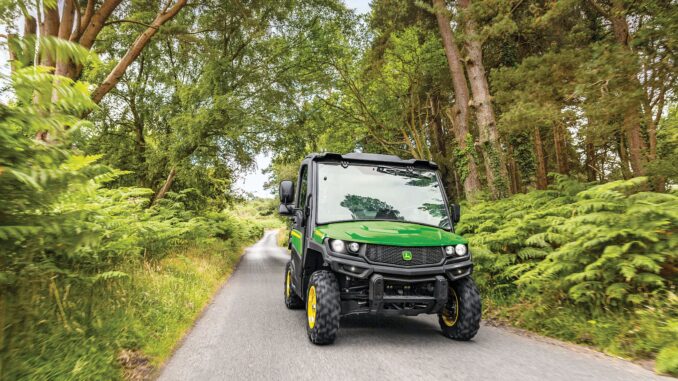
John Deere Compact Gator Models, Maintenance, and Troubleshooting Guide
John Deere’s Compact Gator category is best understood as the smaller, work-oriented end of the broader Gator utility-vehicle lineup rather than one perfectly fixed historical model family. In North America, it includes compact traditional work Gators, electric utility vehicles, smaller turf-focused machines, and compact crossover models commonly used where maneuverability, lower ground pressure, quieter operation, or practical hauling matters more than high-speed trail performance.
These machines serve acreage owners, livestock operators, groundskeepers, estate managers, schools, golf and sports-turf crews, contractors, hunters, and DIY property owners. Typical jobs include hauling tools, feed, fencing supplies, plants, seed, chemicals, parts, and light materials; transporting workers across a site; towing small trailers; spraying; snow work; and moving around farms, campuses, yards, and trails.
About the John Deere Compact Gator Series
“Compact Gator” is not always a single formal North American product label in the way that a particular XUV or HPX range is. Instead, it is a useful ownership and publishing category for smaller John Deere Gator utility vehicles designed around everyday utility work, tight access, turf friendliness, low-speed hauling, and manageable dimensions.
The category spans several distinct types of machine:
-
Traditional gasoline Gators such as the TX 4×2, intended mainly for property work, grounds care, light hauling, and towing.
-
Six-wheel Gators such as the TH 6×4 Gas and TH 6×4 Diesel, designed for carrying heavier payloads while reducing ground pressure through their additional rear wheels.
-
Electric work Gators, including the TE 4×2 Electric and newer GX Electric models, which are especially relevant to campuses, facilities, indoor-adjacent work, turf operations, and noise-sensitive locations.
-
Compact 4WD work machines such as the HPX 615E and HPX 815E, which provide more traction and heavier-duty capability than a basic 2WD utility cart.
-
Smaller crossover side-by-sides, notably the XUV560E, XUV590M, and their S4 four-passenger counterparts, which bridge practical work use and trail-capable 4WD operation.
-
Turf and specialized machines such as the GS Gas and GS Electric, which are aimed more directly at golf, sports turf, institutional grounds, and low-impact material transport.
Current John Deere work-oriented Gator offerings include gas, diesel, and electric models, with 2WD, 4WD, and six-wheel layouts represented in the range. The TX 4×2, TE 4×2 Electric, HPX615E, HPX815E, and TH 6×4 Gas and Diesel are all listed by John Deere as Work Series or traditional work Gators.deere+1
Compact Gators can have basic gear-drive or continuously variable transmission layouts depending on the model. Electric machines use an electric traction-drive system rather than an engine-and-CVT arrangement. More capable 4WD machines may include selectable 4WD, traction-enhancing differential arrangements, independent suspension, power steering, and more capable braking or suspension systems than basic 2WD work vehicles. The mid-size XUV560E and XUV590M family, for example, uses 4WD crossover architecture and is offered in both two-passenger and S4 four-passenger configurations.deere
In practical ownership terms, the key distinction is this:
John Deere currently describes the XUV560E and XUV590M as mid-size crossover models with 4WD, two- and four-seat configurations, and 900-pound or 1,300-pound payload classes depending on seating layout. For owners, this means compact Gator maintenance and fault diagnosis must always begin with the exact model, serial number, engine type, drivetrain, and production year.deere
John Deere Compact Gator Models
The following table is an across-time North American directory of models that fit the compact Gator category. Some machines have changed specification, trim naming, engine sourcing, safety equipment, tire packages, and availability by year. Always verify exact details against the machine’s identification label, operator’s manual, parts catalog, and serial-number range before ordering service parts.
And See:
| Repair guide | Serial Number Lookup | Winter Maintenance |
| HPX 4 x 2 Gas or Diesel | ||
| HPX 4 x 4 Trail | ||
| XUV 590 E | ||
| XUV 620i | ||
| XUV850D | ||
| XUV625i | ||
| XUV 825i | ||
| XUV 825i S4 | ||
| XUV 855D | ||
| XUV 855D S4 | ||
| XUV 825E | ||
| XUV 825M | ||
| XUV 825M S4 | ||
| XUV 855M | ||
| XUV 855M S4 | ||
| XUV 835E | ||
| XUV 835M | ||
| XUV 835R | ||
| XUV 865E | ||
| XUV 865M | ||
| XUV 865R | ||
| XUV 835R | ||
| XUV 845 | ||
| XUV 845E | ||
| XUV 845M | ||
| XUV 845R | ||
| XUV 875 | ||
| XUV 875M |
John Deere’s current Work Series material lists the TX 4×2, TE 4×2 Electric, HPX615E, HPX815E, TH 6×4 Gas, and TH 6×4 Diesel, with gas, diesel, electric, 2WD, 4WD, and six-wheel configurations represented. Deere also currently lists the GX Electric and GX Electric Crew in its electric Gator lineup.deere
For smaller crossover machines, Deere lists the two-seat XUV560E and XUV590M plus the four-seat XUV560E S4 and XUV590M S4. The listed two-seat models have 900-pound payload ratings, while the listed S4 models have 1,300-pound payload ratings; individual year, tire, option, and market specifications should still be confirmed before publishing model-specific figures.deere
Compact Gator Maintenance Guides
Exact maintenance intervals, fluid types, filter numbers, capacities, torque specifications, and inspection procedures vary substantially by model year, engine, drivetrain, and serial-number range. A TX 4×2, TE Electric, TH 6×4 Diesel, HPX815E, and XUV590M should not be serviced by assumption simply because all carry the Gator name.
Use the operator’s manual and technical manual for the exact machine before performing engine, electrical, drivetrain, brake, or steering work.
Routine Service and Inspection
Most compact Gator owners should build maintenance around hours of use, seasonal conditions, workload, and the machine’s environment. A Gator used to transport people on a dry estate driveway needs a different inspection routine from one repeatedly hauling feed through mud, manure, long grass, snow, or dusty livestock yards.
Routine service areas commonly include:
-
Checking engine-oil level before use and changing oil and filters at the interval specified for gasoline or diesel models.
-
Inspecting and replacing air filters more often when the vehicle works in dust, chaff, dry soil, grass clippings, or construction debris.
-
Checking fuel quality, fuel storage practices, fuel lines, caps, filters, and water contamination risks.
-
Inspecting spark plugs, ignition wiring, coil connections, battery condition, and charging output on gasoline Gators.
-
Cleaning radiator screens, cooling fins, fan areas, and debris traps on liquid-cooled engines.
-
Checking coolant level, hose condition, clamps, overflow bottles, and fan operation where applicable.
-
Inspecting diesel fuel filters, water separators, fuel lines, glow-plug systems, and cold-weather starting arrangements on diesel models.
-
Checking battery terminals, grounds, cables, hold-downs, fuses, and charge condition on all models.
-
Following the specified battery-charging procedure for electric machines, including battery-water checks where the battery type requires them.
-
Checking tire pressure, tire damage, wheel-nut tightness, steering joints, brake components, suspension hardware, and chassis fasteners.
-
Inspecting cargo-box hinges, latches, props, bed-lift systems, tailgate hardware, receiver hitches, and safety labels.
:
-
Compact Gator service interval checklist
-
DIY maintenance for John Deere Compact Gators
-
John Deere Gator fluids, filters, and grease-point guide
-
Pre-season inspection checklist for Compact Gator owners
Electric Gators need especially disciplined battery care. John Deere identifies the TE 4×2 Electric as a 48-volt machine using eight Trojan T-105 batteries, with an external LED charge indicator in its current product information. Owners should verify battery chemistry, voltage, charger requirements, watering requirements, and replacement compatibility for the exact vehicle before replacing batteries or modifying the charging system.deere
CVT, Drivetrain, and Suspension Care
Drivetrain service depends heavily on whether the machine is a traditional work Gator, electric Gator, HPX work machine, six-wheel Gator, or XUV crossover. Do not apply a CVT-belt service procedure to a gear-drive work Gator, and do not assume that an electric Gator has the same clutch, belt, engine, or transmission service points as a gasoline XUV.
For gasoline crossover Gators and other CVT-equipped machines, owners should inspect:
-
CVT belt wear, glazing, cracking, edge damage, abnormal width loss, and contamination.
-
Clutch sheaves for scoring, heat marks, dirt, or belt residue.
-
Intake and exhaust ducting for the CVT housing.
-
Ventilation restrictions that can raise belt and clutch temperature.
-
Water, mud, oil, fuel, or debris contamination inside belt-drive components.
-
Abrupt engagement, belt squeal, vibration, slipping, or burning smells under load.
For 4WD and six-wheel work machines, common inspection areas include:
-
Gearcase and differential fluid levels.
-
Front and rear axle seals.
-
Driveshafts, U-joints, prop shafts, and couplings.
-
CV boots and axle-joint condition where fitted.
-
4WD engagement mechanisms, switches, cables, or actuators.
-
Differential-lock function where fitted.
-
Wheel bearings, hubs, steering knuckles, ball joints, and suspension bushings.
-
Shock absorbers, suspension-arm pivots, steering-linkage wear, and excessive steering play.
-
Brake-pedal travel, hydraulic-fluid condition, brake drag, parking-brake operation, and brake-pad or shoe wear.
:
-
CVT belt and clutch maintenance for Compact Gators
-
4WD, differential, and axle service on Compact Gator models
-
Suspension and steering maintenance for John Deere Gators
-
How to inspect a Gator drivetrain before costly repairs
Cargo Box, Towing, and Work Equipment
Compact Gators often spend more time working than recreating, which means cargo, hitch, and accessory inspections should be treated as safety items rather than optional cosmetic checks.
Inspect the cargo box for cracked mounts, loose hinge pins, damaged tailgate latches, bent panels, overloaded bed floors, and failed lift-assist or hydraulic-lift components. A box that will not latch correctly can lose tools or materials while traveling, while a damaged hinge or prop arrangement can create a crushing hazard during loading or repair work.
For towing and hitch work:
-
Use only approved hitch hardware and the correct hitch pin, clip, ball, receiver insert, or drawbar arrangement.
-
Stay within the rated towing and tongue-weight limits for the exact model.
-
Check safety chains, trailer couplers, trailer brakes where fitted, and lighting connectors.
-
Avoid overloading a trailer merely because the Gator can move it on level ground.
-
Account for slopes, loose ground, wet grass, stopping distance, passenger weight, cargo-box load, and tire condition.
-
Inspect winch ropes or cables for fraying, kinks, abrasion, corrosion, damaged hooks, and loose mounting hardware.
-
Clean mud, grass, manure, leaves, bedding material, and debris from beneath the vehicle and around cooling or driveline areas.
:
-
John Deere Compact Gator cargo-box and bed-lift maintenance
-
Towing and cargo safety for John Deere Gator utility vehicles
-
Winch inspection and recovery setup for John Deere Gators
Compact Gator Troubleshooting Guides
A good troubleshooting hub should help an owner identify the system involved before replacing parts. The same symptom—such as a no-start, loss of power, or machine that will not move—can have very different causes on a carbureted legacy work Gator, EFI XUV590M, diesel HPX815E, TE 4×2 Electric, or GX Electric.
XUV590M common problems and fixes, TE 4×2 Electric battery and charging guide, HPX815E diesel starting troubleshooting, and TX 4×2 maintenance guide.
Starting, Battery, and Electrical Problems
No-crank and no-start conditions often begin with simple checks: battery state of charge, terminal cleanliness, cable tightness, ground connections, main fuse condition, starter-solenoid operation, ignition-switch output, and safety-interlock status.
Common compact Gator electrical symptoms include:
-
No crank when the key is turned.
-
Clicking from a relay or solenoid but no starter operation.
-
Starter turns slowly or only after repeated attempts.
-
Repeated battery discharge.
-
Blown fuses or intermittent accessory operation.
-
Corroded battery terminals, grounds, connectors, or fuse contacts.
-
Loose wiring near the battery tray, engine compartment, cargo box, frame, steering column, or accessory circuits.
-
Faulty brake-pedal, neutral, park, seat, or gear-selector safety switches where fitted.
-
Charging-system failure on gasoline or diesel models.
-
Lighting, winch, horn, gauge, display, beacon, or accessory faults.
-
Charger, battery-pack, controller, cable, connection, or range issues on electric Gators.
:
-
Compact Gator won’t start: diagnostic steps and fixes
-
John Deere Gator battery and charging-system problems
-
Electrical troubleshooting for Compact Gator models
-
Safety-switch and no-crank problems on John Deere Gators
For electric vehicles, avoid bypassing chargers, safety circuits, controller protection systems, or battery-pack components. High-current battery systems can cause severe arcing, burns, component damage, or fire if handled incorrectly.
Engine, Fuel, and Performance Problems
Gasoline, diesel, and electric Gators can all feel weak, hesitate under load, or fail to deliver expected performance, but the likely causes differ.
On gasoline Gators, investigate:
-
Stale gasoline, water contamination, incorrect fuel storage, or clogged fuel filters.
-
Restricted fuel lines, faulty fuel pumps, carburetion faults on applicable older models, or EFI-related faults on later machines.
-
Dirty air filters, damaged intake boots, vacuum leaks, fouled spark plugs, weak ignition components, or poor electrical connections.
-
Throttle-cable, throttle-body, injector, sensor, or governor-related issues where applicable.
-
Overheating caused by blocked screens, clogged radiator fins, low coolant, failed fan operation, damaged hoses, or coolant loss.
On diesel Gators, investigate:
-
Water in fuel.
-
Plugged fuel filters or restricted fuel lines.
-
Air leaks in the fuel system.
-
Weak glow plugs or glow-plug electrical faults.
-
Cold-weather fuel waxing or fuel-quality problems.
-
Injection-system faults that require qualified diagnosis.
-
Excessive smoke, poor cold starting, reduced power, or unusual diesel knock.
On electric Gators, investigate:
-
Low state of charge.
-
Weak or unbalanced batteries.
-
Battery-cable corrosion or loose connections.
-
Charger faults.
-
Controller protection or thermal limiting.
-
Excessive rolling resistance from brakes, tires, bearings, or overloaded cargo.
-
Reduced range caused by battery age, temperature, terrain, payload, or repeated stop-start work.
:
-
Engine and fuel-system problems on Compact Gators
-
John Deere Gator overheating causes and fixes
-
Loss of power under load on John Deere Compact utility vehicles
-
Diesel Gator starting and fuel-delivery troubleshooting
Drive, CVT, 4WD, and Steering Problems
A Gator that starts and revs but will not move may have a completely different failure from one that moves normally until it climbs a hill, pulls a trailer, or carries a full cargo box.
Symptoms worth separating into dedicated guides include:
-
The Gator will not move in forward or reverse.
-
Delayed engagement after selecting gear.
-
Slipping, jerking, abrupt engagement, or poor hill-climbing performance.
-
CVT belt squeal, burning smell, clutch vibration, or belt-dust buildup.
-
Loss of drive only when the machine is hot or heavily loaded.
-
4WD that will not engage or will not disengage.
-
Differential-lock faults or poor traction from one driven wheel.
-
Clicking, grinding, driveline vibration, wheel-bearing noise, or axle noise.
-
Heavy steering, wandering, steering-wheel free play, or power-steering faults.
-
Brake drag, poor stopping performance, uneven braking, or parking-brake problems.
:
-
Compact Gator drive and CVT problems
-
4WD and differential-lock troubleshooting for John Deere Gators
-
Steering and suspension problems on Compact Gator models
-
Why a John Deere Gator loses drive under load
Do not assume that a slipping condition is automatically a bad CVT belt. On different machines, loss of drive can involve brake drag, incorrect belt specification, clutch contamination, transmission linkage, gearcase damage, axle failure, electrical interlocks, electric-controller protection, low battery voltage, or a driveline fault.
Attachments, Accessories, and Work Setups
Compact Gators are often more useful because of how they are equipped than because of the base vehicle alone. The best setup depends on whether the machine’s primary job is property maintenance, livestock work, turf management, hunting, trail access, passenger transport, snow clearing, facility support, or a combination of tasks.
Common accessory and work-setup categories include:
-
Cargo-bed liners, bed extenders, dividers, covers, tool mounts, and load-securing systems.
-
Front and rear receiver hitches.
-
Utility trailers, small feed trailers, dump trailers, and equipment trailers within approved limits.
-
Winches, recovery points, tow straps, snatch blocks, and recovery accessories.
-
Front blades, snow pushers, tire chains, cab enclosures, and winter lighting.
-
Sprayers, spot-spray tanks, boom systems, spreaders, salt or sand equipment, and hose-management systems.
-
Roofs, windshields, rear panels, doors, soft enclosures, heaters, fans, and weather-protection packages.
-
LED work lights, warning beacons, mirrors, turn-signal kits, backup alarms, radios, USB outlets, and jobsite safety equipment.
-
Gun holders, tool racks, chainsaw mounts, first-aid kits, fire extinguishers, storage boxes, and mobile field-service arrangements.
-
Turf tires, all-terrain tires, mud tires, snow tires, and work-focused tire packages.
Before fitting an accessory, check:
-
The vehicle’s permitted payload, cargo-box limit, towing capacity, and tongue-weight limit.
-
Whether the Gator is 2WD, 4WD, six-wheel, electric, gas, diesel, or crossover-oriented.
-
The engine, drivetrain, suspension, and brake capability required for the intended work.
-
Electrical-system capacity for lights, winches, heaters, sprayer pumps, radios, and other add-ons.
-
Correct winch mounting, line rating, pulley use, electrical protection, and recovery technique.
-
Whether a roof, windshield, cab, or enclosure affects visibility, ventilation, cooling, access, or rollover-protection equipment.
-
The effect of larger tires on gearing, turning clearance, brake performance, steering effort, ride height, wheel-bearing load, CV-joint angles, and drivetrain wear.
-
Whether the intended use favors turf protection, traction, passenger comfort, cargo capacity, trail clearance, or winter performance.
:
-
Attachments and accessory options for Compact Gators
-
How to set up a John Deere Gator for property maintenance
-
Choosing tires for Compact Gator work and trail use
-
Towing and cargo safety for John Deere Gator utility vehicles
For used-machine buyers, route readers from every model page to a serial-number and inspection guide. The most valuable used-Gator checks are normally confirmation of the exact model and serial range, engine identity, drivetrain type, 2WD or 4WD configuration, cargo-box condition, CVT or transmission behavior, axle and suspension wear, battery condition on electric units, cooling-system cleanliness, evidence of overload or towing abuse, and availability of model-specific service parts.