
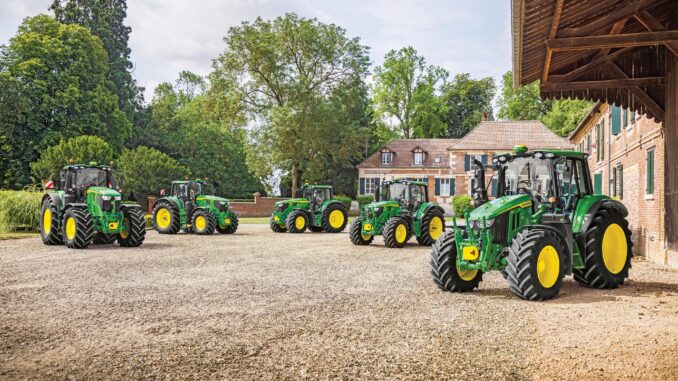
The John Deere 4010 is a compact utility tractor built for property maintenance, mowing, loader work, light ground-engaging tasks, and year-round small-acreage use. It sits in Deere’s 4000 Series compact lineup and uses a diesel engine with compact-tractor systems such as PTO, hydraulics, front axle service points, and transmission/hydraulic filtration that differ from a basic lawn tractor.
This guide is written for homeowners and DIY users in the USA and Canada who want a practical, symptom-first reference for John Deere 4010 repair, troubleshooting, and maintenance. It covers the most common problems owners actually run into, which jobs are realistic at home, what parts information to gather before ordering, and a maintenance routine based on Deere’s published service intervals.
John Deere 4010 overview and where it fits
The John Deere 4010 belongs to Deere’s 4000 Series Compact Utility Tractor family alongside the 4110 and 4115, rather than the much older large-frame agricultural 4010 from the 1960s. Deere’s own quick-reference material groups these three compact models together for filters, capacities, and routine maintenance items.
For most owners, the key systems are the diesel engine and fuel system, cooling system, transmission and hydraulic system, MFWD front axle if equipped, PTO system, electrical starting/charging system, and any mower deck or implement fitted to the tractor. The operator’s manual index also shows dedicated service and troubleshooting sections for engine, electrical system, machine, brakes, and steering, which is useful when building a symptom-based repair plan.
Common service parts owners regularly buy for the John Deere 4010 include the engine oil filter M806418, transmission oil filter LVA802833, fuel filter CH15553, primary air filter M113621, secondary air filter M123378, and filter kit LVA21192. Those are the core maintenance items that usually matter most before moving on to belts, battery, switches, deck parts, or attachment-specific wear items.
John Deere 4010 troubleshooting approach
The best way to troubleshoot a John Deere 4010 is to start with the symptom the owner actually sees, not with an assumed failed part. Deere’s operator information separates troubleshooting into engine, electrical system, machine, brakes, and steering, which supports a symptom-first workflow instead of random parts swapping.
Main symptom groups for this model usually include:
-
Starting issues, such as no crank, slow crank, or hard starting.
-
Running issues, such as stalling, smoke, rough running, or loss of power.
-
Hydraulic or drive problems, including weak travel, poor PTO response, or transmission/hydraulic performance complaints.
-
Overheating, leaks, and cooling problems caused by debris, low fluids, worn hoses, or poor airflow through the radiator and screens.
-
Electrical and safety-system faults involving battery condition, fuses, switches, PTO interlocks, or neutral/seat switch logic.
Emergency John Deere 4010 repair needs
Some John Deere 4010 problems need immediate attention because they can make the tractor unsafe or quickly damage expensive systems. Fuel leaks, hydraulic leaks under pressure, overheating, charging faults that leave the machine stranded, steering or brake issues, and abnormal drivetrain noise should never be treated as “use it until it gets worse” problems.
John Deere 4010 starting issues
If the tractor will not crank, cranks slowly, or starts and dies, stop and diagnose before repeated attempts drain the battery or overheat the starter. Starting problems on this model often trace back to battery condition, cable corrosion, fuel shut-off position, air in the fuel system, dirty filters, or safety interlock faults.
Common causes:
-
Weak or sulfated battery.
-
Dirty or loose battery terminals or ground connection.
-
Fuel shut-off valve not open or restricted fuel flow.
-
Plugged fuel filter CH15553.
-
Safety switch issue involving neutral, seat, or PTO logic.
Basic owner checks:
-
Confirm the battery is fully charged and terminals are clean and tight.
-
Verify the PTO is off and transmission/range controls are in the correct start position.
-
Check that fuel is fresh and the shut-off valve is in the proper position.
-
Inspect the fuel filter and sediment bowl area for restriction, water, or debris.
-
If the engine cranks but will not fire, stop before excessive cranking and inspect the fuel supply side more closely.
John Deere 4010 running and power-loss problems
A John Deere 4010 that starts but runs rough, smokes, stalls under load, or feels weak often has a fuel, air, cooling, or maintenance issue rather than a major engine failure. Restricted filters, contaminated fuel, clogged radiator fins, or overdue fluid service can all make the tractor feel much worse than it actually is mechanically.
Common causes:
-
Dirty primary or secondary air filter.
-
Restricted fuel filter.
-
Water or sediment in fuel tank or sediment bowl.
-
Dirty grille, screen, or radiator fins causing heat buildup.
-
Old engine oil or neglected scheduled service.
Basic owner checks:
-
Inspect and service the air cleaner system as needed.
-
Replace the fuel filter if service history is unknown or fuel flow is poor.
-
Clean the grille, side screens, and radiator cooling surfaces carefully.
-
Check engine oil level and verify the tractor is not overdue for oil and filter service.
-
If heavy smoke or persistent power loss continues, move toward dealer-level diagnosis.
John Deere 4010 vibration and noise
Unusual vibration, rattling, or driveline noise should be addressed quickly because loose hardware, worn couplers, damaged attachments, or driveline faults can spread damage into the PTO, front axle, or mounted implement. Compact tractors often transmit attachment problems through the whole machine, so the noise source is not always where the operator first hears it.
Common causes:
-
Loose wheel hardware.
-
PTO driveline or implement issue.
-
Worn or damaged mower blades or deck hardware if a mid-mount mower is installed.
-
Front axle lubrication issue on MFWD models.
-
Loose shields, brackets, or frame hardware.
Basic owner checks:
-
Park safely and inspect for loose wheel bolts and visible hardware issues.
-
Remove the implement from the equation if possible and retest.
-
Check PTO shafts, guards, and couplers for looseness or damage.
-
Verify front axle oil level on MFWD tractors.
-
Stop using the tractor if the vibration is severe or suddenly worse.
John Deere 4010 overheating and leaks
Overheating on the John Deere 4010 is a serious warning sign because compact tractors rely on clean airflow and correct coolant level to protect the diesel engine. Hydraulic, fuel, or coolant leaks also deserve immediate attention because they can create fire risk, air-entry issues, fluid starvation, or long-term damage.
Common causes:
-
Debris-packed grille, side screens, or radiator fins.
-
Low coolant or neglected cooling-system service.
-
Cracked or aging hoses and loose clamps.
-
Engine oil, hydraulic oil, or fuel leak from lines, filters, or fittings.
-
Excessive load combined with poor cooling airflow.
Basic owner checks:
-
Clean screens and radiator fins with care, not excessive pressure that bends fins.
-
Check coolant level only when safe and cool.
-
Inspect hose clamps, filter seals, and the area under the tractor for fresh leaks.
-
Confirm hydraulic and transmission fluid levels are correct.
-
Stop operation if the tractor is actively overheating or losing fluid.
John Deere 4010 transmission and drive problems
A John Deere 4010 that moves weakly, hesitates, loses hydraulic response, or shows poor transmission behavior may be low on fluid, overdue for filter service, or developing a driveline or hydro/mechanical transmission fault. Deere specifically includes transmission and hydraulic oil service, suction screen service, and related checks in the operator literature, which shows how important clean fluid is on this platform.
Common causes:
-
Low or contaminated transmission/hydraulic oil.
-
Restricted transmission oil filter LVA802833.
-
Overdue initial 50-hour or 400-hour transmission service.
-
Front axle or driveline issue on MFWD units.
-
Internal transmission or hydraulic problem requiring advanced diagnosis.
Basic owner checks:
-
Verify fluid level and correct fluid type before doing anything else.
-
Check whether the initial 50-hour service and later interval services were actually done.
-
Inspect for leaks around filters, housings, and lines.
-
Note whether the problem changes when hot versus cold.
-
Escalate quickly if travel loss is severe or hydraulics become erratic.
John Deere 4010 electrical problems
Electrical faults on this tractor often show up as no-crank conditions, weak charging, blown fuses, dead lights, or intermittent PTO/safety behavior. Because the operator’s manual includes testing for seat, neutral, and PTO-related safety functions, switch logic is a common and realistic diagnostic path on the John Deere 4010.
Common causes:
-
Low battery voltage or corroded terminals.
-
Blown fuse or poor fuse contact.
-
Failing ignition switch or wiring fault.
-
Safety switch issue at seat, PTO, brake, or neutral start circuit.
-
Charging-system weakness or alternator belt issue.
Basic owner checks:
-
Start with battery voltage and cable condition.
-
Inspect fuses and fuse holders for heat, corrosion, or looseness.
-
Test safety-switch-related symptoms one function at a time.
-
Inspect visible wiring for rubbing, rodent damage, or melted insulation.
-
Move to dealer diagnosis if wiring tests go beyond basic continuity and access.
DIY or dealer repair decision guide for the John Deere 4010
The John Deere 4010 is very DIY-friendly for routine maintenance, inspection, and straightforward bolt-on service, but it crosses into dealer territory once fuel injection, internal hydraulic faults, transmission internals, major electrical diagnosis, or split-tractor work are involved. A good rule is that if the job needs system pressure testing, internal drivetrain access, specialized Deere procedures, or safety-critical calibration, it is no longer a casual home repair.
Good DIY jobs on the John Deere 4010
-
Engine oil and filter changes using M806418.
-
Fuel filter replacement using CH15553.
-
Primary and secondary air filter inspection or replacement using M113621 and M123378.
-
Cleaning radiator screens, fins, grille, and side panels.
-
Battery cleaning, terminal service, and basic fuse replacement.
-
Front axle oil checks and routine lubrication where applicable.
Advanced DIY or dealer jobs on the John Deere 4010
-
Transmission/hydraulic oil, suction screen, and filter service if the owner is not comfortable managing fluid cleanliness and access.
-
Troubleshooting persistent no-start conditions after battery, fuel, and safety checks.
-
Hydraulic leak tracing under pressure.
-
Injection-system work, internal engine repairs, clutch/transmission internal work, or complex electrical diagnosis.
Skill level guide
-
Beginner: Filters, fluid checks, battery cleaning, radiator screen cleaning, greasing, visual inspection.
-
Intermediate: Engine oil service, fuel filter replacement, front axle oil service, basic switch/fuse diagnosis, implement removal and inspection.
-
Advanced: Transmission/hydraulic service, electrical tracing with diagrams, driveline diagnosis, hydraulic troubleshooting, cooling-system repairs.
John Deere 4010 parts, OEM numbers, and what to confirm before ordering
Before buying John Deere 4010 parts, confirm the full model, Product Identification Number, engine identification, transmission type if relevant, and any mower deck or attachment model being used. Deere’s operator information includes a dedicated product identification section, and its parts support pages stress that model and serial details matter before ordering service items or fit-sensitive components.
For the compact 4010, these are the most useful routine service parts to record first:
OEM parts are usually the safer choice for filters, transmission/hydraulic items, safety switches, seals, and fit-sensitive service parts because Deere’s published parts references are built around those exact numbers. Aftermarket can be reasonable for some consumables if the cross-reference is exact and the supplier is reputable, but owners should be more cautious with hydraulic filters, electrical switches, and anything that affects starting, charging, PTO operation, or fluid cleanliness.
John Deere 4010 manuals, diagrams, and parts lookup links
The most useful John Deere 4010 references are the official Deere manuals portal, Deere quick-reference guides, the compact utility tractor parts page, and the online parts catalog. Together, they cover service intervals, maintenance part numbers, identification basics, and dealer-backed parts lookup.
Useful links:
-
John Deere Manuals and Training — official source for operator, technical, and parts publications.
-
John Deere Compact Utility Tractor Quick Reference Guides — quick access to maintenance part numbers and service references.
-
4010/4110/4115 Filter Overview PDF — core routine service part numbers, intervals, and capacities for the 4010 compact tractor.
-
Compact and Utility Tractor Parts — Deere’s parts support page with maintenance guidance and links into the catalog ecosystem.
How to locate John Deere 4010 model, serial, and engine numbers
These numbers matter because the John Deere 4010 may have serial-range changes, transmission-specific components, and attachment-specific fit differences. Deere includes Product Identification and Record Identification Numbers in the operator literature, and Deere’s parts support guidance notes that model and serial numbers on the machine and engine should be checked before ordering parts.
Use this simple process:
-
Find the tractor identification tag on the machine and record the full model and serial/PIN exactly as shown.
-
Check the engine itself for its model and serial information, since engine-related parts can depend on engine identification rather than tractor model alone.
-
Record transmission type or drivetrain configuration if your machine documentation shows it, especially when ordering drive or hydraulic items.
-
If a mower deck or implement is involved, find and record its own model and serial tag as well.
-
Keep all numbers together in your phone or workshop notebook before ordering anything.
Buying John Deere 4010 parts online and in stores
The smartest buying strategy is to identify the exact OEM number first, then compare trusted online sellers, dealer availability, and local retail options for common consumables. Deere’s own resources are best for confirming fit, while dealer counters remain the safest route for serial-sensitive, hydraulic, electrical, or less common compact-tractor parts.
-
Online: verify the OEM number first through Deere references, then search by exact part number rather than by model name only, especially for filters and hydraulic items.
-
Dealer counter: best for serial-range questions, hard parts, safety switches, seals, hydraulic components, and anything with multiple fit options.
-
Retail stores: acceptable for some fluids, batteries, and basic consumables if the packaging clearly cross-references the Deere OEM number and application.
Useful starting points:
-
John Deere Compact & Utility Tractor Attachments for implement compatibility checks.
John Deere 4010 fitting guide for common service parts
These are some of the highest-value DIY jobs on the John Deere 4010 because they directly affect starting, engine protection, fuel delivery, and hydraulic performance. Always park safely, lower implements, shut the engine off, and work from the operator’s manual procedure where possible.
How to change the John Deere 4010 engine oil and filter
This job helps protect the diesel engine and is one of the most practical home service tasks on the 4010. Deere lists engine oil and filter service at the initial 50-hour point and then every 200 hours, with oil filter M806418 for this model.
-
Warm the engine briefly, park safely, and shut it down.
-
Drain the engine oil into a suitable pan and remove the old oil filter.
-
Lightly oil the gasket on the new M806418 filter and install it correctly.
-
Refill with the correct oil to the proper level; Deere lists approximate crankcase-with-filter capacity at 2 L (0.53 gal) for the 4010.
-
Start the engine, check for leaks, shut down, and recheck level after the oil settles.
How to replace the John Deere 4010 fuel filter
Replacing the fuel filter is a common fix for hard starting, weak running, and loss of power under load. Deere lists CH15553 as the engine fuel filter for the 4010 and gives a 500-hour replacement interval.
-
Shut off fuel if equipped and clean the area around the filter first.
-
Remove the old filter and inspect for water, sediment, or contaminated fuel.
-
Install the new CH15553 filter carefully with clean seals and clean fuel-handling practices.
-
Reopen fuel flow and follow the correct bleeding or priming steps for your setup if needed.
-
Start the engine and check for leaks or air-related stumble.
How to service the John Deere 4010 air filters
Air filter service matters on compact tractors because dust and chaff quickly affect power, smoke levels, and engine wear. Deere lists primary filter M113621 and secondary filter M123378 for the 4010 family guide.
-
Open the air cleaner housing and inspect both elements carefully.
-
Replace the primary element if dirty, damaged, oil-soaked, or restricted.
-
Inspect the secondary element and replace it if contaminated or damaged rather than trying to over-clean it.
-
Check the intake hoses and clamps before reassembly.
-
Make sure the housing seals properly so dust cannot bypass the elements.
How to change the John Deere 4010 transmission oil filter
This is a higher-value maintenance job because hydraulic and transmission cleanliness strongly affect drive and implement performance. Deere lists transmission oil filter LVA802833 for the 4010 and specifies an initial 50-hour change followed by 400-hour intervals in the quick-reference guide.
-
Confirm the tractor is the compact 4010 and gather the correct filter before draining or opening the system.
-
Clean the service area thoroughly to reduce contamination risk.
-
Remove the old filter and inspect the fluid condition while watching for metal or debris.
-
Install the new LVA802833 filter and refill with the correct transmission/hydraulic fluid to the proper level.
-
Run the system, cycle hydraulics if applicable, and recheck level and leaks.
Preventive maintenance for the John Deere 4010
Regular maintenance prevents many “repair” problems on the John Deere 4010 from appearing in the first place. Deere’s official service structure emphasizes routine checks, first-50-hour break-in service, then recurring daily, 50-hour, 200-hour, 400-hour, 500-hour/yearly, and longer-term intervals.
Focus areas:
-
Starting reliability: keep the battery clean, fuel system dry, and filters current.
-
Engine protection: maintain oil, air filtration, and cooling cleanliness.
-
Hydraulic and drive performance: service transmission/hydraulic fluid and filter on schedule.
-
Overheating prevention: clean screens, grille, and radiator fins before they plug up.
-
Electrical reliability: inspect cables, fuses, lights, and safety-system behavior before faults become no-start complaints.
John Deere 4010 maintenance schedule and yearly checklist
The exact maintenance schedule should always follow the operator’s manual for the tractor’s configuration, but Deere’s published compact-4010 references give a clear interval structure. The operator manual index lists daily, 50-hour, 200-hour, 400-hour, 500-hour, yearly, and longer-term service categories, while the quick-reference guide confirms several filter intervals and fluid capacities.
Daily or before each use
-
Check engine oil level.
-
Inspect for fuel, coolant, or hydraulic leaks.
-
Clean grille, side screens, and visible debris from cooling inlets if needed.
-
Check tire condition and general machine safety.
-
Verify basic lights, controls, and safety systems are functioning.
Break-in and first 50 hours
-
Change engine oil and oil filter.
-
Change transmission oil filter and complete the required break-in service items for the drivetrain/hydraulic system.
-
Recheck wheel hardware and machine fasteners.
-
Inspect belts, hoses, and fluid levels after early-use settling.
Every 200 hours
-
Change engine oil and engine oil filter M806418.
-
Carry out the operator-manual 200-hour service items for lubrication and inspection.
-
Reassess battery condition, hoses, and cooling-system condition.
Every 400 hours
-
Replace transmission oil filter LVA802833.
-
Perform the related transmission/hydraulic service items listed for the tractor.
-
Inspect hydraulic performance and check for contamination or leaks.
Every 500 hours or as required
-
Replace fuel filter CH15553.
-
Check primary air filter M113621 and replace as needed; inspect secondary filter M123378 as required.
-
Service front axle oil and other items that the operator’s manual places at 500 hours or yearly, depending on configuration.
Seasonal checklist
-
Spring: change fluids and filters if due, clean cooling system surfaces, test battery, inspect belts and hoses, and grease fittings.
-
Mid-season: keep screens and radiator fins clean, monitor air restriction, and inspect for leaks or loose hardware.
-
Fall or pre-storage: clean the tractor thoroughly, prepare fuel and engine for storage, and address overdue service before the next season.
Repair, upgrade, or replace a John Deere 4010?
A John Deere 4010 is usually worth repairing when the core engine, transmission, and hydraulics are sound, because many owner complaints come down to maintenance neglect, filters, cooling debris, battery issues, or attachment-related problems rather than terminal tractor failure. Replacement becomes more realistic when major drivetrain or hydraulic work stacks on top of heavy wear, poor parts availability in a local area, or a machine that no longer fits the owner’s workload.
Repair if:
-
The issue is limited to filters, fluids, battery, cooling cleanup, switches, or other routine service items.
-
The tractor starts, drives, and hydraulics function normally once basic maintenance is restored.
-
The machine still matches your property size and attachment needs.
Upgrade if:
-
You need more lift, PTO capability, hydraulic performance, or attachment compatibility than the 4010 comfortably provides.
-
Repeated tasks are pushing the tractor beyond light property-maintenance duty.
Replace if:
-
There is severe internal transmission, hydraulic, or engine damage requiring high-cost major work.
-
The tractor has multiple overlapping failures plus structural wear or poor history.
-
Repair costs approach the value of a better-fit used compact tractor in your market.
John Deere 4010 troubleshooting FAQ
1. Why will my John Deere 4010 not start?
A no-start on the John Deere 4010 usually begins with either a no-crank issue or a crank-no-fire issue, and those are different faults. Start by checking battery condition, terminal cleanliness, PTO and neutral/safety interlocks, fuel shut-off position, and filter condition before assuming a major component has failed.
2. Why does my John Deere 4010 crank slowly?
Slow cranking often points to low battery charge, cable corrosion, poor grounding, or starter-circuit resistance. Deere’s service information includes battery care and electrical troubleshooting, which makes the battery and cable path the logical first check.
3. Why does my John Deere 4010 start and then stall?
If the tractor fires and then dies, suspect restricted fuel flow, air in the fuel system, contaminated fuel, or a fuel shut-off issue first. A partially blocked CH15553 fuel filter can also cause start-then-stall behavior, especially if service history is unknown.
4. Why is my John Deere 4010 hard to start when cold?
Cold-start difficulty can come from weak battery output, marginal fuel delivery, dirty filters, or general maintenance neglect. On a diesel compact tractor, even small drops in cranking speed or fuel quality can make cold starts noticeably worse.
5. Why is my John Deere 4010 losing power under load?
Loss of power under load is commonly tied to restricted air flow, restricted fuel flow, or overheating from blocked cooling surfaces. Check the primary and secondary air filters, fuel filter, and radiator/screen cleanliness before moving into advanced engine diagnosis.
6. Why does my John Deere 4010 smoke?
Smoke usually means the engine is not burning fuel cleanly, often because of restricted intake air, poor fuel quality, overloading, or deeper engine/fuel-system problems. Start with air cleaner inspection and cooling cleanup because those are realistic owner checks with high payoff.
7. Why is my John Deere 4010 overheating?
Overheating usually comes from packed grille screens, dirty radiator fins, low coolant, or hose/cooling-system issues. Deere specifically includes cleaning grille, cooling screen, and radiator fins in operator maintenance guidance, which shows how common airflow-related overheating is on compact tractors.
8. Why is coolant leaking from my John Deere 4010?
Coolant leaks typically come from hoses, clamps, radiator connections, or cooling-system components that have aged or loosened. Because overheating can damage the engine quickly, any active coolant leak should be repaired before further use.
9. Why is hydraulic oil leaking on my John Deere 4010?
Hydraulic leaks can come from filters, hoses, fittings, couplers, or seals, and they should be treated seriously because compact-tractor hydraulic systems can leak under pressure. Clean the area first, identify the highest wet point, and stop using the tractor if the leak is significant.
10. Why does my John Deere 4010 move weakly or hesitate?
Weak travel may mean low or contaminated transmission/hydraulic fluid, a restricted filter, overdue service, or an internal transmission issue. Deere’s maintenance references show that transmission/hydraulic filtration is a core service item on the 4010, so skipped interval service is a realistic first suspect.
11. Why is my John Deere 4010 transmission noisy?
Transmission or driveline noise can come from low fluid, worn driveline parts, axle issues, or implement/PTO problems being transmitted through the chassis. If the sound changes with PTO engagement, MFWD use, or hydraulic demand, that clue helps narrow the system involved.
12. Why is my John Deere 4010 hydraulic system weak?
Weak hydraulics often follow low fluid level, dirty fluid, a restricted filter, or internal wear. Check service history first, because hydraulic complaints on compact tractors are often maintenance-related before they become component failures.
13. Why does my John Deere 4010 battery keep going flat?
A battery that repeatedly goes flat may be old, undercharged, poorly connected, or not receiving proper charging output. Battery cleaning, terminal inspection, and charging-system checks are the right starting point before replacing switches or other electrical parts.
14. Why are my John Deere 4010 lights not working?
Dead lights are usually caused by a blown fuse, corroded connector, weak battery, or wiring fault. Deere includes fuse and bulb service procedures in the operator literature, so begin with the basic electrical path before assuming a harness problem.
15. Why does my John Deere 4010 blow fuses?
Repeated fuse failure usually means a short, rubbed wire, water intrusion, or an overloaded circuit rather than a bad fuse alone. Replace the fuse once with the correct rating, then inspect the circuit instead of continuing to install new fuses.
16. Why will my John Deere 4010 not crank with the PTO engaged?
That behavior can be normal if the safety interlock is working as designed. Deere’s operator information includes PTO, seat, and neutral-start system testing, so a no-crank with PTO engaged should lead you to verify switch logic before condemning the starter.
17. Why is my John Deere 4010 safety switch causing problems?
Seat, PTO, brake, and neutral-related switches can create intermittent no-start or shutdown complaints when dirty, misadjusted, or failing. The key is to test one interlock at a time rather than bypassing several and losing the symptom trail.
18. Why does my John Deere 4010 shut off when I leave the seat?
Depending on PTO use and operating mode, that can be normal safety behavior rather than a fault. Deere includes operator-on-seat and operator-off-seat PTO behavior in the manual, so confirm the machine is responding correctly before chasing a bad seat switch.
19. Why is my John Deere 4010 fuel filter clogging quickly?
Rapid clogging usually points to contaminated fuel, tank sediment, water intrusion, or dirty storage containers. Replacing CH15553 without cleaning up the fuel source only treats the symptom, not the cause.
20. Why is there water in my John Deere 4010 fuel system?
Water in fuel commonly comes from storage contamination, condensation, poor fuel handling, or a dirty tank. Deere includes draining water and sediment from the fuel tank and servicing the sediment bowl, which shows that contamination control is part of normal ownership.
21. Why is my John Deere 4010 air filter getting dirty so fast?
Compact tractors working in dusty mowing or loader conditions can plug filters quickly, especially in dry seasons. That is why Deere lists the air filters as check-and-replace-as-needed items rather than on a simple fixed-hour swap alone.
22. Why does my John Deere 4010 run rough after changing the fuel filter?
Rough running after fuel filter service often means air entered the system or the filter was not seated correctly. Recheck the seals, confirm fuel flow, and make sure any required priming or bleeding steps were completed properly.
23. Why does my John Deere 4010 lose power after warming up?
A power loss that appears hot can suggest fuel restriction, airflow restriction, overheating, or hydraulic/transmission performance issues that worsen as fluid temperature rises. Checking cooling cleanliness and maintenance status is the best first move before deeper diagnosis.
24. Why is my John Deere 4010 front axle noisy?
On MFWD machines, front axle noise can come from low lubricant, wear, or driveline loading issues. Deere includes front axle oil checks and changes in the service literature, so fluid condition and level should be checked early.
25. Why does my John Deere 4010 vibrate when mowing?
If the tractor vibrates mostly when mowing, inspect the mower deck or implement before blaming the tractor itself. Bent blades, packed deck buildup, loose deck hardware, PTO shaft issues, or uneven blade condition are common vibration sources on compact tractors with mowing attachments.
26. Why does my John Deere 4010 PTO not work properly?
A PTO issue may be mechanical, electrical, hydraulic, or even safety-interlock related depending on the configuration. Because Deere’s operator literature includes PTO safety and operator/seat interface testing, start by separating engagement-control issues from implement-side problems.
27. Why is my John Deere 4010 steering heavy?
Heavy steering can be related to front-end loading, tire condition, hydraulic assist issues, or front axle concerns. Deere includes steering troubleshooting in the operator literature, so the symptom should be taken seriously if it appears suddenly or worsens fast.
28. Why are my John Deere 4010 brakes weak?
Brake weakness may come from adjustment, wear, contamination, or a broader machine issue depending on the transmission and setup. Since Deere includes brake troubleshooting, the safest approach is to stop using the tractor on slopes until braking performance is restored.
29. What engine oil filter does a John Deere 4010 use?
The John Deere 4010 compact utility tractor uses engine oil filter M806418 according to Deere’s 4000 Series quick-reference guide for the 4010, 4110, and 4115. That same guide lists the initial 50-hour change and then 200-hour intervals for engine oil and filter service.
30. What transmission oil filter does a John Deere 4010 use?
Deere’s quick-reference guide lists LVA802833 as the transmission oil filter for the 4010 compact tractor. The guide also shows an initial 50-hour change followed by 400-hour replacement intervals.
31. What fuel filter does a John Deere 4010 use?
The engine fuel filter listed by Deere for the compact 4010 is CH15553. Deere’s quick-reference guide places that filter on a 500-hour replacement interval.
32. What air filters does a John Deere 4010 use?
The Deere quick-reference guide lists M113621 as the primary air filter and M123378 as the secondary air filter for the 4010 compact tractor. Deere says to check them after every 500 hours and replace as needed rather than automatically at every shorter interval.
33. How much engine oil does a John Deere 4010 hold?
Deere lists the approximate engine crankcase capacity with filter for the 4010 at 2 L, which is about 0.53 gallons. Final fill should still be confirmed on the dipstick rather than by capacity figure alone.
34. How much transmission/hydraulic fluid does a John Deere 4010 hold?
The 4010 compact tractor quick-reference guide lists approximate transmission and hydraulic system capacity at 10 L, or about 2.6 gallons, using Low Viscosity Hy-Gard. As always, service should follow the correct procedure and level-check method for the machine.
35. Is the John Deere 4010 a good DIY tractor to maintain?
Yes, the compact John Deere 4010 is a practical DIY machine for owners comfortable with filters, fluids, battery service, cooling cleanup, lubrication, and basic inspections. The point where most owners should slow down is when the job moves into fuel injection, internal hydraulics, advanced electrical diagnosis, or transmission/internal driveline repair.