
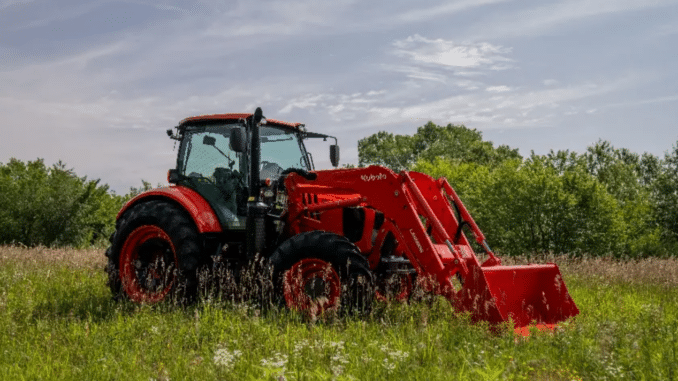
Kubota R Series Wheel Loaders: Maintenance, Parts and Repair Guide
Kubota R Series wheel loader maintenance combines engine servicing, hydraulic-system care and regular inspection of the articulation joint, steering, brakes, axles and loader linkage. Keeping these systems in good condition helps owners identify developing faults and plan repairs before replacing expensive components unnecessarily.
This guide covers documented current and legacy Kubota R Series models, maintenance priorities, replacement parts and general troubleshooting. It explains how to approach starting problems, weak travel, slow lifting, overheating, steering faults, brake concerns and excessive articulation movement before progressing to model-specific repair instructions.
And See:
- Kubota Construction Equipment Maintenance, Parts & Repair
- Kubota Excavator, Skid Steer and Track Loader Serial Number Lokup
Exact service intervals, lubricant specifications, capacities, tyre pressures, torque settings and diagnostic values must come from the documentation for the machine’s model, serial number and configuration.
Kubota R Series Wheel Loader Models
Kubota’s R Series spans several generations and regional naming systems. North American, European and other regional ranges should not automatically be treated as mechanically identical.
The directory below brings together documented principal models and important catalogue distinctions. It is not a guaranteed complete worldwide historical production register. Some domestic-market machines and regional variants may be absent.
Current and Recent North American Models
Kubota’s newer North American R Series wheel loader range includes:
-
Kubota R430.
-
Kubota R540.
-
Kubota R640.
These machines have separate manufacturer parts listings and documentation. The availability of a particular model varies by country and dealer stock.kubotausa+2
Current and Recent UK and European Models
Kubota’s UK and European product information includes:
-
Kubota R070.
-
Kubota R090.
These are distinct regional model designations. Do not assume that an R070 is identical to an R540, or that an R090 is identical to an R640, without comparing the relevant specifications and parts applications.kuk.kubota-eu+1
Legacy North American Models
Kubota’s North American wheel loader catalogue documents:
-
Kubota R310.
-
Kubota R400.
-
Kubota R400B.
-
Kubota R410.
-
Kubota R420.
-
Kubota R420S.
-
Kubota R510.
-
Kubota R520.
-
Kubota R520S.
-
Kubota R530.
-
Kubota R630.
The R510 has separate old-type and new-type catalogue entries. This distinction should be retained when researching service procedures or ordering parts.kubotausa+1
Additional European and Regional Models
Kubota’s regional product resources also document:
-
Kubota R065HW.
-
Kubota R082.
-
Kubota R085.
Kubota explicitly categorises the R082 as an older model. Regional pages for other machines may remain accessible after newer equipment appears, so a live product page does not by itself establish current production or availability.kuk.kubota-eu+2
Catalogue Variants and Extended Designations
Additional identifiers appear within individual R Series model families, including:
-
R420S1 and R420S2.
-
R420S1T3 and R420S2T3.
-
R520S1T3 and R520S2T3.
-
R430R1 and R430R3.
-
R530R41 and R530R43.
-
R540R41 and R540R43.
-
R630R41 and R630R43.
-
R640R41 and R640R43.
Kubota’s listings also contain BU and other extended catalogue codes on older machines. These entries help identify configurations and parts applications; they should not automatically be presented as separate principal loader models.kubotausa
Do not assign a universal meaning to a suffix without checking the relevant catalogue.
R Series and RT Series Are Separate Families
Kubota also sells RT articulated loaders. Although both families include articulated material-handling machines, RT models should have their own maintenance and repair directory.
Do not include RT model names in the R Series list or transfer their specifications without verification. Kubota identifies them separately in its construction range.kuk.kubota-eu+2
Identify Your Kubota Wheel Loader Before Buying Parts
Record:
-
Complete machine designation.
-
Machine serial number.
-
Engine model and serial number.
-
Country or market specification.
-
Cab or canopy configuration.
-
Tyre size and type.
-
Axle identification.
-
Transmission or travel-system identification.
-
Attachment-coupler type.
-
Hydraulic options.
-
Attachment identification.
-
Previous modifications or major repairs.
Why Serial Numbers and Production Types Matter
A model name alone may not identify the correct assembly.
The R510 old-type and new-type catalogue distinction illustrates this clearly. Similar care is needed with configuration codes and production changes within later R Series machines.kubotausa
Photograph identification plates and component tags before dismantling or repainting the machine.
Keep Machine and Attachment Identification Separate
A replacement bucket, pallet fork or hydraulic attachment may not be original to the loader.
Record its identification independently. Coupler parts, fork components, cutting edges and hydraulic requirements may depend on the attachment rather than the carrier model alone.
Kubota R Series Wheel Loader Maintenance
A maintenance programme should combine daily inspections, scheduled servicing and condition-based repairs.
Do not apply one oil specification or service schedule across the entire R Series. Older loaders and newer machines with electronically controlled fuel and exhaust systems require different documentation.
Daily and Pre-Start Checks
Follow the operator’s manual and inspect the machine before work.
Typical inspection areas include:
-
Engine oil level.
-
Coolant level.
-
Hydraulic oil level.
-
Fuel-system condition.
-
Visible leakage.
-
Cooling-pack cleanliness.
-
Belts and hoses.
-
Tyres and wheels.
-
Articulation joint.
-
Steering components.
-
Loader linkage.
-
Attachment retention.
-
Warning indicators.
-
Seat belt and protective structure.
The R540 operator’s manual includes daily fluid checks, brake-fluid inspection, lubrication and safety-control checks. The corresponding routine for an older loader must be established from its own manual.manualslib+1
Engine Oil and Filter Servicing
Use the specified oil, filter and interval for the installed engine.
An oil service should include:
-
Confirming the correct filter.
-
Following the draining procedure.
-
Inspecting for unusual contamination.
-
Replacing required sealing parts.
-
Refilling correctly.
-
Completing the final level check.
-
Checking for leakage.
Do not rely solely on a nominal refill quantity.
Investigate unexplained oil loss, coolant contamination or a rising oil level rather than repeatedly correcting the level without establishing the cause.
Fuel-System Maintenance
Routine servicing may include:
-
Fuel-filter replacement.
-
Water-separator inspection.
-
Draining collected water.
-
Checking accessible hoses.
-
Clean refuelling.
-
Correct priming after service.
Identify the fuel system before diagnosing a starting problem. For example, Kubota documents common-rail injection on the R070, whereas older R Series machines require the procedures appropriate to their installed engines.kuk.kubota-eu
Do not loosen high-pressure injection pipes as a generic bleeding or starting test.
Air-Cleaner Maintenance
Inspect the complete intake system:
-
Filter elements.
-
Housing.
-
Sealing surfaces.
-
Intake hoses.
-
Clamps.
-
Signs of dirt bypass.
Follow the permitted cleaning and replacement instructions. Do not assume that an element can be washed or repeatedly cleaned with compressed air.
Check the applicable guidance for dusty operating conditions.
Cooling-System Maintenance
Inspect:
-
Radiator.
-
Oil coolers.
-
Screens.
-
Debris between cooling components.
-
Damaged fins.
-
Coolant hoses.
-
Clamps.
-
Belts.
-
Visible leakage.
Use the prescribed cleaning method and avoid damaging the cooling fins.
Never remove a pressurised cap while hot.
When overheating occurs, establish whether the warning concerns engine coolant, hydraulic oil or another monitored system before choosing a diagnostic route.
Hydraulic Oil and Filters
Hydraulic maintenance requires correct fluid, suitable filtration and contamination control.
Before opening the system:
-
Clean around caps and connections.
-
Lower equipment as instructed.
-
Shut down the machine.
-
Release stored pressure using the prescribed procedure.
-
Protect open ports.
-
Keep replacement components clean.
Check the level in the specified machine position.
The R540 manual, for example, specifies a particular bucket position for checking the hydraulic oil gauge. A reading taken in another position may not be comparable.manualslib
Hydrostatic Travel-System Maintenance
Where fitted, the hydrostatic travel system has its own inspection and filtration requirements.
Do not assume that changing the main hydraulic return filter completes all hydraulic-related servicing. The R540 manual separately identifies an HST oil filter and hydraulic return filter.manualslib
Check:
-
Relevant filters.
-
Leakage.
-
Warning information.
-
Abnormal noise.
-
Travel response.
-
Temperature-related performance changes.
Use the correct diagnostic procedure before adjusting travel pressures or replacing a pump.
Axles, Differentials and Reduction Gears
Follow the specified requirements for each lubricated assembly.
Depending on the machine, maintenance can include:
-
Front axle differential.
-
Rear axle differential.
-
Reduction gear cases.
-
Seals.
-
Level and drain plugs.
-
Relevant mounting hardware.
Do not assume these assemblies use the same oil as the main hydraulic system.
The R540 manual provides separate servicing instructions for axle differential and reduction gear cases, including component-position requirements for checking and filling.manualslib+1
Articulation Joint and Centre Pivot
The articulation area is a major inspection priority.
Check for:
-
Excessive movement.
-
Damaged seals.
-
Loose hardware.
-
Abnormal knocking.
-
Grease not reaching a joint.
-
Cracks or distortion.
-
Hose damage through the centre section.
The R540 maintenance information includes inspection of the centre-shaft end plate. This demonstrates why articulation servicing should follow the complete chart rather than stop at accessible grease fittings.manualslib
Keep clear of the articulation area and use the prescribed frame-locking arrangement before relevant maintenance.
Steering-System Maintenance
Inspect accessible steering components for:
-
Leakage.
-
Damaged hoses.
-
Loose joints.
-
Excessive movement.
-
Uneven operation.
-
Abnormal noise.
A steering complaint may involve more than a cylinder. Articulation wear, hydraulic condition and control components all need to be considered through the appropriate diagnostic procedure.
Braking-System Maintenance
Braking arrangements differ across the R Series.
Follow the exact instructions for:
-
Fluid checks where applicable.
-
Service brake inspection.
-
Parking brake operation.
-
Pedal operation.
-
Warning indicators.
-
Adjustment and testing.
Do not use a generic automotive brake-fluid recommendation. Identify the required product from the machine documentation.
The R540 manual includes a brake-fluid-reservoir procedure, but that should not be transferred automatically to every older R Series loader.manualslib
Tyres and Wheels
Check:
-
Correct tyre specification.
-
Inflation.
-
Cuts and sidewall damage.
-
Embedded objects.
-
Uneven wear.
-
Wheel damage.
-
Fasteners.
Use the pressure and fastener requirements applicable to the tyre and machine configuration.
Wheel and tyre repairs on heavy equipment require suitable equipment and competence.
Loader Linkage and Lubrication
Follow the full lubrication chart.
Relevant points can include:
-
Loader-arm pivots.
-
Bucket linkage.
-
Cylinder pivots.
-
Articulation joints.
-
Steering joints where specified.
-
Attachment components.
Investigate blocked fittings and joints that do not accept grease.
Lubrication does not restore worn pins, bushes or mounting bores.
Attachment Coupler Maintenance
Inspect:
-
Mounting faces.
-
Locking components.
-
Retainers.
-
Wear.
-
Distortion.
-
Hydraulic leakage where applicable.
-
Attachment fit.
Verify engagement using the prescribed procedure before lifting or carrying a load.
Do not assume that operating a hydraulic locking switch proves the attachment is secure.
Kubota R Series Parts Guide
Filters and Service Kits
Common service items include:
-
Engine oil filters.
-
Fuel filters.
-
Separator elements.
-
Air-cleaner elements.
-
Hydraulic filters.
-
HST filters where applicable.
-
Cab filters.
-
Belts.
-
Sealing washers.
-
Approved fluids.
Compare kit contents with the machine’s actual service requirements.
A broad “Kubota R Series” kit description is not sufficient evidence of compatibility.
Articulation and Steering Parts
Repairs may require:
-
Pins.
-
Bushes.
-
Bearings.
-
Seals.
-
Shims.
-
Retainers.
-
Steering-cylinder parts.
-
Related hardware.
Measure the complete joint before ordering. Replacing one pin may leave substantial movement if surrounding components are worn.
Axle and Driveline Parts
Identify the actual axle or drive assembly before purchasing:
-
Seals.
-
Bearings.
-
Gears.
-
Hubs.
-
Shafts.
-
Brake-related components.
-
Mounting hardware.
Use component identification where the assembly has previously been replaced.
Hydraulic Hoses and Pipes
Replacement lines must match:
-
Application.
-
Pressure requirements.
-
Fittings.
-
Length.
-
Routing.
-
Movement allowance.
-
Protective arrangements.
Pay particular attention to hoses passing through or near the articulation area. Correct rubbing, twisting or trapping that contributed to the original failure.
Cylinder Seal Kits
Order against the correct cylinder assembly.
Inspect the rod and other components before deciding that resealing alone is sufficient.
A weak lift function or drifting bucket does not automatically prove a cylinder-seal failure.
Pumps, Motors and Valves
Buy major hydraulic assemblies after diagnosis.
Confirm:
-
Affected functions.
-
Temperature-related behaviour.
-
Fluid and filter history.
-
Warning information.
-
Component identification.
-
Contamination condition.
-
Prescribed test results.
An engine that runs normally with weak travel does not automatically establish a failed hydrostatic pump.
Electrical and Emissions Components
Before replacing a sensor, switch, solenoid or controller:
-
Preserve fault information.
-
Inspect wiring and connectors.
-
Follow the appropriate electrical diagram.
-
Verify the part application.
-
Check any setup requirements.
The R Series includes both older equipment and newer DPF-equipped machines, so one warning-code or regeneration guide cannot cover the entire family.kuk.kubota-eu+1
Genuine, Aftermarket and Used Parts
Compare replacement options by:
-
Correct application.
-
Technical specification.
-
Condition.
-
Supplier traceability.
-
Warranty.
-
Testing history.
-
Installation requirements.
Kubota’s illustrated parts resources provide a starting point for identifying the original assembly, even when comparing alternative suppliers.kubotausa+1
Kubota R Series Problems and Repairs
The following sections describe troubleshooting categories, not defects proven to affect every R Series loader.
Engine Will Not Crank
Separate:
-
No electrical power.
-
Indicators present but no starter response.
-
A single click.
-
Repeated clicking.
-
Slow rotation.
-
Intermittent operation.
Check starting conditions and electrical supply using the correct procedure.
Do not bridge terminals or bypass safety interlocks.
Engine Cranks but Will Not Start
Record whether the fault followed:
-
Running out of fuel.
-
Filter replacement.
-
Refuelling.
-
Storage.
-
Cold weather.
-
Electrical work.
-
Washing.
Verify the starting and priming procedure before assuming an injection-system failure.
Engine Runs but Loader Will Not Travel
Treat engine operation and travel operation as separate diagnostic areas.
Record:
-
Direction selected.
-
Parking-brake status.
-
Warning indicators.
-
Pedal position.
-
Whether lifting and steering remain normal.
-
Whether failure occurs only when warm.
On machines with an inching function, pedal operation affects travel behaviour. The R530/R630 instructions describe an inching-and-brake pedal that reduces HST drive before applying the brake more fully. Do not assume every travel complaint is a failed drive component.scribd
Travel Is Weak When Hot
Record which directions and travel ranges are affected, whether noise changes and whether other hydraulics also deteriorate.
Check service history, fluid specifications and the applicable filters.
Do not substitute thicker oil or pressure adjustment for diagnosis.
Loader Lifts Slowly or Feels Weak
Determine whether the problem affects:
-
Lift.
-
Bucket rollback.
-
Steering.
-
Travel.
-
Several systems together.
-
Operation only when warm.
Check operating conditions and attachment suitability before major component replacement.
Use prescribed pressure, flow and leakage tests to establish the cause.
Bucket or Loader Arms Drift
Lower equipment and keep clear.
The visible movement alone does not establish whether the fault involves a cylinder, valve or another circuit component.
Never investigate drift from beneath raised loader arms.
Steering Is Heavy, Uneven or Unreliable
Stop work where steering is unsafe.
Record:
-
Direction affected.
-
Temperature effects.
-
Warning information.
-
Noise.
-
Visible leakage.
-
Excessive articulation movement.
A steering-cylinder seal kit should not be purchased solely because steering feels different.
Knocking at the Articulation Joint
Inspect the joint using the prescribed safe method.
Check pins, bushes, bearings, retainers, lubrication and surrounding structure as applicable.
Do not enter the articulation area while another person operates the controls.
Brake Performance Changes
Stop using the machine if braking is unreliable.
Record pedal behaviour, warning indicators, leakage and whether the concern involves service or parking braking.
Do not adjust a brake to compensate for an unidentified hydraulic or mechanical fault.
Engine or Hydraulic Overheating
Stop for a serious warning or visible fluid loss.
After safe cooling, inspect the relevant system.
Record the work being performed, ambient conditions and time before the warning. Distinguish coolant temperature from hydraulic temperature before deciding on a repair.
Auxiliary Attachment Will Not Operate
Determine whether the fault follows the attachment or stays with the loader.
Check:
-
Operating controls.
-
Required flow and pressure.
-
Coupler connections.
-
Return arrangement.
-
Electrical connections.
-
Attachment maintenance.
Features differ between models. Kubota documents proportional auxiliary control on the R085, but that should not be assumed on every R Series machine.kuk.kubota-eu
DPF and Regeneration Warnings
First confirm whether a DPF is fitted.
Kubota documents a DPF-equipped common-rail engine on the R070, while the wider R Series includes much older machines.kuk.kubota-eu
Follow the correct warning sequence and regeneration instructions. Repeated warnings require investigation rather than repeated clearing.
Hydraulic Leaks
Identify the source safely. Oil can travel along hoses and structures before dripping.
Never use hands to locate a pressurised leak. Follow the shutdown and pressure-release procedure before opening the system.
A suspected hydraulic injection injury requires immediate emergency medical attention.
Safe Kubota R Series Repairs
Before maintenance:
-
Park on suitable, level ground.
-
Lower attachments as instructed.
-
Shut down the machine.
-
Prevent unintended starting or movement.
-
Release stored pressure correctly.
-
Allow hot components to cool.
-
Use approved supports.
-
Fit the articulation lock where required.
Kubota’s R530/R630 instructions describe a frame lock that prevents unexpected articulation during servicing and transport. They also require the prescribed lift-arm support arrangement when servicing with raised arms.scribd
Never rely on hydraulic pressure alone to support raised equipment.
Braking repairs, major hydraulic testing, articulation repairs and structural work require suitable competence, equipment and documentation.
Inspecting a Used Kubota R Wheel Loader
A useful inspection combines identification, records, cold starting and observation after normal warming.
Check:
-
Machine and engine identification.
-
Correct production type.
-
Articulation movement.
-
Steering response.
-
Braking.
-
Tyres and wheels.
-
Axle leakage.
-
Travel performance.
-
Loader-linkage wear.
-
Coupler condition.
-
Cooling equipment.
-
Warning history.
-
Previous welding or modification.
Obtain an independent inspection where significant hydraulic, structural, steering or braking concerns are present.
Frequently Asked Questions
Which R Series models are documented?
Manufacturer and regional resources document R310, R400, R400B, R410, R420, R420S, R430, R510, R520, R520S, R530, R540, R630, R640, R065HW, R070, R082, R085 and R090, alongside additional configuration entries. This is not a guaranteed complete worldwide historical register.kuk.kubota-eu+6
Are R Series and RT Series loaders the same family?
No. Kubota identifies them separately. Keep RT models and their servicing information in a dedicated RT guide.kuk.kubota-eu
Does R510 old type or new type matter when ordering parts?
Yes. Kubota’s catalogue separates those applications. Verify the correct machine and assembly before purchasing.kubotausa
Does every R Series loader have a DPF?
No single emissions arrangement applies across the range. Confirm the installed engine and exhaust equipment before following regeneration advice.kuk.kubota-eu+1
Does changing the hydraulic return filter complete every hydraulic-related service?
Not necessarily. Some machines have separately identified HST filtration and other service requirements. Follow the complete chart for the machine.manualslib
Should weak travel automatically lead to a hydrostatic pump replacement?
No. Establish operating conditions, brake and inching behaviour, service history and test results before replacing a major assembly.