
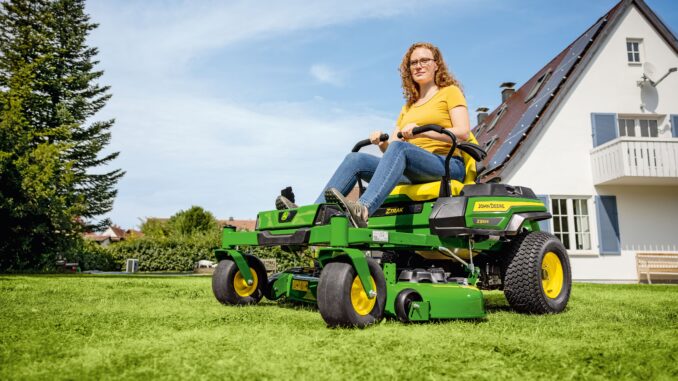
Introduction – John Deere Z930R overview
The John Deere Z930R is a commercial ZTrak zero‑turn mower designed for contractors and large‑property owners who need fast mowing, strong cut quality, and long hours of operation. It runs a commercial-grade Kawasaki engine, uses a 7‑Iron PRO mower deck, and relies on a hydrostatic drive system with dual transaxles to deliver smooth, responsive steering and speed control.
This guide focuses on practical, owner-level repair, troubleshooting and maintenance for the John Deere Z930R. You’ll find symptom‑based checks, parts lists, references to diagrams and manuals, and clear boundaries between realistic DIY work and jobs that should go to a dealer. The target audience is USA and Canada owners who are comfortable with basic tools and want to keep their Z930R mowing reliably without guessing.
General overview of the John Deere Z930R
The John Deere Z930R sits in the commercial Z900 ZTrak lineup, above residential zero‑turns and below larger diesel and stand‑on units. It’s built for daily or near‑daily use on medium to large lawns, commercial sites, and institutional grounds, where uptime and cut consistency matter more than occasional weekend mowing.
Key systems you’ll deal with on the Z930R include:
-
Engine and fuel system (Kawasaki FX series, carbureted, with replaceable fuel filter and dual‑stage air filter).
-
Mower deck system (belt‑driven 7‑Iron PRO deck, typically 60″ or 54″, with three blades and multiple spindles).
-
Hydrostatic drive system (two integrated hydrostatic transaxles controlled by lap bars, supplied by hydraulic oil and filters).
-
Electrical and safety‑interlock system (starter circuit, PTO switch, seat and park‑brake switches, control module, fuses).
Common service parts owners routinely buy for the John Deere Z930R include engine oil filters, air filters (primary and secondary), in‑line fuel filters, spark plugs, deck drive belts, mower blades, spindle assemblies, idler pulleys, hydraulic filters, batteries and common safety switches.
Troubleshooting approach for the John Deere Z930R
For the John Deere Z930R, always start troubleshooting from the symptom the operator sees rather than jumping straight to a part name. Think about what the mower is doing (or not doing), when it happens, and whether it’s repeatable or intermittent.
Main symptom categories for this model include:
-
Starting and cranking issues.
-
Running and performance problems (stalling, loss of power).
-
Cut‑quality issues (uneven cut, scalping, streaks).
-
Vibration and noise from the deck.
-
Overheating, fluid leaks or burning smells.
-
Transmission and drive problems (won’t move, weak drive).
-
Electrical and safety‑switch problems (no PTO, dead controls).
Once you’ve placed your problem in one of these categories, use the quick checks and basic steps below to rule out simple causes before assuming a major component failure.
Emergency and immediate repair needs on the John Deere Z930R
Some John Deere Z930R issues must be addressed immediately because they either make the machine unsafe to operate or can quickly damage expensive parts like the engine, hydrostatic units or deck spindles. Anything involving fuel leaks, burning smells, severe vibration, or loss of steering/braking should trigger a stop‑work inspection before mowing any further.
Starting issues on the John Deere Z930R
Starting problems look like no crank, slow crank, cranks but doesn’t fire, or intermittent starting depending on whether you’re sitting properly, have the brake set, or the PTO is off. They matter because forcing the starter, jumping safety circuits or using starting fluid on a hot engine can damage components or create fire risk.
Common causes:
-
Weak or failing battery.
-
Corroded battery terminals or poor ground.
-
Faulty seat, park‑brake or PTO safety switch.
-
Blown fuse or bad starter relay.
-
Dirty fuel, clogged fuel filter or stale fuel.
Basic owner checks:
-
Verify the parking brake is locked, PTO switch is off, and you are seated correctly.
-
Check battery voltage with a multimeter and clean terminals if any corrosion is present.
-
Inspect the main fuses and relays under the seat or panel for blown fuses or loose connections.
-
Confirm fresh, treated fuel is in the tank and replace the in‑line fuel filter if it’s dark or restricted.
-
If the starter still doesn’t respond, stop and consider a dealer diagnosis rather than bypassing safety circuits.
Cut‑quality problems on the John Deere Z930R
Cut‑quality problems show up as uneven cut, stragglers, ridging, scalping on turns or windrowing (rows of uncut grass). They matter because they impact the finish of customer lawns and often indicate something loose or mis‑adjusted on the deck that can escalate to spindle damage.
Common causes:
-
Dull or mismatched blades.
-
Deck not level side‑to‑side or front‑to‑rear.
-
Wrong cutting height or too much speed for conditions.
-
Bent blade, spindle shaft or deck shell from impact.
-
Clogged deck bottom or packed grass under baffles.
Basic owner checks:
-
Inspect all blades for sharpness, correct type and obvious bending; replace as a set if any are damaged.
-
Check deck level using a deck leveling gauge and follow the manual’s front‑to‑rear pitch recommendations.
-
Slow down ground speed, especially in thick or wet grass, and run at full engine RPM.
-
Scrape the deck underside to remove built‑up grass and debris.
-
If vibration accompanies poor cut, stop and inspect for bent components before continuing.
Vibration and noise on the John Deere Z930R
Vibration and abnormal noise typically come from the deck area: buzzing, rattling, grinding or rhythmic thumping as the blades spin. This matters because heavy vibration can rapidly destroy bearings, crack welds, and loosen hardware, leading to expensive deck repairs.
Common causes:
-
Bent blade or blade installed backwards.
-
Worn or failing spindle bearings.
-
Loose blade bolts or deck hardware.
-
Damaged or misaligned deck belt or idler pulleys.
-
Foreign object stuck in the deck or wrapped around the spindle.
Basic owner checks:
-
Disengage PTO, shut off engine, remove key and wait for blades to stop completely.
-
Inspect blades for bends, cracks or incorrect orientation and retorque blade bolts to spec.
-
Spin each spindle by hand (with blades off) to feel for roughness or grinding.
-
Check deck belt routing against the parts diagram and look for frayed or glazed sections.
-
If vibration persists after removing obvious causes, schedule spindle or deck service with a dealer.
Overheating and leaks on the John Deere Z930R
Overheating and fluid leaks on the John Deere Z930R may appear as warning lights, hot engine smells, smoke from the deck or engine compartment, or visible oil, fuel or hydraulic fluid drips on the ground. These issues can cause fires, hydrostatic failure or engine damage if ignored.
Common causes:
-
Blocked engine cooling fins or air intake.
-
Low engine oil level or incorrect oil grade.
-
Hydraulic oil leaking from hoses, fittings or transaxle seals.
-
Fuel leaks at hose connections, tank outlet or carb.
-
Debris buildup around muffler or exhaust.
Basic owner checks:
-
Park the mower, shut it down and let everything cool fully before inspecting.
-
Clean grass and debris from engine cooling fins, screens and shrouds.
-
Check engine oil level and top up or change using the correct oil type and viscosity.
-
Inspect hydraulic and fuel lines for wet spots, cracks or loose clamps and tighten or replace as needed.
-
If you see dripping hydraulic oil or fuel, avoid further use and contact a dealer for proper repair.
Transmission and drive problems on the John Deere Z930R
Drive problems look like the Z930R refusing to move, steering weakly or pulling to one side, moving slowly even at full throttle, or losing drive after running for a while. These matter because hydrostatic failures are expensive and improper diagnosis can waste money on parts that don’t fix the root issue.
Common causes:
-
Park brake still engaged or partially dragging.
-
Low hydraulic oil level or wrong fluid type.
-
Air in the hydrostatic system after service.
-
Worn pump or motor in a transaxle.
-
Linkage or control lever mis‑adjustment.
Basic owner checks:
-
Confirm the parking brake is fully released before driving.
-
Check hydraulic fluid level in the reservoir and inspect for leaks.
-
If drive was recently serviced, follow the purge procedure from the manual to bleed air from the system.
-
Inspect control linkages and dampers for obvious damage or binding.
-
If the mower still moves poorly or only after warming up, get a dealer to perform pressure tests on the hydro units.
Electrical and safety‑switch problems on the John Deere Z930R
Electrical and safety‑switch issues show as dead panels, no PTO engagement, starter clicking, or the mower cutting out when you release the park brake or move in reverse. They matter because bypassed safety systems can cause injury and affect liability on commercial jobs.
Common causes:
-
Failing seat, PTO or park‑brake switch.
-
Corroded or loose wiring connections.
-
Worn ignition switch or PTO switch.
-
Blown fuse or relay failure.
-
Weak battery causing voltage drops under load.
Basic owner checks:
-
Visually inspect safety switches at the seat, brake and PTO for loose brackets, broken wires or obvious damage.
-
Check fuses for continuity and ensure all relays are fully seated.
-
Wiggle harness plugs at the control module and key switch to identify intermittent connections.
-
Replace common wear switches like PTO or ignition with OEM parts if they feel loose or erratic.
-
Avoid bypassing safety switches; instead, use a dealer to test switch circuits if simple replacements don’t fix the issue.
DIY or dealer? Repair decision guide for the John Deere Z930R
For the John Deere Z930R, the line between DIY and dealer work usually sits where you move from bolt‑on parts and fluid changes into engine internals, hydrostatic repairs and complex electrical diagnostics. Routine maintenance and straightforward bolt‑on parts are realistic for most owners, but anything involving deep disassembly, press‑fit bearings, hydrostatic internals or control modules is usually dealer territory.
Good DIY jobs:
-
Engine oil and filter changes.
-
Air and fuel filter replacement.
-
Blade removal, sharpening and replacement.
-
Deck belt replacement and basic deck leveling.
-
Battery replacement and straightforward switch swaps.
-
Greasing pivots and checking tire pressures.
Advanced DIY or dealer jobs:
-
Spindle replacement and bearing‑press work.
-
Hydrostatic transaxle replacement or repair.
-
Carburetor or fuel system overhaul.
-
Electrical diagnostics involving control modules and loom repairs.
-
Frame and deck weld repairs or straightening after impact.
Skill level guide:
-
Beginner: Oil changes, filters, blade replacement, greasing points, cleaning cooling fins.
-
Intermediate: Belt routing, deck leveling, basic electrical checks, battery and switch replacement.
-
Advanced: Spindle rebuilds, hydro unit replacement, precise wiring repairs, steering linkage adjustment and alignment.
John Deere Z930R parts needed and OEM vs aftermarket
Before ordering parts for the John Deere Z930R, collect all the identification information you can:
-
Full model name, including “Z930R” and deck size if relevant.
-
Product Identification Number (PIN), stamped on the mower frame.
-
Engine model and serial number (usually on the Kawasaki engine tag).
-
Deck size / configuration (e.g. 54″ or 60″ 7‑Iron PRO deck).
Here is a typical service/repair parts list for the John Deere Z930R (always double‑check against your PIN and engine numbers):
| Part | OEM number | Notes |
| Part | OEM number | Notes |
| Engine oil filter | AM107423 | Used on Z930R and related Z900 models; confirm engine series. |
| Primary air filter | M131802 | Main engine‑air element; replace at recommended intervals. |
| Secondary air filter | M131803 | Inner safety element; replace with primary or as manual states. |
| Fuel filter | AM116304 | Inline fuel filter; common wear part on Ztrak units. |
| Deck drive belt | TCA24881 | Typical deck belt for 60″ 7‑Iron PRO deck; verify deck size. |
| Blade – high lift | TCU30317 | High‑lift blade for common Z930R deck sizes. |
| Blade – mulch | TCU8990 | Mulch‑on‑demand blade option where fitted. |
| Spindle assembly | TCA24880 | Complete mower‑deck spindle kit; check deck configuration. |
| Hydraulic filter | Refer to manual | PIN‑sensitive; match to hydro model and serial. |
| Battery | BG or JD spec | Use commercial‑grade battery that matches CCA and size. |
| Seat safety switch | Common Z900 part | PIN‑specific; cross‑check on parts diagram. |
| PTO switch | Standard Ztrak PTO | Use OEM for correct function and durability. |
OEM vs aftermarket guidance:
-
Stick with OEM for belts, safety‑critical parts (switches, hydro filters, steering components) and fit‑sensitive parts like spindles and deck hardware.
-
Quality aftermarket parts are often fine for filters, blades and batteries if they clearly cross‑reference your exact Z930R model and PIN.
-
Avoid bargain “universal” belts or generic electrical parts without confirmed compatibility; they often cause more issues than they solve.
Where to find John Deere Z930R parts diagrams and service manuals
For the John Deere Z930R, accurate diagrams and manuals will save time and prevent wrong‑part orders. Use the following main sources:
-
John Deere Z930R owner information page: the official owner hub with links to maintenance info, safety guidance and basic service intervals.
-
Z900 series repair technical manual (commonly TM172219 or TM176319 depending on serial range): a dealer‑level manual covering detailed diagnostics, wiring and hydraulic systems.
-
John Deere Parts (JDParts or the equivalent parts portal in your region): interactive parts diagrams by model and PIN, letting you click through assemblies like deck, frame, drive and electrical.
-
A reputable John Deere‑focused parts site with a dedicated Z930R page: useful for quick lookups of frequently purchased service parts and maintenance kits.
Use the operator’s manual for day‑to‑day maintenance intervals, fluid capacities and safety procedures, and the technical manual for deeper troubleshooting and component replacement. The parts diagrams help you verify belt routing, fastener counts and sub‑components before you start a job.
How to locate John Deere Z930R model, PIN and engine numbers
Model, PIN and engine numbers matter because John Deere changed details within the Z930R line across serial ranges, and parts like hydraulic filters, harnesses and some deck components can be PIN‑specific. Having the right numbers avoids getting parts that “almost” fit and saves you multiple return trips.
To find them:
-
Look for the product identification plate on the Z930R frame, usually near the rear frame rail or under the seat area; it lists the model (Z930R) and PIN.
-
Check any decal on the deck that lists the deck size and configuration (e.g. 60″ 7‑Iron PRO), as deck‑specific parts depend on this.
-
Locate the metal tag or sticker on the engine block or shroud; it shows the Kawasaki engine family and serial number.
-
Record these numbers in your maintenance log or on your phone so you can reference them whenever ordering parts.
-
If in doubt, take a clear photo of each plate and tag and show them at the dealer counter or attach to online orders.
Buying John Deere Z930R parts online and in stores
For the John Deere Z930R, a simple parts‑buying strategy is to combine online research with local dealer support for complex items. Online parts portals are fast, but your local dealer is still the best resource for serial‑specific items and troubleshooting advice.
Online:
-
Use your Z930R model and PIN to search official John Deere parts portals and cross‑reference any aftermarket listings.
-
Check that each listing explicitly confirms compatibility with the Z930R and your deck size.
Dealer counter:
-
Ideal for hydraulic components, harnesses, control modules and any part where diagrams or serial range questions arise.
-
Bring photos of the machine, PIN tag and old part if possible.
Retail stores:
-
Acceptable for general consumables like engine oil, grease, spark plugs and sometimes blades or universal batteries.
-
Make sure packaging clearly lists John Deere Z930R or the correct engine family rather than a generic “fits most zero‑turns” note.
Useful starting points include the official John Deere parts and service site, the Z930R owner information page, and a trusted aftermarket supplier that provides Ztrak‑specific maintenance kits.
Step‑by‑step fitting guide – common John Deere Z930R DIY jobs
The following jobs give the most impact on reliability and cut quality for a John Deere Z930R and are realistic for most owners with basic tools.
Changing engine oil and filter on a John Deere Z930R
This job improves engine life, keeps internal parts lubricated, and prevents contamination‑related wear.
-
Park the Z930R on level ground, shut off the engine, remove the key and let the engine cool fully.
-
Place a drain pan under the engine’s oil drain and open the drain valve or plug to remove old oil.
-
Remove the old oil filter, wipe the mounting surface clean, and lightly oil the gasket on the new OEM filter.
-
Install the new filter by hand until the gasket contacts, then tighten per manufacturer instructions.
-
Close the drain, add the correct quantity and grade of engine oil, then start the engine and check for leaks.
-
Stop the engine, recheck level and top up if necessary.
Replacing the air filter on a John Deere Z930R
Replacing the air filter helps maintain power and reduces fuel consumption, especially in dusty conditions.
-
With the engine off and cool, unlatch or unclip the air filter housing on the Z930R.
-
Remove the outer (primary) air filter and gently inspect the inner (secondary) element for dirt or damage.
-
Wipe dust from the housing using a dry cloth; avoid blowing dust into the intake.
-
Install the new primary filter and secondary filter (if due), ensuring they seat squarely and seal correctly.
-
Close and latch the housing, then note the hours in your maintenance log for the next replacement interval.
Changing the deck drive belt on a John Deere Z930R
The deck drive belt transmits engine power to the blades; replacing it prevents slip, heat and cut‑quality issues.
-
Park the mower on a flat surface, lower the deck fully, shut off the engine and remove the key.
-
Remove any belt shields or covers over the deck belt, noting fastener locations for reassembly.
-
Release tension from the spring‑loaded idler (usually with a wrench) and slip the old belt off pulleys.
-
Route the new belt according to the deck diagram, making sure it sits correctly in each pulley groove.
-
Reapply tension, double‑check routing and clearance, then reinstall belt covers and test PTO engagement.
Replacing blades on a John Deere Z930R
Fresh blades restore cut quality and reduce strain on the engine and deck drive system.
-
Raise the front of the Z930R using a suitable jack and secure it with jack stands so you can access the underside safely.
-
With the PTO off and key removed, wear gloves and block the blade to prevent spinning.
-
Remove the blade bolts using the correct socket, keeping track of washers and spacer orientation.
-
Install new, matching blades with the cutting edge facing in the correct direction and torque bolts to specification.
-
Lower the mower, run the PTO at low speed to confirm smooth operation, and then check cut quality on a test pass.
Maintenance to prevent John Deere Z930R problems reoccurring
Regular maintenance on the John Deere Z930R is the main way to prevent repeat failures, poor performance and premature component wear. A simple, consistent routine is far cheaper than replacing major parts later.
Focus areas:
-
Starting reliability: Keep the battery charged, terminals clean, and fuel fresh; replace filters on schedule.
-
Cut quality: Maintain sharp blades, correct deck level, and clean deck surfaces to avoid buildup.
-
Fire and overheating prevention: Clean cooling fins, screens and deck areas; address leaks promptly.
-
Drive performance: Maintain proper hydraulic fluid level, avoid overloading the machine and follow purge procedures after service.
-
Electrical reliability: Inspect harnesses, switches and connectors periodically, especially after heavy vibration or impacts.
John Deere Z930R maintenance schedule and year‑round checklist
Base your John Deere Z930R maintenance schedule on the official chart for your serial range and engine. The following structure mirrors typical intervals and tasks for commercial zero‑turns.
Daily / before each use
-
Check engine oil level and look for leaks.
-
Inspect tires for correct pressure and obvious damage.
-
Verify safety interlocks (seat, brake, PTO) function correctly.
-
Walk around the mower checking for fuel, oil or hydraulic drips.
-
Clean grass and debris from engine air intake screens and deck surfaces.
After approximately 8–10 hours
-
Grease all recommended zerk fittings on front casters, deck pivots and steering linkages.
-
Inspect the deck belt and idlers for wear, glazing or misalignment.
-
Check blade condition and cut quality; touch up sharpness as needed.
-
Inspect the battery area for corrosion and clean terminals if required.
Every 25 hours
-
Inspect air filter and clean or replace if operating in dusty conditions.
-
Check levelness of the deck using a leveling gauge; adjust as necessary.
-
Inspect hydraulic system hoses and fittings for weeps or drips.
-
Check lap bar operation and steering response; adjust if any free play develops.
Every 50 hours or yearly
-
Change engine oil and replace the engine oil filter following the manual.
-
Inspect spark plugs and replace if worn or fouled.
-
Clean engine cooling fins and shrouds thoroughly.
-
Check all safety switches for positive engagement and replace any that feel loose or intermittent.
Every 200 hours (or as specified)
-
Replace fuel filter with the correct OEM or cross‑referenced part.
-
Replace primary and secondary air filters in dusty or heavy‑use conditions.
-
Change hydraulic filters and fluid if your serial range calls for it at this interval.
-
Inspect spindle bearings, pulleys and deck hardware for wear and play; replace components that show looseness or roughness.
Seasonal checklist – John Deere Z930R (spring, mid‑season, fall)
Spring:
-
Perform full annual service (oil, filter, air filter check, fuel filter if due).
-
Check and adjust deck level and pitch.
-
Verify tire pressures and inspect casters for free movement.
-
Test all safety interlocks and PTO engagement before first jobs.
Mid‑season:
-
Inspect blades, deck belt and spindles for wear after peak mowing.
-
Grease all pivot points and casters at increased intervals in dusty conditions.
-
Check battery performance and clean terminals.
Fall / end of season:
-
Clean the mower thoroughly, including underside of the deck and engine area.
-
Change engine oil if hours are close to the next interval.
-
Stabilize fuel or drain the tank if storing for an extended period.
-
Store the Z930R in a dry, covered area, battery maintained or disconnected per manual guidance.
John Deere Z930R – repair, upgrade or replace?
For the John Deere Z930R, deciding between repair, upgrade or replacement depends on machine age, hour count, frame and deck condition, and your work profile. A well‑maintained Z930R can run for thousands of hours, but hydrostatic failures, cracked decks and repeated electrical issues might point toward replacement or major upgrades.
Repair if…
-
The problem is limited to bolts‑on parts like belts, blades, filters, simple switches or minor leaks.
-
The frame and deck are structurally sound with no major cracks or heavy rust.
-
Engine compression and hydro performance remain strong.
Upgrade if…
-
You need better cut quality (e.g. changing blade types or adding a mulch kit).
-
Lighting, seating or control improvements will reduce operator fatigue.
-
You’re adding accessories for bagging, striping or specific commercial contracts.
Replace if…
-
The Z930R has extremely high hours with multiple major systems failing (hydros, engine, electrical).
-
Deck shell or frame damage is extensive enough to require major welding or replacement.
-
Frequent breakdowns are impacting customer satisfaction and job scheduling.
Expanded troubleshooting FAQ – John Deere Z930R (30+ questions)
1. Why will my John Deere Z930R not start?
If your John Deere Z930R won’t start, first confirm that the parking brake is set, PTO switch is off and you’re seated correctly. A weak battery or corroded terminals are common causes, so check voltage and clean connections. Safety switches at the seat, brake and PTO can also prevent cranking or spark when they fail. If the starter still doesn’t respond after these checks, have a dealer test the starter circuit and control module rather than bypassing safety systems.
2. Why does my John Deere Z930R crank but not fire?
Cranking without starting usually points to a fuel or spark issue. Confirm that there’s fresh fuel in the tank and the fuel filter isn’t clogged. Pull a spark plug, inspect it for fouling and test for spark if you have the tools. If fuel and spark look okay, the carburetor may need cleaning or internal service, which is generally a dealer‑level job for most owners.
3. Why does my John Deere Z930R start and then stall?
When a John Deere Z930R starts and stalls, think about fuel delivery and safety interlocks. A partially blocked fuel filter or venting issue can starve the engine after a few seconds. Similarly, a faulty seat or brake switch can cut the engine as soon as you move. Check filters and safety switch wiring for loose connections, and inspect fuel lines for pinches or leaks.
4. Why does my John Deere Z930R run rough at full throttle?
Rough running at full throttle can be caused by dirty air filters, old fuel, fouled spark plugs or carburetor issues. Replace or clean the air filter, drain stale fuel, and check plug condition. If the engine still surges or misfires under load, a dealer may need to evaluate carburetor jets, governor settings or ignition components.
5. Why does my John Deere Z930R lose power when mowing thick grass?
Power loss in thick grass often means the blades are dull, the deck is clogged or the engine isn’t reaching full RPM. Sharpen or replace blades and scrape the deck underside. Operate at full throttle and reduce ground speed in heavy conditions so the engine and deck can keep up. Persistent power loss could also signal fuel restriction or compression issues needing professional diagnosis.
6. Why is my John Deere Z930R cutting unevenly?
Uneven cutting on a John Deere Z930R is usually due to a deck that’s out of level, mismatched blades or deflated tires. Use a deck leveling gauge to set side‑to‑side level and front‑to‑rear pitch according to the manual. Check that all blades are the same type and installed correctly. Verify tire pressures match recommendations so the deck sits evenly relative to the ground.
7. Why does my John Deere Z930R leave strips of uncut grass?
Strips of uncut grass, or “stragglers”, can come from dull blades, incorrect blade overlap or deck height set too high for the grass. Replace blades if edges are rounded or chipped. Ensure the deck is level and the height matches lawn conditions. Slow down slightly to give the deck time to lift and cut grass thoroughly.
8. Why is my John Deere Z930R scalping the lawn?
Scalping happens when the deck is too low or the front of the deck is pitched incorrectly relative to the rear. Raise the cutting height and recheck deck pitch using the recommended settings. Rapid changes in terrain or aggressive turns can also cause scalping, so adjust your mowing pattern to minimize sudden dips and bumps.
9. What causes excessive vibration on my John Deere Z930R deck?
Excess vibration often indicates a bent blade, damaged spindle bearings or an out‑of‑round pulley. Inspect blades for damage and replace them as a set if any are bent. Spin spindles by hand to feel for roughness or play. Check belt condition and pulley alignment; if vibration remains strong after these checks, spindle assemblies may need dealer replacement.
10. Why does my John Deere Z930R make grinding noises when I engage the PTO?
Grinding noises at PTO engagement can be caused by a loose blade, failing spindle bearing or debris caught in the deck. Turn off the engine, remove the key and inspect blades, spindles and deck interior for foreign objects. Tighten blade bolts and clear obstructions. If grinding persists, the PTO clutch or spindle bearings may be failing and should be inspected professionally.
11. Why is the deck belt on my John Deere Z930R slipping or squealing?
Belt slip or squeal usually means the belt is worn, contaminated with oil or mis‑tensioned. Inspect the belt for glazing, cracks or contamination and replace if needed. Check the idler pulley and spring for proper tension and smooth operation. Ensure the belt is routed correctly along all pulleys following the parts diagram.
12. Why does my John Deere Z930R deck belt keep jumping off?
A belt that jumps off repeatedly is often mis‑routed, too loose or pulled out of alignment by a bent pulley or bracket. Compare routing to the official deck diagram. Inspect pulleys and idler arms for bends or misalignment after impacts. Replace worn components, then re‑tension and test slowly before returning to full‑speed mowing.
13. Why won’t my John Deere Z930R move forward or reverse?
If your John Deere Z930R won’t move, first ensure the parking brake is fully released and that you’re operating the lap bars correctly. Low hydraulic fluid, air in the system or a failed hydrostatic unit can also cause no‑drive conditions. Check fluid level and look for leaks. If the mower still doesn’t move, it’s time for dealer‑level hydraulic diagnostics.
14. Why does my John Deere Z930R pull to one side?
A Z930R that pulls to one side can have uneven tire pressure, unequal hydro performance or mis‑adjusted control linkages. Start by equalizing tire pressures side‑to‑side. If pulling persists, a dealer can help adjust hydro linkages or test transaxle output pressures to correct steering balance.
15. Why is the steering on my John Deere Z930R jerky or unresponsive?
Jerky steering may result from worn dampers, loose linkage or air in the hydrostatic system after service. Inspect steering linkages and dampers for wear or damage, and replace any loose components. If drive units were recently serviced, perform the purge procedure to eliminate air pockets. Persistent steering issues likely require dealer attention.
16. Why does my John Deere Z930R smell like burning oil or rubber?
Burning smells often come from oil dripping onto hot components or belts overheating and glazing. Look for oil leaks around the engine, hydraulic lines and transaxles. Inspect belts for glazing, cracks or discoloration. Fix leaks and replace damaged belts, then clean any contaminated surfaces to remove residue.
17. Why is my John Deere Z930R overheating?
Overheating can be due to blocked cooling fins, dirty air filters, low oil level or excessive debris around the engine and exhaust. Clean cooling fins and air intake screens thoroughly. Check engine oil level and top up as needed. Clear debris from around the muffler and engine shrouds. If temperature issues continue, have a dealer check the engine’s cooling system.
18. Why is fuel leaking from my John Deere Z930R?
Fuel leaks usually come from cracked fuel lines, loose hose clamps or issues at the tank outlet or carburetor. With the mower off and cool, inspect all fuel hoses and connections for wet spots or cracks. Tighten clamps and replace damaged hoses with fuel‑rated line. For leaks at the carburetor or tank fittings, seek dealer assistance.
19. Why does the battery on my John Deere Z930R keep dying?
Frequent battery drain may mean the battery is near end‑of‑life, charging system output is low or something is drawing current when the mower is off. Check charging voltage at the battery while running and verify it meets specification. Clean terminals and ensure grounds are secure. If voltage is fine but the battery still dies, have a dealer check for parasitic draw and replace the battery with a suitable commercial unit.
20. Why won’t the PTO engage on my John Deere Z930R?
Non‑engaging PTO can be caused by a faulty PTO switch, bad clutch, blown fuse or safety‑interlock issue. Listen for a click when you flip the PTO switch; absence of sound may point to switch or wiring. Check fuses and relay seating. If the clutch coil isn’t receiving power, electrical diagnostics are needed; if it is but doesn’t respond, the clutch itself may require replacement.
21. Why does the PTO on my John Deere Z930R drop out while mowing?
If the PTO drops out intermittently, consider seat or brake switch issues, wiring faults or overheating of the clutch. Inspect harness connections and switches for loose or damaged components. Check clutch wiring for abrasion or heat damage. A dealer can test clutch current draw and interlock logic if basic checks don’t resolve the issue.
22. How often should I change the engine oil on my John Deere Z930R?
For most Z930R units, engine oil changes are recommended at early break‑in and then at regular hour intervals, often in the 50–100‑hour range depending on conditions. Heavy dust, heat or commercial duty may justify more frequent changes. Always follow the maintenance chart for your serial range and engine family.
23. How often should I change the air filter on my John Deere Z930R?
Air filter intervals depend heavily on dust levels and workload. Under normal use, the primary air filter may be replaced around 100–200 hours, with the secondary element on a longer interval. In dusty, commercial conditions, inspect and clean more frequently and replace earlier if restriction or heavy dirt is visible.
24. When should I replace the fuel filter on my John Deere Z930R?
Most Z930R maintenance charts call for fuel‑filter replacement around 200 hours, or sooner if you notice performance issues or use poor‑quality fuel. If the filter appears dark or flow seems restricted, replace it early to prevent running problems.
25. How often should I replace blades on my John Deere Z930R?
Blade replacement depends on wear and damage, not just hours. Inspect blades regularly for rounding, chips and bends. Commercial operators may resharpen frequently and replace blades several times per season. Replace blades whenever sharpening no longer restores a clean edge or damage is evident.
26. How do I know if the spindles on my John Deere Z930R need replacement?
Spindles needing replacement often make grinding noises, wobble or cause persistent vibration and poor cut even after blade changes. With blades removed, spin spindles by hand and feel for roughness, play or noise. Visible shaft damage or loose bearing areas also point to replacement. Spindle work is usually intermediate‑to‑advanced DIY or dealer‑level.
27. What hydraulic fluid should I use in my John Deere Z930R?
Use the hydraulic fluid grade specified in your Z930R operator’s manual for your serial range, often a Deere‑branded hydrostatic fluid or equivalent. Mixing fluids or guessing can cause performance issues or damage. If unsure, consult your dealer and avoid topping up with random oil types.
28. Do I need to purge the hydrostatic system after changing fluid on my John Deere Z930R?
Yes, most Z930R hydro systems require a purge procedure after fluid changes or component replacement to remove air from the system. The process typically involves cycling the drive slowly forward and backward with wheels off the ground. Follow the exact steps in your manual to avoid erratic drive behavior.
29. Why do my front caster wheels on the John Deere Z930R wobble or squeak?
Wobbling or squeaking casters usually indicate worn bearings, lack of grease or loose hardware. Inspect caster stems, bearings and tires for play or damage. Grease fittings as specified. Replace bearings or caster assemblies if wobble persists, as unstable casters can affect cut quality and handling.
30. How do I improve ride comfort on my John Deere Z930R?
Ride comfort can be improved by adjusting seat suspension, tuning tire pressures and avoiding high speeds over rough ground. Consider upgrading the seat or adding suspension components if your mowing involves long hours. Keeping blades sharp and deck balanced also reduces vibration transmitted to the operator.
31. Can I use aftermarket blades on my John Deere Z930R?
You can use quality aftermarket blades if they are specifically cross‑referenced to the Z930R and your deck size. Check length, hole pattern and lift profile to ensure they match OEM specifications. Poorly matched blades can hurt cut quality and load the deck drive system unnecessarily.
32. Should I buy a John Deere maintenance kit for my Z930R?
Maintenance kits that bundle oil, filters and sometimes plugs are convenient and reduce the chance of ordering incorrect parts. They’re especially useful if you prefer OEM components and want a simple way to perform scheduled services. Check that the kit matches your Z930R model and serial range.
33. Why does my John Deere Z930R engine backfire or pop on shutdown?
Backfiring on shutdown can be caused by high idle speed at switch‑off, fuel pooling or carburetor settings. Let the engine idle briefly before turning off to reduce backfire. If popping persists, have a dealer inspect carburetor and ignition timing settings, especially after major service.
34. How do I store my John Deere Z930R over winter?
For winter storage, clean the mower thoroughly, change oil if hours are close to a service interval, and stabilize or drain fuel. Disconnect or maintain the battery to prevent drain. Store indoors where possible, away from moisture, and follow any long‑term storage guidelines in your manual.
35. When is it time to retire my John Deere Z930R?
Retiring a Z930R makes sense when major systems like engine, hydros and deck have all reached end‑of‑life, repair costs approach or exceed the machine’s value, and breakdowns are frequent enough to disrupt work. If frame and deck are compromised or you need newer features and reliability for commercial contracts, replacement becomes the better long‑term decision.