
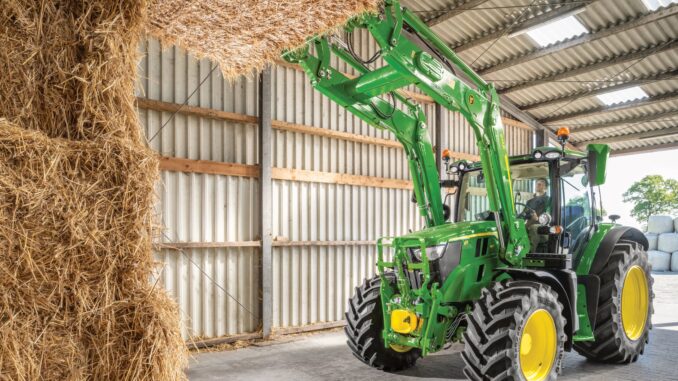
The John Deere 655 is a compact utility tractor built for property maintenance, mowing, light loader work, tilling, grading and other jobs that are beyond the scope of a typical lawn tractor. Produced in the late 1980s, it uses a three-cylinder Yanmar diesel engine, hydrostatic transmission, rear PTO and open-center hydraulics, making it a capable but now mature machine that benefits from careful maintenance.
This John Deere 655 repair guide covers common faults, practical troubleshooting, service parts, maintenance routines, parts diagrams, manuals and realistic DIY repair boundaries. It is aimed at owners in the USA and Canada who are comfortable with routine servicing and want to identify a problem before buying parts.
General Overview of the John Deere 655
The John Deere 655 sits in Deere’s early compact utility tractor range alongside models such as the 755, 855 and 955. It is a small diesel compact tractor rather than a lawn-and-garden machine, and owners commonly find it fitted with a mid-mount mower, front blade, loader, rear finish mower, tiller, snowblower or other Category 1-compatible implements.
The tractor uses a Yanmar 3TN66UJ three-cylinder indirect-injection diesel engine rated at approximately 16 net engine horsepower, with about 10.6 PTO horsepower. Its two-range hydrostatic transmission provides infinitely variable travel speed within high and low ranges, while the hydraulic system supports steering, implement lift and compatible hydraulic attachments.
The exact configuration matters. A John Deere 655 may have different tire sizes, mower decks, loaders, hydraulic connections, PTO equipment and serial-number breaks. Always identify the tractor and attachment before ordering a belt, blade, hydraulic hose or drivetrain component.
Key systems on the John Deere 655 include:
-
Yanmar diesel engine, fuel tank, fuel filter, injection system and glow-plug starting system.
-
Two-range hydrostatic transmission and rear differential.
-
Rear PTO, three-point hitch and hydraulic lift system.
-
Electrical charging, starter, safety-switch and glow-plug circuits.
-
Mechanical brakes, steering system and front axle.
-
Optional mid-mount mower deck, loader or rear-mounted implement.
Common service items owners frequently need include:
-
Engine oil and oil filter.
-
Diesel fuel filter and fuel-line clamps.
-
Primary and secondary air-filter elements.
-
Battery, battery cables and terminal hardware.
-
Glow plugs, starter relay or ignition switch components.
-
Hydraulic/hydrostatic oil and hydraulic filter.
-
Fan belt and PTO or mower-drive belts.
-
Mid-mount mower blades, spindle bearings, deck wheels and belt idlers.
-
PTO shield parts, three-point hitch pins and hydraulic quick-couplers.
John Deere 655 Troubleshooting Approach
Start with the symptom rather than assuming a failed part. For example, a no-start condition may be caused by a weak battery, poor cable connection, fuel restriction, air in the diesel fuel system, a failed safety switch or insufficient glow-plug operation. Replacing a starter before checking voltage at the starter can waste time and money.
On an older compact tractor, more than one problem can exist at once. A neglected fuel filter may cause hard starting, while corroded battery connections may make the same tractor crank slowly. Work through the simplest checks first, record what you find and avoid dismantling systems until basic tests point to the fault.
Main John Deere 655 symptom categories include:
-
Engine will not crank or will not start.
-
Engine starts but runs roughly, smokes excessively or lacks power.
-
Hydrostatic drive is weak, noisy or does not move the tractor correctly.
-
Three-point hitch, steering or loader hydraulics are slow or inoperative.
-
PTO will not engage, slips or makes abnormal noise.
-
Mower deck cuts unevenly, throws belts or vibrates.
-
Tractor overheats, leaks oil or leaks hydraulic fluid.
-
Electrical system does not charge or safety interlocks prevent operation.
John Deere 655 Emergency Repairs
Problems involving braking, steering, hydraulic leaks, PTO shields, overheating or severe driveline noise should be addressed before the tractor is used again. Continuing to work with these faults can create a safety hazard or turn a manageable repair into a major transmission, hydraulic or engine repair.
Starting Issues
A John Deere 655 that will not crank, cranks slowly or cranks normally without starting should not be diagnosed by replacing parts at random. Diesel engines need correct cranking speed, clean fuel, air-free fuel lines, compression and adequate cold-start assistance.
Common causes include:
-
Discharged battery or loose battery terminals.
-
Corroded ground cable or damaged positive cable.
-
Faulty ignition switch, neutral-start switch or PTO safety switch.
-
Failed starter solenoid or worn starter motor.
-
Plugged fuel filter or contaminated diesel.
-
Air entering fuel lines through loose fittings or cracked hoses.
-
Inoperative glow plugs or glow-plug relay.
-
Low engine compression or injection-system faults.
Basic checks:
-
Confirm the transmission range selector and PTO controls are in the correct safe position.
-
Check battery voltage and inspect both battery terminals and ground connections.
-
Turn the key to the glow-plug position and verify that the system is operating as intended.
-
Make sure there is clean diesel fuel in the tank and that the fuel shutoff valve is open.
-
Inspect the fuel filter bowl, fuel lines and fittings for water, sludge, leaks or air bubbles.
-
If the engine cranks but will not start after fuel-system work, bleed the fuel system according to the operator’s manual.
Do not use ether starting fluid unless the correct manual procedure specifically permits it. Ether can damage a diesel engine and is especially hazardous when glow plugs or intake heaters are in use.
John Deere 655 Running and Power Problems
A tractor that starts but runs unevenly, loses power under load, surges or produces unusual exhaust smoke often has a fuel, air, cooling or injection-related problem. Stop working if the engine loses power severely, overheats or produces heavy smoke that does not clear.
Common causes include:
-
Dirty fuel filter or restricted fuel tank vent.
-
Water-contaminated or old diesel fuel.
-
Air entering the fuel system.
-
Plugged air filter or blocked air intake.
-
Dirty cooling screens or debris around engine cooling fins.
-
Incorrect throttle setting or restricted linkage.
-
Worn injectors, injection-pump issues or low compression.
-
Engine overload from an implement that is too large or improperly adjusted.
Basic checks:
-
Replace contaminated fuel and drain water from the fuel system if present.
-
Inspect and service the fuel filter.
-
Check the air filter and make sure the intake is not blocked.
-
Clean debris from the grille, screens and cooling passages.
-
Make sure the implement is not overloaded or set too deeply.
-
If clean fuel, airflow and cooling do not correct the fault, arrange professional diesel diagnosis.
Black smoke usually points to too much fuel or insufficient air under load. White smoke may indicate incomplete combustion, cold-engine operation, air in the fuel system or an injection/compression issue. Blue smoke can indicate oil consumption and deserves prompt investigation.
John Deere 655 Vibration and Noise
New vibration, knocking, squealing or grinding should never be ignored. A loose mower blade, failing universal joint, worn PTO shaft, damaged fan belt, loose wheel or failing bearing can cause more damage quickly.
Common causes include:
-
Loose wheel nuts or damaged wheel bearings.
-
Loose engine mounts or implement mounting hardware.
-
Bent, loose or unbalanced mower blades.
-
Worn mower spindle bearings or idler pulleys.
-
Damaged PTO shaft, universal joint or driveline shield.
-
Loose fan belt or failing alternator/water-pump bearing.
-
Hydrostatic transmission noise caused by low or contaminated oil.
-
Worn front-axle pivot, steering joints or tie-rod ends.
Basic checks:
-
Park on level ground, lower all implements and shut the engine off.
-
Inspect wheels, tires, hitch pins, loader mounts and mower-deck hardware.
-
Turn mower blades and pulleys by hand only with the engine off and key removed.
-
Check the PTO shaft for damaged guards, excessive joint play or loose locking collars.
-
Inspect belt condition, pulley alignment and bearing noise.
-
Stop operation and seek professional help if noise appears to come from the hydrostatic unit, differential or internal PTO gearing.
Overheating and Leaks
A diesel compact tractor can overheat from blocked airflow even when coolant level is correct. Hydraulic leaks also require immediate attention because pressurized fluid can penetrate skin and loss of oil can damage pumps and hydrostatic components.
Common causes include:
-
Blocked front grille, radiator screen or cooling fins.
-
Low coolant or incorrect coolant mixture.
-
Loose, cracked or damaged fan belt.
-
Failing thermostat, water pump or radiator cap.
-
Hydraulic hose leaks or damaged quick couplers.
-
Loose engine-oil, transmission-oil or hydraulic-filter connections.
-
Worn seals around axles, PTO shafts or steering components.
Basic checks:
-
Shut down immediately if the temperature gauge rises abnormally or steam appears.
-
Allow the engine to cool completely before removing any radiator cap.
-
Clean screens, grille openings and cooling fins carefully.
-
Check fluid levels and inspect around filters, hoses, fittings and seals.
-
Place cardboard under the parked tractor to identify the source of a leak.
-
Never use your fingers to search for a pressurized hydraulic leak; use cardboard or wood instead.
John Deere 655 Transmission and Drive Problems
A John Deere 655 that creeps, fails to move, loses pulling power or whines excessively may have a simple linkage or fluid problem, but internal hydrostatic repairs are specialist work. Low fluid, incorrect oil, contaminated oil or a slipping drive belt can all create symptoms that resemble a failed transmission.
Common causes include:
-
Low hydrostatic/hydraulic fluid level.
-
Incorrect fluid type or severely degraded oil.
-
Plugged hydraulic filter or suction restriction.
-
Worn, loose or damaged hydrostatic drive belt.
-
Range-selector linkage not fully engaging.
-
Parking brake dragging.
-
Sticking forward/reverse pedal linkage.
-
Internal hydrostatic pump, motor or relief-valve failure.
Basic checks:
-
Check the hydraulic/transmission oil level using the specified procedure.
-
Inspect the drive belt, pulleys and linkage for damage or binding.
-
Release the parking brake fully and check brake-linkage movement.
-
Test the tractor in low range on level ground before attempting a heavy load.
-
Change fluid and filter only with the correct approved specification.
-
If the tractor still lacks drive or emits loud hydrostatic noise, stop and use a Deere-capable repair shop.
Electrical and Safety-Switch Problems
Electrical issues are common on older tractors because moisture, vibration and corrosion affect connectors, switches and grounds. Never bypass safety switches permanently; they help prevent starting or operating the tractor in unsafe conditions.
Common causes include:
-
Loose battery terminals or corroded ground connection.
-
Weak battery or failing alternator.
-
Failed ignition switch or starter relay.
-
Damaged fuse holder or corroded fuse contacts.
-
Neutral-start, PTO or seat-switch faults.
-
Broken wiring near moving controls, the engine or battery tray.
-
Failed glow-plug relay or poor glow-plug connections.
Basic checks:
-
Clean and tighten battery terminals and chassis ground points.
-
Check fuses with a meter rather than relying on visual inspection alone.
-
Inspect wire insulation, connectors and switch plugs for corrosion or damage.
-
Test battery voltage before cranking and charging voltage with the engine running.
-
Use the wiring diagram before tracing circuits or replacing electrical parts.
-
Replace defective safety switches rather than bypassing them.
DIY or Dealer Repairs
The practical DIY line for a John Deere 655 is routine servicing, adjustments and external bolt-on repairs. Once the repair involves diesel injection calibration, internal hydrostatic transmission components, internal hydraulic pump work, PTO geartrain repair or major engine disassembly, a qualified compact-tractor shop is usually the better choice.
Good DIY Jobs
-
Engine oil and filter changes.
-
Fuel-filter replacement and normal fuel-system bleeding.
-
Air-filter service.
-
Battery replacement, terminal cleaning and cable replacement.
-
Fan-belt inspection and replacement.
-
Mower blade removal, sharpening, balancing and replacement.
-
Mower belt, idler pulley and deck-wheel replacement.
-
Greasing steering, axle and mower-deck points.
-
Replacing basic lights, fuses, switches and external wiring repairs.
-
Hydraulic hose replacement when the system is safely depressurized.
-
Three-point hitch pin, bushing, stabilizer and top-link repairs.
Advanced DIY or Dealer Jobs
-
Injection-pump timing, injector testing or fuel-injection repairs.
-
Cylinder-head removal, valve work or engine overhaul.
-
Hydrostatic pump, motor or internal transmission repair.
-
Differential, axle or final-drive overhaul.
-
Internal hydraulic pump and control-valve repair.
-
PTO clutch, PTO gearbox or internal driveline work.
-
Loader-frame structural repair or welding on safety-critical components.
-
Electrical diagnosis requiring advanced voltage-drop, continuity and load testing.
Skill Level Guide
-
Beginner: Fluid checks, greasing, cleaning screens, battery-terminal service and basic visual inspections.
-
Intermediate: Filters, belts, blades, fuel bleeding, mower-deck repairs, starter replacement and hydraulic-hose replacement.
-
Advanced: Electrical diagnosis, hydraulic pressure testing, steering rebuilds, injector removal and complex linkage adjustment.
-
Dealer or specialist: Hydrostatic internals, diesel fuel-system calibration, transmission rebuilds and major engine work.
John Deere 655 Parts and Part Numbers
Do not order parts from the tractor model alone. John Deere changed components over production runs, while attachments such as mower decks, loaders and snowblowers have their own model and serial numbers.
Before ordering, collect:
-
Full tractor model: John Deere 655.
-
Product Identification Number, often called the PIN or serial number.
-
Engine model and engine serial number from the engine identification plate.
-
Mower deck, loader or attachment model and serial number.
-
Existing part number where available.
-
Measurements for belts, hoses or blades only as a secondary cross-check.
The following table is a planning reference rather than a substitute for confirming parts by PIN. Verify every number against the official parts catalog before purchase.
Use OEM parts for belts, safety switches, PTO guards, steering parts, hydraulic filters, seals and fit-sensitive components. Deere belts are often worth the extra cost because exact length, cord construction and pulley fit affect belt life and drive performance.
Aftermarket parts can be sensible for batteries, common filters, blades, lights and selected wear items if the supplier cross-references the exact original number. Avoid choosing a part solely because it “fits John Deere tractors.” A part can fit physically but still have the wrong filtration rating, belt profile, blade lift design or electrical specification.
John Deere 655 Parts Diagrams and Manuals
Parts diagrams help you identify component locations, determine whether a part changed by serial number and see associated hardware that may need replacement. A technical manual explains repair procedures, diagnostics, torque values and system operation; an operator’s manual is the best starting point for normal maintenance and safe use.
Useful sources include:
-
John Deere Parts Catalog for exploded diagrams, original part numbers and serial-number breaks.
-
John Deere Technical Information Store for available operator, technical and service literature.
-
John Deere Parts OnSite for locating diagrams by model, attachment and part category.
-
GreenPartStore for Deere-focused parts searches, supplied part-number references and commonly used service items.
-
Messick’s John Deere parts lookup for parts diagrams and dealer-supported ordering.
For the John Deere 655, Technical Manual TM1360 is commonly associated with the 655, 755, 855, 955, 756 and 856 compact utility tractor family. It covers major tractor systems including engine, fuel and air systems, electrical components, powertrain, steering, brakes and hydraulics.
Some 50-inch, 60-inch and 72-inch mid-mount mower applications also have separate parts-catalog sections that must be identified by mower model and serial number, not merely by the tractor model.
Finding John Deere 655 Serial Numbers
Serial and engine numbers matter because the 655 had production changes, and attached equipment is treated as separate machinery. The correct number helps a dealer or parts catalog identify the exact specification originally fitted to your tractor.
Use this process:
-
Park the tractor safely, lower implements, set the parking brake and switch the engine off.
-
Look for the tractor Product Identification Number plate on the tractor frame or chassis area; clean it gently so the stamped or printed characters are readable.
-
Record the complete PIN exactly, including letters and numbers.
-
Find the engine data plate on the Yanmar engine block or engine-mounted component and record the engine model and serial number.
-
Check every attachment separately for its own identification tag, including mid-mount mower decks, loaders, rear implements and snowblower equipment.
Take clear photos of all plates before ordering parts. A photo is useful when a dealer asks for confirmation and prevents errors when numbers are difficult to read.
Buying John Deere 655 Parts
The best buying strategy is to identify the original part number first, then compare availability and pricing. For a serial-sensitive part, especially a hydraulic component, belt, PTO item, steering part or electrical switch, use the dealer catalog or a Deere-focused supplier before considering an aftermarket alternative.
-
Online: Use the tractor PIN, attachment serial number and OEM part number. Check product descriptions for serial-number restrictions and return policies.
-
Deere dealer counter: Best for hydraulic components, safety items, hard-to-identify seals, linkage parts and any component with a serial-number break.
-
Retail farm and auto-parts stores: Suitable for fluids, batteries, some filters, grease, electrical terminals and basic consumables when the packaging specifically confirms the cross-reference.
-
Salvage yards: Useful for discontinued sheet metal, brackets, wheels and non-wear components, but inspect carefully for wear, cracks and hidden damage.
Useful starting points are John Deere Parts Catalog, GreenPartStore and Messick’s John Deere parts pages.
John Deere 655 Common Parts Fitting Guide
Always park on firm, level ground. Lower implements, set the parking brake, remove the key and allow hot parts to cool before service. Disconnect the battery negative cable when working near the starter, alternator or exposed electrical wiring.
Changing Engine Oil and Filter
Regular oil changes protect the diesel engine from wear, especially on tractors used for short runs, dusty mowing or heavy PTO work.
-
Run the engine briefly to warm the oil, then park safely and shut it off.
-
Place a suitable drain pan under the engine drain point.
-
Remove the drain plug carefully and let the oil drain completely.
-
Remove the old oil filter, ensuring its sealing gasket does not remain stuck to the engine.
-
Lightly oil the new filter gasket, install the filter by hand and tighten to the filter instructions.
-
Refit the drain plug, add the correct oil quantity and grade, then check for leaks after a brief run.
Do not overfill the crankcase. Recheck the oil level after the engine has been shut off for several minutes.
Replacing the Diesel Fuel Filter
A clean fuel filter improves starting, power and injection-system protection. If the old fuel contains water, rust or biological contamination, clean the tank and fuel system rather than fitting only a new filter.
-
Close the fuel shutoff valve if fitted, or clamp the fuel line carefully using an approved method.
-
Clean around the filter head and fittings before opening the fuel system.
-
Remove the old filter and dispose of fuel safely.
-
Install the correct new filter and seals, checking that all fittings are secure.
-
Open the fuel supply and follow the correct bleeding procedure for the 655 engine.
-
Start the engine, inspect for leaks and confirm it runs smoothly under light load.
Never crank continuously for long periods. Allow the starter to cool between attempts.
Servicing the Air Filter
A restricted air filter can reduce power, increase smoke and accelerate engine wear if dirt enters the intake system.
-
Shut the engine off and clean loose debris from around the air-cleaner housing.
-
Remove the cover without allowing dust to fall into the intake.
-
Inspect the primary element for heavy dust, damage, collapsed pleats or oil contamination.
-
Replace damaged elements and clean the housing with a clean, lint-free cloth.
-
Inspect the inner safety element and replace it if it is dirty, damaged or due for service.
-
Reassemble the housing correctly and make sure the cover seals fully.
Do not strike a filter against a hard surface or use high-pressure air close to the filter media. Damaged filter paper can allow abrasive dust into the engine.
Replacing Mower Blades and Inspecting the Deck
A 655 fitted with a mid-mount mower needs sharp, balanced blades and a sound deck drive system for a clean cut. The exact blade and belt layout depends on the mower deck model.
-
Park on level ground, lower the deck, remove the key and disconnect the battery negative cable.
-
Raise and support the tractor or deck safely using approved stands; never rely on a hydraulic jack alone.
-
Photograph the blade orientation and belt routing before removing parts.
-
Remove each blade, inspect for cracks, bends and excessive wear, then sharpen and balance or replace it.
-
Check spindle bearings, pulleys, idlers, belt guards and deck wheels for play or damage.
-
Reinstall blades in the correct orientation, tighten mounting hardware to the manual specification and test at low speed first.
Replace blades that are cracked, severely pitted, bent or too thin to sharpen safely.
Maintenance for John Deere 655 Reliability
Regular maintenance prevents many of the faults owners associate with an aging compact tractor. The main goal is to keep clean oil in the engine and hydrostatic system, clean fuel and air going into the engine, proper cooling airflow, correctly adjusted belts and sound electrical connections.
Focus on these areas:
-
Starting reliability: Keep the battery charged, terminals clean, fuel fresh and filters serviced.
-
Engine protection: Change oil and filters on time, keep the air intake sealed and clean cooling screens often.
-
Hydraulic performance: Check oil level, repair leaks early and use the correct fluid and filter.
-
Drive performance: Inspect hydrostatic drive belts, linkage, brake adjustment and tire condition.
-
Mowing quality: Keep blades sharp and balanced, clean the deck, inspect belts and grease mower spindles where applicable.
-
Electrical reliability: Clean grounds, protect connectors from moisture and repair damaged wiring promptly.
-
Safe operation: Check brakes, steering, PTO guards, tire condition, hitch pins and all safety interlocks.
John Deere 655 Maintenance Schedule
Service intervals can vary by tractor serial number, attachment and operating conditions. Use the operator’s manual for the final schedule, particularly for fluid capacity, approved oil specifications and lubrication locations.
Daily or Before Each Use
-
Check engine oil level.
-
Check coolant level only when the engine is cold.
-
Check hydraulic/transmission oil level using the correct procedure.
-
Inspect for fuel, coolant, engine-oil and hydraulic leaks.
-
Inspect tires, wheel hardware, steering and brake operation.
-
Clean the grille, radiator screen and visible debris around cooling areas.
-
Check PTO shields, hitch pins, mower guards and implement attachment points.
After Heavy or Dusty Use
-
Remove grass, chaff and debris from the engine compartment and mower deck.
-
Inspect the air-cleaner restriction condition.
-
Check belts for heat damage, glazing, cracking or debris buildup.
-
Inspect mower blade condition and deck spindle noise.
-
Check hydraulic hose routing and quick-coupler condition after loader or implement work.
Every 25 Hours
-
Grease steering, front-axle and implement lubrication points as specified.
-
Inspect battery terminals and electrolyte level if using a serviceable battery.
-
Check tire pressure and examine tires for cracking or damage.
-
Inspect fan belt and hydrostatic-drive belt condition.
-
Check brake adjustment and parking-brake operation.
-
Inspect mower deck belt tension and blade condition if a mower is fitted.
Every 50 Hours
-
Inspect the primary air-filter element and clean or replace it as required.
-
Inspect fuel lines, clamps and filter condition.
-
Check coolant hoses, radiator cap condition and fan-belt tension.
-
Inspect front-axle pivot, steering linkage and tie-rod ends.
-
Check loader mounts, three-point hitch hardware and implement driveline shields.
-
Inspect hydraulic oil level and look for seepage around filters, hoses and seals.
Every 100 Hours or Annually
-
Change engine oil and replace the oil filter according to the approved interval for your engine and operating conditions.
-
Replace the fuel filter if service history is uncertain or fuel quality has been poor.
-
Clean the cooling system thoroughly, including screens and engine cooling fins.
-
Inspect charging-system performance and battery condition.
-
Inspect hydrostatic-drive belt, linkage and brake adjustment.
-
Service mower deck spindles, idlers and blades if equipped.
Every 200 Hours or As Specified
-
Replace air-filter elements as required by condition and maintenance schedule.
-
Change hydraulic/transmission oil and filter only at the specified interval for the tractor.
-
Inspect hydraulic-system performance and repair external leaks.
-
Check PTO operation, three-point hitch response and implement driveline condition.
-
Have fuel injectors, compression and injection timing assessed if power, smoke or starting problems persist.
Seasonal Checklist
Spring
-
Service engine oil, filters and fuel system before regular mowing or property work.
-
Inspect battery condition after winter storage.
-
Clean the cooling system and inspect belts.
-
Check mower blades, deck wheels, belts and spindle bearings.
-
Test brakes, steering, PTO and safety systems before the first heavy workload.
Mid-season
-
Clean cooling screens more frequently during dry, dusty conditions.
-
Check hydraulic oil and engine oil more often during loader or PTO-intensive work.
-
Sharpen mower blades when cut quality declines.
-
Inspect tires, wheel bolts and mower belts for damage.
Fall and storage
-
Clean the tractor, mower deck and engine compartment thoroughly.
-
Repair leaks, worn belts and damaged guards before storing.
-
Treat or stabilize fuel as appropriate for your storage plan.
-
Fully charge the battery and maintain it with a suitable charger if stored for long periods.
-
Store implements with PTO shafts protected and hydraulic couplers clean.
Repair, Upgrade or Replace?
A John Deere 655 is often worth repairing because it is a durable compact tractor with a useful hydraulic and PTO platform. However, the right decision depends on the condition of the engine, hydrostatic transmission, chassis, attachments and parts availability.
Repair If
-
The engine starts well, has good oil pressure and does not use excessive oil.
-
The hydrostatic transmission is responsive and quiet once serviced correctly.
-
The problem is a belt, filter, battery, hose, switch, seal, blade, tire or external linkage.
-
The tractor has useful attachments that would be costly to replace.
-
The repair cost is modest relative to the value and expected remaining use.
Upgrade If
-
You regularly need more PTO horsepower for larger implements.
-
You need higher lift capacity, improved hydraulics or a loader designed for heavier work.
-
Your work requires four-wheel drive, a cab or more operator comfort.
-
You need faster travel speed or a larger mowing capacity.
Replace If
-
The engine, hydrostatic transmission and hydraulic system all need major repair at the same time.
-
Structural corrosion, cracked castings or unsafe loader damage affects the tractor.
-
Essential parts are unavailable or repeated failures make downtime unacceptable.
-
The cost of repairs approaches the price of a better-maintained tractor that suits your work.
John Deere 655 Troubleshooting FAQ
1. Why will my John Deere 655 not start?
Start by separating a no-crank issue from a crank-no-start issue. If the starter does not turn, inspect the battery, cables, grounds, ignition switch and safety switches. If it cranks but will not fire, check fuel supply, fuel-filter condition, air in the fuel system and glow-plug operation. Do not assume the starter or injection pump is at fault before completing these basic checks.
2. Why does my John Deere 655 crank slowly?
Slow cranking is usually caused by a weak battery, corroded terminals, poor ground connection or a worn starter. Check battery voltage before cranking and inspect voltage drop across the positive and ground cables. A battery can show acceptable voltage at rest but collapse under starter load. Clean all connections before replacing expensive electrical components.
3. Why does my John Deere 655 start then die?
The most common causes are fuel starvation, a clogged fuel filter, blocked tank vent, water in the diesel or air entering a fuel line. Check whether fuel flow is steady to the filter and injection system. Inspect hoses and fittings for dampness or cracks that can admit air. If the issue began after filter replacement, recheck the bleeding procedure.
4. Why is my John Deere 655 hard to start when cold?
Cold diesel starting depends on battery condition, cranking speed, glow-plug performance, clean fuel and engine compression. Use the glow-plug system as specified, ensure the battery is fully charged and make sure the correct seasonal diesel fuel is used. A tractor that starts easily warm but poorly cold may need glow-plug testing. Persistent cold-start problems can also indicate injector or compression issues.
5. Why does my John Deere 655 have no power?
Check the fuel filter, air filter, fuel quality and cooling system before suspecting internal engine damage. A restricted air filter can cause black smoke and weak performance, while a restricted fuel filter can cause surging or stalling under load. Make sure the implement is not oversized or set too aggressively. If basic service does not help, have injectors and compression tested.
6. Why does my John Deere 655 blow black smoke?
Black smoke usually means the engine is receiving more fuel than it can burn cleanly, often because of restricted airflow or overload. Inspect the air filter, intake hose, engine cooling system and implement load. Reduce the load and see whether smoke clears. If it continues with a clean air system and light load, injection-system diagnosis may be needed.
7. Why does my John Deere 655 produce white smoke?
White smoke can be normal briefly during cold starting, but persistent white smoke may point to incomplete combustion. Check glow plugs, fuel quality, air in the fuel system and cold-engine operation. If the engine runs rough and continues to smoke after warming up, have the injectors and compression checked. Coolant loss or overheating alongside white smoke requires urgent diagnosis.
8. Why does my John Deere 655 overheat?
First clean the grille, screens, radiator area and engine cooling passages. Chaff and grass can block airflow quickly during mowing or dry-weather work. Then check coolant level, fan-belt tension, radiator cap condition and signs of coolant leakage. Do not keep operating an overheating tractor, because excessive temperature can damage the head gasket, cylinder head and engine internals.
9. Why is my John Deere 655 leaking hydraulic oil?
Hydraulic leaks commonly come from hose fittings, quick couplers, filter seals, steering hoses, lift-cylinder seals or axle-area seals. Clean the area first, then run the tractor briefly and use cardboard to identify the source. Never inspect a suspected high-pressure leak with your hand. Replace damaged hoses with assemblies that match the correct fitting type and pressure rating.
10. Why will my John Deere 655 not move?
Check that the range selector is fully engaged, the parking brake is released and the hydrostatic control linkage moves freely. Verify the hydraulic/transmission oil level and inspect the hydrostatic drive belt for damage or slipping. If the tractor still does not move or makes a loud whine, stop operating it. Internal hydrostatic failures require specialist diagnosis.
11. Why is my John Deere 655 weak in forward or reverse?
Low or incorrect hydraulic/transmission oil, a restricted filter, slipping drive belt, dragging brake or linkage problem can reduce travel power. Test the tractor in low range on level ground after checking these basics. If performance is poor in one direction only, inspect pedal and linkage adjustment. Continued weakness under light load can indicate a hydrostatic system issue.
12. Why does my John Deere 655 creep in neutral?
Creeping can result from hydrostatic control linkage being out of adjustment or binding. Make sure the pedal returns fully to neutral and inspect linkage pivots for dirt, wear or corrosion. Do not park the tractor relying only on neutral; always use the parking brake. If adjustment does not correct the issue, have the hydrostatic neutral setting checked professionally.
13. Why is my John Deere 655 hydrostatic transmission noisy?
Some hydrostatic noise is normal, particularly under load, but loud whining, grinding or a sudden change in sound is not. Check fluid level, fluid condition, filter history and drive-belt condition. Air in the system, restricted flow or overheated oil can worsen noise. Stop use if noise is severe or accompanied by loss of drive.
14. Why will the three-point hitch not lift?
Check hydraulic fluid level, implement weight, control-lever position and whether any remote hydraulic valve is being held open. Inspect for external leaks and make sure the tractor is running at appropriate engine speed. If the hitch lifts slowly or not at all with correct fluid and no external issue, the hydraulic pump, relief valve or internal lift components may need testing.
15. Why is the loader slow on my John Deere 655?
Slow loader response can result from low hydraulic oil, cold oil, low engine speed, a restricted filter, leaking quick coupler or worn hydraulic components. Check that couplers are fully seated and that hoses are not kinked. Raise engine speed modestly and compare performance once the oil is warm. A sudden decline in speed warrants hydraulic pressure and flow testing.
16. Why will the PTO not turn on my John Deere 655?
Confirm the PTO control is in the correct position and the attached implement driveline is not binding. Inspect PTO shielding, driveline locking pins and universal joints before operating. If the PTO engages but slips or makes internal noise, stop work immediately. PTO clutch or internal geartrain repairs are not usually beginner DIY jobs.
17. Why does my John Deere 655 PTO make noise?
Noise may come from the implement driveline, universal joints, PTO shaft, mower gearbox or tractor PTO components. Disconnect the implement safely and determine whether the noise remains with the tractor PTO operating according to the manual. Inspect shafts and guards for damage or inadequate lubrication. Internal PTO noise requires a dealer or experienced tractor technician.
18. Why does my John Deere 655 mower cut unevenly?
Uneven cutting is usually caused by dull or bent blades, uneven tire pressure, deck height imbalance, worn deck wheels or damaged spindle bearings. Start with tire pressure because it affects the deck’s cutting height. Check the deck side-to-side level and blade condition. Replace bent blades rather than trying to straighten them.
19. Why does my John Deere 655 mower leave strips of grass?
Streaking often results from dull blades, low engine speed, excessive ground speed or a deck that is clogged underneath. Sharpen or replace blades and mow with the engine at the correct PTO speed. Slow down in heavy grass and clean accumulated material from the deck. Check belt condition and spindle operation if the problem continues.
20. Why does my John Deere 655 mower belt keep coming off?
A belt that repeatedly comes off is often caused by a damaged pulley, worn idler bearing, bent belt guide, incorrect belt or poor routing. Inspect every pulley for wobble and make sure belt guards are in the correct position. Use the deck-specific routing diagram rather than guessing. Replace a glazed, cracked or stretched belt rather than trying to reuse it.
21. Why does my John Deere 655 mower vibrate?
Stop mowing immediately if vibration is severe. Inspect for a bent, loose, cracked or unbalanced blade, debris wrapped around a spindle, failing spindle bearings or a damaged pulley. Check that all blade hardware is tight and that blades are installed correctly. Continued operation can damage the deck shell, spindle assemblies and PTO drive components.
22. How often should I sharpen John Deere 655 mower blades?
Sharpen blades whenever cut quality declines, grass tips become torn or mowing requires repeated passes to get an even result. Frequency depends on acreage, soil conditions, sticks, sand and mowing hours. Inspect blades before each major mowing session. Replace blades that are cracked, bent, deeply pitted or excessively thin.
23. Why does my John Deere 655 battery keep going flat?
A flat battery may be caused by a failing battery, loose cables, poor ground, charging-system fault or electrical draw while parked. Clean the terminals first and test charging voltage with the engine running. Inspect wiring near the battery and starter for corrosion or damage. If the tractor sits for weeks, use a suitable battery maintainer.
24. Why is the battery light on in my John Deere 655?
The warning light generally indicates a charging-system problem. Check fan-belt condition and tension because the alternator may not be turning fast enough. Then inspect battery connections, alternator wiring and charging voltage. Do not continue using the tractor until the cause is found, because it may eventually stall or fail to restart.
25. Why will my John Deere 655 starter click but not crank?
A single click can indicate a weak battery, poor cable connection, faulty solenoid or starter problem. Clean and tighten the battery terminals and ground cable, then load-test the battery. Check voltage at the starter while attempting to crank. If voltage is present but the starter does not turn, the starter or solenoid may need service.
26. Can I use automotive oil in a John Deere 655?
Use an engine oil that meets the viscosity and diesel-service requirements specified for the tractor’s Yanmar engine and your operating temperature. Modern automotive oil may not always provide the needed diesel rating or suitability for older diesel engines. Check the operator’s manual and use a quality oil from a reputable brand. Hydraulic/transmission oil must meet the tractor’s separate specification.
27. What hydraulic oil should I use in a John Deere 655?
Use only the hydraulic/transmission fluid specification recommended for the 655 by John Deere or a clearly documented equivalent. This oil serves a more demanding role than ordinary hydraulic fluid because it affects hydrostatic drive, hydraulics and system protection. Do not mix unknown oils. If the existing fluid is contaminated or of uncertain type, plan a correct fluid and filter service.
28. How do I bleed the fuel system on a John Deere 655?
Bleed the system after running out of fuel, replacing fuel filters or opening fuel lines. Fill the tank, ensure the fuel shutoff is open and follow the operator’s manual procedure for the filter, injection pump and injector lines if required. Keep fuel and dirt away from open connections. Do not loosen high-pressure injector lines while the engine is running.
29. Can I use starting fluid on a John Deere 655?
Avoid starting fluid unless the official procedure specifically permits it for your exact engine. Ether can ignite violently in engines using glow plugs or intake heating systems and may cause engine damage. Correct cold-start problems by checking battery condition, glow plugs, fuel quality, compression and injection-system health. A properly maintained diesel should not routinely need ether.
30. How do I know if my John Deere 655 fuel filter is blocked?
Typical signs include loss of power under load, surging, hard starting, stalling and visible water or debris in a filter bowl if fitted. A fuel restriction may become worse as demand increases during mowing, loader work or PTO use. If the service history is unknown, replacing the filter is sensible preventive maintenance. Bleed the system correctly afterward.
31. How do I find the correct John Deere 655 mower belt?
Identify the exact mower-deck model and serial number, then use the John Deere parts catalog to locate the deck diagram and belt part number. Do not buy by tractor model alone because several deck configurations may have been used. Compare the OEM number, routing layout and any serial-number break. A belt that seems close in length can still fail quickly if its profile is wrong.
32. Is a John Deere 655 good for a loader?
The 655 can be useful for light property work when fitted with the correct compatible loader and properly ballasted. Keep loads low while moving, use rear ballast as recommended and avoid exceeding loader or front-axle limits. Use caution on slopes and uneven ground. It is not a substitute for a larger utility tractor or skid steer for heavy repetitive lifting.
33. Can a John Deere 655 run a tiller?
Yes, if the tiller is properly matched to the tractor’s PTO horsepower, hitch category, width and soil conditions. The 655 has limited PTO power compared with larger compact tractors, so avoid over-wide or aggressive tillers. Set the tiller depth gradually and allow the engine to maintain rated working speed. Excessive load can cause smoke, overheating and driveline stress.
34. Is the John Deere 655 worth restoring?
A 655 is often worth restoring if the engine and hydrostatic transmission are fundamentally sound, the tractor has useful attachments and structural condition is good. Start with safety, fluids, filters, cooling, tires, brakes and electrical connections before cosmetic work. Price major parts before committing to an overhaul. A careful mechanical restoration generally adds more practical value than cosmetic upgrades alone.
35. Where can I find John Deere 655 repair manuals and diagrams?
Start with the official John Deere Parts Catalog for exploded diagrams and current part-number information. Use John Deere’s Technical Information Store to search for operator and technical literature. Technical Manual TM1360 is associated with the 655 compact utility tractor family and is intended for deeper repair and diagnostic work.