
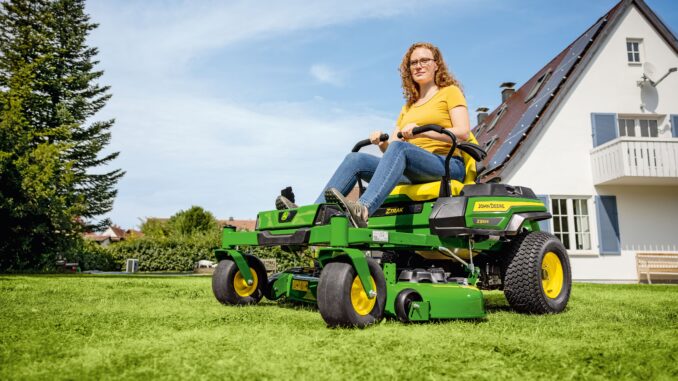
The John Deere 757 is a mid-frame ZTrak zero-turn mower built for fast mowing on larger residential properties and light commercial-style work, with a heavy-duty deck, hydrostatic drive, and service points that matter to owners who want to keep the machine reliable without overcomplicating repairs. This guide is written for USA and Canada homeowners and DIY users who need practical help with John Deere 757 repair, troubleshooting, maintenance, parts lookup, diagrams, and manuals in one place.
In plain English, the goal is to help owners start from the symptom they actually see, then work toward the likely cause, the right replacement part, and a realistic decision about whether the repair is a good DIY job or a better fit for a dealer. It also covers the service intervals, common wear items, and official manual sources that make ordering and maintaining the mower much easier.
John Deere 757 model overview
The John Deere 757 sits in Deere’s mid-frame ZTrak lineup and is best known as a larger, heavier zero-turn mower with hydrostatic transmissions, a 60-inch mower deck configuration in commonly referenced service guides, and a Kawasaki V-twin engine family listed in Deere materials for this machine line. In owner terms, that makes it a strong fit for big home lawns, estate mowing, and users who want faster trimming around obstacles than a traditional lawn tractor can provide.
The major systems that matter most for repair work are the engine and fuel system, the mower deck and blade drive, the hydrostatic transmission system, and the electrical/safety interlock system. Deere’s operator literature also gives dedicated service sections for engine, transmission, mower, electrical, brakes, and steering, which is useful because most real-world problems on the 757 fall into one of those groups.
Common John Deere 757 service parts owners frequently buy include the engine oil filter AM107423, fuel filter AM116304, spark plug M805853, hydraulic oil filters AM131054 and AM39653, hydraulic pump belts TCU12829 and TCU16026, auxiliary drive belts TCU13195 and TCU16907, 60-inch deck belt TCU13198, high-lift 60-inch blades TCU15881, medium-lift blades M128485, spindle assembly TCA13807, PTO clutch TCA12522 or TCA15800, battery TY25221, and idlers such as AM124925 and TCA13020.
John Deere 757 troubleshooting approach
The best way to diagnose a John Deere 757 is to start with the symptom, not the first part you think might be bad. On this mower, the main symptom groups are starting problems, rough running or stalling, poor cut quality, vibration or unusual noise, overheating or fluid leaks, drive and steering problems, and electrical or safety-switch faults.
That symptom-first approach matters because many 757 issues overlap. For example, a no-start condition can come from the battery, safety switches, PTO switch position, fuel delivery, or ignition components, while poor cutting can come from dull blades, deck setup, spindle wear, or belt problems rather than one obvious failed part.
Immediate John Deere 757 repair needs
Some problems on the John Deere 757 should not be ignored because they can become expensive quickly or create a safety issue. Stop using the mower immediately if blades are loose, a spindle or idler is noisy, hydraulic oil is leaking, the PTO clutch chatters heavily, the machine creeps in neutral, or a safety switch no longer works as intended.
4.1 John Deere 757 starting issues
When the 757 will not crank or cranks poorly, the practical concern is not only downtime but also repeated starter, battery, and wiring stress if the wrong cause is chased first. Deere specifically includes testing procedures for the PTO, park brake, neutral start, and seat switch systems because those interlocks are common no-start points on this model.
Common causes:
-
Weak or failed battery.
-
Dirty or loose battery terminals.
-
PTO switch left engaged.
-
Park brake, seat, or neutral start switch fault.
-
Plugged fuel filter or stale fuel.
-
Fouled spark plugs or ignition-related engine issues.
Basic owner checks:
-
Confirm the PTO is off, the park brake is set, and the control levers are in the correct start position.
-
Inspect battery cable tightness and corrosion before assuming the starter is bad.
-
Check fuel level, fuel freshness, and whether the fuel filter looks restricted.
-
Remove and inspect spark plugs if cranking is normal but the engine will not fire.
-
Test the safety system only with the machine parked safely, following Deere’s operator procedures.
4.2 John Deere 757 cut-quality problems
A poor cut on the 757 usually shows up as stragglers, scalping, uneven height, clumps, or a weak discharge pattern. That matters because owners often replace blades first when the real issue may be deck leveling, belt wear, spindle play, or anti-scalp wheel setup.
Common causes:
-
Dull, bent, or unbalanced blades.
-
Wrong blade style for conditions.
-
Deck out of level.
-
Worn or slipping deck belt.
-
Spindle bearing wear.
-
Heavy buildup under the deck.
Basic owner checks:
-
Clean the underside of the deck and discharge area with the engine off and key removed.
-
Inspect blades for edge wear, bends, and balance problems.
-
Verify deck level and anti-scalp wheel settings.
-
Check the belt and idlers for glazing, cracking, or wobble.
-
Match blade type to conditions, such as standard high-lift versus mulch setups where applicable.
4.3 Vibration and noise on the John Deere 757
New vibration should be treated as urgent because it can point to blade damage, spindle failure, pulley issues, or loose hardware. Continued mowing with strong vibration can damage bearings, belts, and the PTO clutch more quickly.
Common causes:
-
Bent blade or blade installed incorrectly.
-
Unbalanced blade after sharpening.
-
Failing spindle bearings.
-
Damaged idler pulley.
-
Loose deck or wheel hardware.
Basic owner checks:
-
Stop mowing and inspect blades before running the machine again.
-
Spin spindle and idler pulleys by hand with the engine off to feel for roughness.
-
Check that blade hardware is tight and the blade orientation is correct.
-
Inspect tires and wheel hardware if the vibration seems chassis-related rather than deck-related.
4.4 John Deere 757 overheating and leaks
Overheating on the 757 is often linked to blocked cooling fins, dirty screens, airflow restriction, or hydraulic cooling issues rather than a dramatic internal engine failure. Oil or hydraulic leaks also need attention quickly because low fluid levels can shorten engine or transmission life.
Common causes:
-
Packed grass around engine cooling fins or blower housing.
-
Dirty air intake screen or pump-belt compartment.
-
Low engine oil or hydraulic fluid.
-
Oil filter or hydraulic filter leak.
-
Failing hose, seal, or reservoir cap.
Basic owner checks:
-
Clean the cooling screen, blower fan area, and external cooling fins regularly.
-
Check engine oil and hydraulic oil level on level ground.
-
Inspect beneath the seat and under the engine for wet spots around filters and hoses.
-
Do not keep mowing if the machine is running hot or leaving fresh hydraulic oil on the frame or floor.
4.5 John Deere 757 transmission and drive problems
Drive complaints on the 757 usually show up as weak movement, one side tracking differently, neutral creep, or reduced hill performance. Those issues can come from hydraulic oil level, pump drive belt condition, linkage adjustment, or wear in hydro components.
Common causes:
-
Low hydraulic oil.
-
Restricted or old hydraulic filter.
-
Worn or slipping pump drive belt.
-
Motion control linkage out of adjustment.
-
Internal hydro pump or wheel motor wear.
Basic owner checks:
-
Check hydraulic oil level first, because it is fast and can rule out a simple cause.
-
Inspect the pump drive belt and tensioner area under the seat.
-
Test for neutral creep on a level surface and inspect linkage adjustment if wheels turn when they should not.
-
If one side remains weak after fluid and belt checks, dealer-level hydro diagnosis is usually the next step.
4.6 John Deere 757 electrical problems
Electrical faults on the 757 are often intermittent, which makes them frustrating for owners. The most common real-world trouble points are the battery, terminals, fuses, relays, PTO clutch circuit, ignition switch area, and the seat, brake, and neutral interlock system.
Common causes:
-
Corroded battery connections.
-
Blown fuse or weak relay.
-
Faulty PTO switch or clutch circuit issue.
-
Seat, brake, or neutral safety switch failure.
-
Damaged wiring near heat or vibration points.
Basic owner checks:
-
Start with the battery and main grounds before replacing switches.
-
Check fuses and swap in a known-good relay where applicable.
-
Use Deere’s safety test sequence for interlock diagnosis rather than bypassing switches.
-
If the PTO clutch is not engaging but voltage supply is inconsistent, wiring diagnosis may go beyond simple DIY work.
DIY or dealer for John Deere 757 repairs
The practical line on a John Deere 757 is this: routine service, blades, filters, spark plugs, deck cleaning, many belt jobs, and basic electrical checks are realistic DIY work for an owner with ordinary hand tools, while hydrostatic diagnosis, deeper engine work, repeated electrical tracing, and structural deck or spindle housing repairs are usually better handled by an experienced technician.
Good DIY jobs
-
Engine oil and oil filter service.
-
Air filter and fuel filter replacement.
-
Spark plug inspection and replacement.
-
Blade removal, sharpening, balancing, and replacement.
-
Deck cleaning, leveling, and anti-scalp adjustment.
-
Battery cleaning or replacement.
-
Basic belt inspection and some belt replacement work.
Advanced DIY or dealer jobs
-
Hydraulic oil and filter service if access, cleanliness, and bleeding procedures are not comfortable.
-
Motion control linkage adjustment and neutral creep correction.
-
PTO clutch diagnosis and replacement.
-
Spindle housing or pump replacement.
-
Carburetor adjustment or more involved engine troubleshooting.
-
Wiring fault tracing beyond fuses, relays, and visible connectors.
Skill level guide
-
Beginner: Battery service, air filter, fuel filter, spark plugs, deck cleaning, blade inspection.
-
Intermediate: Oil service, deck leveling, blade replacement, deck belt replacement, simple switch testing.
-
Advanced: Hydraulic service, linkage adjustment, PTO clutch work, spindle replacement, detailed electrical diagnosis.
John Deere 757 parts, OEM numbers, and ordering information
Before ordering John Deere 757 parts, gather the full model name, the Product Identification Number, the engine model and serial number, and the deck size or configuration installed on the mower. That matters because belts, blades, filters, clutches, and even some transmission-related parts can vary by serial range, deck version, or engine setup.
OEM parts are usually the safest choice for belts, PTO clutch components, spindle assemblies, safety switches, and other fit-sensitive or safety-critical parts because the 757 depends on correct belt length, pulley fit, and switch behavior. Aftermarket parts can be acceptable for items like air filters, some oil filters, batteries, and even blades when the cross-reference is exact and the seller clearly lists the John Deere 757 application and deck size.
John Deere 757 diagrams and manuals
For diagrams and manuals, the most useful sources are Deere’s operator literature, Deere’s quick reference guide area, Deere’s technical publications pages, and a Deere-focused parts seller with a model-specific 757 page. Using those together usually gives owners everything they need: maintenance intervals, part numbers, exploded parts lookup support, and service-category guidance.
-
John Deere operator manual / operator information page — useful for service intervals, safety-system tests, operating procedures, lubrication points, mower service steps, and troubleshooting categories.
-
John Deere Quick Reference Guides — useful for maintenance part numbers, service intervals, and fast model-based lookup through Deere’s official parts-and-service portal.
-
John Deere 757 maintenance guide at Green Farm Parts — useful for commonly purchased part numbers, belts, blades, filters, battery, clutch, and other wear items owners often need.
-
John Deere Technical Information Store — useful when an owner needs deeper factory publications or shop literature beyond the operator material.
How to find John Deere 757 serial and engine numbers
Those identification numbers matter because Deere parts support often depends on exact model and serial information, and engine parts can require the engine maker’s own model and serial tag rather than only the mower PIN. Taking photos of every tag before ordering parts is one of the simplest ways to avoid returns and incorrect belt, filter, or clutch orders.
-
Park the mower safely on level ground, remove the key, and let hot components cool before searching for tags.
-
Locate the John Deere product identification label on the machine frame in the area Deere identifies under product identification and record the full PIN exactly as shown.
-
Confirm the deck size and any attachment or deck-version details, especially if the machine has been modified or fitted with mulch components.
-
Find the engine model and serial number on the engine manufacturer label and photograph it clearly for filter, ignition, and engine-gasket parts lookup.
-
Keep the numbers in your phone or maintenance log so dealer and online orders can be cross-checked quickly.
Buying John Deere 757 parts online and in stores
The best buying strategy is to identify the likely failed part from the symptom, verify the OEM number from a Deere source or a trusted Deere-oriented parts page, and only then compare online or local pricing. That reduces the risk of ordering the wrong deck belt, clutch, or filter family for the machine.
-
Online: Best for comparing OEM numbers, checking part supersessions, and matching serial-sensitive items before ordering.
-
Dealer counter: Best for unusual, serial-number-specific, or high-cost parts like clutches, hydro components, and control-linkage-related items.
-
Retail stores: Fine for oil, grease, spark plugs, batteries, and some filters if packaging clearly confirms John Deere 757 compatibility.
Useful sources:
John Deere 757 fitting guide for common parts
These are the highest-value DIY jobs on a John Deere 757 because they address many of the most common no-start, poor-cut, and reliability complaints owners run into.
Replace the John Deere 757 fuel filter
A fresh fuel filter helps with hard starting, lean running, surging, and loss of power under load.
-
Park safely, shut off the engine, and clamp or manage fuel flow as needed.
-
Note the arrow direction on the old filter before removal.
-
Remove the old filter and inspect the fuel lines for cracking or looseness.
-
Install the new filter in the correct flow direction and secure the clamps.
-
Start the engine and check carefully for leaks before mowing.
Change the John Deere 757 air filter
Air filter service helps prevent rich running, black smoke, power loss, and excessive engine wear.
-
Open the air cleaner housing and remove the outer element carefully.
-
If fitted, remove and inspect the inner element as well.
-
Clean debris from the housing without forcing dirt into the intake.
-
Install the correct replacement elements and seal the housing properly.
-
Clean the intake screen area while access is open.
Replace John Deere 757 mower blades
New or properly sharpened blades improve cut quality, reduce stragglers, and lower deck vibration when balanced correctly.
-
Park safely, disable the engine, and block the deck for safe access.
-
Remove each blade and mark its position if you want to compare wear patterns.
-
Inspect for bends, cracks, and uneven wear; replace rather than reuse damaged blades.
-
If sharpening, balance each blade before installation.
-
Reinstall with the correct orientation and tighten hardware to specification from the manual.
Replace the John Deere 757 deck belt
A worn deck belt can cause weak blade speed, poor discharge, squealing, and inconsistent cutting under load.
-
Park safely and remove the deck belt shields or access covers as required.
-
Note the belt routing before removal, using a photo if needed.
-
Relieve tension at the idler as directed in the service procedure and remove the old belt.
-
Route the replacement belt correctly on all pulleys, making sure it sits fully in the grooves.
-
Refit shields, rotate the system by hand, and test at low throttle before full mowing speed.
Maintenance to prevent repeat John Deere 757 problems
Regular maintenance prevents most repeat failures on the 757 because the common breakdown points are predictable: dirty cooling areas, overdue filters, worn blades, neglected belts, low hydraulic oil, and safety-system issues that were missed until the mower would not start. Owners who keep the deck clean, cooling air clear, and service intervals current usually avoid many of the most frustrating in-season breakdowns.
Focus areas:
-
Starting reliability: Keep the battery clean, fuel fresh, filters clear, and interlock switches working properly.
-
Cut quality: Maintain sharp, balanced blades, correct deck level, clean underside surfaces, and good belt condition.
-
Fire and overheating prevention: Clean engine cooling fins, blower fan area, intake screens, and grass buildup around hot engine surfaces.
-
Drive performance: Monitor hydraulic oil level, hydraulic filter condition, and pump-belt wear.
-
Electrical reliability: Inspect terminals, fuses, and harness areas exposed to heat, vibration, and moisture.
John Deere 757 maintenance schedule
Deere’s operator material for the 757 includes an initial break-in service, then recurring service points at 25, 50, 100, 200, 300, 500, and 1000 hours, plus yearly checks. That official structure is the best base for a homeowner-friendly maintenance checklist because it reflects the actual systems Deere expects owners to inspect and service.
Daily or before each use
-
Check engine oil level.
-
Inspect the mower for loose hardware, damaged blades, and obvious leaks.
-
Clean visible grass and debris from the deck and engine air-intake areas.
-
Test the safety systems if operation seems abnormal.
After the first 5 hours
-
Complete the initial break-in checks listed in Deere’s service interval section.
-
Reinspect the machine for looseness, early leaks, and any abnormal belt or blade behavior.
Every 25 hours
-
Lubricate the grease points listed by Deere, including caster spindles and several deck-related pivots and supports.
-
Clean engine and cooling areas that collect chaff and grass.
Every 50 hours
-
Service the engine oil and filter according to the manual schedule.
-
Inspect air filter condition, belts, and blade hardware.
-
Check battery condition and cable cleanliness.
Every 100 hours
-
Inspect spark plugs and replace if worn or fouled.
-
Recheck transmission drive belt condition and mower belt condition.
-
Inspect fuel filter condition and fuel system cleanliness.
Every 200 hours
-
Change hydraulic oil and filter where required by the service schedule and operating conditions.
-
Inspect motion control linkage behavior and neutral return.
Every 300 to 1000 hours and yearly
-
Follow Deere’s listed interval items for deeper machine service, lubrication, and replacement checks.
-
Complete annual inspection of tires, controls, safety switches, wiring, deck condition, and storage prep items.
Seasonal checklist for the John Deere 757
-
Spring: Change overdue fluids and filters, sharpen blades, level the deck, and test safety switches before regular mowing starts.
-
Mid-season: Clean cooling fins, inspect belts and idlers, and watch for hydro leaks or weak drive response.
-
Fall or storage season: Stabilize fuel, clean the machine thoroughly, inspect the battery, and prepare the mower according to Deere storage guidance.
Repair, upgrade, or replace the John Deere 757?
For most owners, a John Deere 757 is worth repairing when the core machine is structurally sound and the problem is limited to normal wear parts, tune-up items, deck service, battery, clutch, belts, or manageable hydro-related maintenance. Upgrading or replacing makes more sense when several expensive systems are failing at once, the deck shell is badly damaged, or the machine needs major engine and hydro work at the same time.
Repair if…
-
The problem is a belt, blade, spindle, battery, filter, switch, or PTO-related issue with the rest of the machine in good condition.
-
The engine and hydro drives still perform well once routine service issues are corrected.
Upgrade if…
-
You need different blade performance, mulching setup, or collection capability rather than a completely different mower.
-
Your mowing workload has changed and accessory or deck-setup changes would solve the problem.
Replace if…
-
The mower has major hydro weakness, repeated electrical trouble, severe deck damage, and engine wear together.
-
Repair cost approaches the value of the machine and reliability is still uncertain.
John Deere 757 troubleshooting FAQ
1. Why will my John Deere 757 not start?
Most no-start complaints come down to the basics: battery condition, terminal corrosion, fuel delivery, spark, or the interlock system not seeing the correct PTO, brake, seat, or neutral conditions. Start by confirming the PTO is off and the park brake is engaged, then check battery connections, fuel filter condition, and spark plugs before moving deeper into wiring diagnosis.
2. Why does my John Deere 757 crank but not fire?
If the engine cranks normally but does not start, think fuel or ignition before anything else. A restricted fuel filter, stale fuel, fouled spark plugs, or an engine-side ignition problem are all more likely than a transmission issue in that situation.
3. Why does my John Deere 757 start and then stall?
A start-then-stall pattern often points to fuel restriction, dirty air filtration, or a problem that appears after the initial start phase. Check the fuel filter, air filter elements, and signs of contaminated or old fuel first because those are straightforward and common owner-level fixes.
4. Why is my John Deere 757 running rough?
Rough running usually means the engine is not getting clean air, clean fuel, or consistent ignition. Dirty air filters, fouled spark plugs, stale fuel, or cooling-related contamination around the engine are the first places to look.
5. Why does my John Deere 757 have low power?
Low power under mowing load often comes from restricted intake or fuel flow, worn blades creating poor airflow, or deck drag from buildup and belt problems. If the machine also runs hot, clean the engine cooling and intake areas immediately before assuming internal engine damage.
6. Why is my John Deere 757 cutting unevenly?
Uneven cutting is commonly caused by dull blades, an unlevel deck, wrong tire pressure, or spindle and belt wear. The fix is usually basic setup and inspection work rather than a major mechanical failure, so check deck level and blade condition first.
7. Why does my John Deere 757 leave strips of uncut grass?
Strips or stragglers usually mean blade edge quality or blade speed is not right. Dull blades, the wrong blade type, a slipping deck belt, or excess buildup under the deck can all reduce cut and discharge performance.
8. Why does my John Deere 757 scalp the lawn?
Scalping happens when deck height, deck level, anti-scalp wheel setting, or mowing speed does not match the terrain. On a zero-turn like the 757, uneven ground and sharp direction changes can make setup issues more obvious than they would on a slower tractor mower.
9. Why does my John Deere 757 clump grass?
Clumping is usually a mix of wet grass, too much growth at once, reduced airflow, or a deck that is dirty underneath. Clean the deck, sharpen the blades, and make sure the discharge path and belt-driven blade speed are not being compromised.
10. Why are my John Deere 757 blades not engaging?
If the blades will not engage, check the PTO switch circuit, electrical supply, clutch operation, and related safety interlocks. The PTO clutch itself is a known replacement item on 757 parts lists, but it is worth checking fuses, relays, and switch inputs before replacing it.
11. Why does my John Deere 757 deck belt keep coming off?
A belt that jumps off repeatedly usually points to pulley alignment, worn idlers, damaged belt guides, incorrect routing, or a stretched or wrong-size belt. Simply installing another belt without checking idler condition and routing often leads to the same failure again.
12. Why does my John Deere 757 deck belt squeal?
Squealing usually means slipping, especially at startup or under heavy grass load. Inspect the belt for glazing and check idler pulleys, tensioner action, and debris packed around the belt path.
13. Why is my John Deere 757 vibrating when mowing?
Mowing vibration is most often blade, spindle, or pulley related. Stop the machine and inspect for a bent blade, loose blade hardware, rough spindle bearings, or an idler that wobbles under hand rotation.
14. Why is my John Deere 757 shaking even with the PTO off?
If the vibration remains with the deck disengaged, think chassis, wheel, engine mounting, or engine-running quality rather than deck-only causes. Tire condition, wheel hardware, and engine smoothness are good first checks before chasing the mower deck.
15. Why is there a knocking noise from my John Deere 757 deck?
A knocking deck noise often means a loose blade, worn spindle, damaged pulley, or debris contacting rotating parts. Because those problems can escalate quickly, it is better to inspect immediately than keep mowing and risk damaging the deck housing or clutch.
16. Why does my John Deere 757 overheat?
Overheating usually comes from blocked cooling fins, packed chaff, restricted airflow, or low fluid levels rather than a sudden catastrophic failure. Deere specifically includes cleaning engine cooling fins, blower fan areas, and intake screens in the service material, which shows how important routine cleaning is on this model.
17. Why is my John Deere 757 leaking oil?
Engine oil leaks should be checked around the filter, drain area, seals, and any surfaces that were recently serviced. If the leak is hydraulic rather than engine oil, stop using the mower until you identify the source because low hydraulic oil can affect drive performance and component life.
18. Why is my John Deere 757 leaking hydraulic fluid?
Hydraulic leaks are commonly found around the filter, hoses, fittings, reservoir area, or aging seals. Even a modest leak matters because hydro systems depend on correct fluid level and cleanliness, so continuing to mow can turn a small repair into a more expensive one.
19. Why does my John Deere 757 move weakly uphill?
Weak uphill performance usually points to hydraulic oil level, filter restriction, pump-belt condition, or hydro wear. Start with the easy checks under the seat, because low oil or a slipping pump drive belt is far easier to correct than internal hydro damage.
20. Why does one side of my John Deere 757 drive slower?
When one side lags, check for neutral or linkage adjustment issues first, then move toward hydraulic and pump diagnosis. If oil level, belt condition, and visible linkage movement all check out, a dealer is often better equipped to confirm whether a hydro unit is wearing out.
21. Why does my John Deere 757 creep in neutral?
Neutral creep means the motion control linkage needs inspection and likely adjustment. Deere provides a specific linkage check and adjustment approach for this condition, and it should be done carefully on a level surface with the machine safely supported where required.
22. Why are the motion control levers on my John Deere 757 not tracking evenly?
Uneven lever tracking can come from linkage adjustment, damper behavior, or one side of the hydro system responding differently than the other. Start with external linkage inspection before assuming a costly transmission failure.
23. Why does my John Deere 757 battery keep going flat?
Repeated battery discharge usually means poor terminal condition, weak battery age-related capacity, charging issues, or a connection problem. Cleaning the terminals and confirming cable tightness is the first step because corrosion alone can cause repeated starting trouble.
24. Why does my John Deere 757 click but not crank?
A click with no crank often suggests insufficient battery power, bad cable connection, or starter-circuit voltage drop. Owners often find the problem at the battery and ground points before the starter itself is ever replaced.
25. Why is the PTO on my John Deere 757 not working?
A non-working PTO can be caused by the switch, relay, clutch, wiring, fuse, or a safety interlock preventing engagement. Diagnose the simple electrical supply side first because the clutch is a significant part and should not be replaced on guesswork alone.
26. Why does my John Deere 757 blow fuses?
Blown fuses usually mean a short, failing component, or wiring insulation damage near vibration or heat points. If the same fuse fails repeatedly, that is a sign to stop replacing fuses blindly and inspect the circuit more carefully.
27. Why does my John Deere 757 backfire?
Backfiring can come from fuel issues, ignition problems, or engine tune conditions that let unburned fuel ignite in the exhaust. Start with fresh fuel, correct spark plug condition, and air-filter inspection before considering deeper engine adjustments.
28. How often should I service my John Deere 757?
Use Deere’s official service structure as the baseline: initial break-in, then 25-, 50-, 100-, 200-, 300-, 500-, and 1000-hour intervals plus yearly service. Machines used in heavy dust, heat, or difficult conditions may need more frequent cleaning and inspection than the basic chart suggests.
29. What oil filter does a John Deere 757 use?
One commonly listed engine oil filter for the John Deere 757 is AM107423. Always cross-check that against the mower PIN and engine information before ordering because service parts can vary with engine specification and machine setup.
30. What spark plug does a John Deere 757 use?
A commonly listed spark plug in 757 parts references is M805853. It is still smart to confirm against the engine model and serial label because engine maker data is the safest final check for ignition parts.
31. What hydraulic filter fits a John Deere 757?
757 parts references commonly list AM131054 and AM39653 as hydraulic oil filter options. Because hydraulic service is expensive to get wrong, verify the exact application before purchase and use the correct fluid and cleanliness practices during replacement.
32. What deck belt fits a John Deere 757?
A commonly listed 60-inch deck belt reference for the John Deere 757 is TCU13198. Confirm the deck configuration and any serial-range differences before ordering because belt fit is critical on zero-turn deck performance.
33. Where can I find a John Deere 757 manual?
The easiest starting point is Deere’s operator information pages and quick reference guides, which cover service intervals, maintenance points, and basic troubleshooting. For deeper service literature, Deere’s Technical Information Store is the official place to check for additional publications.
34. Should I buy OEM or aftermarket John Deere 757 parts?
OEM is usually the safer call for belts, PTO clutch parts, spindle assemblies, safety switches, and other items where fit and performance matter a lot. Aftermarket can work well for some consumables like filters, batteries, and some blade options when the cross-reference is exact and the seller is reputable.
35. Is the John Deere 757 a good DIY mower to maintain?
Yes, within limits. The machine has strong official service support for routine maintenance and many owner-level repairs, but hydrostatic, advanced electrical, and deeper engine work still require more skill, cleaner working practices, and sometimes dealer tools or experience.