
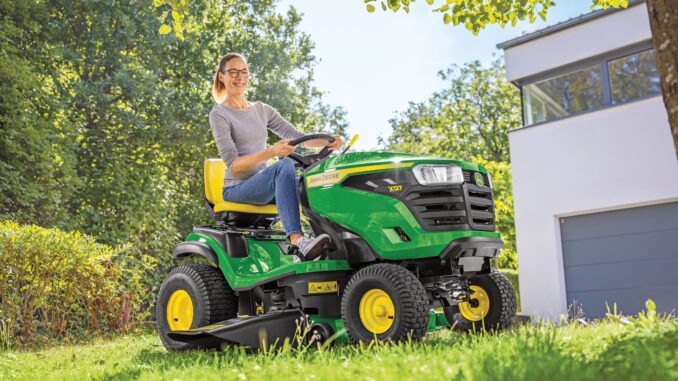
Introduction: John Deere x304 overview
The John Deere x304 is a 4‑wheel‑steer lawn tractor in the X300 Select Series range, designed for homeowners who need tighter turning and more precise control around trees, beds and obstacles on medium to large lawns. It typically pairs with a 42‑inch mower deck and a Kawasaki V‑twin engine, giving a good balance of cut quality, torque and comfort for residential use.
This guide is written for DIY owners in the USA and Canada who want practical help with John Deere x304 repair, troubleshooting and maintenance. You’ll find symptom‑based diagnostics, common service parts and numbers, links to parts diagrams and manuals, fitting steps for typical jobs, and an expanded FAQ focused on real‑world x304 problems.
General overview of the John Deere x304 lawn tractor
The John Deere x304 sits in the X300 Select Series lineup above the regular X300 models thanks to its 4‑wheel‑steer chassis, which allows a much tighter turning radius and better trimming around obstacles. It’s usually equipped with a twin‑cylinder Kawasaki engine, hydrostatic drive, and a mid‑mounted 42‑inch mower deck with optional mulching or bagging kits.
For day‑to‑day repair and maintenance on the John Deere x304, you mainly deal with four systems: the engine and fuel system, the mower deck and blades, the transmission and drive system, and the electrical/safety‑interlock system.
Typical owner‑purchased parts include engine oil filters (AM107423 or AM125424), fuel filter AM116304, spark plugs M805853, air filter elements MIU10998/MIU10999, mower deck drive belts (such as M138583, M153160, M172924), traction drive belt M144044, headlights, ignition switches (AM133596/AM133597) and batteries like TY25221 or TY25878.
Troubleshooting approach for the John Deere x304
On a John Deere x304, always begin troubleshooting from the symptom the owner sees, not from an assumed failed part. Start with what the tractor is doing (or not doing): will it crank, will it run, is the cut rough, is there vibration, is it losing drive, are safety lights or interlocks acting up.
Key symptom categories for a John Deere x304 include: starting issues (no crank or no start), running issues (stalling, surging, low power), cut quality problems (uneven cut, scalping, stragglers), vibration and noise (deck shake, rattles, whining), overheating or fluid leaks (engine overheating, oil seepage, fuel leaks), transmission and drive complaints (won’t move, weak on hills), and electrical or safety switch issues (cranks but won’t fire, PTO won’t engage, seat or brake switch faults). Work through each symptom step‑by‑step, ruling out simple causes before assuming a major failure.
Emergency and immediate repair needs on a John Deere x304
Some John Deere x304 problems need immediate attention because they can either make the tractor unsafe to operate or quickly damage expensive components. Anything involving fuel leaks, severe vibration, loud grinding noises, loss of steering or drive, or repeated safety‑interlock faults should be treated as “stop, inspect now” issues.
In this section we’ll break down urgent complaints by category: starting issues, cut‑quality problems, vibration and noise, overheating and leaks, transmission/drive problems, and electrical problems. For each, you’ll get common causes and a quick owner checklist to decide whether you can safely continue, attempt a DIY fix, or park the tractor until a dealer looks at it.
1. John Deere x304 starting issues
When a John Deere x304 has starting issues, you may see a no‑crank situation (turn the key and nothing happens) or a crank‑but‑no‑start, where the engine turns but will not fire. This matters because repeated cranking can drain the battery, overheat the starter and leave you stuck mid‑season.
Common causes:
-
Battery state of charge low or failed battery
-
Loose or corroded battery cables and grounds
-
Faulty seat, brake or PTO safety switch preventing start
-
Blown fuse or failed ignition switch
-
Stale fuel, clogged fuel filter, or carburetion issues (on carb models)
Basic owner checks:
-
Verify the parking brake is fully set, PTO switch is off and you’re seated properly.
-
Inspect battery terminals for corrosion; clean and tighten, then test voltage with a meter.
-
Check fuses in the fuse block and replace any blown units with correct ratings.
-
Listen for the fuel pump when turning the key to “run”; if silent, trace electrical supply.
-
If it cranks but won’t start, drain old fuel, replace fuel filter and try fresh gasoline before suspecting deeper engine problems.
2. John Deere x304 cut‑quality problems
On a John Deere x304, cut‑quality problems show up as uneven stripes, scalping, uncut strips, or a ragged, shredded look to the grass. Poor cut quality matters because it points to deck setup or blade condition issues that, left alone, can damage spindles, belts or the turf itself.
Common causes:
-
Dull, bent or wrong‑profile blades
-
Deck not level side‑to‑side or front‑to‑rear
-
Incorrect tire pressures affecting deck pitch
-
Clogged underside of deck restricting airflow
-
Wrong deck height or mowing too fast for conditions
Basic owner checks:
-
Park on level ground and measure deck height at each corner to confirm level.
-
Inflate tires to the recommended PSI, then recheck deck pitch.
-
Inspect blades for nicks, bends and wear; sharpen or replace with correct x304 42‑inch blades.
-
Clean the underside of the deck thoroughly, removing packed grass and debris.
-
Slow down mowing speed, raise the deck slightly and test on a small area to see if cut improves.
3. John Deere x304 vibration and noise
Excessive vibration or unusual noise on a John Deere x304 usually comes from the mower deck, but can also be from the engine, driveline or steering components. Heavy vibration matters because it can quickly damage spindles, bearings and belts, and in extreme cases cause hardware to loosen or fail.
Common causes:
-
Bent blade or mismatched blade set
-
Damaged spindle shaft or worn spindle bearings
-
Debris wrapped around blades or spindles
-
Worn idler pulleys or loose deck hardware
-
Engine misfire or loose exhaust components
Basic owner checks:
-
Stop immediately if vibration is severe; disengage PTO, shut off engine and inspect.
-
Remove blades and check for straightness; replace any suspect blades as a balanced set.
-
Spin each spindle by hand to feel for roughness, wobble or noise.
-
Check idler pulleys and belt routing for damage or misalignment.
-
Inspect engine mounts and exhaust for loose hardware or cracked components.
4. John Deere x304 overheating and leaks
Overheating or fluid leaks on a John Deere x304 can involve engine oil, fuel or coolant (for liquid‑cooled variants), and occasionally transmission oil seepage. These issues matter because a minor leak or airflow restriction can escalate into major engine or hydrostat damage.
Common causes:
-
Grass buildup around engine shrouds blocking airflow
-
Low engine oil level or wrong oil grade
-
Fuel line cracks, loose hose clamps or failing fuel cap seal
-
Overfilled or underfilled transmission sump, or leaking seals
Basic owner checks:
-
With the engine cool, remove cowling and clean debris from cooling fins and screens.
-
Check engine oil level and condition; top up or change using correct viscosity oil.
-
Inspect fuel lines, filter connections and the fuel cap for wetness or gasoline smell.
-
Wipe down suspected leak areas, then run the tractor briefly and recheck to pinpoint source.
-
If overheating persists despite cleaning and oil checks, treat as dealer priority to avoid engine damage.
5. John Deere x304 transmission and drive problems
Transmission and drive problems on a John Deere x304 include weak pull up hills, slow response when changing direction, or the tractor refusing to move at all. Because the hydrostatic transmission is a major cost item, persistent drive issues should be diagnosed and corrected quickly.
Common causes:
-
Parking brake partially engaged or misadjusted
-
Debris or corrosion around foot pedals causing sticking
-
Transmission fan damaged or cooling fins packed with debris
-
Low or contaminated transmission fluid
-
Internal hydrostat faults or drive belt slipping
Basic owner checks:
-
Confirm the parking brake fully releases and linkages move freely.
-
Clean around pedals and linkages, lubricating pivot points as needed.
-
Inspect the traction drive belt M144044 for wear, glazing or slippage.
-
Check for broken or missing transmission cooling fan blades.
-
If drive still feels weak after belt inspection and cleaning, plan a dealer fluid service or deeper hydrostat testing.
6. John Deere x304 electrical and safety switch problems
Electrical and safety‑switch issues on the John Deere x304 often show as intermittent starting, PTO not engaging, or the engine shutting down when you release the brake or seat. These problems matter because they can mimic more serious faults and frustrate owners, yet often come down to simple switch or wiring issues.
Common causes:
-
Failing seat, brake or PTO safety switches
-
Loose connectors under the seat or dash
-
Chafed wiring harness near the frame or deck lift
-
Weak battery or corroded grounds causing low voltage
-
Faulty ignition switch or key
Basic owner checks:
-
Gently wiggle harness connectors with the engine off to find loose plugs.
-
Inspect under‑seat wiring for pinched or rubbed‑through insulation.
-
Clean battery posts and grounds, then retest operation.
-
Temporarily hold switches firmly while starting to see if behavior changes.
-
Replace obviously faulty switches with OEM parts and avoid bypassing safety circuits.
DIY or dealer? Repair decision guide for the John Deere x304
For the John Deere x304, the typical DIY/dealer boundary falls between routine maintenance and bolt‑on repairs (DIY), versus internal engine, transmission or complex electrical diagnostics (dealer). Most owners can comfortably handle filters, belts, blades and simple switch replacements with basic tools and patience, but should be cautious about deep hydrostat work or advanced electrical troubleshooting.
Good DIY jobs on a John Deere x304:
-
Engine oil and filter changes
-
Air and fuel filter replacement
-
Spark plug replacement and basic tune‑up
-
Mower blades removal, sharpening and replacement
-
Deck drive belt replacement and deck leveling
-
Battery replacement and cleaning electrical connections
Advanced DIY or dealer jobs:
-
Internal engine repairs (valve adjustments, timing, major gasket work)
-
Hydrostatic transmission disassembly or internal repairs
-
Complex wiring harness repairs or intermittent electrical diagnostics
-
Steering system rebuilds and front axle work beyond basic parts swaps
-
Major frame repairs or welding
Skill level guide:
-
Beginner: Oil changes, air filter swaps, blade changes, battery replacement using clear instructions.
-
Intermediate: Deck belt replacement, drive belt inspection and change, minor safety switch replacement, basic carburetor cleaning.
-
Advanced: Engine internal work, hydraulic/hydrostatic repairs, full electrical diagnostics with multimeter and wiring diagrams.
John Deere x304 parts needed and OEM vs aftermarket
Before ordering parts for a John Deere x304, you should gather a few key identifiers so you can match exactly what the tractor needs. The full model name (John Deere x304), the Product Identification Number (PIN), the engine model and serial, and the mower deck size (most commonly 42‑inch) all influence belt length, filter variants and some electrical components.
For the John Deere x304, OEM parts are strongly recommended for belts, safety‑critical hardware and fit‑sensitive items like ignition switches, safety switches and deck spindles. Aftermarket parts can work well for certain filters, blades and batteries, as long as they are clearly cross‑referenced to John Deere x304 part numbers and verified against your PIN and deck size.
Key John Deere x304 service and repair parts
Where to find John Deere x304 parts diagrams and service manuals
For detailed parts diagrams and service information on the John Deere x304, you should rely on official John Deere resources plus one or two reputable aftermarket sites. The main operator’s manual and parts catalog show exploded diagrams for the engine, deck and driveline, along with maintenance schedules and safety information.
Useful links for John Deere x304 owners include:
-
John Deere X304 owner support page (operator’s manual, how‑to videos and maintenance tips) – for basic operation, daily checks and scheduling.
-
Online parts catalog/John Deere store model page for X304 – for interactive parts diagrams and ordering OEM components.
-
Technical manual TM2308 for X300 series (including x304) – for in‑depth diagnostics and repair procedures, aimed at advanced DIY and dealer technicians.
-
One strong Deere‑focused aftermarket parts site with a “John Deere X304 Lawn Tractor Maintenance Guide & Parts List” page – for quick cross‑referencing of common service parts and bundles.
How to locate John Deere x304 model, serial and engine numbers
Model and serial numbers matter on a John Deere x304 because Deere often uses serial‑number breaks to change belt part numbers, electrical components and some hardware. Using the wrong number can mean ordering a belt that almost fits or a switch that won’t plug into your harness.
To locate your numbers:
-
Find the tractor PIN plate, typically on the frame near the rear of the tractor under the seat or on the right‑hand side. Clean the plate and record the full PIN.
-
Note the model designation printed on the hood and on the same plate: “X304”.
-
Look for the mower deck model and serial sticker on the deck shell, usually on the left or right top surface near the discharge chute.
-
Locate the engine ID label on the engine itself (often on the blower housing or valve cover), and record both the model and serial number.
-
Keep these numbers in your maintenance log or taped inside the garage cabinet for quick reference when ordering parts.
Buying John Deere x304 parts online and in physical stores
A good buying strategy for John Deere x304 parts is to use your PIN and OEM part numbers to avoid fit mistakes. Online ordering works well for filters, belts, blades and switches, while more complex or PIN‑specific components are often easier to sort out at a dealer counter where staff can check serial breaks.
When buying John Deere x304 parts:
-
Online: Use official John Deere parts sites or reputable dealers that list OEM numbers; verify your model and PIN before adding to cart.
-
Dealer counter: Ideal for hydrostat parts, steering components and electrical modules; bring your PIN, deck size and old part if possible.
-
Retail stores: Fine for common consumables like oil, grease, and sometimes blades or batteries, but only buy items clearly labeled as compatible with John Deere X300/X304 models.
Useful URLs to bookmark include John Deere’s official “X304 Owner Support” page, the JDParts/online store X304 catalog, and a high‑quality aftermarket site with a dedicated “John Deere X304 Lawn Tractor Maintenance Guide & Parts List” page for quick cross‑references.
John Deere x304 fitting guide: common DIY jobs
To keep a John Deere x304 running well, there are a handful of high‑impact DIY jobs that most owners can learn to do safely. The jobs below focus on filters, plugs, blades and belts, which directly affect starting, running, cut quality and deck reliability. Always park on level ground, set the brake, remove the key and disconnect the battery negative before working near rotating parts.
Changing the engine oil and filter on a John Deere x304
This job improves engine life and starting reliability, especially if the tractor sees dusty or hot conditions.
-
Warm the engine for a few minutes to thin the oil, then shut off and remove the key.
-
Place a drain pan under the oil drain valve or plug, open it and let oil fully drain.
-
Remove the old oil filter (AM107423 or AM125424), clean the mounting surface and lightly oil the new filter’s gasket.
-
Install the new filter hand‑tight, then close the drain and refill with the recommended oil quantity and grade.
-
Start the engine, check for leaks, then stop and recheck the oil level, topping up if needed.
Replacing the air filter on a John Deere x304
Clean air is critical to prevent power loss and premature engine wear.
-
Lift the hood and open the air filter housing; note the orientation of the paper and foam elements.
-
Remove the foam pre‑cleaner and paper element (e.g. MIU10998/MIU10999), inspecting for dirt, damage and oil.
-
Clean the housing interior carefully, keeping debris out of the intake.
-
Install the new paper element and foam pre‑cleaner in the same orientation as the originals.
-
Close the housing securely and confirm it latches fully to prevent dust leaks.
Changing spark plugs on a John Deere x304
Fresh plugs help with smoother starting and more stable running, especially on older or hard‑starting machines.
-
Remove the hood if needed for access and pull the plug boots off each spark plug M805853.
-
Use a spark plug socket to remove each plug, noting how tight they were.
-
Check the new plugs for correct gap per the manual and lightly apply anti‑seize if recommended.
-
Thread new plugs in by hand, then snug with a torque wrench to spec.
-
Push the boots firmly back onto each plug until they click or feel fully seated.
Replacing mower blades on a John Deere x304
New or properly sharpened blades restore cut quality and reduce strain on the deck drive system.
-
Set the deck to its lowest position, remove the key, and block the deck securely.
-
Use a suitable socket to remove the blade bolts while holding the blade to prevent spin.
-
Inspect each blade for bends, cracks or excessive wear; replace in matched sets for balance.
-
Install new blades shaped and sized for the x304 42‑inch deck, ensuring the cutting edge faces the correct direction.
-
Tighten blade bolts to the specified torque and spin blades by hand to ensure they rotate freely without contacting the deck.
Replacing the mower deck belt on a John Deere x304
A fresh deck belt reduces slippage, improves cut consistency and prevents sudden deck failures.
-
Lower the deck, remove the key and relieve belt tension by moving the idler arm as described in the manual.
-
Remove the old belt from the PTO pulley, idlers and spindle pulleys, noting the routing path.
-
Compare the new belt (e.g. M138583/M153160/M172924) to the old one to confirm length and width.
-
Route the new belt exactly as shown in the deck diagram, making sure it sits fully in each pulley groove.
-
Re‑apply tension via the idler, then test engagement at idle with the PTO; listen for normal operation and watch for smooth belt tracking.
Maintenance to prevent John Deere x304 problems
Regular maintenance on a John Deere x304 prevents most common failures, especially starting issues, cut‑quality complaints and belt or bearing problems. The goal is to keep filters, fluids, belts and blades in good condition so heavier repairs never become necessary.
Key maintenance focus areas:
-
Starting reliability: Maintain battery charge, clean terminals, and replace fuel and air filters on schedule to avoid hard starts and stalling.
-
Cut quality: Keep blades sharp and balanced, set deck level correctly, and clear deck buildup regularly to protect airflow and discharge.
-
Fire/overheating prevention: Clean engine cooling fins, shrouds and screens, and inspect for fuel/oil leaks each season.
-
Drive performance: Inspect traction drive belt and transmission cooling fan, clean debris from the hydrostat area, and monitor drive feel on hills.
-
Electrical reliability: Periodically inspect connectors, harness routing and safety switches to catch chafing or intermittent faults early.
John Deere x304 maintenance schedule and year‑round checklist
Use the official John Deere x304 maintenance chart as your baseline, then adjust frequency upward if you mow in dusty, hot or demanding conditions. Think in terms of “before each use”, fixed hour intervals, and seasonal checks tied to spring start‑up and end‑of‑season storage.
Daily / before each use
-
Check engine oil level and top up if needed.
-
Walk around the tractor to look for obvious leaks, loose hardware or damaged components.
-
Verify tire pressures and visually inspect the mower deck and belt.
-
Confirm safety interlocks (seat, PTO, brake) behave normally before mowing.
After 8 hours of operation
-
Inspect and clean grass and debris from the engine cooling fins and screens.
-
Clean the mower deck top and underside to maintain airflow.
-
Grease key steering and deck lift points if recommended by the lubrication chart.
Every 25 hours on a John Deere x304
-
Change engine oil if operating in heavy service conditions or as otherwise specified.
-
Inspect the air filter and clean or replace the foam pre‑cleaner if dirty.
-
Check battery terminals and charging voltage.
-
Inspect the traction drive belt and deck belts for glazing and cracks.
Every 50 hours or yearly
-
Change engine oil and filter using approved products.
-
Replace fuel filter AM116304 to maintain clean fuel flow.
-
Remove, inspect and sharpen or replace blades.
-
Grease all recommended chassis and deck zerks per the lubrication chart.
Every 200 hours (or multi‑year intervals)
-
Replace spark plugs M805853 as a set.
-
Replace air filter paper elements and foam pre‑cleaners.
-
Consider hydrostatic transmission service if specified for your x304 configuration.
Seasonal checklist for a John Deere x304
Spring / preseason:
-
Perform a full service: oil/filter, fuel filter, air filter inspection, blades, belts and grease.
-
Check battery condition after storage, charging or replacing as needed.
-
Test safety switches and PTO operation before the first real mowing session.
Mid‑season:
-
Recheck blade sharpness and deck level, especially after hitting obstacles.
-
Clean cooling and deck areas thoroughly and inspect for belt wear.
-
Monitor drive feel; address any new noises or weak drive promptly.
Fall / end of season:
-
Clean the tractor thoroughly, including the deck underside, and touch up rust if needed.
-
Stabilize or drain fuel, change oil if due, and store with battery maintained.
-
Park the tractor in a dry, covered area and disconnect the battery if long storage is expected.
John Deere x304: repair, upgrade, or replace?
For a John Deere x304, the general rule is to repair and maintain as long as the frame, engine and hydrostatic transmission are fundamentally sound. Upgrades become attractive when you want better cut quality, comfort or attachments, while replacement makes sense if the tractor has extensive structural or powertrain damage that would cost more than a good used or new unit.
Repair a John Deere x304 if:
-
Problems are limited to belts, blades, filters, switches or moderate steering/deck components.
-
The engine still starts and runs well with normal compression and no major smoke.
-
The hydrostatic drive works reliably once belts and cooling issues are addressed.
Upgrade a John Deere x304 if:
-
You want mulching or bagging kits for the 42‑inch deck to improve lawn finish.
-
You need better lighting, seat comfort or accessories like rear carts or snow blades.
-
You want to move to higher‑quality blades or maintenance kits while keeping the same tractor.
Replace a John Deere x304 if:
-
The frame is cracked or badly rusted in structural areas.
-
The engine or hydrostat requires major rebuilds that exceed the tractor’s value.
-
You need a substantially larger deck, more horsepower or different capabilities that the x304 cannot economically provide.
Expanded troubleshooting FAQ – John Deere x304
1. Why will my John Deere x304 not start?
If your John Deere x304 will not start, begin with the simple checks: make sure the PTO is off, the brake is set and you are seated, as safety switches must be satisfied before the tractor will crank. Then check battery voltage and cable condition, since a weak or corroded battery is the most common cause. If the engine cranks but doesn’t fire, suspect stale fuel, a clogged fuel filter or a dirty carburetor on older units. Replacing the fuel filter, refreshing the fuel and inspecting the spark plugs are realistic DIY steps before you consider dealer diagnostics.
2. Why does my John Deere x304 only click when I turn the key?
A clicking sound with no crank on a John Deere x304 usually indicates a low battery or poor connection between the battery and starter solenoid. Check the battery with a meter and clean the terminals and ground strap to the frame, tightening bolts firmly. If voltage is good and connections are clean, the starter solenoid itself or ignition switch may be failing. Those parts are replaceable as DIY jobs if you match OEM numbers and follow basic safety precautions.
3. Why does my John Deere x304 crank but not fire?
When a John Deere x304 cranks but does not fire, it typically lacks either fuel or spark. Make sure the fuel shut‑off is open and listen for the fuel pump; if silent, check fuses and wiring. Inspect the fuel filter for blockage and the spark plugs for fouling or damage, replacing them if they look worn. If you have spark and fresh fuel yet no start, deeper carburetor or ignition module issues may require dealer‑level testing with the technical manual.
4. Why does my John Deere x304 start and then stall?
On a John Deere x304 that starts and stalls, common causes include restricted fuel flow, water in the fuel, or a blocked air filter. Replace the fuel filter and try fresh gasoline from a known good source, and inspect the air filter housing for heavy dirt. Also look for a partially closing fuel cap vent, which can cause vacuum in the tank and starve the engine; try running briefly with the cap loosened as a test. Persistent stalling after basic checks points to carburetor or ignition issues where a dealer may need to step in.
5. Why is my John Deere x304 losing power on hills?
If your John Deere x304 loses power on hills, first determine if the issue is engine‑related or transmission‑related. Clean the air filter, check fuel quality and ensure the engine reaches full RPM, as low throttle or clogged filters can mimic drive weakness. Then inspect the traction drive belt for wear or slippage and make sure the transmission cooling fan is intact and debris‑free. If, after belt and cooling checks, the tractor still struggles badly on slopes, the hydrostatic unit may need professional evaluation.
6. Why does my John Deere x304 mow unevenly?
Uneven mowing with a John Deere x304 usually comes from a deck that is out of level, blades that are dull or bent, or incorrect tire pressures. Check tire pressures first, then measure deck height at each corner and adjust per the manual. Remove and inspect blades, replacing any that are bent or badly worn, and ensure they are installed in matched sets. Cleaning the deck underside and slowing mowing speed can also help straighten out stripes and reduce scalping.
7. Why is my John Deere x304 leaving uncut strips?
Uncut strips often indicate missing blade overlap or misrouted deck belt on a John Deere x304. Confirm that both blades are correct for the 42‑inch deck and are installed in the right orientation. Check the deck belt routing against the diagram to ensure all pulleys are turning as they should; a misrouted belt can leave one blade under‑driven. Also verify that the deck is set to the recommended height for your grass; mowing too high or too fast can exaggerate striping.
8. Why does my John Deere x304 scalp the lawn?
Scalping with a John Deere x304 comes from deck height set too low, uneven ground or incorrect deck level/pitch. Raise the deck one notch and test on the worst area of your lawn to see if scalping reduces. Make sure deck wheels (gauge wheels) are properly adjusted and contacting the ground at the right times, not carrying weight constantly. If scalping persists, reevaluate deck level, and consider adjusting mowing pattern to avoid steep dips.
9. Why is my John Deere x304 vibrating badly when mowing?
Bad vibration while mowing usually points to blade or spindle issues on a John Deere x304. Stop immediately, disengage PTO and inspect blades for bends or missing chunks; replace suspect blades as a full set. Spin spindles by hand to feel for roughness or wobble, and check idler pulleys and belt routing. If vibration continues even with new blades and good belt routing, spindle bearings or deck hardware may need replacement or tightening.
10. Why does my John Deere x304 make a grinding noise from the deck?
Grinding noises from the deck on a John Deere x304 suggest blade contact with the deck shell, a failed bearing, or debris jammed around the spindles. With the engine off, turn blades manually and listen for grinding or scraping, noting any points of contact. Clear debris and check for bent deck components that might draw the shell into the blade path. If a spindle feels loose or grinds when spun, replacement of the spindle assembly is likely required.
11. Why is my John Deere x304 deck belt slipping or smoking?
A slipping or smoking deck belt on a John Deere x304 means the belt is either worn, improperly tensioned, or being overloaded. Inspect the belt for glazing, cracks and length changes; replace if worn and ensure it’s the correct OEM part. Check idler springs and pulleys for proper tension and alignment, and confirm you’re not mowing excessively tall, wet grass at full speed. Once the new belt is fitted and tensioned correctly, monitor operation and back off immediately if smoke returns.
12. Why does my John Deere x304 throw belts frequently?
Frequent belt throw‑off on a John Deere x304 is usually due to misaligned pulleys, damaged belt guides or incorrect routing. Compare belt path with the parts diagram and re‑route as needed. Inspect pulleys for wobble, broken flanges or missing hardware, and ensure guides are present and correctly spaced. Using the wrong belt length or width can also cause throw‑off, so always match the belt number to your deck serial and x304 configuration.
13. Why will the PTO on my John Deere x304 not engage?
When the PTO will not engage on a John Deere x304, safety circuits or electrical components may be blocking operation. Confirm the seat and brake switches are functioning and the parking brake is released. Check the PTO switch itself for wear or melted contacts, and verify fuses and wiring to the PTO clutch. If the clutch receives power but does not click or engage, the clutch may need replacement; this is an intermediate DIY job if you follow the manual and use OEM parts.
14. Why does my John Deere x304 shut off when I release the brake?
If your John Deere x304 shuts off when you release the brake, the safety‑interlock system is likely seeing an unsafe condition, often related to seat or brake switches. Inspect the brake switch linkage and adjustment to ensure it changes state correctly when the pedal is pressed and released. Check the seat switch wiring for damage and confirm the plug is firmly connected. If the switches are functioning mechanically but the engine still dies, trace wiring continuity or consult a dealer for more advanced testing.
15. Why does the battery on my John Deere x304 keep going flat?
A battery that keeps going flat on a John Deere x304 is caused either by a failing battery, parasitic draw, or poor charging output from the engine. Test battery voltage before and after charging, and verify alternator output while the engine runs using a multimeter. Clean terminals thoroughly and confirm grounds are secure to the frame. If charge voltage is low despite good wiring, charging components may need dealer replacement; if draw persists with the engine off, a wiring or switch fault could be draining the battery.
16. Why are my John Deere x304 headlights not working?
Headlights on a John Deere x304 may fail due to blown bulbs, a bad headlight switch, or wiring issues in the hood harness. Start by checking the bulbs and replacing them with correct units such as AD2062R. Examine the headlight switch and fuse, and verify power at the bulb sockets if you have a meter. If the harness is damaged where it passes through the hood or frame, repairing or replacing the section is necessary to restore reliable lighting.
17. Why does my John Deere x304 feel loose in the steering?
Loose steering on a John Deere x304 can result from worn tie rods, steering bushings or front axle components. Inspect the steering linkage while wiggling the steering wheel to see where movement is lost. Tighten any loose hardware and replace worn bushings or rods as needed, using OEM parts for proper fit. Because the x304 is a 4‑wheel‑steer tractor, steering geometry is more complex; if looseness persists after obvious parts are replaced, a dealer inspection may be appropriate.
18. Why does my John Deere x304 pull to one side?
Pulling to one side with a John Deere x304 often relates to uneven tire pressures, deck or steering misalignment, or drag in one wheel. Check and adjust tire pressures to match specifications, then test on flat ground. Inspect steering linkage and front axle for bent components that could steer one wheel differently. If pull continues and you notice drag or noise from one rear wheel, a brake or bearing issue may need professional attention.
19. Why does my John Deere x304 hydrostatic drive feel jerky?
Jerky hydrostatic drive on a John Deere x304 may come from air in the system, worn linkage or debris interfering with pedal movement. With the engine running and wheels off the ground, cycle the transmission from forward to reverse several times to purge air per the manual. Clean and lubricate pedal linkages to ensure smooth movement. If jerky behavior continues and is accompanied by noise or heat, the hydrostat itself may require dealer‑level diagnosis.
20. Why is my John Deere x304 hard to shift or change direction?
Hard direction changes on a John Deere x304 often trace back to dirty or sticking foot controls and linkages. Clean around the pedals, pivot points and link rods, removing built‑up dirt or grass. Lubricate moving parts lightly and check for bent linkage pieces. If controls are free but the tractor still hesitates or resists direction changes, the transmission control internals may be wearing and should be checked professionally.
21. Why is my John Deere x304 burning oil?
Oil burning in a John Deere x304 is signaled by blue smoke from the exhaust, especially under load or after idling. First make sure oil level isn’t overfilled, as that can cause oil to be pushed into the combustion chamber. Replace the air filter to reduce draw of dusty air and check for crankcase breather issues. Persistent heavy smoking suggests engine wear, such as worn rings or valve guides, where dealer assessment and possibly overhaul may be required.
22. Why does my John Deere x304 smell strongly of fuel?
A strong fuel smell around a John Deere x304 points to leaks from fuel lines, filter connections or the tank cap. Inspect all visible fuel hoses and clamps for wetness, cracks or looseness. Check the fuel filter and its fittings for seepage, and examine the fuel cap for damaged seals. Any fuel leak should be repaired immediately, and parts like fuel lines, filter and cap are straightforward DIY replacements if you match the correct numbers.
23. Why does my John Deere x304 keep blowing fuses?
Fuse blowing on a John Deere x304 indicates a short circuit or component drawing more current than designed. Identify which fuse is blowing (e.g., lights, PTO, or ignition), then inspect the associated wiring for chafing, crushed sections or aftermarket modifications. Repair or replace damaged wires and secure harnesses away from moving parts. If the fuse still blows after visible repairs, a component such as a PTO clutch, light or switch may be internally shorting and should be replaced.
24. Why does my John Deere x304 PTO clutch get hot?
A hot PTO clutch on a John Deere x304 is often a sign of slipping, overloading or internal wear. Make sure the deck belt is in good condition and correctly tensioned so the clutch doesn’t have to work against excessive drag. Verify you’re mowing at proper engine speed and not attempting to cut overly tall or wet grass at low RPM. If the clutch continues to overheat despite correct belt and operating practices, replacement of the clutch may be necessary.
25. Why is my John Deere x304 deck not lifting properly?
If the deck on your John Deere x304 doesn’t lift properly, check the lift linkage, adjustment rods and any springs for bends, breakage or disconnection. Look for grass buildup or corrosion around pivot points that may be binding movement. Lubricate the lift mechanism and re‑adjust deck height per the manual. Should lifting still feel weak or uneven, some owners find that worn bushings or bent lift arms need replacement to restore full travel.
26. Why does my John Deere x304 seat safety switch keep cutting the engine?
A seat safety switch cutting the engine on a John Deere x304 can result from a sensitive or failing switch or from owners leaning forward enough to unweight the seat. Inspect the seat switch and its mounting to ensure it is secure and aligned properly. Replace the switch if it shows signs of intermittent behavior, using the correct OEM part. Avoid defeating this safety device; instead, adjust your operating posture or seat position to maintain pressure on the switch while mowing.
27. Why are my John Deere x304 blades not engaging?
If the blades on a John Deere x304 don’t engage, start by confirming the PTO switch is on and the engine is at operating speed. Check the deck belt routing and tension, as a loose or broken belt will prevent blade rotation. Inspect wiring and fuses to the PTO clutch, and listen for the clutch click when the switch is turned on. No click suggests either no power to the clutch or a failed clutch coil; tracing voltage and, if needed, replacing the clutch are the next steps.
28. Why does my John Deere x304 bounce or ride rough?
A rough ride on a John Deere x304 often comes from incorrect tire pressure, worn front suspension components or operator seat issues. Set tire pressures to Deere’s recommended values and test again on your usual terrain. Inspect the front axle, pivot and steering components for wear or looseness. If the seat suspension is basic, consider adjustments or an upgraded seat kit to improve comfort on uneven lawns.
29. Why does my John Deere x304 struggle to mow in wet grass?
The John Deere x304 will struggle in wet grass if blades are dull, deck is clogged, or ground speed is too high for conditions. Sharpen or replace blades so they cut rather than tear. Clean the underside of the deck to restore airflow and discharge performance. Slow your mowing pace and raise deck height slightly when the lawn is wet, or wait until grass dries for best results and reduced belt strain.
30. What maintenance should I do before storing my John Deere x304 for winter?
Before winter storage, a John Deere x304 benefits from a simple end‑of‑season routine. Clean the tractor thoroughly, including deck underside, and change engine oil if due to remove contaminants before storage. Add fuel stabilizer to fresh fuel or drain the tank, then run the engine briefly to circulate treated fuel. Charge the battery fully and either disconnect it or use a maintainer, and store the tractor in a dry, covered location. This reduces the chance of corrosion, fuel‑system issues and dead batteries come spring.
31. How often should I change oil on my John Deere x304?
Oil change intervals on a John Deere x304 follow the maintenance chart, which typically calls for an initial break‑in change, then regular changes every set hours (often 50) or yearly, whichever comes first. Owners mowing in dusty, hot or heavy conditions may benefit from shorter intervals, such as every 25 hours. Always use the recommended oil grade and capacity listed in the operator’s manual for your specific engine variant.
32. How often should I replace the air filter on my John Deere x304?
The air filter on a John Deere x304 should be inspected regularly and replaced at the hour interval specified in the maintenance guide, often around 100 hours in normal conditions. In dusty environments, check more frequently and replace sooner if the element looks heavily loaded or damaged. Remember to service both the paper element and foam pre‑cleaner, as a clogged pre‑cleaner can restrict airflow just as much as a dirty main filter.
33. What blades are correct for my John Deere x304?
Correct blades for a John Deere x304 depend on the deck type and width, commonly the 42‑inch deck with side discharge, mulching or bagging kits. Use blades specified for your deck model and serial, typically listed in the parts catalog and on maintenance guide pages. Avoid generic blades that “fit most 42‑inch decks” unless they explicitly list compatibility with X300/X304 models. Using the right blade profile and length is key to good cut quality and proper overlap.
34. Should I use OEM belts on my John Deere x304?
Yes, OEM belts are strongly recommended on a John Deere x304, especially for the mower deck and traction drive. John Deere designs belt length, angle and material to match pulley geometry and engagement load, so off‑size aftermarket belts can slip, throw or wear prematurely. If you do consider aftermarket belts, choose high‑quality replacements that cross‑reference directly to your OEM belt numbers and confirm fit before mowing heavily.
35. Is the John Deere x304 still worth repairing if it’s older?
An older John Deere x304 is often still worth repairing if the engine and hydrostatic transmission remain fundamentally healthy. The X300 series tractors are known for robust construction, and many issues involve consumables like belts, blades, filters, bearings and switches. Evaluate repair costs against the tractor’s overall condition and your needs; if the frame, steering and powertrain are solid, investing in maintenance and a few upgrades can be far cheaper than buying a new machine.