
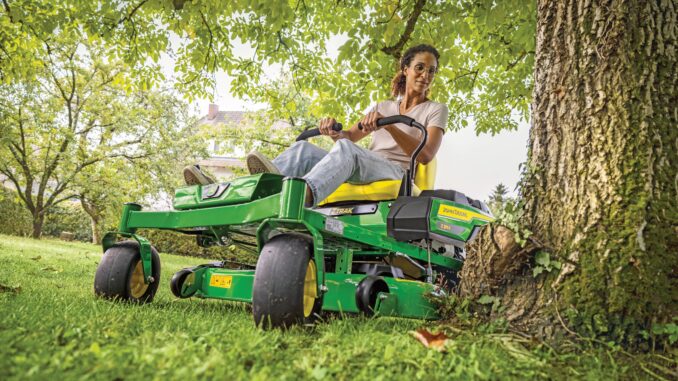
The John Deere Z225 is a residential zero-turn mower built for homeowners who want faster mowing and tighter maneuvering than a traditional lawn tractor. Deere’s operator literature groups it with the EZtrak residential zero-turn range, and the machine uses the core systems owners care about most: a gasoline engine, mower deck, hydrostatic transaxle drive, electrical starting system, and seat/brake/blade safety interlocks.
For most owners in the USA and Canada, the John Deere Z225 fits best on typical home lawns where speed, trimming around trees, and easy weekly mowing matter more than heavy towing or rough-ground work. This guide focuses on the problems owners actually see first—hard starting, poor running, weak cutting, vibration, belt issues, drive problems, and maintenance questions—while also showing where DIY stops and dealer work makes more sense.
And See:
John Deere Z225 model overview
The John Deere Z225 sits in Deere’s residential EZtrak zero-turn lineup, not in the larger commercial ZTrak family. That matters because repair expectations are different: the Z225 is very owner-serviceable for routine maintenance, but it is still a light residential mower with model-specific deck, belt, and safety-switch parts.
The main systems on the John Deere Z225 are straightforward once you break them down by function:
-
Engine and fuel system: gasoline V-twin engine, air filter, spark plugs, fuel filter, crankcase oil, and cooling fins/screens.
-
Mower system: 42-inch deck on common North American configurations, spindle assemblies, two blades, deck belt, gauge wheels, and discharge components.
-
Drive system: dual transaxle/hydrostatic drive arrangement with motion-control levers and a transaxle drive belt.
-
Electrical system: battery, ignition switch, charging circuit, starter circuit, and operator-presence/safety interlock switches.
Common service parts owners regularly buy for the John Deere Z225 include the fuel filter AM116304, air filter kit GY20573, spark plug M78543, blade kit GY20850, mower belt M154294, transaxle drive belt M155343, ignition switch TCA15075, and battery TY25878.
John Deere Z225 troubleshooting approach
The best way to diagnose a John Deere Z225 is to begin with the symptom, not the first part that seems suspicious. A no-start mower, a rough-running mower, and a mower that cuts badly can all share some overlapping causes, but the fastest diagnosis comes from matching the complaint to the system most likely involved.
The main symptom groups on the John Deere Z225 are:
-
Starting issues, including no crank, slow crank, or cranks-but-won’t-start.
-
Running issues, including surging, stalling, smoking, or loss of power under load.
-
Cut-quality problems, including uneven cut, scalping, clumping, and poor discharge.
-
Vibration and noise, often linked to blades, spindle parts, pulleys, or debris buildup.
-
Overheating, odor, or leak complaints, especially around the engine, muffler, belts, or fuel system.
-
Transmission and drive problems, such as weak ground speed, one-side tracking issues, or poor hill response.
-
Electrical and safety-switch issues, including intermittent cranking or blade-engagement faults.
John Deere Z225 emergency repairs
Some John Deere Z225 problems need attention immediately because they create a direct safety hazard or can quickly damage more expensive parts. If the mower is throwing objects, vibrating heavily, leaking fuel, overheating, or failing to stop blades properly after disengagement, it should not be used until the fault is corrected.
John Deere Z225 starting issues
Starting trouble on the John Deere Z225 usually shows up as no crank, slow crank, or cranking without firing. These problems matter because repeated low-voltage cranking, poor connections, or fuel-delivery faults can leave you stranded and can also hide a failing safety switch or ignition component.
Common causes:
-
Weak or failing battery.
-
Dirty, loose, or corroded battery terminals.
-
Bad ignition switch.
-
Safety interlock issue at the seat, brake, or control levers.
-
Fouled spark plugs or restricted air filter.
-
Fuel filter restriction or stale fuel.
Basic checks:
-
Confirm the park brake is locked, PTO is off, and control levers are in the start/shutdown position.
-
Check battery terminals for corrosion and verify the battery is charged.
-
Inspect the air filter, spark plugs, and fuel filter if the engine cranks but will not fire.
-
If cranking is intermittent, inspect the ignition switch and safety-switch operation before replacing starter parts.
John Deere Z225 running issues
A John Deere Z225 that starts but runs rough, surges, bogs in grass, or stalls under load usually points to fuel, air, ignition, or maintenance neglect. This matters because continued operation with a lean condition, dirty cooling surfaces, or ignored tune-up items can increase heat and shorten engine life.
Common causes:
-
Dirty air filter.
-
Worn or fouled spark plugs.
-
Restricted fuel filter or stale fuel.
-
Debris blocking engine cooling areas.
-
Heavy wet grass overloading the deck.
Basic checks:
-
Inspect and replace overdue air filter, spark plugs, and fuel filter items first.
-
Clean grass and debris from engine screens, muffler area, and cooling surfaces.
-
Test under lighter mowing load to separate an engine issue from a deck-overload problem.
-
If the engine still surges or loses power, move to carburetion or governor diagnosis, which is often better handled by an experienced technician.
John Deere Z225 cut-quality problems
Poor cut quality on the John Deere Z225 usually shows up as ragged grass tips, strips of uncut grass, scalping, clumps, or poor side discharge. These issues matter because owners often blame the deck belt first when the real cause is usually blade condition, deck level, mowing speed, or grass buildup under the deck.
Common causes:
-
Dull, bent, or incorrectly installed blades.
-
Uneven deck level.
-
Worn mower belt.
-
Packed grass under the deck shell.
-
Cutting too much height in one pass or mowing wet grass.
Basic checks:
-
Inspect both blades for sharpness, bends, and correct orientation.
-
Clean the underside and top of the deck before adjusting anything.
-
Check deck level with a leveling gauge if available.
-
Replace the mower belt if it is glazed, stretched, cracked, or slipping under load.
John Deere Z225 vibration and noise
Severe vibration on a John Deere Z225 is not something to mow through. It can indicate blade damage, spindle trouble, loose hardware, or debris wrapped around rotating parts, and continued use can damage bearings, belts, and deck components.
Common causes:
-
Bent or unbalanced blade set.
-
Loose blade hardware.
-
Worn spindle bearings or pulley issues.
-
Debris packed around pulleys or spindle shafts.
Basic checks:
-
Shut the machine down and inspect blade condition before restarting.
-
Check blade mounting hardware and visible spindle play.
-
Remove wrapped grass, wire, or twine from deck pulleys and shafts.
-
If vibration remains after blade service, inspect spindle and pulley assemblies more deeply or hand the job to a dealer.
John Deere Z225 overheating and leaks
Heat, burning smell, smoke, fuel odor, or visible leakage on a John Deere Z225 should be taken seriously because the operator manual specifically warns about fire risk from grass and debris accumulation around hot and moving parts. Fuel leaks, oil leaks onto hot engine areas, and restricted cooling airflow can quickly turn into a more expensive repair or a safety issue.
Common causes:
-
Grass and debris around muffler, exhaust, deck top, or engine screens.
-
Engine oil leakage.
-
Fuel seepage at lines, filter, or cap area.
-
Overdue maintenance causing hotter running.
Basic checks:
-
Let the machine cool fully, then inspect and clean the engine, muffler, deck top, and transmission areas.
-
Look for wet spots around fuel lines, filter, cap, and crankcase areas.
-
Correct any active fuel leak before operating again.
-
If the source is not obvious or oil is reaching hot exhaust parts, stop and arrange professional repair.
John Deere Z225 transmission and drive problems
A John Deere Z225 with weak drive, poor tracking, or reduced hill performance may have a belt problem, transaxle issue, or control linkage concern. This matters because owners sometimes continue mowing with slipping drive components, which can worsen belt wear and hide a more expensive hydro issue.
Common causes:
-
Worn transaxle drive belt M155343.
-
Linkage adjustment issue.
-
Air or wear inside the hydro/transaxle system.
-
Tire pressure or traction difference side to side.
Basic checks:
-
Inspect the transaxle drive belt for wear, glazing, cracking, or obvious slack.
-
Compare tire condition and pressure side to side.
-
Check for obvious linkage looseness or binding at the control levers.
-
If one side remains weak or erratic, dealer diagnosis is usually smarter than guessing at hydro components.
John Deere Z225 electrical problems
Electrical faults on the John Deere Z225 often look random to the owner: one day it starts, the next day it does nothing. In many cases the issue is still basic—battery, terminal corrosion, ignition switch, fuse area, or interlock logic—not a major harness failure.
Common causes:
-
Weak battery TY25878 or poor cable connection.
-
Faulty ignition switch TCA15075.
-
Dirty or loose fuse/block connections.
-
Seat or brake interlock issue.
Basic checks:
-
Start with battery state and cable cleanliness before testing switches.
-
Verify the machine is set up exactly as required for starting.
-
Inspect the ignition switch and nearby wiring for looseness or damage.
-
If an interlock problem is suspected, test carefully rather than bypassing safety systems permanently.
John Deere Z225 DIY boundaries
The normal DIY line on a John Deere Z225 is clear: routine service, blades, filters, plugs, and many belt-related inspections are realistic for most homeowners, while hydro/transaxle diagnosis, deeper electrical tracing, and internal engine work are better left to a dealer or an experienced independent shop.
John Deere Z225 good DIY jobs
-
Engine oil service and routine inspections.
-
Air filter, fuel filter, and spark plug replacement.
-
Blade removal, sharpening/replacement, and deck cleaning.
-
Battery replacement and terminal cleaning.
-
Basic mower belt replacement if the routing is confirmed first.
John Deere Z225 advanced DIY or dealer jobs
-
Transaxle drive diagnosis or weak-drive complaints.
-
Spindle replacement if shafts, housings, or pulleys are damaged.
-
Safety-switch tracing with a meter.
-
Carburetor/internal fuel-system repair.
-
Internal engine repair or valve work.
John Deere Z225 skill level guide
-
Beginner: air filter, spark plugs, battery, deck cleanout, visual belt checks.
-
Intermediate: blade service, mower belt replacement, deck leveling, fuel filter replacement.
-
Advanced: electrical diagnosis, spindle work, drive-system troubleshooting, hydro-related problems.
John Deere Z225 parts and part numbers
Before ordering any John Deere Z225 part, collect the machine’s full model, product identification number, engine serial number, and the exact deck configuration. Deere’s manual specifically tells owners to provide the product model and identification numbers when seeking service information, and engine and transaxle serial numbers matter when a running or drive issue turns into a parts-ordering problem.
OEM parts are usually the safest choice for belts, ignition/safety items, and fit-sensitive deck parts because routing, length, and tolerances matter more than they do on simpler consumables. Aftermarket parts are often acceptable for blades, batteries, spark plugs, and some filters, but only if the cross-reference is exact and the deck/engine version matches your machine.
John Deere Z225 manuals and diagrams
A John Deere Z225 owner should keep three source types handy: the operator’s manual for service intervals and safe procedures, Deere parts diagrams for exact breakdowns, and one reputable Deere-focused parts site for quick cross-checking of common service items.
-
Official Deere operator’s manual: Deere’s Technical Information Store version of OMM154566 covers identification, service intervals, service sections, troubleshooting, and storage guidance for EZtrak models including the Z225.
-
PDF operator manual mirror: the Lowe’s-hosted PDF is useful when you want a downloadable North American manual with maintenance and troubleshooting sections in one file.
-
JDParts / Deere parts lookup: Deere’s official parts environment is the best source for serial-sensitive diagram checking before ordering.
-
Green Farm Parts Z225 page: useful for quickly seeing commonly serviced Z225 parts and owner-purchased repair items in one place.
John Deere Z225 serial number locations
The right identification numbers matter because the John Deere Z225 can share broad model-family documentation while still needing exact serial-based confirmation for repair and parts work.
-
Find the tractor Product Identification Number on the machine and record it exactly as shown.
-
Find the engine serial number on the engine valve cover area, which Deere identifies for the Z225/Z245/Z425 group.
-
Find the left and right transaxle serial tags at the rear of each transaxle housing.
-
Record deck size and any attachment setup, especially if the machine has been converted for bagging or mulching.
-
Keep these numbers with your manual before ordering parts or calling a dealer.
John Deere Z225 buying parts
The smartest John Deere Z225 parts-buying strategy is to identify the exact OEM number first, then decide whether you want dealer-backed OEM fit or a proven aftermarket cross-reference.
-
Online: best for common service parts, but confirm the OEM number and deck/engine fit first. Good starting points are Deere manuals/technical info, Green Farm Parts, and JDParts.
-
Dealer counter: best for serial-sensitive items, safety parts, wiring problems, and anything where the old part number may have been superseded.
-
Retail stores: acceptable for oil, spark plugs, batteries, and some blades or filters if the packaging clearly lists John Deere Z225 compatibility and the OEM cross-reference matches.
John Deere Z225 fitting guide
These are the highest-value DIY jobs for most John Deere Z225 owners because they solve a large share of common running, cutting, and reliability complaints.
John Deere Z225 air filter and spark plugs
This service helps fix hard starting, rough running, and loss of power caused by neglected tune-up parts.
-
Park safely, remove the key, and let the engine cool fully.
-
Remove the air filter cover and replace the filter kit with the correct GY20573 service parts.
-
Remove and inspect both spark plugs, then install the correct M78543 replacements if worn or fouled.
-
Reassemble carefully, making sure the air-cleaner components seal properly.
-
Restart and verify smoother idle and cleaner throttle response.
John Deere Z225 fuel filter
This job helps when the mower cranks normally but runs lean, stumbles, or acts fuel-starved under load.
-
Park safely and work with a cool engine in a well-ventilated area.
-
Clamp the fuel line if needed and remove the old filter.
-
Install the correct replacement filter in the proper flow direction.
-
Check for seepage before restarting.
-
Start the engine and inspect again for leaks after a short run.
John Deere Z225 blades
Blade service fixes many cut-quality and vibration complaints faster than any other single repair.
-
Park safely, remove the key, and disable accidental starting before working under the deck.
-
Remove both blades and inspect for bends, cracks, or severe wear.
-
Sharpen only serviceable blades or replace them with the correct GY20850 or AM141031 set for your setup.
-
Reinstall in the correct orientation and tighten hardware to spec from the manual.
-
Test cut on a small area before returning to normal mowing speed.
John Deere Z225 mower deck belt
Replacing the mower belt helps when the deck slips, squeals, or loses blade speed in thicker grass.
-
Park safely and lower the deck only as needed for access, following safe service steps from the manual.
-
Note the belt routing before removal because incorrect routing causes immediate performance problems.
-
Remove the worn belt and inspect pulleys and guards while accessible.
-
Install the correct M154294 belt and verify it seats properly in every pulley groove.
-
Rotate the system by hand where safe to confirm alignment before restarting.
John Deere Z225 maintenance prevention
Regular maintenance prevents many John Deere Z225 failures before they become repair jobs. The most common homeowner problems on this model—hard starting, weak cutting, overheating risk, and belt wear—usually get worse when the mower is run dirty, overdue for service, or stored with old fuel and neglected tune-up parts.
Focus areas:
-
Starting reliability: keep the battery charged, terminals clean, and filters/plugs current.
-
Cut quality: sharpen or replace blades, keep the deck clean, and maintain deck level.
-
Fire and overheating prevention: clean debris from muffler, engine screens, deck top, and transmission areas.
-
Drive performance: inspect the transaxle drive belt and watch for early tracking or weak-drive symptoms.
-
Electrical reliability: protect the battery, ignition switch area, and visible wiring from corrosion and debris.
John Deere Z225 maintenance schedule
The official Z225 operator literature includes dedicated service interval, engine, transmission, mower, electrical, and miscellaneous service sections, and owner-facing maintenance guides add the most commonly replaced interval parts. Exact frequency can increase in dusty, hot, or heavy-use conditions.
John Deere Z225 daily or before each use
-
Check overall machine condition and confirm guards and shields are in place.
-
Inspect for fuel, oil, or debris buildup around hot and moving parts.
-
Check blade area and discharge components for blockage or damage.
-
Verify tire condition and basic operating controls.
John Deere Z225 after first 8 hours
-
Change engine oil on new-machine break-in service interval listed for the Z225 maintenance guide.
-
Check and tighten machine hardware, especially as early-use settling occurs.
John Deere Z225 every 25 hours
-
Clean the machine thoroughly if operating conditions cause rapid debris accumulation.
-
Inspect blades, deck underside, and belt condition more closely during active mowing season.
John Deere Z225 every 50 hours or yearly
-
Change engine oil as required by the service schedule pattern shown in the Z225 maintenance listing.
-
Lubricate required grease points and deck-related service points as applicable.
-
Inspect safety systems, battery condition, and mower hardware.
John Deere Z225 every 100 to 200 hours
-
Replace fuel filter AM116304 at the intervals shown in the Z225 maintenance guide.
-
Replace air filter kit GY20573 at the intervals shown in the Z225 maintenance guide.
-
Replace spark plugs M78543 at the intervals shown in the Z225 maintenance guide.
-
Inspect belts and other wear parts at the same time to avoid duplicate teardown.
John Deere Z225 seasonal checklist
-
Spring: change overdue oil, inspect battery, fit sharp blades, and clean the machine fully before first heavy use.
-
Mid-season: inspect belts, deck buildup, blade condition, and cooling-airflow areas.
-
Fall or storage prep: clean the machine thoroughly, correct leaks, and store only after hot surfaces and debris areas have been addressed.
John Deere Z225 repair or replace
A John Deere Z225 is usually worth repairing when the frame, engine, and drive system are fundamentally sound and the problem is limited to normal wear parts such as blades, belts, filters, battery, switches, or deck service items. Replacement becomes easier to justify when the machine has stacked problems across engine, transaxles, deck structure, and electrical systems at the same time.
repair if
-
The issue is a routine service part or a single, clearly diagnosed component.
-
The engine starts and runs well after basic maintenance corrections.
-
The deck shell and transaxles are still structurally sound.
upgrade if
-
Your lawn size or terrain now pushes the limits of a light residential zero-turn.
-
You want a heavier-duty deck, stronger commercial support, or more attachment flexibility than the Z225 offers.
replace if
-
The mower needs major engine work plus drive-system repair plus deck restoration at the same time.
-
Safety-related damage, severe corrosion, or repeated hydro problems make repair costs stack up quickly.
John Deere Z225 Troubleshooting FAQ
1. Why will my Z225 not start?
Start with the basics the machine depends on: the park brake must be locked, PTO off, and the motion-control levers in the correct start/shutdown position. If it still will not start, check battery condition, cable corrosion, the ignition switch, and the seat/brake safety interlock system before replacing bigger parts.
2. Why does my Z225 crank but not fire?
If the engine cranks normally but does not fire, the first homeowner checks are fuel delivery, spark, and air restriction. A plugged fuel filter, fouled spark plugs, stale fuel, or a dirty air filter are common causes on lightly used residential mowers.
3. Why is my Z225 battery always dead?
A repeatedly dead battery usually points to age, poor terminal contact, charging issues, or a mower stored for long periods without maintenance charging. Clean the terminals first, confirm the battery is healthy, and only then chase deeper electrical faults.
4. Can a bad ignition switch stop a Z225 from starting?
Yes, and it is one of the more common electrical parts owners end up replacing on this model. If the battery is good and interlock conditions are correct but the machine is still intermittent or dead at the key, the ignition switch becomes a realistic suspect.
5. Why does my Z225 run rough at full throttle?
Rough running at mowing speed often comes from overdue tune-up parts or restricted fuel flow. Replace overdue air and fuel filters, inspect spark plugs, and clean cooling/debris buildup before assuming internal engine trouble.
6. Why does my Z225 stall in heavy grass?
Heavy, wet, or overgrown grass can overload a residential zero-turn, especially if blades are dull or the deck is dirty underneath. If the engine is also overdue for filters or plugs, the combined load shows up as bogging or stalling.
7. Why is my Z225 surging?
Surging often means inconsistent fuel delivery, air restriction, or carburetion issues. Start with the easy service parts first because a surprising number of “carb problems” turn out to be filter, plug, or stale-fuel problems on homeowner machines.
8. Why is my Z225 smoking?
Smoke can come from oil leakage onto hot engine parts, an overfilled crankcase, or internal engine wear. Because the manual stresses fire prevention and debris cleanout around hot components, any oil-on-exhaust situation should be corrected before more mowing.
9. Why does my John Deere Z225 cut unevenly?
Uneven cutting usually comes from deck-level issues, tire differences, dull blades, or a deck packed with old grass. Clean the deck first, then inspect blades and only then move to leveling adjustments.
10. Why does my John Deere Z225 leave strips of uncut grass?
This usually points to reduced blade tip performance rather than a serious engine problem. Dull blades, slow blade speed from a worn belt, or mowing too fast for the grass conditions are the most common causes.
11. Why does my John Deere Z225 scalp the lawn?
Scalping usually means the deck is set too low for the terrain or the deck is not level side to side/front to rear. Gauge wheels and deck adjustment matter, but operator speed and mowing direction across uneven ground matter too.
12. Why does wet grass clog my John Deere Z225 deck?
Wet grass naturally sticks and packs more than dry grass, especially under a deck that already has buildup. Cleaning the underside, using sharp blades, and reducing ground speed will usually help more than replacing parts.
13. Why does my John Deere Z225 vibrate badly?
Bad vibration should make you stop immediately and inspect the blade system first. Bent blades, loose hardware, wrapped debris, or spindle trouble are all possible, and continuing to mow can damage other parts quickly.
14. Can a bent blade damage my John Deere Z225?
Yes, because an out-of-balance blade can overload spindle bearings, loosen hardware, and create severe vibration. Replacing the blade set is far cheaper than waiting until spindle or deck damage develops.
15. Why is my John Deere Z225 mower belt squealing?
Squeal usually means the belt is slipping, glazed, wet, misrouted, or running with pulley problems. Check the belt condition and routing before assuming a spindle has failed.
16. How do I know if my John Deere Z225 mower belt is worn out?
Look for cracking, glazing, frayed edges, or a belt that rides poorly in pulley grooves. If blade speed drops in thicker grass and the rest of the deck is in good condition, the belt becomes a likely wear item.
17. What is the mower belt part number for a John Deere Z225?
A commonly listed mower deck belt for the John Deere Z225 is M154294. Confirm that against your exact deck and serial details before ordering, especially if the machine has had prior deck or attachment changes.
18. What is the transaxle drive belt part number for a John Deere Z225?
A commonly listed transaxle drive belt for the John Deere Z225 is M155343. Because drive complaints can come from more than the belt, inspect the whole drive path before ordering parts on assumption alone.
19. Why won’t my John Deere Z225 drive properly?
Poor drive can come from a worn drive belt, linkage trouble, tire issues, or internal transaxle wear. Start with what you can see from outside before assuming the hydro units are bad.
20. Why does my John Deere Z225 pull to one side?
A side-to-side pull may be caused by tire pressure difference, weak drive on one side, or control-linkage imbalance. It is a good idea to rule out simple tire and belt issues before suspecting a transaxle failure.
21. Can I replace John Deere Z225 blades myself?
Yes, most homeowners with basic tools can handle blade service safely if the machine is parked properly and accidental starting is prevented first. Just make sure the replacement blades match the deck and are installed in the correct orientation.
22. What blades fit a John Deere Z225?
For common 42-inch Z225 configurations, Green Farm Parts lists blade kit GY20850 and 3-in-1 blade kit AM141031 among the usual options. Always match the blade type to your deck and whether you are side-discharging, mulching, or bagging.
23. Why does my John Deere Z225 keep breaking blades or damaging edges?
Residential zero-turn blades are vulnerable to hidden roots, rocks, edging transitions, and mowing too low on uneven ground. Repeated blade damage often means the mowing route or deck height needs changing, not just another replacement blade.
24. What spark plugs does a Z225 use?
A commonly listed spark plug for the Z225 maintenance schedule is M78543, with two plugs used on the machine. Confirm by engine serial if there is any doubt, especially on older machines with engine changes or prior repairs.
25. What air filter does a John Deere Z225 use?
A commonly listed air filter kit for the Z225 is GY20573. This is one of the first parts to inspect when the mower starts losing power or running rough in dusty summer conditions.
26. What fuel filter does a John Deere Z225 use?
A commonly listed fuel filter for routine Z225 service is AM116304. Fuel restriction often shows up as weak running under load before it shows up as a complete no-start.
27. How often should I service a Z225?
The Z225 maintenance information points owners to frequent inspections plus interval-based service for oil, plugs, air filter, and fuel filter. For typical homeowner use, the most important habit is not letting several seasons pass before doing the basic scheduled items.
28. What should I check before each use of my John Deere Z225?
Check for loose or damaged parts, debris buildup, obvious leaks, blade-area blockage, and correct safety/guard condition before mowing. This is especially important on residential machines that may sit for days or weeks between uses.
29. Why does my Z225 get covered in dry grass around the engine?
The operator manual specifically warns that debris accumulation around the muffler, engine screens, deck top, transmissions, and fuse area increases fire risk. Dry conditions, airflow, and normal mowing turbulence all help grass collect in these areas, so regular cleanout is part of safe ownership.
30. When should I stop using my Z225 immediately?
Stop right away if you have severe vibration, fuel leakage, blades that do not disengage properly, major smoke, or any sign of fire risk from oil and grass buildup around hot parts. Those are not “finish the lawn first” problems.
31. Is a Z225 worth repairing?
Usually yes, if the repair is limited to normal service parts, belts, blades, battery, switchgear, or deck work. It becomes less attractive when the machine needs major engine work and hydro/drive repairs together.
32. When should I take my Z225 to a dealer?
Dealer help makes sense when the problem involves internal engine work, transaxle diagnosis, repeated electrical faults, or anything safety-related that you cannot test confidently. It also makes sense when parts identification depends on exact serial-number breakdowns rather than a simple wear-part lookup.
33. Can I use aftermarket parts on a Z225?
Yes, but use more caution with belts, safety parts, and fit-sensitive deck components than with basic consumables. Aftermarket filters, batteries, and some blade options can work well if the OEM cross-reference is exact.
34. Where do I find the serial number on a Z225?
Deere’s manual says you should record the machine product identification number, the engine serial number, and the transaxle serial numbers for service reference. On the Z225 family, the engine serial is identified on the engine valve cover area, while transaxle serial tags are at the rear of each transaxle housing.
35. What is the best maintenance habit for extending Z225 life?
If only one habit gets emphasized, it should be keeping the machine clean and not postponing routine service parts. Clean cooling and deck areas reduce fire risk and heat, while fresh filters, plugs, and oil prevent many of the running complaints owners later call “repair problems.”
Most common Z225 starting problems
On the John Deere Z225, the most common starting problems are a weak or poorly connected battery, safety‑interlock not being satisfied, a bad ignition switch/relay, and basic fuel/air/spark issues like clogged filters or fouled plugs.
Main Z225 starting symptoms
Owners usually see one of three patterns on a Z225:
-
No crank at all (no click, dead at the key).
-
Slow crank or very labored cranking.
-
Cranks normally but will not fire or only runs on starting fluid.
Each of these tends to point to a different cluster of causes.
John Deere Z225 “no crank” causes
For a Z225 that does nothing (or just a faint click) when you turn the key, the problems are usually electrical.
Most common causes:
-
Weak or discharged battery, or corroded/loose battery cables.
-
Faulty ignition switch or starter‑circuit wiring fault.
-
Failed safety‑interlock component (seat switch, brake switch, control‑lever switch) or the mini interlock relay/diode on the fuse block.
-
Blown fuse or poor contact at the fuse block.
A real‑world Z225 case on a mower forum ended up being a burned‑out mini interlock relay on the fuse block—after all the usual checks—illustrating how often the issue is in that safety/relay circuit rather than the starter itself.
John Deere Z225 “slow crank / hard to turn over”
If the starter engages but the engine turns slowly or seems “tight,” you’re often looking at load or starter issues rather than pure electrical silence.
Common causes:
-
Battery that is weak under load even if it reads decent voltage at rest.
-
High resistance in cables or grounds (corrosion, damaged wire).
-
Starter Bendix/drive gear binding, full of plastic shavings or not engaging the flywheel smoothly (documented on a Z225 tune‑up case).
-
Mechanical drag from poor maintenance (low oil level, valve‑lash issues, etc.).
Addressing oil level and doing a tune‑up (plugs, filters, valve‑lash set) brought a struggling Z225 back to normal cranking in one documented repair, showing how basic engine maintenance can fix what looks like a “starter” problem.
John Deere Z225 “cranks but won’t start”
When your Z225 spins over fine but refuses to fire, the most common problems are fuel, spark, and air.
Typical causes:
-
Fuel‑supply problems: clogged fuel filter, weak/failed fuel pump (if equipped), stuck fuel‑shutoff solenoid on the carb bowl, or blocked fuel line.
-
Stale fuel or water‑contaminated fuel after storage.
-
Ignition issues: worn/fouled spark plugs, or a safety circuit cutting spark.
-
Air restriction from a heavily clogged air filter, especially after dusty mowing.
Mechanic discussions around Z225‑type failures repeatedly point out that if it fires on starting fluid, the ignition is likely OK and the problem is usually fuel delivery (filter, pump, or solenoid). Many owners also overlook the little fuel‑shutoff solenoid on the carb bowl, which can stick shut or lose power and silently kill fuel flow.