
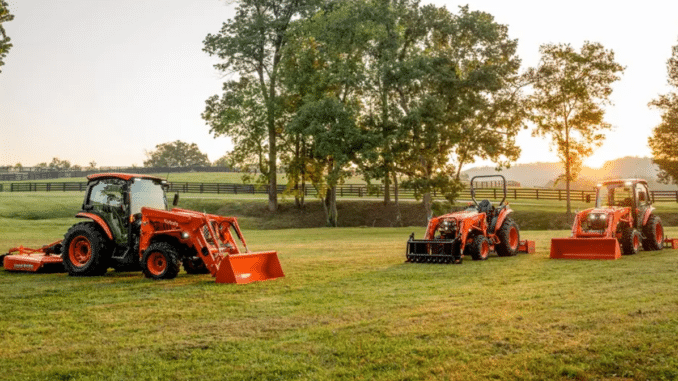
Kubota Engines: Complete Guide to Machinery Applications, Maintenance, Parts and Repairs
Kubota engines power subcompact tractors, agricultural tractors, excavators, loaders, mowers, utility vehicles, generators and specialist agricultural equipment. They also appear in machinery made by other manufacturers, including wood chippers, access platforms, pumps, sweepers and industrial equipment.
For owners and repairers, however, “Kubota engine” is only the starting point. Identifying the exact engine model, specification and serial number is essential before buying filters, ordering internal parts, diagnosing injection problems or choosing a replacement engine.
A D902 installed in a utility vehicle may share its basic engine family with a D902 used elsewhere, but its sump, cooling arrangement, governor settings, mounting components and external equipment can differ. The same principle applies across Kubota’s larger diesel engines.
This guide explains the main Kubota engine families, the machinery categories in which they are used, routine servicing requirements, common faults, parts identification and the practical differences between repairing, rebuilding and replacing an engine.
Engine lists below cover important current and legacy applications. They are not a claim that every engine listed fits every machine in its category, or that every regional and historical Kubota engine variant is included.
Understanding Kubota Engine Models and Families
Most familiar Kubota machinery engines are liquid-cooled, four-stroke diesels. Depending on their age and specification, they may use mechanical fuel injection, electronically controlled injection or a common-rail fuel system.
Kubota also manufactures petrol, LPG and dual-fuel engines. In addition, some Kubota-branded machinery uses engines supplied by other manufacturers.
What Kubota Engine Letters Mean
On many Kubota diesel engines, the first letter identifies the cylinder count.
| Engine prefix | Cylinder count | Examples |
|---|---|---|
| E | One | Certain single-cylinder diesel models |
| Z | Two | Z482, Z602 |
| D | Three | D722, D902, D1105, D1703, D1803 |
| V | Four | V1505, V2203, V2403, V3307, V3800 |
| F | Five | Certain legacy Kubota engine models |
This system does not cover every Kubota engine designation. Horizontal engines, oil-cooled engines and petrol engines use other naming arrangements.
The numerical portion commonly relates to approximate displacement and engine series. It should not be treated as an exact capacity figure or a complete specification.
Why Engine Suffixes Matter
The suffix after the basic engine model can identify important differences involving:
-
Turbocharging.
-
Fuel-injection system.
-
Emissions specification.
-
Generator configuration.
-
Application-specific equipment.
-
Engine production variation.
For example, a naturally aspirated V1505 with mechanical injection is not equivalent to a turbocharged common-rail V1505.
Likewise, two engines advertised simply as “V2403” may require different injectors, gaskets, pistons, wiring or external components.
Always record the complete designation rather than stopping at the basic model number.
Main Kubota Engine Families
Super Mini Series
Important models include:
-
Z482.
-
Z602.
-
D722.
-
D902.
These compact diesels are used where installation space, weight and fuel consumption are important. Applications include small construction equipment, compact machinery, generators, grounds-care equipment and utility vehicles.
Maintenance commonly centres on cooling-system cleanliness, air filtration, fuel quality, glow-plug operation and oil changes.
05 Series
Important models include:
-
D905 in legacy applications.
-
D1005.
-
D1105.
-
D1305.
-
V1305 in legacy applications.
-
V1505.
Turbocharged and electronically controlled versions exist within this wider group.
These engines appear across compact tractors, mowers, construction equipment, generators and third-party industrial machinery.
03 and 03-M Series
Important models include:
-
D1503.
-
D1703.
-
D1803.
-
V2003.
-
V2203.
-
V2403.
This group includes older mechanical-injection engines and newer electronically controlled variants.
From a repair perspective, the family name alone is insufficient. Combustion-system design, emissions equipment and application specification must also match.
07 Series
Key models include:
-
V2607.
-
V3307.
These four-cylinder engines are associated with larger compact construction equipment, loaders, tractors and industrial applications.
Common-rail versions require different diagnostic methods and fuel-system precautions from older mechanical engines.
V3 Series
Important models include:
-
V3300.
-
V3600.
-
V3800.
These engines are found in agricultural, construction and industrial applications. Naturally aspirated, turbocharged and electronically controlled versions vary by model and generation.
Larger Agricultural and Industrial Engines
Larger Kubota engine models include:
-
V5009.
-
V6108.
-
V6120.
Their applications should be checked individually. An engine’s presence in Kubota’s industrial range does not establish that it was installed in a particular Kubota-branded machine.
Petrol, LPG and Dual-Fuel Engines
Kubota’s spark-ignition engine range includes models such as:
-
WG752.
-
WG972.
-
WG1005.
-
WG1605.
Fuel configuration varies by specification. Petrol, LPG and dual-fuel versions have different fuel-system components and servicing requirements.
These engines should not be confused with the diesel engines carrying similar displacement-related numbers.
How to Identify Your Kubota Engine
Before ordering any engine parts, collect:
-
Machine model.
-
Machine serial number.
-
Complete engine model.
-
Engine serial number.
-
Engine specification or assembly number, where available.
-
Country or market specification.
-
Details of any previous engine replacement.
The machine serial number and engine serial number are separate identifiers.
Where to Find the Engine Number
Depending on the engine, identification may appear on a label around the valve cover and as a stamping on the engine block.
The stamped location varies between engine families. It may be near the injection pump, below a manifold or towards the flywheel end.
Clean the area carefully and photograph the identification before dismantling anything.
Do not rely solely on an emissions label, a casting number or an online photograph of a similar engine.
Why Identification Matters for Repairs
Correct identification helps avoid ordering:
-
The wrong oil or fuel filter.
-
An incompatible water pump.
-
Incorrect glow plugs.
-
The wrong cylinder-head gasket.
-
Injectors for a different combustion system.
-
A starter with the wrong mounting arrangement.
-
An engine assembly with an unsuitable sump or flywheel.
An engine that looks the same externally may still have different internal or application-specific components.
Kubota Engines by Machinery Type
The following sections separate Kubota machinery into practical ownership and repair categories.
Basic engine models are used where appropriate for readability. Full suffixes, machine serial numbers and regional specifications must still be checked before buying parts.
1. Subcompact Tractors
Kubota’s BX tractors use compact three-cylinder diesel engines.
Important engine models across the BX range include:
-
D902.
-
D1005.
Established examples include D722-powered BX1880 tractors, D902-powered BX2380 and BX23S tractors, and D1005-powered BX2680 tractors, subject to the relevant market specification.
Maintenance priorities
Subcompact tractors frequently collect grass, seed heads and dust around the radiator screen. Check the screen regularly when mowing or handling dry material.
Pay particular attention to:
-
Engine oil and filter servicing.
-
Radiator and screen cleanliness.
-
Fuel filters and water contamination.
-
Battery condition and glow-plug performance.
-
Coolant hoses and fan belts.
Repair considerations
Poor starting may originate in a safety interlock, battery connection or fuel-supply problem rather than worn engine components.
Do not confuse hydrostatic-transmission servicing with engine servicing. They involve separate systems and specifications.
2. Compact Tractors
Kubota’s compact tractor ranges include B, LX and L models, together with numerous earlier generations.
Important engines used across current and legacy compact tractors include:
-
D650.
-
D750.
-
D850.
-
D950.
-
D1005.
-
D1105.
-
D1305.
-
D1403.
-
D1503.
-
D1703.
-
D1803.
-
V1505.
-
V1902.
-
V2203.
-
V2403.
This is a cross-generation list, not an interchange guide. Older B and L tractors can differ substantially from modern LX and L machines.
Examples of familiar applications include D1005 and D1105 engines in B-series tractors, D1305 engines in selected LX tractors, and D1703, D1803 and V2403 engines across different L-series models.
Maintenance priorities
-
Keep radiator screens clear during mowing and cultivation.
-
Inspect air-intake hoses for splits.
-
Replace fuel filters using the correct bleeding procedure.
-
Use the specified engine oil, particularly on emissions-equipped models.
-
Investigate coolant loss rather than repeatedly topping up.
Repair considerations
Older mechanical-injection tractors may be comparatively straightforward to diagnose. Newer common-rail tractors can require fault-code reading, electrical testing and emissions-system diagnosis.
Do not assume that every compact Kubota tractor has a diesel particulate filter.
3. Utility, Agricultural and Specialist Tractors
This category includes MX tractors, M-series utility tractors, larger agricultural models and specialist narrow, low-profile and high-clearance tractors.
Important Kubota engine models across these ranges include:
-
V2403.
-
V3300.
-
V3307.
-
V3600.
-
V3800.
-
V6108.
-
V6120.
Older agricultural tractors also use additional legacy engines, so identification remains especially important when dealing with discontinued or imported machines.
The V6108 and V6120 are associated with larger agricultural applications. Smaller utility tractors use several of the four-cylinder engines listed above.
A significant exception is the Kubota M8 range, which uses a Cummins B6.7 engine rather than a Kubota-built engine.
Maintenance priorities
-
Match engine oil to the exact engine and emissions specification.
-
Keep cooling packs clear of chaff and crop debris.
-
Inspect turbocharger and charge-air hoses.
-
Maintain fuel-water separation.
-
Follow regeneration and DEF requirements where fitted.
Repair considerations
Reduced power can come from fuel restriction, boost leakage, overheating or electronic derating. It should not automatically be attributed to an injection pump or turbocharger failure.
For M8 engine repairs, identify the Cummins engine separately from the Kubota tractor.
4. Tractor-Loader-Backhoes and Landscaper Tractors
Kubota’s dedicated tractor-loader-backhoe machines are distinct from ordinary tractors carrying removable backhoe attachments.
Important engines across selected current and legacy models include:
-
D1105.
-
D1703.
-
D1803.
-
V1505.
-
V2403.
The BX23S also belongs in the smaller tractor-loader-backhoe ownership category and uses the D902 in established specifications.
Maintenance priorities
These machines combine digging, loading, idling and transport work. Inspect:
-
Cooling screens.
-
Engine mounts.
-
Fuel and coolant hoses.
-
Battery cables.
-
Air-cleaner housings.
-
Wiring near hot or moving components.
Repair considerations
An engine that struggles during hydraulic work may be reacting to an excessive hydraulic load.
Check the hydraulic system, attachment operation and engine performance together before concluding that the engine needs rebuilding.
5. Mini and Compact Excavators
Kubota’s KX and U excavators use several engine families across different sizes and generations.
Important engines include:
-
D722.
-
D902.
-
D1105.
-
D1503.
-
D1703.
-
D1803.
-
V1505.
-
V2203.
-
V2403.
-
V2607.
-
V3307.
Established examples include D722 applications in small K008 excavators, D902 applications in selected KX41 machines, V2607 applications in KX057 machines and V3307 applications in the KX080 class.
Newer generations and larger excavators require their own model-specific checks.
Maintenance priorities
-
Clean the radiator and hydraulic oil cooler.
-
Check air-filter restriction.
-
Inspect fuel-water separators.
-
Protect wiring and connectors from washdown damage.
-
Look for hose chafing in confined engine compartments.
Repair considerations
Slow digging does not necessarily indicate an engine problem. Hydraulic pump condition, control settings and operating temperature can produce similar symptoms.
Record whether engine speed drops under load. This helps distinguish an engine power problem from a hydraulic performance problem.
6. Skid Steer Loaders
Kubota’s SSV skid steers have well-established engine pairings:
| Machine | Engine |
|---|---|
| SSV65 | V2607-CR-T variants |
| SSV75 | V3307-CR-T variants |
Full suffixes vary with the applicable specification.
Maintenance priorities
Skid steers often work in dust, bedding, demolition debris and confined areas. Priorities include:
-
Cooling-pack cleanliness.
-
Air-filter condition.
-
Fuel filtration.
-
Crankcase ventilation.
-
DPF operation where fitted.
-
Wiring and connector security.
Repair considerations
Loss of power may result from overheating, restricted fuel supply, a boost leak or emissions-related derating.
Use the correct lift-arm support and machine safety procedure before entering service areas.
7. Compact Track Loaders
Important Kubota engines used across the SVL range include:
-
D1803.
-
V2607.
-
V3307.
-
V3800.
Established applications include:
| Loader group | Engine family |
|---|---|
| SVL50x | D1803 |
| SVL65-2 | V2607 |
| SVL75 generations | V3307 |
| SVL90, SVL95 and SVL97 generations | V3800 |
Check newer and higher-output models individually rather than extending these pairings by assumption.
Maintenance priorities
High-flow attachments can place sustained loads on the engine and cooling system.
Monitor:
-
Engine temperature.
-
Radiator and cooler blockage.
-
Fuel-filter condition.
-
Charge-air hoses.
-
Regeneration warnings.
-
Engine-oil level.
Repair considerations
Repeated regeneration problems require diagnosis. Possible contributing factors include unsuitable operating patterns, sensor faults, temperature problems and underlying combustion faults.
Replacing or cleaning the DPF without correcting the cause may not resolve the problem.
8. Stand-On Compact Loaders
The Kubota SCL1000 uses a turbocharged D902 engine.
This is an important distinction: its engine specification should not be treated as identical to a naturally aspirated D902 from another application.
Maintenance priorities
-
Check air filtration frequently in dusty landscaping work.
-
Keep cooling surfaces clear.
-
Inspect turbocharger oil connections.
-
Check intake hoses and engine mounts.
-
Maintain clean fuel storage.
Repair considerations
Confirm the turbocharged specification before ordering engine assemblies, manifolds or fuel-system components.
9. Wheel Loaders and Articulated Compact Loaders
Kubota’s R and RT loader ranges cover multiple generations, machine sizes and regional specifications.
Important engines used across selected models include:
-
D1105.
-
V1505.
-
V2203.
-
V2403.
-
V2607.
-
V3307.
The R and RT ranges should not be treated as one uniform engine platform. Verify each loader’s engine plate and parts catalogue.
Maintenance priorities
-
Remove dust and agricultural debris from cooling packs.
-
Inspect intake hoses and clamps.
-
Check engine mounts.
-
Look for fuel-line deterioration.
-
Inspect turbocharger hoses where fitted.
Repair considerations
Poor pushing performance may originate in the hydrostatic drive or transmission rather than the engine.
Compare engine speed, travel response and hydraulic performance before ordering engine parts.
10. Telehandlers and Wheeled Excavators
Kubota sells telehandlers and wheeled excavators in selected markets. Their engine specifications are model- and market-dependent.
These categories should be identified by exact machine model rather than assigned a generic list of Kubota industrial engines.
For parts and repair work, record:
-
Engine manufacturer.
-
Complete engine model.
-
Engine serial number.
-
Emissions specification.
-
Machine serial number.
Do not assume that an engine is Kubota-built simply because the machine carries Kubota branding.
Maintenance priorities
Cooling-system access, charge-air plumbing, fuel filtration and aftertreatment condition are particularly important on machines carrying out sustained lifting or travel work.
11. Tracked Carriers and Site Dumpers
Kubota’s tracked carriers and dumpers include different regional and historical KC-series machines.
An important engine example is:
-
D902 in selected KC-series applications.
Other machines require individual identification. A carrier’s payload designation does not identify its engine.
Maintenance priorities
These machines often work in mud, confined spaces and stop-start conditions.
Inspect:
-
Radiator screens.
-
Cooling airflow.
-
Fuel lines.
-
Engine mounts.
-
Battery terminals.
-
Wiring exposed to vibration and debris.
Repair considerations
A weak travel response can involve the transmission or hydraulic drive, not just the engine.
12. Diesel Zero-Turn Mowers
Kubota’s diesel zero-turn ranges include older ZD machines and later ZD1000, ZD1200 and ZD1600-series models.
Important engines across selected generations include:
-
D722.
-
D782.
-
D902.
-
D1005.
-
D1105.
-
D1305.
Examples include D902-powered ZD1000-series applications, D1105-powered ZD1200-series applications and D1305-powered ZD1611 machines.
Maintenance priorities
Grass contamination is a major servicing concern.
Check:
-
Radiator screens.
-
Radiator fins.
-
Air-cleaner condition.
-
Coolant level.
-
Fan belts.
-
Engine oil.
-
Fuel filters.
Repair considerations
If the engine loses speed only when the deck engages, inspect the deck for packed grass, seized bearings, belt problems and excessive cutting load before blaming the engine.
13. Front Mowers and Commercial Out-Front Mowers
Kubota’s F-series front mowers use several diesel engines across their production history.
Important models include:
-
D1105.
-
D1305.
-
V1505.
Older machines may use other engines, so the mower model and engine plate must both be checked.
Maintenance priorities
-
Clean cooling screens during dry mowing.
-
Inspect intake ducting.
-
Check engine and PTO drive components separately.
-
Maintain fuel filtration.
-
Inspect coolant hoses and belts.
Repair considerations
Poor cutting performance may involve PTO clutches, deck gearboxes or blade-drive components rather than engine output.
14. Diesel Garden Tractors and Collector Mowers
Kubota’s G, GR and G-series collector machines include several smaller diesel platforms.
Important engines across selected current and legacy machines include:
-
D600.
-
D640.
-
D662.
-
D722.
-
D782.
-
D902.
-
D1005.
This category spans many generations. A legacy G-series tractor should not be serviced using specifications intended for a modern GR or collector mower.
Maintenance priorities
-
Keep grass out of cooling areas.
-
Inspect fuel hoses on older machines.
-
Check charging-system operation.
-
Service air filters correctly.
-
Inspect coolant for contamination and deterioration.
Repair considerations
Transmission wear, deck loading and electrical interlocks can resemble engine faults.
15. Petrol Ride-On, Zero-Turn, Stand-On and Walk-Behind Mowers
Not every Kubota mower uses a Kubota-built engine.
Depending on model and generation, petrol mowers may use:
-
Kubota petrol engines.
-
Kawasaki engines.
-
Kohler engines.
-
Briggs & Stratton engines.
Kubota-built petrol engine examples include the KGZ770 and models from the WG range in selected applications.
For Kawasaki, Kohler and Briggs & Stratton engines, record the engine manufacturer’s full identification details before ordering parts.
Maintenance priorities
Petrol mower servicing may include:
-
Spark plugs.
-
Air filters and pre-cleaners.
-
Engine oil and filters where fitted.
-
Fuel filters.
-
Valve-clearance checks where specified.
-
Carburettor or electronic fuel-injection maintenance.
Do not apply diesel troubleshooting procedures to a petrol mower.
16. Diesel Utility Vehicles
Kubota’s diesel RTV and RTV-X vehicles use compact three-cylinder engines.
Important models include:
-
D902.
-
D1105.
Established applications include D902 engines in numerous RTV900 and RTV-X900 machines and D1105 engines in several larger RTV-X models.
Maintenance priorities
-
Keep radiators and screens free from mud and vegetation.
-
Check air-intake plumbing.
-
Maintain fuel-water separation.
-
Inspect battery connections.
-
Check coolant hoses.
-
Service the transmission separately.
Repair considerations
Slow travel, poor hill climbing or unusual drive behaviour can originate in the hydrostatic transmission, brakes or linkage.
Do not judge engine condition from road speed alone.
17. Petrol Utility Vehicles
Kubota’s petrol utility vehicles include RTV400, RTV500, RTV520 and Sidekick models, depending on market and generation.
Engine arrangements differ between these vehicles. They should not be grouped under one universal Kubota petrol engine designation.
Identify the installed engine directly, including any supplier-specific model and serial details.
Maintenance priorities
-
Fuel condition.
-
Spark plugs.
-
Air filtration.
-
Cooling-system condition.
-
Fuel-injection or carburettor operation.
-
Battery and charging performance.
Repair considerations
Confirm whether a fault is engine-related, electrical or associated with the vehicle’s drive system before replacing components.
18. Generators and Generator Sets
Kubota engines are used in Kubota-branded generators and generator sets assembled by other manufacturers.
Important engine models across generator applications include:
-
Z482.
-
Z602.
-
D722.
-
D902.
-
D1005.
-
D1105.
-
D1305.
-
V1505.
-
D1503.
-
D1703.
-
D1803.
-
V2203.
-
V2403.
-
V3300.
-
V3800.
Generator-specific BG variants exist within several families.
Petrol and gas-fuelled generator applications may also use engines such as the WG1605.
Maintenance priorities
-
Follow both operating-hour and calendar-based servicing requirements.
-
Check cooling airflow through the enclosure.
-
Inspect exhaust systems.
-
Maintain batteries on standby sets.
-
Monitor fuel contamination.
-
Follow the generator manufacturer’s exercise and loading instructions.
Repair considerations
Low electrical output is not automatically an engine problem. Alternator faults, voltage regulation, wiring and engine speed can all affect generator performance.
Use a qualified electrical technician for output-side diagnosis.
19. Combine Harvesters
Kubota combines range from compact rice-harvesting machines to larger agricultural models sold in different regions.
Important engine models across selected combine applications include:
-
D782 in legacy compact applications.
-
V2403.
-
V3800.
Specific established examples include V2403-M-DI-T engines in PRO688 combines and V2403-M-DI-TI engines in PRO758 combines.
Additional engines exist across regional and historical ranges. Use the exact combine model to extend the application list.
Maintenance priorities
-
Remove chaff from cooling packs.
-
Inspect air-cleaner seals.
-
Keep fuel clean.
-
Check belts and hoses.
-
Clean crop debris from hot engine and exhaust areas.
Repair considerations
Engine power loss and excessive crop-processing load must be distinguished. Blockages, incorrect settings and worn harvesting components can overload an otherwise serviceable engine.
20. Rice Transplanters
Kubota rice transplanters include petrol and diesel machines with different engine arrangements.
The D782 appears in legacy rice-planting applications, while other transplanters use model-specific petrol or diesel engines.
A universal transplanter engine list is not reliable without specifying the market and machine generation.
Maintenance priorities
-
Protect fuel systems from water.
-
Inspect components exposed to mud.
-
Check cooling-air passages or radiators as applicable.
-
Service the engine before extended seasonal storage.
-
Protect electrical connections from corrosion.
Repair considerations
Confirm the actual displacement and specification from engine identification. Used-engine advertisements are not a dependable substitute for the correct parts catalogue.
21. Power Tillers, Walking Tractors and Stationary Agricultural Equipment
Kubota has produced horizontal diesel engines and compact engines for walking tractors, tillers and stationary agricultural work.
Relevant engine groups include:
-
EA series.
-
EL series.
-
ZB series.
-
Other regional and legacy horizontal diesel families.
Small oil-cooled engines, including OC-series models, also belong to Kubota’s wider engine range.
Maintenance priorities
Cooling arrangements differ from those on familiar liquid-cooled tractor engines.
Check:
-
Cooling fins and airflow where applicable.
-
Engine oil level.
-
Air-cleaner type.
-
Fuel-system condition.
-
Drive belts and couplings.
Never assume that every small Kubota diesel requires the same coolant or servicing procedure.
22. PTO-Driven and Hydraulically Powered Implements
Many Kubota implements do not have their own engine.
Examples include numerous:
-
Balers.
-
Disc mowers.
-
Tedders.
-
Rakes.
-
Spreaders.
-
Rotary tillers.
-
Snowblowers.
-
Loader attachments.
-
Excavator breakers.
These implements obtain power from the tractor’s PTO, the host machine’s hydraulic system or mechanical ground drive.
Their maintenance belongs to the implement’s gearbox, driveline, bearings, belts and hydraulic systems—not a separate Kubota engine.
23. Other Manufacturers’ Machinery with Kubota Engines
Kubota supplies engines to many equipment manufacturers.
Application categories include:
| Machinery category | Kubota engine examples encountered across applications |
|---|---|
| Wood chippers and landscaping equipment | D1105, V1505 and larger application-specific engines |
| Pumps and jetting equipment | D902, D1105 and other industrial diesels |
| Commercial turf equipment | D1105, D1803, V1505, V2403 |
| Telehandlers | V3307 and other model-specific engines |
| Access equipment | Small Kubota diesels and WG-series spark-ignition engines |
| Lighting towers and mobile generators | Z482, D722, D902 and generator-specific variants |
| Industrial power units | Multiple Super Mini, 05, 03, 07 and V3 engines |
These are application examples rather than complete equipment-manufacturer fitment lists.
For these machines, use both the equipment manufacturer’s documentation and the Kubota engine identification. The equipment manufacturer may specify unique external components, controls or service access procedures.
Kubota Engine Maintenance
There is no single maintenance schedule covering every Kubota engine.
Oil-change intervals, filter replacement, valve-clearance inspections and coolant replacement depend on the engine, installation, operating conditions and manual.
Use the following as a maintenance framework, not as a substitute for the correct service schedule.
Daily or Pre-Use Checks
Before operation:
-
Check engine oil on level ground using the prescribed procedure.
-
Check coolant level when the engine is cold, where applicable.
-
Inspect for fuel, oil and coolant leaks.
-
Check radiator screens and cooling airflow.
-
Inspect the air-cleaner restriction indicator where fitted.
-
Check the fuel-water separator.
-
Look for loose wiring, damaged hoses and belt deterioration.
-
Note warning lights and unusual starting behaviour.
A rising oil level, strong fuel smell in the oil, unexplained coolant loss or repeated warning messages requires investigation.
Engine Oil and Filter Changes
Select oil using the exact manual requirements for:
-
Viscosity.
-
Ambient temperature.
-
Diesel or petrol application.
-
Required performance classification.
-
Emissions-system compatibility.
Do not assume that the same oil is suitable for an older mechanical diesel, a modern DPF-equipped engine and a petrol mower.
Oil capacity can vary with sump design and installation. Fill and verify using the correct procedure rather than relying only on a generic engine-family capacity.
Air-Filter Maintenance
A restricted filter can reduce performance, but a leaking intake system can allow damaging dust into the engine.
Inspect:
-
Filter seals.
-
Housing clips.
-
Dust valves.
-
Intake hoses.
-
Hose clamps.
-
The clean side of the housing.
Only clean filter elements if the manufacturer permits it. Replace damaged elements, and avoid frequent unnecessary removal of inner safety elements.
Fuel-System Maintenance
Diesel fuel maintenance should include:
-
Using clean, suitable fuel.
-
Preventing water contamination.
-
Draining separators where instructed.
-
Replacing filters at the required interval.
-
Inspecting hoses and clamps.
-
Following the correct priming procedure.
Common-rail systems are particularly sensitive to contamination.
Do not loosen high-pressure injector pipes to bleed a common-rail engine. Fuel under pressure can penetrate skin and cause severe injury.
Cooling-System Maintenance
Check the complete cooling system rather than only the coolant level.
Inspect:
-
Radiator screens.
-
Radiator and cooler fins.
-
Fan belt.
-
Fan and shroud.
-
Thermostat operation.
-
Water pump.
-
Hoses and clamps.
-
Radiator cap.
-
Expansion or recovery tank.
Do not open a hot cooling system. Allow it to cool before inspection.
Coolant colour alone does not establish compatibility. Use the specified coolant and avoid mixing unidentified products.
Glow Plugs and Cold Starting
Before replacing glow plugs, check:
-
Battery condition.
-
Cranking speed.
-
Cable and earth connections.
-
Glow-plug fuse or fusible link.
-
Relay operation.
-
Voltage supply.
-
Timer or control function.
Low compression, unsuitable oil viscosity and fuel problems can also cause hard starting.
Do not use ether or starting fluid on engines with glow plugs or intake-heating equipment.
Valve Clearance and Timing Components
Valve-clearance checks are engine-specific. Use the correct:
-
Engine temperature.
-
Crankshaft position.
-
Clearance values.
-
Adjustment method.
-
Tightening torque.
Do not copy valve settings from another Kubota engine simply because it has the same number of cylinders.
Common Kubota Engine Problems and Diagnostic Checks
A symptom identifies an area for investigation, not a failed part.
| Symptom | Initial checks | Possible deeper causes |
|---|---|---|
| No crank | Battery, terminals, earth cable, interlocks, fuses | Starter, relay, wiring or control fault |
| Cranks but will not start | Fuel supply, shut-off system, glow operation, codes | Injection fault, low compression, timing problem |
| Starts then stops | Fuel flow, filter, tank vent, electrical supply | Pump fault, shutdown control, ECU command |
| Low power | Air filter, fuel filter, temperature, machine load | Boost leak, injection fault, derating, wear |
| Black smoke | Air restriction, excessive load, intake condition | Injection fault or boost problem |
| Persistent white smoke | Cold operation, fuel quality, coolant level | Poor combustion, injector fault, coolant ingress |
| Blue smoke | Oil level, breather, operating conditions | Ring, bore, valve-guide or turbocharger wear |
| Overheating | Cooling blockage, coolant, belt, leaks | Thermostat, pump, radiator or internal fault |
| Rising oil level | Fuel smell, operating pattern | Fuel dilution or another internal contamination source |
| Coolant loss | Hoses, cap, pump, radiator, external leaks | Internal leak, cylinder-head or gasket fault |
When to Stop the Engine
Stop safely and investigate if the machine develops:
-
An oil-pressure warning.
-
Severe overheating.
-
Sudden knocking.
-
Rapid fluid loss.
-
Heavy unexplained smoke.
-
Uncontrolled engine speed.
-
A serious fuel leak.
Continuing to operate can turn a repairable fault into major engine damage.
DPF, EGR, Common Rail and DEF Systems
Some modern Kubota engines use emissions-control equipment, but the combination varies.
Diesel Particulate Filter
A DPF traps soot and periodically burns it during regeneration.
Maintenance and diagnosis may involve:
-
Correct oil specification.
-
Suitable operating conditions.
-
Exhaust temperature sensors.
-
Differential-pressure sensing.
-
Regeneration history.
-
Scheduled ash servicing.
Soot and ash are different. Regeneration burns soot but does not remove accumulated non-combustible ash.
Exhaust Gas Recirculation
EGR reduces certain emissions by recirculating a controlled amount of exhaust gas.
Faults may involve the valve, cooler, sensors or passages. Diagnosis should confirm the fault before components are replaced.
Common-Rail Injection
Common-rail systems electronically control fuel delivery at high pressure.
Diagnosis may require:
-
Fault-code reading.
-
Rail-pressure data.
-
Low-pressure fuel-supply testing.
-
Injector testing.
-
Wiring and sensor checks.
-
Manufacturer-approved procedures.
Do not assume that replacing injectors will cure a rail-pressure fault.
Selective Catalytic Reduction and DEF
Some larger machines use SCR and DEF.
Not every Kubota diesel requires DEF. Check the machine’s actual equipment rather than assuming from its age or horsepower.
Use only the specified fluid and prevent contamination.
Buying Kubota Engine Parts
Routine Service Parts
Common service items include:
-
Oil filters.
-
Fuel filters.
-
Water-separator elements.
-
Air filters.
-
Fan belts.
-
Coolant hoses.
-
Thermostats.
-
Glow plugs.
-
Service gaskets and seals.
Repair and Rebuild Parts
Depending on diagnosis, repair parts may include:
-
Water pumps.
-
Starters and alternators.
-
Injectors and injection pumps.
-
Turbochargers.
-
Cylinder-head components.
-
Pistons and rings.
-
Bearings.
-
Crankshaft seals.
-
Oil pumps.
-
Gasket sets.
Do not order a rebuild kit before measuring the engine. Bore wear, crankshaft condition and cylinder-head damage determine what is required.
Genuine, Aftermarket and Reconditioned Parts
Genuine parts can simplify specification matching when ordered through the correct catalogue.
Aftermarket parts vary in quality and accuracy. Check:
-
Exact application.
-
Material and manufacturing quality.
-
Warranty.
-
Supplier reputation.
-
Return terms.
-
Technical support.
For injection components, turbochargers and internal engine parts, correct calibration and specification are particularly important.
A cheap part is not economical if it causes repeat labour or further engine damage.
Can Kubota Engines Be Swapped Between Machines?
Sometimes, but sharing the same basic model number does not guarantee a direct replacement.
Check:
-
Mounting points.
-
Sump shape and clearance.
-
Oil pickup arrangement.
-
Flywheel and housing.
-
Crankshaft connection.
-
Starter and alternator.
-
Cooling outlets.
-
Intake and exhaust.
-
Injection calibration.
-
Governor settings.
-
Wiring and ECU.
-
Sensors.
-
Emissions equipment.
-
Legal and certification requirements.
A generator engine may have a different speed-control arrangement from a tractor engine. An excavator engine may have different external components from a utility-vehicle engine.
Transferring external parts may be possible in some cases, but it must be checked technically rather than assumed.
Repair, Rebuild or Replace a Kubota Engine?
Choose a Targeted Repair When
A specific fault has been confirmed and the rest of the engine remains serviceable.
Examples include a failed water pump, defective starter, leaking external seal or confirmed electrical fault.
Consider Rebuilding When
-
Compression or oil-pressure testing supports internal wear.
-
The block and cylinder head are repairable.
-
Suitable parts are available.
-
Machining can restore the engine within specification.
-
The machine justifies the cost.
A proper rebuild involves inspection and measurement, not simply fitting rings and gaskets.
Consider Replacement When
-
The block is severely damaged.
-
Multiple major components have failed.
-
Repair costs approach a properly specified replacement.
-
Downtime is critical.
-
A suitable warranted engine is available.
Compare the complete installed cost, including transport, labour, transferred components, calibration and warranty conditions.
Also correct the original failure cause. A replacement engine can fail again if the machine still has a blocked radiator, contaminated fuel system or leaking intake.
Seasonal Storage and Low-Hour Machines
Low operating hours do not eliminate maintenance requirements.
During storage:
-
Follow the correct fuel-storage procedure.
-
Maintain or isolate the battery as instructed.
-
Protect against rodents.
-
Check coolant protection.
-
Store with clean cooling surfaces.
-
Attend to overdue oil and filter servicing.
-
Inspect for leaks before returning to work.
Short periods of unloaded idling are not a universal substitute for a proper storage or exercise procedure.
Generators, combines, rice transplanters and seasonal mowing machines each need an appropriate return-to-service inspection.
Kubota Engine FAQs
Are all Kubota machines fitted with Kubota engines?
No. Many use Kubota-built engines, but exceptions exist. The M8 tractor range uses a Cummins B6.7, and several petrol mower ranges use engines from other manufacturers.
Are all Kubota engines diesel?
No. Kubota also manufactures petrol, LPG and dual-fuel engines. Some Kubota-branded machines use third-party petrol engines.
What is the difference between a D1105 and a V1505?
The D1105 is a three-cylinder engine with approximately 1.123 litres of displacement. The V1505 is a four-cylinder engine with approximately 1.498 litres of displacement.
Their power, injection system and emissions equipment depend on the exact variant.
Can I identify an engine from the tractor or mower model alone?
The machine model is useful, but the complete engine model and serial number provide a safer basis for parts ordering, especially when an engine may have been replaced.
How often should Kubota engine oil be changed?
Follow the interval in the correct operator’s manual, including any calendar limit, initial service requirement and severe-duty adjustment.
There is no single interval suitable for every Kubota engine.
Do all Kubota diesels have a DPF?
No. DPF fitment depends on the engine, output, emissions certification, application and market.
Can I bleed a common-rail engine by loosening injector pipes?
No. Follow the specified low-pressure priming procedure. High-pressure fuel-system work requires the correct equipment and safety procedures.
Can a D902 from another machine replace my D902?
Possibly, but only after checking the complete specification. Turbocharging, sump design, governor settings, mounts, cooling components and external equipment may differ.
How long will a Kubota engine last?
There is no dependable universal lifespan. Maintenance quality, operating load, dust exposure, overheating, fuel cleanliness and repair history all influence service life.
Assess condition through service records, starting behaviour, oil pressure, compression where appropriate, fluid condition and professional inspection.
Which information should I give a Kubota parts supplier?
Provide the machine model and serial number, full engine model, engine serial number, market specification and the required component.
Photographs of the identification plate and existing part can help, but they do not replace correct catalogue matching.
Keeping Kubota Engines Reliable
Reliable Kubota engine maintenance begins with accurate identification.
Once the exact engine is known, the most valuable priorities are clean oil, clean fuel, an intact intake system, effective cooling and prompt investigation of warning signs.
For repairs, separate engine faults from transmission, hydraulic, electrical and attachment problems. For replacement engines, verify the complete application specification rather than relying on a shared model name.
That approach improves parts accuracy, reduces unnecessary repairs and gives the engine the best chance of a long working life.