
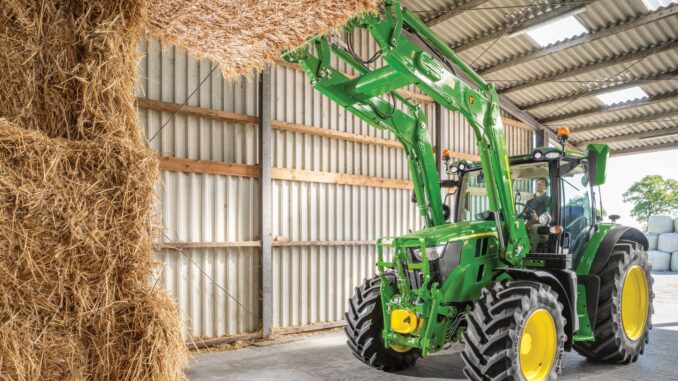
The John Deere 3033R is a compact utility tractor in Deere’s 3R Series, aimed at homeowners, acreage owners, and light commercial users who need a diesel tractor for mowing, loader work, material handling, and year-round property maintenance. Deere’s North American operator manual groups the 3033R with the 3039R and 3046R, while Deere’s replacement parts guide confirms the 3033R uses a diesel engine, hydraulic/transmission system, electrical system, and serviceable air, oil, and fuel filtration components.
In practical terms, the John Deere 3033R sits between a basic lawn-and-garden machine and a larger farm tractor. That makes it popular with owners who are comfortable changing filters, greasing fittings, and replacing simple wear items, but who still need clear guidance on when a repair moves into dealer-level diagnostic or hydraulic work. This guide covers the main repair trouble spots, common service parts, parts diagrams and manuals, buying strategy, maintenance intervals, and a large troubleshooting FAQ for USA and Canada owners.
And See:
General overview of the John Deere 3033R
The John Deere 3033R is part of Deere’s 3R Final Tier 4 compact utility tractor range. Deere’s parts documentation for the 3033R highlights the machine’s main systems as engine, transmission/hydraulic, axle, cab or operator station, and electrical components, which aligns well with how owners should think about diagnosis and maintenance.
For repair purposes, the most important John Deere 3033R systems are:
-
Engine and fuel system, including engine oil filter M806419, primary fuel filter MIU802421, final fuel filter MIU803127, and diesel particulate filter MIU803093.
-
Air intake system, including primary air filter RE68048 and secondary air filter RE68049.
-
Hydraulic and transmission system, including transmission oil filter LVA13065 and inline hydraulic oil filter LVA12726.
-
Electrical system, including battery TY26498, key RE183935, and switch-related parts shown by Deere-focused parts listings.
-
Cab ventilation on cab-equipped machines, including fresh air filter MIU10010 and recirculation filter MIU10011.
Common John Deere 3033R service parts owners often buy include:
-
Engine oil filter M806419.
-
Hydraulic/transmission oil filter LVA13065.
-
Inline hydraulic filter LVA12726.
-
Primary fuel filter MIU802421.
-
Final fuel filter MIU803127.
-
Primary air filter RE68048.
-
Secondary air filter RE68049.
-
Battery TY26498.
-
Key RE183935.
-
PTO switch AM127393 and neutral start switch RE12411 from Deere-focused aftermarket listings.
John Deere 3033R troubleshooting approach
The best way to diagnose a John Deere 3033R is to start with the symptom the owner actually sees. A no-start, hard start, power loss, hydraulic weakness, warning light, vibration, or overheating complaint usually points you toward a smaller group of likely causes than starting with random parts replacement.
Main symptom groups for the John Deere 3033R include:
-
Starting issues.
-
Running issues and low power.
-
Hydraulic or drive performance problems.
-
PTO and implement operation faults.
-
Electrical and safety-switch problems.
-
Overheating, leaks, and warning indicators.
-
Vibration, belt noise, or unusual mechanical sounds.
John Deere 3033R emergency and immediate repair needs
Some problems on the John Deere 3033R should be handled immediately because they create a safety risk or can quickly damage expensive systems. Fuel leaks, hydraulic leaks under pressure, overheating, repeated battery cable arcing, brake issues, and loud driveline or PTO noises should never be ignored.
4.1 Starting issues
A John Deere 3033R that will not crank or only clicks can leave you stranded and may point to a battery, connection, safety-switch, or starter-circuit problem. Continued attempts to start a weak electrical system can overheat cables, drain the battery further, and hide the real fault.
Common causes:
-
Weak or failed battery TY26498.
-
Dirty or loose battery terminals.
-
Faulty seat, PTO, or neutral start switch.
-
Blown fuse or bad key switch.
-
Starter or relay fault.
Basic checks:
-
Confirm battery voltage and terminal tightness.
-
Make sure PTO is off and range or neutral position is correct.
-
Sit firmly in the seat and retry, especially if the seat switch is suspect.
-
Check visible fuses and main electrical connections.
-
If it still will not crank, stop before overheating the starter circuit.
4.2 John Deere 3033R running issues
If the John Deere 3033R starts but runs rough, lacks power, or stalls under load, the most common owner-level causes are fuel restriction, dirty air filtration, overdue service, or contaminated fuel. On a diesel compact tractor, delayed diagnosis can lead to injector, DPF, or regeneration-related complaints becoming more expensive than they needed to be.
Common causes:
-
Clogged primary or final fuel filter.
-
Dirty primary or secondary air filter.
-
Bad or stale diesel fuel.
-
Water contamination in fuel.
-
Sensor or emissions-related fault requiring dealer diagnostics.
Basic checks:
-
Replace overdue fuel filters.
-
Inspect the air filter housing and service the air filters if restricted.
-
Confirm fuel quality and recent fuel source.
-
Look for warning lights or stored fault behavior.
-
Move to dealer diagnostics if the machine still derates or stalls.
4.3 Vibration and noise
New vibration on a John Deere 3033R usually means something has come loose, worn, or gone out of balance. Belt noise, driveline vibration, brake drag, or PTO-related noise should be investigated early before they create secondary damage.
Common causes:
-
Worn or damaged drive belt.
-
Loose wheel or axle hardware.
-
PTO clutch or implement driveline issue.
-
Worn brake or clutch-related components.
-
Debris around rotating components.
Basic checks:
-
Stop the tractor on level ground.
-
Inspect visible belts, guards, and driveline areas.
-
Check wheel torque and obvious looseness.
-
Disconnect the implement if safe and retest.
-
Escalate immediately if noise is heavy, metallic, or load-related.
4.4 Overheating and leaks
Overheating and fluid leaks are high-priority John Deere 3033R issues because they can damage the engine or hydraulic system fast. Deere publishes coolant, engine oil, transmission/hydraulic, and front axle capacities for the 3033R, which shows just how important correct fluid level and condition are on this tractor.
Common causes:
-
Low coolant.
-
Blocked radiator or screen.
-
Engine oil leak.
-
Hydraulic hose or filter leak.
-
Loose clamps or aging hoses.
Basic checks:
-
Check coolant and engine oil before restarting.
-
Inspect radiator screen and cooling package for debris.
-
Look around filters, hose connections, and the ground under the tractor.
-
Top up only with the correct fluid if the source of loss is known.
-
Do not keep operating if temperature rises quickly or a hydraulic leak sprays fluid.
4.5 John Deere 3033R transmission and hydraulic problems
Hydraulic weakness, jerky loader response, steering issues, or transmission complaints often trace back to fluid condition, filter restriction, or leaks. Because the 3033R uses a shared transmission/hydraulic system with a substantial fluid capacity, neglecting filter service can affect multiple functions at once.
Common causes:
-
Restricted transmission oil filter LVA13065.
-
Restricted inline hydraulic filter LVA12726.
-
Low hydraulic/transmission fluid.
-
Contaminated fluid.
-
Internal hydraulic or transmission fault.
Basic checks:
-
Verify fluid level and service history.
-
Inspect for filter leakage or damage.
-
Replace overdue filters before assuming a major failure.
-
Note whether steering, loader, and 3-point all act up together.
-
Use dealer support for pressure testing or internal hydraulic diagnosis.
4.6 Electrical problems
The John Deere 3033R has enough electrical and interlock hardware that a simple switch or connector issue can create a confusing fault. Owners can usually handle battery, fuse, key, and visible switch checks, but module-level or intermittent wiring faults often become time-consuming without Deere documentation.
Common causes:
-
Weak battery.
-
Corroded ground cable.
-
Faulty key or ignition switch.
-
PTO, seat, or neutral switch failure.
-
Lighting or charging-system fault.
Basic checks:
-
Clean and tighten battery grounds and posts.
-
Test battery condition under load if possible.
-
Check key operation and fuse condition.
-
Inspect obvious chafed wiring near moving parts.
-
Move to dealer diagnostics if the problem is intermittent or involves multiple circuits.
DIY or dealer repair decision guide for the John Deere 3033R
The John Deere 3033R is very workable for routine DIY service, but it crosses into dealer territory once the job needs electronic diagnostics, hydraulic pressure testing, emissions-system work, clutch or transmission teardown, or safety-critical internal repair. Deere’s manuals and parts resources help owners identify the right components, but they do not turn a basic garage into a full diagnostic shop.
Good DIY jobs
-
Engine oil and filter changes.
-
Air filter replacement.
-
Fuel filter replacement.
-
Battery replacement.
-
Greasing and visual inspections.
-
Cab air filter replacement on cab models.
-
Replacing simple switches, keys, or lights after confirming the part number.
Advanced DIY or dealer jobs
-
Hydraulic leak tracing beyond obvious hose or filter leaks.
-
PTO clutch diagnosis.
-
Starting-circuit faults that need wiring diagrams or load testing.
-
DPF or emissions-related faults.
-
Internal transmission or hydraulic repairs.
-
Brake or clutch pack service.
Skill level guide
-
Beginner: Filters, battery, greasing, visual checks.
-
Intermediate: Fuel-system service, minor electrical switches, simple belt replacement where access is clear.
-
Advanced: Electrical diagnosis with meter work, hydraulic service beyond routine filters, implement/PTO-related repair.
-
Dealer level: DPF issues, software-guided diagnostics, internal hydraulic or transmission repairs.
John Deere 3033R parts needed, OEM vs aftermarket, and what information you need
Before ordering John Deere 3033R parts, gather the full model name, tractor PIN, engine information where applicable, and whether the tractor is open station or cab-equipped. Deere’s own manuals place strong emphasis on product identification, and the parts guides show that some items differ by configuration.
You should confirm:
-
Full model: John Deere 3033R.
-
Product Identification Number (PIN).
-
Engine model/serial information when ordering engine-related parts.
-
Cab or open-operator-station configuration.
-
Whether the part is routine service, electrical, hydraulic, or attachment-related.
OEM parts are usually the safer choice for filters with known spec requirements, hydraulic/transmission components, and safety-sensitive electrical parts. Aftermarket can be acceptable for batteries, some filters, and common wear items, but only when the supplier clearly cross-references the 3033R and the exact OEM number.
John Deere 3033R parts diagrams and service manuals
John Deere owners should use a mix of official Deere documents and a reputable Deere-focused parts site. The official sources are best for accuracy, while dealer-oriented aftermarket parts pages can be helpful for quickly finding commonly ordered items and cross-checking part numbers.
Useful sources:
-
John Deere Manuals and Training — Deere’s official hub for operator manuals, technical manuals, and parts catalogs.
-
3033R, 3039R, 3046R Operator’s Manual (North America) — Best for maintenance basics, controls, safety, and identification information.
-
3033R Replacement Parts Guide PDF — Best for service part numbers, filter intervals, capacities, and quick-reference maintenance parts.
-
Green Farm Parts 3033R maintenance guide — Useful for common service parts and frequently purchased repair items.
How to locate model, serial and engine numbers on the John Deere 3033R
These numbers matter because John Deere parts, manuals, and some repair procedures are tied to exact machine identity. Ordering by “3033R” alone is often not enough when there are configuration or production differences.
Use this process:
-
Find the tractor’s Product Identification Number plate using the operator manual’s product identification section as your starting point.
-
Write the full PIN exactly as shown, including any letters and number sequence.
-
Record whether the tractor is open station or cab-equipped, since Deere’s parts guide lists cab-only filters and other configuration-specific items.
-
Locate the engine information label and copy the engine model and serial details before ordering engine-side parts. Deere manuals stress identification details for service support.
-
Keep a photo of each tag on your phone so you can compare it against online parts listings at checkout. This is practical advice based on the way Deere and parts sellers organize 3033R service items by identification.
Buying John Deere 3033R parts online and in stores
The smartest buying strategy is to identify the OEM number first, then shop by that number rather than by a vague model search. This reduces wrong orders and makes it much easier to compare Deere, dealer, and aftermarket listings.
-
Online: Use the exact OEM number and confirm fit by model and PIN where the seller allows it. Good starting points are John Deere Manuals and Training, Green Farm Parts, and Deere’s replacement parts guide PDF for number verification.
-
Dealer counter: Best for serial-sensitive parts, hydraulic items, switch modules, and anything related to emissions or safety systems. Deere’s official support flow is still the most reliable route for technical publications and exact-match parts help.
-
Retail stores: Fine for engine oil, grease, batteries, and some clearly cross-referenced filters, but only if the packaging lists the John Deere 3033R or the precise OEM replacement number.
Step-by-step John Deere 3033R fitting guide for common parts
These are some of the highest-value DIY jobs on the John Deere 3033R because they directly affect starting, running quality, and long-term reliability. Always park on level ground, lower attachments, remove the key, and let hot components cool first.
Replace the engine oil filter on a John Deere 3033R
This job helps with engine life and is one of the most realistic DIY services on the tractor. Deere lists engine oil filter M806419 for the 3033R and gives engine oil capacity information in the parts guide.
-
Warm the engine briefly, then shut it off and park safely.
-
Drain the engine oil into a suitable pan.
-
Remove the old M806419 filter and make sure the old gasket comes off with it.
-
Lightly oil the gasket on the new filter and install it hand-tight.
-
Refill with the correct engine oil quantity and grade, then check for leaks and recheck the level after running.
John Deere 3033R air filter replacement
This service helps restore power and protects the engine from dust ingestion. Deere lists RE68048 as the primary air filter and RE68049 as the secondary filter for the 3033R.
-
Open access to the air cleaner housing.
-
Remove the outer primary filter carefully so loose dirt does not fall inward.
-
Inspect the secondary filter and replace it if dirty, damaged, or due.
-
Wipe out the housing gently without forcing dirt into the intake path.
-
Install the new filters in the correct order and seal the housing fully before restart.
Replace John Deere 3033R fuel filters
This job is worth doing when hard starting, low power, or overdue maintenance is present. Deere’s filter overview shows the 3033R uses a primary fuel filter MIU802421 and final fuel filter MIU803127, with 400-hour or annual replacement guidance.
-
Shut off the engine and clean the area around the filters first.
-
Remove the old filters carefully to keep dirt out of the system.
-
Install the new filters using clean hands and clean diesel-compatible practice.
-
Prime or bleed according to the operator manual procedure for your configuration.
-
Start the tractor and check carefully for leaks or stumble after the first run.
Cab air filter service on John Deere 3033R cab models
Cab filter service improves airflow and HVAC performance. Deere lists fresh air filter MIU10010 and recirculation air filter MIU10011, both with 50-hour cleaning or replacement guidance in the quick reference materials.
-
Confirm the tractor is a cab model.
-
Access the fresh and recirculation filter locations as shown in your machine documentation.
-
Remove the filters without dumping dust into the cab ducting.
-
Clean or replace them depending on condition.
-
Reinstall and test blower airflow and HVAC response.
Maintenance to prevent John Deere 3033R problems from coming back
Most recurring John Deere 3033R issues are not true “bad tractor” problems but overdue-service problems. Deere’s quick reference documents show clear intervals for oil, fuel, hydraulic, and cab filtration service, which gives owners a practical roadmap for prevention.
Focus areas:
-
Starting reliability: Keep the battery healthy, terminals clean, and safety switches functioning.
-
Engine performance: Stay on top of fuel filters, air filters, and oil service.
-
Hydraulic performance: Change hydraulic/transmission filters on schedule and watch for leaks early.
-
Cooling and fire prevention: Keep the cooling package and engine area free of debris and oil buildup.
-
Electrical reliability: Protect connectors, inspect grounds, and replace weak batteries before cold-weather failures start.
John Deere 3033R maintenance schedule and year-round checklist
Deere’s 3033R replacement parts guide and filter overview provide the key service intervals most owners need to build a working maintenance schedule. Always cross-check the exact operator manual edition for your tractor configuration before doing major scheduled service.
Daily / before each use
-
Check engine oil level.
-
Check coolant level and inspect for leaks.
-
Look for hydraulic or fuel leaks around filters, hoses, and under the tractor.
-
Inspect tires, lights, and obvious loose hardware.
-
Remove debris from the radiator screen and engine area.
Every 50 hours
-
Clean or replace cab fresh air filter MIU10010 as required on cab models.
-
Clean or replace cab recirculation filters MIU10011 as required on cab models.
-
Grease service points as applicable to loader, front axle, and chassis use. Deere lists grease as a regular maintenance consumable.
Every 200 hours or yearly
-
Replace engine oil filter M806419.
-
Change engine oil using the proper Deere-approved grade and quantity.
Every 400 hours or yearly
-
Replace primary fuel filter MIU802421.
-
Replace final fuel filter MIU803127.
-
Replace hydraulic/transmission filter LVA13065 according to Deere guidance shown in the quick reference material.
-
Replace inline hydraulic filter LVA12726 where applicable to the service schedule.
Every 600 hours / as required
-
Check primary air filter RE68048 and secondary air filter RE68049, replacing as required.
-
Review front axle fluid and general driveline condition, since Deere publishes front axle fluid capacity and periodic service needs for the 3033R family.
Seasonal checklist
-
Spring: Change overdue engine oil and filter, inspect battery condition, and check loader/3-point hydraulic performance before peak use.
-
Mid-season: Clean cooling areas more often in dusty mowing or loader conditions and inspect air filters more frequently than the standard schedule if dirt load is heavy. Deere-focused maintenance guidance specifically notes harsher conditions may require more frequent service.
-
Fall/winter prep: Replace weak batteries, inspect fuel filtration, and make sure lights and electrical functions are ready for cold-weather starts and shorter daylight use.
Repair, upgrade, or replace the John Deere 3033R?
For most owners, a John Deere 3033R is worth repairing when the fault is limited to maintenance backlog, filters, battery, small electrical items, hoses, or simple wear parts. The decision becomes harder when a machine has repeated hydraulic, transmission, or emissions-related faults that require specialist diagnostics and expensive labor.
Repair if…
-
The issue is clearly tied to service items.
-
The tractor is otherwise structurally sound.
-
Hydraulics, drivetrain, and PTO are basically healthy.
-
You have a clear part number and a clear symptom path.
Upgrade if…
-
Your work has outgrown the 3033R’s size or configuration.
-
You regularly need more hydraulic capability, lift, or heavier attachments.
-
The tractor is mechanically sound but no longer matches your property needs.
Replace if…
-
The tractor has major internal hydraulic or transmission damage.
-
Repair costs stack up across multiple systems at once.
-
Dealer-only repairs approach the value of the machine in your market.
John Deere 3033R troubleshooting FAQ
1. Why will my John Deere 3033R not start?
Most no-start complaints on the John Deere 3033R come down to battery condition, terminal corrosion, safety interlocks, or starter-circuit faults. Start by checking the battery, confirming the PTO is off, verifying neutral or range position, and making sure the seat switch is being satisfied. If the tractor only clicks, think battery, cables, grounds, or starter circuit before replacing fuel-system parts.
2. Why does my John Deere 3033R click but not crank?
A click usually means some part of the starting circuit is trying to work, but the battery current or starter engagement is not enough to turn the engine. Bad battery cables, poor grounds, a weak TY26498 battery, or a failing starter can all cause this. Repeatedly cycling the key without testing voltage can waste time and overheat components.
3. Why is my John Deere 3033R hard to start when cold?
Cold-start trouble often points to a weak battery, overdue fuel filters, poor diesel quality, or general maintenance backlog. Because the 3033R is a diesel machine with staged fuel filtration, restricted filters can show up first during colder starts. Owners should also rule out poor cable connections before assuming a deeper engine problem.
4. Why does my John Deere 3033R crank but not fire?
If it cranks normally but will not fire, think fuel delivery, air restriction, or an electronic fault rather than a basic starter problem. Replace overdue fuel filters, inspect the air filter system, and note any warning-light behavior. If service items are current and the machine still will not fire, dealer diagnostics may be needed.
5. Why does my John Deere 3033R start then stall?
A start-and-stall pattern often suggests fuel starvation, contamination, or an air leak in the fuel service path after a recent filter change. It can also happen when a sensor or emissions-related issue causes unstable running. Confirm correct filter installation and good fuel before chasing more complex causes.
6. Why is my John Deere 3033R low on power?
Low power on the 3033R is commonly tied to restricted air intake, overdue fuel filters, poor fuel, or heavy load beyond the tractor’s setup. Service the air and fuel filters first, because Deere specifically identifies these filters as routine replacement items on this model. If the tractor still derates under load, move toward dealer diagnostics.
7. Why does my John Deere 3033R run rough?
Rough running often means the engine is not getting clean fuel, enough air, or consistent combustion conditions. Dirty filters, contaminated fuel, or unresolved warning-code issues are stronger suspects than random hard-part failure. Start with the maintenance items Deere expects owners to replace on schedule.
8. Why is my John Deere 3033R smoking?
Smoke can mean poor combustion, restricted airflow, fuel quality issues, or a more serious engine or emissions problem. Because Deere lists both air and fuel filtration as core service items on the 3033R, those are sensible first checks. Persistent smoke after service should be taken more seriously than a simple filter issue.
9. Why does my John Deere 3033R overheat?
Overheating usually comes from low coolant, blocked cooling fins or screens, debris buildup, or an emerging cooling-system leak. Deere publishes cooling-system capacities for the 3033R, which underlines that coolant level and condition matter. Stop using the tractor if the temperature climbs quickly or coolant loss is obvious.
10. Why is my John Deere 3033R leaking hydraulic oil?
Hydraulic leaks often appear around filters, hose fittings, damaged hoses, or seals. Since the 3033R uses shared hydraulic and transmission fluid with a significant system capacity, even a modest leak can affect steering, loader, and implement response. Clean the area first, identify the exact leak point, and do not put hands near a pressurized spray.
11. Why is my John Deere 3033R leaking fuel?
Fuel leaks are an immediate repair issue because they raise both fire risk and air-ingress risk in the fuel system. Common sources include filter seals, loosened fittings, cracked hoses, or disturbed components after service. Fix the leak before continued use.
12. Why are my John Deere 3033R hydraulics weak?
Weak hydraulics usually come from low fluid, restricted filters, contamination, or a deeper hydraulic issue. Deere identifies LVA13065 and LVA12726 as important hydraulic/transmission filters on this model, so overdue filter service is an obvious first step. If steering, loader, and 3-point are all weak together, do not ignore the hydraulic side.
13. Why is my John Deere 3033R loader jerky?
Jerky loader movement often points to air in the system, low fluid, dirty fluid, or a restriction rather than a failed loader itself. Check fluid level, service history, and visible leaks first. If the problem persists after proper maintenance, pressure testing may be needed.
14. Why is the 3-point hitch on my John Deere 3033R slow?
A slow 3-point hitch can be another sign of hydraulic filter restriction, low fluid, or internal hydraulic wear. Because the 3033R shares hydraulic function across several systems, compare hitch behavior with steering and loader response. Similar weakness across all functions usually means a central hydraulic issue.
15. Why does my John Deere 3033R have no PTO operation?
No PTO operation can come from switch issues, interlocks, clutch problems, or wiring faults. A faulty PTO switch such as AM127393 is a realistic external cause, but internal clutch or control problems are also possible. Confirm switch function and electrical basics before assuming mechanical failure.
16. Why does my John Deere 3033R shut off when I leave the seat?
That behavior often means the seat switch and safety logic are doing exactly what they are designed to do, or the seat switch is faulty and acting inconsistently. Deere-focused parts listings show seat switch parts for both cab and open-station versions, which matters when ordering replacements. Check switch mounting and connector condition before replacing other components.
17. Why does my John Deere 3033R blow fuses?
Blown fuses usually indicate a short, chafed wire, failed component, or moisture intrusion rather than a simple battery problem. Look near moving linkages, rubbed harness points, and recently repaired areas first. If the same fuse blows repeatedly, avoid installing larger fuses and trace the circuit properly.
18. Why are the lights not working on my John Deere 3033R?
Lighting faults can come from bulbs, fuses, grounds, switches, or harness damage. Deere parts documentation and parts listings show model-specific electrical items like lamps and switches, so exact part matching matters. Start with the easy checks before digging deeper into the harness.
19. Why is my John Deere 3033R battery always dead?
A repeatedly dead battery usually means the battery is weak, the charging system is not keeping up, or there is a parasitic draw. Deere lists battery TY26498 and alternator service parts in the replacement parts guide, which gives owners a useful starting point. Test charging performance before replacing multiple electrical parts.
20. Why does my John Deere 3033R make a belt squeal?
A belt squeal suggests wear, contamination, misalignment, or improper tension. Deere’s 3033R parts guide lists drive-belt components, so belt-related noise is a legitimate service area on this tractor. Check for oil contamination and pulley issues, not just the belt itself.
21. Why is my John Deere 3033R vibrating at higher rpm?
Higher-rpm vibration can come from rotating components, driveline imbalance, loose hardware, or PTO/implement issues. Separate tractor-only operation from tractor-with-implement operation to narrow the cause. A vibration that disappears with the implement disconnected points the diagnosis in a much clearer direction.
22. Why does my John Deere 3033R make a knocking or grinding sound?
A knocking or grinding sound should be treated as serious until proven otherwise. It may be as minor as loose hardware or as major as PTO, driveline, brake, or internal mechanical trouble. Stop operating and localize the sound before causing further damage.
23. Why does my John Deere 3033R lose power under load?
Load-related power loss often shows up first when filters are restricted or the fuel system is partially blocked. Deere’s fuel and air service schedule makes those items the logical first checks. If fresh filters do not help, move quickly toward professional diagnosis instead of repeatedly pushing the machine harder.
24. How often should I change the oil on a John Deere 3033R?
Deere’s 3033R parts guide lists the engine oil filter M806419 with a replacement interval of every 200 hours or annually, whichever comes first. The sensible owner approach is to treat engine oil service on the same cadence unless the operator manual for the exact tractor configuration says otherwise. Heavy or dirty use may justify shorter intervals.
25. How often should I change John Deere 3033R fuel filters?
Deere’s filter overview lists the primary fuel filter MIU802421 and final fuel filter MIU803127 at 400 hours or annually, whichever comes first. If the tractor sees poor fuel conditions, contamination, or storage-related issues, earlier replacement can be worthwhile. Fuel quality problems often mimic deeper engine trouble.
26. How often should I service the hydraulic filter on a John Deere 3033R?
Deere’s quick reference material lists hydraulic/transmission filter service for the 3033R, including LVA13065 and LVA12726 in relevant guides. Owners should use the exact quick reference or operator documentation for their tractor version, but 400-hour service points are a key benchmark in Deere’s published material. Correct fluid and clean installation matter just as much as interval timing.
27. How often should I replace the air filter on a John Deere 3033R?
Deere lists RE68048 and RE68049 for the 3033R and indicates checking at around 600 hours with replacement as required, rather than blindly replacing too early. In dusty mowing, loader, or property-maintenance work, practical inspection frequency should be much higher. Dust load matters more than the calendar.
28. What oil filter does a John Deere 3033R use?
Deere’s published 3033R replacement parts guide lists M806419 as the engine oil filter. That is the best number to start with when buying OEM or cross-referenced aftermarket. Always confirm against your PIN if a seller flags multiple fit options.
29. What fuel filters does a John Deere 3033R use?
Deere’s 3R FT4 filter overview lists MIU802421 as the primary fuel filter and MIU803127 as the final fuel filter for the 3033R. Those are the two critical numbers most owners need when doing annual or 400-hour fuel service. Buying both together is often the easiest way to avoid half-done maintenance.
30. What hydraulic filter does a John Deere 3033R use?
The 3033R is commonly associated in Deere’s quick reference material with transmission oil filter LVA13065, and Deere parts documentation also lists inline hydraulic filter LVA12726. Owners should confirm both against their exact machine and service task because hydraulic and transmission terminology can overlap in Deere literature.
31. Where can I get a John Deere 3033R manual?
The best starting point is Deere’s official Manuals and Training page, which provides access to operator manuals, technical manuals, and parts catalogs. For quick service-reference work, Deere’s 3033R replacement parts guide PDF is also extremely useful. Dealer support is still the best route for full technical information if you are doing advanced repair.
32. Where can I find John Deere 3033R parts diagrams?
John Deere’s official manuals and publications hub is the strongest primary source for parts catalogs and publication access. A Deere-focused retailer such as Green Farm Parts can also help for common maintenance parts and frequently ordered repair items. Use retailer listings to help search, but use Deere documentation to confirm.
33. Should I use OEM or aftermarket parts on a John Deere 3033R?
OEM is usually the safer bet for filters with tight specs, hydraulic items, switches, and fit-sensitive components. Aftermarket can work well for batteries and some routine consumables when the seller clearly cross-references the exact Deere OEM number. The risk rises when the listing is vague or only says “fits many models.”
34. Is the John Deere 3033R a good DIY tractor to maintain?
Yes, for routine service and straightforward repairs it is a very reasonable DIY machine. Deere publishes clear quick-reference parts information for filters, fluids, and capacities, which helps owners handle preventive maintenance confidently. The line is crossed when a job needs software diagnostics, internal hydraulic work, or emissions-system repair.
35. When should I stop and take my John Deere 3033R to a dealer?
Take it to a dealer when the problem involves repeated warning lights, DPF concerns, internal hydraulic weakness, transmission issues, persistent no-start faults after basic checks, or anything safety-critical. Also stop and escalate when you cannot identify a leak or noise source with confidence. Dealer time is cheaper than replacing the wrong parts on a co