
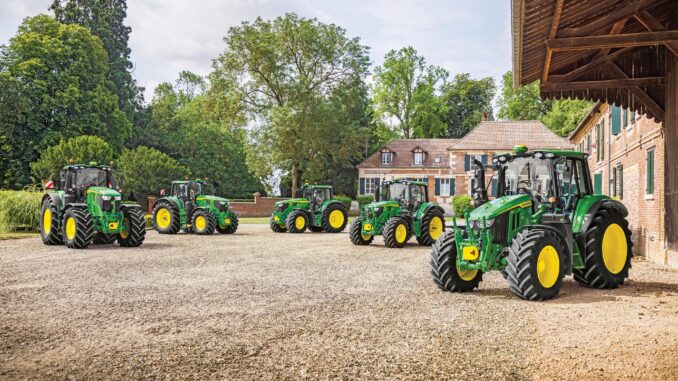
John Deere 3000 Series Compact Tractor Models and Maintenance Guide
The John Deere 3000 Series is an across-time family of compact utility tractors built for acreage owners, small farms, estates, landscape work, and demanding property maintenance.
Depending on the generation and model, these tractors range from straightforward gear-drive work machines to premium hydrostatic or PowrReverser-equipped compacts with cab availability, mid-mount mower capability, and loader-focused features.
And See:
- John Deere 3000 Series Battery Guide
- John Deere 3000 Series Fault Codes Guide
- John Deere 3000 Series Tool Box
This page is designed as a working directory for owners, buyers, and DIY maintainers of John Deere 3000 Series tractors in the United States and Canada. Use it to locate model-specific maintenance and troubleshooting content, identify legacy machines, and find practical information on loaders, hydraulics, PTO equipment, drivetrain service, and common operating faults. For the broader lineup, begin with the General John Deere Compact Tractor Guide, then return here for 3000 Series-specific model and repair coverage.
About the John Deere 3000 Series Compact Tractor Series
“John Deere 3000 Series” can refer to more than one related generation of Deere compact utility tractors. In older usage, it includes the basic 3005 and the 3000 Twenty-series machines—3120, 3320, 3520, and 3720. In modern Deere lineup terminology, the 3 Series continues the same general role through 3D, 3E, and 3R compact tractors, including models such as the 3025D, 3035D, 3043D, 3025E, 3032E, 3038E, 3033R, 3039R, and 3046R.
Across the full history of the family, engine power broadly runs from about 27 hp in the 3005 to approximately 45 hp in the current premium 3046R. These are compact utility tractors rather than sub-compact tractors. They are substantially heavier, wider, and more capable than Deere 1 Series machines, while generally remaining more maneuverable and easier to transport than larger 4 Series compact utility tractors.
The 3000 Series is commonly used for loader work, mowing, brush control, material handling, driveway grading, snow removal, light tillage, post-hole digging, estate maintenance, and small-farm chores. A properly matched model can handle anything from maintaining several acres of lawn and woodland tracks to moving feed, soil, gravel, firewood, fencing materials, or round-bale-scale loads within the tractor’s limits.
Transmission choice is one of the main dividing lines in the range:
-
Older 3000 Twenty tractors were offered with eHydro hydrostatic drive, while several models also had a 12F/12R PowrReverser option.
-
The 3005 and present-day 3D tractors emphasize simple mechanical gear-drive operation, normally with an 8F/8R transmission.
-
The 3E models use two-range hydrostatic drive with Twin Touch pedals.
-
The premium 3R range adds a three-range hydrostatic transmission or, on selected models, a PowrReverser transmission.
-
Four-wheel drive is standard across the current 3 Series family and is a core part of their usefulness for loader work, wet ground, snow, slopes, and traction-demanding implement work.deere+1
Depending on age and specification, equipment can include a Category 1 three-point hitch, independent rear PTO, folding ROPS, open operator station, optional enclosed cab, front-end loader mounting, hydraulic remote valves, AutoConnect mid-mount mower compatibility, and iMatch Quick-Hitch compatibility. Premium 3R models are the closest descendants of the older 3000 Twenty tractors in terms of operator comfort, transmission sophistication, and option availability. Current 3D and 3E machines are more value-oriented choices for owners who prioritize basic capability and simpler ownership.manuals.deere+1
Relative to Deere’s other compact ranges, the 3000 Series sits above the 1 Series sub-compact machines and the lighter 2 Series compact tractors. It is often the practical “middle ground” for owners who need more lift capacity, implement capability, ground clearance, and weight than a sub-compact can provide, but do not require the size, cost, or heavier Category 1/2 implement capability associated with many 4 Series tractors.
John Deere 3000 Series Compact Tractor Models
The following table is an across-time USA and Canada index. It combines legacy machines sold under the original 3000/3000 Twenty naming convention with the modern 3D, 3E, and 3R compact tractor families that occupy the same 3 Series position in John Deere’s North American compact lineup.
Horsepower figures are approximate gross engine ratings and can vary slightly by year, emissions generation, and published specification standard.
| Repair Guide | Serial Number Lookup | Winter Maintenance |
| John Deere 3010 | ||
| John Deere 3020 |
The legacy 3120, 3320, 3520, and 3720 were part of Deere’s 3000 Twenty compact utility tractor range. Deere documentation identifies approximate gross ratings of 29.5 hp, 32.4 hp, 37.2 hp, and 43.7 hp respectively, with eHydro available across the group and 12F/12R PowrReverser availability on selected models.manuals.deere+1
The original 3005 is generally identified as a 27 hp tractor produced from approximately 2008 to 2012. The 3000 Twenty family is commonly associated with production from the mid-2000s into the early 2010s, although exact production dates can vary by model and regional inventory history.tractordata+2
In the current North American 3 Series lineup, Deere lists 3D models at 24.7–42.2 hp, 3E models at 24.7–37.3 hp, and 3R models at approximately 32.2–45.3 hp. Current 3D machines use 8F/8R gear transmissions, while the 3E family uses two-range hydrostatic drive and 3R tractors offer higher-spec hydrostatic and selected PowrReverser arrangements.deere
3000 Series Compact Tractor Maintenance Guides
Routine Service and Checks
Routine service is the best protection against expensive repairs on any John Deere 3000 Series compact tractor. The exact service interval, fluid capacity, lubricant specification, and filter part number depend on the model and serial-number range, so owners should always confirm details in the operator’s manual before ordering parts or draining fluids.
For most tractors in this family, the regular maintenance plan should include:
-
Checking engine-oil level before operation, especially on tractors used on slopes, during extended loader work, or in hot weather.
-
Changing engine oil and the oil filter at the manufacturer’s stated interval, with particular attention to break-in servicing on recently acquired low-hour or restored tractors.
-
Draining water from the fuel system when applicable and replacing fuel filters on schedule.
-
Inspecting the air-cleaner restriction indicator, primary element, dust-unloader valve, intake hoses, and clamps.
-
Checking coolant level only when the engine is cold, inspecting radiator screens, and cleaning chaff from the radiator, oil cooler, and grille areas.
-
Checking front-axle lubricant, especially on four-wheel-drive machines that frequently carry loader loads or work in mud, snow, or uneven ground.
-
Greasing loader pivots, steering linkages, front axle points, three-point-hitch pivots, driveline joints, and attachment pivot points.
-
Inspecting hydraulic/transmission oil level and checking filter-service intervals according to the correct model manual.
A useful site structure is to maintain a 3000 Series compact tractor service interval checklist as the main service-planning page. This can link out to DIY maintenance for 3000 Series compact tractors, John Deere 3000 Series engine oil and filter service, compact tractor hydraulic fluid and filter changes, and seasonal maintenance for Deere compact tractors.
Do not assume one service kit fits every 3000 Series tractor. A 3005, 3320, 3038E, and 3046R may have different engines, hydraulic capacities, filters, axle arrangements, and emissions equipment. Check the model designation, serial number, and any mid-production updates before purchasing filters, belts, fluids, or repair parts.
Hydraulics, Loader, and 3-Point Hitch
Hydraulic maintenance matters because the hydraulic system operates more than the loader. Depending on model and equipment, it may support power steering, hydrostatic transmission functions, the three-point hitch, selective-control valves, mower lift equipment, and hydraulic attachments.
Start with clean oil, the correct fluid specification, and a clean suction system. A slow or weak loader may be caused by low fluid, a restricted filter, air entering through a suction connection, a quick-coupler issue, worn loader pins, an incorrectly connected hose, a relief-valve concern, or simply an overloaded bucket. Before assuming a major hydraulic failure, inspect the simple causes first.
Loader care should include regular greasing of pivot pins and loader-attachment points, checking pins and retaining hardware, examining hoses for abrasion or wetness, and keeping quick couplers clean before connecting implements. A pin that no longer accepts grease may be seized, misaligned, blocked with hardened grease, or loaded by bucket position. Relieve attachment pressure and reposition the loader safely before forcing lubricant into a fitting.
Three-point hitch checks should include:
-
Inspecting lower lift arms, stabilizers, sway links, top link, check chains, and retaining clips.
-
Keeping implement pins and hitch balls lubricated where appropriate.
-
Checking for bent stabilizer parts caused by side-loading a rear blade, box blade, or rotary cutter.
-
Confirming that draft or position-control adjustments are correctly set on tractors equipped with those features.
-
Looking for external leaks at lift-cylinder areas, remote-valve couplers, hydraulic hoses, and loader valve connections.
Useful internal guide targets include Hydraulic maintenance and leak diagnosis on 3000 Series tractors, Loader and 3-point hitch maintenance for 3000 Series, John Deere compact tractor hydraulic quick-coupler troubleshooting, and Front-end loader grease points and inspection checklist.
Transmission and Drivetrain
The service approach changes according to transmission type. Gear-drive tractors such as the 3005, 3025D, 3035D, and 3043D need regular clutch, linkage, shift-pattern, and drivetrain inspection. Hydrostatic models need clean hydraulic oil, proper pedal-linkage adjustment, cooling-system cleanliness, and attention to transmission response under load.
On hydrostatic tractors, loss of performance can sometimes be normal operating behavior rather than a fault. High range, steep terrain, a heavily loaded bucket, a dragging implement, low engine speed, or engaged brakes can all make the tractor feel weak. Reduce travel range, raise engine speed to the normal working range, confirm the parking brake is fully released, and compare performance with and without an implement before diagnosing an internal hydrostatic problem.
For all four-wheel-drive models, inspect:
-
Front-axle oil level and condition.
-
Front driveshafts, universal joints, seals, and protective boots where fitted.
-
Front tire condition and correct matched tire sizing.
-
Wheel-nut torque and signs of loose wheel centers.
-
Differential-lock linkage operation.
-
Brake adjustment and parking-brake release.
-
PTO shaft guards, coupler condition, and implement driveline lubrication.
A dedicated Transmission and driveline maintenance across 3000 Series compact tractors guide can serve as the main internal hub, with separate model-level pages for eHydro troubleshooting, PowrReverser shifting concerns, gear-drive clutch and linkage checks, and front-axle service.
3000 Series Compact Tractor Troubleshooting Guides
The 3000 Series includes several generations and transmission systems, so diagnosis should always begin with the precise model, serial number, operating hours, warning indicators, transmission type, and recent repair history. A complaint such as “won’t move,” “loader is weak,” or “PTO will not engage” has different likely causes on a mechanical gear-drive 3005 than on a premium eHydro 3320 or a current 3046R.
This section should operate as a hub. Broad symptom guides should route readers to model-specific posts, such as a 3005 fuel-system guide, 3320 eHydro diagnostic guide, 3038E hydraulic troubleshooting guide, or 3046R PTO fault guide.
Starting, Engine, and Fuel Problems
Common no-start and poor-running complaints include a weak battery, corroded cable terminals, failed safety-switch interlock, fuel restriction, air in the fuel system, dirty fuel filter, glow-plug concerns, water-contaminated diesel, or a plugged air filter. On a diesel compact tractor, cold-start difficulty can also be made worse by thick engine oil, poor battery condition, low cranking speed, an incorrect starting procedure, or failure of the preheat system.
Begin diagnosis in a sensible order:
-
Confirm that the PTO is disengaged, transmission and range selectors are in the correct neutral position, and the operator-presence and safety-interlock conditions are met.
-
Test battery voltage and inspect both battery terminals and ground connections under load, not only at rest.
-
Check fuel quantity, fuel-shutoff position, visible water contamination, filter condition, and any signs of air leakage around fuel hoses.
-
Inspect air intake restriction and look for collapsed hoses, rodent damage, or blocked radiator and grille screens.
-
Note whether the engine cranks normally, cranks slowly, starts then dies, produces abnormal smoke, or loses power only under PTO or loader load.
Power loss under load may come from fuel restriction, an air-intake problem, excessive implement demand, overheating, incorrect PTO gearing, or working a hydrostatic tractor in too high a travel range. Do not adjust injection-system components or defeat safety circuits as a first response.
Useful internal targets include 3000 Series compact tractor starting problems – diagnostics and fixes, Engine and fuel system issues across 3000 Series models, John Deere compact tractor safety-switch troubleshooting, and Diesel compact tractor loses power under load.
Hydraulic and Loader Performance Issues
Weak lift, delayed bucket curl, jerky loader movement, slow three-point-hitch response, or an implement that will not raise can all point to hydraulic issues, but they do not always indicate a failed pump.
First check hydraulic fluid level, the correct position of hydraulic controls, quick-coupler seating, visible hose damage, filter-service status, and engine speed. Cold hydraulic oil will make many tractors operate slowly until warmed. A loader that works normally after warming may need a fluid-condition and viscosity review before more complex repairs are considered.
A loader that will not lift should be tested without a load. If it moves normally empty but will not raise a loaded bucket, compare the load with the tractor’s rated capacity and inspect for bypassing, leaks, incorrect plumbing, relief-valve concerns, or attachment geometry problems. If one loader function works but another does not, inspect the valve section, couplers, cylinder condition, and hose routing relevant to that function.
On tractors with removable loaders or quick-connect systems, confirm that all hydraulic couplers are fully latched. A partly connected coupler can restrict flow, cause one function to fail, or lead to confusing intermittent symptoms.
Recommended hub pages include Hydraulic performance problems on 3000 Series compact tractors, Loader won’t lift or is slow on 3000 Series models, Three-point hitch will not raise or lower – Deere compact diagnosis, and Hydraulic quick-coupler problems and pressure relief.
Transmission, Drive, and PTO Problems
A tractor that will not move should first be checked for simple operating causes. Confirm the parking brake is released, the correct range is selected, the transmission selector is correctly positioned, the differential lock is not binding, and no linkage has been knocked out of adjustment. On hydrostatic models, also ensure that the engine is running at a suitable working speed and that the travel pedals return properly to neutral.
Poor hill performance on hydrostatic models is often caused by selecting too high a range. Lower range is intended for heavier pulling, loader work, steep slopes, and precision work. Trying to climb or push a full bucket in high range can make a sound tractor feel underpowered.
For gear-drive tractors, clutch adjustment, clutch wear, shift linkage, range-selector movement, brake drag, and driveline condition deserve inspection. For PowrReverser or eHydro machines, electronic controls, neutral switches, pedal sensors, transmission cooling, correct hydraulic-fluid level, and stored diagnostic information may be relevant. Use the exact operator’s and technical documentation for the individual tractor before testing electrical circuits or calibrating transmission controls.
PTO faults may include failure to engage, engagement followed by immediate shutdown, intermittent operation, noise, inability to maintain implement speed, or a PTO that stops under load. Start by confirming the implement driveline is correct, guards are not binding, the implement itself turns freely, the correct PTO speed is selected, and the operator-presence requirements are satisfied. Then inspect PTO switch operation, fuses, wiring connectors, safety interlocks, clutch or engagement mechanisms, and hydraulic or electrical controls as applicable to the model.
Core internal guide targets include Drive and transmission problems on 3000 Series compact tractors, PTO won’t engage or drops out across 3000 Series models, eHydro transmission diagnostics for Deere compact tractors, and PowrReverser operating and troubleshooting guide.
Attachments and Implements for the 3000 Series Compact Tractor Series
The strength of the John Deere 3000 Series is its ability to work with a wide selection of implements. The exact attachment range depends on tractor model, loader mounting package, three-point-hitch capacity, rear PTO output, hydraulic flow, tire choice, ballast, and whether the machine has mid-PTO or rear hydraulic remotes.
Common equipment used with this family includes:
-
Front-end loaders for soil, mulch, gravel, feed, firewood, manure, and general material handling.
-
Pallet forks, bale spears, grapples, buckets, landscape rakes, and other loader-mounted tools where hydraulic capacity and ballast permit.
-
Mid-mount mower decks on compatible models, especially premium and lawn/estate-oriented configurations.
-
Rear finish mowers and rotary cutters for lawn, pasture-edge, orchard, and rough-grass work.
-
Box blades, rear blades, landscape rakes, grader blades, and drag harrows for driveway and surface maintenance.
-
Post-hole diggers, tillers, spreaders, sprayers, seeders, and cultivators for smallholding and garden work.
-
Snow blades, rear-mounted snow blowers, front snow equipment, ballast boxes, chains, and winter traction equipment.
-
Backhoes and compatible digging equipment on models designed and equipped for them.
Compatibility must never be judged by horsepower alone. A 25 hp tractor may have enough engine power to spin a particular mower but lack the weight, hydraulic lift capacity, tire traction, or loader capacity to use a different attachment safely. Conversely, a 40 hp compact may operate an implement comfortably but still be limited by three-point-hitch lift, front ballast, transport width, or terrain.
Match the implement to these factors:
For site navigation, use Attachments and implement options for 3000 Series compact tractors as the central attachment page. It can route readers to Setting up and using loaders and rear implements on 3000 Series, Selecting a rotary cutter for Deere 3 Series compact tractors, Compact tractor ballast and tire setup guide, and John Deere compact tractor snow-removal equipment guide.