
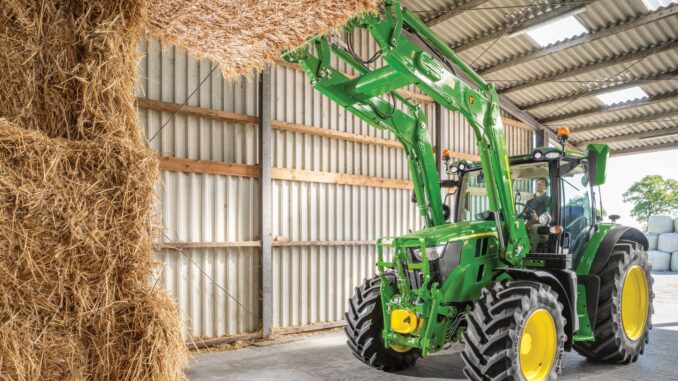
John Deere 3046R Repair, Troubleshooting and Maintenance Guide (USA & Canada)
The John Deere 3046R is a 3R Series compact utility tractor built for heavier homeowner, estate, and light property-maintenance work, with a diesel engine, hydrostatic transmission, and compatibility with mid-mount mower decks and front/rear implements.
And See
The Jhn Deere 3046R is a compact utility tractor aimed at owners who need more capability than a lawn tractor but still want a machine that is practical for mowing, loader work, material handling, driveway maintenance, and light acreage tasks. In Deere’s lineup, it sits in the premium 3R Series and combines a 44.7 hp diesel engine with hydrostatic drive and an open-center hydraulic system, making it suitable for both mowing and utility jobs around larger residential or rural properties.
This guide covers John Deere 3046R repair basics, symptom-based troubleshooting, routine maintenance, parts sourcing, and a detailed FAQ for USA and Canada owners. The focus is on what owners actually notice first—hard starting, poor running, vibration, hydraulic or drive complaints, electrical faults, and mower-related issues—before narrowing down the likely causes.
General overview of the John Deere 3046R
The John Deere 3046R belongs to Deere’s 3R compact utility tractor family, alongside models such as the 3033R and 3039R, and shares the same operator manual family in North America. It is designed as a compact diesel tractor rather than a simple lawn-and-garden machine, so owners are dealing with tractor systems such as hydraulics, PTO functions, emission-related components, front axle service points, and implement-specific wear parts in addition to basic engine maintenance.
Key systems on the John Deere 3046R include:
-
Engine and fuel system, including diesel filtration and air intake components.
-
Drive system, including hydrostatic transmission and front axle service items.
-
Electrical system, including battery, switches, lighting, and safety interlocks.
-
Hydraulic and PTO systems, which are central to attachment performance and tractor functionality.
-
Mower system, when equipped with a mid-mount deck such as the 48-, 54-, or 60-inch deck options listed in Deere deck documentation.
Common service parts owners frequently buy for this platform include the LVA21038 filter pack, engine oil filter, air filter elements, fuel filters, hydraulic-related filters, and cab air filters on cab-equipped tractors. Because deck and attachment parts vary by configuration, blades, belts, and gauge-wheel parts must be matched to the exact mower deck or implement rather than ordered only by tractor model.
John Deere 3046R troubleshooting approach
The best way to diagnose a John Deere 3046R is to start with the visible symptom rather than guessing which component failed. For example, “cranks but will not start,” “starts then dies,” “won’t move correctly,” or “mower cuts unevenly” each points to a different system and saves time compared with replacing random parts.
Main symptom groups for the John Deere 3046R include:
-
Starting issues, such as no crank, slow crank, or cranks but will not fire.
-
Running issues, such as low power, rough operation, smoke, or shutdowns.
-
Mower and PTO issues, such as poor cut quality, belt slip, or uneven mowing on deck-equipped tractors.
-
Vibration and noise, including driveline, mower deck, or engine-related sources.
-
Overheating and leaks, including coolant, oil, fuel, and hydraulic leaks.
-
Transmission and drive complaints, including hydrostatic response issues or front axle service-related concerns.
-
Electrical and safety-switch issues, including intermittent no-start conditions and PTO lockout faults.
Emergency and immediate repair needs on the John Deere 3046R
Certain John Deere 3046R problems should be addressed immediately because they can create a safety risk or turn a smaller repair into a much more expensive one. The big red flags are fuel leaks, hydraulic leaks under pressure, overheating, strong vibration, brake or steering issues, and any PTO or mower problem that creates impact noise or sudden belt failure.
4.1 Starting issues
A no-start or crank-no-start condition matters because repeated cranking can flatten the battery, stress the starter, and hide an underlying fuel or safety-interlock problem. On a diesel compact tractor like the 3046R, starting faults often come from battery condition, connection issues, fuel delivery restrictions, or interlock-related lockouts rather than a single “bad spark plug” type failure seen on gas lawn tractors.
Common causes:
-
Weak or discharged battery.
-
Corroded or loose battery cables.
-
Seat, PTO, range, or other safety interlock not in the required position.
-
Restricted fuel filter or fuel supply problem.
-
Air in the fuel system after service or low-fuel operation.
-
Cold-weather starting conditions or glow/preheat procedure issues.
Basic owner checks:
-
Confirm PTO, range, and operator controls are in the correct start positions.
-
Check battery voltage, terminal tightness, and visible corrosion.
-
Verify there is clean diesel fuel in the tank and inspect the fuel filter service status.
-
Listen for normal cranking speed; slow cranking usually points to battery, cable, or starter-circuit issues.
-
If the tractor recently had fuel service, suspect air in the system before ordering parts.
4.2 John Deere 3046R cut-quality problems
If a deck-equipped John Deere 3046R leaves streaks, scalps, or uneven cut lines, the issue is usually setup, blade condition, deck cleanliness, or deck-specific wear parts rather than a tractor-engine fault. Poor cut quality should not be ignored because it often gets worse as blades dull, belts slip, or deck pitch drifts out of specification.
Common causes:
-
Dull, bent, or mismatched blades.
-
Packed grass under the deck.
-
Incorrect tire pressure affecting deck level.
-
Deck not leveled correctly side-to-side or front-to-rear.
-
Worn or slipping mower belt.
-
Ground speed too high for conditions.
Basic owner checks:
-
Check tire pressures before adjusting deck level.
-
Inspect blades for wear, bends, and matching part numbers.
-
Clean the underside of the mower deck.
-
Inspect the belt and pulleys for glazing, cracking, or heat damage.
-
Recheck deck pitch and mowing height after any blade or belt work.
4.3 Vibration and noise
Unusual vibration on a John Deere 3046R is an immediate warning sign because it can point to blade damage, loose hardware, driveline issues, or attachment imbalance. Continued use can damage bearings, spindles, mounts, or shafts, especially if the problem started suddenly after striking an object.
Common causes:
-
Bent mower blade or damaged spindle assembly.
-
Loose wheel, loader, or attachment hardware.
-
PTO driveline or implement imbalance.
-
Engine mounting or accessory issues.
-
Debris wrapped around rotating parts.
Basic owner checks:
-
Stop operation immediately and inspect for obvious impact damage.
-
Check blade condition and spindle area if vibration appears only with mower engaged.
-
Inspect wheel lug torque and attachment mounting points.
-
Remove packed debris from shafts, pulleys, and deck areas.
-
If vibration remains with PTO off, move diagnosis toward engine, driveline, or chassis areas.
4.4 John Deere 3046R overheating and leaks
Overheating and leaks are high-priority issues because diesel engines and hydraulic systems can be damaged quickly if oil, coolant, or hydraulic fluid levels drop too far. Even a small recurring leak matters on a compact tractor because contamination, low fluid level, and belt exposure can create multiple secondary failures.
Common causes:
-
Low coolant or neglected cooling-system service.
-
Blocked radiator screen or debris-packed cooling fins.
-
Loose hose clamp or aging hose.
-
Engine oil leak around filter or sealing surfaces.
-
Hydraulic hose seepage or fitting leak.
Basic owner checks:
-
Park safely and let the tractor cool before opening the hood.
-
Check coolant, engine oil, and visible hydraulic leak points.
-
Clean screens and radiator intake areas carefully.
-
Inspect hoses, clamps, and filter seating after recent service.
-
Do not continue heavy operation if temperature warning or active fluid loss is present.
4.5 Transmission and drive problems
A John Deere 3046R that hesitates, feels weak on hills, or responds poorly to pedal input may have a hydrostatic-control, fluid, linkage, or axle-related issue. Drive complaints are not always transmission failure, so owners should first rule out brake drag, fluid level issues, or range-selection problems.
Common causes:
-
Incorrect operating range for the task.
-
Low or overdue transmission/hydraulic service items.
-
Linkage or pedal return issues.
-
Front axle oil or driveline concerns.
-
Parking brake not fully released.
Basic owner checks:
-
Confirm range selection matches load and terrain.
-
Check for brake drag or partial parking-brake engagement.
-
Review hydraulic/transmission service history and filter status.
-
Inspect for visible leaks or contamination around axle and hydraulic areas.
-
Escalate quickly if the tractor loses pulling power with noise, heat, or fluid contamination.
4.6 Electrical problems
Electrical issues on the John Deere 3046R often show up as intermittent starting, warning lights, dead accessories, or PTO engagement faults. Because many tractor functions are tied into switches and operator-presence logic, a simple wiring or connector problem can mimic a major mechanical failure.
Common causes:
-
Weak battery or poor ground.
-
Blown fuse or poor fuse contact.
-
Faulty safety switch.
-
Corroded connectors exposed to moisture or vibration.
-
Lighting or accessory circuit failure.
Basic owner checks:
-
Start with battery condition and grounds before chasing switches.
-
Inspect fuses and obvious connector corrosion.
-
Test whether the fault changes with seat position, PTO switch position, or range selection.
-
Check harness routing around areas that move or vibrate.
-
Avoid bypassing safety systems as a permanent fix.
DIY or dealer? Repair decision guide
The realistic DIY line on a John Deere 3046R is wider than on many compact tractors for routine service, but it still stops short of internal hydraulic, emission-system, and major driveline work unless the owner has strong tools, space, and diagnostic experience. Most owners can safely handle filters, fluids, blades, deck service, battery work, and basic inspections, while dealer support is the better choice for internal hydrostatic, electronic diagnosis, and advanced engine or emissions faults.
Good DIY jobs:
-
Engine oil and filter service.
-
Air and fuel filter replacement.
-
Battery replacement and terminal cleaning.
-
Deck blade inspection, sharpening, and replacement on deck-equipped tractors.
-
Deck belt inspection and straightforward replacement when deck access is clear.
-
Cleaning radiator screens, mower deck underside, and visible debris buildup.
Advanced DIY or dealer jobs:
-
Hydraulic leak tracing beyond simple hose tightening.
-
Front axle service beyond basic level checks.
-
Hydrostatic drive diagnosis with persistent performance loss.
-
PTO clutch or electrical interlock diagnosis that requires meter-based testing.
-
Emission-system component faults, including diesel particulate filter-related issues.
-
Internal engine, injection, or valve-clearance work.
Skill level guide:
-
Beginner: air filter, battery checks, radiator screen cleaning, deck cleaning.
-
Intermediate: oil and filter service, fuel filters, blade changes, deck belt work.
-
Advanced: electrical diagnosis, hydraulic repairs, driveline work, emission-system troubleshooting.
John Deere 3046R parts needed, OEM vs aftermarket, and what information you need
Before ordering any John Deere 3046R repair parts, collect the full tractor model, the Product Identification Number, engine details, and the exact mower deck or attachment model if fitted. That matters because filters may cross across several models, but deck belts, blades, some switches, and attachment parts are often serial- or configuration-sensitive.
For tractors, you should gather:
-
Full model name: John Deere 3046R.
-
Product Identification Number (PIN).
-
Engine model and serial number.
-
Deck size or attachment version, if the tractor is used with a mower deck or front/rear implement.
OEM vs aftermarket guidance:
-
Use OEM for belts, fit-sensitive deck parts, hydraulic filters, and safety-related electrical items because fit and operating characteristics matter more than small price savings.
-
Aftermarket can be reasonable for certain batteries, blades, and some filter cross-references if the supplier clearly lists the John Deere 3046R or the exact OEM number being replaced.
-
For anything tied to serial breaks, deck variants, cab equipment, or front PTO systems, OEM lookup is usually the safer route.
Where to find parts diagrams and service manuals for the John Deere 3046R
The best starting point is Deere’s own operator manual for the 3033R, 3039R, and 3046R family because it covers operating, identification, and maintenance procedures for North America. For deeper parts lookup, Deere’s online parts ecosystem and technical publications are more reliable than generic seller listings because they help confirm compatibility before you buy.
Useful sources:
-
John Deere 3033R/3039R/3046R Operator’s Manual for operating instructions, service intervals, and identification basics.
-
John Deere older North America operator manual view for model-family manual access and identification sections.
-
John Deere Technical Publications search for official manuals and publication lookup.
-
John Deere Shop filter pack page for routine maintenance kit details.
How to locate model, serial and engine numbers
These numbers matter because John Deere 3046R parts can change by production range, configuration, deck choice, and engine-specific application. Using only “3046R” when ordering can work for common filters, but it is not enough for every repair part.
Steps:
-
Locate the tractor Product Identification Number using the identification guidance in the operator manual’s product identification section.
-
Record the full model exactly as shown with any configuration details.
-
Find the engine identification information on the engine data label or identification point described in the manual family.
-
If the tractor has a mower deck or attachment, record the deck or implement model and serial details separately.
-
Photograph all tags before ordering so you can compare numbers at checkout or at the dealer counter.
Buying parts online and in physical stores for the John Deere 3046R
The best buying strategy is to identify the OEM number first, then compare official Deere supply with reputable aftermarket sources for price and availability. This reduces returns and helps avoid ordering a part that fits a different deck, a different cab/open-station setup, or a different serial range.
-
Online: best for maintenance kits, filters, and clearly cross-referenced parts; confirm model and OEM number before purchase.
-
Dealer counter: best for serial-sensitive parts, hydraulic items, PTO components, and anything where the parts diagram matters.
-
Retail stores: acceptable for batteries, some oils, and selected filters only when the packaging clearly matches the 3046R or the exact OEM cross-reference.
Useful links:
Step-by-step fitting guide for common parts on the John Deere 3046R
These are high-impact DIY jobs that solve a large share of routine John Deere 3046R reliability complaints. Always park safely, lower implements, remove the key, and let hot components cool before starting work.
Change the engine oil and oil filter
Fresh oil and a clean filter protect the diesel engine and are core routine service tasks in Deere’s maintenance guidance.
-
Warm the engine briefly so the oil drains more completely.
-
Park safely, shut down, and place a drain pan under the oil drain plug.
-
Remove the drain plug and allow the oil to drain fully.
-
Remove the old oil filter, lightly oil the new filter gasket, and install the new filter to the specified contact-and-turn guidance.
-
Refit the drain plug, refill with the correct oil, and verify level after running the engine briefly.
Replace the air filters on the John Deere 3046R
Air filter service helps prevent hard starting, smoke, and power loss caused by restricted intake flow.
-
Open the hood and locate the air cleaner housing.
-
Remove the housing cover carefully to avoid dropping dirt into the clean side.
-
Replace the primary element and, if fitted and due, the secondary element according to the service requirement.
-
Wipe the housing sealing surfaces clean without forcing dirt inward.
-
Reassemble the housing and confirm the cover seals evenly.
Replace the fuel filters
Fuel filter restriction is a common cause of poor running, hard starting, and low-power complaints on diesel compact tractors.
-
Park safely and clean the area around the filters before removal.
-
Remove the old filter elements carefully and catch any spilled fuel.
-
Install the correct replacement filters from the kit or individual parts listing.
-
Follow the machine’s fuel-system priming or restart procedure in the operator manual.
-
Check carefully for leaks after restart.
Inspect or replace deck blades and belt
On deck-equipped John Deere 3046R tractors, blade and belt condition strongly affects cut quality and vibration.
-
Remove the deck or position it safely for access according to the deck procedure.
-
Inspect blades for bends, cracks, uneven wear, and edge damage.
-
Inspect the belt for glazing, cracking, frayed edges, or burned spots.
-
Replace worn parts with the exact deck-specific components for your deck size.
-
Recheck deck level and test at low speed before returning to full mowing use.
Maintenance to prevent John Deere 3046R problems reoccurring
Regular maintenance prevents many John Deere 3046R failures before they show up as expensive repairs. Most recurring owner complaints on compact tractors trace back to overdue filter changes, poor cleaning around cooling systems, deck neglect, low fluid levels, or delayed inspection after vibration and impacts.
Focus areas:
-
Starting reliability: keep the battery charged, terminals clean, and fuel filters current.
-
Engine health: change oil and filters on schedule and monitor for leaks.
-
Cooling protection: keep screens and cooling areas free of debris.
-
Cut quality: sharpen or replace blades and inspect deck belts before they fail.
-
Drive performance: check front axle oil level and keep hydraulic/transmission service current.
-
Electrical reliability: inspect grounds, fuses, and connectors periodically, especially on machines stored outdoors.
John Deere 3046R maintenance schedule and year-round checklist
The operator manual family and maintenance summaries show that the John Deere 3046R uses staged service intervals rather than a one-size-fits-all annual routine. The exact hour-based tasks should always be confirmed against the manual for your configuration, but the following structure reflects the published service pattern for this tractor family.
Daily / before each use
-
Check engine oil level.
-
Check coolant level and inspect for visible leaks.
-
Check fuel supply and look for water or contamination concerns.
-
Inspect tires, lights, and obvious hardware/security points.
-
Clean screens and remove debris from cooling areas.
After 50 hours
-
Check front axle oil level.
-
Lubricate the machine at specified grease points.
-
Check cab ROPS mounting hardware torque if cab-equipped.
-
Inspect front hitch hydraulic connections for leaks if equipped.
Every 200 hours
-
Check belt tension and adjust if required.
-
Review any recurring seepage, hose wear, or clamp looseness.
-
Inspect intake-system hose connections.
Every 400 hours or yearly
-
Change engine oil and filter.
-
Replace fuel filters.
-
Inspect hoses and clamps.
-
Review overall intake and cooling-system condition.
Every 1000 hours and beyond
-
Check engine valve clearance through a John Deere dealer.
-
Flush and refill coolant at the interval specified for the coolant type and maintenance practice used.
Seasonal checklist
-
Spring: check battery condition, fluid levels, and mower setup before mowing season.
-
Mid-season: inspect blades, belt condition, radiator cleanliness, and grease points.
-
Fall: clean thoroughly, inspect for leaks, and complete overdue filter or oil services before storage or winter use.
-
Winter or cold-weather prep: pay extra attention to battery strength and clean fuel-system maintenance.
Repair, upgrade, or replace?
For a John Deere 3046R, repair usually makes sense because it is a premium compact utility tractor with enough capability to justify proper upkeep, especially when the issue is limited to maintenance items, deck wear parts, or straightforward electrical and hydraulic corrections. Upgrade makes more sense when the tractor itself is sound but your jobs have outgrown the current deck, loader, cab/open-station setup, or attachment package, while replacement becomes the stronger option only when repair needs stack up across multiple major systems.
Repair if:
-
The problem is isolated to filters, belts, blades, battery, hoses, or switches.
-
Engine and hydrostatic performance are otherwise solid.
-
The tractor has been maintained reasonably well.
Upgrade if:
-
You need different implements, a larger deck, or more attachment capability rather than a different tractor entirely.
-
Your current configuration is limiting productivity more than reliability is.
Replace if:
-
The machine has major engine, hydrostatic, hydraulic, and electrical issues at the same time.
-
Repair cost approaches the value of a sound used replacement tractor in similar condition.
Expanded troubleshooting FAQ
1. Why will my John Deere 3046R not start?
A John Deere 3046R that will not start usually has a battery, cable, safety-interlock, or fuel-delivery problem rather than a random major engine failure. Start by checking battery condition, terminal tightness, PTO switch position, range selection, and whether the fuel filters are overdue. If it cranks slowly, focus on the battery and cables first. If it cranks normally but will not fire, move toward fuel restriction or air in the fuel system.
2. Why does my John Deere 3046R crank but not fire?
That symptom commonly points to fuel delivery, air in the fuel system, or an operating-condition issue rather than a starter problem. Make sure the tractor has clean diesel fuel, the shutoff and controls are set correctly, and the fuel filters are not restricted. If the problem started right after fuel filter service, suspect priming or trapped air. Repeated cranking without correcting the cause only adds battery stress.
3. Why is my John Deere 3046R hard to start in cold weather?
Cold starts are harder on diesel tractors because cranking demand rises and fuel ignition is less forgiving at low temperatures. A weak battery, marginal cables, or neglected filters can show up first in cold weather. Start with battery health and proper cold-start procedure from the operator’s manual. If the tractor is consistently slow to fire in winter, maintenance condition matters more than guessing at expensive parts.
4. Why does my John Deere 3046R start and then die?
Starting and then stalling often indicates fuel starvation, air in the fuel system, or a control/interlock issue. Check fuel quality, filter condition, and whether the symptom appeared after recent service. If the engine runs briefly and fades out, a restriction is more likely than an instant electrical cutoff. Intermittent stalling can also come from wiring or connector faults.
5. Why is my John Deere 3046R low on power?
Low power usually comes from restricted air or fuel flow, incorrect operating range, or a load issue rather than immediate internal engine damage. Check the air filter, fuel filters, and whether the tractor is being pushed too hard in the wrong range. On mowing jobs, an overloaded deck or dull blades can make the engine seem weaker than it is. Resolve basic maintenance items before assuming major repairs are needed.
6. Why is my John Deere 3046R smoking?
Smoke points to incomplete combustion, load issues, intake restriction, fuel issues, or more serious engine concerns depending on color and when it appears. A dirty air filter and overloaded operation are common owner-level causes to rule out first. If smoke is sudden, heavy, and persistent, stop hard use and inspect the tractor before continuing. Dealer diagnosis is smarter when smoke is paired with power loss or warning indicators.
7. Why does my John Deere 3046R overheat?
Overheating commonly comes from blocked cooling screens, dirty radiator areas, low coolant, or unresolved cooling-system maintenance. Compact tractors used for mowing or loader work collect debris fast, so airflow problems are common and easy to miss. Clean the cooling inlets and confirm coolant level before assuming deeper failure. Do not keep working a tractor that is already showing high-temperature warning signs.
8. Why is my John Deere 3046R leaking oil?
Oil leaks often come from filter sealing problems, hose or fitting seepage, or aging seals rather than catastrophic engine failure. Check whether the leak started after a recent oil or filter change, because service-related sealing issues are common. Clean the area first so you can identify fresh leakage accurately. Running with a known leak risks low oil level and contamination elsewhere on the tractor.
9. Why is my John Deere 3046R leaking hydraulic fluid?
Hydraulic leaks matter because fluid loss can affect steering, implement performance, and system longevity. Look for wet hoses, fittings, couplers, and connection points before assuming an internal failure. A small drip can become serious under pressure, so do not ignore seepage that worsens during operation. Dealer help is the safer route if the leak is from a major component housing or hard-to-access line.
10. Why won’t my John Deere 3046R move properly?
Poor movement or weak drive response can come from the wrong range selection, brake drag, low fluid condition, or hydrostatic-related issues. Start by confirming the tractor is being operated in the correct range for the job and that the parking brake is fully released. Then review hydraulic/transmission service history and inspect for leaks. If the tractor loses movement with noise or heat, stop and escalate quickly.
11. Why is my John Deere 3046R weak on hills?
Hill weakness is often a sign that the tractor is overloaded, in the wrong range, overdue for service, or affected by a developing hydrostatic issue. Compare performance in lower range and under lighter load before assuming failure. If power is normal on level ground but poor under load, service condition and operating setup are the first things to check. Persistent weakness after maintenance deserves a more advanced diagnosis.
12. Why does my John Deere 3046R vibrate when mowing?
If vibration appears only when the mower is engaged, suspect blades, spindles, pulleys, or the belt before looking elsewhere on the tractor. Bent blades and impact damage are especially common after striking roots, stones, or hidden debris. Stop immediately and inspect rather than finishing the job. Continued use can damage spindle bearings and deck hardware.
13. Why does my John Deere 3046R vibrate even with the PTO off?
Vibration with the PTO off shifts suspicion away from the mower deck and toward tires, wheel hardware, engine mounting, driveline issues, or chassis-mounted attachments. Inspect for loose hardware, debris buildup, and anything recently installed or adjusted. If the problem began suddenly, think impact or loosened parts first. Persistent non-PTO vibration is a good reason to avoid heavy use until the source is confirmed.
14. Why is my John Deere 3046R cutting unevenly?
Uneven cutting usually comes from deck level, tire pressure, blade condition, or deck buildup rather than engine performance. Always check tire pressures before adjusting deck settings because one low tire can mimic a deck problem. Then inspect blade condition and clean under the deck. If the issue remains, recheck deck pitch and deck-specific wear points.
15. Why does my John Deere 3046R leave strips of uncut grass?
Strips usually mean the blades are dull, bent, slowing down under load, or not overlapping correctly due to deck issues. Packed grass under the deck and excessive ground speed can also cause it. Sharp blades and a clean deck often solve the problem faster than more invasive repairs. Belt slip is another common cause when the problem appears under heavier grass conditions.
16. Why is the mower belt on my John Deere 3046R slipping?
A slipping mower belt is usually worn, glazed, contaminated, or running with a pulley or tension issue on the attached deck. Heat marks and shiny belt sides are common visual clues. Replace belts with the exact deck-specific part number, not a “close enough” belt size. If a new belt slips quickly, inspect pulleys and alignment rather than blaming the belt alone.
17. How often should I replace blades on a John Deere 3046R?
There is no single hour number for every owner because blade life depends heavily on acreage, terrain, sand, and impact exposure. In practice, blades should be inspected regularly and replaced when bent, cracked, excessively worn, or no longer worth sharpening. Dull blades hurt cut quality and increase deck load. Owners mowing rough ground should inspect much more often than those mowing clean turf.
18. Can I sharpen John Deere 3046R mower blades instead of replacing them?
Yes, as long as the blades are not cracked, badly bent, or worn beyond safe service limits. Sharpening is a normal maintenance step, but the blade must remain balanced and structurally sound. If the blade has impact damage or severe edge loss, replacement is the safer choice. Reinstalling mismatched or unbalanced blades can create vibration immediately.
19. Why does my John Deere 3046R battery keep going flat?
A recurring flat battery usually points to poor charging habits, dirty connections, battery age, or a charging-system issue. Start with cable cleanliness and terminal tightness because corrosion creates resistance and slow cranking. If the battery is old or the tractor sits unused for long periods, replacement or maintenance charging may be needed. Intermittent electrical drains are possible, but connection faults are more common starting points.
20. Why are the lights or accessories on my John Deere 3046R not working?
That often comes down to a fuse, connector, switch, or ground issue rather than a major harness failure. Check the simple items first, especially after vibration, washing, or outdoor storage. If one circuit is dead but the tractor runs normally, local wiring and fuse diagnosis usually makes more sense than broader electrical guessing. Use the manual and parts resources to match the exact circuit involved.
21. Why does the PTO on my John Deere 3046R not engage?
PTO engagement problems can be mechanical or electrical, but operator-position and interlock conditions should be ruled out first. If the PTO refuses to engage, check seat position, switch condition, and related electrical behavior. On deck-equipped tractors, also inspect the belt and deck load because a seized or jammed deck can create secondary PTO complaints. Dealer diagnosis is often worthwhile when the issue is inside the PTO control system.
22. Why does my John Deere 3046R stall when I engage the mower?
That usually indicates the deck is overloaded, the belt or spindle system has resistance, or the engine is already marginal under maintenance load. Check for packed grass, dragging spindle bearings, and blade damage first. If the engine is already low on power due to restricted filters, PTO engagement can expose it. Solve airflow and deck drag issues before assuming a major engine problem.
23. Why is my John Deere 3046R using more fuel than expected?
Higher fuel use often follows heavy loads, dirty filters, poor mowing efficiency, or excessive idle time rather than a single failed component. If the tractor is mowing with dull blades or a slipping belt, the job takes longer and burns more fuel. Restricted intake and overdue service can also reduce efficiency. Compare current use with your typical workload before deciding something is wrong.
24. Why does my John Deere 3046R have warning lights on?
Warning lights should always be taken seriously because they can indicate temperature, pressure, charging, or system-management problems. Start with the operator manual to identify the exact indicator before continuing operation. Some warnings are tied to maintenance or operating condition, while others signal immediate shutdown needs. Do not guess when a light is paired with noise, heat, or loss of function.
25. What maintenance kit fits the John Deere 3046R?
Deere lists filter packs including LVA21038, and Deere/aftermarket listings also show TA25768 associated with 3033R, 3039R, and 3046R routine maintenance applications. The right choice depends on the exact service interval and configuration. Always confirm the model and serial context before ordering. Using a kit is often easier than piecing together routine filters one by one.
26. What oil filter fits the John Deere 3046R?
Deere shop content tied to 3046R-compatible parts references MIU800650 as an engine oil filter in that equipment context. Even so, owners should confirm the exact application against the current Deere parts listing or dealer lookup using the tractor’s identification details. That extra step matters if production or engine-specific changes apply. It is safer than relying on a generic marketplace listing alone.
27. What air filter fits the John Deere 3046R?
Deere shop content associated with the 3046R parts context lists AT338105 as a primary air filter element. Filter packs such as LVA21038 also bundle routine maintenance filters for compact tractor service. Always verify whether your service interval also calls for a secondary element or other intake components. Matching by OEM number is the best way to avoid mistakes.
28. How often should I change the oil on a John Deere 3046R?
Maintenance summaries associated with the 3046R show engine oil and filter change intervals at 400 hours or yearly in the referenced service material. Owners should still verify the exact interval in the operator manual and match it to their engine hours, usage, and service conditions. Heavy-duty or neglected operation is a good reason not to stretch intervals. Keeping records makes later diagnosis much easier.
29. How often should I change fuel filters on a John Deere 3046R?
Referenced maintenance material for the 3046R shows fuel filter replacement in the yearly/400-hour service structure. If the tractor has fuel contamination, storage-related issues, or power complaints, earlier replacement may still be justified as diagnosis. Diesel tractors are especially sensitive to fuel cleanliness. Waiting too long on filters can create hard-start and low-power symptoms.
30. What should I check before each use on a John Deere 3046R?
Before each use, the smart routine is engine oil, coolant, fuel level, tires, visible leaks, and cooling-area cleanliness. Those checks catch the most common small issues before they become downtime. On deck-equipped tractors, add a quick walkaround for blades, belt area, and deck buildup. A two-minute inspection is cheaper than a missed mowing day or avoidable repair.
31. Why does my John Deere 3046R steering feel wrong or heavy?
Heavy or inconsistent steering can come from hydraulic issues, low fluid condition, front-axle concerns, or load-related factors. Start by checking for leaks, service history, and obvious front-end damage or binding. If steering changes suddenly, stop and inspect before continuing loader or transport work. Steering complaints deserve quicker attention than cosmetic or convenience issues.
32. Why is my John Deere 3046R front axle making noise?
Front axle noise can be caused by lubrication issues, wear, or mechanical stress, especially on tractors used heavily with loader work or rough terrain. Check front axle oil level and inspect for leaks or obvious looseness first. Noise under load should not be ignored because front drivetrain repairs escalate quickly if run dry or damaged. Dealer inspection is sensible if the sound persists after basic checks.
33. Can I use aftermarket filters on a John Deere 3046R?
Aftermarket filters can be acceptable when they cross-reference correctly and come from a reputable supplier, but OEM is still the safer choice for fit-sensitive or higher-risk applications. Many owners use aftermarket consumables successfully, but the cross-reference must be exact. For hydraulic, serial-specific, or uncertain applications, Deere parts support remains the lower-risk route. Saving a small amount is not worth contamination or fit problems.
34. Is the John Deere 3046R a good DIY maintenance tractor?
Yes, for routine service it is reasonably owner-friendly, especially for oil, filters, battery care, cleaning, and many mower-deck service tasks. It becomes less DIY-friendly when repairs move into hydraulics, advanced electrical diagnosis, hydrostatic performance issues, or emissions components. Owners with moderate mechanical skill can handle a good share of preventive work. The key is knowing when not to push into dealer-level repairs.
35. When should I take my John Deere 3046R to a dealer?
Dealer support makes sense when the problem involves persistent no-start faults after basic checks, hydrostatic performance loss, major hydraulic leaks, warning-light issues, emissions-system faults, or internal engine work. It is also the best path for serial-sensitive parts identification when diagrams are unclear. If the tractor is unsafe, overheating, or making severe noise, stop using it and escalate. Waiting usually increases cost on those issues.