
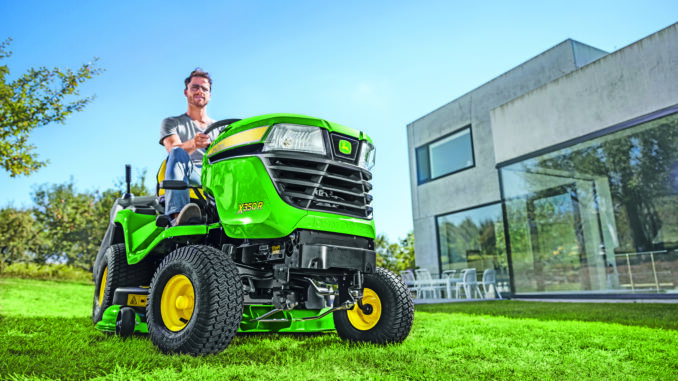
The John Deere E180 is a 25 hp V-twin riding lawn tractor with a 54-inch Edge mower deck, hydrostatic transmission, and homeowner-focused layout aimed at larger residential lawns rather than commercial mowing work. This guide is built around owner symptoms first, then repairs, maintenance, parts ordering, and a detailed FAQ so it is ready to publish as a practical WordPress post for USA and Canada readers.
Introduction to the John Deere E180
The John Deere E180 sits near the top of the E100 lawn tractor range and uses a hydrostatic drive, electric PTO, and 54-inch deck, which makes it a better fit for medium-to-large home properties where faster mowing and wider coverage matter. Deere’s operator information for the E180 groups it with the E140 through E180 control layout and with the E170/E180 specification family, showing it shares many service procedures with the larger E100-series machines.
Owners usually buy the E180 for mowing, towing a light yard cart, and general residential property work, not for ground-engaging jobs or steep, rough acreage. In this article, the focus is on realistic DIY repair work, common trouble signs, preventive maintenance, part-number planning, and the most common questions owners ask once problems start showing up.
General overview of the John Deere E180
The E180 belongs to John Deere’s E100 series of lawn tractors and is one of the heavier-duty homeowner models in that lineup, especially because of its 54-inch mower deck and hydrostatic transmission. For troubleshooting, the main systems that matter are the engine and fuel system, mower deck and blade drive, transmission and traction system, and the electrical/safety interlock system.
On this model, the engine side includes fuel delivery, air filtration, spark plugs, cooling fins, and starting/charging components. The mowing side centers on the 54-inch deck, mower drive belt, blades, spindle assemblies, deck level, and wash/cleanout condition, all of which strongly affect cut quality and vibration.
Common service parts owners regularly buy for the E180 include the fuel filter AM116304, John Deere Easy Change oil system AUC12916 on equipped machines, spark plug M78543 or MIU11020 depending on engine specification, and air filter cartridge MIU11515. Owners also commonly replace mower blades, deck belts, batteries, fuses, and occasionally electrical items such as voltage regulators or switches when age-related failures show up.
John Deere E180 troubleshooting approach
The best way to diagnose a John Deere E180 is to start with the exact symptom the owner sees: no crank, cranks but will not start, runs rough, cuts unevenly, vibrates, overheats, loses drive, or blows fuses. Deere’s manual separates troubleshooting into engine, electrical, tractor, and mower categories, which is a useful structure because many problems cross over more than one system.
The main symptom groups on this model are:
-
Starting issues, such as no crank or hard starting.
-
Running issues, such as surging, stalling, smoke, or loss of power.
-
Cut-quality problems, such as streaks, scalping, uneven height, or poor discharge.
-
Vibration and noise, often linked to blades, spindles, pulleys, or loose hardware.
-
Overheating and leaks, usually tied to engine cooling blockage, oil issues, or fuel seepage.
-
Transmission and drive complaints, including weak uphill pull or inconsistent ground speed.
-
Electrical and safety switch faults, including PTO cut-out, no-start conditions, or charging problems.
Emergency John Deere E180 repair needs
Some E180 problems need immediate attention because they create a safety risk or can damage expensive parts quickly. Stop using the tractor right away if you have fuel leakage, heavy vibration, a blade-impact event, smoke from wiring, repeated belt shredding, or a deck that will not disengage normally.
John Deere E180 starting issues
If the E180 will not crank, only clicks, or starts and dies, the problem may be as simple as battery charge or as involved as a failed safety switch or fuel-delivery issue. It matters because repeated cranking can drain the battery, overheat cables, and mask the real fault.
Common causes:
-
Weak or dirty battery connections.
-
Failed seat, brake, or PTO safety switch.
-
Old fuel or restricted fuel filter AM116304.
-
Fouled spark plug or ignition issue.
-
Dirty air filter reducing starting and running quality.
Basic checks:
-
Confirm the PTO is off and brake is fully applied.
-
Test battery voltage and inspect terminals for corrosion.
-
Check fuel age, fuel shutoff condition if fitted, and fuel filter flow.
-
Remove and inspect the spark plugs for fouling or damage.
-
Check seat and brake switch operation if the machine still will not crank normally.
John Deere E180 cut-quality problems
A poor cut on the E180 usually shows up as strips of uncut grass, an uneven finish, clumps, scalping, or ragged grass tips. This matters because owners often blame blades first, but deck level, belt condition, buildup under the shell, and ground speed are just as important.
Common causes:
-
Dull, bent, or unbalanced blades.
-
Deck out of level.
-
Mower drive belt slipping or worn.
-
Wet grass or mowing too fast.
-
Heavy debris packed under the 54-inch deck.
Basic checks:
-
Inspect blades for edge wear, bends, and balance issues.
-
Check deck pitch and side-to-side level.
-
Inspect the mower belt for glazing, cracking, or stretching.
-
Clean the underside of the deck thoroughly.
-
Retry mowing at a slower travel speed in dry conditions.
John Deere E180 vibration and noise
Sudden vibration on a John Deere E180 should be treated seriously because it often means blade damage, spindle trouble, or loose rotating hardware. Continued use can destroy spindle bearings, belt guides, pulleys, or even crack the deck shell over time.
Common causes:
-
Bent blade after striking a stump, root, or rock.
-
Loose blade bolt or spindle hardware.
-
Worn spindle bearings or pulley bearings.
-
Damaged idler pulley or belt.
-
Loose engine or deck mounting hardware.
Basic checks:
-
Shut the tractor off and remove the key before deck inspection.
-
Check both blades for bends and matching orientation.
-
Spin pulleys and spindles by hand to feel for roughness.
-
Inspect belt routing and belt guards.
-
Tighten obviously loose fasteners before further use.
John Deere E180 overheating and leaks
Overheating, hot-running, burning smells, or visible leaks should be handled quickly on the E180. The operator’s manual specifically includes engine oil checks, cleaning air intake screens and fins, and fire-prevention guidance because grass buildup and neglected service can turn a small problem into engine damage or a fire risk.
Common causes:
-
Low engine oil.
-
Cooling fins or intake screen plugged with debris.
-
Dirty engine compartment full of dry grass.
-
Fuel line or filter seepage.
-
Belt drag or deck seizure increasing engine load.
Basic checks:
-
Check engine oil level before restarting.
-
Clean the blower housing area, screen, and cooling fins.
-
Inspect around the fuel filter and fuel lines for wetness or smell.
-
Check that deck blades turn freely by hand with the engine off.
-
Stop using the machine if oil or fuel leaks continue.
John Deere E180 transmission and drive problems
If the E180 moves weakly, hesitates, or loses climbing power, the issue can come from the hydrostatic drive system, linkage, traction limits, or simply unrealistic use on slopes or with heavy towing. These problems matter because owners sometimes keep forcing the machine, which adds heat and can shorten transmission life.
Common causes:
-
Transmission bypass/freewheel setting not fully returned.
-
Drive belt wear or slippage.
-
Low traction from worn tires or wet turf.
-
Linkage issues affecting pedal response.
-
Heat-related hydrostatic wear on older machines.
Basic checks:
-
Confirm the machine was not left in freewheel mode after moving it by hand.
-
Inspect drive-belt condition and routing.
-
Test traction on level ground before judging hill performance.
-
Make sure pedals return smoothly and fully.
-
Use a dealer for persistent weak-drive complaints after belt and linkage checks.
John Deere E180 electrical problems
Electrical problems on the E180 usually show up as no-start, intermittent PTO operation, dead lights, low charging, or blown fuses. These faults can be time-consuming because the safety system involves multiple switches and the charging system can fail gradually.
Common causes:
-
Corroded battery terminals.
-
Blown fuse.
-
Weak battery.
-
Failed regulator/rectifier or charging fault.
-
Faulty PTO, brake, or seat switch.
Basic checks:
-
Clean and tighten battery terminals first.
-
Replace any blown fuse only after checking for rubbed wiring.
-
Verify charging voltage with the engine running.
-
Test interlock function using Deere’s safety-system checks.
-
Escalate to dealer diagnosis if wiring damage or repeated fuse failure appears.
DIY or dealer for the John Deere E180
The normal line on the John Deere E180 is straightforward: routine service, blade work, battery work, filters, deck cleaning, and many belt or switch replacements are realistic DIY jobs, while internal engine work, hydrostatic failures, and deeper electrical diagnosis are usually better left to a dealer or experienced repair shop.
Good DIY jobs
-
Engine oil and filter or Easy Change service on equipped machines.
-
Air filter and fuel filter replacement.
-
Spark plug replacement.
-
Blade removal, sharpening, balancing, and replacement.
-
Deck cleaning, leveling, and many mower belt replacements.
Advanced DIY or dealer jobs
-
Electrical fault tracing through safety switches and harnesses.
-
Charging-system diagnosis with regulator testing.
-
Hydrostatic drive diagnosis beyond belt/linkage checks.
-
Valve clearance adjustment at 200 hours.
-
Internal engine repairs or crankshaft-related vibration diagnosis.
Skill level guide
-
Beginner: Battery, air filter, fuel filter, spark plugs, deck washing, blade inspection.
-
Intermediate: Blade sharpening, belt replacement, deck leveling, switch replacement, battery cable repair.
-
Advanced: Electrical testing with a meter, charging diagnosis, spindle replacement, deeper driveline work.
John Deere E180 parts information
Before ordering E180 parts, gather the full model name, tractor Product Identification Number, engine model and serial numbers, and deck size. That matters because Deere uses serial- and engine-specific variations, and even common items like plugs, filters, or electrical parts can differ by engine specification or production run.
OEM parts are the safer choice for belts, fit-sensitive deck parts, electrical components, and safety-related switches because exact fit and correct geometry matter on these machines. Aftermarket parts are often acceptable for filters, batteries, blades, and tune-up items, but only when the listing clearly cross-references the E180 and matches the engine or deck specification.
Manuals and diagrams for the John Deere E180
For the E180, the most useful online sources are the official operator’s manual, Deere owner support, Deere Technical Information Store, and a model-specific illustrated parts source.
-
Official operator’s manual: John Deere OMUC23650 for operating procedures, safety checks, deck leveling, service intervals, and troubleshooting structure.
-
Deere owner support: Shop.Deere.com E180 support for owner-support navigation and official parts ecosystem access.
-
Deere Technical Information Store: linked through the manual and TractorData references for official publications and deeper literature.
-
Illustrated parts source: Jack’s Small Engines E180 diagrams for exploded views and visual parts identification.
How to locate John Deere E180 serial and engine numbers
These numbers matter because Deere parts lookup and dealer ordering often depend on exact identification, especially for engine service parts and serial-break changes. If you order only by “E180,” you can easily end up with the wrong ignition, air-cleaner, or electrical component.
-
Find the tractor PIN on the left side of the machine under the fender area near the rear wheel.
-
Record the full model and PIN exactly as shown on the identification tag.
-
Locate the engine model and serial numbers on the engine label or shroud area.
-
Confirm the mower deck size as 54 inches and note any deck tag information if visible.
-
Use all of that information together when checking Deere diagrams or speaking to a dealer.
Buying John Deere E180 parts online and in stores
The best strategy is to identify the OEM number first, then compare availability between Deere, a Deere-focused parts seller, and local retail channels for common consumables. This reduces the risk of buying a “fits many models” part that works poorly or does not match your exact engine or deck setup.
-
Online: Use official Deere support and cross-check with illustrated diagrams before ordering serial-sensitive parts.
-
Dealer counter: Best for wiring parts, charging parts, interlock switches, deck hardware, and anything tied to production changes.
-
Retail stores: Fine for oil, grease, some batteries, and clearly matched spark plugs or filters, but verify packaging against the E180 and engine spec.
Useful links:
Step-by-step fitting guide for common John Deere E180 parts
These are the highest-impact DIY service jobs for keeping an E180 reliable and mowing cleanly.
Replacing the John Deere E180 air filter
A dirty air filter can cause hard starting, black smoke, and power loss on the E180.
-
Park safely, shut the engine off, and let it cool.
-
Open the air-cleaner housing and remove the old cartridge carefully.
-
Wipe dust from the housing without letting debris fall into the intake.
-
Install the correct replacement element, such as MIU11515 where applicable.
-
Refit the cover securely and check for a proper seal.
Replacing the John Deere E180 fuel filter
A restricted fuel filter can cause surging, stalling, or crank-no-start complaints.
-
Clamp the fuel line if needed and work with the engine cool in a ventilated area.
-
Note the flow direction marked on the old filter.
-
Remove the clamps, swap in the new AM116304 filter, and reinstall clamps securely.
-
Check the fuel line for cracks or looseness while you are there.
-
Start the engine and inspect for leaks immediately.
Servicing John Deere E180 blades
Blade service fixes ragged cutting, striping problems, and vibration caused by edge wear or impact damage.
-
Disable the machine safely and access the deck underside.
-
Remove the blades and mark their original orientation.
-
Inspect for bends, cracks, and severe edge loss before sharpening.
-
Sharpen evenly and balance each blade before refitting.
-
Torque hardware correctly and test for smooth operation afterward.
Replacing the John Deere E180 mower drive belt
A worn mower belt can cause weak blade speed, poor cut quality, squealing, and heat buildup.
-
Park safely, lower the deck, and remove the ignition key.
-
Follow Deere’s routing procedure for removing the belt at the engine drive sheave and deck pulleys.
-
Inspect idlers and belt guides before fitting the new belt.
-
Route the replacement exactly as shown in the deck path for the 54-inch mower.
-
Engage the deck briefly at low throttle first and watch for correct tracking.
Maintenance to prevent John Deere E180 problems
Regular maintenance prevents most E180 complaints long before they become repair jobs. On this model, the biggest gains come from keeping the engine breathing clean air, keeping fresh fuel moving, maintaining blade and belt condition, and preventing grass buildup around hot engine and deck areas.
Focus areas:
-
Starting reliability: Keep the battery clean, fuel fresh, and filters/plugs within service interval.
-
Cut quality: Sharpen blades, level the deck, and replace slipping belts before cut issues spread.
-
Fire and overheating prevention: Clean intake screens, cooling fins, and dry grass accumulation often.
-
Drive performance: Avoid forcing the hydrostatic drive on steep terrain and inspect belts/linkages if response changes.
-
Electrical reliability: Keep battery terminals clean and investigate charging weakness early.
John Deere E180 maintenance schedule
The E180 operator’s information includes daily checks, lubrication points, engine service items, mower service items, battery care, and storage preparation, while the service schedule summary for this model highlights 8-hour, 25-hour, 50-hour/yearly, 100-hour/yearly, and 200-hour tasks.
Daily / before each use
-
Check engine oil level.
-
Check fuel level and inspect for leaks or fuel smell.
-
Test safety systems and brake operation.
-
Check tire condition and obvious loose hardware.
-
Inspect the deck area for packed debris.
After 8 hours
-
Lubricate mower spindles and pivot points.
-
Lubricate front axle pivot and axle spindles.
-
Lubricate front axle wheel bushings.
-
Check mower deck spindle brakes where applicable.
Every 25 hours
-
Lubricate front axle pivot and axle spindles.
-
Lubricate front axle wheel bushings.
-
Lubricate mower spindles and pivot points.
Every 50 hours or yearly
-
Replace engine oil and filter, or service the Easy Change system if equipped.
-
Replace the air filter element.
-
Replace the fuel filter.
-
Replace spark plugs.
-
Clean engine cooling fins.
-
Sharpen or replace mower blades.
-
Check or replace mower drive belts.
-
Check and level the mower deck.
-
Clean battery terminals.
Every 100 hours or yearly
-
Change engine oil and filter more frequently under dusty conditions.
-
Replace air filter elements more frequently under dusty conditions.
-
Replace fuel filter.
-
Replace spark plugs.
-
Clean engine cooling fins.
Every 200 hours
-
Check and adjust valve clearance through a John Deere dealer.
Seasonal checklist
-
Spring: Oil service, air filter check, blade inspection, battery check, deck leveling.
-
Mid-season: Clean cooling fins, inspect belts, sharpen blades if cut quality drops, inspect fuel filter.
-
Fall or storage prep: Clean the machine thoroughly, stabilize or manage fuel correctly, inspect battery, and prepare for storage per Deere procedures.
Repair, upgrade, or replace the John Deere E180?
For most owners, the E180 is worth repairing when the issue is in normal wear items like belts, blades, battery, filters, switches, or deck setup, because these are predictable homeowner-tractor costs. Upgrading makes more sense when you need better comfort, faster mowing, heavier towing ability, or more durable long-term driveline components than the E100 series was designed to provide.
Repair if:
-
The problem is limited to service parts, deck setup, battery, switches, or a mower belt.
-
The engine starts and runs well once basic faults are corrected.
-
The tractor frame, deck shell, and transmission are still fundamentally sound.
Upgrade if:
-
You mow a very large property and want faster ground speed or a step-up in chassis and transmission durability.
-
You regularly tow more than a light yard cart or work on tougher terrain than a lawn tractor suits.
-
You are repeatedly pushing the E180 beyond normal residential mowing duty.
Replace if:
-
The machine has major engine trouble plus hydrostatic weakness and deck wear at the same time.
-
Structural rust, severe vibration damage, or chronic electrical issues make repairs stack up.
-
Repair cost approaches the value of a cleaner replacement tractor.
John Deere E180 troubleshooting FAQ
1. Why will my John Deere E180 not start?
Most no-start complaints on the E180 come down to battery condition, dirty battery terminals, PTO/brake/seat safety interlock issues, stale fuel, or spark-related faults. Start with the simple checks first: brake on, PTO off, battery charged, and clean cable connections. Then inspect the fuel filter, fuel freshness, and plugs before assuming a larger electrical failure.
2. Why does my John Deere E180 click but not crank?
A click usually means the starter circuit is trying to work, but battery power or cable connection quality is poor. Corroded terminals, a weak battery, or a failing solenoid are common causes. Check voltage under load and clean both cable ends before replacing parts.
3. Why does my John Deere E180 crank but not fire?
If it cranks normally but does not start, focus on fuel delivery, ignition, and safety cutout conditions. Old fuel, a blocked fuel filter, fouled plugs, or wet plugs are common starting points. Also verify the air filter is not badly restricted.
4. Why does my John Deere E180 start and then stall?
That pattern often points to fuel starvation, contaminated fuel, or ignition weakness once the engine begins running. A partially plugged filter, venting issue, or dirty carburetion can also do it. Check fuel flow and whether the engine improves with a fresh filter and fresh gasoline.
5. Why is my John Deere E180 surging?
Surging commonly means the engine is not getting stable fuel or air flow. Dirty fuel, a restricted filter, vacuum leaks, or partial carburetor blockage are typical causes. Also inspect the air filter because a heavily loaded element can make mixture problems worse.
6. Why does my John Deere E180 run rough under load?
If the engine smooths out at idle but struggles in grass, look at air filter condition, spark plugs, fuel filter condition, and deck drag. A deck packed with wet grass or a belt/pulley problem can overload the engine and mimic an engine fault. Make sure blades spin freely and the underside of the deck is clean.
7. Why is my John Deere E180 smoking?
Black smoke often points to an over-rich condition or restricted air intake, while blue smoke suggests oil burning or overfill. Start by checking the oil level and air filter condition. If smoke continues after those checks, deeper engine diagnosis is more appropriate.
8. Why does my John Deere E180 lose power in tall grass?
Tall or wet grass raises deck load quickly on a 54-inch deck, especially if blades are dull or the mower belt is slipping. Slow down, mow in dry conditions, and inspect blade sharpness and belt condition. A clogged underside also hurts airflow and discharge performance.
9. Why is the cut uneven on my John Deere E180?
Uneven cut height usually comes from deck level issues, uneven tire pressure, or bent/dull blades rather than one bad part. Deere includes deck-level checking and adjustment in the operator procedures because it is a routine correction, not a rare repair. Set tire pressures first, then level the deck and inspect blades.
10. Why does my John Deere E180 leave strips of uncut grass?
Strips usually mean blade overlap is not doing its job because of dull blades, poor deck level, low blade speed, or excessive travel speed. A worn mower belt can also reduce blade speed enough to leave lines behind. Sharpen blades, check belt condition, and slow down in heavy growth.
11. Why does my John Deere E180 scalp the lawn?
Scalping happens when the deck pitch or side-to-side level is off, the cutting height is too low, or the ground is uneven for the deck setting. Anti-scalp wheel adjustment also matters on Deere decks. Raise the cut height and correct deck setup before blaming the blades.
12. Why are the tips of the grass ragged after mowing with my John Deere E180?
Ragged grass tips usually mean the blades are dull, nicked, or not turning fast enough due to belt slippage. Grass tears instead of cutting cleanly, which also makes the lawn look pale or stressed after mowing. Sharpen or replace the blades and inspect the mower belt.
13. Why does my John Deere E180 clump grass?
Clumping is usually a mowing-condition problem first, not a machine failure. Wet growth, mowing too much off at once, or a deck packed with old debris can all prevent clean discharge. Clean the deck, reduce ground speed, and mow more often during fast growth.
14. Why is my John Deere E180 vibrating badly?
Bad vibration should always be treated as urgent because blades, spindles, pulleys, and crankshaft-related parts are all at risk. The most common cause is a bent or unbalanced blade after striking something. Stop mowing and inspect the blade set before running it again.
15. Why does the John Deere E180 make a squealing noise when I engage the deck?
A squeal at PTO engagement often points to belt slip, pulley wear, or belt contamination. If the belt is glazed, stretched, or oil-soaked, it may not grab properly under load. Inspect belt routing and idlers before replacing the belt.
16. Why does the mower deck on my John Deere E180 shake?
Deck shake can come from blade imbalance, spindle-bearing wear, loose mounting hardware, or pulley issues. Start with the blades because they are the quickest and most common source. Then check spindle smoothness and deck mounting points.
17. Why does my John Deere E180 throw a belt?
Thrown belts usually mean the belt is worn, routed incorrectly, or running with a bent guide, weak idler, or damaged pulley. Debris buildup can also push the belt out of line. Replace the belt only after checking the pulleys and guides, or the new one may fail quickly too.
18. How do I know if the John Deere E180 mower belt is bad?
Look for glazing, cracking, frayed edges, stretching, or a burnt-rubber smell during use. Weak blade speed and poor cut quality are also practical signs even before the belt fully breaks. If the belt slips under normal mowing load, replacement is usually justified.
19. Why do the blades on my John Deere E180 stop in heavy grass?
Blade slowdown in heavy grass usually means deck load is exceeding available blade-drive grip or engine power. Dull blades, a worn belt, heavy buildup, or mowing too fast are the most common reasons. Fix the deck condition first before chasing more complicated engine theories.
20. Why is one blade area cutting lower on my John Deere E180?
That usually means deck level is off, a blade is bent, or a spindle has developed play. Tire pressure differences can create the same visual result, so check those before adjusting hardware. Then inspect blades and spindle tightness side to side.
21. Why does my John Deere E180 overheat?
Overheating is often caused by blocked cooling fins, a dirty intake screen, low oil, or heavy debris packed around the engine. Deere specifically calls for cleaning the air intake screen and engine fins as part of service. Clear debris first, then recheck oil level and mowing load.
22. Why does my John Deere E180 smell hot after mowing?
A hot smell often comes from grass packed against hot engine parts, belt slippage, or an overworked deck in heavy conditions. This is one of those warning signs you should not ignore because it can lead to belt damage or a fire hazard. Clean the machine thoroughly and inspect belts and pulleys.
23. Why is my John Deere E180 leaking fuel?
Fuel leaks often show up at the filter, line connections, or cracked fuel hose sections. Because Deere’s safety guidance includes fuel-handling and fire prevention, any fuel seepage should be fixed before the tractor is used again. Replace damaged hose or filter components immediately.
24. Why is my John Deere E180 using too much fuel?
High fuel use usually reflects mowing conditions, engine tune, or operator habits rather than one failed part. A dirty air filter, dull blades, and mowing heavy or wet grass can all increase load and fuel consumption. Restore tune-up parts and cut in better conditions before assuming deeper engine trouble.
25. Why does my John Deere E180 move weakly uphill?
The E180 is still a lawn tractor, so weak uphill pull can be part traction-related and part hydrostatic-related. Check that the bypass is fully engaged for normal driving, inspect the drive belt, and test on level ground for comparison. If it remains weak in normal conditions, hydrostatic wear may be developing.
26. Why does my John Deere E180 not reverse properly?
Poor reverse response can come from linkage adjustment issues, hydrostatic response changes, or operator-control problems rather than a complete transmission failure. Make sure the pedals move freely and return correctly. If forward and reverse are both weak, inspect the drive system more broadly.
27. Why will my John Deere E180 not charge the battery?
Charging problems usually come from the regulator/rectifier, stator output issues, bad battery connections, or a failing battery that no longer accepts charge well. Test battery voltage with the engine off and running before replacing parts. Clean terminals first because corrosion can mimic charging failure.
28. Why does my John Deere E180 keep blowing fuses?
Repeated fuse failure usually means there is a short, rubbed wire, failed component, or moisture-related connector issue in the circuit. Replacing the fuse alone rarely solves it for long. Inspect the harness anywhere it moves near the frame, PTO, or engine vibration areas.
29. Why does my John Deere E180 shut off when I get off the seat?
That can be normal safety-system behavior if the PTO is engaged or the parking brake situation is wrong. Deere includes seat-switch and park-brake switch testing in the operator procedures for exactly this reason. If it shuts off unexpectedly during normal operation, test the seat switch and related interlocks.
30. Why won’t the PTO stay engaged on my John Deere E180?
If the PTO disengages unexpectedly, check the safety interlock system, battery/charging condition, PTO switch, and wiring quality. Low system voltage can sometimes make electrical clutch behavior inconsistent. Also inspect the deck for drag that may be overloading the mower drive.
31. How often should I change oil on a John Deere E180?
The E180 service summary calls for engine oil and filter service yearly or every 50 hours, with a 100-hour reference also noted and more frequent service under dusty conditions. Machines equipped with Deere’s Easy Change system follow the service approach listed for that setup. In real homeowner use, annual oil service is a sensible minimum even if hours stay low.
32. How often should I replace the air filter on a John Deere E180?
The E180 maintenance listing calls for air-filter replacement yearly or every 50 hours, with more frequent service in dusty conditions and another yearly/100-hour reference in the schedule summary. In practice, inspection should happen much sooner if you mow dry or dusty ground. A cheap filter change is usually better than a season of poor running.
33. How often should I replace spark plugs on a John Deere E180?
The E180 schedule summary lists spark plug replacement yearly or at 50-hour intervals, with 100-hour/yearly service references also shown. For most homeowner machines, annual replacement is easy insurance against hard starting and misfire complaints. Always match the plug number to your engine specification.
34. Does the John Deere E180 need dealer service?
Not always. Routine maintenance is very DIY-friendly, but valve clearance checks at 200 hours and deeper hydrostatic or electrical diagnosis are better dealer jobs for many owners. The right dividing line is whether you are replacing a clear wear part or diagnosing a system-level fault.
35. Is the John Deere E180 worth fixing?
In most cases, yes, when the problem is in routine wear parts or deck-related service items. The E180 becomes less attractive to repair when multiple major systems are failing together, such as engine, transmission, and deck structure at the same time. For a machine with otherwise good bones, normal repairs are usually more economical than replacement.