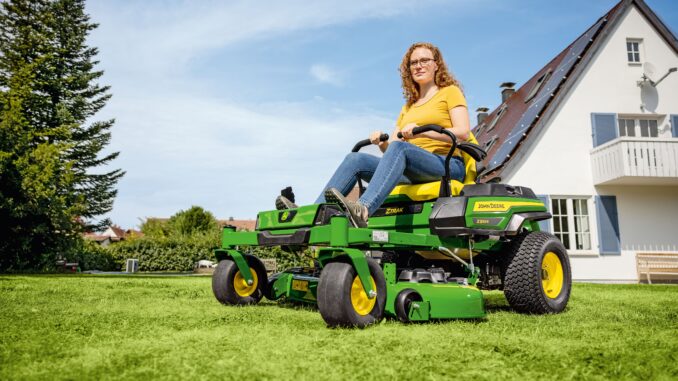
The John Deere Z515E is a residential zero-turn mower built around a 48-inch mower deck and a twin-cylinder gasoline engine, aimed at homeowners who want faster mowing and tighter maneuvering than a lawn tractor usually offers. This guide is written for USA and Canada owners and covers practical John Deere Z515E repair, troubleshooting, maintenance, service parts, and realistic DIY limits in a plain-English format.
For most owners, the John Deere Z515E is a good fit for routine mowing on larger home lawns where speed, cut quality, and obstacle trimming matter more than towing or ground-engaging work. The most common ownership issues usually come down to starting trouble, poor cut quality, belt or blade wear, debris buildup, safety-switch faults, and neglected routine service intervals.
General overview of the John Deere Z515E
The John Deere Z515E sits in the Z500 Series ZTrak lineup and shares its operator’s manual platform with the Z530M, Z530R, and Z545R models. That tells you two useful things straight away: many service procedures are familiar across the range, but parts still need to be checked by exact model and PIN before ordering.
From an owner-maintenance point of view, the John Deere Z515E is built around a few main systems:
-
Engine and fuel system, including the air filter, fuel filter, spark plugs, engine oil, and oil filter.
-
Mower system, including the 48-inch deck, blades, deck belt, deck lift hardware, deck leveling points, and spindle lubrication points.
-
Drive system, including the dual transaxles, motion control levers, park brake, and transmission oil level checks.
-
Electrical and safety system, including battery, key switch, PTO engagement control, interlock switches, fuses, and seat-related safety functions.
Several John Deere Z515E service parts owners commonly buy include:
-
48-inch mower blade: GY22621.
-
48-inch mower deck belt: GX25998.
-
Oil filter: GY20577.
-
Fuel filter: GY20709.
-
Air filter: GY21057.
-
Engine oil often referenced in Deere’s quick parts guide: TY22029.
-
Mulch kit for applicable 48-inch deck setup: BUC10705.
John Deere Z515E troubleshooting approach
The best way to troubleshoot a John Deere Z515E is to start with the exact symptom the owner sees, not with a random parts-swapping approach. In practice, that means asking whether the mower will not start, starts but runs poorly, cuts badly, vibrates, overheats, leaks, refuses to drive correctly, or shows electrical/interlock problems.
The main symptom groups for this model are:
-
Starting issues.
-
Running issues and loss of power.
-
Cut-quality problems.
-
Vibration and unusual noise.
-
Overheating, fire-risk debris, and leaks.
-
Transmission or drive complaints.
-
Electrical and safety-switch faults.
This symptom-first approach matters because the Z515E has several issues that can feel similar from the seat. For example, a weak cut can come from dull blades, a slipping belt, deck pitch problems, wet grass, or heavy deck buildup, and each fix is different.
Emergency John Deere Z515E repair needs
Some John Deere Z515E faults should be dealt with immediately because they create a safety risk or can quickly damage more expensive components. Stop using the mower at once if you notice fuel leaks, oil leaks onto hot engine parts, heavy vibration after blade impact, missing guards, non-working safety interlocks, smoke, or major drive loss on slopes or around drop-offs.
John Deere Z515E starting issues
A no-start problem matters more than convenience because repeated cranking can flatten the battery, flood the engine, or distract owners from a safety-interlock fault that should not be bypassed. Many starting complaints on this model trace back to basic operator-control conditions, stale fuel, a weak battery, dirty air or fuel filters, or ignition-related faults.
Common causes:
-
Weak or discharged battery.
-
Dirty or restricted fuel filter.
-
Dirty air filter.
-
Spark plug issues.
-
Safety interlock or control-position problem.
-
Poor fuel quality or stale gasoline.
Basic owner checks:
-
Confirm the park brake is engaged and controls are in the correct neutral/start positions.
-
Check fuel level and fuel condition; replace old fuel if it smells stale.
-
Inspect battery connections for looseness or corrosion.
-
Check the air filter and fuel filter if the engine cranks but struggles to fire.
-
Inspect spark plug leads and plugs if basic fuel and air checks do not solve it.
John Deere Z515E cut-quality problems
Poor cut quality usually shows up as stragglers, scalping, uneven height, clumping, or a deck that leaves one side lower than the other. These issues matter because they often point to worn blades, a dirty deck, wrong tire pressures, incorrect deck level, or a weak/slipping deck belt.
Common causes:
-
Dull, bent, or mismatched blades.
-
Deck packed with wet grass.
-
Incorrect tire pressure.
-
Deck out of level.
-
Worn or slipping mower belt.
-
Mowing conditions that are too wet or too heavy.
Basic owner checks:
-
Clean the underside of the deck fully.
-
Check front and rear tire pressures before touching deck adjustments.
-
Inspect blades for edge wear, bends, and balance issues.
-
Inspect the deck belt for glazing, cracking, and fraying.
-
Check mower deck level after tires and blades are confirmed good.
John Deere Z515E vibration and noise
New vibration on a Z515E should never be ignored because blade damage, loose hardware, spindle trouble, or belt issues can escalate quickly. If the vibration began right after hitting a stump, stone, or root, stop mowing and inspect before using the machine again.
Common causes:
-
Bent blade.
-
Loose blade hardware.
-
Debris wrapped around spindles or pulleys.
-
Damaged spindle bearings.
-
Belt damage or pulley issues.
Basic owner checks:
-
Park safely, remove the key, and wait for all motion to stop.
-
Inspect blades and blade bolts visually.
-
Look for wrapped grass, string, or wire around spindle areas and pulleys.
-
Inspect the belt and visible pulleys for heat damage or wobble.
-
Do not keep mowing “to finish the yard” if the vibration is strong.
John Deere Z515E overheating and leaks
Debris buildup is a major issue on zero-turns because dry grass can collect around muffler components, cooling fins, intake screens, deck tops, transaxles, and under-seat electrical areas. On the Z515E, this is both a reliability issue and a fire-risk issue, so hot-running complaints and oily debris accumulation deserve fast attention.
Common causes:
-
Grass and chaff packed around cooling fins or intake screens.
-
Oil or fuel leaks attracting debris.
-
Dirty engine area.
-
Deck-top debris near belt and spindle areas.
Basic owner checks:
-
Clean muffler, engine cooling fins, air intake screen, and deck-top debris areas.
-
Inspect underneath and around the engine for fresh oil or fuel traces.
-
Clean around transaxles and belt-drive cooling areas.
-
Check under the seat near the battery and fuse block for trapped debris.
-
Do not store the mower until the machine has cooled and combustible buildup is removed.
John Deere Z515E transmission and drive problems
Drive complaints on the Z515E usually show up as weak pulling power, poor tracking, one side moving differently from the other, or a mower that feels unstable because basics like tire pressure and oil levels were ignored. Since the machine uses dual transaxles, side-to-side differences are especially important during diagnosis.
Common causes:
-
Incorrect tire pressure.
-
Low transmission oil level.
-
Control linkage adjustment issues.
-
Debris around transaxle cooling areas.
-
Internal transaxle wear requiring dealer-level diagnosis.
Basic owner checks:
-
Verify equal and correct tire pressures before assuming a transmission failure.
-
Check oil level in both transmissions as part of routine daily checks.
-
Inspect for heavy debris around transaxle housings and cooling fins.
-
Note whether the issue affects one side or both sides.
-
Move to dealer diagnosis if the unit still lacks drive after basic checks.
John Deere Z515E electrical problems
Electrical faults often feel random to owners because the symptom may be no crank, intermittent PTO engagement, warning lights, or a machine that dies when a control is moved. On this model, safety interlocks, battery condition, fuse-area contamination, and wiring condition should be checked before assuming a major failure.
Common causes:
-
Weak battery or poor terminal connection.
-
Blown fuse or dirty fuse-block area.
-
Seat or control-position safety-switch faults.
-
PTO or key-switch problems.
-
Wiring damage under the seat or around heat/debris areas.
Basic owner checks:
-
Check and clean battery terminals.
-
Inspect fuses and the under-seat electrical area for dirt and moisture.
-
Confirm the complaint happens consistently in the same control position.
-
Never bypass safety switches as a permanent “fix.”
-
Escalate to dealer service if wiring diagnosis or live electrical testing is needed.
DIY or dealer for John Deere Z515E repairs?
For the John Deere Z515E, the normal DIY line is simple: routine servicing, blades, filters, deck cleaning, belt inspection, basic belt replacement, spark plugs, battery work, and deck-level checks are realistic for many owners, while internal transmission work, valve-clearance adjustment, complex electrical diagnosis, and structural or safety-system repairs are better left to a dealer.
Good DIY jobs
-
Engine oil and oil filter changes.
-
Air filter replacement.
-
Fuel filter replacement.
-
Spark plug replacement.
-
Blade removal, sharpening, and replacement.
-
Deck cleaning and deck-level checks.
-
Tire pressure correction and basic battery maintenance.
Advanced DIY or dealer jobs
-
Deck belt replacement if access or routing is unclear.
-
Spindle replacement or pulley issues.
-
Safety-switch diagnosis.
-
Motion-control linkage adjustment.
-
Valve-clearance inspection and adjustment at 200 hours.
-
Internal transaxle diagnosis or replacement.
Skill level guide
-
Beginner: Air filter, fuel filter, oil change, battery cleaning, deck cleanout, tire pressure checks.
-
Intermediate: Spark plugs, blades, belt inspection, deck leveling, basic electrical checks.
-
Advanced: Deck belt replacement, spindle work, switch diagnosis, control-linkage adjustments.
John Deere Z515E parts needed, OEM vs aftermarket, and what information you need
Before ordering John Deere Z515E parts, gather the full model name, machine PIN, engine serial number, and deck size/version. Deere specifically notes that dealers need the machine serial number or PIN when ordering parts, and the manual also tells owners to record machine, engine, and transaxle identification numbers.
For this model, also confirm whether you are ordering deck parts for the 48-inch setup referenced in the quick parts guide, because belts, blades, and add-on kits are deck-specific. For tune-up items sold through general retailers, cross-reference carefully and avoid guessing from “fits many models” listings.
OEM versus aftermarket guidance is straightforward on the John Deere Z515E. OEM parts are the better choice for belts, safety-related components, fit-sensitive deck parts, and anything tied to correct routing or clearances, while good aftermarket options can be acceptable for filters, blades, spark plugs, and batteries if the part cross-reference is exact and from a reputable brand.
Where to find John Deere Z515E parts diagrams and manuals
For accurate John Deere Z515E service information, owners should use official manuals and Deere parts resources first, then use a reputable Deere-focused parts site to confirm exploded views and ordering details.
-
John Deere Z500 Series ZTrak operator’s manual — Best for safety, controls, service intervals, cleanout points, troubleshooting basics, and identification-number locations.
-
John Deere Z515E parts and maintenance quick guide — Best for common service parts and quick interval reminders.
-
John Deere Technical Information Store — Best place to buy the parts catalog or technical manual when deeper repair information is needed.
-
John Deere Parts / JDParts — Useful for OEM part lookup, diagrams, and ordering by part number or model.
-
GHS Z515E parts diagrams page — Helpful as a Deere-focused aftermarket reference for diagrams and cross-checking service items.
How to locate John Deere Z515E model, serial, and engine numbers
These numbers matter because many John Deere Z515E parts are serial-sensitive, and Deere asks owners to provide model and identification numbers when contacting an authorized service center or ordering parts.
-
Locate the machine Product Identification Number on the mower frame in the Product Identification area described in the operator’s manual.
-
Record the full PIN exactly as shown, including any letters and number sequence.
-
Find the engine serial number on the engine blower housing, which Deere specifically identifies in the manual.
-
If drive-system diagnosis is involved, record the serial number tags on the forward side of each transaxle housing.
-
Keep these numbers with your manual, service receipts, and online parts account for future orders.
Buying John Deere Z515E parts online and in stores
The best buying strategy is to identify the symptom first, confirm the exact OEM part number second, and only then compare online, dealer, and retail availability. That approach avoids one of the biggest homeowner mistakes on the Z515E: ordering “close enough” deck or tune-up parts that physically fit another Z500 model but are wrong for your exact machine or deck setup.
-
Online: Best for price comparison and OEM number matching, especially through John Deere Parts, TechPubs, and Deere-focused suppliers such as GHS.
-
Dealer counter: Best for serial-number-sensitive items, technical diagrams, safety-related parts, and anything involving controls or interlocks.
-
Retail stores: Fine for common consumables such as oil, spark plugs, filters, and batteries only when the packaging clearly cross-references the Z515E or the exact OEM number.
John Deere Z515E fitting guide for common parts
These are four of the most useful owner-level jobs on the John Deere Z515E because they directly affect starting reliability, cut quality, and seasonal dependability.
Change the John Deere Z515E air filter
A fresh air filter helps restore power, cleaner running, and easier starting when the old filter is dirty or restricted.
-
Park the mower safely on level ground, shut off the engine, remove the key, and let hot parts cool.
-
Open the air-filter housing and remove the old filter element.
-
Wipe out loose dust from the housing without forcing debris into the intake.
-
Install the new air filter element in the same orientation as the original.
-
Refit the cover securely and make sure the housing seals correctly before restarting.
Replace the John Deere Z515E fuel filter
A clogged fuel filter can cause hard starting, weak running, surging, or power loss under load.
-
Park safely and allow the engine to cool fully.
-
Locate the inline fuel filter and note the flow direction before removal.
-
Clamp or manage the fuel line carefully to reduce spillage.
-
Install the new GY20709 filter in the correct direction and secure the line connections.
-
Start the engine and check carefully for leaks before mowing.
Replace John Deere Z515E spark plugs
Spark plug replacement helps with hard starting, rough running, and weak combustion under load.
-
Park safely, remove the key, and let the engine cool.
-
Pull off each spark plug lead carefully without yanking the wire itself.
-
Remove the old plugs with the correct deep socket, commonly a 5/8-inch spark-plug socket in owner demonstrations for this model.
-
Install the replacement plugs carefully by hand first to avoid cross-threading.
-
Refit the plug leads firmly and test-run the mower.
Replace John Deere Z515E blades
Sharp, straight blades are one of the biggest factors in cut quality and reduced vibration.
-
Park safely, remove the key, and disconnect spark plug leads before working under the deck.
-
Raise and secure access safely according to your normal service method.
-
Remove each blade and inspect for bends, cracks, and severe edge wear.
-
Sharpen and balance reusable blades, or replace them as a matched set if damaged or worn.
-
Reinstall with correct hardware condition and secure tightening before returning the machine to service.
Maintenance to prevent John Deere Z515E problems recurring
Regular maintenance prevents most repeat Z515E complaints because the machine is very sensitive to dirty cooling areas, neglected blades, old fuel filters, and skipped deck inspections. A lot of “repair” work on residential zero-turns is really deferred maintenance catching up with the owner.
Focus areas:
-
Starting reliability: Keep the battery connections clean, replace the fuel filter on time, change the air filter on schedule, and do not let old fuel sit too long.
-
Cut quality: Keep blades sharp, deck underside clean, tire pressures correct, and deck level checked regularly.
-
Fire and overheating prevention: Clean muffler areas, cooling fins, intake screens, deck tops, and transaxle areas regularly, especially in dry conditions.
-
Drive performance: Check tire pressure and transmission oil levels during routine inspections.
-
Electrical reliability: Keep the under-seat area, fuse block, battery area, and wiring clean and dry.
John Deere Z515E maintenance schedule and year-round checklist
The official John Deere Z515E quick guide gives a clear service framework: daily checks before use, an 8-hour deck-level check, 50-hour or annual service items, 100-hour or annual service items, and a 200-hour valve-clearance check handled by a dealer.
Daily / before each use
-
Check engine oil.
-
Clean muffler area, air intake screens, and mower deck.
-
Check brake system.
-
Check fuel level.
-
Check under the machine for leaks.
-
Check safety interlock system, tire pressures, and transmission oil levels.
After 8 hours
-
Check mower deck level.
Every 50 hours or yearly
-
Replace fuel filter.
-
Change engine oil.
-
Check mower belt.
-
Change engine oil filter.
-
Sharpen or replace mower blades.
-
Lubricate mower deck spindles and mower idler arm.
-
Clean underside of deck, check tire pressure, check mower deck level, clean engine cooling fins, and clean air intake screens.
Every 100 hours or yearly
-
Replace air filter element(s).
Every 200 hours
-
Check and adjust engine valve clearance through a John Deere dealer.
Seasonal checklist
-
Spring: Change oil and filter if due, replace fuel filter if due, inspect blades, clean all fire-risk debris zones, and verify deck level before the main mowing season.
-
Mid-season: Recheck tire pressure, belt condition, deck cleanliness, engine cooling areas, and blade sharpness.
-
Fall / end of season: Clean the machine thoroughly, inspect for leaks or worn belts, record hours for the next service, and store only after combustible debris is removed and the machine has cooled.
Repair, upgrade, or replace a John Deere Z515E?
For most homeowners, a John Deere Z515E is worth repairing when the machine is structurally sound, the engine and transaxles are fundamentally healthy, and the problem is limited to normal wear parts, neglected maintenance, or one moderate repair. Upgrade decisions make more sense when the machine is regularly being pushed beyond its intended residential workload or when attachment, comfort, or deck-capacity needs have changed.
Repair if…
-
The issue is a belt, blade, filter, battery, switch, or routine service item.
-
The deck shell, frame, and drive system are otherwise sound.
-
The mower has been reliable aside from normal maintenance wear.
Upgrade if…
-
You need a larger deck, heavier-duty features, or more premium controls than the Z515E offers in the Z500 range.
-
Your property size makes mowing time a bigger issue than repair cost.
-
You want to step into a more feature-rich model rather than keep adding accessories.
Replace if…
-
The machine has major engine and transaxle problems at the same time.
-
Structural deck or frame damage makes safe repair questionable.
-
Repair costs are stacking up on an otherwise heavily worn mower with poor remaining life.
John Deere Z515E troubleshooting FAQ
1. Why will my John Deere Z515E not start?
The most common starting causes are a weak battery, stale fuel, blocked fuel flow, dirty air filtration, spark plug issues, or a safety interlock condition that is not satisfied. Start with the basics: park brake position, control lever position, battery condition, fuel quality, and visible wiring issues under the seat before buying parts.
2. Why does my John Deere Z515E crank but not fire?
If the engine cranks but does not start, focus on fuel delivery, spark, and air supply rather than the battery alone. A restricted fuel filter, fouled spark plugs, stale fuel, or a dirty air filter are common owner-level causes.
3. Why does my John Deere Z515E start and then die?
This usually points to fuel restriction, stale fuel, a dirty filter, or an interlock issue rather than a pure cranking problem. Check whether it dies consistently when a control is moved, the PTO is engaged, or after a short run period, because that pattern helps separate fuel issues from switch issues.
4. Why is my John Deere Z515E hard to start when hot?
Hot-start complaints often trace back to weak spark plugs, marginal fuel delivery, dirty cooling areas, or general tune-up neglect. A mower that is already running hot because of debris buildup can also become less consistent restarting after shutdown.
5. Can a dirty air filter make my John Deere Z515E lose power?
Yes, a restricted air filter can reduce airflow enough to affect power, throttle response, and overall running quality. Deere lists the air filter as a regular replacement item, and owners often find performance improves noticeably after overdue filter service.
6. How often should I change the oil on a John Deere Z515E?
The quick maintenance guide lists engine oil and oil filter service every 50 hours or annually, whichever comes first. That makes yearly service a good baseline even for homeowners who do not rack up many hours.
7. How often should I replace the fuel filter on a John Deere Z515E?
Deere’s quick guide lists fuel filter replacement every 50 hours or annually. If the mower has been sitting with old fuel, replacing it sooner is often sensible during diagnosis.
8. How often should I replace the air filter on a John Deere Z515E?
The Deere quick guide calls for replacing the air filter element every 100 hours or annually. In dusty mowing conditions, inspection may show it needs attention sooner even though the formal replacement interval is 100 hours or yearly.
9. Why is my John Deere Z515E cutting unevenly?
Uneven cutting usually comes from wrong tire pressures, a deck that is out of level, dull or damaged blades, or buildup under the deck. Always correct tire pressure before adjusting the deck, because deck measurements are meaningless if the mower is not sitting correctly.
10. Why does my John Deere Z515E leave strips of uncut grass?
Strips or stragglers are commonly caused by dull blades, blade-tip damage, slow blade speed from belt slip, or heavy/wet grass conditions. Inspect blade condition and the mower belt before blaming the deck design.
11. Why is my John Deere Z515E clumping grass?
Clumping usually means the deck is packed with wet material, mowing conditions are too heavy, or blade performance has dropped off. Cleaning the underside of the deck and restoring sharp blades are the first two fixes to try.
12. Why does my John Deere Z515E scalp the lawn?
Scalping often points to deck-height choice, deck-level issues, uneven ground, or mowing too fast across dips and crowns. Checking tire pressure and deck level is more productive than simply raising the deck and hoping the problem disappears.
13. How do I know if the John Deere Z515E deck is out of level?
A deck that is out of level usually shows as one side cutting lower, uneven stripe appearance, or repeated complaints that return even after blade sharpening. Deere specifically lists deck-level checks at 8 hours and again during regular 50-hour or annual service.
14. What causes John Deere Z515E blade vibration?
The most common causes are bent blades, loose blade hardware, blade imbalance, or spindle-related trouble. Strong vibration after impact should be treated as a stop-and-inspect event, not something to mow through.
15. Should I replace both blades on my John Deere Z515E together?
If one blade is damaged, replacing or servicing blades as a matched set is generally the better practice for balance and even cutting. Deere also warns that worn or damaged blades and bolts should be replaced in sets to prevent damage.
16. What happens if the John Deere Z515E mower belt is worn?
A worn belt can slip, overheat, reduce blade speed, worsen cut quality, and sometimes create noise or a burning-rubber smell. Since Deere lists routine belt checks, visible fraying, cracking, or glazing should be taken seriously.
17. How do I know if my John Deere Z515E deck belt needs replacing?
Look for frayed edges, cracking, glazing, missing chunks, heat damage, or a belt that rides poorly in the pulleys. If cut quality has declined and blades are good, belt condition becomes a more likely suspect.
18. Why does my John Deere Z515E shake after hitting something?
A sudden shake after impact usually means a bent blade, loose hardware, spindle damage, or debris jammed in the deck area. Stop immediately and inspect before more running turns a blade problem into spindle or deck damage.
19. Why is my John Deere Z515E making a squealing noise?
Squealing often points to belt slip, pulley trouble, or debris affecting belt travel. The noise may be strongest when the PTO is engaged or when the belt is loaded in heavier grass.
20. Why does my John Deere Z515E smell hot while mowing?
A hot smell often comes from packed grass around hot components, belt slip, or engine cooling areas clogged with debris. Because Deere highlights fire-risk cleanout areas around the muffler, deck top, transaxles, and under-seat zone, this is a complaint to act on quickly.
21. Can debris buildup really cause John Deere Z515E fires?
Yes. Deere specifically warns that grass, leaves, and debris on or near hot or moving parts can cause a fire. That is why routine cleanout of muffler areas, cooling fins, deck tops, transaxle zones, and under-seat areas matters so much.
22. Why does my John Deere Z515E lose power on hills?
Loss of power on slopes can involve engine load, traction loss, wet grass, or a drive-system issue, and slopes also create extra safety concerns on this machine. Deere stresses mowing across slopes, not up and down, and staying within the machine’s recommended slope limits.
23. Why won’t one side of my John Deere Z515E pull properly?
If one side feels weaker, compare tire pressure, visible debris around that transaxle, and any obvious control-linkage differences first. If the issue remains isolated to one side after those checks, dealer-level transaxle diagnosis becomes more likely.
24. Should I check transmission oil on a John Deere Z515E?
Yes. Deere includes checking oil level in both transmissions in the daily operating checklist. That makes it a routine inspection item, not just something to think about when a drive problem appears.
25. Why does my John Deere Z515E battery keep going flat?
Repeated dead-battery complaints can come from poor terminal contact, corrosion, infrequent use, charging issues, or repeated failed-start attempts from another underlying problem. Clean and tighten the battery connections first, then see whether the battery is the cause or only the symptom.
26. Can a bad safety switch stop a John Deere Z515E from starting?
Yes, a safety interlock problem can prevent starting or cause confusing shutdown behavior if the machine does not see the expected control positions. Safety systems should be diagnosed properly, not bypassed, because they are critical to safe operation.
27. Where is the engine serial number on a John Deere Z515E?
The operator’s manual says the engine serial number is on the engine blower housing. Record it before ordering engine-specific parts so you do not have to stop halfway through the repair.
28. Where do I find the PIN on a John Deere Z515E?
The manual’s Product Identification section is the reference point for the machine Product Identification Number. Deere asks owners to record it because dealers use it to confirm the right parts and service information.
29. Is the John Deere Z515E a good DIY mower to maintain?
Yes, for routine ownership tasks it is reasonably DIY-friendly because the official service schedule centers on filters, oil, blades, belt checks, deck cleaning, lubrication, and visual inspections. It becomes less DIY-friendly once diagnosis moves into transaxle internals, valve adjustment, or complex electrical faults.
30. What service should be dealer-only on a John Deere Z515E?
Valve-clearance checking and adjustment at 200 hours is specifically called out for dealer service in Deere’s quick guide. Beyond that, major transaxle work, advanced electrical troubleshooting, and repairs affecting rollover or safety systems are better handled professionally.
31. Does the John Deere Z515E need the deck cleaned after mowing?
Yes. Deere includes mower-deck cleaning in the operating checklist and also lists cleaning the underside of the deck as a regular service item. This helps maintain cut quality and reduces debris accumulation that can trap moisture or increase fire risk.
32. What tire pressure issues do to a John Deere Z515E?
Incorrect tire pressure can affect cut height, deck-level accuracy, straight tracking, and overall drive feel. That is why tire pressure checks show up both in the daily checklist and in regular service reminders.
33. Why does my John Deere Z515E seem to cut lower on one side?
That symptom usually means unequal tire pressure, deck-level drift, or a blade issue on one spindle position. Check the simple causes in that order before assuming bent deck hardware.
34. Can I use aftermarket parts on a John Deere Z515E?
Yes, but use caution. Aftermarket filters, blades, spark plugs, and batteries can be acceptable when they cross-reference exactly, but OEM is usually the safer choice for belts and safety- or fit-sensitive parts.
35. What is the first thing to check on a neglected John Deere Z515E?
Start with safety and fire-risk basics: engine oil, fuel condition, battery connections, air and fuel filters, blade condition, deck cleanliness, and debris buildup around hot engine and deck areas. That gives you a baseline before chasing more expensive faults.