
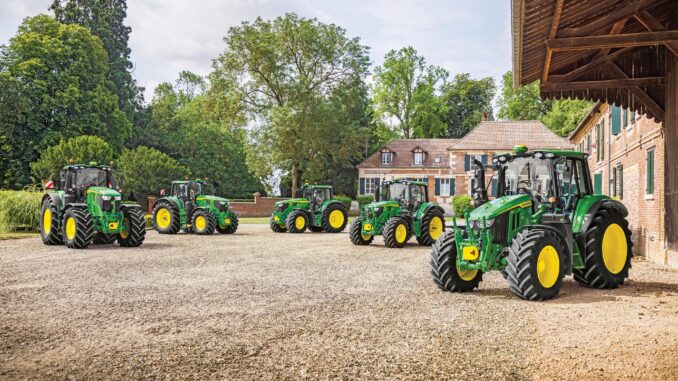
The John Deere 6430 is a mid-size utility tractor built for acreage owners, livestock properties, hay work, loader work, mowing, and general farm duties rather than suburban lawn care. In the Deere lineup, it sits in the 6030 family covered by the official 6230, 6330 and 6430 operator literature, and owners typically rely on it for heavier year-round jobs where reliability, hydraulics, PTO performance, and driveline condition matter as much as engine starting.
This guide is written for DIY-minded owners in the USA and Canada who are comfortable with routine maintenance and basic repairs but want clear guidance on what is realistic at home and what usually belongs at the dealer or a qualified tractor mechanic. It follows a symptom-first format so you can start with what the tractor is doing, narrow the likely causes, and then decide whether the job is a simple service task, a more advanced repair, or a dealer-level diagnostic problem.
General overview of the John Deere 6430
The John Deere 6430 belongs to Deere’s 6030-series utility tractor range, and official Deere documentation groups it with the 6230 and 6330 rather than lawn and garden machines. Public specification sources consistently describe it as a 4-cylinder diesel utility tractor with roughly 120 gross engine horsepower, optional MFWD/4WD configurations, and PTO output that varies by version and year.
From an owner-repair point of view, the main systems that matter on the John Deere 6430 are:
-
Engine and fuel system, including diesel fuel delivery, air filtration, cooling, starting, and charge-air related issues.
-
PTO and hydraulic system, which affect balers, mowers, loaders, remotes, and hitch performance.
-
Transmission and drive system, including shuttle, clutching behavior, road speed issues, MFWD engagement, and axle seals depending on configuration.
-
Electrical and safety systems, including battery condition, grounds, relays, sensors, dash warnings, and starting interlocks described in Deere service literature.
Common service parts owners often buy for this class of tractor include engine oil filters, fuel filters, air filters, hydraulic/transmission filters, cab filters, belts, batteries, and work-light bulbs. One confirmed OEM example is the John Deere engine oil filter RE504836, while other part numbers should be matched by model variant, serial/PIN, transmission type, and engine arrangement before ordering.
John Deere 6430 troubleshooting approach
The best way to diagnose a John Deere 6430 is to begin with the symptom the owner can actually observe rather than jumping straight to a replacement part. A hard-starting tractor, a weak loader, a PTO that slips under load, and a transmission warning light can all come from very different causes even though they may seem related at first.
Main symptom groups on the John Deere 6430 usually include:
-
Starting issues.
-
Running or power-loss issues.
-
Hydraulic or loader performance problems.
-
PTO engagement or under-load problems.
-
Transmission and drive complaints.
-
Overheating, leaks, or warning lights.
-
Electrical and cab-control faults.
-
Vibration, noise, and abnormal mechanical sounds.
A good rule is to check the simplest and least expensive items first: fluid levels, filters, battery voltage, visible wiring damage, belt condition, warning messages, and whether the problem happens cold, hot, under load, or all the time. That approach often prevents expensive misdiagnosis and helps separate a maintenance problem from a true component failure.
Emergency John Deere 6430 repair needs
Some problems on the John Deere 6430 need immediate attention because they affect safe operation or can damage expensive systems very quickly. Hydraulic starvation, overheating, major oil or coolant loss, brake issues, and driveline noises under load should not be ignored just because the tractor still moves.
John Deere 6430 starting issues
A no-start or hard-start condition matters because repeated cranking can flatten the battery, overheat starter components, and hide a fuel, air, or electrical fault that will only get worse.
Common causes include:
-
Weak or aging battery.
-
Dirty or loose battery terminals and grounds.
-
Faulty starter relay or starter motor.
-
Fuel restriction, contaminated diesel, or air in the fuel system.
-
Safety interlock, range/neutral, or PTO-related starting condition not met.
-
Glow or cold-start related issues depending on temperature and configuration.
Basic owner checks:
-
Confirm the battery is fully charged and cable ends are clean and tight.
-
Check for obvious corrosion at the ground points and starter connections.
-
Make sure the tractor is in the correct start position or neutral state per the operator controls.
-
Inspect the fuel level and look for signs of water, waxed fuel, or a plugged fuel filter.
-
Listen carefully: no click, single click, slow crank, and strong crank/no fire each point in different directions.
John Deere 6430 running and power-loss problems
If the John Deere 6430 starts but lacks power, smokes excessively, hesitates, or struggles under PTO or transport load, the issue can quickly affect fuel economy, exhaust temperature, and overall reliability.
Common causes include:
-
Restricted air filter.
-
Fuel filter restriction.
-
Poor-quality or contaminated diesel fuel.
-
Intake, turbo, or charge-air related leaks.
-
Sensor or electrical input problems affecting fueling.
-
PTO or driveline load that is too heavy for tractor setup.
Basic owner checks:
-
Inspect the air filter and pre-cleaner area for blockage.
-
Replace overdue fuel filters before assuming an injector problem.
-
Check for split intake hoses, loose clamps, or soot/oil signs around air plumbing.
-
Compare engine behavior at idle, under throttle, and under working load.
-
Stop using the tractor if severe smoke, knocking, or high-temperature warnings appear.
John Deere 6430 hydraulic and loader problems
Weak loader lift, slow remote response, hitch hesitation, or noisy hydraulics on a John Deere 6430 can point to low oil, clogged filtration, suction restriction, control-valve issues, or deeper pump problems.
Common causes include:
-
Low hydraulic or transmission oil.
-
Restricted hydraulic filter or suction screen.
-
Air leaks on the suction side.
-
Contaminated oil.
-
Internal leakage in loader valves, SCVs, or cylinders.
-
Hydraulic pump wear or pressure/flow problems.
Basic owner checks:
-
Park safely and verify hydraulic/transmission oil level exactly as specified for the tractor.
-
Check service history for filter and oil change timing.
-
Inspect around couplers, hoses, valve blocks, and cylinders for external leakage.
-
Note whether the problem affects all hydraulic functions or only one circuit.
-
Stop work immediately if the system chatters loudly, foams oil, or loses multiple functions at once.
John Deere 6430 PTO problems
A John Deere 6430 PTO that will not engage, cuts out, or slips under load can damage implements and create a serious safety hazard around rotating equipment.
Common causes include:
-
Incorrect PTO speed or control selection.
-
Electrical or switch input faults.
-
Hydraulic pressure problems affecting PTO clutch operation.
-
Worn clutch pack or internal PTO components.
-
Implement driveline issues mistaken for tractor PTO failure.
Basic owner checks:
-
Confirm the correct PTO mode and speed selection for the implement.
-
Test with a known-good implement if available.
-
Inspect PTO stub, shield area, and external wiring/connectors near controls.
-
Check whether dash warnings or hydraulic symptoms appear at the same time.
-
Avoid repeated heavy-load engagement until the root cause is known.
John Deere 6430 transmission and drive problems
Drive complaints on the John Deere 6430 range from harsh shuttle behavior and poor acceleration to MFWD faults, seal leaks, or a tractor that moves poorly once warm.
Common causes include:
-
Low or degraded transmission/hydraulic oil.
-
Filter restriction.
-
Internal clutch or hydraulic-control issues.
-
Axle seal leaks.
-
Calibration or electronic control problems.
-
Brake drag or driveline resistance.
Basic owner checks:
-
Check oil level and look for signs of contamination or burnt smell.
-
Inspect for axle, transmission, and final-drive leaks.
-
Note whether the problem is cold only, hot only, forward only, reverse only, or speed-range specific.
-
Test MFWD engagement only in a safe area and avoid forcing operation on hard surfaces if behavior is abnormal.
-
Seek professional diagnosis if warning lamps or transmission codes are present.
John Deere 6430 overheating and leak problems
Overheating and fluid leaks deserve immediate attention because engine damage, hydraulic failure, and fire risk can follow quickly on a working tractor.
Common causes include:
-
Low coolant.
-
Plugged radiator, cooler pack, or screen.
-
Fan or belt issues.
-
Hose, clamp, water pump, or radiator leaks.
-
Engine oil, fuel, or hydraulic leaks onto hot surfaces.
Basic owner checks:
-
Shut the tractor down and let it cool before opening anything in the cooling system.
-
Clean debris from screens and cooling-package surfaces using the correct low-damage method.
-
Check for coolant staining, oil wetness, fuel smell, or dripping hoses.
-
Inspect the belt and fan area for slippage or damage.
-
Do not continue operating with persistent temperature warnings.
John Deere 6430 electrical problems
Electrical faults on the John Deere 6430 often show up as no-start complaints, warning lights, dead dash functions, intermittent PTO operation, or lighting issues.
Common causes include:
-
Battery or charging problems.
-
Corroded terminals or grounds.
-
Blown fuses or bad relays.
-
Damaged harness sections in high-vibration or exposed areas.
-
Sensor faults or switch failures.
Basic owner checks:
-
Load-test or at least voltage-check the battery before chasing sensors.
-
Inspect fuses and relays methodically rather than swapping random parts.
-
Check major grounds from battery to frame and engine.
-
Look for rubbed-through wiring near hinges, steering, loader mounts, and cab-entry points.
-
Escalate to proper diagnostics if CAN/electronic controller faults are suspected.
DIY or dealer? Repair decision guide for the John Deere 6430
The John Deere 6430 is very serviceable for routine maintenance and straightforward repairs, but the line usually gets crossed when the job requires tractor splitting, pressure testing, electronic diagnostics, transmission calibration, hydraulic flow testing, or internal PTO and clutch work. Owners can save money by handling regular service and obvious wear items, but dealer support is often the smarter choice when a fault could affect the transmission, hydraulics, brakes, or safety systems.
Good DIY jobs on a John Deere 6430
-
Engine oil and filter changes.
-
Fuel filter replacement and routine fuel-system bleeding where applicable.
-
Air filter and cab filter service.
-
Battery replacement and terminal cleaning.
-
Light bulb replacement.
-
Cooling-pack cleaning and debris removal.
-
Basic hose, clamp, and belt inspection.
-
External hydraulic hose replacement where access is straightforward.
Advanced DIY or dealer jobs on a John Deere 6430
-
Hydraulic pressure and flow diagnosis.
-
PTO clutch or internal PTO repairs.
-
Transmission calibration or internal transmission work.
-
Injector, high-pressure fuel, or turbocharger replacement.
-
Major cooling-system component replacement in tight layouts.
-
MFWD axle seal or driveline repairs.
-
Electrical controller, sensor-network, or harness diagnostics.
Skill level guide
-
Beginner: filters, battery service, visual inspections, cleaning, basic fluid checks.
-
Intermediate: belts, accessible hoses, basic bleeding, electrical testing with a meter, light mechanical replacement.
-
Advanced: hydraulic diagnosis, driveline work, calibrations, component removal requiring special tools, and any repair involving major safety systems.
Parts needed for John Deere 6430 repairs, OEM vs aftermarket, and what information you need
Before ordering parts for a John Deere 6430, gather the exact tractor model, the Product Identification Number or serial information, the engine identification details, and any configuration details that can affect fit such as transmission type, PTO option, front axle setup, and cab or non-cab arrangement. That matters because tractors within the same family can use different filters, belts, sensors, seals, or electrical components depending on build date and specification.
Use this information before ordering:
-
Full model name: John Deere 6430 or 6430 Premium if applicable. [PLACEHOLDER — confirm exact badge/version on your tractor]
-
Product Identification Number / serial / PIN.
-
Engine model and serial number.
-
Transmission type. [PLACEHOLDER]
-
PTO configuration. [PLACEHOLDER]
-
Front axle or MFWD configuration. [PLACEHOLDER]
-
Cab or open-station details if relevant in your market. [PLACEHOLDER]
OEM parts are usually the safest choice for belts, hydraulic filters, safety switches, PTO-related parts, seals, and any item where exact dimensions or pressure characteristics matter. Aftermarket parts are often acceptable for batteries, some air and fuel filters, bulbs, and certain maintenance consumables, but only when the cross-reference is tied to the exact 6430 configuration and serial range.
Where to find John Deere 6430 parts diagrams and service manuals
The best sources for John Deere 6430 service information are Deere’s own operator-manual and publications systems, because they are built around equipment identification and current publication records.
Useful sources include:
-
John Deere operator manual page for 6230, 6330 and 6430 — useful for controls, operating procedures, safety, and owner-level maintenance guidance.
-
John Deere Technical Information Store — useful for operator manuals, parts catalogs, technical manuals, and quick-reference publications.
-
John Deere publication search — useful when you have the exact model and need to locate the correct publication group.
-
John Deere Parts Catalog — useful for diagrams, exploded views, and checking whether a part number supersedes to a newer one.
For owners in the USA and Canada, the smartest approach is to start with the official operator literature, then move to the parts catalog for exploded diagrams, and only then order components after matching them against the tractor’s identification details.
How to locate model, serial and engine numbers on a John Deere 6430
These numbers matter because Deere parts and publications are often serial-break sensitive, and using only the words “John Deere 6430” can lead to the wrong filter, belt, sensor, or hydraulic part.
Use this process:
-
Look for the tractor identification plate or PIN decal/tag on the main tractor frame area specified in your operator literature. [PLACEHOLDER — confirm exact location from your manual or tag]
-
Clean the area carefully before reading numbers, because paint, grease, and dirt can hide key digits.
-
Record the full tractor model and serial/PIN exactly as shown, including letters.
-
Locate the engine serial plate on the engine block or engine identification area. [PLACEHOLDER — confirm exact location on your engine version]
-
Photograph both tags before ordering anything online or visiting the dealer counter.
If your 6430 has a loader or a major attachment fitted, record the loader model and serial as well because hoses, brackets, joystick parts, and mounts are attachment-specific rather than tractor-specific.
Buying John Deere 6430 parts online and in physical stores
The safest buying strategy is to identify the exact OEM number first, then compare price and availability rather than shopping by a generic model search alone. That reduces the risk of ordering the wrong hydraulic filter, electrical switch, or engine component on a tractor with multiple configuration options.
-
Online: use Deere diagrams and publication records first, then cross-check the OEM number before placing the order.
-
Dealer counter: best for serial-specific parts, updated part supersessions, wiring items, hydraulic parts, and anything tied to a build break.
-
Retail stores: fine for common consumables such as batteries, fluids, and some filters if the packaging clearly cross-references the exact Deere OEM number and tractor configuration.
Useful links:
Step-by-step fitting guide for common John Deere 6430 parts
These are practical owner-level jobs that often solve common reliability complaints before they become bigger repair bills.
How to change the engine oil and oil filter on a John Deere 6430
Fresh oil and a clean filter protect the diesel engine and can reduce wear caused by extended service intervals or contaminated oil.
-
Park on level ground, lower all implements, apply the parking brake, and let the engine cool enough to work safely.
-
Drain the engine oil into a suitable container using the correct drain point and approved disposal method.
-
Remove the old oil filter, confirm the old seal came off with it, and install the replacement filter; the confirmed Deere oil filter reference is RE504836.
-
Refill with the correct oil grade and quantity listed in your operator manual. [PLACEHOLDER — confirm exact oil spec and capacity]
-
Start the engine, check for leaks, shut it down, and verify the oil level again after the oil has settled.
How to replace the fuel filters on a John Deere 6430
Replacing overdue fuel filters is one of the first jobs to do on a hard-starting or power-losing diesel tractor because fuel restriction is common and relatively inexpensive to fix.
-
Shut the tractor off and clean the filter area first so dirt cannot fall into the system.
-
Remove the old filter or filters carefully and compare them to the replacements before installation. [PLACEHOLDER — confirm exact filter count and arrangement]
-
Lubricate the new seals with clean fuel or the method specified in the manual, then install the new filters correctly.
-
Prime or bleed the fuel system using the procedure for your 6430 configuration. [PLACEHOLDER — confirm exact priming method]
-
Start the engine and watch for leaks, rough running, or air-in-fuel symptoms.
How to service the air filter on a John Deere 6430
A restricted air filter can reduce power, increase smoke, and make a good engine feel weak under load.
-
Open the air-cleaner housing and inspect the outer and inner elements.
-
Check for dust packing, moisture, or damage inside the housing and intake tubing.
-
Replace the element if it is dirty, damaged, or at the service limit; avoid damaging the inner safety element if fitted.
-
Wipe the sealing surfaces clean and reassemble the housing correctly.
-
Inspect intake hoses and clamps for leaks before returning the tractor to work.
How to clean the radiator and cooling pack on a John Deere 6430
Cooling-pack blockage is a common cause of heat-related complaints on working tractors, especially in mowing, hay, loader, and dusty field conditions.
-
Shut the tractor down and allow the cooling system to cool completely.
-
Open or access the screen and cooler pack areas according to the operator layout. [PLACEHOLDER — confirm exact access method]
-
Remove loose debris carefully from screens, radiator, and coolers without bending fins.
-
Inspect belts, hoses, and clamps while the area is open.
-
Recheck engine temperature under load after cleaning, and stop if overheating continues.
Maintenance to prevent John Deere 6430 problems coming back
Most recurring John Deere 6430 problems are made worse by delayed filter changes, dirty cooling surfaces, weak batteries, contaminated fuel, ignored leaks, and hydraulic oil that is left in service too long. Preventive maintenance matters more on a utility tractor than many owners expect because one neglected filter or low-fluid condition can affect starting, PTO work, hydraulic performance, and transmission behavior all at once.
Focus areas:
-
Starting reliability: keep the battery charged, terminals clean, grounds solid, and fuel filters current.
-
Engine performance: service air and fuel filters on time and watch for intake leaks.
-
Cooling protection: keep screens and coolers clean, especially in dusty or chaff-heavy conditions.
-
Hydraulic reliability: use the correct oil, change filters on schedule, and never ignore chatter or slow functions.
-
Electrical reliability: repair rubbed wires early and keep moisture out of connectors where possible.
-
Leak prevention: deal with minor hose seepage and axle leaks before they become major repairs.
John Deere 6430 maintenance schedule and year-round checklist
The exact maintenance intervals for a John Deere 6430 should be confirmed against the operator manual and quick-reference publications for your exact serial range and configuration. The checklist below is a publication-ready working draft that follows the typical structure owners use, with placeholders where the official interval or model-specific task must be confirmed before final publication.
Daily or before each use on a John Deere 6430
-
Check engine oil level.
-
Check coolant level. [PLACEHOLDER — confirm if cold-check procedure should be noted]
-
Check fuel level and drain water separator if fitted. [PLACEHOLDER]
-
Inspect tires, visible leaks, and lights.
-
Check hydraulic/transmission oil level if required by the manual for regular use. [PLACEHOLDER]
-
Clean debris from screens and radiator area when operating in dusty conditions.
After the first [PLACEHOLDER] hours on a John Deere 6430
-
[PLACEHOLDER — confirm any initial break-in service items from the official chart]
-
[PLACEHOLDER — confirm whether wheel hardware, loader frame, or belt inspection is specifically called for]
Every 50 hours or weekly on a John Deere 6430
-
Grease loader, front axle, steering, and hitch lubrication points as equipped. [PLACEHOLDER — confirm exact list]
-
Inspect belt condition and tension where applicable.
-
Check battery hold-down, terminals, and cable condition.
-
Inspect air intake and pre-cleaner condition.
Every 250 hours on a John Deere 6430
-
Change engine oil and oil filter. [PLACEHOLDER — confirm official interval]
-
Inspect or replace fuel filters as required. [PLACEHOLDER]
-
Inspect cab air filters and HVAC intake areas.
-
Check brake performance and parking brake operation.
Every 500 hours or yearly on a John Deere 6430
-
Replace fuel filters if not already covered by a shorter interval. [PLACEHOLDER]
-
Service air filters depending on restriction indicator and operating conditions. [PLACEHOLDER]
-
Inspect cooling system hoses, clamps, and belt condition.
-
Test battery and charging performance before heavy seasonal use.
Every 1000 hours on a John Deere 6430
-
Change hydraulic/transmission filters and oil if required by the official schedule. [PLACEHOLDER]
-
Inspect front axle and MFWD driveline service items. [PLACEHOLDER]
-
Check valve lash, PTO clutch performance, or other higher-hour items if listed by Deere. [PLACEHOLDER]
Seasonal checklist for the John Deere 6430
Spring or heavy-work startup
-
Test battery condition after winter storage.
-
Check all fluid levels and inspect for rodent or wiring damage.
-
Service filters that are near due before the season starts.
-
Clean the cooling package before mowing or loader season.
Mid-season
-
Recheck grease points and loader pivot wear.
-
Monitor air filtration and cooling cleanliness in dusty work.
-
Watch for hose rub points and small hydraulic leaks.
-
Listen for changes in PTO, transmission, or front axle noise.
Fall or off-season
-
Wash the tractor thoroughly, especially around coolers and under cab steps.
-
Replace overdue filters and stabilize storage condition.
-
Repair leaks before winter rather than parking the tractor with known seepage.
-
Keep the battery maintained if the tractor will sit for long periods.
Repair, upgrade, or replace a John Deere 6430?
For most owners, a John Deere 6430 is worth repairing when the tractor is structurally sound, starts and works well overall, and the problem is limited to service items, external hydraulics, cooling, electrical faults, or moderate wear components. Upgrading makes more sense when the tractor is basically good but your workload has outgrown the hydraulic capacity, transmission features, loader performance, or comfort level you need for current jobs.
Repair if:
-
The engine is healthy and the problem is external or maintenance-related.
-
The transmission works normally and there are no major internal hydraulic failures.
-
The tractor still matches your acreage, hay, loader, or utility workload.
-
Parts are available and the repair cost is reasonable relative to market value.
Upgrade if:
-
You need more hydraulic flow, lift capacity, PTO capability, or road comfort.
-
Your current implements regularly push the tractor to its limit.
-
You want newer controls, cab features, or emission-era changes found in later machines. [PLACEHOLDER — verify exact comparison model if adding one]
Replace if:
-
The tractor has combined engine, transmission, and hydraulic issues at the same time.
-
Major structural corrosion, repeated overheating, or chronic electrical faults make reliability poor.
-
Repair estimates approach the value of a sound replacement tractor in your market.
John Deere 6430 troubleshooting FAQ
1. Why will my John Deere 6430 not start?
The most common starting issues are battery weakness, poor cable connections, fuel restriction, or a starting-condition problem such as neutral or PTO control position. Start with battery voltage, terminal cleanliness, and whether the engine is not cranking at all or cranking normally without firing, because those are two different diagnostic paths. If it cranks well but will not fire, check fuel quality, filter condition, and whether air may have entered the fuel system.
2. Why does my John Deere 6430 crank slowly?
Slow cranking usually points to a weak battery, corroded cables, poor grounds, or starter resistance. Cold weather and a battery that looks charged but has low cranking capacity can make the problem much worse on a diesel tractor. Clean every major connection first before assuming the starter motor itself has failed.
3. Why does my John Deere 6430 start and then die?
This often happens when fuel delivery is restricted or air is getting into the fuel system after startup. Dirty fuel filters, contaminated diesel, or a priming issue after recent service are common causes. If the tractor runs briefly on what is already in the system and then quits, focus on fuel supply before chasing electrical parts.
4. Why is my John Deere 6430 low on power?
Low power usually comes from restricted air flow, restricted fuel flow, intake leaks, or a tractor being worked beyond what the setup can support. A dirty air filter or overdue fuel filter is much more common than a major engine failure. Check whether the issue shows up only under PTO load, road transport, or heavy draft work because that helps narrow the cause.
5. Why is my John Deere 6430 blowing black smoke?
Black smoke usually means the engine is getting more fuel than the available air can burn cleanly. Restricted air filtration, intake hose leaks, or an overloaded working condition are common starting points. Do not ignore persistent black smoke under normal load because it can signal a bigger air or fueling issue.
6. Why does my John Deere 6430 overheat?
Overheating is often caused by a plugged cooling pack, low coolant, belt or fan problems, or coolant circulation issues. Working in chaff, dust, or mowing residue can block airflow surprisingly fast on tractors used hard in warm weather. Clean the screens and cooler surfaces first, then investigate coolant level and circulation problems if temperatures stay high.
7. Why is my John Deere 6430 losing coolant?
Coolant loss points to an external leak, a loose clamp, a failing hose, radiator seepage, water pump issues, or a deeper engine problem. Small leaks can leave only dried residue rather than obvious drips, so inspect the cooling system carefully when cold. Never keep topping off coolant without finding the source.
8. Why is my John Deere 6430 leaking hydraulic oil?
External hydraulic leaks commonly come from hoses, couplers, valve blocks, cylinders, or seals around heavily used loader and remote circuits. Even a small leak matters because low oil level can reduce hydraulic performance and harm expensive components. Clean the area first, then identify whether the leak is from a hose, fitting, cylinder rod seal, or a housing gasket.
9. Why is the loader slow on my John Deere 6430?
A slow loader can come from low hydraulic oil, restricted filtration, oil aeration, internal leakage, or pump wear. First decide whether all hydraulic functions are slow or just the loader, because that separates tractor-side issues from loader valve or cylinder issues. Noisy hydraulics together with slow movement often point to supply or restriction problems rather than a simple adjustment issue.
10. Why will my John Deere 6430 three-point hitch not lift properly?
Poor hitch lift can be caused by low oil, internal hydraulic leakage, control-valve issues, or a heavier implement than expected. If remote valves and loader functions also seem weak, the problem is likely more general than the hitch itself. If only the hitch is affected, focus on hitch controls, linkage feedback, and internal leakage possibilities.
11. Why does the PTO on my John Deere 6430 not engage?
Start with the simple items first: correct PTO mode, switch operation, wiring, and whether any warning lights or interlocks are active. If the tractor has hydraulic or electrical issues elsewhere, the PTO complaint may be part of a larger system problem. Internal PTO clutch issues are possible, but they should not be your first assumption.
12. Why does the John Deere 6430 PTO stop under load?
A PTO that starts but drops out or slips under load can point to hydraulic-pressure problems, control issues, or internal clutch wear. Also make sure the implement itself is not binding or overloaded, because a failing implement driveline can look like tractor PTO trouble. Repeated testing under heavy load can make damage worse, so stop early if slippage is obvious.
13. Why does my John Deere 6430 hydraulic system chatter?
Hydraulic chatter usually means the system is drawing air, starving for oil, pushing contaminated oil, or fighting a restriction. It is a warning sign, not just an annoyance, because cavitation and aeration can shorten pump life. Check oil level, filter condition, and suction-side integrity before doing more work.
14. Why are the remotes weak on my John Deere 6430?
Weak remotes can come from low hydraulic pressure or flow, a dirty filter, worn couplers, internal valve leakage, or a pump issue. Compare remote performance with loader and hitch performance to see whether the whole system is weak or only one circuit is affected. That simple comparison often saves time in diagnosis.
15. Why does my John Deere 6430 move poorly when hot?
A tractor that works better cold than hot can have oil-viscosity-related leakage, filter restriction, hydraulic control problems, or internal wear that becomes more obvious as fluids warm up. Pay attention to whether the issue affects only transmission drive, only hydraulics, or both. Heat-related changes are useful clues and should be noted before calling for service.
16. Why is my John Deere 6430 shuttle harsh or inconsistent?
Harsh or inconsistent shuttle behavior can come from calibration, oil quality, hydraulic control issues, or internal transmission wear depending on specification. Start by confirming fluid condition and whether any fault lights or codes are present. Dealer-level diagnostics are often the next step once basic checks are done.
17. Why does my John Deere 6430 have a transmission leak?
Transmission-area leaks may come from seals, axle ends, hoses, fittings, or case joints, and they should be repaired before the oil level drops enough to affect operation. Clean the area and identify the exact source before ordering parts because leaks often travel and appear lower than where they start. Repeatedly topping up oil is not a repair plan.
18. Why is the MFWD not working on my John Deere 6430?
MFWD issues can involve electrical controls, engagement hydraulics, driveline components, or operator-control problems depending on the exact axle and transmission setup. Check whether the fault is constant or intermittent and whether any warning indication appears at the same time. Avoid hard-surface testing that could stress components if engagement is uncertain.
19. Why does my John Deere 6430 battery keep going dead?
A battery that repeatedly goes flat can mean the battery itself is weak, the charging system is underperforming, or there is a parasitic drain or poor connection. Load-test the battery and verify charging output before replacing random electrical parts. Corroded terminals can mimic more serious failures.
20. Why are my John Deere 6430 lights or dash functions intermittent?
Intermittent electrical faults are often caused by loose connectors, poor grounds, vibration-damaged wiring, or moisture intrusion. Cab and chassis harness areas that flex or rub are common places to inspect first. Methodical testing works better than guessing and swapping parts.
21. Why does my John Deere 6430 blow fuses?
A blown fuse usually points to a short circuit, an overloaded circuit, or a failed component drawing too much current. Replace the fuse once with the correct rating after inspection, but if it blows again, stop and trace the circuit instead of fitting a larger fuse. Upsizing fuses can create much more expensive harness damage.
22. Why does my John Deere 6430 have excessive vibration?
Vibration can come from the engine, driveline, wheels and tires, PTO components, loader mounts, or attached implements. First decide whether the vibration happens at idle, at a certain engine speed, while moving, or only with an implement running. That pattern often points you toward the right part of the tractor quickly.
23. Why does my John Deere 6430 make a whining hydraulic noise?
A hydraulic whine usually suggests restriction, air entry, low oil, or pump distress. If the noise gets worse when functions are used, stop and inspect the system before continuing heavy work. Persistent whine together with slow operation should always be taken seriously.
24. Why does my John Deere 6430 stall under PTO load?
Stalling under PTO load can be caused by engine power loss, fuel restriction, overloading the implement, or PTO clutch problems depending on what exactly happens first. Watch engine rpm, smoke level, and whether the PTO physically stops or the whole engine lugs down. Those details make diagnosis far easier.
25. Why does my John Deere 6430 smoke on startup?
Some startup smoke may be brief and condition-dependent, but persistent smoke can indicate fuel-system, air-system, or engine-wear issues. Pay attention to the color and whether it clears once the engine settles. Smoke that continues warm needs more attention than a brief cold-start puff.
26. Why does my John Deere 6430 use more fuel than expected?
Higher fuel use can be tied to overloaded operation, dirty filters, poor maintenance, tire setup, excess idling, or an engine that is not breathing or fueling correctly. Start with maintenance basics and operating conditions before assuming a major engine problem. A partially restricted air or fuel system can raise consumption while also reducing power.
27. Why does my John Deere 6430 have poor cab heat or A/C airflow?
Weak cab airflow often comes from dirty cab filters, blocked intakes, blower issues, or HVAC controls rather than a major tractor fault. Cab filters are easy to overlook on utility tractors that spend time in dusty work. Service the filtration side first before assuming compressor or heater-core failure. [PLACEHOLDER — confirm exact cab filter access details]
28. Why is my John Deere 6430 hard to steer?
Hard steering can point to hydraulic supply issues, front axle loading, steering circuit problems, or low oil depending on when the symptom appears. If steering effort rises along with weak loader or hitch functions, suspect a broader hydraulic issue. Do not keep using the tractor in confined areas until steering response is consistent.
29. Why does my John Deere 6430 lose power after a filter change?
If a problem starts right after service, check for an incorrectly fitted filter, a damaged seal, trapped air, or contamination introduced during the job. Diesel fuel systems are especially sensitive to air after filter replacement. Always compare old and new parts and follow the priming procedure exactly.
30. How often should I service my John Deere 6430?
The exact answer depends on the official Deere maintenance chart for your serial range and configuration, but the key owner-level pattern is daily checks, frequent lubrication and cleaning, routine engine service, and scheduled hydraulic, fuel, and cooling maintenance. Heavy loader work, dusty mowing, hay work, and long idling can justify servicing sooner than the absolute maximum interval. Confirm all final published intervals from the operator manual before using a checklist as a strict service schedule.
31. Can I use aftermarket filters on a John Deere 6430?
You usually can for some maintenance items, but only when the aftermarket brand provides a precise cross-reference to the exact Deere number and tractor setup. Filters tied to critical hydraulic performance or exact fit are where OEM parts offer the most peace of mind. Never assume that “fits 6430” is enough without checking serial and specification details.
32. Is a John Deere 6430 a good DIY tractor to maintain?
Yes, it is generally practical for routine service and straightforward repairs, but it is still a modern utility tractor with systems that can quickly exceed home-shop diagnosis once electronics, hydraulics, or transmission controls get involved. Owners who stay on top of filters, fluids, cooling cleanliness, and leaks usually avoid many of the expensive failures that push jobs toward the dealer.
33. What repairs on a John Deere 6430 usually require a dealer?
Internal transmission work, PTO clutch repair, advanced hydraulic diagnosis, controller or network faults, and jobs requiring Deere-specific procedures or calibrations are the main dealer-level categories. These repairs can be technically possible outside the dealership, but they usually stop being sensible DIY jobs once special tools and electronic diagnostics are needed.
34. Is it worth buying a used John Deere 6430?
It can be, because the 6430 is a capable utility tractor in a useful power class, but condition and maintenance history matter more than badge appeal. A tractor with clean hydraulics, good cooling performance, normal transmission behavior, and no chronic leak history is usually a far better buy than a cheaper machine with unresolved symptoms. Always inspect by symptom, not just by appearance.
35. What should I check before buying John Deere 6430 parts?
Check the exact model version, serial or PIN, engine identification, transmission setup, and the OEM part number from Deere’s publications or diagrams before spending money. That is especially important for filters, electrical components, PTO parts, hydraulic parts, and any item that may vary across serial breaks. Taking photos of tags and old parts before ordering can prevent a lot of wasted time.
Common John Deere 6430 hydraulic system failure points
Common hydraulic failure points on the John Deere 6430 follow the same pattern seen across utility tractors in this power class, with problems typically clustering around filtration, suction restriction, pump wear, control valves, external leakage, and overheating rather than catastrophic single-point failures.
Primary failure areas
Filters and bypass valves
Blocked hydraulic filters and jammed filter bypass valves are among the most frequent causes of sudden hydraulic loss on older John Deere tractors, because a stuck bypass valve can dump oil to sump instead of maintaining system pressure. The filter bypass valve is designed to open when the filter becomes restricted, but the valve itself can stick, break, or fail to reseat properly, especially when contamination or temperature changes affect valve movement. Symptoms include hydraulics that work when the oil is hot and thin but fail or weaken dramatically when cold and thick.
Suction restriction
Suction-side problems account for a significant portion of hydraulic complaints, particularly blocked suction screens, air leaks on suction lines, and low hydraulic/transmission oil levels. When the pump cannot draw adequate oil, the entire system becomes weak, noisy, or unresponsive, and cavitation damage to the pump can follow quickly. Aeration and foaming oil are clear signs that the suction side needs immediate attention.
Hydraulic pump wear
The hydraulic pump represents roughly 25% of hydraulic system failures in agricultural tractors, with symptoms including reduced lifting capacity, unstable three-point hitch operation, slow loader response, and declining remote-valve flow. Pump output can be tested by measuring flow at the SCV couplers, which is a common diagnostic step when evaluating the health of a 6430 hydraulic system. Internal pump wear typically progresses gradually rather than causing sudden total failure, so declining performance over time is the more common pattern.
Control valves and internal leakage
Control-valve issues, whether in the loader valve, SCV block, or three-point hitch control, cause jerky operation, inconsistent lift, slow or wandering response, and function-specific weakness. Internal leakage within cylinders, valve spools, or control sections reduces system efficiency and can make one circuit weak while others remain normal. Contaminated oil accelerates wear in tight-tolerance valve components.
External leaks
Hoses, fittings, couplers, cylinder rod seals, and valve-block gaskets are the most visible failure points, and even small external leaks matter because they reduce system volume, introduce air, and create contamination entry points. Loader circuits and remote couplers see heavy flexing and stress, making those areas particularly prone to hose and fitting failures.
Overheating
Hydraulic oil overheating comes from extended high-demand use, restricted coolers, low oil level, internal leakage that increases heat generation, or working beyond the system’s design capacity. High temperatures degrade oil, damage seals, reduce pump life, and make control valves less responsive.
Diagnostic priority
The most cost-effective troubleshooting sequence starts with oil level and condition, then moves to filter and suction-screen inspection, followed by external leak checks and bypass-valve operation before assuming pump or control-valve replacement. Many expensive hydraulic repairs turn out to be simple maintenance neglect or contamination issues that could have been avoided with regular filter changes and oil-quality monitoring.