
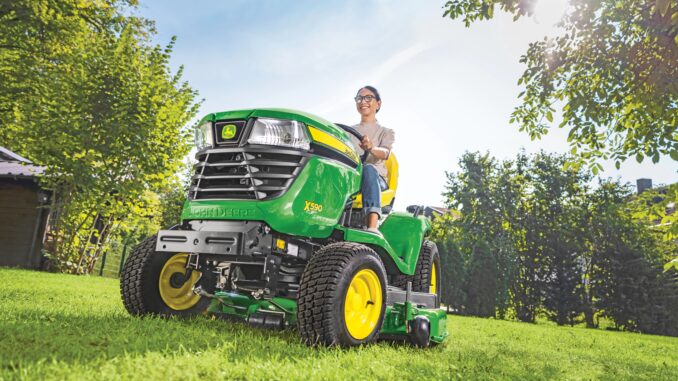
The John Deere 125 automatic is a 100 Series lawn tractor built for homeowner mowing, with a 42-inch deck, a Briggs & Stratton V-twin gasoline engine, and a belt-driven hydrostatic automatic transmission. This guide is written for USA and Canada owners who want a practical, symptom-first reference covering repairs, troubleshooting, routine maintenance, parts buying, and realistic DIY limits.
For most owners, the John Deere 125 automatic is best suited to regular lawn care, seasonal leaf work, and light towing within the limits set out in the operator’s material, rather than heavy commercial use or repeated rough-ground abuse. That matters because many common problems on this model, such as weak starting, poor cut quality, belt wear, vibration, and hydro drive complaints, are usually linked to maintenance condition, deck setup, or age-related wear rather than one dramatic component failure.
General overview of the John Deere 125 automatic
The John Deere 125 sits in the residential 100 Series family covered by the North American operator’s manual for Deere lawn tractors, which is why many service procedures, safety practices, and identification points are shared with nearby models in the same range. In practical terms, it is a homeowner lawn tractor with a mid-mount 42-inch mower deck, manual steering, 12-volt electrical system, mechanical PTO engagement, and a Tuff Torq T40 belt-driven hydrostatic transmission.
The main systems an owner needs to understand are:
-
Engine and fuel system: Briggs & Stratton 40R877 V-twin, paper air filter with foam pre-cleaner, spin-on oil filter, carbureted gasoline setup.
-
Mower system: 42-inch Edge-style deck, two blades, deck belt drive, spindle assemblies, idlers and brakes.
-
Drive system: belt-driven hydrostatic transaxle, drive belt, bypass arrangement, brake and linkage components.
-
Electrical system: 12-volt battery, ignition switch, charging circuit, starter, PTO and seat/brake safety interlock circuits.
Common service parts owners regularly buy for this platform include the 42-inch mower deck belt GY20072, 42-inch mower blade GY20850, oil filter GY20577, fuel filter GY20709, and air filter GY21435. The wider 100 Series operator’s manual also confirms that owners should keep the machine PIN and engine serial number handy before ordering service parts or seeking technical help.
John Deere 125 automatic troubleshooting approach
The best way to diagnose this tractor is to start with the symptom the owner actually sees: no-crank starting, crank-but-won’t-start, rough running, weak mowing performance, unusual vibration, oil or fuel leakage, poor traction, or an electrical function that does not behave normally. That symptom-first method helps avoid replacing parts at random and usually separates a simple service issue from a true repair issue much faster.
Main symptom groups for the John Deere 125 automatic are:
-
Starting issues
-
Running and power issues
-
Cut-quality problems
-
Vibration and noise
-
Overheating, smoke, and leaks
-
Transmission and drive complaints
-
Electrical and safety-switch faults
A good first pass is to check fuel freshness, battery condition, visible loose wiring, deck buildup, belt condition, oil level, and whether the machine is being started in the correct safe position with PTO disengaged and brake applied. On these residential tractors, a lot of “major” problems turn out to be stale fuel, dirty filters, belt wear, debris buildup, or an out-of-adjustment safety input.
Emergency John Deere 125 automatic repair needs
Some faults on the John Deere 125 automatic need immediate attention because they create a safety risk or can damage expensive parts quickly. If the machine has fuel leakage, heavy vibration, a blade that does not stop correctly, severe belt burning, smoke from the engine bay, or a brake/safety problem, it should be parked until the cause is found and corrected.
John Deere 125 automatic starting issues
When this tractor will not crank or will crank but not fire, the risk is usually inconvenience first, but repeated attempts can flatten the battery, overheat wiring, or hide a fuel-system problem that gets worse over time. Starting faults also matter because many owners misread an interlock problem as a bad starter or a dead engine.
Common causes:
-
Weak or failing battery
-
Corroded battery terminals or poor ground
-
PTO left engaged
-
Brake/clutch input not set correctly for starting
-
Bad fuel, blocked fuel filter, or stale gasoline
-
Fouled spark plugs
-
Faulty ignition switch, solenoid, or safety switch
Basic checks:
-
Confirm PTO is off, parking brake is locked, and the operator is following the correct start procedure.
-
Inspect battery terminals for corrosion and check for obvious loose or damaged cables.
-
Verify fresh fuel is in the tank and the fuel filter is not visibly restricted or old.
-
Remove and inspect the spark plugs if the engine cranks normally but does not fire.
-
If it only clicks or intermittently cranks, test battery voltage and starter circuit rather than guessing at parts.
Cut-quality problems on the John Deere 125 automatic
Poor cut quality usually shows up as ragged grass tips, strips of uncut grass, scalping, clumping, or an uneven finish. It matters because owners often blame the deck design when the actual cause is blunt blades, incorrect deck setup, grass buildup, or belt slip.
Common causes:
-
Dull, bent, or mismatched blades
-
Deck packed with wet grass
-
Worn or slipping deck belt
-
Deck not level side-to-side or front-to-back
-
Mowing too fast for grass conditions
-
Engine not reaching full governed speed
Basic checks:
-
Clean the underside and top of the deck after the machine is fully shut down and cooled.
-
Inspect blades for wear, bends, missing lift, or poor previous sharpening.
-
Check belt condition and tension, since Deere’s service sheet specifically calls for belt-tension checks.
-
Verify deck leveling before replacing more expensive parts.
-
Slow ground speed in heavy or damp grass and test cut again.
John Deere 125 automatic vibration and noise
Abnormal vibration on this model should always be treated seriously because rotating blade and belt systems can damage spindles, pulleys, and mounts if the machine keeps running. A tractor that suddenly starts shaking after blade contact with an object often has a blade, spindle, pulley, or belt problem rather than an engine issue.
Common causes:
-
Bent or unbalanced blade
-
Loose blade hardware
-
Worn spindle bearing
-
Damaged idler pulley
-
Debris wrapped around spindle or pulley shafts
-
Engine mounting or exhaust hardware looseness
Basic checks:
-
Stop using the tractor immediately if vibration begins suddenly after striking something.
-
Inspect both blades and blade fasteners for looseness, cracks, or bending.
-
Spin pulleys and spindles by hand with the machine safely disabled to feel for roughness.
-
Look for belt damage, glazing, or missing chunks.
-
Do not continue mowing until the rotating cause is found.
Overheating and leaks on the John Deere 125 automatic
Because this tractor uses an air-cooled engine, overheating often begins with blocked cooling screens, dirt around the engine, or oil level problems rather than coolant loss. Fuel or oil leaks also deserve quick attention because Deere specifically warns that debris and spilled fuel or oil can increase fire risk around hot engine and exhaust areas.
Common causes:
-
Grass and debris packed around engine screens and shrouds
-
Low or degraded oil
-
Fuel filter or fuel line seepage
-
Crankcase gasket or oil filter seepage
-
Operating in extreme dust without increased service frequency
Basic checks:
-
Let the machine cool and clean the engine screen, muffler area, top of deck, and transmission area.
-
Check engine oil level and service history.
-
Inspect around the oil filter, fuel filter, and fuel lines for fresh wetness.
-
Replace leaking consumable parts promptly rather than continuing to use the machine.
-
If smoke or strong fuel odor appears, stop operation and inspect before restarting.
John Deere 125 automatic transmission and drive problems
Drive complaints usually appear as weak uphill pull, slow response, loss of motion, belt squeal, or a tractor that rolls oddly when moved. On this type of belt-driven hydro, external linkage or drive-belt issues are often more realistic DIY fixes than internal transaxle repairs.
Common causes:
-
Worn or slipping drive belt
-
Linkage out of adjustment
-
Bypass rod not fully returned
-
Brake drag
-
Hydro transaxle wear after high hours or hard use
Basic checks:
-
Confirm the bypass arrangement is in the normal drive position before diagnosing a transmission failure.
-
Inspect the drive belt for glazing, cracking, or contamination.
-
Check that the tractor rolls freely when appropriate and is not fighting a dragging brake.
-
Test on level ground first, then compare behavior on a mild incline.
-
If the belt and linkage are sound but drive remains weak, dealer diagnosis becomes more sensible.
Electrical problems on the John Deere 125 automatic
Electrical faults on residential Deere tractors often show up as no crank, intermittent cut-out, PTO not engaging, battery not holding charge, or safety-related shutoff. Because several switches and connectors interact, electrical diagnosis should be methodical rather than based on swapping parts.
Common causes:
-
Corroded battery terminals
-
Weak battery
-
Failed seat, brake, or PTO switch
-
Faulty ignition switch or solenoid
-
Damaged wiring near moving or hot parts
-
Charging issue after repeated low-battery starts
Basic checks:
-
Start with battery connections and battery state of charge.
-
Inspect visible harness routing for rubbing or heat damage near the engine and frame.
-
Test switches only after confirming the basic power supply is good.
-
Check whether the fault is repeatable in one operating condition or completely random.
-
Keep all guards and safety devices in place during diagnosis.
DIY or dealer repair decision guide
The line on the John Deere 125 automatic is fairly clear: routine service, deck work, filters, blades, battery replacement, and many belt-related jobs are realistic for a careful owner, while internal hydro repairs, deep engine work, valve-clearance adjustment, and complex electrical tracing are better handled by a Deere dealer or an experienced small-engine technician.
Good DIY jobs for the John Deere 125 automatic
-
Engine oil and filter service.
-
Air and fuel filter replacement.
-
Spark plug service.
-
Blade removal, sharpening, and replacement.
-
Deck cleaning, leveling, and belt replacement.
-
Battery replacement and terminal cleaning.
Advanced DIY or dealer jobs on the John Deere 125 automatic
-
Hydro drive belt path diagnosis if access is poor.
-
Spindle housing replacement if bolts are seized or deck damage exists.
-
Intermittent electrical faults across several safety circuits.
-
Carburetor overhaul or governor-related engine issues.
-
Valve clearance inspection and adjustment, which Deere’s maintenance sheet points to dealer service at 200 hours.
-
Internal transmission repair or replacement.
Skill level guide
-
Beginner: oil change, air filter, battery, fuel filter, blade inspection.
-
Intermediate: spark plugs, deck belt, blade replacement, deck leveling, spindle checks.
-
Advanced: electrical diagnosis with a meter, spindle replacement, carburetor work, drive-system diagnosis, seized-hardware repairs.
Parts for the John Deere 125 automatic: OEM, aftermarket, and what you need first
Before ordering anything, gather the full model name, the tractor Product Identification Number, and the engine serial number, because Deere’s operator’s manual specifically directs owners to use those identifiers when contacting service support or ordering parts. If the tractor has been modified or fitted with different deck-related components over time, confirm the deck width and the actual part already fitted before buying replacements online.
For this model, OEM parts make the most sense for belts, safety switches, ignition components, and fit-sensitive deck parts, because small differences in belt length or switch design can cause repeat failures or unsafe operation. Aftermarket parts can be acceptable for common consumables such as batteries, some filters, and some blades, but only when the cross-reference is clear and the supplier is reputable.
John Deere 125 automatic manuals and parts diagrams
Owners should use a mix of official Deere material and a strong Deere-focused parts source. The most useful references are:
-
John Deere 100 Series operator’s manual for safety, controls, service intervals, identification locations, and operating procedures.
-
Deere parts and maintenance sheet for the D125 platform for quick service part numbers and interval reminders.
-
John Deere Technical Publications for official manuals and deeper literature access.
-
JDParts for exploded diagrams and serial-sensitive parts lookup by model and PIN.
The operator’s manual is the best first stop for service intervals, safety interlocks, location of identification numbers, and operating rules on slopes and towing. JDParts is usually the better tool when you need diagrams for deck assemblies, belt routing, switches, linkages, and exact ordering confirmation.
How to locate John Deere 125 automatic model, PIN, and engine numbers
These numbers matter because Deere ties support and parts lookup to the machine and engine identifiers, especially when a model has running changes or multiple engine applications. Without them, it is much easier to order the wrong belt, filter, switch, or engine part.
-
Park the tractor safely on level ground, switch the engine off, set the brake, and remove the key before looking for identification tags.
-
Find the tractor Product Identification Number on the left side of the frame, which is where the 100 Series operator’s manual places the machine PIN location.
-
Clean the tag carefully so the full PIN can be read and photographed for future parts orders.
-
Find the engine serial number on the engine itself; the operator’s manual illustrates separate locations for single-cylinder and V-twin engines.
-
Record both numbers in your phone, service log, or workshop notebook before ordering anything.
Buying John Deere 125 automatic parts online and in stores
The best strategy is to identify the symptom first, confirm the exact OEM part number second, and only then compare suppliers. That cuts down on wasted time, especially with belts, ignition parts, and switch-related items that may look similar but fit differently.
-
Online: use OEM numbers, confirm model/PIN fitment, and cross-check with diagrams on JDParts or the official Deere ecosystem.
-
Dealer counter: best for serial-specific, hard-to-identify, safety-related, or unclear drive and electrical parts.
-
Retail stores: acceptable for oil, batteries, some filters, and spark plugs if the package clearly lists the correct cross-reference for your machine.
-
Useful sources include John Deere Technical Publications, JDParts, and The Home Depot parts/maintenance sheet page for quick part-number confirmation.
Step-by-step fitting guide for common John Deere 125 automatic parts
These are the high-impact DIY jobs that solve many of the most common owner complaints on this tractor. Always park safely, remove the key, and disconnect spark plug leads when working close to rotating parts.
Replacing the air filter on a John Deere 125 automatic
A fresh air filter helps with hard starting, black smoke, rough running, and power loss in dusty mowing conditions.
-
Shut the tractor down, let the engine cool, and open the air-cleaner housing.
-
Remove the old paper element and any foam pre-cleaner, noting how they sit in the housing.
-
Wipe dust from the housing without pushing dirt into the intake.
-
Fit the new pre-cleaner and paper element correctly and close the housing securely.
-
Test-run the engine and make sure the cover seals properly.
Replacing the fuel filter on a John Deere 125 automatic
Fuel filter replacement can cure lean running, surging, and crank-no-start problems caused by restricted fuel flow.
-
Work in a well-ventilated area with the engine cool and away from sparks or flame sources.
-
Clamp the fuel line if needed and place a rag under the filter.
-
Note the fuel-flow direction marked on the old filter before removal.
-
Install the new filter in the same direction and secure the line clamps properly.
-
Start the engine and inspect immediately for seepage or drips.
Changing blades on the John Deere 125 automatic
Blade service restores cut quality and can eliminate vibration caused by damaged or badly worn blades.
-
Park on level ground, disengage PTO, remove the key, and disconnect the spark plug wires.
-
Raise the deck safely for access and block it securely if needed.
-
Remove the blade hardware, keeping note of blade orientation.
-
Install sharpened or new matched blades and tighten hardware to the correct specification from the applicable Deere literature.
-
Spin-check by hand for clearance, reconnect spark plug wires, and test mow a small area.
Replacing the John Deere 125 automatic deck belt
A new deck belt helps when the blades slow in heavy grass, the deck squeals, or the belt shows cracks, glazing, or frayed edges.
-
Lower the deck, park safely, and remove the key before working around the belt path.
-
Note the existing routing carefully, ideally with a photo before removal.
-
Release belt tension from the idler system and remove the worn belt from the engine sheave and deck pulleys.
-
Route the new OEM belt exactly as the old one was installed, making sure it sits fully in pulley grooves.
-
Reapply tension, rotate the pulleys by hand, and then engage the deck briefly to confirm normal tracking.
Maintenance to prevent repeat John Deere 125 automatic problems
Routine maintenance does more than keep the tractor running; it prevents the exact failures most owners complain about, including hard starting, belt slip, weak cut quality, overheating, and fire-risk debris buildup. On this model, regular cleaning and scheduled service are often more important than chasing upgrades.
Focus areas:
-
Starting reliability: keep the battery charged, terminals clean, fuel fresh, and filters current.
-
Cut quality: sharpen or replace blades, keep the deck clean, and monitor belt condition and tension.
-
Fire and overheating prevention: clean the muffler area, engine screens, top of deck, and transmission area regularly.
-
Drive performance: inspect belts and linkages before assuming the hydro unit is worn.
-
Electrical reliability: protect wiring from corrosion, rubbing, and low-battery operation.
John Deere 125 automatic maintenance schedule and year-round checklist
The official Deere material for this lawn-tractor family and the D125 maintenance sheet give a strong baseline schedule for owners in the USA and Canada. Service frequency should increase in dusty, hot, or debris-heavy conditions, which Deere-focused maintenance sources also note for similar tractors.
Daily or before each use
-
Check engine oil level.
-
Inspect the machine for loose hardware, damage, leaks, and debris buildup.
-
Confirm guards, shields, and discharge components are in place.
-
Check tire condition and general operating safety.
After 8 hours
-
Change engine oil for the initial service interval listed on the Deere maintenance sheet.
Every 25 hours
-
Check and adjust mower deck spindle brakes.
-
Lubricate mower spindles.
Every 50 hours or yearly
-
Change engine oil and replace filter.
-
Clean or replace the air filter pre-cleaner and main element.
-
Replace the fuel filter.
-
Sharpen or replace mower blades.
-
Check or replace the mower drive belt and verify belt tension.
Every 200 hours
-
Lubricate pivot points.
-
Lubricate front axle wheel spindles and bushings.
-
Check and adjust valve clearance through a dealer service visit.
Seasonal checklist for the John Deere 125 automatic
Spring
-
Fit sharpened blades and inspect the deck belt.
-
Change oil and filter if due before the mowing season starts.
-
Inspect battery condition after winter storage.
Mid-season
-
Clean deck and engine cooling areas more often in hot or dusty weather.
-
Recheck blade condition and belt wear if cut quality drops.
-
Watch for fuel-system restriction if hot restarts become harder.
Fall or end of season
-
Clean the entire machine before storage, especially around the muffler, engine screens, deck top, and transmission area.
-
Replace overdue filters and oil so acidic old oil is not left in the engine over storage.
-
Store only after leaks, worn belts, or battery issues are addressed.
Repair, upgrade, or replace the John Deere 125 automatic?
For this model, repair usually makes sense when the tractor is structurally sound, the engine has good basic health, and the issue is limited to normal wear parts such as blades, belts, filters, battery, spindle components, or minor electrical items. Upgrade makes more sense when the tractor still works but your property, mowing hours, or comfort expectations have clearly outgrown a 100 Series machine, while full replacement becomes the smarter path when engine, hydro, deck shell, and electrical issues start stacking together.
Repair if…
-
The problem is isolated to routine wear parts or one system.
-
The deck shell and frame are still solid.
-
Starting, charging, and drive issues point to external parts rather than major internal failure.
Upgrade if…
-
You want heavier transmission capacity, stronger deck construction, or more comfort features.
-
You mow larger areas than this homeowner platform was really designed for.
-
You repeatedly push the tractor into towing or rough-ground work beyond routine lawn care.
Replace if…
-
The tractor has weak engine compression plus hydro weakness plus deck rust or spindle damage.
-
Safety-related systems are neglected and the machine has become uneconomical to sort properly.
-
Parts and labor together approach the value of a better replacement mower.
Expanded troubleshooting FAQ for the John Deere 125 automatic
1. Why will my John Deere 125 automatic not start?
Start with the basics the tractor actually needs to crank safely: PTO off, brake locked, adequate battery power, and clean cable connections. If it cranks but will not fire, fresh fuel, a clean filter, and spark-plug condition are the next most likely checks on this model.
2. Why does my John Deere 125 automatic click but not crank?
A clicking sound usually points to low battery voltage, poor cable connection, or starter-solenoid engagement without enough current to spin the starter. Corroded terminals and weak batteries are far more common than catastrophic starter failure on homeowner tractors.
3. Why does the John Deere 125 automatic crank but not fire?
That usually means compression and starter function are present, so focus on fuel delivery, spark, and stale gasoline first. A restricted fuel filter, fouled plugs, or old fuel left in the machine are common causes.
4. Why does my John Deere 125 automatic start and then die?
This often happens when fuel flow is restricted, the carburetor is varnished from stale fuel, or an interlock-related electrical fault cuts operation unexpectedly. Check the fuel filter, fuel quality, and whether the problem changes when PTO is engaged or the operator shifts position.
5. Why is my John Deere 125 automatic running rough?
Rough running often comes from dirty air filtration, old spark plugs, stale fuel, or partial fuel restriction. On a V-twin engine, one weak ignition side can also make the tractor feel down on power without fully quitting.
6. Why does the John Deere 125 automatic surge at idle or part throttle?
Surging usually points to fuel quality issues, restricted fuel flow, or carburetor contamination. Before assuming the carburetor must be rebuilt, replace the fuel filter, use fresh fuel, and make sure the air filter is not heavily restricted.
7. Why does my John Deere 125 automatic blow black smoke?
Black smoke suggests an overly rich condition, often caused by a dirty air filter, over-choking on a different engine setup, or fuel-system issues. A badly restricted filter is one of the quickest checks and one of the cheapest fixes.
8. Why is my John Deere 125 automatic low on power in thick grass?
Low mowing power is commonly tied to dull blades, belt slip, clogged deck airflow, or grass that is simply too heavy for the chosen travel speed. Slow down, clean the deck, and inspect blades and belt condition before chasing deeper engine problems.
9. Why does my John Deere 125 automatic leave strips of uncut grass?
Uncut strips usually mean blade edges are dull, the deck is not level, or one blade is not rotating correctly because of belt or spindle trouble. Wet grass and mowing too fast can make the same symptom look worse.
10. Why does the John Deere 125 automatic cut unevenly?
Check tire pressures, then deck level, then blade condition in that order. Many owners go straight to replacing parts when the real cause is a deck that is slightly off level or a blade with poor lift.
11. Why does my John Deere 125 automatic scalp the lawn?
Scalping usually comes from setting the deck too low for uneven ground, mowing too fast over humps, or having the deck incorrectly leveled. The tractor can cut well, but only if deck setup matches the lawn conditions.
12. Why do the blades on my John Deere 125 automatic slow down in heavy grass?
That usually means the deck belt is slipping, worn, glazed, or not tensioning correctly under load. Deere’s own maintenance sheet highlights belt-tension checks and deck-belt inspection because this is a common wear point.
13. Why is my John Deere 125 automatic vibrating badly?
Severe vibration is often caused by a bent blade, blade damage after striking an object, loose blade hardware, or a failing spindle bearing. Stop mowing immediately because continued use can damage more parts and increase safety risk.
14. Why does my John Deere 125 automatic make a squealing noise when mowing?
A squeal usually points to belt slip, an idler problem, or a pulley bearing beginning to fail. Inspect the belt for glazing or cracking and check whether the noise appears only when PTO is engaged.
15. Why does my John Deere 125 automatic thump when the deck is engaged?
A thump at engagement can come from a damaged belt, pulley issue, debris around the spindle area, or a blade problem. Shut the machine down and inspect before assuming the PTO control itself is at fault.
16. Why does my John Deere 125 automatic throw belts?
Thrown belts usually indicate wrong routing, wrong belt size, worn belt guides, damaged pulleys, or an alignment issue after another repair. This is one reason OEM belts are usually the safest choice on fit-sensitive deck systems.
17. Why does the John Deere 125 automatic deck belt keep burning?
A belt that burns or smokes is slipping badly, often because of seized spindle bearings, frozen idlers, incorrect installation, or heavy misalignment. Do not keep fitting new belts until the pulley system turns freely by hand.
18. Why are my John Deere 125 automatic blades wearing so quickly?
Fast blade wear is usually caused by mowing sandy ground, striking debris, or running dull blades too long between sharpening. Blade condition is a consumable issue on homeowner tractors, especially in dry abrasive conditions.
19. Why does my John Deere 125 automatic battery keep going flat?
Common causes are battery age, dirty terminals, poor charging, or repeated short runs that never recover starting load. Start with terminal condition and battery health before digging deeper into the charging circuit.
20. Why does the PTO on my John Deere 125 automatic not engage correctly?
Check the operator controls and interlocks first, then inspect the deck belt system and linkage behavior. Owners sometimes assume a major PTO fault when the actual problem is a worn belt or a safety-related input preventing normal operation.
21. Why does my John Deere 125 automatic shut off when I leave the seat?
That is usually the seat safety system doing its job or showing a switch fault if it behaves inconsistently. If the tractor dies unexpectedly during normal operation, inspect the seat switch and related wiring rather than bypassing the system.
22. Why will my John Deere 125 automatic not move forward or reverse?
First confirm the transmission bypass is fully returned to the drive position, then inspect the drive belt and linkage. On belt-driven hydro tractors, external drive issues are much more common than instant internal hydro failure.
23. Why is my John Deere 125 automatic weak on hills?
Some reduction in performance on slopes can be normal for a residential tractor, but sudden weakness points more toward belt slip, brake drag, or hydro wear. Diagnose on level ground first so you do not confuse normal slope limits with an actual fault.
24. Why does the John Deere 125 automatic roll oddly when I push it?
Check whether the bypass rod is engaged for freewheeling and whether the brake is dragging. The operator’s manual specifically warns owners to use the transmission bypass arrangement correctly.
25. Why does my John Deere 125 automatic smell hot after mowing?
A hot smell often comes from grass packed around the engine or muffler area, a slipping belt, or oil and debris collecting on hot surfaces. Deere places heavy emphasis on debris cleanout because fire risk rises fast when dry clippings build up.
26. Why is oil leaking from my John Deere 125 automatic?
Check around the oil filter, drain area, and engine sealing surfaces first. Small leaks matter on air-cooled engines because low oil level and oily debris buildup can both shorten engine life.
27. Why does my John Deere 125 automatic smell like fuel?
Fuel odor usually means a leaking hose, loose clamp, seeping filter connection, or spill around the cap or tank area. Stop using the tractor until the leak source is found because fuel and dry debris together create a fire hazard.
28. Why does my John Deere 125 automatic backfire?
Backfire can be linked to stale fuel, ignition issues, carburetion faults, or shutdown behavior after rough running. Start with routine tune-up items and fuel condition before assuming internal engine damage.
29. How often should I change oil on a John Deere 125 automatic?
The Deere maintenance sheet calls for an initial oil change after 8 hours, then engine oil and filter service every 50 hours or annually. If the tractor works in dusty or severe conditions, service should be done more often.
30. How often should I replace the air filter on a John Deere 125 automatic?
The published maintenance information says to clean or replace the air-filter pre-cleaner and element every 50 hours or annually, with more frequent service in dusty conditions. A visibly dirty filter, black smoke, or power loss are good reasons to inspect it sooner.
31. How often should I replace the fuel filter on a John Deere 125 automatic?
The Deere maintenance sheet lists fuel-filter replacement every 50 hours or annually. If the tractor has been sitting with old fuel or shows fuel-starvation symptoms, replacing it earlier is often worthwhile.
32. How often should I sharpen blades on a John Deere 125 automatic?
There is no single perfect number of hours because blade wear depends heavily on soil, debris, and mowing conditions. Deere’s maintenance sheet includes sharpening or replacing blades at the 50-hour or annual service interval, but many owners need touch-up sooner during peak season.
33. When should deck spindles on a John Deere 125 automatic be checked?
Check them any time you hear growling, feel vibration, or notice uneven cut or belt trouble. Deere’s maintenance literature also includes regular spindle-related service attention through lubrication and brake checks on the deck assembly.
34. Should I buy OEM belts for a John Deere 125 automatic?
In most cases, yes. Belt length, width, and side profile matter a lot on mower decks, so OEM belts reduce the odds of tracking issues, poor engagement, or repeat belt loss.
35. What jobs on a John Deere 125 automatic should go to a dealer?
Dealer work is the safer choice for valve-clearance adjustment, internal hydro faults, complex electrical diagnosis, and deeper engine repairs. Deere’s own maintenance information specifically points valve-clearance service at 200 hours to dealer support.