
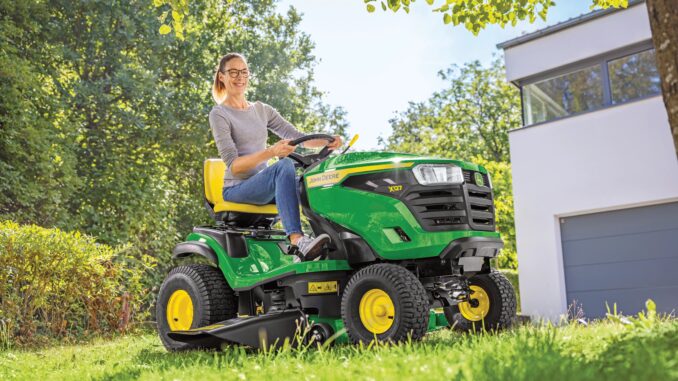
The John Deere 210 lawn tractor is a classic 200‑series garden tractor with a single‑cylinder Kohler engine, manual clutch and variator drive, and mid‑mounted mower deck options. It was built for heavier homeowner work than a typical “big box” lawn tractor, including mowing, light towing, and snow removal with the correct attachments.
This guide is written for USA and Canada homeowners who want to keep a John Deere 210 running, cutting, and starting reliably. It focuses on real‑world symptoms you will see in the yard, then walks through troubleshooting, repair and maintenance, plus a large FAQ so you know what is realistic DIY and when to call a dealer or small‑engine shop.
John Deere 210 lawn tractor – model overview
The John Deere 210 lawn tractor sits in the older 200‑series garden tractor lineup, produced in the late 1970s and 1980s. It is heavier and more serviceable than many modern box‑store machines, with a steel frame, mechanical clutch and a Kohler single‑cylinder engine.
Key systems on the John Deere 210 lawn tractor include:
-
Engine and fuel system – single‑cylinder Kohler K‑series gasoline engine with carburetor, gravity fuel feed, and mechanical governor.
-
Mower system – mid‑mount mower deck (commonly 38‑ or 46‑inch), belt‑driven from the tractor’s PTO, with manual deck lift and mechanical deck engagement.
-
Drive system – belt‑driven variator and gear transmission, mechanical clutch and brake, and rear‑axle drive to turf tires.
-
Electrical system – 12‑volt battery, starter motor, charging system, ignition switch, safety switches and basic lighting depending on configuration.
Because these tractors are now several decades old, common work includes ignition and carburetor service, belts, blades, PTO and variator adjustments, and electrical troubleshooting.
General overview of the John Deere 210 lawn tractor
In the 200‑series, the John Deere 210 sits above the entry‑level 200 model and below the higher‑horsepower 212 and 214. It is still a true garden tractor, not a lightweight lawn tractor, and many units are still in service for mowing and light hauling.
Important components owners should be aware of:
-
Engine: Kohler K‑series single‑cylinder, air‑cooled gasoline engine with conventional carburetor and points (on older versions) or electronic ignition on some later updates.
-
Fuel system: Steel or plastic fuel tank, fuel shut‑off valve, rubber fuel line, inline filter, and carburetor. Sediment and stale fuel are common problems on older machines.
-
Mower deck: Optional 38‑ or 46‑inch deck with spindles, blades, idlers and deck belt driven from the front PTO. Decks use replaceable blades and serviceable spindles.
-
Drive and transmission: Manual clutch, drive belt and variator feeding a gear transmission. Clutch/brake linkage and belts need periodic adjustment and replacement.
-
Electrical: 12‑volt battery, starter, solenoid, ignition switch, voltage regulator and safety switches. Corrosion and poor grounds are common with age.
Typical service parts that 210 owners buy regularly include:
-
Engine oil and filter (if equipped with an external filter)
-
Air filter element and pre‑cleaner
-
Spark plug
-
Fuel filter and fuel line
-
Deck belt(s) and drive belt
-
Mower blades
-
Battery
-
Ignition switch and safety switches on worn machines
Exact part numbers depend on engine spec, serial range and deck size, so always check your model and serial details before ordering.
Troubleshooting approach for a John Deere 210 lawn tractor
Diagnosing a John Deere 210 lawn tractor should always start with the symptom you see, not with guessing which part is bad. Work from “what it is doing” toward “which system is at fault”.
For this model, most owner problems fall into a few categories:
-
Starting issues – turns over slowly, clicks only, or does not crank at all.
-
Running issues – starts then stalls, surges, runs rough, smokes or has low power.
-
Cut‑quality issues – uncut strips, scalping, uneven cut or poor discharge.
-
Vibration and noise – excessive deck vibration, rattling or grinding noises.
-
Overheating and leaks – oil leaks, fuel leaks or engine running very hot.
-
Transmission and drive – won’t move, jerky drive, weak pulling, poor braking.
-
Electrical and safety switches – no crank with key, intermittent shut‑down, blown fuses.
Each of the sections below starts from what you see, then outlines basic checks you can safely perform at home.
Emergency and immediate repair needs on a John Deere 210 lawn tractor
Some problems on a John Deere 210 lawn tractor need immediate attention because they affect safety or can quickly damage expensive parts. If you see any of these, stop, shut down, and inspect before continuing.
Starting issues – when the 210 will not crank or start
If the John Deere 210 will not crank at all, cranks slowly, or only clicks at the key, you may be dealing with a weak battery, poor connection, starter problem, or safety‑switch issue. Repeated cranking with a weak battery can overheat wiring and the starter.
Common causes:
-
Weak or dead battery
-
Dirty or loose battery cables and grounds
-
Faulty ignition switch or starter solenoid
-
Seat, PTO or neutral safety switch not made
-
Internal starter motor failure
Basic owner checks:
-
Verify the PTO is off, brake/clutch is fully depressed, and transmission in neutral.
-
Check battery terminals for corrosion; clean and tighten both ends including ground.
-
Try a known‑good, fully charged battery or jump pack (follow safety rules).
-
Listen for a click from the solenoid; if none, suspect ignition switch or safety circuit.
-
If it still only clicks or does nothing, plan on electrical diagnosis or starter removal.
Cut‑quality problems on a John Deere 210 lawn tractor
Cut‑quality complaints include uneven cut, uncut strips, scalping on bumps, or poor discharge and clumping. These often come from deck setup and blades rather than the tractor itself.
Common causes:
-
Dull, bent or mismatched blades
-
Wrong blade type for the deck
-
Deck not leveled side‑to‑side or front‑to‑back
-
Deck belt slipping, causing low blade speed
-
Excessive ground speed or wet grass
Basic owner checks:
-
Inspect blades for sharpness, bends and correct installation direction.
-
Verify the deck is level side‑to‑side and pitched slightly lower at the front.
-
Check deck belt for cracks, glazing or slack; replace if worn.
-
Slow down in heavy or wet grass and avoid cutting more than about one‑third of the grass height at once.
-
Clean built‑up grass from the underside of the deck (engine off, plug wire removed).
Vibration and noise on a John Deere 210 lawn tractor
Excessive vibration or unusual noises from the John Deere 210 lawn tractor are warning signs. Continued use can damage spindles, belts, pulleys or the engine if not corrected.
Common causes:
-
Bent or unbalanced blades
-
Worn spindle bearings
-
Loose or missing deck hardware
-
Stones or debris caught in the deck
-
Loose engine or deck mounting bolts
Basic owner checks:
-
With engine off, remove the key and disconnect the spark plug wire.
-
Inspect blades; replace any that are bent, cracked or badly nicked.
-
Spin each blade spindle by hand; feel for roughness or play.
-
Check deck and engine mounting bolts for tightness.
-
Remove any trapped debris from the deck and around pulleys.
Overheating and leaks on a John Deere 210 lawn tractor
Air‑cooled engines depend on airflow and clean fins. Oil or fuel leaks on a John Deere 210 can be both a fire risk and a sign of a more serious problem.
Common causes:
-
Cooling fins and shrouds packed with grass and debris
-
Low engine oil level or very old oil
-
Cracked or loose fuel line or fittings
-
Oil leaks from crank seals, gaskets or breather
-
Rodent nests under engine shrouds
Basic owner checks:
-
With engine cool, check oil level and top up to spec; if oil is very dark, change it.
-
Remove engine shrouds and gently clean grass and debris from cooling fins.
-
Inspect fuel lines and shut‑off valve; replace any hardened or cracked hoses.
-
Wipe everything clean and run briefly to pinpoint the source of any fresh leaks.
-
If the leak is from a crank seal or main gasket, plan on shop or experienced DIY repair.
Transmission and drive problems on a John Deere 210 lawn tractor
Drive problems on a John Deere 210 lawn tractor include weak pulling, surging ground speed, or no movement in one or more gears. The clutch, drive belt and variator system are common wear points.
Common causes:
-
Worn or loose drive belt
-
Incorrect clutch/brake adjustment
-
Variator linkage out of adjustment
-
Transmission or axle internal wear
-
Brake pedal not returning fully
Basic owner checks:
-
Confirm the drive belt is in good condition and routed correctly.
-
Check for excessive slack or belt glazing; replace if worn.
-
Inspect clutch and brake linkages for free movement and correct adjustment.
-
Make sure the brake pedal returns fully and is not partially applied.
-
If gears grind, jump out or the tractor still will not move, seek professional help.
Electrical and safety‑switch problems on a John Deere 210 lawn tractor
Electrical faults on an older John Deere 210 often show up as intermittent no‑crank, dying when you release the clutch or let go of the seat, or blowing fuses. Safety circuits are there for good reason, so never bypass them permanently.
Common causes:
-
Corroded connectors and grounds
-
Failing ignition switch
-
Faulty seat, PTO or neutral safety switch
-
Chafed wiring harness contacting the frame
-
Weak battery or failing voltage regulator
Basic owner checks:
-
Visually inspect wiring for rubbed, melted or pinched sections.
-
Clean and tighten all major grounds and battery connections.
-
Wiggle the key while holding the clutch down; if crank is intermittent, suspect switch.
-
Sit firmly in the seat and ensure PTO is off; test if engine still cuts out on bumps.
-
If fuses blow repeatedly or wiring is damaged, consult a qualified technician.
John Deere 210 DIY vs dealer – repair decision guide
On a John Deere 210 lawn tractor, the practical DIY line is usually anything you can do without splitting the tractor, opening the transmission, or rebuilding the engine. Most owners can handle routine maintenance and simple bolt‑on repairs with basic tools and a good manual.
Good DIY jobs:
-
Engine oil and filter changes
-
Air, fuel and spark plug replacement
-
Battery replacement and battery cable cleaning
-
Mower blade changes and deck belt replacement
-
Drive belt replacement if you are comfortable working under the tractor
-
Basic deck adjustments and deck removal/refitting
-
Seat, hood and cosmetic repairs
Advanced DIY or dealer jobs:
-
Engine tear‑down, piston/ring or valve work
-
Internal transmission or differential repairs
-
Clutch or variator overhaul
-
Significant electrical rewiring or harness replacement
-
Steering gear or front‑axle rebushing if heavily worn
Skill level guide:
-
Beginner: Oil changes, air filter, spark plug, battery, deck cleaning and blade removal/refitting.
-
Intermediate: Deck belt replacement, drive belt replacement, carburetor cleaning, basic electrical diagnosis.
-
Advanced: Engine or transmission internal work, variator rebuilds, full electrical harness repair.
Parts information for a John Deere 210 lawn tractor
Before you order parts for a John Deere 210 lawn tractor, gather all the identification details so you get components that actually fit.
Information to collect:
-
Full model designation: “John Deere 210” lawn and garden tractor.
-
Product Identification Number (PIN) or serial number from the tractor tag.
-
Engine model and specification number from the Kohler ID tag.
-
Mower deck size and style (38‑inch vs 46‑inch, and whether it is the original deck).
-
Attachment model numbers (e.g., snowthrower, front blade).
Common John Deere 210 service parts (example table)
Use this table as a starting point, then cross‑check exact numbers against the parts catalog or a reputable parts supplier for your serial range and deck size.
For exact OEM numbers, use the official John Deere parts catalog for the John Deere 210 and your specific deck and attachment models, or cross‑reference via a trusted online parts supplier.
OEM vs aftermarket guidance
-
Use OEM parts for belts, safety‑critical items (like steering and brake components), and fit‑sensitive parts such as variator components and some electrical switches.
-
Quality aftermarket parts are usually fine for filters, spark plugs, batteries and sometimes mower blades, as long as the parts cross‑reference correctly to your engine, tractor and deck model.
-
Avoid very cheap, unbranded belts and electrical parts; they often fail early and cause more downtime.
Where to find John Deere 210 parts diagrams and manuals
For a John Deere 210 lawn tractor, you will get the best results by pairing this guide with official diagrams and manuals:
-
Operator’s manual – Shows basic operation, controls, safety, maintenance schedule, fluid specs and adjustment procedures. This is the first document every owner should read.
-
Parts catalog – Exploded diagrams of every system (engine installation, drive, steering, mower decks, attachments) plus the official part numbers for your tractor.
-
Technical/service manual – A more in‑depth manual covering repairs, adjustments, testing procedures and system theory. This is valuable for advanced DIY and shop repairs.
-
Reputable Deere‑focused parts sites – Many aftermarket and OEM‑reselling sites host model‑specific John Deere 210 pages where you can look up parts by diagram, serial number or deck size.
Use these resources side by side with the tractor to confirm part locations, torque specs and routing before you take anything apart.
How to locate model, serial and engine numbers
Correct identification is critical for the John Deere 210 lawn tractor, because parts can change between years and serial ranges.
Follow these steps:
-
Tractor PIN/serial tag: Look for the product identification plate on the frame (often near the rear of the tractor or under the seat, depending on year). Clean it gently so you can read the model and serial.
-
Mower deck model tag: On the deck shell, look for a small metal or decal tag with deck model and serial; it may be on the top surface or side of the deck.
-
Engine ID tag: On the Kohler engine, find the small tag or stamping with the engine model (e.g. K‑series) and specification number; this is the key to correct filters, carburetor kits and ignition parts.
-
Attachment IDs: For front blade, snowthrower or other implements, locate their individual tags as well; they have their own parts lists.
-
Write these numbers down and keep them with your manuals or in your phone for future parts orders.
Buying John Deere 210 parts online and in stores
A simple strategy works well for most John Deere 210 lawn tractor parts purchases:
-
Online sources: Use official part numbers from the Deere catalog or your manual and search a couple of reputable online Deere parts suppliers. Many sites allow you to enter the model “John Deere 210” and browse the diagrams. Only order when the listing clearly matches your model and deck size.
-
Local Deere dealer counter: Best for complex, serial‑specific items or when you’re unsure; bring your model and serial numbers and the old part if possible.
-
Big‑box or farm stores: Fine for generic items such as oil, grease, basic filters, spark plugs, and batteries as long as the packaging clearly lists your engine or tractor model.
Always double‑check return policies and shipping times, especially for seasonal repairs (spring start‑up or winter snow duty).
Fitting guides – common John Deere 210 DIY jobs
The sections below give simple, safe steps for some of the highest‑impact DIY tasks on a John Deere 210 lawn tractor. Always remove the key and disconnect the spark plug wire before working near moving parts.
Changing the engine oil on a John Deere 210 lawn tractor
Regular oil changes are the easiest way to keep the Kohler engine alive.
-
Run the engine for a few minutes to warm the oil slightly (not hot).
-
Park on level ground, set the brake, shut off, remove the key and pull the spark plug wire.
-
Place a drain pan under the drain plug, open the plug and allow oil to drain completely.
-
Refit the drain plug with a new washer if required, then refill with the recommended grade and amount of oil.
-
Start the engine briefly, check for leaks, stop and recheck the oil level, topping off as needed.
Replacing the spark plug on a John Deere 210 lawn tractor
A fresh plug often improves starting and running on older engines.
-
With the engine cool, remove the key and disconnect the spark plug boot.
-
Use a spark plug socket to remove the old plug, noting how tight it was.
-
Check that the replacement plug is the correct type and set the gap to spec.
-
Thread the new plug in by hand to avoid cross‑threading, then snug it with the socket.
-
Reattach the plug boot firmly and start the engine to confirm proper operation.
Changing the air filter on a John Deere 210 lawn tractor
A clean air filter protects the engine from abrasive dust and improves performance.
-
Remove the key, disconnect the plug wire, and open the engine air cleaner housing.
-
Take out the old filter element and pre‑cleaner (if fitted).
-
Clean any loose debris out of the housing carefully; do not let dirt fall into the carburetor.
-
Install the new filter and pre‑cleaner in the correct order and orientation.
-
Close and latch the housing, then test run the engine for smooth operation.
Replacing mower blades on a John Deere 210 lawn tractor
Sharp blades are essential for a clean cut and healthy lawn.
-
Park on level ground, set the brake, remove the key, and disconnect the spark plug wire.
-
Jack up the front of the tractor or remove the deck according to the manual for better access.
-
Use a block of wood to hold each blade and a suitable wrench to remove the blade bolts.
-
Install new matched blades, making sure they face the correct direction and are tightened securely to manufacturer torque specifications.
-
Re‑install the deck if removed, then test cut a small area and recheck blade hardware after the first use.
Replacing the deck belt on a John Deere 210 lawn tractor
A worn deck belt causes poor cut and slipping blades.
-
Lower the deck fully, remove the key and disconnect the spark plug wire.
-
Note the belt routing using a diagram from the manual or a photo from your phone.
-
Release belt tension by moving the idler or spring as directed in the manual.
-
Remove the old belt from all pulleys and install the new belt following the correct routing.
-
Re‑tension the belt, verify clearances around guards and pulleys, then test‑run briefly at low throttle and re‑check.
Maintenance to prevent repeat problems on a John Deere 210 lawn tractor
Regular maintenance on a John Deere 210 lawn tractor dramatically reduces breakdowns and expensive repairs. Focusing on a few areas will extend the life of both the engine and the driveline.
Key focus areas:
-
Starting reliability: Keep the battery healthy, terminals clean, and fuel fresh; replace the plug and filters at recommended intervals.
-
Cut quality: Sharpen or replace blades regularly, keep the deck clean, and check deck level and belt condition each season.
-
Fire and overheating prevention: Clean engine cooling fins and shrouds, repair any oil or fuel leaks promptly, and avoid heavy debris buildup around the engine.
-
Drive performance: Inspect drive belts, keep linkages lubricated, and adjust clutch/brake linkages so the tractor stops and starts smoothly.
-
Electrical reliability: Protect wiring from chafe, secure grounds, and keep moisture away from connectors where possible.
John Deere 210 lawn tractor maintenance schedule and checklist
Use your official operator’s manual for exact intervals, but the checklist below is a good starting point for year‑round care of a John Deere 210 lawn tractor.
Daily / before each use
-
Check engine oil level and top up if needed.
-
Walk around the tractor for loose hardware, leaks or obvious damage.
-
Inspect tires for proper inflation and damage.
-
Verify safety systems: brake, PTO and operator‑presence.
Every 8–10 hours (or weekly during heavy use)
-
Clean grass and debris from the mower deck and engine shrouds.
-
Inspect blades visually for damage and sharpness.
-
Check deck and drive belts for cracks, fraying or glazing.
-
Grease any easily accessible fittings if the manual recommends it.
Every 25 hours
-
Inspect and clean or replace the air filter pre‑cleaner.
-
Check battery connections; clean corrosion and apply dielectric protection.
-
Lubricate steering and pivot points as specified in the manual.
Every 50 hours or yearly (whichever comes first)
-
Change engine oil (and oil filter, if equipped).
-
Replace the fuel filter and inspect fuel lines.
-
Check blade balance and replace blades if they are worn out.
-
Inspect brake and clutch linkages and adjust if required.
Every 200 hours or every few seasons
-
Replace the spark plug.
-
Perform a thorough deck inspection, including spindle bearings, pulleys and idlers.
-
Inspect and, if needed, replace the drive belt and variator‑related components.
-
Review steering components for wear and tighten or replace as needed.
Seasonal checklist (spring, mid‑season, fall)
-
Spring start‑up: Change oil if not done at end of last season, install fresh fuel, check battery, sharpen blades, and test safety systems.
-
Mid‑season: Re‑check deck level and belt condition, touch up blade sharpness, and clean cooling fins.
-
Fall/end of season: Stabilize or drain fuel, clean the tractor thoroughly, change oil if hours are close to interval, and store with battery maintained or removed and on a maintainer.
John Deere 210 – repair, upgrade, or replace?
Deciding whether to keep investing in a John Deere 210 lawn tractor depends on the tractor’s overall condition, your attachment collection, and your comfort level with repairs.
General guidelines:
-
The 210 is worth repairing if the frame, transmission and steering are sound and you use the tractor regularly.
-
Upgrading can be smart if you want better cut quality, comfort or modern safety features, but your 210 still runs.
-
Replacement begins to make sense when major engine or transmission failures combine with heavy wear in multiple systems.
Repair if:
-
The engine has good compression, starts reasonably well, and only needs ignition, carburetor or gasket work.
-
The transmission and rear end are quiet and functional.
-
Most issues are belts, blades, electrical tidying and basic maintenance.
Upgrade if:
-
You want a newer mower deck with modern blade options, improved ergonomics, or better collection/mulching performance (often by moving to a newer Deere model).
-
You have attachments but want a higher‑horsepower or hydrostatic machine, and can still sell the 210 locally.
Replace if:
-
The engine requires full rebuild plus the transmission or rear axle is failing.
-
The frame or steering components are cracked or severely worn.
-
Repair costs approach or exceed the cost of a newer, reliable replacement tractor.
Expanded troubleshooting FAQ – John Deere 210 lawn tractor
1. Why will my John Deere 210 not start at all?
First confirm the basics: PTO off, brake/clutch fully depressed, and transmission in neutral. A completely dead starter usually means a flat battery, poor battery connection, faulty ignition switch or a safety switch not made. Clean and tighten the battery terminals, test with a known‑good battery, and listen for a click from the solenoid as you turn the key. If there is still no response, the starting circuit or starter motor needs further diagnosis.
2. Why does my John Deere 210 only click when I turn the key?
A single click typically indicates the solenoid is trying to work but the starter is not turning. This is most often due to a weak battery or corroded battery cables causing voltage drop under load. Try charging the battery fully or using a jump pack, and clean both ends of each battery cable, including the frame ground. If a known‑good battery does not fix it, suspect a bad solenoid or starter motor.
3. Why does my John Deere 210 crank but not fire?
When the engine spins but never fires, you are missing fuel, spark or both. Start by removing the spark plug, reconnecting the plug wire, and checking for a strong blue spark while cranking (ground the plug safely). If spark is weak or absent, investigate the ignition system and plug. If spark is good, check for fuel at the carburetor, verify the choke is working, and consider stale fuel or a clogged carburetor jet.
4. Why does my John Deere 210 start then stall after a few seconds?
Starting then stalling often points to fuel delivery problems. A partially clogged fuel filter, blocked tank vent, debris in the carburetor or sticking float can all cause starvation after the initial prime burns off. Try loosening the fuel cap slightly, replacing the fuel filter, and inspecting the fuel line for kinks. If the problem persists, the carburetor likely needs cleaning and possibly a rebuild.
5. Why does my John Deere 210 run rough or surge at mid‑throttle?
Surging at steady throttle on a single‑cylinder engine usually indicates a lean mixture from partially clogged carburetor passages, vacuum leaks or incorrect governor linkage adjustment. Inspect the carburetor for dirt and varnish, and ensure the air filter is not severely restricted. Cleaning the carburetor and confirming the governor linkage matches the manual often smooths out surging.
6. Why is my John Deere 210 blowing blue smoke?
Blue smoke usually means the engine is burning oil. Causes include over‑filled crankcase, worn piston rings, worn valve guides or running the tractor on steep slopes that overwhelm the oil control. First check the oil level and correct if it is too high. If the engine consistently smokes under load and oil consumption is noticeable, internal engine wear may require a rebuild or professional evaluation.
7. Why is my John Deere 210 blowing black smoke?
Black smoke indicates a rich fuel mixture. Common causes are a stuck choke, overly rich carburetor adjustment, clogged air filter or a carburetor fault. Make sure the choke fully opens once the engine starts and warm‑up is complete. Replace the air filter if dirty and check that the carburetor needle and float are functioning correctly.
8. Why is my John Deere 210 hard to start when hot?
Hot‑start problems often link to weak ignition components, marginal compression or vapor lock in the fuel system. Verify that the spark remains strong when the engine is hot and that the ignition coil and plug lead are in good condition. Consider routing fuel lines away from extreme heat sources and ensure the cooling fins and shrouds are clean so the engine does not run excessively hot.
9. Why does my John Deere 210 battery keep going flat?
If you frequently need to charge the battery, either the charging system is not working or the battery itself is failing. With the engine running at full throttle, check voltage across the battery; it should be higher than static battery voltage if charging is functioning. Corroded connections, a bad voltage regulator or a failing stator can all reduce charge. Old batteries also lose capacity and may no longer hold a full charge.
10. Why does my John Deere 210 shut off when I let the clutch pedal up?
This is usually a safety‑switch issue. The tractor is designed to shut off if certain conditions are not met when you release the clutch or leave the seat. Verify the PTO is off, the seat switch is functioning, and wiring to these switches is not damaged. If someone previously bypassed safety switches, poor connections there can also cause intermittent shut‑downs.
11. Why is my John Deere 210 cutting unevenly?
Uneven cutting typically comes from uneven deck level or blade issues. Check that the deck is level left‑to‑right and that the front of the deck is slightly lower than the rear. Inspect blades for bends or mismatched types and replace them in matched sets. Also ensure tire pressures are equal, as low pressure on one side will tilt the deck and affect cut quality.
12. What causes uncut strips between the blades on my John Deere 210?
Uncut strips between blades point to dropped blades, incorrect blade overlap or the wrong blades for the deck. Confirm that all blades are correct for the deck model and are mounted in the proper position. If a spindle was replaced with the wrong part or bent, blade tip paths may no longer overlap correctly. Correct hardware and proper spindle installation usually fix this issue.
13. Why does my John Deere 210 scalp the lawn on bumps?
Scalping happens when the deck front or rear wheels drop into depressions or the deck is set too low relative to tire size and terrain. Raise the cutting height a notch or two and check deck pitch and gauge wheel adjustments. For rough lawns, slower mowing speed and a higher cut height often reduce scalping dramatically.
14. Why is the discharge weak or clumping on my John Deere 210?
Weak discharge and clumping usually occur when the grass is wet, the deck is clogged, or blade tip speed is low. Mow only when the grass is reasonably dry and make sure the deck underside is clean. Dull blades, a slipping deck belt or running at too low an engine RPM also reduce lift and discharge, so keep blades sharp and mow at full throttle.
15. Why does my John Deere 210 deck vibrate so badly?
Strong deck vibration is a sign of imbalance or mechanical wear. Bent blades, damaged spindle shafts, worn spindle bearings and loose pulleys can all cause shaking. With the engine off and plug wire disconnected, inspect each blade and spindle carefully for damage or play. Replace any suspect blades and rebuild or replace noisy or loose spindle assemblies.
16. Why do I hear grinding or squealing from the mower deck on my John Deere 210?
Grinding sounds often mean a failing bearing, while squealing can be a slipping belt or dry idler pulley. Check each pulley and idler for smooth operation by spinning them by hand. Look for metal shavings or heat discoloration near bearings. Replace worn pulleys and idlers promptly to avoid further damage to the belt and deck.
17. Why does the belt keep coming off my John Deere 210 mower deck?
Belts jump off when routing is incorrect, pulleys are misaligned, or belt tension is too low. Compare routing to the diagram and inspect all pulley brackets for bends or wear. Make sure spring tensioners and idlers move freely and that guards are not interfering with belt travel. Installing the exact‑spec belt is also crucial; incorrect length belts can slip off easily.
18. Why will my John Deere 210 not move even though the engine runs?
A running engine with no movement usually points to a drive belt issue, clutch problem or serious transmission fault. Start by checking the drive belt for breakage or excessive wear and confirm it is still on all pulleys. Inspect the clutch linkage to ensure it engages properly and that the brake is releasing. If the belt and linkage are sound but the tractor still does not move, internal transmission or axle damage is possible.
19. Why does my John Deere 210 creep or surge in speed?
Creeping or surging ground speed can be caused by incorrect variator adjustment, worn drive belt or linkage binding. Review the variator adjustment procedure in the service or operator’s manual and ensure the linkage moves smoothly through its range. Replace the drive belt if it is worn or heavily glazed, as slipping belts can cause uneven power transfer.
20. Why does my John Deere 210 roll when parked on a slope?
If the tractor moves when parked, the parking brake is not holding correctly. The brake linkage may be out of adjustment, or brake components may be heavily worn. Locate the brake linkage and adjustment points as described in the manual and set them so the tractor holds firmly when the brake is engaged. If adjustment runs out, brake pads or components may need replacement.
21. Why do I smell burning rubber from my John Deere 210?
A burning rubber smell usually means a belt is slipping badly against a pulley or a belt is contacting a stationary object. Stop the tractor and inspect the deck and drive areas for belts that are off track, misrouted or jammed with debris. Also check for seized pulleys or idlers that would force the belt to slide instead of turn. Replace heavily damaged belts.
22. Why is there a fuel smell around my John Deere 210 when parked?
A persistent fuel smell indicates a leak or carburetor seepage. Inspect the fuel tank, shut‑off valve, fuel line and filter for cracks or loose clamps. Look at the carburetor for dripping fuel or staining indicating overflow. Replace old fuel hoses and gaskets, and make sure you close the fuel shut‑off valve when storing the tractor.
23. Why is oil dripping under my John Deere 210?
Oil leaks can come from the crankshaft seals, oil pan gasket, breather assembly or a loose drain plug. First, clean the engine area thoroughly and then run the engine briefly to identify where fresh oil appears. Tighten the drain plug if loose and replace any gaskets that clearly leak. Major seal leaks may require partial engine teardown, which is advanced DIY or shop work.
24. Why do the lights on my John Deere 210 not work?
Non‑working lights may be caused by burnt bulbs, corroded lamp sockets, a blown fuse or lack of power from the light circuit. Inspect bulbs and replace as needed, then trace wiring back to the switch and fuse area. Clean any corroded connectors and make sure the light switch itself still functions. If the charging system is weak, the lights may also dim excessively when running.
25. How often should I change the oil on my John Deere 210?
A good rule of thumb is to change the engine oil at least every 50 hours of operation or once per season, whichever comes first. If you operate the tractor in very dusty or hot environments, more frequent changes are cheap insurance. Always warm the engine slightly before draining and dispose of used oil properly.
26. How often should I replace the air filter on my John Deere 210?
Inspect the air filter at least every 25 hours of use and replace it when it looks heavily soiled or after a season in dusty conditions. A plugged filter restricts air, reduces power and can cause rich running and plug fouling. In very clean conditions you might get more time, but filters are inexpensive compared to engine repairs.
27. How often should I sharpen mower blades on my John Deere 210?
For typical homeowner use, sharpening every 25 hours or at least a couple of times per season works well. If you mow in sandy or rough conditions, blades may dull much faster. Inspect the cutting edges frequently and sharpen or replace blades when they become rounded, chipped or bent.
28. What type of fuel should I use in my John Deere 210?
Use fresh, clean unleaded gasoline with the octane recommended for small‑engine use, and avoid fuel with more than 10% ethanol. Stale fuel is a major cause of carburetor problems, so buy fuel in quantities you can use within a month or treat it with stabilizer if it will sit longer. Always store fuel in approved containers.
29. Can I mulch with a John Deere 210 mower deck?
Many 210 decks were not originally designed as dedicated mulching decks, but you can often mulch by using appropriate blades and closing off discharge openings with a mulching plate if available. Check with a parts supplier or dealer for mulching blade and kit options compatible with your specific deck model. Even without a full kit, sharp high‑lift blades and slower ground speed help chop clippings more finely.
30. How do I adjust the deck level on my John Deere 210?
Deck level is usually adjusted using linkage rods and lift arms. Park on a flat surface, set tire pressures correctly, and raise the deck to the desired cutting height. Using a ruler or deck gauge, measure blade tip height left and right and adjust linkages to match. Then set the front of the deck slightly lower than the rear according to the manual for best cut quality.
31. What size battery does a John Deere 210 use?
The John Deere 210 typically uses a 12‑volt lawn and garden battery sized to fit the tray and cable reach. Check the physical dimensions and cold‑cranking amp requirements in your manual or measure your existing battery. Choose a reputable brand and ensure terminals match your cable configuration.
32. How do I store my John Deere 210 over winter?
At season’s end, clean the tractor thoroughly, change the oil if due, and either run the fuel system dry or add stabilizer to fresh fuel. Charge the battery fully and store the tractor in a dry, covered location. Many owners remove the battery and keep it on a maintainer in a warmer area to extend battery life.
33. Why does my John Deere 210 carburetor keep gumming up?
Old, unstabilized fuel left in the tank and carburetor is the main cause of varnish and gum. Ethanol blends attract moisture, which only makes things worse. Use fresh fuel, consider stabilizer for any fuel stored longer than a month, and shut off the fuel and run the carburetor dry before long idle periods. Regular seasonal cleaning can prevent major carburetor rebuilds.
34. When is it time to give up on my John Deere 210?
If the tractor has severe frame rust, repeated major drivetrain failures, and an engine needing a full rebuild, the economics may no longer favor repair. Compare the estimated cost of all the needed work to the price of a good used or new machine. Sentimental value and attachment compatibility also factor into this decision.
35. Can I still get parts for my John Deere 210 in the USA and Canada?
Yes, parts availability for the John Deere 210 lawn tractor is still generally good through a mix of OEM Deere dealers and aftermarket suppliers. Common wear items like belts, blades, filters, ignition parts and many mechanical components remain available. For rare or cosmetic pieces, you may need to look at used parts sources, online marketplaces or vintage tractor forums.