
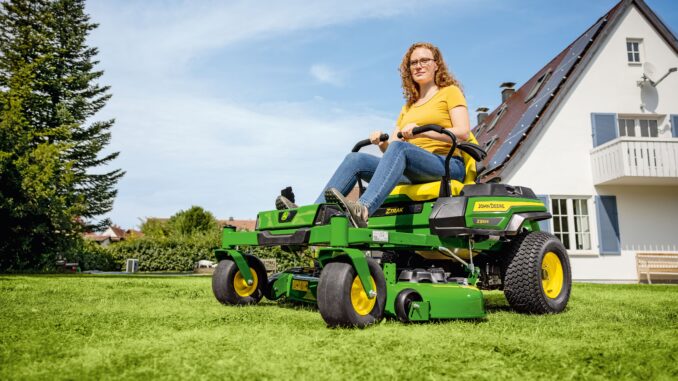
The John Deere Z997R is a commercial-grade diesel zero-turn mower built for heavy mowing work, large properties, and demanding turf conditions, but many of its routine repairs and service jobs are still realistic for an owner with basic tools and a careful approach. This guide explains common John Deere Z997R problems, the parts owners usually replace, where to find manuals and diagrams, and which jobs are sensible DIY work versus dealer-level repair.
John Deere Z997R model overview
The John Deere Z997R is a diesel ZTrak mower in Deere’s commercial zero-turn lineup, with support for 60-inch and 72-inch mower decks and a maintenance structure built around engine, hydraulic, mower, electrical, and safety systems. For homeowners, estate owners, and acreage users in the USA and Canada, it sits well above a light residential mower and is better suited to long run times, rougher terrain, and heavier weekly mowing loads.
This John Deere Z997R repair guide focuses on the systems owners most often deal with in real life: hard starting, poor cut quality, belt and blade wear, hydraulic drive concerns, overheating from debris buildup, and electrical or safety-switch faults. It also covers the service parts and Deere resources that help you order accurately the first time.
General overview of the John Deere Z997R
Within the Deere range, the Z997R is part of the diesel commercial ZTrak family rather than the lighter homeowner zero-turn group, which matters because its hydraulic, cooling, deck-drive, and safety systems are more complex than those on small gas-powered lawn tractors. That extra capability also means owners need to be more disciplined about preventive maintenance, especially cooling-system cleaning, hydraulic service, blade condition, and belt inspection.
The key systems on the John Deere Z997R are:
-
Engine and fuel system, including diesel fuel delivery, air filters, coolant system, water separator checks, and engine oil service.
-
Mower system, including blades, spindle kits, deck belt, idlers, sheaves, deck leveling, and anti-scalp hardware.
-
Drive system, including hydrostatic transaxle oil level, hydraulic oil filter, hydraulic cooler cleaning, and motion-control linkage adjustment.
-
Electrical and safety system, including battery, relay, ignition switch, PTO switch testing, brake switch, seat switch, neutral start switch, and fuses/relays.
Several service parts come up repeatedly for this model, including engine oil filter M806419, hydraulic oil filter M146082, primary air filter M131802, secondary air filter M131803, Tier 4 fuel filter MIU803127, 60-inch deck belt TCU31194, 72-inch deck belt TCU19900, and 12V battery TY27806B for USA and Canada units.
John Deere Z997R troubleshooting approach
The best way to diagnose a John Deere Z997R is to start with the exact symptom the owner sees, not with a random list of possible parts. A mower that cranks slowly, a deck that leaves strips, and a machine that loses drive when hot each point toward different systems, so symptom-first diagnosis saves both time and money.
The main symptom groups on this model are:
-
Starting issues, such as no crank, weak crank, or cranks but will not fire.
-
Running issues, such as low power, smoke, rough running, or shutdown under load.
-
Cut-quality problems, including scalping, streaking, uneven cut, and poor discharge.
-
Vibration and noise, often linked to blades, spindle wear, idlers, belts, or deck debris.
-
Overheating and leaks, especially around cooling fins, coolant system components, hydraulic oil areas, or the mower deck belt path packed with debris.
-
Transmission and drive problems, including weak tracking, poor response, or hydraulic performance concerns.
-
Electrical and safety-switch issues, including PTO engagement faults, no-start conditions, and intermittent shutdowns.
John Deere Z997R emergency repair needs
Some John Deere Z997R faults should not be ignored because they either create an immediate safety risk or can multiply the repair bill very quickly. In practical terms, stop using the mower if it has heavy vibration, hydraulic leaks, overheating, failed safety interlocks, brake problems, or a deck-drive fault that could throw a belt or damage spindle components.
John Deere Z997R starting issues
If the machine will not crank, only clicks, or starts inconsistently, the problem may be electrical, battery-related, or tied to the neutral, brake, PTO, or seat safety circuits. This matters because repeated jump-starting or bypass attempts can hide the real fault and sometimes damage wiring or switches.
Common causes:
-
Weak or failed battery TY27806B.
-
Corroded battery terminals or poor ground connection.
-
Faulty ignition switch, with Deere listing TCA22740 for earlier serials and AUC15805 for later serials.
-
Faulty brake switch AM128925 or reverse implement push switch TCA21027.
-
PTO, seat, park-brake, or neutral-start switch failure or misadjustment.
-
Relay or fuse issues, with relay AM123716 shown in the parts guide.
Basic checks:
-
Confirm the battery is charged and both cable ends are clean and tight.
-
Make sure the PTO is off, the brake is set, and the control levers are in the required start position.
-
Test whether the machine status display shows any warning or service prompts before cranking.
-
Inspect the ignition-switch, brake-switch, and relay area for loose connectors.
-
If the engine cranks well but will not fire, move on to fuel delivery, air restriction, and water-separator checks.
John Deere Z997R cut-quality problems
Poor cut quality usually shows up as streaks, scalping, ragged grass tips, clumping, or a deck that cuts lower on one side. These problems matter because owners often blame the deck belt first, when the real cause is commonly blade wear, deck-level error, wrong ground speed, or packed debris.
Common causes:
-
Dull, bent, or unbalanced blades.
-
Wrong blade type for conditions, since Deere lists standard-lift, high-lift, low-lift, mulch, and Mulch on Demand blade options depending on deck setup.
-
Deck out of level.
-
Worn spindle kit or noisy idler.
-
Loose, worn, or slipping mower-deck belt.
-
Excessive mowing speed or mowing wet, overgrown grass.
Basic checks:
-
Clean the underside of the deck and discharge area fully.
-
Check blade edges, blade balance, and correct blade part type for your deck setup.
-
Verify deck level and anti-scalp wheel adjustment.
-
Inspect the deck belt, idlers, and sheaves for heat glazing, cracks, wobble, or slack.
-
Retest at a slower travel speed in dry grass.
John Deere Z997R vibration and noise
Sharp vibration, rattling, squealing, or a drumming sound from the deck area should be treated as urgent on a John Deere Z997R because blade, spindle, or belt failures can cascade into more expensive deck damage. A heavy commercial deck can tolerate work, but it should not be run once vibration becomes obvious.
Common causes:
-
Bent or damaged mower blade.
-
Blade out of balance after sharpening.
-
Failing spindle kit TCA24881 or TCA25356 depending on serial range.
-
Worn deck idler or sheave.
-
Belt damage or belt rubbing because of alignment problems.
-
Debris wrapped around spindle or pulley areas.
Basic checks:
-
Shut the machine down immediately and inspect for missing blade material or obvious impact damage.
-
Check that each blade is tight and visually straight.
-
Spin pulleys and spindle areas by hand with the machine safely secured and disabled.
-
Inspect the belt for burned spots, frayed edges, or twisted routing.
-
Replace damaged blades and worn rotating components before mowing again.
John Deere Z997R overheating and leaks
A diesel Z997R that runs hot, smells of hot oil, pushes debris around the rear cooling area, or leaves coolant or hydraulic oil under the machine needs prompt attention. Heat and leaks can damage the engine or hydraulic system quickly, especially if debris has reduced cooling airflow.
Common causes:
-
Grass, dust, and chaff blocking engine cooling fins.
-
Low coolant or neglected coolant service.
-
Dirty hydraulic oil cooler.
-
Hydraulic oil level low or overdue filter service.
-
Oil seepage from service points, filter sealing areas, or hoses.
Basic checks:
-
Clean the engine cooling fins and hydraulic cooler area thoroughly.
-
Check coolant level only when the system is cool.
-
Check hydraulic oil level and inspect around the hydraulic oil filter M146082.
-
Look for oily buildup around hoses, fittings, and the transaxle area.
-
Stop using the mower if temperature warnings, steam, or active leaks are present.
John Deere Z997R transmission and drive problems
If one side feels weak, the machine drifts, response changes as oil warms up, or the mower will barely pull on slopes it previously handled, start with the hydraulic system and control linkages. These issues are often service-related at first, but ignoring them can lead to much more expensive hydro repair.
Common causes:
-
Low hydraulic oil.
-
Dirty hydraulic oil cooler.
-
Overdue hydraulic filter or oil change.
-
Motion-control linkage needing adjustment.
-
Internal hydro wear or damage.
Basic checks:
-
Verify hydraulic oil level with the machine on level ground and cool.
-
Clean the hydraulic cooler and surrounding debris screens.
-
Review whether the 50-hour break-in or later hydraulic service has been completed.
-
Check linkage movement and lever alignment before assuming internal failure.
-
If performance remains weak or uneven, dealer diagnosis is usually the safer next step.
John Deere Z997R electrical problems
Electrical faults often present as intermittent no-starts, no PTO engagement, dead lights, blown fuses, or a machine that shuts down because a safety input is not being read correctly. Since Deere includes testing procedures for PTO, park brake, neutral start, and seat systems in the operator’s manual, these should be checked methodically rather than guessed at.
Common causes:
-
Low battery voltage or poor connections.
-
Faulty seat, brake, neutral, or PTO switch.
-
Failed relay AM123716 or fuse issue.
-
Faulty ignition switch by serial range.
-
Damaged wiring near vibration or heat points.
Basic checks:
-
Test the battery and clean the terminals.
-
Check fuses and relay condition before replacing switches.
-
Use the operator’s manual safety-system test sequence for PTO, brake, seat, and neutral functions.
-
Inspect harness connectors around the seat platform and control areas.
-
If the fault is intermittent and the machine has no obvious wiring issue, dealer tracing may save time.
DIY or dealer for the John Deere Z997R?
The usual repair line on a John Deere Z997R is simple: consumables, cleaning, blades, belts, filters, and visual inspections are realistic DIY jobs, while hydraulic diagnosis, internal hydro repairs, deeper electrical tracing, and engine or emissions-related faults are better handled by a dealer or an experienced commercial-equipment technician. This is a heavier, more complex mower than a homeowner lawn tractor, so safe DIY work depends on proper lifting, isolation, and careful parts matching by serial number.
Good DIY jobs on the John Deere Z997R
-
Engine oil and filter service.
-
Air-filter replacement.
-
Fuel-filter replacement and water-separator checks.
-
Blade inspection, sharpening, balancing, and replacement.
-
Deck-belt replacement if the owner can follow the routing exactly.
-
Battery, fuse, relay, and visible-switch replacement.
-
Deck cleaning, deck leveling, and anti-scalp wheel adjustment.
Advanced DIY or dealer jobs
-
Hydraulic oil and filter service if access, cleanliness, and bleeding procedure are unfamiliar.
-
Motion-control linkage diagnosis and adjustment.
-
Spindle-kit replacement when seized hardware or pulley removal becomes difficult.
-
Cooling-system drain, flush, and bleed work.
-
Electrical faults involving intermittent harness issues or multiple safety-circuit signals.
-
Internal hydro, engine, or DPF-related diagnosis.
Skill level guide
-
Beginner: Air filter, battery, fuse, blade inspection, deck cleaning, tire-pressure checks.
-
Intermediate: Engine oil and filter, fuel filter, deck belt, blade replacement, deck leveling.
-
Advanced: Hydraulic service, linkage adjustment, spindle replacement, coolant-system work, electrical tracing.
John Deere Z997R parts needed, OEM numbers, and ordering info
Before ordering John Deere Z997R parts, gather the full model name, the machine PIN, the engine identification, and the exact deck version because Deere uses serial breaks and deck-specific components across this platform. That matters most for ignition switches, spindle kits, deck idlers, and certain blade or pulley combinations where an early and late machine do not always use the same part.
OEM parts are usually the safest choice for belts, spindle-related items, switches, and serial-sensitive fit parts because routing, pulley match, and safety logic matter on this mower. Aftermarket can be acceptable for some filters, blades, batteries, and routine consumables, but only when the seller clearly cross-references the exact Deere number and your deck or serial range.
John Deere Z997R diagrams and manual sources
The most useful John Deere Z997R reference sources are Deere’s operator material, Deere’s replacement-parts guide, Deere’s parts catalog system, and a reputable Deere-focused parts seller with a model page. Used together, these give owners the maintenance intervals, exploded diagrams, and OEM numbers needed for more accurate DIY planning.
Recommended sources:
-
Official John Deere operator’s manual for safety procedures, service intervals, troubleshooting sections, control operation, deck service, electrical checks, and storage guidance.
-
John Deere replacement parts guide PDF for fast access to common service parts and deck-specific belt, blade, spindle, and switch numbers.
-
John Deere Technical Information Store for official Deere publication access related to the Z997R platform.
-
Green Farm Parts Z997R maintenance guide for a Deere-focused aftermarket parts reference that mirrors common service items owners buy regularly.
How to find John Deere Z997R model, PIN, and engine numbers
These identification numbers matter because the John Deere Z997R uses serial-based changes and deck-specific parts, so ordering from the model name alone is not always enough. Deere’s operator material includes a product identification section specifically for recording these numbers before service work begins.
-
Park the mower safely on level ground, remove the key, and let hot components cool.
-
Locate the machine product identification label and record the full model and PIN exactly as shown.
-
Confirm which deck is installed, such as 60-inch or 72-inch, because belt and blade numbers differ between them.
-
Record the engine identification from the engine tag before ordering fuel, air, or engine-service parts.
-
Keep a photo of each tag on your phone so online and dealer parts checks are easier later.
Buying John Deere Z997R parts online and in stores
The best buying strategy is to use Deere diagrams and official part numbers first, then compare pricing and availability only after the exact number is confirmed. That approach reduces the risk of getting the wrong deck belt, wrong serial-range switch, or the wrong filter variation for the engine version.
-
Online: Best for price comparison and routine parts, but always match the OEM number and serial notes first; good starting points are JDParts/John Deere parts search, Green Farm Parts, and Deere’s own replacement guide PDF.
-
Dealer counter: Best for serial-specific items, safety switches, spindle assemblies, hydraulic parts, and any repair where superseded part numbers may apply.
-
Retail stores: Fine for common oil, batteries, and some cross-referenced filters, but only when the packaging clearly matches the Deere number or your exact engine specification.
John Deere Z997R fitting guide for common parts
These are the routine John Deere Z997R jobs that solve a large share of owner complaints before they turn into expensive failures. Always use proper lockout practices, remove the key, and support raised components safely before working underneath the machine.
Replacing the John Deere Z997R primary air filter
A restricted air filter can reduce power and increase smoke or poor running under load, so it is one of the first checks on a diesel mower. Deere lists primary air filter M131802 for this model.
-
Park safely, shut the engine off, and open the air-cleaner housing.
-
Remove the primary element carefully so loose dirt does not fall into the intake.
-
Empty debris from the housing and check the rubber dust-unloading valve area.
-
Inspect the secondary element and replace it too if needed, using M131803 where applicable.
-
Install the new primary element, seal the housing properly, and check the restriction indicator afterward.
Changing the John Deere Z997R engine oil and filter
Fresh engine oil protects the diesel engine during long mowing sessions, and late oil service is a common cause of avoidable wear. Deere lists filter M806419 and Plus-50 10W-30 oil TY26669 in the replacement guide.
-
Warm the engine briefly, park safely, and shut it down.
-
Drain the old oil into a suitable container and remove the old filter.
-
Lightly oil the gasket on the new M806419 filter and install it correctly.
-
Refill with the correct oil, then verify the level on the dipstick.
-
Start the engine, check for leaks, shut it down, and recheck the oil level after a short pause.
Replacing a John Deere Z997R mower deck belt
A worn or stretched deck belt can cause poor blade speed, squeal, heat buildup, and weak cut quality. Deere lists TCU31194 for the 60-inch deck and TCU19900 for the 72-inch deck, so confirm the deck before ordering.
-
Remove the key, lower the deck safely, and remove the appropriate belt shields.
-
Note the existing belt routing or photograph it before removal.
-
Release tension according to the deck setup and remove the old belt from the sheaves and idlers.
-
Install the new belt exactly as routed for your deck version, checking that it sits fully in every pulley groove.
-
Refit the shields, rotate the system by hand where safe, and test engagement at low throttle first.
Replacing John Deere Z997R blades
Blade service fixes ragged cut quality, vibration, and striping issues faster than most owners expect. Deere lists multiple blade options by deck and discharge setup, including M128485 and TCU15881 for 60-inch setups and TCU15882 for 72-inch setups.
-
Secure the machine safely and block the blades from turning before loosening hardware.
-
Remove each blade and inspect it for bends, cracks, or severe edge wear.
-
Sharpen only if the blade is still structurally sound, then balance it before reuse.
-
Reinstall the correct blade type for your deck and mowing system.
-
Test mow a small area and recheck for smooth operation with no abnormal vibration.
Maintenance to prevent John Deere Z997R problems
Regular maintenance prevents most repeat John Deere Z997R complaints because this mower depends heavily on clean airflow, correct hydraulic condition, sharp blades, and proper belt and safety-system function. In real ownership, many expensive failures start as small maintenance delays rather than sudden breakdowns.
Focus areas:
-
Starting reliability: Keep the battery charged, terminals clean, and safety switches functioning correctly.
-
Cut quality: Clean the deck, keep blades sharp and balanced, and replace worn belts before they slip.
-
Fire and overheating prevention: Remove dry grass and debris from engine, deck, and cooler areas after use.
-
Drive performance: Watch hydraulic oil level, service the filter on schedule, and keep the hydraulic cooler clean.
-
Electrical reliability: Check connectors, fuses, relays, and visible harness routing during routine service.
John Deere Z997R maintenance schedule and seasonal checklist
The official Z997R operator material groups service by before-each-use, after-each-use, break-in, 50-hour or yearly, 250-hour, 500-hour or yearly, 1500-hour, and as-needed intervals, which is the schedule owners should base their maintenance calendar on. The exact list can vary with use conditions and fuel type, but the official interval structure is clear and gives a reliable framework for publication-ready owner guidance.
Daily or before each use
-
Check engine oil level.
-
Check coolant level.
-
Inspect air-intake and cooling areas for debris.
-
Check safety-system operation and general machine condition.
-
Inspect blades, tires, and visible leaks before mowing.
After each use
-
Clean grass and debris from the machine and mower deck.
-
Inspect the discharge and belt areas for buildup.
-
Check for wrapped material around spindle and pulley zones.
Break-in service
-
Perform the first break-in service after the first 5 hours where required by the official schedule.
-
Complete the first 50-hour break-in items, especially hydraulic oil and filter service if still due on the machine.
-
Recheck wheel hardware and general fastener condition after early operating hours.
Every 50 hours or yearly
-
Change hydraulic oil and hydraulic filter where the schedule calls for the 50-hour service point.
-
Grease the machine at the lubrication points listed by Deere.
-
Clean the hydraulic oil cooler and inspect linkages.
-
Review park brake and motion-control lever adjustment condition.
Every 250 hours
-
Change engine oil and replace the oil filter.
-
Reinspect cooling fins and airflow passages carefully.
-
Check deck-belt condition and blade balance as mowing hours accumulate.
Every 500 hours or yearly
-
Replace the fuel filter.
-
Replace the secondary air filter and inspect the primary element condition.
-
Change hydraulic oil and filter again where the later interval applies in the Deere guide.
-
Review battery, relay, and switch condition before the next heavy-use season.
Every 1500 hours
-
Follow Deere’s scheduled long-interval service items at the 1500-hour mark from the operator manual.
-
Treat this as a good point for deeper dealer inspection of hydraulic, cooling, and drive systems.
Seasonal checklist for the John Deere Z997R
-
Spring or start of season: Change overdue fluids and filters, sharpen blades, inspect belt condition, and test all safety systems.
-
Mid-season: Clean cooling and hydraulic-airflow areas more often in dusty or dry conditions, and recheck deck level and blade condition.
-
Fall or end of season: Clean the mower thoroughly, address leaks or worn parts before storage, and use Deere’s storage procedures for fuel and engine preparation.
Repair, upgrade, or replace the John Deere Z997R?
For a John Deere Z997R, repair is usually the right move when the machine is structurally solid and the problem is limited to service parts, deck components, or normal hydraulic maintenance, while replacement becomes easier to justify when several high-cost systems are failing at once. Because this is a heavy commercial mower, even fairly expensive repairs can still make sense if the frame, engine, and hydraulic core systems remain healthy.
Repair if
-
The issue is mainly filters, blades, belt, spindle, battery, switch, or routine hydraulic service.
-
The machine still starts, drives, and cuts well apart from one isolated system fault.
-
The frame, deck shell, and major hydraulic components are still in good condition.
Upgrade if
-
You need a different blade style, mulch kit, or deck setup to improve performance in your mowing conditions.
-
The mower is sound, but your current setup is not ideal for discharge, lift, or finish quality.
Replace if
-
The mower has major engine, hydraulic, and deck problems at the same time.
-
Safety, braking, or structural issues make repair uneconomical.
-
Parts and labor together approach the value of a better-condition replacement machine in your market.
John Deere Z997R troubleshooting FAQ
1. Why will my John Deere Z997R not start?
Most no-start complaints come from the battery, poor terminal connections, or a safety circuit that is not in the required start condition. Check battery voltage, confirm the PTO is off, set the park brake, and make sure the motion-control levers are in the correct position before suspecting larger faults. If it still does nothing, inspect the ignition switch, relay, and brake or seat switch areas next.
2. Why does my John Deere Z997R crank but not fire?
If the engine cranks well but will not run, start with fuel supply, water-separator condition, air restriction, and engine-specific fuel filter checks. A clogged filter or restricted intake can stop a diesel from starting cleanly even when cranking speed seems normal. Check whether the correct Tier 4 or non-Tier 4 fuel filter has been fitted to the machine.
3. What safety switches can stop a John Deere Z997R from starting?
The operator manual includes testing for PTO, park brake, neutral start, and seat systems, and any of these can interrupt normal starting or operation if they fail or fall out of adjustment. On this mower, that makes switch diagnosis just as important as battery diagnosis. It is worth testing the circuit logically before ordering random parts.
4. Why does my John Deere Z997R battery keep going flat?
A weak battery, dirty terminals, poor charging performance, or a machine that sits too long between uses can all cause repeat low-voltage problems. Start with terminal cleaning and battery testing before replacing other electrical parts. If the battery is old or unstable under load, replacement is often more efficient than repeated charging.
5. Why does the John Deere Z997R cut unevenly?
Uneven cut on this model usually comes from deck-level error, blade wear, wrong tire pressure, or a deck packed with debris. The mower deck should be clean and correctly leveled before you assume anything is wrong with the spindle or belt system. Also confirm you have the right blade style installed for your deck and mowing conditions.
6. Why is my John Deere Z997R leaving strips of uncut grass?
Striping or narrow uncut lines often means blade edges are dull, blade tip speed is reduced by belt slip, or travel speed is too high for the grass conditions. Inspect the deck belt, blade edges, and underside of the deck first. Wet or overly tall grass can make the symptom worse even when the machine is mechanically sound.
7. Why does my John Deere Z997R scalp the lawn?
Scalping is commonly caused by incorrect deck height setup, uneven ground, wrong anti-scalp wheel adjustment, or a deck that is not level side to side. Start with setup checks before changing parts. On large or rough lawns, slowing down and adjusting height slightly higher often reduces repeat scalping.
8. Why are the grass tips ragged after mowing with a John Deere Z997R?
Ragged tips usually point to dull blades rather than a major deck failure. Sharpen or replace the blades, then verify they are balanced before reinstalling them. A sharp, balanced blade does more for finish quality than most owners expect.
9. Which blades fit the John Deere Z997R?
That depends on whether the mower has a 60-inch or 72-inch deck and which cutting style is being used. Deere lists options such as M128485 and TCU15881 for 60-inch setups and TCU15882 for 72-inch setups, alongside other lift and mulch variations. Always match the blade number to both deck width and mowing configuration.
10. Why does my John Deere Z997R vibrate when the deck is engaged?
Deck-engaged vibration usually points to a bent blade, unbalanced blade, failing spindle, worn idler, or belt damage. Stop using the mower until the rotating parts are inspected, because continued use can damage spindle and pulley components. Severe vibration is never a normal operating trait on this mower.
11. Why is the John Deere Z997R deck belt squealing?
A squealing belt often means slippage from wear, glazing, contamination, routing error, or tension-related problems. Check the belt condition, pulley alignment, and shielded belt path for debris before fitting a new belt. Also confirm you are using the correct deck belt for the installed deck size.
12. What deck belt does a John Deere Z997R use?
The common deck-belt part number is TCU31194 for the 60-inch deck and TCU19900 for the 72-inch deck according to Deere’s replacement guide. Because deck width changes the belt, owners should verify the deck before ordering. That one check avoids many wrong-part returns.
13. Why does my John Deere Z997R overheat?
Overheating on this mower is often tied to blocked engine cooling fins, poor airflow, coolant issues, or debris affecting the hydraulic cooling area. Start with cleaning because dry grass and dust buildup are common on commercial-style diesel mowers. If temperature warnings or coolant loss remain, move to coolant-level and cooling-system checks.
14. Why is my John Deere Z997R losing power in tall grass?
Loss of power under load can come from restricted airflow, overdue fuel filtration, dull blades, deck buildup, or simply mowing too fast for conditions. Service the air filter first and make sure the deck is clean and the blades are sharp. Diesel machines hide airflow restriction surprisingly well until load increases.
15. Why is my John Deere Z997R smoking?
Smoke can be linked to restricted air intake, fuel quality issues, engine load, or deeper engine concerns. The practical first step is to inspect the air-cleaner system, dust valve, and filter condition before assuming internal engine trouble. Continued smoke after basic service should push the job toward dealer diagnosis.
16. Why does my John Deere Z997R shut off while mowing?
Unexpected shutdown can come from safety-switch input loss, fuel-delivery interruption, overheating protection, or electrical faults. If it restarts only after cooling or after moving controls, that symptom can help narrow the system involved. Check seat and PTO-related circuits as well as visible wiring and fuel supply condition.
17. Why will the PTO not engage on my John Deere Z997R?
PTO engagement problems can be caused by switch faults, safety interlock inputs, wiring issues, or faults detected by the machine systems. Deere includes PTO switch testing in the operator material, so use that logic before replacing parts blindly. Also confirm battery voltage is healthy because low voltage can complicate electrical behavior.
18. Why does one side of my John Deere Z997R feel weaker?
A weak side is usually a hydraulic or linkage symptom rather than a mower-deck symptom. Check hydraulic oil level, cooler cleanliness, and whether scheduled hydraulic service has been done. If the issue remains after service and linkage checks, internal hydro wear becomes more likely.
19. Why is my John Deere Z997R slow to move when hot?
Loss of response after warming up often points toward hydraulic oil condition, cooling issues, or internal hydro wear. Start with oil level, service history, and cooler cleanliness because those are the easiest and cheapest checks. Heat-related drive symptoms should not be ignored on a commercial zero-turn.
20. When should I change the hydraulic oil filter on a John Deere Z997R?
Deere’s replacement guide shows the hydraulic oil filter M146082 tied to 50-hour and 500-hour service points in the schedule structure. The operator manual also includes hydraulic oil and filter service under its interval sections. Always match your machine’s actual hour history rather than guessing from calendar time alone.
21. What hydraulic oil does the John Deere Z997R use?
Deere’s replacement guide lists TY6354 Hy-Gard hydraulic oil for the Z997R. The same guide shows about 22.8 L or 6 gallons as the hydraulic oil quantity reference. Use the official guide and your machine setup to verify fill and service requirements before refilling.
22. When should I change the engine oil on a John Deere Z997R?
The official maintenance structure includes engine oil and filter service at the 250-hour interval, with Deere’s replacement guide listing filter M806419 and Plus-50 oil TY26669. Heavier use, dust, and commercial conditions can make owners more vigilant about inspection between intervals. Follow the manual rather than a generic mower schedule.
23. What oil filter fits the John Deere Z997R?
Deere lists M806419 as the engine oil filter in the replacement guide for the Z997R. That is one of the most common routine service parts owners buy for this model. It is still smart to confirm machine spec when ordering across serial or engine variations.
24. What air filters fit the John Deere Z997R?
The replacement guide lists primary air filter M131802 and secondary air filter M131803. Deere also shows service procedures for air-cleaner elements, dust valve cleaning, and checking the restriction indicator in the operator manual. That makes air-system service one of the easiest preventive jobs owners can stay ahead of.
25. What fuel filter fits the John Deere Z997R?
Deere lists MIU803127 for Tier 4 machines and MIU800645 for non-Tier 4 versions in the replacement guide. Owners should not guess here because emissions version and engine specification matter. Confirm the machine and engine details before buying the fuel filter.
26. Why does my John Deere Z997R keep throwing or wearing belts?
Repeated belt failure usually means there is another problem underneath, such as a seized idler, damaged pulley, alignment issue, or debris buildup. Replacing the belt alone often leads to another failure soon after. Inspect the whole belt path and rotating components each time a belt is damaged.
27. How do I know if a John Deere Z997R spindle is bad?
Common clues are noise, play, heat, rough rotation, and cut-quality or vibration issues even after blade service. Deere lists spindle kits TCA24881 and TCA25356 by serial range, which shows why serial confirmation matters before ordering. Once a spindle starts to feel rough or loose, replacement is usually better than trying to nurse it through the season.
28. Can I use aftermarket parts on a John Deere Z997R?
Yes, but with caution. Aftermarket can work for some filters, blades, and batteries if the cross-reference is exact, while OEM is the safer route for belts, switches, spindle-related parts, and serial-sensitive components. The more fit-critical the part, the more valuable OEM usually becomes.
29. Where can I find John Deere Z997R parts diagrams?
The best sources are Deere’s operator and publication resources, Deere’s parts catalog system, and Deere-focused sellers that organize parts by model and deck version. For quick service items, Deere’s replacement-parts PDF is especially useful because it lists common numbers in one place. For full diagram work, the Deere catalog is the better starting point.
30. Where can I find a John Deere Z997R manual?
John Deere hosts official operator material for the Z997R online, including service intervals, troubleshooting sections, safety-system testing, and mower service topics. Deere’s Technical Information Store is the right route when you need additional official publications beyond the operator guide. That combination usually covers most owner-level service planning.
31. Is the John Deere Z997R realistic for DIY maintenance?
Yes, for routine maintenance and straightforward deck or electrical service, provided the owner works safely and follows the manual. Oil, filters, blades, battery work, deck cleaning, and some belt jobs are all realistic for many owners. Hydraulic internals, deeper diagnostics, and major engine work are better left to the dealer level.
32. What should I clean after each use on a John Deere Z997R?
Deere includes after-use cleaning in the service structure, and the high-priority areas are the mower deck, discharge path, engine cooling area, and general debris-collection points. This simple habit helps prevent overheating, poor cut quality, and even fire risk. On dry properties, it is one of the highest-value maintenance steps you can take.
33. Why is serial number lookup so important for the John Deere Z997R?
Because Deere uses serial breaks for some parts, including items like ignition switches and spindle kits. Two Z997R mowers can look similar but still need different parts depending on serial range or deck version. Recording the PIN before ordering is one of the easiest ways to avoid wasted time.
34. Should I repair or replace my John Deere Z997R?
Repair usually makes sense when the machine needs normal wear items or one isolated system repair, especially on a commercial-grade mower built for long service life. Replacement becomes easier to justify when engine, hydro, and deck costs stack up together or when safety and structural issues are present. The decision is less about one part and more about the condition of the whole machine
How to troubleshoot hydrostatic transmission issues on John Deere Z997R
Hydrostatic transmission issues on a Z997R usually trace back to low/overheated oil, clogged filters, air in the system, drive‑belt/linkage problems, or internal pump/motor wear. A safe owner checklist focuses on simple inspections and fluid/filter checks first, and leaves pressure testing and internal repairs to a dealer.
1. Recognize typical Z997R hydro symptoms
Common owner‑visible symptoms on a Z997R hydro system include:
-
Mower moves slowly, especially on hills or when hot.
-
One side weak or the machine pulls to one side.
-
Jerky, surging motion or creeping in neutral.
-
No drive at all even though engine runs and PTO works.
-
Whining or growling noises from the hydro area.
Patterns matter:
-
If it was fine and then suddenly lost drive, belt or linkage issues are more likely.
-
If it has been getting weaker over weeks/months, think fluid condition, filter, or internal hydro wear.
2. Safety prep before troubleshooting
Always:
-
Park on level ground, lower the deck, set the parking brake, and chock the wheels.
-
Shut the engine off, remove the key, and let hot components cool before touching the reservoir, lines, or pump.
-
Never get under a raised mower without solid stands or ramps rated for the weight.
Hydraulic oil can stay hot for a long time and can cause severe burns if sprayed under pressure.
3. Quick external checks (owner‑level)
3.1 Drive belt and linkage
Even on hydrostatic machines, a failed or off‑track drive belt can cause a “no‑drive” or “weak drive” complaint.
Checks:
-
With the engine off, visually inspect the transmission/drive belt that feeds the pumps on the Z9‑series frame. Confirm it is fully on each pulley, not shredded, and not heavily glazed.
-
Look for sticks, wire, or debris wrapped around the drive pulleys or fan areas; debris can stop the belt or overheat the pumps.
-
Cycle the control levers and watch the motion‑control linkages at the pumps to confirm they move the pump arms smoothly from neutral to forward/reverse. A loose or disconnected linkage can give very weak or no drive.
If the belt is off or badly worn, correcting that is the first step before blaming the hydro units.
3.2 Fluid level and condition
Low or degraded hydro oil is the cause of many hydrostatic problems across hydro lawn equipment.
-
Locate the Z997R’s hydraulic reservoir and check fluid level with the machine cold and parked level, using the sight glass/dipstick as in the operator’s manual.
-
If level is low, look carefully for visible leaks at hoses, fittings, and axle seals rather than just topping up and running it again. Running a hydro with low oil risks permanent internal damage.
-
Inspect fluid:
-
Clean/normal: clear amber to light brown.
-
Bad signs: pitch‑black, burnt smell, milky (water contamination), or metallic sheen/particles.
-
Very dark or contaminated fluid suggests the system is overdue for a full change and that there may already be internal wear.
3.3 Filter and external leaks
A restricted filter can starve the hydro of flow and cause weak drive or surging.
-
Find the external hydraulic filter (Z997R uses a replaceable filter) and check for dents, damage, or signs of leaks around the seal.
-
Look along hose runs and at pump/motor housings for oil weeping or wet areas.
If you see chronic leaks or an obviously collapsed or ancient filter, plan a fluid and filter service before anything else.
4. Functional tests: cold vs hot, forward vs reverse
Hydro problems often change as the oil warms up. This helps narrow the cause.
-
If the Z997R drives normally cold but loses power after 10–20 minutes, that points more toward worn components or thin/overheated oil than a simple belt issue.
-
If it never drives properly, even cold, think: belt, bypass, fluid level, air, or a major internal failure.
Simple owner test pattern:
-
With the area safe and open, start the machine and run at moderate throttle.
-
Slowly drive forward and reverse, then up a small incline, watching for delay, slipping, or side‑to‑side differences.
-
Note whether the problem is only one side, only forward, or only under heavy load. That detail is useful if a dealer needs to get involved.
5. Fluid, filter, and air‑purge service (owner‑level if comfortable)
If belt, linkages, and basic level look OK but performance is weak or jerky, the next realistic DIY move (assuming you are comfortable) is a correct fluid/filter service and air purge.
High‑level process (always follow the Z997R operator/service manual for exact specs and procedures):
-
Confirm correct fluid. Z997R hydro systems are designed for John Deere Hy‑Gard or Low‑Vis Hy‑Gard, not generic ATF; using the wrong oil can cause poor performance or damage.
-
Drain and refill:
-
Safely drain the existing hydraulic oil and the reservoir as per the manual.
-
Replace the external hydraulic filter with the specified part.
-
Refill with the correct grade and quantity of hydraulic oil.
-
-
Purge air: Many hydrostatic systems need an air‑purge procedure after service. A typical pattern:
-
Raise the drive wheels off the ground (or follow the Deere procedure for Z997R) and engage the bypass/transport valve so the wheels can spin freely.
-
Run the engine at low throttle and slowly cycle the levers forward and reverse several times.
-
Disengage the bypass and repeat forward/reverse cycling until movement becomes smooth.
-
Shut down, re‑check fluid level, and top off as needed.
-
If performance improves significantly after correct fluid/filter service and purging, the problem was likely fluid/air related.
6. When the problem is likely internal (dealer territory)
If you have:
-
Correct fluid at the right level.
-
New or known‑good filter.
-
Clean belt and functioning linkages.
-
Completed air purge.
…and the Z997R still has weak drive, severe noise, or loses power badly when hot, the hydro units may have internal wear or damage.
Internal signs include:
-
Strong whining/whirring that changes with load.
-
Metallic particles in drained oil or filter.
-
Drive that fades rapidly as the oil warms even after fresh fluid.
At that point, proper diagnosis requires pressure gauges and model‑specific specs (charge pump pressure, case drain, etc.), which is best handled by a John Deere dealer or experienced hydrostatic specialist.
7. Practical “decision line” for owners
Realistic DIY on Z997R hydro issues:
-
Inspect and replace drive belt (including debris checks).
-
Check and correct fluid level.
-
Perform complete fluid and external filter change if the system is owner‑serviceable.
-
Purge air from the system following the manual.
-
Basic visual checks for leaks and linkage problems.
Dealer jobs:
-
Hydro pressure checks and internal pump/motor diagnosis.
-
Repairing or replacing pumps, motors, or heavily leaking components.
-
Complex neutral tracking and return‑to‑neutral setup using factory procedures and fixtures.