
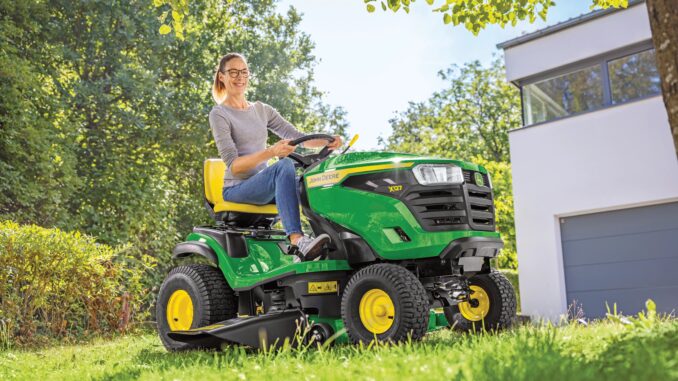
John Deere STX38 Serial Number Lookup, PIN Location, Parts & Year Guide
The John Deere STX38 is a residential riding lawn tractor built for mowing and light lawn-care work. It is widely recognised by its compact layout and was sold in versions commonly described by their yellow or black mower-deck configuration. The model is particularly common in the North American used-equipment market, where many examples remain in service and are regularly restored, repaired or sold privately.
A complete John Deere STX38 serial number or Product Identification Number is important because the model name alone does not always identify every service part, mower-deck component, engine-related item or production-version detail. Record the machine PIN before ordering parts, buying a replacement mower deck, checking service information or inspecting a used tractor.
And See:
Important: This guide covers the John Deere STX38 riding lawn tractor. Do not assume that information for an STX30, STX46, LX-series tractor, GT-series garden tractor or another John Deere lawn tractor applies to an STX38. Confirm the full machine PIN, deck identification number and engine identification before ordering parts.
The machine PIN can help establish the identity of an individual tractor, allow a dealer or parts supplier to select the appropriate parts-catalogue range, and support a more careful used-machine inspection. It can also help distinguish the machine PIN from identification numbers fitted to the engine, mower deck and other replaceable components.
In this guide
-
Main machine PIN or serial-number identification
-
Engine serial-number identification
-
PIN format and decoding limits
-
Year identification and serial-number lookup
-
Parts ordering and serial breaks
-
Maintenance and service differences
-
Mower-deck and attachment compatibility
-
Safety checks, used-machine inspections and missing-plate advice
Quick Guide: Where to Find the Serial Number on a John Deere STX38
On the John Deere STX38, the main Product Identification Number (PIN) is located at a machine-specific identification point that should be confirmed against the correct operator’s manual, official parts catalogue or dealer records for the tractor’s production range. Do not rely on an engine number, mower-deck number or a number cast into a component as the main tractor PIN.
If you are in a hurry:
Park the machine safely on level ground, stop the engine and remove the key.
Check the chassis, frame and operator-platform area for the identification plate.
Look for “PIN,” “Product Identification Number,” “Product ID” or “Serial Number.”
Use a torch and clean surrounding dirt gently with a brush and cloth if needed.
Main Product Identification Number Location on the John Deere STX38
Exact position on the machine
The STX38 has been sold in more than one production configuration, and the safest approach is to confirm the PIN location for the individual tractor through the applicable John Deere documentation or dealer lookup. This matters because older residential lawn tractors may have faded labels, repainted chassis areas, replaced body panels or missing mower-deck assemblies.
Begin by inspecting permanent structural areas of the tractor rather than removable or replaceable parts. The correct machine identification should be associated with the tractor itself, not simply with the engine, transaxle, seat, bonnet, mower deck or replacement frame component.
If the tractor has been repainted, restored or repaired, inspect carefully for an original identification label or marking that may be partly hidden by paint, dirt or corrosion. Do not scrape aggressively or use tools that can damage an identification plate.
What the PIN plate looks like
The condition and appearance of an STX38 identification label can vary substantially because of age, weather exposure, cleaning chemicals, corrosion, repainting and previous repairs. The plate or label should provide machine-identification information that can be matched against the tractor’s documented model designation and dealer records.
A legitimate identification point may show some combination of:
-
John Deere product information
-
The STX38 model designation
-
A Product Identification Number, product ID or serial number
-
Manufacturing or configuration information used for parts and service lookup
Do not assume that a loose label, replacement decal or number stamped on an unrelated component is the main machine PIN. If the plate appears altered, recently attached or inconsistent with the rest of the tractor, pause a purchase or parts order until the number has been checked.
Tips for old, dirty or painted machines
Use a careful approach when inspecting an older John Deere STX38:
-
Brush away loose grass, dust and soil.
-
Use a soft cloth and a mild degreaser where appropriate.
-
Photograph the identification area before and after cleaning.
-
Record every visible letter and number, including leading zeroes.
-
Compare your transcription character by character before submitting it for parts lookup.
-
Use angled light from a torch to make faint markings easier to read.
-
Do not use grinders, wire wheels, aggressive abrasives or paint removers that can destroy an identification label.
-
Do not restamp, alter or create a replacement identification plate.
A damaged or unreadable plate should be documented, not altered. A John Deere dealer may be able to help interpret the available identification information and advise on the correct next step.
Engine Serial Number on the John Deere STX38
The engine serial number is separate from the John Deere STX38 machine PIN. It is useful when ordering engine overhaul components, ignition or charging-system parts, fuel-system items, cooling components, belts and other engine-specific service parts.
The STX38 was produced over an extended period and owners should not assume that every tractor has the same engine specification. Engine-related parts can differ even where two tractors carry the same STX38 hood decal.
Engine serial-number location
The engine serial number is normally found on an engine-mounted label, identification plate or stamped engine area. Its exact position depends on the engine version fitted to the tractor and can vary by production range.
Check the engine manufacturer’s identification label first. If the label is missing, dirty or partly unreadable, consult the correct engine documentation, the official John Deere parts catalogue or a John Deere dealer before ordering engine-specific components.
The engine number may be needed for:
-
Internal engine repair parts
-
Carburettor or fuel-system parts
-
Ignition components
-
Starter and charging-system parts
-
Cooling-system components
-
Engine shrouds and service hardware
-
Correct engine maintenance information
Engine variants
Confirm the engine model and engine serial number before ordering engine-specific parts. STX38 tractors may have differences associated with their production version, and parts listings that group every STX38 together can create costly ordering mistakes.
The machine PIN identifies the tractor. The engine number identifies the installed engine. Both may be needed when a repair involves engine-specific components.
How to Read a John Deere STX38 Serial Number
Copy the full John Deere STX38 PIN exactly as it appears. Do not omit letters, substitute similar characters or assume that a partial number is enough for a parts order.
A machine PIN may contain information used by John Deere systems to identify a product family, production details, configuration or sequence number. However, character-by-character interpretations should not be guessed unless they are confirmed for the exact STX38 production version through official documentation or a dealer PIN lookup.
PIN structure
John Deere’s publicly available documentation does not clearly confirm a single universal character-decoding method for every STX38 production version. Some PIN details may be interpreted through John Deere dealer systems rather than generic online charts.
[MODEL CODE]-[PRODUCTION CODE]-[SEQUENCE NUMBER]Illustrative format only — this is not a real John Deere STX38 serial number and should not be used to identify a machine.
What the PIN can tell you
A complete, correctly recorded PIN can help with:
-
Identifying the individual STX38 tractor
-
Selecting the correct parts-catalogue serial range
-
Helping a John Deere dealer identify the production period or configuration
-
Checking whether a listed part applies before or after a serial break
-
Reviewing machine-specific service and safety information
-
Supporting ownership, insurance and resale records
What the PIN cannot tell you on its own
A PIN does not independently prove:
-
The exact calendar year of manufacture
-
The full original equipment specification
-
The original supplying dealer
-
Complete service history
-
Current legal ownership
-
Whether the engine, mower deck or transaxle has been changed
-
Whether the machine is stolen
-
Whether finance is outstanding
Use the PIN as one part of a wider identification and ownership check.
Finding the Year of Your John Deere STX38 from the Serial Number
The STX38 was produced during the 1990s, but a model name or broad production-era reference should not be treated as proof of an individual tractor’s exact year. Publicly circulated year charts can be incomplete, misapplied or based on a different John Deere model, market or serial-number system.
For a reliable STX38 year identification, use the complete machine PIN together with original documentation and dealer records where available.
A safer year-identification process
-
Copy the full PIN exactly.
-
Check the applicable official STX38 operator’s manual, parts catalogue or verified serial-range information.
-
Ask a John Deere dealer to search the complete PIN.
-
Compare the result with original sales documents, labels, decals and configuration features.
-
Be cautious with generic online serial-year charts that do not clearly match the exact STX38 and its market.
A dealer PIN lookup may provide a more useful production reference than an online serial-number chart. It is especially valuable when the tractor has replacement components, a non-original mower deck or incomplete paperwork.
Using Your John Deere STX38 Serial Number to Order the Right Parts
The STX38 decal is useful, but it is not always enough to identify the correct replacement part. A mower deck, belt, blade, spindle, steering component, engine part or electrical component can differ by production range, engine version, deck configuration or previous repairs.
Always begin a parts order with the complete machine PIN. For deck-related components, also record the mower-deck identification number. For engine-related components, record the engine model and engine serial number.
Understanding serial breaks
A serial break is a point in production where John Deere changed a component, system, design or specification. The change can affect whether a part fits an early or late tractor.
Common catalogue terms include:
Known serial breaks on the John Deere STX38
Read every serial-range note in the official parts catalogue for your exact STX38. Parts differences can exist even where a public serial-break table is not available. This is particularly important for mower-deck parts, drive belts, electrical components, steering hardware, engine-related items and replacement assemblies.
Do not select a part solely because an aftermarket listing says it fits “all STX38 models.” Check the machine PIN, engine information, deck identification and the visible old part before ordering.
Ordering parts correctly
-
Photograph and record the complete machine PIN.
-
Confirm the exact John Deere STX38 designation on the tractor.
-
Identify the engine model and engine serial number for engine-related parts.
-
Record the mower-deck identification number before ordering deck parts.
-
Use the official John Deere parts catalogue where possible.
-
Read every “before” and “after” serial-range note.
-
Compare the old part number and visible component with the parts diagram.
-
Ask a John Deere dealer or knowledgeable supplier to confirm uncertain parts before ordering.
Aftermarket catalogues can group different STX38 production versions under one model name. Treat broad fitment claims as a starting point, not final proof of compatibility.
Maintenance and Service Differences by Serial Range on the John Deere STX38
Basic maintenance needs remain similar across STX38 tractors: safe operation, regular inspection, clean cooling areas, belt checks, blade-condition checks and prompt attention to fluid leaks or damaged wiring. However, the correct service parts and procedures may differ by production range, installed engine and mower-deck version.
Use an operator’s manual and parts information that match the machine’s exact PIN range. For engine service, use documentation that matches the engine model and engine serial number rather than relying only on the STX38 model decal.
Areas that deserve PIN and component-number confirmation include:
-
Engine oil and air-service components
-
Spark-ignition and charging-system parts
-
Fuel-system parts
-
Drive belts and mower-deck belts
-
Blades, spindles and deck hardware
-
Battery and electrical-system components
-
Steering, brake and safety-switch components
-
Transaxle and drivetrain repair parts
If a previous owner has changed the engine, mower deck, wiring harness, pulleys or drivetrain components, the tractor may no longer match every original configuration detail. Match replacement parts to the actual component as well as the machine PIN.
Attachment Compatibility for the John Deere STX38 by Serial Number
The STX38 is primarily a lawn tractor, and its mower deck is one of the most important attachments to identify correctly. Do not assume that every deck, belt, blade set, chute, lift component or grass-collection accessory marketed for a John Deere lawn tractor will fit an STX38.
Attachment fitment can depend on the tractor’s production range, deck configuration, mounting arrangement, belt routing, lift system, tyres, guards and safety equipment.
What to check before buying an attachment
Before buying a mower deck or accessory, provide the seller, dealer or supplier with:
-
The complete STX38 machine PIN
-
The mower-deck identification number
-
Clear details of the existing mounting hardware
-
The belt-routing and pulley arrangement
-
Any accessory brackets already fitted to the tractor
-
Photographs of the attachment mounting points
-
Details of modifications made by previous owners
Mower deck and accessory verification
The yellow-deck and black-deck descriptions commonly used by owners are helpful visual references, but colour alone is not a reliable parts or fitment identifier. A deck may have been repainted, replaced or fitted from another tractor.
Confirm compatibility using both the machine PIN and the attachment identification number. A John Deere dealer can check whether the tractor and deck combination matches the applicable parts information before you buy a used deck, replacement belt, blade set or accessory.
Do not rely on a seller’s statement that an attachment “came off an STX38.” Confirm its identification number, mounting arrangement and parts-catalogue application first.
Checking Recalls and Safety Notices Using Your John Deere STX38 PIN
Safety campaigns, recalls and service actions can apply only to particular production ranges, components or configurations. The correct way to check is to use the complete machine PIN.
-
Record the full STX38 PIN exactly.
-
Contact a John Deere dealer and ask for a check of open safety campaigns or recall actions.
-
Check official John Deere safety or recall information for the applicable market.
-
Keep a photograph and written record of the PIN with the tractor’s ownership and service documents.
Do not assume that a repair mentioned online applies to every STX38. A dealer can use the machine PIN to determine whether a particular safety action is relevant.
Using the John Deere STX38 Serial Number When Buying or Selling
Checks for buyers
A John Deere STX38 can be an attractive used lawn tractor, but an apparently tidy machine can still have mismatched components, incomplete paperwork or identification concerns. Inspect the PIN before agreeing a purchase.
Use this checklist:
-
Check that the PIN plate matches available paperwork.
-
Confirm that the tractor is genuinely an STX38 rather than a similar John Deere model.
-
Look for damage, removal marks, unusual rivets, mismatched paint, altered characters or a suspicious replacement plate.
-
Check whether the engine, transaxle or mower-deck number is being presented as the machine PIN.
-
Use the PIN to verify parts ranges, deck suitability and potential safety actions.
-
Compare the mower-deck identification with the tractor and advertised equipment.
-
Ask the seller to explain missing, unreadable or inconsistent identification information.
-
Pause the purchase if there is a serious identity discrepancy.
Advice for sellers
A clear model description, honest condition report, hour reading, service history and good photographs can help legitimate buyers assess an STX38. Record the PIN accurately in private sale documents and retain a copy for your records.
Avoid posting a high-resolution image of the full PIN plate in a public advertisement. Share the complete number privately with a serious buyer, John Deere dealer, insurer or parts supplier where appropriate.
What If You Cannot Find or Read the Serial Number on Your John Deere STX38?
Plate is dirty, painted over or faded
Use strong lighting, a soft brush and a cloth to expose the available markings. Photograph the area before and after cleaning, then write down every visible character. A dealer may be able to help interpret a partly readable number when it is supported by original paperwork and other identification details.
Plate is corroded or damaged
Record every readable character without attempting to restore, engrave or alter the plate. Look for original purchase documents, previous service invoices, dealer records and mower-deck or engine information that may help establish the tractor’s identity.
Plate is missing
Check for legitimate supporting information in historical ownership records, dealer service documents and original manuals. The owner should not manufacture, restamp or alter an identification plate.
If ownership, theft, registration or insurance is relevant, contact a John Deere dealer and the appropriate local authority before buying, selling or registering the tractor.
PIN does not match paperwork
A mismatch can result from:
-
Data-entry errors
-
Incorrect paperwork
-
A machine number being confused with an engine or mower-deck number
-
Replacement components
-
A previous repair involving non-original parts
-
A more serious ownership or identity issue
Resolve the discrepancy through a John Deere dealer and, where appropriate, the relevant authority before completing a purchase or sale.
John Deere STX38 Serial Number FAQ
Where is the serial number on a John Deere STX38?
The main serial number or Product Identification Number should be found at a permanent machine-identification point on the tractor rather than on the mower deck or engine. Because STX38 production versions and surviving machine condition can vary, confirm the exact location with the applicable operator’s manual, official parts information or a John Deere dealer before relying on a number for parts or ownership purposes.
What does the serial number on my John Deere STX38 identify?
The complete machine PIN identifies the individual STX38 tractor and can help a dealer or parts supplier select the correct production range. It is useful for checking parts applications, investigating serial breaks, reviewing safety information and maintaining ownership records. It does not, by itself, prove every original specification or the machine’s current ownership status.
Is the John Deere STX38 serial number the same as a VIN?
For practical owner use, the STX38 machine PIN performs a similar identification role to a vehicle identification number. However, lawn tractors are not necessarily identified or regulated in the same way as road vehicles. Use the term Product Identification Number or machine serial number when checking John Deere parts, service records and dealer information.
Is the Product Identification Number the same as the serial number?
Owners and sellers often use “PIN” and “serial number” interchangeably when referring to the main identification number for the tractor. The important point is to distinguish that machine number from the separate engine serial number, mower-deck identification number and any drivetrain or component markings.
Can I find the year of my John Deere STX38 from the serial number?
A complete PIN may allow a John Deere dealer to provide useful production information, but do not rely on a generic online year chart alone. The most reliable approach is to have the full machine PIN checked against applicable dealer records, then compare the result with original documents, labels and the tractor’s configuration.
Are official serial-number year charts available for the STX38?
Do not assume that a universal public year chart applies to every STX38. Use an official model-specific publication where available, or ask a John Deere dealer to check the complete machine PIN. This is safer than matching a partial number to a chart intended for another John Deere product family or market.
How accurate are online John Deere STX38 serial-number year charts?
Accuracy varies widely. Some charts are incomplete, copied from another source or based on a different John Deere model. Use online charts only as background information and verify any claimed year through the complete PIN, dealer lookup, official publications and original machine records.
What is the difference between the machine PIN and engine serial number?
The machine PIN identifies the STX38 tractor. The engine serial number identifies the engine installed in it. Use the machine PIN for tractor, chassis, deck-fitment and serial-range questions. Use the engine model and engine serial number for engine-specific service parts, repair procedures and component identification.
Where is the engine serial number on a John Deere STX38?
The engine serial number is normally on an engine-mounted label, plate or stamped area. Its exact location depends on the engine version fitted to the tractor. Clean the engine carefully, inspect its identification label and use engine documentation or dealer support if the label is unreadable.
Do I need the engine number or machine PIN to order parts?
For tractor, mower-deck, steering, chassis and many electrical parts, start with the machine PIN. For engine overhaul, fuel, ignition, charging and engine cooling parts, the engine model and engine serial number may also be necessary. For deck components, record the mower-deck identification number as well.
Why does the parts catalogue ask for a serial-number range?
The catalogue asks because parts can change during production. A serial break may affect a belt, pulley, electrical component, bracket, blade, deck part or other assembly. The range note prevents you from ordering a component intended for an earlier or later STX38 version.
What is a serial break on a John Deere STX38?
A serial break is a production point where John Deere changed a part or design. Parts catalogues may describe this as “serial number below,” “serial number and above,” “before PIN” or “after PIN.” Always read the complete note because the same part description can apply differently before and after the stated break.
Which STX38 parts are most likely to change by serial range?
Mower-deck components, drive belts, pulleys, electrical switches, wiring-related items, steering parts, engine-related components and brackets can require closer serial-range checking. The exact differences should be confirmed in the applicable official parts catalogue using the tractor PIN and, where relevant, the deck and engine identification.
Does maintenance differ by serial number on a John Deere STX38?
Routine care is similar in principle, but maintenance parts, service procedures and engine requirements can vary by production version and installed engine. Use an operator’s manual that matches the machine and consult the engine documentation for engine-specific maintenance details. Do not assume another STX38 owner’s filter, belt or service specification applies to your tractor.
Can filters change by serial number or engine version?
Yes. Engine-related filters and service parts may depend on the engine version, while other components can vary by production range. Confirm the machine PIN, engine model and engine serial number before buying filters or service kits, especially if the tractor has been repaired or modified during its life.
How do I use a John Deere parts catalogue with my STX38 PIN?
Locate the STX38 parts listing, then read all serial-range and option notes before selecting a part. Compare the illustration with the actual component, record the machine PIN and identify the mower deck or engine separately when relevant. If the catalogue wording is unclear, ask a John Deere dealer to confirm the correct application before ordering.
Can a John Deere dealer identify build details from the PIN?
A John Deere dealer can often use the complete machine PIN to help identify the tractor’s relevant production range and applicable parts information. The amount of detail available can vary, so provide the number exactly as shown and explain whether you need help with year identification, parts, attachment fitment or safety checks.
Can I check recalls or safety notices using my STX38 PIN?
Yes. Record the complete machine PIN and ask a John Deere dealer to check for applicable open safety campaigns, recall actions or relevant service information. Such actions can be limited to particular production ranges or configurations, so do not assume that a notice for another lawn tractor automatically applies to your STX38.
Is it safe to share a John Deere STX38 serial number online?
Avoid publishing a high-resolution, fully legible PIN image in a public listing or social-media post. It is reasonable to share the complete number privately with a serious buyer, dealer, insurer or parts supplier when necessary. Keep your own clear record, including photographs and copies of relevant paperwork.
What should I do if the serial plate is missing?
Do not make, stamp or attach a replacement identification plate yourself. Collect supporting evidence such as purchase documents, service records, old photographs and dealer invoices, then contact a John Deere dealer for guidance. If there are ownership, theft or registration concerns, also contact the appropriate local authority.
How can I tell whether a serial plate has been tampered with?
Warning signs can include altered characters, unusual rivets, fresh paint around the plate, scratches, mismatched finishes, a plate that appears recently fitted or identification that conflicts with paperwork. None of these signs proves wrongdoing on its own, but a serious inconsistency should be resolved before buying, selling or insuring the tractor.
Can I legally replace a damaged identification plate?
Do not replace, recreate or restamp an STX38 identification plate without appropriate guidance. Rules can vary by location and circumstance. Contact a John Deere dealer and, where relevant, the appropriate authority to establish the correct and lawful procedure for a damaged, missing or unreadable identification plate.
Why does the serial number not match my paperwork?
The cause may be a transcription error, incorrect paperwork, confusion between the tractor PIN and an engine or mower-deck number, or a previous component replacement. It can also indicate a more serious identity issue. Compare all documentation carefully and have the complete PIN checked through a John Deere dealer before completing a transaction.
Do attachments for a John Deere STX38 depend on serial number?
They can. Mower decks and accessories may depend on production range, mounting points, belt routing, lift arrangements, guards and other configuration details. Confirm the machine PIN and attachment identification number together before buying a deck, blade set, belt, grass-collection component or other used accessory.
Which mower decks fit a John Deere STX38?
Confirm fitment using the tractor’s complete PIN and the deck’s own identification number. The terms “yellow deck” and “black deck” are commonly used by owners, but deck colour alone is not sufficient proof of compatibility. Check mounting hardware, belt routing, pulley arrangement and official parts information before purchasing.
Will an attachment from another John Deere model fit my STX38?
Do not assume it will. Similar John Deere lawn tractors can use different frames, lift systems, belt arrangements, mounting points and safety guards. Provide both identification numbers to a John Deere dealer or compare the applicable official parts information before spending money on a used attachment.
Can I decode every character in my STX38 serial number?
Do not assume that every character has a publicly available meaning. Some PIN details may be interpreted through John Deere dealer systems or model-specific internal records. Use the complete number for dealer lookup rather than relying on unofficial character-decoding charts.
Does the serial number show where my STX38 was built?
The machine PIN may support dealer identification of production information, but it should not be used to make unverified claims about factory location or country of manufacture. Ask a John Deere dealer to interpret the complete PIN if factory or production information is important for restoration, documentation or export purposes.
How should I record and store my John Deere STX38 PIN?
Photograph the identification area clearly, write the number exactly as shown and store it with purchase documents, service invoices, insurance information and mower-deck details. Keep a separate record of the engine model and serial number. Avoid publicly posting a full, high-resolution image of the PIN plate.
Can I still get parts for an early John Deere STX38?
Availability depends on the specific part, machine PIN range, engine version and mower-deck configuration. Start with the official John Deere parts catalogue and a dealer inquiry. Even where an original part is no longer available, a dealer or experienced supplier may be able to identify the correct current replacement or repair route.
How can I identify my machine if the STX38 decals are missing?
Start with the main machine PIN and compare it with official parts information and dealer records. Also record the engine identification, mower-deck number, chassis layout and existing components. Do not identify the tractor solely from paint colour, hood style, deck colour or a loose decal, as these can change over time.
Does the serial number affect STX38 resale value?
A clear, matching and legible machine PIN can improve buyer confidence because it supports accurate identification, parts research and ownership records. A missing, altered or inconsistent plate can reduce buyer confidence and may complicate a sale. The PIN does not determine value by itself; condition, deck condition, engine performance and service history also matter.
Are there known serial-number-related service bulletins for the STX38?
Do not assume a repair notice applies without checking the tractor’s complete PIN. Ask a John Deere dealer to review applicable safety actions, service information and production-range details. This is more reliable than relying on online reports that may refer to a different STX38 version or another John Deere lawn tractor.
Who should I contact if I am still unsure about my STX38 serial number?
Contact a John Deere dealer with clear photographs, the complete machine PIN, engine identification, mower-deck identification and any available paperwork. For a missing or suspicious plate involving ownership, theft, registration or insurance concerns, also contact the appropriate local authority before buying, selling or altering the machine.