
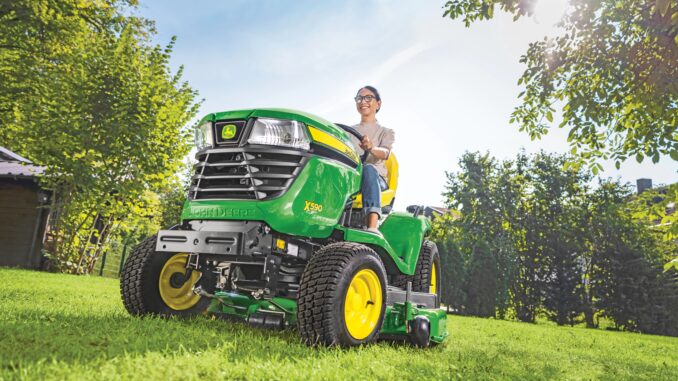
The John Deere STX38 is a compact lawn tractor built for homeowner mowing, not heavy ground-engaging work. It was sold as part of Deere’s older STX lawn tractor line and is commonly found with a 38-inch mower deck, mechanical transaxle or hydrostatic drive depending on version, and either a yellow-deck or black-deck configuration that can affect parts selection.
This guide is written for DIY owners who want practical help with repair decisions, symptom-based troubleshooting, regular maintenance, and parts buying. It focuses on the problems owners actually see first—hard starting, poor mowing, belt trouble, vibration, drive issues, and electrical faults—before moving to likely causes and realistic next steps.
And See:
John Deere STX 38 Introduction / model overview
The STX38 sits in John Deere’s earlier homeowner lawn tractor range, below heavier garden tractors and well before the later D- and X-series machines. It was designed mainly for routine residential lawn mowing, light towing, and general yard work, with service information shared across the STX30, STX38, and STX46 family in Technical Manual TM1561.
In practical use, the STX38 is best suited to relatively modest lawns where maneuverability matters more than raw power. Owners usually need help with age-related issues now—fuel system varnish, belts, switches, deck wear, steering play, and engine-related maintenance—rather than factory defects.
General overview of the John Deere STX38
The STX38 belongs to Deere’s STX lawn tractor family, and the two biggest model distinctions owners need to know are deck type and drive type. Parts ordering can change depending on whether the tractor has a yellow mower deck or black mower deck, and whether it uses a geared transaxle or hydrostatic transmission.
John Deere STX 38 Key systems and components
John Deere STX 38 Engine and fuel system
STX38 tractors were commonly fitted with small single-cylinder or twin-cylinder engines depending on version, and the service family manual covers engine, fuel, intake, ignition, and governor-related diagnostics for the STX series. For owners, the most common real-world trouble points are stale fuel, clogged filters, dirty air elements, weak spark, carburetor contamination, and aged fuel lines.
John Deere STX 38 Mower system
The mower system includes the deck shell, spindle assemblies, belt, idlers, pulleys, blades, draft arms, and gauge wheels. Because many STX38 machines are now older units, deck belts, spindle bearings, bent blades, worn idlers, and rust damage are among the most common cut-quality and vibration complaints.
John Deere STX 38 Drive system
Depending on version, the STX38 may use a geared transaxle with traction drive belt part M74747 or a hydrostatic setup with traction drive belt M118760. Drive complaints usually trace to the wrong belt for the machine, belt wear, linkage adjustment, brake drag, or internal transaxle wear on high-hour tractors.
John Deere STX 38 Electrical and safety system
Important electrical and operator-presence items include the ignition switch, PTO switch, seat switch, brake switch, battery, starter, charging components, and related wiring. On an older STX38, many “won’t crank” complaints are caused by simple voltage loss, dirty terminals, failed safety switches, or corrosion in connectors rather than a bad starter itself.
John Deere STX 38 Common service parts and part numbers
Several service parts show up repeatedly for the STX38 in Deere-focused parts listings, including spark plug M78543, fuel filter AM107314, air filter set GY20574, engine oil filter AM125424, mower deck belt M125218, geared-tractor traction belt M74747, hydro traction belt M118760, seat switch AM103119, ignition switch TCA22740, PTO switch AUC10632, and battery AM121593 / TY25878.
John Deere STX 38 Troubleshooting approach
Diagnosis should always begin with the symptom the owner can see, hear, or feel. On an STX38, the main symptom groups are starting issues, poor running, weak or uneven cut quality, vibration and noise, overheating or leaks, transmission and drive problems, and electrical or safety-switch faults.
A symptom-first approach matters because older lawn tractors often have more than one worn item at once. For example, a mower that cuts poorly may have dull blades, low tire pressure, a stretched belt, and deck-leveling problems at the same time, so checking only one component can miss the real cause.
John Deere STX 38 Emergency and immediate repair needs
Some STX38 problems should be addressed right away because they create a safety hazard or can damage more expensive parts quickly. Fuel leaks, smoking wiring, loose blades, severe vibration, hot bearings, charging failures that strand the machine, and belts running off pulleys should not be treated as “finish the mowing first” problems.
4.1 John Deere STX 38 Starting issues
A no-start or no-crank problem matters because owners often keep cycling the key, which can drain the battery, overheat the starter circuit, or flood the engine. If the tractor previously ran well, start with fuel freshness, battery condition, operator-presence switches, and visible wiring before assuming major engine failure.
Common causes:
-
Weak or failed battery.
-
Dirty or loose battery cables and grounds.
-
Faulty seat, brake, or PTO safety switch.
-
Stale fuel, blocked fuel filter, or dirty carburetor.
-
Worn spark plug or ignition fault.
Basic checks:
-
Confirm the PTO is off, the brake is fully applied, and the operator is seated if required.
-
Check battery terminals for corrosion and make sure cables are tight.
-
Verify fuel is fresh and that the fuel filter is not obviously restricted.
-
Remove and inspect the spark plug for fouling or damage.
-
If it cranks but will not fire, look for fuel contamination or carburetor varnish before replacing major parts.
4.2 John Deere STX 38 Cut-quality problems
Poor cut quality usually shows up as streaks, scalping, uncut strips, ragged grass tips, or a deck that bogs down in average grass. Left unresolved, these issues can overload belts, stress spindles, and make owners think the engine is weak when the real fault is in the deck setup.
Common causes:
-
Dull, bent, or mismatched blades.
-
Worn or slipping deck belt M125218.
-
Deck out of level.
-
Low or uneven tire pressure affecting deck height.
-
Packed grass buildup under the deck.
Basic checks:
-
Inspect blades for sharpness, bends, and secure mounting.
-
Check the underside of the deck for grass buildup or rust holes.
-
Verify the deck is level side-to-side and correct front-to-rear.
-
Inspect the belt and idlers for glazing, cracking, or weak tension.
-
Set tire pressures evenly before rechecking cut height.
4.3 John Deere STX 38 Vibration and noise
A vibrating STX38 should be stopped and checked quickly because deck and engine vibration can damage bearings, crack brackets, loosen hardware, or throw a blade. Sudden vibration after hitting an object usually points to blade, spindle, or pulley damage rather than an engine tune-up problem.
Common causes:
-
Bent blade or blade installed incorrectly.
-
Failing spindle bearings or idler bearings.
-
Debris wrapped around shafts or packed in pulleys.
-
Loose engine mounting or deck hardware.
-
Worn drive or deck pulleys.
Basic checks:
-
Shut the engine off and remove the key before inspecting underneath.
-
Check blades for bends, cracks, and tight hardware.
-
Spin spindle and idler pulleys by hand for roughness or wobble.
-
Look for fresh metal marks showing belt misalignment or contact.
-
Do not continue mowing until the source is found.
4.4 John Deere STX 38 Overheating and leaks
Overheating on the STX38 often shows up as power loss, hot smell, smoking debris around the engine shrouds, or repeated stalling after warm-up. Fuel or oil leaks need immediate attention because they create fire risk and can ruin belts, collect dirt, and hide the true source of failure.
Common causes:
-
Cooling fins or screens blocked by chaff and grass.
-
Low oil level or neglected oil changes.
-
Fuel line, filter, or carburetor seepage.
-
Worn valve-cover, sump, or crank seals on older engines.
-
Debris packed around muffler area.
Basic checks:
-
Clean cooling air passages and remove packed grass around the engine.
-
Verify engine oil level and condition before further use.
-
Inspect for wet fuel or oil areas around lines, filter, carburetor, and crankcase.
-
Replace any leaking fuel line before operating again.
-
If the engine still overheats after cleaning, internal engine work may be needed.
4.5 John Deere STX 38 Transmission and drive problems
Drive problems matter because slipping belts and dragging brakes can quickly destroy otherwise usable components. Owners commonly notice weak uphill movement, delayed response, no travel, or inconsistent speed after the machine warms up.
Common causes:
-
Wrong or worn traction belt.
-
Linkage adjustment problems.
-
Brake not releasing fully.
-
Idler or pulley wear.
-
Internal transaxle wear on older machines.
Basic checks:
-
Confirm whether the tractor is a gear-drive or hydro model before ordering or fitting parts.
-
Inspect the traction belt for cracking, glazing, or wrong routing.
-
Check that brake and speed-control linkages move freely.
-
Look for seized idlers or belt guards bent into the belt path.
-
If the linkage and belt are sound but travel is still weak, suspect internal transaxle wear.
4.6 John Deere STX 38 Electrical problems
Electrical faults on older STX38 tractors often feel random—intermittent cranking, lights working but no start, PTO engagement trouble, or repeated battery drain. In many cases the real issue is a corroded connection, failing switch, or weak charging circuit rather than a single dramatic component failure.
Common causes:
-
Corroded battery terminals or ground points.
-
Failed ignition switch TCA22740.
-
Faulty seat switch AM103119, brake switch AM119978, or PTO switch AUC10632.
-
Weak battery AM121593 / TY25878.
-
Damaged wiring near engine vibration points.
Basic checks:
-
Charge and load-test the battery before chasing smaller faults.
-
Inspect the main ground connection and starter cable ends.
-
Test safety switches one at a time instead of replacing them blindly.
-
Check harness areas for rubbed insulation or green corrosion.
-
If charging output is low, move beyond DIY only if you are comfortable with electrical testing.
John Deere STX 38 DIY or dealer? Repair decision guide
The STX38 is realistic for a lot of homeowner maintenance and moderate repair because it is mechanically simple compared with newer electronic tractors. The line is usually this: routine service, belts, blades, switches, battery work, and many deck repairs are good DIY jobs, while internal engine repairs, transaxle rebuilds, complex electrical diagnosis, and precision steering or governor work are often better left to a dealer or experienced small-engine shop.
Good DIY jobs
-
Engine oil and filter service.
-
Air filter and fuel filter replacement.
-
Spark plug replacement M78543.
-
Blade removal, sharpening, and replacement.
-
Deck belt replacement M125218.
-
Battery, seat switch, and ignition switch replacement.
Advanced DIY or dealer jobs
-
Carburetor overhaul or repeated fuel-system contamination cleanup.
-
Steering wear diagnosis beyond simple tie-rod replacement.
-
Hydro or gear transaxle internal repair.
-
Engine head-gasket, valve, or bottom-end work.
-
Charging-system diagnosis requiring meter-based testing under load.
Skill level guide
-
Beginner: oil changes, filters, spark plug, blades, battery, basic cleaning.
-
Intermediate: deck belt, switch replacement, deck leveling, spindle and idler inspection.
-
Advanced: carburetor rebuild, engine internal repair, electrical diagnosis, transaxle work.
John Deere STX 38 Parts needed, OEM vs aftermarket, and what information you need
Before ordering STX38 parts, gather the full model name, product identification number, engine model and serial, deck color/type, and whether the tractor is geared or hydrostatic. This matters because the STX38 family had configuration differences, and a wrong belt or switch can waste time even if the listing still says “fits STX38.”
OEM parts are usually the safest choice for belts, switches, safety components, and fit-sensitive deck items because routing, length, and engagement characteristics matter. Aftermarket can work well for batteries, some filters, and some blades, but only when the cross-reference is exact and the seller clearly identifies STX38 configuration details.
John Deere STX 38 Where to find parts diagrams and service manuals
The most useful starting points are Deere’s official parts catalog, Deere technical-publications resources, the model-specific Green Farm Parts maintenance page, and the STX family technical manual listing. Together, they give owners exploded diagrams, common service part numbers, and a path to more detailed repair information.
-
John Deere Parts Catalog: Best for exploded diagrams, assembly breakdowns, and verifying whether a part number supersedes another.
-
Green Farm Parts STX38 maintenance guide: Useful for quick service-part lookups and commonly purchased STX38 items.
-
STX30/STX38/STX46 Technical Manual listing: Useful for identifying the correct Deere technical manual family, TM1561, when deeper repair procedures are needed.
-
Manual sample for the STX family: Helpful as a public preview of service-manual coverage and safety procedures.
John Deere STX 38 How to locate model, serial and engine numbers
These numbers matter because Deere parts fitment can change by model variation, deck version, and engine specification. On an STX38, getting the exact identifiers before ordering saves more time than any brand choice later.
-
Locate the tractor Product Identification Number plate on the tractor frame area identified in the Deere technical literature for the STX family.
-
Record the full tractor model exactly as shown, including STX38 designation and any drive/deck variation you can confirm from the machine.
-
Check the mower deck for identification details, especially if the machine may have had deck parts swapped over the years.
-
Find the engine model and serial numbers on the engine shroud or engine identification label before ordering engine filters, ignition parts, or gaskets.
-
Take photos of all tags and the old part before ordering online so you can compare belt style, connector shape, and mounting details.
John Deere STX 38 Buying parts online and in physical stores
The best buying strategy is to identify the OEM part number first, then compare sources. That keeps the search focused and reduces the chance of ordering a “universal” substitute that technically fits the listing but not the tractor in front of you.
-
Online: Use the Deere number first, verify PIN-sensitive parts, and confirm whether the machine is gear-drive or hydro before ordering belts or switches.
-
Dealer counter: Best for serial-specific, superseded, or confusing parts, especially when the tractor has been modified or repaired before.
-
Retail stores: Fine for common consumables such as spark plugs, batteries, and some filters if the packaging clearly cross-references the STX38 engine or OEM number.
Useful sources:
-
RDM Parts STX38 listings for broad aftermarket searching, with fitment checked carefully against OEM numbers.
John Deere STX 38Step-by-step fitting guide for common parts
John Deere STX 38 Replace the spark plug
A fresh spark plug can cure hard starting, misfire, and rough running when the old plug is fouled or worn.
-
Let the engine cool fully and remove the key.
-
Pull off the spark plug boot and clean dirt away from the plug area first.
-
Remove the old plug and compare it with M78543 or the engine-specified replacement.
-
Install the new plug carefully by hand first to avoid cross-threading.
-
Refit the boot firmly and test-start the engine.
John Deere STX 38 Replace the fuel filter
A clogged fuel filter can cause hard starting, surging, and stalling under load.
-
Shut off fuel flow if the setup allows and work in a ventilated area away from ignition sources.
-
Clamp the fuel line gently if needed and remove the old filter.
-
Match the new filter to AM107314 or the exact engine application.
-
Install the new filter in the correct flow direction and secure the clamps.
-
Check carefully for leaks before starting the engine.
John Deere STX 38 Replace the mower deck belt
A worn deck belt causes weak blade speed, poor cut quality, squealing, and belt-slippage under moderate grass load.
-
Lower the deck, remove the key, and disconnect the spark plug wire for safety.
-
Note the belt routing before removal, using a photo if necessary.
-
Release belt tension and remove the old M125218 belt from the pulleys.
-
Inspect idlers and pulley grooves before installing the new belt.
-
Route the new belt exactly, restore tension, and rotate the system by hand before mowing.
John Deere STX 38 Remove and replace blades
Sharp, straight blades are central to good cut quality and lower deck vibration.
-
Raise or remove the deck safely enough to access the blades securely.
-
Block the blade from turning and remove the mounting hardware.
-
Inspect for bends, cracks, and worn mounting holes before reusing any blade.
-
Refit the correct blade type—standard AM141039, mulching AM141040, or bagging AM141041 as appropriate.
-
Tighten properly and confirm both blades match in style and condition.
John Deere STX 38 Maintenance to prevent problems reoccurring
Regular maintenance matters more on an STX38 now than it did when the machine was newer because age-related wear compounds small neglect quickly. Clean cooling air passages, fresh fuel, sharp blades, correct belts, and healthy electrical connections prevent a large share of the starting, cutting, and drive complaints owners report.
Focus areas:
-
Starting reliability: keep fuel fresh, replace fouled plugs, and maintain battery terminals and safety switches.
-
Cut quality: keep blades sharp, the deck clean, the belt in good condition, and deck level correct.
-
Fire and overheating prevention: remove grass buildup around cooling fins, engine shrouds, and muffler areas.
-
Drive performance: inspect traction belts and linkage before they fail completely.
-
Electrical reliability: clean grounds and watch for brittle connectors and rubbed wiring.
John Deere STX 38 Maintenance schedule and year-round checklist
The STX38-specific public maintenance page emphasizes regular service parts replacement, while Deere service-chart guidance for lawn and tractor equipment reinforces recurring checks such as engine oil, safety systems, cooling-area cleaning, lubrication, and periodic filter service. Exact intervals can vary by engine and configuration, so owners should always verify against the operator’s manual and engine manual for the tractor in hand.
Daily / before each use
-
Check engine oil level.
-
Inspect for loose hardware, leaks, and obvious belt damage.
-
Check safety interlock operation before mowing.
-
Clean heavy grass and debris from cooling-air inlets and deck top surface.
-
Verify tire condition and deck discharge area are clear.
After 8 hours / early service
-
Recheck engine oil level and general machine condition after initial or heavy use periods.
-
Inspect blade condition and fastener tightness after hard mowing or impacts.
-
Clean the underside of the deck if grass buildup is heavy.
Every 25 hours
-
Inspect air filter elements and clean or replace as needed based on dust conditions.
-
Check deck belt and traction belt condition.
-
Inspect battery cables and terminals for corrosion.
-
Lubricate moving linkage points where applicable.
Every 50 hours or yearly
-
Replace spark plug M78543.
-
Replace fuel filter AM107314 if service history is unknown or annual service is due.
-
Change engine oil and replace oil filter where equipped/applicable.
-
Replace or service the air filter set GY20574 as needed.
-
Inspect blades, spindle area, and idlers closely before the next mowing season.
Every 200 hours or similar long interval
-
Perform a deeper inspection of steering, pulleys, deck bearings, and drive linkages.
-
Check for wear that suggests transaxle, spindle, or engine-seal repair rather than another round of basic service.
-
Review whether recurring overheating, smoking, or weak drive is now a larger repair issue.
John Deere STX 38 Seasonal checklist
Spring
-
Change stale fuel, inspect fuel lines, and service the ignition and air-intake system before first mowing.
-
Sharpen or replace blades and inspect the deck belt.
-
Test the battery and charging system before the season starts.
Mid-season
-
Clean the deck and cooling fins more often during dusty or heavy-growth conditions.
-
Recheck level, belt condition, and blade sharpness if cut quality drops off.
-
Watch for vibration that signals spindle or blade trouble.
Fall / storage prep
-
Clean the machine thoroughly, especially around the deck and engine shrouds.
-
Stabilize or drain fuel according to engine practice and storage length.
-
Charge the battery and store or maintain it properly during long downtime.
John Deere STX 38 Repair, upgrade, or replace?
For most STX38 owners, repair makes sense when the tractor is structurally sound, starts and drives without major internal problems, and mainly needs wear items. Upgrade makes more sense when mowing needs have grown beyond the tractor’s size or when repeated small repairs are adding up, while full replacement is usually the better call once the machine has serious engine, transaxle, and deck issues at the same time.
Repair if…
-
The frame, deck shell, and steering are fundamentally sound.
-
The machine mainly needs belts, blades, filters, switches, battery, or minor deck work.
-
Engine compression and drive performance are still acceptable.
Upgrade if…
-
You need a wider deck, better traction control, or easier parts support than an older STX model offers.
-
The tractor is usable but increasingly limited for your property size or mowing speed needs.
-
You are facing repeated moderate repairs that still do not solve comfort or productivity issues.
Replace if…
-
The engine, transaxle, and deck all need major work together.
-
Structural rust, heavy deck damage, or chronic wiring problems make reliable use unlikely.
-
Repair cost approaches the value of a better-condition replacement tractor.
John Deere STX 38 Troubleshooting FAQ
1. Why will my John Deere STX38 not start?
The first split is whether it will not crank at all or it cranks but will not fire. No-crank problems usually point to the battery, cable corrosion, ignition circuit, or safety switches, while crank-no-start issues are more often stale fuel, carburetor contamination, weak spark, or a blocked fuel filter.
2. Why does my STX38 crank but not fire?
That usually means the starter circuit is working but the engine is not getting clean fuel, usable spark, or the right air-fuel mix. Check fresh fuel, filter flow, spark plug condition, and whether the carburetor has sat long enough to varnish internally.
3. Why does my STX38 click once and not crank?
A single click often means low battery voltage, poor cable connection, or a weak solenoid/starter path. Start with battery charge and terminal condition before replacing the starter motor.
4. Why does my STX38 start and then die?
This often points to fuel starvation, contaminated fuel, a partially blocked filter, or carburetor debris. It can also happen when a failing ignition component breaks down as the engine warms.
5. Why does my STX38 run rough at idle?
Rough idle is commonly caused by stale fuel, carburetor varnish, intake leaks, or an old spark plug. On an older mower, it is smart to service the basics before adjusting anything deeper.
6. Why is my John Deere STX38 surging?
Surging usually means the engine is hunting for fuel through a restricted carburetor or fuel supply issue. Dirty fuel, a partly clogged filter, or air leaks in the intake side are common starting points.
7. Why does my STX38 smoke?
Black smoke suggests an overly rich mixture, while blue smoke suggests oil burning or oil entering the combustion chamber. White or light smoke can also come from debris burning off hot engine or muffler areas after buildup.
8. Why does the STX38 lose power in thick grass?
Most often the deck is asking too much because the blades are dull, the underside is packed with grass, or the belt is slipping. Reduced blade speed can feel like engine weakness even when the engine itself is still healthy.
9. Why is my mower leaving uncut strips?
Uncut strips usually come from dull blades, low blade tip speed, deck-level issues, or mowing too fast for conditions. Start with blades, belt condition, and deck setup rather than blaming the engine.
10. Why is my STX38 cutting unevenly?
Check tire pressure first, then verify deck level and blade condition. A bent blade or worn spindle can also create a persistent side-to-side cut difference.
11. Why is the deck scalping my lawn?
Scalping often means the deck is too low, out of level, or the lawn surface is uneven for the chosen height setting. Uneven tire pressure can make the problem look worse than it is.
12. Why does the deck belt keep coming off?
A belt usually comes off because of wrong routing, worn pulleys, weak idlers, bent belt guides, or the wrong belt for the deck version. Simply installing another new belt will not fix it if the alignment problem remains.
13. What is the mower deck belt part number for an STX38?
A commonly listed mower deck belt for the STX38 is M125218. Owners should still verify deck version and serial details before ordering because older tractors may have had parts swapped over time.
14. Why does my traction drive feel weak?
Weak traction commonly points to a worn or wrong traction belt, linkage issues, brake drag, or internal transaxle wear. The correct diagnosis depends on whether the machine is a gear-drive or hydro model.
15. What is the traction belt number for a geared STX38?
The commonly listed traction belt for a geared transaxle STX38 is M74747. Do not use that number for a hydro model without verifying the machine first.
16. What is the traction belt number for a hydro STX38?
A commonly listed traction belt for a hydrostatic STX38 is M118760. Because the STX38 family includes multiple configurations, confirm the exact version before ordering.
17. Why will my STX38 not move forward or reverse?
Check the traction belt, pulleys, idlers, and linkage movement before assuming the transaxle has failed. A seized idler or badly worn belt can mimic a much more expensive internal problem.
18. Why is my STX38 vibrating badly?
Stop mowing immediately and inspect the blades and spindle area. Severe vibration often follows blade damage, loose hardware, wrapped debris, or spindle-bearing failure.
19. Can a bent blade damage other parts?
Yes, continued operation with a bent blade can stress spindle bearings, deck mounts, pulleys, and the deck shell itself. That is why sudden new vibration should be treated as an immediate repair issue.
20. Why is my STX38 making a squealing noise?
A squeal usually points to a slipping deck or traction belt, a seized idler bearing, or pulley misalignment. The sound often gets worse when the PTO engages or when the tractor is put under load.
21. Why does my STX38 overheat?
The most common cause is restricted cooling airflow from grass, chaff, and dirt around engine shrouds or fins. Low oil level and heavy debris around hot exhaust parts can make the problem worse.
22. Why is there oil on my STX38 engine?
Oil around the engine can come from overfilling, leaking gaskets, crank seals, or seepage that spreads with vibration and airflow. Clean the area first, then recheck so you can identify the true source instead of replacing random seals.
23. Why does my STX38 smell like gas?
A gasoline smell usually means seepage at the fuel line, filter, carburetor, or tank area. Treat that as a no-mow issue until the leak is found because fuel leaks around hot engines are a real fire hazard.
24. Why does my PTO not engage correctly?
Look at the PTO switch, wiring, belt condition, and the deck-side engagement components. On older tractors, switch failure and worn deck hardware are both common.
25. Which safety switches are common failure points?
The seat switch AM103119, brake switch AM119978, and PTO switch AUC10632 are all commonly listed STX38-related electrical items. These should be tested methodically rather than bypassed permanently.
26. What battery fits a John Deere STX38?
A common listing is a 12V U1 battery under AM121593 or TY25878. Battery fit should still be checked against tray size, cable reach, and terminal orientation on the tractor.
27. How often should I change the spark plug?
A practical rule is yearly service or around the recurring service intervals used in Deere-focused maintenance listings, especially if starting quality drops. Plug life also depends on fuel quality, oil control, and how much the machine idles.
28. How often should I change the fuel filter?
Annual replacement is sensible for many homeowner machines, and sooner is wise if fuel has been left sitting or contamination is visible. A restricted filter can create surging, weak power, and hard starting that feel like bigger engine problems.
29. Is aftermarket okay for STX38 parts?
Aftermarket is usually acceptable for some filters, batteries, and blades when the cross-reference is exact. OEM is the safer choice for belts, switches, and fit-sensitive parts where small differences can affect operation.
30. Is the John Deere STX38 worth repairing?
It often is, if the tractor mainly needs normal wear items and the deck, frame, and drivetrain are still basically sound. It becomes harder to justify when the machine needs major engine work, major transaxle work, and deck reconstruction at the same time.
31. When should I take my STX38 to a dealer or shop?
Dealer or specialist help is sensible when the job involves internal engine repair, persistent carburetion problems after basic service, charging-system diagnosis, or transaxle work. Those repairs need tools, test equipment, or experience beyond typical homeowner maintenance.
32. Can I do STX38 maintenance myself?
Yes, many owners can handle oil service, filters, spark plug changes, blades, belts, battery replacement, and basic switch replacement safely. The machine is old enough that careful DIY maintenance is often the difference between dependable use and constant minor problems.
33. What manual do I need for deeper STX38 repairs?
The STX30, STX38, and STX46 technical service family is covered under Deere Technical Manual TM1561. That is the main reference to look for when repairs go beyond routine operator-level service.
34. Why do I need the model and serial numbers before ordering?
Because STX38 tractors can differ by deck version, drive type, and engine setup, and older machines may not be fully original anymore. Correct identification lowers the chance of ordering the wrong belt, switch, filter, or deck part.
Most common John Deere STX38 starting problems
The most common STX38 starting problems are weak/no crank from battery or safety-circuit issues, and crank-but-no-start from stale fuel, restricted fuel flow, or ignition problems.
Typical STX38 starting symptoms
For most owners, starting trouble on an STX38 falls into a few repeatable patterns.
-
Turns key and nothing happens (no click, no crank)
-
Single click or slow, labored cranking
-
Cranks normally but never fires
-
Starts sometimes, other times dead key or random “no start”
-
Starts, runs a bit, then stalls and won’t restart
No crank or intermittent crank problems
A very common STX38 issue is “dead key” or intermittent cranking caused by battery, ground, relay, or safety-switch problems rather than the starter itself.
Main causes:
-
Weak or discharged battery even if it reads near 12.6–12.9 V at rest
-
Corroded or loose battery cables and frame/engine grounds (including the PTO clutch ground point and engine-mount ground bolt)
-
Worn ignition switch or starter relay causing intermittent power to the solenoid
-
Safety switches (seat, brake, PTO) not closing properly so the start circuit is never completed
What owners typically notice:
-
Turn key and get only a click or dimming lights
-
Sometimes starts after jiggling the key or reseating connectors
-
Battery tests “okay,” but load causes large voltage drop or weak ground prevents current flow
Cranks but will not start
If the engine spins over but will not fire, the problem is usually fuel delivery, carburetor contamination, or weak spark.
Common causes:
-
Stale fuel from sitting, especially over winter
-
Partially blocked fuel filter, shutoff valve, or degraded fuel lines restricting flow
-
Dirty or varnished carburetor jets and passages after long storage
-
Fouled/worn spark plug or marginal ignition components
Typical symptoms:
-
Machine was running earlier in the season but now just spins
-
May briefly catch with starting fluid, then die (points toward fuel side)
-
Needs full choke and still will not stay running
Starts then dies or shuts off randomly
Many STX38 owners see a tractor that starts but dies shortly after, or the deck shuts off and then the machine will not restart.
Likely causes:
-
Fuel flow dropping off after a few seconds due to restricted filter, bad fuel shutoff valve, or collapsing line
-
Ground or wiring faults affecting the PTO clutch and ignition circuit (loose PTO/engine ground point is a documented root cause on one STX38)
-
Intermittent ignition switch or safety-switch contact that opens when vibration starts
“Common fix” themes seen on STX38s
Content from STX38-specific troubleshooting videos and owner reports points to a few recurring fixes that solve many starting complaints.
-
Clean and tighten all engine and frame ground points, especially the PTO clutch/engine ground bolt
-
Verify battery is good under load, not just at rest voltage
-
Inspect and reseat the ignition switch connector; cleaning/reseating has restored starting in some cases
-
Check and replace a failing starter relay where applicable on Kohler-equipped STX38 units
-
Refresh fuel system: new fuel, filter, and address any weak flow through lines/shutoff valve