Kubota Construction Equipment: Maintenance, Parts and Repair Guide
Kubota construction equipment maintenance involves more than changing engine oil and replacing filters. Keeping an excavator, skid steer, track loader or dumper working reliably also requires hydraulic-system care, regular inspections, accurate parts identification and a structured approach to troubleshooting.
This guide covers the main Kubota construction equipment series, their maintenance requirements, replacement parts and general repair considerations. It explains how to approach starting problems, overheating, weak hydraulics, travel faults, electrical warnings and attachment issues without assuming that every machine has the same systems.
Exact service intervals, fluid specifications, adjustment procedures and replacement parts depend on the machine’s model, serial number and configuration. Use this page as the main construction equipment hub, then consult the appropriate machine-specific guide and operator’s manual for detailed procedures.
Kubota Construction Equipment Types and Series
Kubota’s construction machinery range varies by country and production period. Its equipment families include excavators, skid steer loaders, compact track loaders, stand-on compact loaders, wheel loaders, articulated loaders, tracked dumpers and compact telehandlers.
Some series are widely available across several markets, while others are regional or primarily associated with older equipment. Not every series listed below is sold new in every country.kuk.kubota-eu+1
Kubota K Series Micro Excavators
Kubota K Series micro excavators belong at the smallest end of the excavator range. Their compact dimensions make them useful for restricted-access excavation, landscaping, drainage work and smaller construction projects.
Maintenance priorities include:
-
Track condition and adjustment.
-
Undercarriage cleanliness.
-
Boom, arm and bucket lubrication.
-
Hydraulic hose condition.
-
Blade pivots and operating mechanisms.
-
Cooling-system cleanliness.
-
Engine servicing and fuel-system care.
Small excavators still require careful parts identification. Track dimensions, hydraulic components, seals and engine service parts must match the exact machine rather than simply its size or appearance. Kubota lists its micro excavators separately within its construction equipment and parts resources.kubotausa+1
Kubota KX Series Excavators
The KX Series covers several generations of Kubota compact excavators. These machines support a broad range of digging, trenching, landscaping, utility and attachment work.
A KX maintenance and repair guide should cover:
-
Engine servicing and cooling.
-
Hydraulic oil and filtration.
-
Boom, arm and bucket linkage wear.
-
Swing operation.
-
Track and undercarriage condition.
-
Travel motors and final drives.
-
Auxiliary hydraulic circuits.
-
Electrical controls and warning systems.
Hydraulic performance should be assessed by function. Slow digging, weak travel and an attachment that will not operate may require different diagnostic procedures, even when the symptoms appear related.
Kubota’s KX range includes different generations and regional configurations, so specifications should not be transferred between machines without verification.kuk.kubota-eu+2
Kubota U Series Excavators
Kubota U Series excavators include machines designed for work where operating space and tail clearance are important. Tail-swing arrangements and equipment specifications vary across the series.
Maintenance requirements broadly overlap with other excavators, but access, component layout and adjustment procedures remain machine-specific.
Important inspection areas include:
-
Hydraulic hoses around moving joints.
-
Swing operation and abnormal movement.
-
Boom, arm and bucket pivots.
-
Track rollers, idlers and sprockets.
-
Cooling compartments.
-
Auxiliary hydraulic connections.
-
Operator controls and safety equipment.
Restricted tail swing does not remove the need to check working clearances, lifting limits or the condition of the machine’s safety systems. Kubota describes the U range through its compact operating characteristics, with configurations varying between machines.kuk.kubota-eu+1
Kubota KH Series Legacy Excavators
The KH Series belongs in the legacy section of a Kubota construction equipment hub. These older excavators require particular care with identification, previous repairs and replacement-parts compatibility.
Maintenance and repair investigations should consider:
-
Age-related hose and seal deterioration.
-
Cooling-system condition.
-
Electrical wiring repairs.
-
Wear in pins, bushes and operating linkages.
-
Hydraulic contamination.
-
Travel and final-drive condition.
-
Availability of correct replacement components.
On older machines, the fitted engine, hydraulic pump, controls or attachments may differ from the original specification. Check identification plates and component markings before ordering parts.
Kubota’s parts resources retain listings for a number of KH excavators, making the series relevant to owners maintaining older equipment.shop.kubotausa
Kubota KW Series Wheeled Excavators
Kubota KW Series wheeled excavators require maintenance coverage for both their digging equipment and wheeled chassis.
In addition to engine and hydraulic servicing, inspection should include:
-
Tyres and wheel hardware.
-
Steering components.
-
Braking systems.
-
Travel operation.
-
Stabilising equipment, where fitted.
-
Boom and attachment pivots.
-
Road-travel equipment applicable to the machine.
A travel or steering complaint on a wheeled excavator should not be approached using tracked-excavator procedures. The chassis, braking and stabilising systems need their own diagnostic sections.
The KW Series forms part of Kubota’s UK construction equipment directory.kuk.kubota-eu
Kubota SSV Series Skid Steer Loaders
The SSV Series is Kubota’s wheeled skid steer loader range. These machines combine compact manoeuvrability with loader and attachment capability.
Maintenance priorities include:
-
Tyre condition and inflation.
-
Wheel fasteners.
-
Drive-system servicing.
-
Loader-arm and bucket linkage lubrication.
-
Hydraulic cooling.
-
Auxiliary couplers.
-
Attachment locking mechanisms.
-
Operator-presence and control-enable systems.
Repair guides should distinguish between an engine that will not start, a loader that will not move and a machine whose lift or auxiliary hydraulics will not operate. These are separate diagnostic categories rather than one general “skid steer problem.”kubotausa
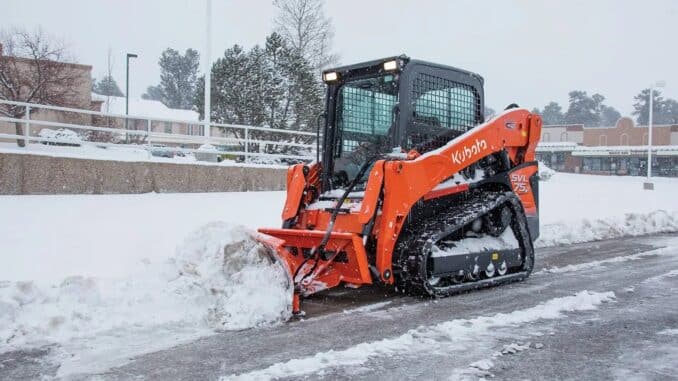
Kubota SVL Series Compact Track Loaders
Kubota SVL Series compact track loaders require attention to both loader systems and the tracked undercarriage.
Maintenance should include:
-
Track condition and tension.
-
Rollers, idlers and sprockets.
-
Undercarriage cleaning.
-
Loader pivots and attachment mounting equipment.
-
Hydraulic oil and filters.
-
Cooling-pack cleanliness.
-
Auxiliary hydraulic connections.
-
Engine and emissions-system servicing, where applicable.
A loader that loses performance only when hot needs a different investigation from one with a constant travel fault or an attachment-specific problem.
Engine and emissions equipment vary across the SVL range. Do not assume that every machine uses the same regeneration procedure, fluids or aftertreatment components.kubotausa+1
Kubota SCL Series Stand-On Compact Loaders
The SCL Series sits separately from Kubota’s larger skid steer and compact track loader ranges.
Maintenance priorities include:
-
Tracks and undercarriage.
-
Loader linkage.
-
Operator platform and controls.
-
Safety interlocks.
-
Cooling-system cleanliness.
-
Auxiliary hydraulic couplers.
-
Attachment mounting and retention.
Attachment procedures should be checked specifically for the SCL machine. Operating and maintenance instructions from a larger loader should not be treated as interchangeable. Kubota identifies its stand-on compact loader separately within its construction equipment range.kubotausa
Kubota R Series Wheel Loaders
Kubota R Series wheel loaders require maintenance coverage for the loader equipment, steering, chassis and travel systems.
Key inspection areas include:
-
Articulation joints.
-
Steering components.
-
Axles and driveline assemblies.
-
Brakes.
-
Tyres and wheel hardware.
-
Loader pins and bushes.
-
Hydraulic cylinders and hoses.
-
Travel-system performance.
A machine that lifts normally but travels weakly presents a different diagnostic problem from one with weak lifting and normal travel.
Kubota’s parts catalogue includes several generations of R Series loaders, including configuration distinctions that can affect replacement-parts selection.kuk.kubota-eu+1
Kubota RT Series Articulated Loaders
The RT Series includes articulated compact loaders in different configurations, including diesel and electric machines in European markets.
General maintenance priorities include:
-
Articulation-joint condition.
-
Steering response.
-
Loader linkage.
-
Tyres and wheel fasteners.
-
Hydraulic connections.
-
Attachment locking.
-
Cooling and electrical equipment appropriate to the powertrain.
Electric machines require their own charging, battery and electrical-system coverage. Diesel starting and fuel-system advice does not apply to an electric loader.
Kubota’s European range includes electric RT loaders alongside other articulated loader configurations.kuk.kubota-eu+1
Kubota KC Series Tracked Dumpers
Kubota KC Series tracked dumpers include different carrying, loading and discharge arrangements. Depending on the machine, these can include conventional tipping, rotating skips, high-discharge systems, self-loading equipment and variable-width undercarriages.
Maintenance should address:
-
Tracks and adjustment mechanisms.
-
Rollers and undercarriage condition.
-
Skip pivots.
-
Tipping cylinders and hoses.
-
Travel controls.
-
Self-loading mechanisms, where fitted.
-
High-dump or rotating-skip equipment.
-
Engine or electric-drive requirements.
The KC range includes different power sources and operating configurations. Shared series branding does not establish identical engines, capacities or hydraulic systems.kuk.kubota-eu+2
Kubota KTH Series Compact Telehandlers
Kubota KTH Series compact telehandlers need maintenance coverage centred on safe load handling as well as routine engine and hydraulic servicing.
Important areas include:
-
Boom condition and wear.
-
Extension mechanisms.
-
Attachment locking.
-
Hydraulic hoses and cylinders.
-
Steering and braking.
-
Tyres.
-
Load-handling safety systems.
Lifting capacity must be checked against the correct load chart for the machine, attachment and operating configuration. It should never be inferred from the series name or the machine’s appearance.
The KTH family appears in Kubota’s European construction equipment range.kuk.kubota-eu+1
Related Kubota Equipment for Construction Sites
Kubota RTV utility vehicles support worksite transport and material handling, but they are best covered in a separate utility-vehicle maintenance hub.
Similarly, Kubota tractor-loader-backhoes should have their own maintenance and repair section. Their tractor-based transmissions, hydraulic arrangements and backhoe installations differ from purpose-built excavators and loaders.
Kubota includes utility vehicles alongside its core construction machinery in some construction-related material.kubotausa+1
Identify Your Kubota Equipment Before Ordering Parts
Accurate parts identification starts with the machine itself.
Record the following information before searching for replacement components:
-
Complete model designation.
-
Machine serial number.
-
Engine model and serial number.
-
Country or market specification.
-
Cab or canopy configuration.
-
Relevant hydraulic options.
-
Attachment identification.
-
Component numbers and identification tags.
-
Any applicable production or serial-number break.
Kubota’s illustrated parts resources separate machines and configurations within individual equipment families. Use the appropriate diagram to identify the assembly and part number before comparing suppliers.shop.kubotausa+2
Machine Identification and Component Identification
The machine serial number helps establish the original specification, but individual assemblies may need additional identification.
This is especially important where a previous owner has replaced an engine, pump, motor, valve or attachment.
Photograph identification plates and retain copies of service invoices. A clear record of previous replacements can prevent repeated ordering errors and make future fault diagnosis easier.
Kubota Construction Equipment Maintenance
A maintenance schedule should reflect the exact machine, its operating hours, calendar requirements and working conditions.
Do not apply one oil specification, fluid capacity or service interval across the whole Kubota construction range. Kubota directs owners to the relevant machine manual for service intervals and climate-related requirements.kubota-eu
Daily and Pre-Start Inspections
Use a consistent walk-around inspection based on the operator’s manual.
Typical inspection areas include:
-
Fluid levels checked using the correct procedure.
-
Visible fuel, coolant and oil leaks.
-
Cooling-pack obstruction.
-
Damaged hoses.
-
Track or tyre damage.
-
Loose hardware.
-
Attachment locking components.
-
Guards and covers.
-
Lubrication points.
-
Warning displays and safety controls.
Record changes rather than relying on memory. A small leak, unusual noise or increasing amount of joint movement can provide an early indication that closer inspection is needed.
Do not continue operating with damaged attachment retention equipment, seriously deteriorated hydraulic hoses or defective safety controls. Kubota attachment instructions emphasise hose inspection and safe maintenance around hydraulically operated equipment.kubotausa
Engine Servicing
Engine maintenance should follow the specification of the engine installed in the machine.
A useful service record identifies:
-
Approved engine oil.
-
Oil filter.
-
Fuel filters and separator elements.
-
Air-cleaner elements.
-
Coolant specification.
-
Belt inspections.
-
Relevant emissions-system servicing.
Keep dates, operating hours and part numbers together. This makes it easier to distinguish an overdue service from a developing mechanical or control-system fault.
Cooling-System Maintenance
Cooling-system inspections should cover more than the visible radiator face.
Depending on the installation, check the accessible cooling pack, screens, hoses, belts and surrounding compartments using the manufacturer’s procedure.
When overheating occurs, establish which temperature warning is active. Engine coolant temperature and hydraulic oil temperature are separate diagnostic concerns, even when their cooling equipment shares the same compartment.
Hydraulic-System Maintenance
Hydraulic maintenance depends on cleanliness, correct fluid selection and timely inspection.
Important practices include:
-
Keeping couplers clean.
-
Protecting open ports during repairs.
-
Using correctly specified filters.
-
Checking hoses for damage and unsuitable routing.
-
Monitoring unexplained fluid loss.
-
Investigating contamination.
-
Recording major component failures.
If a hydraulic pump, motor or another component fails internally, fitting a replacement may not remove debris already circulated through the system. Kubota advises hydraulic-system cleaning following component damage to address contamination.kubota-eu
Track and Undercarriage Maintenance
Tracked equipment should have a separate undercarriage inspection routine.
Check:
-
Track damage.
-
Track adjustment.
-
Roller and idler condition.
-
Sprocket wear.
-
Track-frame damage.
-
Final-drive leaks.
-
Abnormal travel noise.
-
Material trapped around moving components.
Use the track-tension measurement and adjustment procedure for the exact machine. A measurement copied from another excavator, loader or dumper may be unsuitable.
Wheel, Steering and Articulation Maintenance
Wheeled equipment needs additional attention to:
-
Tyres.
-
Wheel fasteners.
-
Steering joints.
-
Articulation pivots.
-
Braking operation.
-
Axle and driveline leaks.
-
Relevant lubrication points.
Before maintenance, follow the machine’s prescribed procedures for parking, support and articulation locking.
Attachment Maintenance
Attachments require their own maintenance schedules.
A machine service does not automatically cover the lubrication, wear parts, hydraulic requirements or safety checks of an attached breaker, auger, grapple or other powered tool.
Kubota’s attachment information specifies different operating requirements between tools. Confirm compatibility and follow both the carrier and attachment instructions.kubotausa+1
General Kubota Construction Equipment Problems
The following sections describe troubleshooting categories, not defects proven to affect every Kubota machine.
Before replacing parts, record:
-
Whether the machine is hot or cold.
-
When the fault first appeared.
-
Which functions are affected.
-
Whether the problem is constant or intermittent.
-
Any warning messages or codes.
-
Recent servicing, repairs or attachment changes.
These observations help narrow the diagnosis and make a model-specific repair guide more useful.
Engine Will Not Crank
A no-crank problem means the starter does not rotate the engine.
Record whether the machine has:
-
No dashboard power.
-
Normal dashboard power but no starter response.
-
A single click.
-
Repeated clicking.
-
Slow engine rotation.
-
An intermittent response affected by control position.
The starting circuit, battery supply and required start-permission conditions should be checked using the appropriate electrical procedure.
Do not bypass operator-presence switches or other start-inhibit systems to keep the machine in service.
Engine Cranks but Will Not Start
An engine that turns normally but does not fire requires a different investigation from a no-crank fault.
Useful background includes whether the problem followed:
-
Running out of fuel.
-
Fuel-filter replacement.
-
Refuelling.
-
Long storage.
-
Cold weather.
-
Engine washing.
-
Electrical work.
Check the correct starting and fuel-priming procedure before assuming a major injection-system failure.
Where electronic controls are fitted, preserve warning information and diagnostic codes before clearing them. High-pressure fuel-system testing requires the correct equipment and precautions.
Engine Starts and Then Stalls
Record how long the engine runs and what happens immediately before it stops.
Important distinctions include:
-
Stalling immediately after starting.
-
Stalling only under load.
-
Stopping after prolonged operation.
-
Restarting only after cooling.
-
Stalling when travel or an attachment is engaged.
A useful diagnosis depends on this pattern. Repeatedly restarting the machine without documenting the circumstances can make an intermittent fault harder to identify.
Engine Overheating
Repeated overheating requires investigation rather than acceptance as normal operation.
Check the cooling system and working conditions using the machine’s instructions. Establish whether the warning concerns engine coolant or hydraulic oil, and record whether it occurs during travel, digging, lifting or attachment work.
Stop work for a serious temperature warning, coolant loss or other signs of damage. Allow the system to cool before following the inspection procedure.
Weak or Slow Hydraulics
Start by identifying the affected functions:
-
All hydraulic functions.
-
A single cylinder or movement.
-
Travel only.
-
Auxiliary hydraulics only.
-
Performance only when hot.
-
Performance only with a particular attachment.
This distinction matters. A single slow function should not automatically lead to the same repair as poor performance across the whole machine.
Check service history, fluid condition, warning information and obvious external problems before major component replacement. Use the prescribed pressure, flow and leakage tests to establish the cause.
Where a previous hydraulic failure has occurred, contamination must remain part of the investigation.kubota-eu
Jerky or Uneven Hydraulic Movement
Describe exactly when the movement becomes uneven.
Useful observations include whether it happens:
-
At low or high engine speed.
-
During one function or several.
-
Only when the machine is cold.
-
Only after warming up.
-
With a particular attachment.
-
Following hydraulic servicing.
Avoid adjusting valves or operating pressures without the correct diagnostic procedure. An adjustment can conceal a symptom without correcting its cause.
Hydraulic Oil Leaks
Identify the source before ordering a hose, seal kit or replacement assembly.
Oil can travel along hoses and structural members before dripping. The lowest wet point may not be the failed component.
Never use a hand to search for a pressurised hydraulic leak. Shut the machine down, follow the prescribed pressure-release procedure and use safe inspection methods. A suspected hydraulic injection injury requires immediate emergency medical attention.kubotausa
Replacement hoses must match the application, fittings, pressure requirements, routing and movement allowance.
Boom, Loader Arm or Bucket Drift
A raised component moving downward does not, by itself, prove that its cylinder seals have failed. The relevant hydraulic circuit needs to be tested.
Do not investigate drift from beneath raised equipment. Lower attachments where possible and use the approved mechanical support when raised loader arms must be secured.
Hydraulic pressure is not a safe substitute for a support device. Kubota specifically warns against working beneath equipment supported only by hydraulics.kubotausa
Loss of Travel or Uneven Travel
Separate these complaints:
-
No movement in either direction.
-
Weak movement.
-
Pulling to one side.
-
Loss of one travel speed.
-
Travel failure only when hot.
-
Travel problems accompanied by noise.
On tracked equipment, inspect for visible damage and undercarriage obstruction before more involved testing.
On wheeled machines, the diagnostic process may also involve tyres, brakes, steering and driveline components.
Do not increase travel pressures to compensate for an unidentified fault.
Tracks Repeatedly Coming Off
Repeated derailment needs an inspection rather than repeated refitting.
Check the complete undercarriage, including track condition, adjustment, sprockets, rollers, idlers and alignment.
Use the machine’s approved tensioning and repair procedure. Track-adjuster components can retain significant stored force and must not be loosened or dismantled casually.
Attachment Will Not Operate
Establish whether the fault stays with the machine or follows the attachment.
Check the relevant requirements for:
-
Hydraulic flow.
-
Hydraulic pressure.
-
Coupler connection.
-
Return plumbing.
-
Case-drain connection.
-
Electrical controls.
-
Operating-mode selection.
-
Attachment safety conditions.
Kubota’s attachment information shows that tools can have substantially different hydraulic requirements. Being able to connect an attachment does not prove that the machine can operate it correctly.kubotausa
Electrical Warnings and Intermittent Faults
Record the exact warning and the circumstances in which it appears.
Useful information includes:
-
Startup versus working operation.
-
Wet-weather or washing-related symptoms.
-
Vibration-related interruptions.
-
Functions that become disabled.
-
Whether the engine continues running.
-
Whether cooling or restarting temporarily changes the fault.
A warning code provides a diagnostic starting point. It does not necessarily prove that the component named in the description needs replacement.
DPF, Regeneration and DEF Problems
First identify the emissions equipment fitted to the machine.
There is no universal regeneration procedure for all Kubota construction equipment. Some machines have different aftertreatment arrangements, and electric equipment does not use diesel exhaust treatment.
Follow the correct warning sequence and operating instructions. Repeated warnings need diagnosis rather than repeated attempts to clear them without investigating the cause. Kubota publishes separate specifications for machines with DPF regeneration and machines equipped with DEF systems.kubotausa+1
Excessive Play, Knocking or Vibration
Identify where the movement or noise originates and what operation produces it.
Inspection areas may include:
-
Boom and bucket pivots.
-
Loader linkage.
-
Attachment mounts.
-
Articulation joints.
-
Undercarriage components.
-
Wheel and chassis assemblies.
Lubrication does not restore worn components. Where movement is excessive, inspect and measure the affected joint before deciding whether it needs pins, bushes, shims or more extensive repair.
Kubota Construction Equipment Parts Guide
Filters and Routine Service Parts
Common service items include:
-
Engine oil filters.
-
Fuel filters.
-
Water-separator elements.
-
Air-cleaner elements.
-
Hydraulic filters.
-
Cab filters.
-
Belts.
-
Approved fluids.
-
Sealing washers and related consumables.
Check the contents of a service kit against the exact machine. A broad series description is not enough to confirm compatibility.
Undercarriage Parts
Tracked-machine repairs may involve:
-
Tracks.
-
Rollers.
-
Idlers.
-
Sprockets.
-
Track-adjuster components.
-
Final-drive components.
-
Guards.
-
Mounting hardware.
Select parts by the documented application and specification rather than approximate machine size.
Hydraulic Parts
Hydraulic replacement parts can include:
-
Hoses and fittings.
-
Couplers.
-
Cylinder seal kits.
-
Complete cylinders.
-
Valves.
-
Pumps.
-
Motors.
-
Filters.
Confirm the diagnosis before purchasing a major assembly. If internal component damage is established, include contamination assessment and cleaning in the repair plan.kubota-eu
Pins, Bushes and Wear Parts
Inspect the whole joint before buying an individual pin or bush.
A complete repair may also require:
-
Shims.
-
Seals.
-
Retainers.
-
Grease fittings.
-
Associated hardware.
-
Repairs to damaged mounting bores.
For buckets and powered attachments, use the attachment identification as well as the carrier-machine details.
Electrical and Control Parts
Before replacing a sensor, switch, solenoid or controller, verify the relevant wiring, connections and diagnostic procedure.
Preserve fault information and confirm any setup, calibration or programming requirements associated with the replacement component.
Genuine and Aftermarket Parts
Compare replacement parts by:
-
Correct application.
-
Technical specification.
-
Manufacturing quality.
-
Supplier traceability.
-
Warranty.
-
Availability.
-
Installation requirements.
For braking, steering, lifting and safety-control components, visual similarity is not sufficient evidence of suitability.
Kubota’s illustrated parts resources provide a useful starting point for confirming the original assembly and part number.kubotausa
Safe Kubota Construction Equipment Repairs
Before maintenance or repair:
-
Park in a suitable location.
-
Lower attachments where possible.
-
Follow the shutdown procedure.
-
Prevent unintended starting or movement.
-
Release stored pressure as instructed.
-
Use approved supports and locking devices.
-
Keep people outside crush zones.
-
Follow the machine and attachment manuals.
Never work beneath equipment supported only by hydraulics. Where loader arms must remain raised, use the approved lift-arm support and the prescribed procedure.kubotausa
Major hydraulic testing, high-pressure fuel repairs, structural repairs and safety-system diagnosis require appropriate training, equipment and documentation.
Frequently Asked Questions
What information is needed to order Kubota construction equipment parts?
Start with the complete machine designation and serial number. Add engine, attachment and component identification where relevant. Confirm the correct illustrated parts diagram and any serial-number restrictions before ordering.shop.kubotausa+1
Are Kubota construction equipment parts interchangeable between series?
Do not assume so. Similar-looking machines can use different engines, hydraulic systems, undercarriages and controls. Check the actual part application and configuration rather than relying on appearance or series branding.shop.kubotausa+1
Can the same maintenance schedule be used for every Kubota construction machine?
No. Use the schedule for the exact machine, along with any separate engine and attachment requirements. Kubota directs owners to the relevant manual for service intervals and operating-condition guidance.kubota-eu
Should weak hydraulics automatically lead to pump replacement?
No. Establish which functions are affected and carry out the appropriate tests first. Where internal damage is confirmed, assess the system for contamination as part of the repair.kubota-eu
Does every Kubota construction machine require regeneration?
No. Emissions equipment varies, and the correct procedure depends on the engine and machine specification. Check the installed system before following regeneration or DEF-related advice.kubotausa+1
What should a machine-specific repair guide contain?
A useful guide should identify the machine configuration and explain maintenance requirements, parts identification, symptoms, diagnostic checks, repair limitations and safety precautions.
Exact capacities, torque settings, adjustment measurements and diagnostic values should be verified for that machine rather than copied from a general series guide.