
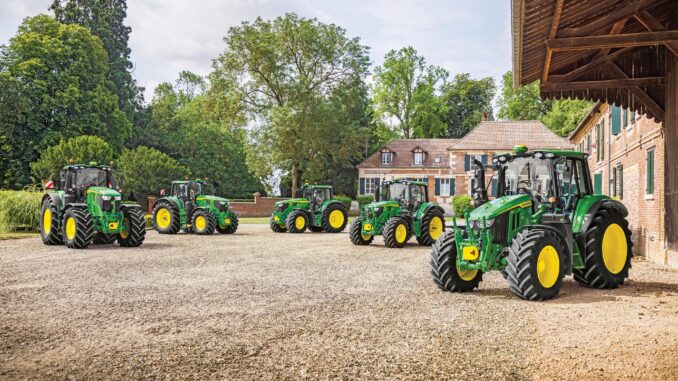
The John Deere 670 is a compact utility tractor built by Yanmar for John Deere, with a 3-cylinder diesel engine, gear transmission, and 2WD or 4WD configurations depending on version. It was designed for small-acreage work, mowing, light grading, hauling, and general property maintenance, which makes it popular with owners who want a simple tractor they can still maintain themselves.
This guide explains how to troubleshoot common John Deere 670 problems, which repairs are realistic for DIY owners, where to find parts diagrams and manuals, and how to stay ahead of wear with a practical maintenance routine.
John Deere 670 model overview
The John Deere 670 sits in Deere’s older compact utility tractor lineup and was sold as a small-frame diesel machine for property owners, hobby farms, and light utility work rather than heavy row-crop use. TractorData lists the 670 as a compact utility tractor built in Japan by Yanmar, with production references running from 1989 through 1997.
Key systems on the John Deere 670 include the diesel engine and fuel system, the mechanical gear-drive transmission, the hydraulic system, the PTO and hitch, and the electrical starting/charging system. On this model, owners most often end up dealing with filters, belts on attached implements, battery issues, glow/start circuit faults, hydraulic leaks, and wear items linked to mowing or loader use.
Common service parts owners typically shop for include engine oil and fuel filters, air filters, battery, radiator hoses, hydraulic fluid and filters, PTO-related wear parts, and mower-deck consumables if the tractor is used with a mid-mount deck.
General overview of the John Deere 670 systems
The John Deere 670 uses a Yanmar 0.9L 3-cylinder diesel rated at 19.3 gross horsepower, with claimed PTO power of 16 hp, which is enough for light mowing, small implement work, and routine property jobs. Fuel delivery and clean air intake matter more than on many gasoline lawn tractors because diesel starting and running quality can deteriorate quickly when filters clog or air enters the fuel system.
The transmission is an 8-speed unsynchronized gear unit, so complaints about shifting, tractor movement, or PTO behavior often trace back to clutch adjustment, operator technique, linkage wear, or drivetrain faults rather than an automatic transmission problem. Hydraulics are open-center, with listed system pressure around 2050 psi, so weak lift or slow hydraulic response points owners toward fluid condition, suction issues, leaks, or pump-related wear.
John Deere 670 troubleshooting approach
The best way to diagnose a John Deere 670 is to start with the symptom the owner actually sees: hard starting, no crank, weak hydraulics, poor PTO performance, strange noise, fluid leakage, or loss of drive. That approach prevents random parts replacement and makes it easier to separate a simple maintenance issue from a repair that really belongs with a dealer or diesel shop.
Main symptom groups on this model usually fall into:
-
Starting issues.
-
Running issues and power loss.
-
PTO or mower performance problems.
-
Vibration and unusual noise.
-
Overheating and leaks.
-
Transmission and drive problems.
-
Electrical and charging faults.
Emergency John Deere 670 repair needs
Some problems on the John Deere 670 should be handled immediately because they create a safety risk or can turn a small repair into a much more expensive one. Fuel leaks, overheating, major hydraulic leaks, brake problems, steering faults, and severe driveline noise all belong in the “stop using it until checked” category.
Starting issues
If the tractor cranks slowly, clicks, or refuses to fire, the problem may be as simple as a weak battery or poor cable connection, but repeated hard starting on a diesel can also point to fuel restriction, air intrusion, or engine-condition issues. Ignoring it often leads to a stranded tractor and extra wear on the starter and electrical system.
Common causes:
-
Weak or old 12-volt battery.
-
Dirty or loose battery terminals.
-
Bad ground connection.
-
Faulty starter or solenoid.
-
Fuel restriction or contaminated diesel.
-
Air in fuel lines.
-
Glow/preheat or cold-start related issues, depending on configuration.
Basic owner checklist:
-
Check battery charge and terminal condition.
-
Confirm the ground cable is clean and tight.
-
Verify the tractor has clean diesel and a reasonably fresh fuel filter.
-
Listen for starter engagement versus a single click.
-
If it cranks but will not start, check for fuel delivery before assuming a major engine fault.
Running issues
A John Deere 670 that starts but runs rough, smokes excessively, or lacks power often has a fuel, air, or maintenance-related problem before it has an internal engine problem. That matters because dirty filters, stale fuel, or restricted intake are far cheaper to correct than injector or compression work.
Common causes:
-
Clogged fuel filter.
-
Dirty air filter.
-
Water-contaminated diesel.
-
Restricted fuel flow from tank or lines.
-
Injector issues.
-
Low engine compression.
-
Old engine oil or neglected service.
Basic owner checklist:
-
Inspect and replace the air filter if dirty.
-
Replace the fuel filter if service history is unknown.
-
Drain suspect fuel and refill with clean diesel if contamination is likely.
-
Check for black smoke under load, which can suggest airflow restriction or overfueling.
-
Move to injector or compression testing only after maintenance basics are ruled out.
PTO and cut-quality problems
If a John Deere 670 is used with a mower deck and the cut looks uneven, weak, or ragged, the issue is often in the attachment rather than the tractor itself. Bent blades, worn belts, wrong deck pitch, spindle wear, or PTO engagement problems are more common than an actual engine-power shortage.
Common causes:
-
Dull or bent blades.
-
Loose or worn mower-deck belt.
-
Deck not level.
-
Spindle or pulley wear.
-
PTO engagement problem.
-
Engine not reaching proper operating speed.
Basic owner checklist:
-
Inspect blades for sharpness and damage.
-
Check deck level side-to-side and front-to-back.
-
Inspect belt condition and tension.
-
Verify PTO engagement is positive and consistent.
-
Clean heavy grass buildup from under the deck.
Vibration and noise
New vibration on a John Deere 670 usually means something has loosened, bent, worn, or gone out of balance. Running the tractor that way can damage bearings, shafts, mounts, and attached equipment much faster than owners expect.
Common causes:
-
Loose wheel hardware.
-
Damaged implement driveline.
-
Bent mower blade.
-
Worn spindle bearings.
-
Exhaust or sheet-metal looseness.
-
Driveline or clutch-related wear.
Basic owner checklist:
-
Stop use and identify whether vibration appears at idle, while driving, or only with PTO engaged.
-
Check wheels, lug hardware, and visible fasteners.
-
Disconnect the implement if possible and retest.
-
Inspect blades, pulleys, and shafts for damage.
-
Escalate quickly if the noise sounds internal or gear-related.
Overheating and leaks
A compact diesel like the John Deere 670 depends on clean cooling fins, proper coolant level, and leak-free hoses to stay reliable. Overheating can lead to head-gasket damage or long-term engine wear, so it should never be treated as a nuisance issue.
Common causes:
-
Low coolant.
-
Clogged radiator screen or fins.
-
Failing hose or clamp.
-
Water pump issue.
-
Thermostat fault.
-
Engine oil or hydraulic leak contacting hot surfaces.
Basic owner checklist:
-
Check coolant level only when the engine is cool.
-
Clean the radiator screen and outer cooling surfaces.
-
Look for damp hose ends, stains, or active leaks.
-
Check engine oil and hydraulic fluid levels.
-
Stop running the tractor if temperature continues rising.
Transmission and drive problems
Because the John Deere 670 uses a gear transmission, complaints about shifting or movement often come down to clutch release, linkage condition, or drivetrain wear. Forcing shifts on an unsynchronized gearbox can make things worse quickly.
Common causes:
-
Clutch out of adjustment.
-
Clutch wear.
-
Linkage wear or binding.
-
Low or contaminated drivetrain/hydraulic fluid.
-
Brake drag.
-
Final-drive issues.
Basic owner checklist:
-
Confirm the clutch pedal has proper feel and travel.
-
Do not force gear engagement.
-
Check for abnormal grinding or movement with clutch depressed.
-
Verify fluid level and condition where applicable.
-
Move deeper clutch or transmission work into advanced repair territory.
Electrical problems
Electrical faults on older compact tractors are often simple but frustrating: weak charging, corroded connections, bad grounds, or switch failures. The 670 uses a 12-volt electrical system with an alternator and a listed 20-amp charging output, so low-voltage issues can affect starting and general reliability.
Common causes:
-
Weak battery.
-
Corroded terminals.
-
Faulty alternator.
-
Damaged wiring.
-
Blown fuse.
-
Bad ignition switch or safety-related switch fault.
Basic owner checklist:
-
Check battery voltage and cable condition.
-
Clean terminals and grounds.
-
Confirm charging system output after startup.
-
Inspect visible harness sections for rub-through or repairs.
-
Replace suspect switches only after confirming power and ground are present.
John Deere 670 DIY or dealer repair guide
The normal line on the John Deere 670 is fairly clear: routine service, basic electrical checks, filter replacement, battery work, deck setup, and minor hose or belt work are realistic DIY jobs, while injector work, clutch splitting, internal transmission repair, hydraulic pump diagnosis, and engine internal repairs usually belong with an experienced shop.
Good DIY jobs:
-
Engine oil and filter changes.
-
Air and fuel filter replacement.
-
Battery replacement and cable cleaning.
-
Cooling-system inspection and hose replacement.
-
Mower blade service and deck leveling.
-
Basic leak inspection and fluid changes.
Advanced DIY or dealer jobs:
-
Clutch replacement or adjustment beyond basic linkage checks.
-
Injector testing or replacement.
-
Compression testing and internal engine diagnosis.
-
Hydraulic pump and control-valve diagnosis.
-
Transmission teardown.
-
PTO internal repairs.
Skill level guide:
-
Beginner: battery, filters, blades, fluid checks, grease points.
-
Intermediate: hose replacement, deck belt service on attachments, minor switch testing, cooling-system service.
-
Advanced: clutch work, hydraulic diagnosis, injector/fuel-system repair, driveline teardown.
John Deere 670 parts, OEM numbers, and ordering info
Before ordering John Deere 670 parts, gather the full model name, the tractor PIN/serial number, the engine model and serial, and the exact attachment or deck model if one is involved. That matters because older Deere compact tractors often have serial breaks, attachment differences, and engine-specific service parts that look similar but do not interchange cleanly.
The Deere online parts catalog and Deere-focused parts sites are the safest places to confirm fit before buying, especially for serial-sensitive or attachment-related parts.
OEM vs aftermarket guidance:
-
Use OEM for filters when fit is uncertain, for safety-related parts, electrical switches, and anything serial-number sensitive.
-
Aftermarket can be fine for batteries, some blades, and common consumables if the cross-reference is exact and the seller clearly lists the John Deere 670 or the precise attachment model.
John Deere 670 diagrams and manuals
For diagrams and manuals, start with official Deere publications and then use a Deere-focused parts site to make parts lookup faster.
Useful sources:
-
John Deere Parts Catalog — best for exploded diagrams and confirming current OEM numbers.
-
John Deere Quick Reference Guides — useful for Deere maintenance references and manual lookup pathways.
-
Weingartz John Deere 670/770 Parts Diagrams — useful for model-specific catalog navigation tied to PC2227.
-
TractorData John Deere 670 — useful for quick specs, serial-year references, and publication references such as OM-M79606.
How to locate John Deere 670 serial and engine numbers
These numbers matter because parts fit, production breaks, and even manual references can depend on exactly which tractor and engine version you have.
Use this process:
-
Find the tractor PIN/serial tag on the tractor frame area indicated by Deere identification decals or tag mounts for the unit.
-
Record the full model and serial exactly as stamped.
-
Find the engine model and serial on the engine data plate.
-
Record the attachment model and serial if you use a mower deck, loader, or other implement.
-
Use all of those numbers together when checking parts diagrams or calling a dealer.
Buying John Deere 670 parts online and in stores
The best buying strategy is to confirm the OEM part number first, then shop by that number rather than by a loose model description. That reduces returns and avoids the common mistake of ordering parts for the wrong deck, wrong serial range, or wrong engine version.
Use these channels:
-
Online: verify the Deere part number first using Deere Parts Catalog, then compare with Deere-focused sellers.
-
Dealer counter: best for hydraulic, clutch, steering, fuel-system, and serial-specific items that are easy to misidentify.
-
Retail stores: acceptable for common consumables like batteries, fluids, and some filters only if the packaging clearly cross-references the exact tractor or engine.
Helpful links:
John Deere 670 fitting guide for common parts
These are the most worthwhile DIY service jobs because they solve a large share of real-world running and reliability complaints on older compact tractors.
Replacing the engine oil and oil filter
This job protects the diesel engine and is one of the best first steps when the tractor’s service history is unclear.
-
Warm the engine briefly, then shut it off and park safely on level ground.
-
Drain the old oil into a suitable pan.
-
Remove the old oil filter and make sure the old gasket comes off with it.
-
Lightly oil the new filter gasket and install the new filter by hand.
-
Refill with the correct oil type and quantity from the operator’s manual, then start and check for leaks.
Replacing the fuel filter
A restricted fuel filter can cause hard starting, rough running, or loss of power under load.
-
Shut off fuel if the setup allows and clean around the filter area first.
-
Remove the old filter carefully so dirt does not enter the system.
-
Install the new filter and seals exactly as supplied.
-
Bleed or prime the fuel system as required by the tractor’s fuel setup.
-
Start the engine and check for leaks or air-related stumbling.
Replacing the air filter
Airflow restriction is a common cause of smoky running and reduced performance on diesel equipment.
-
Open the air cleaner housing.
-
Remove the old filter without dropping debris into the intake.
-
Wipe out loose dust from the housing.
-
Install the new filter and inspect the housing seal.
-
Recheck after a short run if the tractor works in dusty conditions.
Servicing blades and leveling the mower deck
If the tractor is used with a 60-inch mid-mount deck, deck setup often has more effect on cut quality than engine power alone.
-
Remove the key and disable accidental starting before working under the deck.
-
Inspect blades for dull edges, bends, or severe wear.
-
Sharpen or replace blades as needed, keeping them balanced.
-
Check belt condition and pulley alignment.
-
Level the deck side-to-side and set front-to-rear pitch to the deck manual specification.
Maintenance to prevent John Deere 670 problems
Regular maintenance prevents most of the expensive problems owners face on older compact tractors, especially starting trouble, fuel-system issues, overheating, weak hydraulic performance, and attachment-related wear. On a tractor like the John Deere 670, maintenance matters even more when usage is seasonal and the machine sits between jobs.
Focus areas:
-
Starting reliability: keep the battery charged, terminals clean, and fuel fresh.
-
Engine health: change oil and filters on schedule and watch for leaks.
-
Cooling: keep the radiator area clean and coolant at the correct level.
-
Hydraulic performance: monitor fluid level, leaks, and sluggish lift response.
-
PTO and mower performance: keep blades sharp, belts sound, and the deck clean and level.
John Deere 670 maintenance schedule
Official maintenance details should always be checked against the operator’s manual for the exact tractor and attachment setup, but the 670 follows the usual compact-tractor pattern of pre-use inspection, regular lubrication, filter service, and seasonal storage preparation.
Daily or before each use
-
Check engine oil level.
-
Check coolant level and inspect for visible leaks.
-
Check fuel supply and drain/inspect if contamination is suspected.
-
Inspect tires, steering feel, and brakes.
-
Clean debris from the radiator screen and engine area.
Every 25 hours
-
Grease chassis and implement lubrication points listed for the tractor or attachment.
-
Inspect battery terminals and cable tightness.
-
Check air cleaner condition, especially in dusty work.
-
Inspect belts, hoses, and visible wiring.
Every 50 hours or yearly
-
Change engine oil and replace the oil filter according to manual guidance and usage severity.
-
Inspect or replace the fuel filter as needed.
-
Inspect cooling hoses and clamps.
-
Check hydraulic fluid condition and look for seepage around fittings and cylinders.
Every 200 hours or as specified
-
Perform deeper fluid and filter service according to the operator’s manual and actual configuration.
-
Inspect clutch, linkage, driveline wear, and PTO operation more closely.
-
Check charging-system performance and battery condition.
Seasonal checklist
-
Spring: battery test, fresh fuel, filter check, cooling-system inspection, deck setup if mowing season is starting.
-
Mid-season: clean radiator area often, monitor belt wear, sharpen blades, check for leaks after heavy work.
-
Fall or off-season: clean tractor thoroughly, stabilize or manage fuel properly, address leaks before storage, and keep the battery maintained.
Repair, upgrade, or replace?
For the John Deere 670, repair usually makes sense when the tractor is structurally sound, starts reliably after normal service, and only needs maintenance, hoses, filters, deck work, or minor electrical attention. Upgrade makes more sense when attachments are limited, hydraulics no longer match your workload, or you need easier operation than an older gear-drive compact provides, while replacement becomes easier to justify if the tractor needs major engine, clutch, transmission, and hydraulic work at the same time.
Repair if:
-
The engine is sound.
-
The drivetrain works properly.
-
Problems are mostly service-related.
-
Attachments still match your needs.
Upgrade if:
-
You need more hydraulic capacity or lift capability.
-
You want power steering, loader performance, or more modern operator convenience.
-
Your work has moved beyond light compact-tractor tasks.
Replace if:
-
It has major engine and transmission issues together.
-
Parts costs are stacking up across several systems.
-
The tractor no longer matches your property or implement needs.
John Deere 670 troubleshooting FAQ
1. Why will my John Deere 670 not start?
The most common starting causes are a weak battery, dirty cable connections, poor grounding, restricted fuel flow, or air in the fuel system. Start with battery condition and cable cleanliness before assuming the starter or engine is at fault. If it cranks strongly but will not fire, move toward fuel-filter and fuel-delivery checks next.
2. Why does my John Deere 670 crank but not fire?
That usually points more toward fuel delivery than cranking power. A clogged fuel filter, contaminated diesel, or trapped air in the fuel system are common suspects on older compact diesels. Check the easy service items first, then consider injector or compression testing only if maintenance does not solve it.
3. Why is my John Deere 670 hard to start when cold?
Cold starts get harder when battery output is low, the fuel system is restricted, or engine condition has declined. Diesel engines also react badly to weak cranking speed, so even a battery that seems “almost okay” can still be the problem. Clean connections and strong battery performance matter more than many owners expect.
4. Why does my John Deere 670 lose power under load?
Loss of power under load often comes from a dirty air filter, restricted fuel filter, poor fuel quality, or an implement that is overloading the tractor. Check maintenance items before chasing engine internals. If smoke and power loss continue after service, injector condition becomes more likely.
5. Why is my John Deere 670 blowing black smoke?
Black smoke usually means incomplete combustion from too much fuel, not enough air, or an overloaded engine. A dirty air filter is one of the first things to inspect. If the air system is clean, look at fuel-system condition and how heavily the tractor is being worked.
6. Why is my John Deere 670 running rough?
Rough running often means inconsistent fuel delivery, dirty filters, contaminated diesel, or injector issues. Start by replacing filters and verifying clean fuel. If roughness remains after basic service, deeper fuel-system diagnosis is justified.
7. Why does my John Deere 670 stall after starting?
A tractor that starts and then dies may be getting just enough fuel to light off but not enough to keep running. Fuel restriction, venting issues, or air in the system are common causes. Check the filter and fuel path before replacing electrical parts.
8. Why is my John Deere 670 battery always dead?
Repeated battery discharge usually points to poor charging, dirty terminals, parasitic drain, or an aging battery. The 670 uses a 12-volt system with alternator charging, so charging output should be confirmed once the tractor is running. Do not keep replacing batteries without checking the cables and charging circuit.
9. What battery does a John Deere 670 use?
TractorData lists the John Deere 670 as a 12-volt system with a 420 CCA battery reference. Match the physical case size, terminal layout, and tray fit as well as the electrical rating when buying a replacement.
10. Why is my John Deere 670 not charging?
The usual causes are loose or corroded battery connections, alternator failure, wiring faults, or regulator-related charging problems. Check terminal condition first because low charging can be mimicked by high resistance at the cables.
11. Why does my John Deere 670 overheat?
Low coolant, clogged radiator fins, a weak hose, thermostat trouble, or water-pump issues can all push temperature up. Compact tractors used around grass and dust often collect debris in the cooling area, so external cleaning is one of the first checks.
12. Can I keep using my John Deere 670 if it is overheating?
No, not until the cause is found. Running hot can damage the engine quickly and turn a hose or cooling issue into a major repair. Shut it down, let it cool, and inspect coolant level, leaks, and radiator airflow.
13. Why is my John Deere 670 leaking hydraulic fluid?
Hydraulic leaks usually come from hoses, fittings, seals, or cylinders rather than the pump itself. Even a small leak matters because low hydraulic oil affects steering, lift, and implement performance.
14. Why are the hydraulics weak on my John Deere 670?
Weak lift or slow hydraulic response can point to low fluid, suction issues, pump wear, or internal leakage. Start with fluid level and visible leaks because those are the easiest causes to verify. If the problem remains, hydraulic diagnosis becomes more technical.
15. Why will my John Deere 670 not move?
If the engine runs but the tractor does not move, check clutch function, gear engagement, brake drag, and drivetrain condition. Because the 670 uses an 8-speed gear transmission, movement complaints are usually mechanical rather than hydrostatic.
16. Why is my John Deere 670 hard to shift?
Hard shifting can be normal if the tractor is forced between gears without proper clutch use because the gearbox is unsynchronized. It can also indicate clutch adjustment problems or linkage wear. Do not force it, because grinding can worsen internal wear.
17. Does the John Deere 670 have a hydrostatic transmission?
No, TractorData lists an 8-speed unsynchronized gear transmission for the John Deere 670. That changes both the driving feel and the likely causes when the tractor has drive complaints.
18. Why is my John Deere 670 clutch slipping?
A slipping clutch usually shows up as rising engine speed without matching tractor pull. Linkage misadjustment or clutch wear are common causes. Basic external checks are reasonable, but clutch replacement is generally an advanced repair.
19. Why is my John Deere 670 PTO not working?
PTO problems can come from engagement issues, linkage faults, clutch-related problems, or trouble in the attached implement. Always separate tractor PTO faults from mower-deck or implement belt faults before ordering parts.
20. Why is my mower cutting uneven behind the John Deere 670?
Uneven cutting is often caused by deck leveling issues, dull or bent blades, spindle wear, or the wrong tire pressures. Check the deck first before assuming the tractor is the problem.
21. Why does my mower leave uncut strips with the John Deere 670?
That usually means dull blades, low blade tip speed from belt slip, clogged deck airflow, or mowing too fast for conditions. A clean, level deck with sharp blades fixes a large share of these complaints.
22. Why are the blades on my John Deere 670 mower setup vibrating?
Blade vibration usually means a bent blade, damaged spindle, worn bearing, or debris caught around rotating parts. Stop mowing immediately because vibration can damage spindles and deck hardware quickly.
23. Why does my John Deere 670 shake when the PTO is engaged?
If vibration appears only with PTO engagement, focus on the implement, deck belt path, blades, pulleys, and PTO driveline components. That symptom is less likely to be a tire or chassis issue because it is tied to PTO operation.
24. Why is my John Deere 670 making a grinding noise?
Grinding can come from the transmission, clutch, PTO components, or attached equipment. The key clue is when it happens: while shifting, while moving, or only when the PTO is on. Internal gearbox noise should be taken seriously and not driven through.
25. Why is my John Deere 670 steering heavy?
The 670 could be equipped with manual steering or optional power steering, so steering feel depends partly on configuration. Heavy steering can also reflect front-tire condition, axle load, lubrication issues, or hydraulic steering faults on equipped machines.
26. How much horsepower does a John Deere 670 have?
TractorData lists the John Deere 670 at 19.3 gross engine horsepower, 18.5 net horsepower, and 16 hp claimed at the PTO. Those figures place it firmly in the small compact utility class.
27. Is the John Deere 670 a diesel?
Yes, the John Deere 670 uses a Yanmar 0.9L 3-cylinder diesel engine. That is one reason fuel cleanliness and filter condition matter so much to starting and running quality.
28. Is the John Deere 670 2WD or 4WD?
It was available in both two-wheel-drive and four-wheel-drive versions. That is worth checking when ordering axle, steering, or front-drive related parts.
29. What attachments fit a John Deere 670?
TractorData lists attachments including a 60-inch mid-mount mower deck, front-end loader, and backhoe references for the 670. Attachment fit still needs to be confirmed by model and serial, especially on used equipment.
30. Where can I find a John Deere 670 parts diagram?
The best source is the official Deere online parts catalog, with Deere-focused sites such as Weingartz providing an easier model navigation path for PC2227. Those diagrams help confirm exploded views, part relationships, and current OEM numbers.
31. Where can I get a John Deere 670 operator’s manual?
TractorData lists the operator’s manual reference for the 670 and 770 tractors as OM-M79606, and Deere’s manuals and quick-reference pages are the safest starting point for official literature lookup.
32. What information do I need before buying John Deere 670 parts?
Have the full tractor model, PIN/serial, engine model and serial, and the exact attachment model if the part belongs to a mower or other implement. That prevents a lot of ordering mistakes on older Deere compact tractors.
33. Are aftermarket parts okay for the John Deere 670?
They can be, especially for batteries and some consumables, but fit-sensitive and safety-related items are safer as OEM unless the aftermarket cross-reference is very clear. Belts, switches, and serial-specific hydraulic parts are where owners should be most cautious.
34. How often should I service my John Deere 670?
Use the operator’s manual as the final word, but the basic rhythm is pre-use inspection, regular lubrication, scheduled oil and filter service, and seasonal preparation for storage or heavy-use periods. Older tractors benefit from more frequent inspections when maintenance history is unknown.
35. Is the John Deere 670 worth repairing?
Usually yes, if the tractor is mechanically sound and mainly needs normal service, hoses, filters, electrical cleanup, or attachment work. It becomes harder to justify when engine, clutch, transmission, and hydraulic repairs all stack up together.