
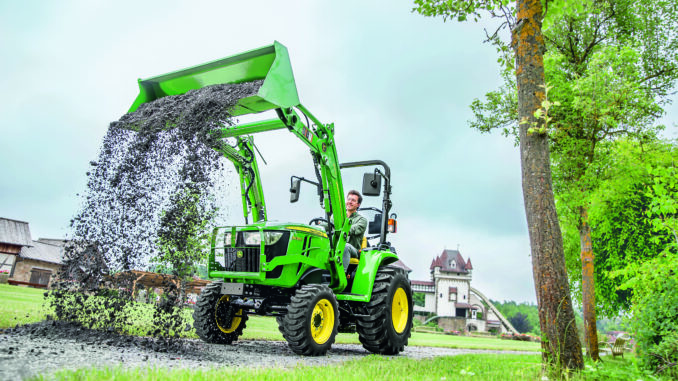
The John Deere 850 is a compact utility diesel tractor built for small acreage work, mowing, light grading, loader tasks, and general property maintenance, and it uses a gear-drive transmission with open-center hydraulics, 540 rpm rear PTO, and a 12-volt electrical system.
This guide is written for homeowner and DIY users in the USA and Canada who need practical help with repairs, symptom-based troubleshooting, maintenance intervals, parts lookup, and deciding when a job is realistic at home and when it belongs at the dealer.
John Deere 850 model overview
The John Deere 850 sits in Deere’s older compact utility tractor range and shares much of its service logic with the 950 and 1050, which is useful because many manuals and parts references group those machines together. On the 850, the systems owners deal with most often are the diesel engine and fuel system, the cooling system, the clutch and gear transmission, the transmission-hydraulic system, the PTO and 3-point hitch, and the basic 12-volt charging and starting system.
For most owners, the John Deere 850 is more of a small farm and acreage tractor than a lawn tractor, so repair priorities tend to center on starting, hydraulic response, clutch and PTO behavior, brake function, steering, and fluid condition rather than mower deck issues. The official operator’s manual also shows service sections for the air cleaner, belts, fuel system, cooling system, electrical system, brakes, tires, and ROLL-GARD frame, which matches the areas where age-related problems usually appear first.
General overview of the John Deere 850
The John Deere 850 uses an 8-forward, 2-reverse gear transmission with a dual-stage dry clutch, open-center hydraulic system rated at 2000 psi working pressure, and a continuous-running 540 rpm PTO at 2260 engine rpm. Fuel capacity is 32 L or 8.5 U.S. gallons, crankcase capacity with filter change is 4.5 L, cooling system capacity is 5.5 L, and the transmission-hydraulic system capacity is 26 L on the 850.
Common service parts owners regularly buy for a John Deere 850 include engine oil and filters, air cleaner elements, fuel system sediment-bowl parts and fuel filters, fan belts, hydraulic filters or suction screen service parts depending on configuration, battery replacements, light bulbs, and common hardware around the clutch, brakes, and hitch. Because Deere grouped some serial ranges and configurations differently, it is important to confirm the tractor serial number and any MFWD or hydraulic-filter differences before ordering parts.
John Deere 850 troubleshooting approach
Troubleshooting on the John Deere 850 should start with the symptom the owner actually sees, such as slow cranking, no start, low power, hydraulic weakness, overheating, or a PTO that will not behave correctly. That symptom-first approach prevents unnecessary parts swapping and lines up with the way the operator’s manual separates troubleshooting into engine, electrical, and transmission-hydraulic categories.
Main symptom groups on this tractor are:
-
Starting issues, including no crank, hard starting, and cold-weather starting trouble.
-
Running issues, including smoke, weak power, rough running, and stalling under load.
-
Hydraulic and hitch issues, including weak lift, slow response, and remote hydraulic problems.
-
Transmission and clutch issues, including hard shifting, poor engagement, and PTO/clutch complaints.
-
Overheating, leaks, and charging faults, especially on older tractors with deferred maintenance.
-
Electrical and safety-related issues such as battery, starter, alternator, lighting, and neutral start system problems.
John Deere 850 emergency and immediate repair needs
Some faults on the John Deere 850 need attention immediately because they create a safety hazard or can damage expensive driveline, hydraulic, or engine parts very quickly. If the tractor has loss of braking, major hydraulic leaks, overheating, charging failure combined with hard starting, or obvious PTO/clutch malfunction, stop using it until the cause is confirmed.
4.1 John Deere 850 starting issues
A no-start or hard-start problem matters because repeated cranking can flatten the battery, overheat cables, and mask a fuel-system issue that is easy to fix if caught early. Diesel starting complaints on this tractor often show up after long storage, contaminated fuel, weak batteries, or air entering the fuel system.
Common causes:
-
Weak or discharged battery.
-
Dirty or loose battery terminals and ground connections.
-
Faulty key switch, starter wiring, or starter circuit issues.
-
Fuel shutoff closed, dirty fuel path, or air in fuel lines.
-
Cold-weather starting problems related to low temperature and poor fuel condition.
Basic checks:
-
Confirm the battery is charged and cable connections are clean and tight.
-
Verify the fuel shutoff is open and there is clean diesel in the tank.
-
Inspect the sediment bowl and fuel flow path for blockage or water.
-
Check visible starter wiring and watch the dash indicators while cranking.
-
If fuel delivery was interrupted, bleed the fuel lines using the operator’s manual procedure.
4.2 John Deere 850 running and power problems
When the John Deere 850 starts but lacks power, smokes heavily, or stalls under load, the issue usually traces back to restricted air flow, fuel delivery, injector condition, or basic service neglect. These problems matter because poor combustion can foul the engine, raise exhaust temperature, and make hydraulic or PTO work feel weaker than it really is.
Common causes:
-
Dirty air cleaner element or restricted intake path.
-
Dirty fuel system or sediment buildup in the bowl.
-
Old fuel or water contamination.
-
Injector issues or valve-clearance problems, both dealer-level items in most cases.
-
Incorrect throttle use or overloading the tractor in the wrong gear.
Basic checks:
-
Inspect the air cleaner and intake hoses first.
-
Clean the fuel sediment bowl and confirm fresh fuel supply.
-
Check for black smoke under load, which often points to air restriction or overfueling.
-
Reduce load and confirm the engine can reach proper operating speed.
-
If the problem persists, move on to injector and valve-clearance diagnosis through a dealer.
4.3 Vibration and noise
New vibration or mechanical noise on a John Deere 850 should never be ignored because this tractor transmits sound through the clutch, transmission, PTO, and driveline very clearly. A noise that appears only with the clutch engaged, PTO running, or under load is often more useful diagnostically than the noise itself.
Common causes:
-
Loose wheel hardware or improper wheel torque.
-
Fan belt or alternator bracket issues.
-
Worn PTO-driven implement components rather than the tractor itself.
-
Clutch, brake, or transmission wear.
-
Loose hitch or ballast hardware.
Basic checks:
-
Park safely and inspect wheels, hitch hardware, and visible brackets.
-
Check belt condition and tension with the engine stopped.
-
Run the tractor only long enough to isolate whether the noise changes with clutch or PTO input.
-
Remove the implement from the equation if possible and retest.
-
If the sound appears internal to the clutch or gearbox, stop there and seek experienced repair help.
4.4 Overheating and leaks on the John Deere 850
Overheating is one of the fastest ways to turn a manageable repair into major engine work, so a hot-running John Deere 850 needs immediate attention. Fluid leaks also matter because this tractor depends on clean coolant, engine oil, and transmission-hydraulic oil to protect expensive systems.
Common causes:
-
Low coolant level.
-
Dirty grille, side screens, or radiator cooling screen.
-
Clogged radiator fins.
-
Loose hoses or hose clamp issues.
-
Belt slippage affecting cooling performance.
Basic checks:
-
Let the tractor cool and check coolant level before further operation.
-
Clean the grille, side screens, and radiator cooling screen.
-
Inspect fins, hoses, and clamps for blockage or leakage.
-
Check fan belt deflection and tension with the engine off.
-
If overheating returns quickly, do not keep working the tractor until the cause is resolved.
4.5 John Deere 850 transmission and drive problems
Gear-selection trouble, clutch drag, weak PTO engagement, or poor hydraulic response often feel like separate issues on the John Deere 850, but they can overlap because clutch, transmission, and hydraulic service condition all matter. Continued use with poor shifting or contaminated transmission-hydraulic oil can accelerate wear in parts that are much harder to repair at home.
Common causes:
-
Low or old transmission-hydraulic oil.
-
Plugged suction screen or overdue hydraulic filter service, depending on configuration.
-
Clutch adjustment or wear issues.
-
Internal hydraulic leakage or control-valve contamination.
-
Incorrect gear/range selection for the load.
Basic checks:
-
Check transmission-hydraulic oil level first.
-
Confirm whether your tractor uses a hydraulic filter, screen, or both for service planning.
-
Review the last transmission oil service interval.
-
Test hitch and remote hydraulic response after fluid level is corrected.
-
If shifting remains difficult or PTO/clutch action is abnormal, treat it as an advanced repair.
4.6 John Deere 850 electrical problems
Electrical faults on the John Deere 850 are usually simple but age-related, which means corrosion, poor grounds, old batteries, and brittle wiring are often more likely than exotic failures. Charging issues should be dealt with early because a weak alternator or slipping belt can look like a battery problem until the tractor leaves you stranded.
Common causes:
-
Weak battery or poor terminal connections.
-
Faulty or slipping alternator belt.
-
Blown fuse, bad switch, or damaged starter wiring.
-
Corrosion at grounds or connectors.
-
Aging bulbs or lighting-circuit faults.
Basic checks:
-
Start with battery condition and cable cleanliness.
-
Inspect the alternator belt and its tension.
-
Check fuses, visible wiring, and key switch behavior.
-
Verify the charging warning light behavior during start-up.
-
If voltage is still low after these checks, test the charging circuit properly or hand it off.
DIY or dealer repair decision guide for the John Deere 850
The normal line on a John Deere 850 is that routine service, basic fuel-system cleaning, cooling-system maintenance, belts, battery work, lights, and many external adjustments are sensible DIY jobs, while internal clutch, transmission, hydraulic, injector, and valve-train work usually needs more experience, tools, and model-specific information.
Good DIY jobs
-
Engine oil and filter changes.
-
Air cleaner service.
-
Cleaning the fuel sediment bowl.
-
Coolant checks, radiator cleaning, and hose inspection.
-
Fan belt inspection and adjustment.
-
Battery replacement, cable cleaning, fuse and bulb replacement.
-
Greasing and basic brake or hitch lubrication points.
Advanced DIY or dealer jobs
-
Bleeding the fuel system after major interruption or component replacement.
-
Transmission-hydraulic oil, screen, and filter service if access is unfamiliar.
-
Clutch diagnosis and adjustment beyond simple checks.
-
PTO engagement problems.
-
Injector service and valve-clearance adjustment, both specifically flagged for dealer attention in Deere maintenance guidance.
-
Internal hydraulic or transmission repairs.
Skill level guide
-
Beginner: Battery, engine oil, air cleaner, coolant level, screen cleaning, lights.
-
Intermediate: Belt adjustment, fuel sediment bowl cleaning, minor electrical diagnosis, transmission-hydraulic service with the manual in hand.
-
Advanced: Fuel bleeding, clutch work, hydraulic diagnosis, valve adjustment, injector-related repairs.
John Deere 850 parts needed, OEM vs aftermarket, and what information you need
Before ordering parts for a John Deere 850, gather the full tractor model, the Product Identification Number or serial number, the engine serial number, and whether the tractor is two-wheel drive or MFWD. Also confirm whether it has the hydraulic filter arrangement or the screen-only arrangement in the transmission-hydraulic system because that changes what you buy and how you service it.
OEM parts are the safest choice for fit-sensitive items such as belts, hydraulic filters, clutch-related parts, brake parts, seals, and any safety-related components. Aftermarket parts can be acceptable for batteries, some filters, bulbs, and general service consumables, but only when the cross-reference is tied to the correct John Deere 850 serial range and configuration.
Where to find John Deere 850 parts diagrams and manuals
A good parts-and-manual strategy saves time because the John Deere 850 spans old serial ranges and configuration differences that can easily lead to wrong parts orders. Use these sources first:
-
John Deere Parts Catalog for exploded diagrams and current OEM part-number lookup by model and serial-sensitive breakdowns.
-
Cross Implement John Deere manuals page for locating operator, technical, and parts publications through a Deere-focused source.
-
Jensales operator’s manual listing for identifying the correct operator’s manual number and covered serial range.
-
Jensales manual PDF for service interval structure, capacities, and operating/service procedures.
How to locate model, serial and engine numbers on the John Deere 850
These numbers matter because John Deere 850 parts and service information can vary by serial range, drivetrain, and hydraulic-filter setup. Deere’s manual includes product identification, tractor serial number, and engine serial number references, which makes those the first details to record before ordering any serious repair parts.
-
Check the tractor identification area for the Product Identification Number or tractor serial number listed in the operator’s manual identification section.
-
Write down the full model designation exactly as shown on the tractor.
-
Locate and record the engine serial number from the engine identification point referenced in the specifications/index section.
-
Note whether the tractor is MFWD or two-wheel drive and whether it has remote hydraulics or other options.
-
Keep a photo of all tags before ordering online or visiting a dealer counter.
Buying John Deere 850 parts online and in stores
The best buying strategy for a John Deere 850 is to use the manual and parts diagram together, confirm the serial range first, then compare OEM and trusted aftermarket options only after the Deere number is known.
-
Online: Best for price checking and availability, but only after matching the OEM number to your exact serial range and configuration.
-
Dealer counter: Best for hydraulic, clutch, brake, steering, drivetrain, and serial-sensitive items where the wrong part wastes the most time.
-
Retail stores: Fine for batteries, fluids, bulbs, and a few consumables when packaging clearly matches the tractor specification.
Useful sources include the official John Deere Parts Catalog, the Deere manual hub at Cross Implement, and model-focused aftermarket sellers such as Cross Creek Tractor’s 850 parts page for replacement parts lookup.
Step-by-step fitting guide for common John Deere 850 parts
Change the John Deere 850 engine oil and filter
This service protects the diesel engine and is one of the highest-value DIY jobs on the tractor.
-
Warm the engine briefly, park safely, and shut it down.
-
Drain the engine oil into a suitable pan and remove the old oil filter.
-
Install the correct new filter and refill with the specified engine-oil quantity for the 850.
-
Start the engine, check for leaks, then recheck the oil level once it settles.
-
Record the hours so the next interval is easy to track.
Service the John Deere 850 air cleaner
Air cleaner service helps with hard starting, smoke, and power loss, especially on tractors used in dusty conditions.
-
Open the air cleaner housing and remove the element carefully.
-
Inspect the element and housing for dust, damage, and sealing problems.
-
Replace the element if dirty or damaged instead of trying to save a marginal filter.
-
Check intake hoses and clamps before reassembly.
-
Refit everything securely so unfiltered air cannot bypass the element.
Clean the John Deere 850 fuel sediment bowl
This simple job often improves fuel delivery and is a smart first step before blaming injectors or the pump.
-
Shut off fuel and place a container under the bowl area.
-
Remove the bowl carefully and empty water or debris.
-
Clean the bowl and inspect the sealing surfaces.
-
Reassemble, reopen fuel flow, and check for leaks.
-
If the engine still runs poorly, move on to bleeding or deeper fuel diagnosis.
Check and adjust the John Deere 850 fan belt
Correct fan belt tension helps cooling and charging, so it is worth checking any time the tractor overheats or the battery stops staying charged.
-
Make sure the engine is stopped and the belt is cool.
-
Press midway between pulleys and check for about 13 mm or 1/2 inch deflection at the specified force.
-
Loosen the alternator fasteners as described in the manual.
-
Adjust belt tension by moving the alternator, then retighten hardware.
-
Recheck tension after the engine has run briefly.
Maintenance to prevent John Deere 850 problems repeating
Regular service matters more on an older John Deere 850 than on many newer homeowner machines because age, storage habits, and contamination often cause more trouble than outright design weakness. Most recurring problems shrink dramatically when the tractor is kept clean, serviced on hours, and checked before each use.
Focus areas:
-
Starting reliability: Keep the battery charged, terminals clean, and fuel system free of water and sediment.
-
Running quality: Service the air cleaner and engine oil on schedule and use clean diesel fuel.
-
Overheating prevention: Keep screens, grille, radiator fins, hoses, and the fan belt in good condition.
-
Hydraulic and drive performance: Maintain transmission-hydraulic oil level and do not skip filter or screen service.
-
Electrical reliability: Watch belt condition, charging behavior, and age-related wiring corrosion.
John Deere 850 maintenance schedule and year-round checklist
The official operator’s manual for the John Deere 850 lays out service intervals at 10 hours or daily, 50 hours, 200 hours, 600 hours, annual, two-year, and as-required checks, while the Deere service-interval page for similar compact tractors confirms the same logic of frequent fluid, screen, filter, cooling, and inspection tasks. For owners in the USA and Canada, the practical version is to combine the hour-based chart with seasonal checks before heavy mowing, loader, grading, or winter-use periods.
Daily / before each use
-
Check coolant level.
-
Check transmission oil level.
-
Check the fuel filter sediment bowl.
-
Check radiator screen, grille, and side screens for debris.
-
Inspect the air-cleaner dust valve and air restriction indicator.
After first 50 hours / break-in
-
Change engine oil and filter.
-
Check transmission oil level.
-
Check alternator belt tension.
-
Check radiator hoses and intake hoses/clamps.
-
Lubricate specified brake pivot and related points.
Every 200 hours
-
Change engine oil and filter.
-
Change transmission oil and oil filter where applicable.
-
Clean the fuel filter sediment bowl.
-
Inspect alternator belt and tension.
-
Clean radiator cooling fins and lubricate grease points.
Every 600 hours
-
Change transmission-hydraulic oil on the 850.
-
Clean the transmission-hydraulic filter screen.
-
Replace the transmission-hydraulic filter if equipped.
-
Replace the screen every 600 hours where specified.
Annual / every year
-
Change engine oil if the hour limit has not already triggered it sooner.
-
Inspect steering, brakes, tires, and safety equipment.
-
Review storage-related items and overall tractor condition.
Every 2 years
-
Follow the two-year service items listed in the operator’s manual, including cooling-system attention tied to long-term service life.
Seasonal checklist
-
Spring: Change overdue fluids, inspect the cooling system, and check battery and charging condition before the work season.
-
Mid-season: Clean screens and radiator fins more often, especially in dusty mowing or field conditions.
-
Fall: Clean the fuel system, inspect belts and hoses, and prepare for cold-weather starting.
-
Winter storage or winter use: Keep the battery maintained, use suitable diesel fuel practices, and address coolant condition before freezing temperatures.
Repair, upgrade, or replace the John Deere 850?
For the John Deere 850, repair usually makes sense when the tractor is structurally sound and the problem is confined to maintenance items, external components, or one clearly defined system, because the platform is mechanically straightforward and still useful for acreage work. Upgrade or replacement becomes more logical when clutch, transmission, hydraulics, steering, brakes, and engine wear are all stacking up at the same time, especially if the tractor no longer matches your workload.
Repair if…
-
The issue is a battery, belt, hose, filter, cooling, sediment-bowl, lighting, or routine hydraulic-service problem.
-
Compression, oil pressure, clutch behavior, and hydraulic lift are still generally healthy.
-
You mainly need a dependable compact tractor for light to moderate acreage work.
Upgrade if…
-
You need MFWD, loader capability, easier parts support, or more modern ergonomics than your current setup offers.
-
You are repeatedly hitting the limits of traction, hydraulics, or convenience rather than dealing with one repair fault.
Replace if…
-
The tractor has major engine, clutch, transmission, and hydraulic faults together.
-
Parts chasing, downtime, and labor are overtaking the tractor’s practical value for your use case.
-
Safety-related systems such as brakes, steering, or protective structures are compromised and the machine has been heavily neglected.
John Deere 850 troubleshooting FAQ
1. Why will my John Deere 850 not start?
A John Deere 850 that will not start usually has a battery, cable, starter-circuit, fuel-supply, or air-in-fuel issue rather than a mysterious engine failure. Start with battery charge, cable condition, the fuel shutoff position, and the sediment bowl, then move to fuel bleeding if supply was interrupted.
2. Why does the John Deere 850 crank slowly?
Slow cranking usually points to a weak battery, dirty terminals, a poor ground, or starter-circuit resistance on an older tractor. It can also happen more often in cold weather, especially if the battery is aging or cable connections are marginal.
3. Why does my John Deere 850 start and then stall?
If the tractor starts and then dies, suspect restricted fuel flow, debris or water in the sediment bowl, or air entering the fuel system. This is a common pattern after long storage or when fuel quality is poor.
4. Why is the John Deere 850 hard to start in cold weather?
The manual includes cold-weather starting aids because diesel starting gets harder as temperature drops and fuel quality or battery performance falls off. Clean fuel, strong battery condition, and correct cold-weather procedure matter more than repeated cranking.
5. Why is my John Deere 850 losing power under load?
Loss of power under load often comes from a dirty air cleaner, restricted fuel delivery, stale fuel, or simply asking too much of the tractor in the wrong gear. If the engine cannot breathe or fuel properly, PTO and hydraulic work both feel weak.
6. Why does the John Deere 850 smoke?
Smoke color matters, but in general black smoke points toward poor air flow or overloading, while persistent abnormal smoke can also suggest injector or engine-condition issues. Start with the air cleaner and fuel condition before assuming a major internal fault.
7. Why does my John Deere 850 run rough?
Rough running usually means inconsistent fuel delivery, contaminated fuel, restricted air flow, or uneven combustion. On an older compact tractor, basic service neglect is often the real cause.
8. Why is the John Deere 850 overheating?
Overheating usually comes from low coolant, dirty screens, blocked radiator fins, loose hoses, or poor belt condition. Stop work early because overheating can quickly become a head-gasket or engine-damage problem.
9. Why is my John Deere 850 leaking coolant?
Coolant leaks often show up at hoses, clamps, radiator-related joints, or age-hardened cooling-system components. Even a small leak matters because the system capacity is not large, so level can drop faster than many owners expect.
10. Why is the John Deere 850 battery not charging?
A charging complaint often comes down to the alternator belt, alternator output, wiring connections, or battery condition itself. Check belt tension first because a slipping belt can mimic a failed charging system.
11. Why does my John Deere 850 keep killing batteries?
Repeated dead batteries usually mean the tractor is not charging correctly, has dirty cable connections, or sits too long between uses. Batteries also suffer quickly if the charging system is weak and the tractor sees many short run cycles.
12. Why are the lights on my John Deere 850 not working?
Lighting faults are usually caused by blown bulbs, fuses, switch problems, corrosion, or wiring issues in the 12-volt system. Because these tractors are older, bad grounds are often just as likely as bad bulbs.
13. Why is my John Deere 850 fan belt squealing?
A squealing belt usually means low tension, wear, contamination, or pulley misalignment. Since the belt also supports cooling and charging, this is not a noise to ignore.
14. How tight should the John Deere 850 fan belt be?
The manual says the cool belt should deflect about 13 mm or 1/2 inch when pressed midway between pulleys with the specified force. That is the correct baseline before deeper charging or cooling diagnosis.
15. Why is the John Deere 850 hydraulic lift weak?
Weak lift usually points to low transmission-hydraulic oil, contaminated oil, screen or filter restriction, or internal hydraulic wear. Start with oil level and service history because they are far easier to correct than internal leakage.
16. Why does my John Deere 850 3-point hitch move slowly?
Slow hitch response often comes from cold oil, low fluid, dirty hydraulic service parts, or general wear in the hydraulic system. Hydraulic warm-up matters on this tractor, especially in cooler conditions.
17. Why is the John Deere 850 PTO not working right?
PTO complaints may involve clutch adjustment, dual-stage clutch wear, operator technique, or internal driveline issues. If the PTO will not engage cleanly or slips under load, the job is usually beyond entry-level DIY.
18. Why is my John Deere 850 hard to shift?
Hard shifting can be caused by clutch drag, poor clutch adjustment, improper gear selection timing, or transmission-related wear. If fresh fluid and correct operation do not help, internal diagnosis may be needed.
19. Why does the John Deere 850 grind going into gear?
Grinding into gear often suggests incomplete clutch disengagement or operator timing issues during shifting. Continued use like this can accelerate wear, so it is better to address it early.
20. Why is my John Deere 850 clutch slipping?
A slipping clutch usually shows up under load as poor tractor pull or weak PTO performance even when engine speed rises. At that point, adjustment checks may help, but worn clutch parts usually mean an advanced repair.
21. Why does the John Deere 850 make noise with the clutch engaged?
Noise that changes with clutch position helps narrow the issue to clutch, transmission input, or connected driveline components. Isolating whether the noise appears with or without an implement attached is a useful first step.
22. Why is my John Deere 850 vibrating more than usual?
Extra vibration can come from loose wheel hardware, implement imbalance, driveline faults, or loose mounting hardware. Check the simple external items first because they are both common and safety-critical.
23. Why are the brakes weak on my John Deere 850?
The 850 uses mechanical dry internal expanding shoe brakes, so weak braking can come from wear, poor adjustment, contamination, or neglected linkage points. Because braking is safety-critical, anything beyond basic inspection should be treated seriously.
24. Why is my John Deere 850 steering heavier than normal?
Heavy steering can be tied to tire condition, inflation, front-end wear, toe-in issues, or added front ballast and implement load. The manual includes toe-in checks because incorrect front-end setup can create both steering and tire-wear complaints.
25. Why does the John Deere 850 leak transmission-hydraulic oil?
Leaks in this system usually show up at plugs, covers, hoses, seals, or service points disturbed during maintenance. Because the same oil supports important functions, even a moderate leak deserves quick attention.
26. How often should I change John Deere 850 engine oil?
The operator’s manual groups routine service around hour intervals and includes engine oil and filter service at the 200-hour schedule as well as break-in and annual maintenance logic. On lightly used tractors, many owners also treat yearly oil service as a minimum standard.
27. How often should I service the John Deere 850 transmission-hydraulic system?
The 850 manual shows major transmission-hydraulic oil service at 600 hours, with screen cleaning and filter replacement as applicable to configuration. Oil level checks happen much more often, including daily or 10-hour checks.
28. How often should I clean the John Deere 850 radiator screen?
The Deere service-interval guidance places radiator cooling-screen checks and cleaning in the daily or 10-hour routine. In dusty conditions, owners often need to do this more than once in a day’s work.
29. How often should I check the John Deere 850 air cleaner?
The air system should be checked regularly through the dust valve, restriction indicator, and scheduled element inspection or replacement as needed. Dusty mowing, grading, and field work shorten the real-world interval substantially.
30. Should I buy OEM parts for my John Deere 850?
OEM is the safer choice for fit-sensitive or safety-related parts like belts, hydraulic components, seals, and brake or clutch-related items. Aftermarket can work well for some consumables, but only when the cross-reference is matched to the exact serial range and setup.
31. Where can I get a John Deere 850 operator’s manual?
You can identify the correct operator’s manual as OMRW19870 for the 850 serial range covered in the referenced manual, and Deere-focused manual sellers and Deere literature portals can help locate it. The manual is the best source for capacities, service intervals, controls, and basic repair procedures.
32. Where can I find John Deere 850 parts diagrams?
The official Deere Parts Catalog is the best starting point because it is designed for model and serial-based exploded diagrams. It is especially useful when a tractor’s configuration is not obvious from appearance alone.
33. Can I work on the John Deere 850 myself?
Yes, most owners can handle routine service, cooling-system cleaning, battery work, belt checks, and some fuel-system maintenance with the manual and normal care. Internal clutch, injector, valve, transmission, and hydraulic repairs are where many owners are better off stepping back.
34. When should a John Deere 850 go to the dealer?
Dealer or specialist help makes sense when the fault involves injectors, valve clearance, internal clutch or transmission work, hydraulic internals, or persistent problems that remain after basic service checks. Those jobs usually need more than ordinary homeowner tools.
35. Is the John Deere 850 worth repairing?
In many cases yes, because the John Deere 850 is still a useful compact tractor when the engine, clutch, hydraulics, and driveline are fundamentally sound. It becomes harder to justify when several major systems need work at once and parts, labor, and downtime start to outweigh the tractor’s real value to you.
John Deere 850 common engine cooling system issues
For the John Deere 850, the most common engine cooling-system issues are overheating from airflow blockage and low coolant, age‑related hose and leak problems, and neglected coolant that leads to rust and pressure problems in the system.
Typical John Deere 850 cooling symptoms
Owners usually see one or more of these symptoms:
-
Temperature gauge running high or “getting really hot” under load.
-
Coolant overflowing from the radiator neck or plastic overflow bottle after mowing or field work.
-
Visible coolant leaks at hoses, clamps, or the radiator, sometimes “topping up with tap water” for years instead of proper coolant.
-
Rusty coolant, broken or missing overflow bottle, and bubbling or pressure in the tank when hot.
These signs almost always point back to restricted airflow through the radiator, low coolant or a non‑sealed system, or internal problems caused by long‑term neglect.
Airflow blockage and dirty radiator / screens
By far the most common cooling issue on compact tractors like the 850 is airflow restriction, not an exotic failure. Debris such as grass, chaff, and dust packs into the radiator fins and screens, so the fan cannot move enough air to cool the engine.
Key points:
-
Owners often report the 850 “gets hot” until they clean out a clogged radiator or screens.
-
Mid‑season repair guides stress daily cleaning of radiator screens and cooling fins in dusty or grassy conditions to prevent overheating and possible engine damage.
Regularly pulling the front screen, blowing out the radiator fins from the fan side, and keeping the grille area clear is often enough to stop recurring overheating on an otherwise healthy tractor.
Low coolant, leaks, and overflow issues
Another cluster of issues is low coolant level and leaks in hoses or the overflow system, which can make the tractor run hot and puke coolant even if the radiator itself is clean.
Common patterns include:
-
Radiator pushing coolant into the clear overflow tank until it fills and spills on the ground, even though the gauge may not yet be above boiling; this often indicates a bad cap, thermostat, or partially clogged radiator.
-
Broken or missing overflow bottle and brackets on older 850s, leaving the system unpressurized so coolant just vents to the ground instead of cycling back.
-
Multiple hose leaks and dried‑out rubber from age, especially on machines that have only ever been refilled with tap water rather than proper coolant mix, leading to “a whole lot of rust” in the system.
On these tractors, the fix is usually a full coolant flush, replacing bad hoses, clamps, and the overflow bottle, and making sure the system can hold pressure again with the correct cap.
Rust, neglect, and internal damage risks
Long‑term neglect of the cooling system is a big problem on older John Deere 850s, especially when owners repeatedly top up with plain water instead of coolant. Over time this causes heavy rust, scale buildup in the radiator and block, and chronic leaks that lead to overheating.
Real‑world reports show:
-
Repeated topping up with tap water left severe rust and no functioning overflow system, causing chronic overheating, bubbling in the overflow tank, and visible oil and smoke issues.
-
Once the system has been run like this for years, you can end up with a blown head gasket, warped head, or even cracked block, which turn a cheap cooling repair into a full engine rebuild decision.
That is why consistent coolant maintenance (correct antifreeze mix, periodic flushing, and fixing leaks quickly) is critical on these older Yanmar‑built Deere engines.
Thermostat, cap, and radiator faults
If the radiator and screens are clean and the coolant level is correct, but an 850 still overheats or pushes coolant into the bottle and out the overflow, the problem may be in the control hardware.
Typical culprits:
-
Stuck or failing thermostat that does not open properly, causing the engine to run hotter and build pressure.
-
Bad radiator cap or missing pressure control, so coolant boils at a lower temperature and escapes into the overflow or out of the neck.
-
Internally clogged radiator that has reduced flow after years of rust and contamination; once “stuffed” it cannot shed heat and will keep overheating under load.
On an 850 that runs hot even after cleaning debris and fixing basic leaks, testing or replacing the thermostat and cap and having the radiator flow‑checked are common next steps.
Practical first checks for an overheating John Deere 850
For a typical homeowner/DIY user, a sensible order of attack is:
-
Inspect and thoroughly clean the front grille, removable radiator screen, and radiator fins from the fan side to remove grass and dirt.
-
Check coolant level when cold and look for obvious leaks at hoses, clamps, and the radiator or overflow bottle.
-
Confirm there is a working overflow bottle and correct cap so the system can hold pressure.
-
If issues persist, flush the system, inspect the thermostat and cap, and consider having the radiator professionally cleaned or tested.
-
When there is bubbling in the overflow with heavy white or non‑black smoke and oil consumption, have a shop check for head‑gasket or internal engine damage before spending heavily on cooling parts.
John Deere 850 thermostat replacement procedure
Replacing the thermostat on a John Deere 850 is a straightforward DIY job if you are comfortable draining coolant and working around the upper radiator hose and thermostat housing; the key is to work on a cold engine, partially drain the system below the housing, then remove, swap, and reseal the thermostat before refilling and bleeding the cooling system.
Safety and preparation
Work only on a cold engine so the cooling system is not pressurized and hot coolant cannot spray when you open it. Always loosen the radiator cap slowly to relieve any residual pressure, and capture old coolant in a pan so it can be disposed of properly.
Basic items you will need:
-
Correct replacement thermostat and gasket for the John Deere 850 (match by model and serial).
-
Coolant mix suitable for your climate, plus a drain pan.
-
Basic hand tools (sockets/spanners, screwdriver, small scraper or razor blade).
-
Rags and, ideally, some fine abrasive pad for cleaning gasket surfaces.
John Deere 850 thermostat replacement – step‑by‑step
This is a generic but model‑appropriate procedure based on standard Deere/Yanmar compact‑tractor cooling layouts and Deere’s thermostat‑cover removal guidance.
-
Let the tractor cool and relieve pressure
-
Park on level ground, set the brake, shut the engine off, and let it cool completely.
-
Slowly loosen and remove the radiator cap to release any remaining pressure.
-
-
Partially drain the coolant below thermostat level
-
Place a drain pan under the radiator or engine drain point.
-
Open the radiator drain cock or loosen the lower hose just enough to drain coolant until the level is below the thermostat housing height.
-
Close the drain when finished so you do not lose more coolant than needed.
-
-
Remove the upper hose and thermostat housing
-
Follow the top radiator hose back to the engine; the thermostat housing is typically where the hose connects to the cylinder head or coolant manifold.
-
Loosen the hose clamp(s) and slide the hose off the housing neck.
-
Remove the bolts or nuts securing the thermostat cover; pry gently if the cover is stuck, taking care not to crack the casting.
-
-
Remove the old thermostat and gasket
-
Note how the thermostat is oriented (spring toward engine side on most diesel layouts).
-
Lift the thermostat out, along with any old gasket or seal.
-
Carefully scrape the gasket surfaces on both the housing and the engine side until clean and smooth, avoiding gouges in the metal.
-
-
Install the new thermostat and gasket
-
Place the new thermostat in the recess in the same orientation as the old one.
-
Fit a new gasket (dry or with a very thin film of suitable sealant if recommended) onto the housing or engine face, aligning bolt holes.
-
Refit the thermostat cover, install bolts/nuts, and tighten evenly to draw the housing down without warping it.
-
-
Reconnect the hose and clamps
-
Slide the top hose back onto the housing neck and retighten the clamps; avoid over‑tightening to prevent cutting into the hose.
-
Double‑check that all clamps and the drain cock are secure.
-
-
Refill and bleed the cooling system
-
Slowly pour the correct coolant mix into the radiator up to the full level, allowing air to escape as you fill.
-
Let the tractor sit for a while so trapped air can work out, then top up again as needed.
-
Reinstall the radiator cap, start the engine, and run at fast idle until it reaches operating temperature so the thermostat opens and coolant circulates.
-
Shut down, let it cool, recheck the radiator and overflow levels, and top up again if they drop after the first heat cycle.
-
DIY vs dealer for thermostat work
On an otherwise healthy John Deere 850, thermostat replacement is well within DIY range because it only involves external cooling components and basic tools. If the tractor still overheats after a new thermostat, clean radiator, correct coolant, and good cap, or you see bubbling in the overflow with white smoke and oil issues, that is the point to involve a shop to check for a clogged radiator or internal problems such as a head‑gasket failure.