
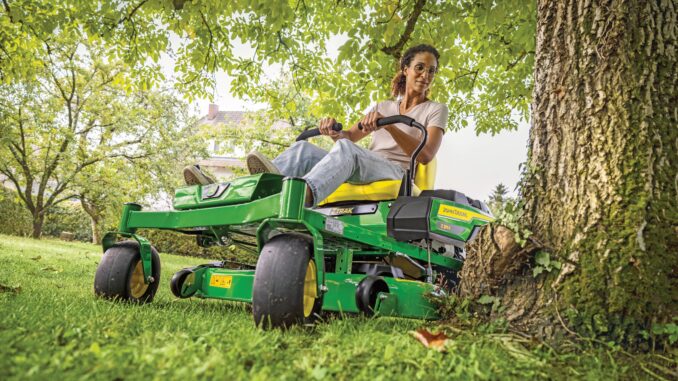
Deere’s official Z997R operator material shows this machine is a diesel ZTrak with service sections covering engine, transmission, mower deck, electrical, troubleshooting, storage, and scheduled intervals.
Introduction
The John Deere 997 is a heavy-duty commercial mid-mount ZTrak mower built for large properties, estates, contractors, and demanding mowing conditions rather than light suburban lawn use. Deere’s operator documentation for the Z997R places it in the diesel commercial Z900 family and includes dedicated procedures for engine service, hydraulic service, deck service, electrical checks, and troubleshooting.
And See
This guide is written for DIY-oriented owners in the USA and Canada who are comfortable with routine service and basic diagnosis but need a clear line between realistic home repairs and dealer-level work. It covers common John Deere 997 repair problems, symptom-based troubleshooting, maintenance intervals, parts information, and an expanded FAQ in a practical, plain-English format.
General overview of the John Deere 997
The John Deere 997 sits in Deere’s commercial diesel zero-turn lineup rather than the homeowner lawn tractor range. Deere’s operator material for the Z997R shows a machine built around a diesel engine, hydrostatic drive system, commercial mower deck options, ROPS, and integrated electrical/safety systems.
For owners, the key systems are:
-
Engine and fuel system: diesel engine, air filtration, fuel filter, water separator, cooling system, and drive belt.
-
Mower system: deck, spindles, blades, idlers, anti-scalp wheels, belt shields, and deck drive belt.
-
Drive system: hydrostatic transmission/hydraulic system, oil cooler, motion control linkages, and park brake.
-
Electrical and safety system: battery, fuses, relays, ignition switch, PTO switch, seat switch, neutral start circuit, and park brake switch.
Common service and repair parts owners regularly buy for the John Deere 997 include:
-
Engine oil filter M806419.
-
Primary air filter M131802.
-
Secondary air filter M131803.
-
Fuel filter MIU800645.
-
Hydraulic oil filter M146082.
-
Fan belt M809983 or RG60874, depending on configuration.
-
60-inch high-lift blade M128485.
-
72-inch high-lift blade TCU15882.
-
72-inch deck belt TCU16036 or TCU19900, depending on deck setup.
-
60-inch side-discharge deck belt DMU210282 or DMU210479, depending on deck setup.
-
Relay AM123716.
-
Ignition switch TCA15075.
-
Battery TY21747.
John Deere 997 troubleshooting approach
The best way to diagnose a John Deere 997 is to start with the symptom the owner can actually observe, then work inward toward the likely cause. Deere’s operator manual separates troubleshooting into engine, electrical system, machine, brakes, steering, mower deck, and common diagnostic trouble codes, which supports a symptom-first method.
The main symptom groups for this machine are:
-
Won’t start or cranks poorly.
-
Starts but runs rough, smokes, or loses power.
-
PTO or mower deck will not engage properly.
-
Poor cut quality, streaking, scalping, or uneven mowing.
-
Vibration, rattling, or abnormal deck noise.
-
Hydraulic drive weakness, tracking problems, or steering response issues.
-
Overheating, debris buildup, or fluid leaks.
-
Electrical faults, blown fuses, switch problems, or safety interlock issues.
Emergency and immediate John Deere 997 repair needs
Some John Deere 997 problems should be addressed immediately because they create a safety risk or can damage expensive components very quickly. Deere specifically highlights fire prevention, rotating blade hazards, rotating belt hazards, high-pressure fluid risk, safety-system testing, and daily clean-out areas in the operator literature.
4.1 John Deere 997 starting issues
A no-start problem matters because repeated cranking can drain the battery, overheat wiring, and hide a safety-switch or fuel issue that will keep returning. On this mower, starting faults often involve the battery, relay, ignition switch, seat/brake/neutral interlocks, fuel delivery, or air in the diesel side rather than a simple spark problem found on gasoline models.
Common causes:
-
Weak or sulfated battery.
-
Dirty battery terminals or poor ground.
-
Faulty relay AM123716.
-
Worn ignition switch TCA15075.
-
Park brake, PTO, neutral, or seat switch not reading correctly.
-
Restricted fuel filter MIU800645.
-
Air leak in fuel system or water in separator bowl.
Basic owner checks:
-
Confirm the PTO is off, park brake is fully applied, and motion levers are in the proper start position.
-
Check battery voltage, cable tightness, and visible corrosion at both ends.
-
Inspect the main relay/fuse area and listen for a relay click during key-on or crank.
-
Check the fuel shutoff valve position and inspect the fuel filter and water separator condition.
-
If the machine still will not crank or repeatedly blows fuses, stop and move to deeper electrical diagnosis.
4.2 John Deere 997 cut-quality problems
Poor cut quality shows up as streaks, ragged tips, uneven height, scalping, or clumps left behind, and it usually points to blades, deck setup, belt drive, or buildup under the deck. Deere includes deck leveling, anti-scalp wheel adjustment, blade inspection, blade sharpening, and belt service as normal owner-service items because these are common causes of mowing complaints.
Common causes:
-
Dull, bent, or unbalanced blades.
-
Wrong blade type for the deck and conditions.
-
Deck out of level.
-
Anti-scalp wheels set incorrectly.
-
Worn or slipping deck belt.
-
Grass packed under deck shell or around spindle areas.
-
Ground speed too high for conditions.
Basic owner checks:
-
Park safely, remove key, and inspect the underside of the deck for packed grass and damaged blades.
-
Check blade condition and confirm all blades match the installed deck type.
-
Level the deck and verify anti-scalp wheel adjustment.
-
Inspect the deck belt, idlers, and tension condition under the belt shields.
-
Test again at a slower mowing speed in dry grass before assuming a major failure.
4.3 John Deere 997 vibration and noise
New vibration on a John Deere 997 should never be ignored because a bad blade, spindle, idler, or pulley can quickly damage the deck, PTO driveline, or mounting hardware. Deere’s service sections specifically cover blade balance, spindle lubrication points, idler pivots, and deck belt components because these are common vibration sources.
Common causes:
-
Bent blade.
-
Blade installed loose or on the wrong side.
-
Unbalanced blade after sharpening.
-
Worn spindle assembly TCA51058.
-
Failing idler pulley or seized pulley bearing.
-
Damaged deck belt.
-
Debris wrapped around spindle shafts or pulleys.
Basic owner checks:
-
Stop mowing immediately if vibration appears suddenly.
-
Inspect each blade for bends, cracks, looseness, and balance issues.
-
Spin idlers and pulleys by hand with the machine safely disabled and listen for roughness.
-
Check belt condition and look for glazing, frayed edges, or thrown cords.
-
If vibration remains after blade and belt inspection, suspect spindle or shaft problems.
4.4 Overheating and leaks on the John Deere 997
Overheating on the John Deere 997 can become expensive fast because diesel commercial mowers rely on clean cooling passages, proper coolant level, and clean hydraulic oil cooler surfaces. Deere’s service schedule includes cleaning engine cooling fins and the hydraulic oil cooler, plus checking coolant and hydraulic oil levels.
Common causes:
-
Debris packed into radiator, screen, or cooling fins.
-
Dirty hydraulic oil cooler.
-
Low coolant level.
-
Worn or damaged fan belt.
-
Engine oil, coolant, fuel, or hydraulic leak.
-
Heavy grass buildup causing heat retention and airflow loss.
Basic owner checks:
-
Clean all screens, fins, and cooler faces with the engine off and cool.
-
Check coolant level and inspect for visible seepage around hoses and fittings.
-
Inspect the fan belt for wear or slack.
-
Check hydraulic oil level and look for wet spots around hoses, filters, and transaxle areas.
-
Do not keep mowing a hot-running machine, especially if warning indicators or fluid smells are present.
4.5 John Deere 997 transmission and drive problems
Drive complaints usually show up as weak hill performance, one side pulling harder, poor tracking, jerky response, or a machine that will not move correctly after service. Deere provides service procedures for hydraulic oil level, hydraulic oil and filter changes, hydraulic oil cooler cleaning, and motion-control linkage adjustment, which are the first areas to check.
Common causes:
-
Low hydraulic oil.
-
Restricted hydraulic oil filter M146082.
-
Dirty hydraulic oil cooler.
-
Linkage out of adjustment.
-
Park brake drag.
-
Hydro wear or internal transmission issue.
-
Air introduced during improper service.
Basic owner checks:
-
Confirm the bypass/freewheel setting is not left in the wrong position after moving the machine by hand.
-
Check hydraulic oil level and filter condition.
-
Clean the oil cooler thoroughly.
-
Inspect motion-control linkage adjustment and lever alignment.
-
If one side remains weak or noisy after fluid-level checks, dealer hydro diagnosis is usually the safer next step.
4.6 Electrical problems on the John Deere 997
Electrical issues often appear as intermittent no-starts, dead PTO, warning messages, blown fuses, or safety systems that fail testing. Deere includes battery care, fuse and relay replacement, light electrical service, and safety-system testing in the operator manual, but deeper diagnostic fault tracing can move beyond simple owner work.
Common causes:
-
Weak battery TY21747.
-
Corroded terminals or poor grounds.
-
Failed relay AM123716.
-
Faulty ignition switch TCA15075.
-
Blown fuse.
-
Bad seat, PTO, brake, or neutral switch.
-
Harness damage from rubbing, heat, or corrosion.
Basic owner checks:
-
Inspect battery and grounds first because low voltage creates misleading symptoms.
-
Replace obviously failed fuses with the correct rating only.
-
Swap or test relays where appropriate if the circuit design allows it.
-
Run Deere’s basic safety-switch tests in the operator manual.
-
If a problem is intermittent and tied to the control module or diagnostic codes, dealer-level testing becomes more realistic.
DIY or dealer? John Deere 997 repair decision guide
The normal line on a John Deere 997 is simple: routine service, deck work, blade work, filters, belts, battery service, and basic linkage adjustment are reasonable DIY jobs, while internal hydro repairs, advanced diesel fuel-system work, module-related electrical faults, and major driveline issues are usually better left to a dealer or experienced commercial-equipment technician. Deere’s own operator documentation supports owner-level work on lubrication, filters, fluid checks, blades, deck belts, battery care, and several adjustments, while the more technical repairs sit outside routine operator tasks.
Good DIY jobs
-
Engine oil and filter changes.
-
Air filter and fuel filter replacement.
-
Cleaning cooling fins and hydraulic oil cooler.
-
Blade inspection, sharpening, balancing, and replacement.
-
Deck leveling and anti-scalp wheel adjustment.
-
Deck belt replacement on the correct deck version.
-
Battery cleaning and replacement.
Advanced DIY or dealer jobs
-
Hydraulic oil and transmission diagnosis if drive performance stays poor after routine service.
-
Internal spindle failure with shaft damage or housing wear.
-
Repeated PTO engagement faults tied to electrical controls or interlocks.
-
Fuel-system air leaks, injection-side issues, or persistent hard starting after filter service.
-
Wiring harness repair, control module faults, or recurring diagnostic trouble codes.
Skill level guide
-
Beginner: air filter, fuel filter, battery cleaning, deck cleanout, blade inspection.
-
Intermediate: engine oil service, deck belt replacement, blade replacement, deck leveling, relay/switch replacement.
-
Advanced: hydraulic service, linkage calibration, electrical diagnosis with a meter, spindle or pulley replacement, repeated no-start tracing.
Parts needed for John Deere 997 repairs: OEM vs aftermarket
Before ordering parts for a John Deere 997, gather the full model name, the Product Identification Number, the exact deck size and discharge type, and the engine model and serial details. Deere’s manuals begin with identification-number recording, and parts listings for the 997 clearly vary by deck size and configuration, especially for belts, blades, pulleys, and idlers.
OEM parts are usually the safest choice for deck belts, safety switches, relays, and fit-sensitive drive components because those parts must match routing, tension, and electrical specs closely. Aftermarket parts can be acceptable for some filters, blades, and batteries when the cross-reference is exact and the seller clearly states compatibility with the exact John Deere 997 deck and serial configuration.
John Deere 997 manuals, diagrams, and service information
For official information, start with Deere’s operator support pages and operator manual, then use Deere’s parts catalog for exploded diagrams and exact part confirmation. Deere’s operator manual for the Z997R includes service intervals, lubrication points, troubleshooting sections, deck procedures, hydraulic service, and electrical checks, while the Deere parts system is intended for diagram-based part lookup.
Useful sources:
-
John Deere Owner Support for manual lookup, support resources, and machine-specific owner information.
-
John Deere Z997R Owner Support for model-specific owner support entry points.
-
John Deere operator manual for service intervals, safety tests, lubrication, deck work, hydraulic service, and troubleshooting.
-
John Deere Parts Catalog for exploded diagrams and exact OEM number confirmation by model/serial.
-
Green Farm Parts 997 maintenance guide for a convenient aftermarket-oriented service-parts overview, though owners should still verify against Deere diagrams and serial data.
How to locate John Deere 997 model, serial, and engine numbers
These numbers matter because John Deere 997 parts can vary by deck version, production changes, and engine configuration, and ordering by “997 mower” alone is often not specific enough. Deere’s manual begins with product identification, and Deere-focused serial-location guidance says commercial Z900-series serial plates are typically on the engine plate on the right side, visible behind the right tire, while engine numbers are located directly on the engine data plate.
Steps:
-
Stand on the right side of the mower and inspect the engine-plate/frame area behind the right rear tire for the product identification tag used on commercial Z900-series machines.
-
Record the full model name exactly as shown, including any deck designation or suffix.
-
Record the machine serial or PIN from the identification tag. Deere documentation specifically includes a record-identification section for this purpose.
-
Find the engine serial/data plate on the engine block or near the valve cover area, where Deere engine-identification guidance says it is commonly mounted.
-
Record the deck size and discharge type separately because belts, blades, idlers, and pulleys vary across 60-inch, 72-inch, side-discharge, rear-discharge, and mulch configurations.
Buying John Deere 997 parts online and in stores
The best strategy is to confirm the OEM part number first, then shop by that number rather than by broad model description. That matters on the John Deere 997 because Green Farm Parts shows multiple deck belts, blade types, pulleys, and fan belt options under the same 997 umbrella.
Use this approach:
-
Online: confirm the OEM number in Deere diagrams first, then compare price and stock across Deere and reputable Deere-focused sellers.
-
Dealer counter: best for serial-number-sensitive parts, electrical items, deck-configuration questions, or cases where multiple part numbers appear possible.
-
Retail stores: acceptable for common consumables like battery, blades, and filters only if the package clearly cross-references the exact machine and deck.
Useful places to check:
-
John Deere Parts Catalog for diagrams and OEM confirmation.
-
John Deere Owner Support for model support and manual access.
-
Green Farm Parts John Deere 997 page for common service parts and quick-reference items.
Step-by-step fitting guide for common John Deere 997 parts
These are high-impact DIY jobs that fix many real-world owner complaints on the John Deere 997. Deere’s operator material directly supports routine service for filters, blades, deck belt work, and related inspections.
Replace the John Deere 997 air filters
A restricted air filter can cause power loss, black smoke, harder starting, and higher fuel use on a diesel mower. Deere includes air-cleaner service and restriction-indicator checks in the engine-service section.
-
Park safely, remove the key, and let the engine cool fully.
-
Open the air cleaner housing and remove the primary outer filter first.
-
Inspect the secondary inner filter and replace it if dirty, damaged, or due by schedule.
-
Wipe dust from the housing without forcing debris into the intake path.
-
Install the correct primary and secondary elements, then seal the housing properly before restarting.
Change the John Deere 997 fuel filter
Fuel starvation and hard starting often trace back to a restricted diesel fuel filter or water contamination. Deere includes fuel-filter replacement and water-separator inspection in normal service procedures.
-
Shut the machine down safely and close the fuel shutoff valve if equipped and accessible.
-
Place a container under the filter area and remove the old fuel filter MIU800645.
-
Inspect the old filter for contamination and check the water separator bowl at the same time.
-
Install the new filter correctly, following flow direction and seal seating.
-
Prime or bleed as required by the machine’s service procedure and check carefully for leaks before mowing.
Replace John Deere 997 mower blades
Blade replacement fixes many cut-quality complaints and often removes vibration if the old blades are bent or badly worn. Deere covers blade removal, sharpening, balancing, and replacement in the mower-service section.
-
Raise and secure access safely according to the manual, then remove the key.
-
Inspect each blade for bends, cracks, thinning, and uneven wear before removal.
-
Remove the blades and compare the replacement set to the originals for length and type.
-
Install the correct blades with the cutting edges oriented properly and torque hardware to spec from the Deere manual.
-
Spin-check for clearance, then test mow a small area and recheck for vibration.
Replace the John Deere 997 deck belt
A worn deck belt can cause weak blade speed, poor cut quality, squealing, or complete deck stoppage. Deere includes deck-belt procedures and shield removal for multiple 60-inch and 72-inch deck types.
-
Confirm the exact deck version before ordering because 60-inch and 72-inch belts differ and some decks have alternate part numbers.
-
Remove the belt shields and photograph belt routing before disassembly.
-
Release tension according to the correct deck procedure and remove the old belt.
-
Inspect idlers and pulleys while access is open, replacing rough or loose components now rather than later.
-
Route the new belt exactly, restore tension, reinstall shields, and run the PTO briefly while watching for tracking problems.
Maintenance to prevent John Deere 997 problems recurring
Regular maintenance prevents most expensive John Deere 997 failures because this machine depends on clean airflow, clean hydraulic cooling, correct blade speed, and accurate safety/electrical operation. Deere’s service structure emphasizes daily checks, scheduled lubrication, cooling-system care, hydraulic maintenance, mower service, and storage prep for exactly that reason.
Focus areas:
-
Starting reliability: keep the battery clean, fuel fresh and uncontaminated, and filters on schedule.
-
Cut quality: sharpen or replace blades on time, keep the deck clean, and maintain proper deck level.
-
Fire and overheating prevention: clean grass buildup often and keep engine cooling fins and hydraulic cooler surfaces clear.
-
Drive performance: check hydraulic oil level, maintain the filter, and do not ignore weak tracking or hot-running hydraulics.
-
Electrical reliability: test safety systems, protect terminals from corrosion, and replace relays or switches before intermittent faults strand the machine.
John Deere 997 maintenance schedule and year-round checklist
Deere’s operator manual for the Z997R organizes maintenance into before each use, after each use, break-in after 5 hours, break-in after 50 hours, every 50 hours or yearly, every 250 hours, every 500 hours or yearly, every 1500 hours, and as-needed service. Green Farm Parts also lists engine oil filter M806419 and engine oil as recurring service items, with notes that harsh heat, dust, or terrain require more frequent attention.
Daily / before each use
-
Check engine oil level.
-
Check coolant level.
-
Check hydraulic oil level.
-
Test key safety systems as directed.
-
Inspect blades, tires, and machine for leaks or loose hardware.
After each use
-
Clean grass and debris from the machine and deck.
-
Inspect clean-out areas to reduce fire risk.
-
Check for belt, blade, and spindle damage after heavy mowing.
Break-in after first 5 hours
-
Follow Deere’s first 5-hour break-in service items in the operator manual for the machine. Deere provides a dedicated break-in section at this interval.
Break-in after first 50 hours
-
Perform the Deere-specified first 50-hour break-in service tasks. The operator manual gives this interval its own service section.
Every 50 hours or yearly
-
Perform Deere’s listed 50-hour/yearly maintenance tasks. The official schedule assigns this as a recurring service interval.
-
Lubricate the grease points identified in the lubrication section, such as caster spindles, deck spindles, idler pivot, push arms, PTO shaft, and related pivot points where applicable.
Every 250 hours
-
Perform Deere’s 250-hour interval service items from the operator manual.
Every 500 hours or yearly
-
Perform the official 500-hour/yearly service items from Deere’s schedule.
Every 1500 hours
-
Complete the long-interval items listed by Deere for 1500-hour service.
Seasonal checklist
-
Spring or start of season: inspect battery, install sharp blades, verify deck level, replace filters due by interval, and clean all cooling surfaces.
-
Mid-season: inspect deck belt, idlers, hydraulic cooler, and tire condition, then correct cut-quality drift before it turns into spindle or belt damage.
-
End of season or storage: clean thoroughly, follow Deere fuel and storage guidance, and correct leaks or electrical issues before parking it long term.
Repair, upgrade, or replace the John Deere 997?
In general, repair a John Deere 997 when the machine is structurally sound and the problem is isolated to normal wear parts like blades, belts, filters, switches, battery, or a deck spindle. Consider upgrading when the machine is reliable but your mowing conditions now call for a different deck setup, blade style, or newer support features, and replace only when hydro, engine, frame, or repeated electrical failures stack up beyond the machine’s value and downtime tolerance.
Repair if…
-
The issue is a wear item such as belt, blade, filter, relay, switch, or battery.
-
The engine and hydraulics are still fundamentally strong.
-
Parts are readily available and the machine still fits your mowing workload.
Upgrade if…
-
You need a different blade/deck setup for better discharge or finish quality.
-
Your current machine still runs well but productivity needs have changed.
-
You want newer operator-support resources or updated commercial features.
Replace if…
-
The machine has major engine, hydro, and electrical issues at the same time.
-
Repair costs are approaching the value of a sound replacement mower.
-
Parts chasing and downtime are becoming more expensive than ownership savings.
Expanded John Deere 997 troubleshooting FAQ
1. Why will my John Deere 997 not start?
On the John Deere 997, a no-start often comes down to battery condition, a relay or ignition-switch issue, the PTO being left on, or a safety interlock not reading correctly. Deere’s operator manual specifically includes PTO, park brake, neutral start, and seat switch testing, which makes those systems the first place to look after basic battery checks.
2. Why does my John Deere 997 crank slowly?
Slow cranking usually points to a weak battery, dirty terminals, poor ground, or heavy cable resistance. Because Deere includes battery inspection and terminal cleaning in routine electrical service, owners should rule those out before suspecting the starter itself.
3. Why does my John Deere 997 start and then stall?
If the John Deere 997 starts and dies shortly after, the likely causes are fuel restriction, air in the diesel fuel system, water contamination, or an electrical shutdown condition. The official service sections for fuel filter replacement and water separator checks make those basic fuel-side inspections a sensible first step.
4. Why is my John Deere 997 hard to start when cold?
Cold hard starting is commonly tied to weak cranking speed, restricted fuel flow, or air/fuel delivery issues rather than anything deck-related. On a diesel machine like this, keeping the battery strong and fuel system serviced matters more than on a small gasoline mower.
5. Why is my John Deere 997 losing power in tall grass?
Power loss in heavy grass often means dull blades, an overworked deck from buildup, a slipping belt, or restricted airflow through the engine side. Deere’s service guidance around deck cleaning, belt service, and air-filter maintenance lines up directly with those causes.
6. Why does my John Deere 997 blow black smoke?
Black smoke generally means the engine is getting more fuel than clean air, often because of a dirty air filter or airflow restriction. Since Deere includes air cleaner service and cooling-fin cleaning in routine maintenance, that is the first owner-level check before looking deeper.
7. Why is my John Deere 997 overheating?
Overheating usually comes from packed cooling fins, dirty screens, a dirty hydraulic oil cooler, low coolant, or a belt-related airflow problem. Deere specifically calls for cleaning engine cooling fins and the hydraulic oil cooler and checking coolant level, so these are maintenance-critical items on this mower.
8. Why does my John Deere 997 leak hydraulic oil?
Hydraulic leaks often come from filter seals, hose fittings, aging hoses, or damage around the hydro system. Because low hydraulic oil can quickly affect drive performance, owners should stop using the machine until the source is identified and the level is corrected.
9. Why won’t the PTO engage on my John Deere 997?
A non-engaging PTO can be caused by a switch issue, relay problem, safety-interlock fault, low system condition flagged by the machine, or a mechanical issue in the deck drive path. Deere includes PTO switch testing and safety-system testing in the operator manual, which makes control-circuit checks the logical starting point.
10. Why does my John Deere 997 deck stop turning under load?
If the deck turns briefly and then stops in grass, suspect belt slip, seized spindle drag, idler trouble, or a blade load that is too high from buildup. Deere’s mower-service section covers drive belt replacement, shield removal, blade condition, and spindle-related service, all of which fit this symptom.
11. Why is my John Deere 997 leaving uncut strips?
Uncut strips usually come from dull blades, low blade speed, overlapping errors, or a deck that is not level. Deere includes deck leveling and blade service in normal operator maintenance because these are among the most common cut complaints.
12. Why does the John Deere 997 cut unevenly?
An uneven cut often points to deck pitch/level issues, tire-pressure differences, worn anti-scalp wheels, or bent blades. Before replacing parts, confirm the deck is level and the tire pressures are correct because those setup issues are cheaper and more common than major deck failures.
13. Why is my John Deere 997 scalping the lawn?
Scalping usually happens when anti-scalp wheels are set wrong, the deck is too low for the terrain, or ground speed is too high over uneven surfaces. Deere provides anti-scalp wheel and deck-height adjustment procedures because this is fundamentally a setup problem in many cases.
14. Why does my John Deere 997 leave ragged grass tips?
Ragged tips usually mean the blades are dull, nicked, or the blade speed is lower than it should be because of belt slip or deck drag. Deere’s blade sharpening and balancing procedures exist to correct exactly this problem before it turns into an ugly, brown-tipped finish.
15. Why does my John Deere 997 vibrate when the blades engage?
If vibration starts when the PTO is engaged, the first suspects are bent blades, unbalanced blades, spindle wear, pulley damage, or a failing idler. Deere’s mower-service section specifically covers blade replacement and balancing, which makes blade inspection the fastest first check.
16. Why is there a knocking noise from my John Deere 997 deck?
A knocking or clunking deck often means a loose blade, worn spindle, damaged pulley, or debris striking rotating parts. Stop mowing immediately because continued use can enlarge spindle damage or throw hardware.
17. Why does my John Deere 997 squeal when I engage the mower?
A squeal usually points to a slipping deck belt, weak tension, contaminated belt surfaces, or a pulley beginning to seize. Because Deere provides model-specific deck-belt procedures for different 60-inch and 72-inch decks, confirm the exact belt and routing before replacing anything.
18. Why does my John Deere 997 keep throwing deck belts?
Repeated belt loss often means the wrong belt, bad routing, weak tension, pulley misalignment, or bearing drag in an idler or spindle. On this model, multiple belt part numbers exist for different decks, so ordering by exact configuration matters a lot.
19. Why do my John Deere 997 blades loosen or wear quickly?
Blade problems happen faster when blade bolts are not torqued correctly, the machine hits debris, or worn spindle components let the blade run out of line. Deere’s emphasis on blade inspection, balancing, and proper service procedure is there because blade hardware is safety-critical.
20. Why does my John Deere 997 pull to one side?
If the machine pulls or tracks unevenly, check tire condition, motion-control lever alignment, linkage adjustment, and hydraulic condition before assuming hydro failure. Deere includes motion-control linkage checks and lever alignment procedures, so there is real owner-level setup work to do first.
21. Why is my John Deere 997 weak on hills?
Weak hill performance usually means hydraulic oil issues, cooler clogging, hydro wear, or general system heat buildup. A clean hydraulic cooler and correct oil level are basic checks because overheated hydraulics lose performance quickly.
22. Why won’t my John Deere 997 move after I pushed it by hand?
This can happen if the machine’s hand-move or bypass setting was not returned to the operating position. Deere includes a “moving machine by hand” procedure, so always recheck that setup before chasing a transmission fault.
23. Why is my John Deere 997 steering jerky or inconsistent?
Jerky response can come from linkage adjustment, hydro response differences side to side, or a need for hydraulic-system inspection. The operator manual includes motion-control linkage adjustment and lever-alignment procedures because some steering complaints are mechanical setup issues, not failed hydros.
24. Why does my John Deere 997 battery keep going dead?
A repeatedly dead battery can mean age, poor charging, corroded terminals, key-off draw, or a switch/relay issue. Start with the simple Deere-approved battery cleaning and inspection steps before looking for deeper electrical faults.
25. Why does my John Deere 997 keep blowing fuses?
Blown fuses usually indicate a short, rubbed wire, failed component, or moisture/corrosion issue in the circuit. Replacing fuses without finding the cause is only a temporary step, and repeated failures usually justify deeper electrical tracing.
26. Why won’t my John Deere 997 crank unless I move the levers around?
That symptom strongly suggests a neutral-start, park brake, or seat/PTO interlock issue rather than a fuel problem. Deere includes direct procedures for testing these safety systems, so owners should follow those checks before replacing expensive parts.
27. Why does my John Deere 997 shut off when I get off the seat?
That can be normal if the PTO is engaged or the interlock logic is doing what it is supposed to do, but it can also indicate a seat-switch fault if shutdown behavior becomes inconsistent. Deere includes seat-switch testing in the operator manual for exactly this reason.
28. Why is my John Deere 997 using more fuel than usual?
Higher fuel use often follows dirty air filters, poor cut conditions requiring lower blade efficiency, overgrown grass, or engine cooling issues that increase load. Routine air-filter service and keeping the deck clean help control fuel consumption on diesel commercial mowers.
29. Why does my John Deere 997 have poor discharge or clumping?
Poor discharge usually comes from mowing wet grass, using the wrong blade style, deck buildup, or moving too fast for the conditions. The 997 has different blade options listed for different cutting needs, so matching blade type to conditions can make a visible difference.
30. Why does my John Deere 997 keep burning through spindle parts?
Frequent spindle failure usually means chronic impact load, debris wrapping, poor lubrication/inspection habits, or unresolved vibration from blades and belts. If the same spindle area keeps failing, inspect the pulley, shaft alignment, and blade condition together rather than replacing the spindle alone.
31. How often should I service my John Deere 997?
Deere organizes service by before-each-use, after-each-use, first 5 hours, first 50 hours, every 50 hours or yearly, every 250 hours, every 500 hours or yearly, and every 1500 hours. That means owners should not rely on a single annual service only, especially if the machine works in dust, heat, or heavy grass.
32. What parts should I keep on hand for a John Deere 997?
The smartest spares are the engine oil filter, primary and secondary air filters, fuel filter, at least one deck belt for your exact deck, a blade set, a relay, and basic service supplies. Those parts line up with the most common downtime causes shown in Deere service sections and common parts lists for the 997.
33. Is the John Deere 997 realistic for DIY maintenance?
Yes, for routine work it is. Deere’s own operator material supports owner-level service on filters, blades, deck belts, lubrication, battery care, cooling cleanup, and several adjustments, but deeper hydro, diesel, and control-system faults are where DIY often stops being efficient.
34. Should I buy OEM or aftermarket John Deere 997 parts?
For belts, safety switches, relays, and fit-sensitive deck-drive parts, OEM is usually the safer choice because routing, tension, and function have to be right. Aftermarket is more acceptable for some filters, blades, and batteries if the cross-reference is exact and tied to your exact 997 deck configuration.
35. Where can I find the right John Deere 997 manual and parts diagrams?
Use Deere’s owner-support pages for the operator manual and machine-specific support, then use Deere’s parts catalog for exploded diagrams and current OEM numbers. That combination is more reliable than guessing from marketplace listings because the 997 has several deck and parts variations.