
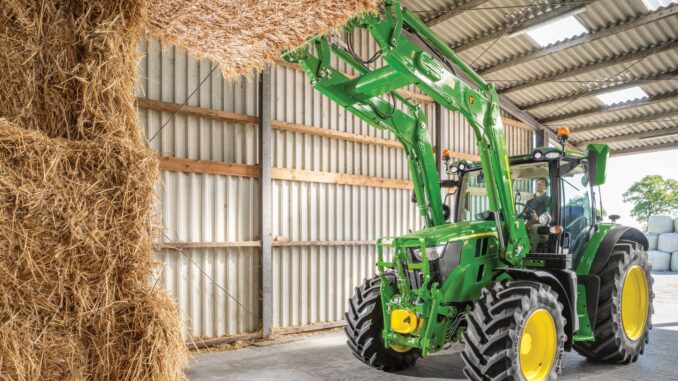
John Deere 55 Utility Series Tractor Models and Maintenance Guide
The John Deere 55 Utility Series is a legacy family of mid-sized agricultural utility tractors built for serious property, livestock, hay, loader, mowing, and field work. Although these tractors pre-date today’s 5E, 5M, and 5R utility lines, they remain widely used on farms, acreages, ranches, and rural properties throughout the United States and Canada.
This page is a directory for the 55 Series utility-tractor range, including the smaller four-cylinder utility models and the larger six-cylinder models commonly associated with the late-1980s and early-1990s Deere lineup. Use it to locate model-specific maintenance guides, parts and service information, common-problem coverage, and troubleshooting articles for individual machines.
For broader information on newer and older Deere utility equipment, start with the General John Deere Compact Tractor Guide and the wider John Deere utility tractor indexes. The 55 Series is not a compact tractor family in the modern 1–4 Series sense; it is a conventional utility-tractor range, generally spanning roughly 45 to 100 engine horsepower in the utility models covered here. Deere’s service literature groups these tractors into four-cylinder and six-cylinder 50/55 Series families.
About the John Deere 55 Utility Series
John Deere introduced the 55 Series utility tractors as successors and updates to earlier 50 Series machines. The family included practical four-cylinder models suited to mixed livestock farms, acreage work, loader operations, mowing, light hay work, and everyday implement use, as well as heavier six-cylinder models capable of handling bigger tillage, hay, and transport workloads.
The broad utility group runs from approximately 45 hp with the 2155 through approximately 96 hp with the 3155. The most common four-cylinder 55 Series models are the 2155, 2255, 2355, 2355N, 2555, 2755, and 2855N. Deere also offered larger six-cylinder utility tractors including the 2955, 3055, 3155, and 3255. The preceding 50 Series models—2150, 2350, 2550, 2750, 2950, and 3150—are closely related mechanically and are included here because Deere groups 50 and 55 Series machines together in much of its parts and service material.deere+1
These are conventional agricultural utility tractors rather than lightweight sub-compact or compact tractors. They use a heavier chassis, larger agricultural tires, Category II-style working capability on many models, a rear three-point hitch, hydraulic remote options, independent or live PTO arrangements depending on specification, and a structure intended for regular farm use.
Most North American examples use two-wheel drive or mechanical front-wheel drive/front-wheel-assist configurations. Open operator stations were common, while selected configurations and markets also offered enclosed cabs or aftermarket cab solutions. Transmission specifications vary by individual tractor, production era, and market. Buyers will encounter synchronized gearboxes, collar-shift transmissions, Hi-Lo arrangements, reverser-equipped machines, and other drivetrain variations.
Unlike later electronically managed Deere utility tractors, these machines are largely mechanical. That is valuable for owners who carry out their own servicing: diagnosis commonly starts with fuel flow, electrical connections, linkage adjustment, filters, fluid condition, clutch condition, hydraulic pressure, and mechanical wear rather than software or electronic fault codes.
Typical 55 Series work includes:
-
Front-loader lifting, manure handling, pallet work, and feeding.
-
Rotary mowing, pasture topping, and roadside or estate maintenance.
-
Hay raking, baling support, wagon work, and small-square-bale handling.
-
Rear-blade grading, driveway maintenance, and snow clearing.
-
Light to moderate tillage, depending on tractor size, ballast, soil, and implement width.
-
PTO-driven work with mowers, augers, spreaders, generators, and other farm implements.
-
Trailer, feeder, and farmyard transport duties.
Modern Deere 5E, 5M, and 5R tractors occupy the current utility-tractor market from roughly 50 hp upward, with newer emissions systems, cabs, transmission choices, loader integration, and electronic features. Deere currently describes its 5-family utility range as covering approximately 50 to 130 hp, while the surviving 55 Series fleet represents an older, simpler, mechanically serviceable generation of utility tractors.deere+1
John Deere 55 Utility Series Models
The table below functions as an across-time index. It includes the closely related 50 Series predecessor models because Deere’s official service literature combines the 50 and 55 Series four-cylinder and six-cylinder utility tractor groups. Exact equipment levels, PTO options, wheel configurations, transmission arrangements, and regional availability can vary by serial number and original dealer specification.deere+1
And See:
John Deere’s 50/55 Series four-cylinder service publication identifies the 2150, 2350, 2550, 2750, 2155, 2255, 2355, 2355N, 2555, 2755, and 2855N. Its six-cylinder companion publication identifies the 2950, 3150, 2955, 3055, 3155, and 3255.deere+1
55 Utility Series Maintenance Guides
Routine Service and Checks
A well-maintained 55 Series tractor can remain productive for decades. Their age means that preventive servicing matters especially: a neglected filter, contaminated fuel supply, deteriorated hose, weak battery cable, or low hydraulic oil level can quickly become a larger repair.
Use the operator’s manual and serial-number-specific service information for exact capacities, lubricant specifications, intervals, and filter part numbers. Deere’s 50/55 Series publications provide grouped filter and service-interval references for both the four-cylinder and six-cylinder families.deere+1
Routine service should include:
-
Checking engine-oil level before work, especially on older tractors with unknown oil-consumption history.
-
Changing engine oil and filter at the interval specified for the exact model, duty cycle, and oil type.
-
Draining water from fuel-system components where equipped and replacing fuel filters on schedule.
-
Inspecting the air cleaner, intake hoses, pre-cleaner, and intake clamps; restricted intake systems reduce power and increase smoke.
-
Checking coolant level only when the engine is cool, then examining hoses, belts, radiator fins, clamps, and the radiator cap.
-
Monitoring hydraulic/transmission oil level, oil condition, suction screens where applicable, and hydraulic filters.
-
Greasing loader pivots, steering joints, front-axle components, clutch linkage, three-point-hitch pivots, and driveline joints according to the lubrication chart.
-
Checking tire pressures, wheel fasteners, ballast condition, and front-end wear before loader or road work.
Useful internal-link targets for this section include 55 Utility Series tractor service interval checklist, DIY maintenance for John Deere 55 Utility Series tractors, John Deere 55 Series filters and fluid specifications guide, 55 Series tractor lubrication-points checklist, and pre-season inspection for John Deere 55 utility tractors.
Hydraulics, Loader, and 3-Point Hitch
Hydraulic condition affects loader speed, steering response, remote-cylinder performance, and rear-hitch operation. A weak or noisy hydraulic system can result from low oil level, restricted filtration, air entering the suction side, a worn hydraulic pump, relief-valve problems, internal cylinder leakage, or worn selective-control-valve components.
Check the hydraulic oil with the tractor parked safely and the loader or hitch lowered where the manual directs. Look for external leaks at hoses, fittings, couplers, remote valves, loader cylinders, steering lines, and hitch components. Milky oil can suggest water contamination; unusually dark, burnt-smelling, or debris-filled oil merits further investigation.
Loader work is demanding on a tractor of this age. Inspect pivot pins, bushings, loader-frame fasteners, quick-attach components, cylinder rods, hose routing, and hose abrasion points. Grease every fitting that takes grease, particularly on machines used for manure, soil, snow, or silage work.
For rear-hitch maintenance, inspect lift-link threads, stabilizers, sway blocks or chains, draft-link wear, top-link brackets, lift-arm balls, pins, clips, and the hydraulic rockshaft area. A hitch that will not lift, drifts down, raises slowly, or will not hold an implement may need diagnosis beyond a simple fluid-level check.
Conceptual internal links include Hydraulic maintenance and leak diagnosis on 55 Utility Series tractors and Loader and 3-point hitch maintenance for John Deere 55 Utility Series tractors.
Transmission and Drivetrain
Transmission care begins with clean, correctly specified hydraulic/transmission fluid and a complete inspection of linkages, clutch adjustment, shifting hardware, axle seals, and driveline components. Do not assume a hard-shifting tractor requires internal transmission work: worn linkage, clutch drag, incorrect adjustment, low fluid, damaged shift components, or an operator technique issue can produce similar symptoms.
On two-wheel-drive tractors, inspect the front axle pivot, steering linkage, spindle wear, wheel bearings, and front-wheel condition. On front-wheel-drive or MFWD machines, inspect front-axle oil, driveshaft guards, U-joints, seals, engagement linkage, and equal tire sizing. Incorrect tire combinations can cause driveline wind-up and expensive front-axle damage.
Pay particular attention to clutch free play, brake adjustment, differential-lock function, and PTO engagement linkage. A clutch that does not fully release can make gear selection difficult and accelerate transmission wear. A clutch that slips under a heavy load can cause heat damage and loss of usable power.
Use Transmission and driveline maintenance across John Deere 55 Utility Series tractors as a central internal link target, supported by individual 2155, 2355, 2555, 2755, 2955, 3055, 3155, and 3255 model guides.
55 Utility Series Troubleshooting Guides
Starting, Engine, and Fuel Problems
Most no-start and poor-running issues on older Deere utility tractors should be diagnosed methodically. Begin with the simple causes before removing injection-system or engine components.
For a no-crank condition, test battery state of charge, battery-cable condition, grounds, starter connections, safety switches, ignition-switch operation, and starter-solenoid function. Old cables can look acceptable externally while developing high resistance internally, particularly at the ground cable or cable ends.
For a cranks-but-will-not-start condition, check that fuel is present, the fuel shutoff is open, the sediment bowl or water separator is not restricted, filters are clean, fuel lines are intact, and the system has been bled correctly after filter replacement or fuel depletion. Air leaks on the suction side can cause intermittent stalling or long cranking without an obvious external fuel leak.
Power loss, black smoke, white smoke, overheating, rough running, or weak performance under load can involve restricted air intake, fuel restriction, injector or injection-pump faults, cooling-system problems, incorrect timing, compression loss, or excessive implement load. Diagnose before ordering expensive fuel-system components.
Suggested internal guides include 55 Utility Series compact tractor starting problems – diagnostics and fixes, Engine and fuel system issues across John Deere 55 Utility Series models, and individual-model content such as 2555 no-start troubleshooting guide or 3155 loss-of-power diagnosis.
Hydraulic and Loader Performance Issues
A loader that lifts slowly, chatters, lacks breakout power, or will not hold its position can have problems in the fluid, filter, suction circuit, pump, control valve, cylinders, couplers, or relief system. The rear hitch and remote hydraulics help narrow the diagnosis.
For example, if the loader, steering, remote valve, and three-point hitch are all slow, look first at fluid level, filter restriction, suction leakage, pump performance, or system pressure. If only one loader function is weak, inspect the relevant spool valve, quick coupler, hose, cylinder, and mechanical linkage.
Jerky motion can result from air in the system, a damaged cylinder seal, contaminated oil, restricted flow, sticky control-valve spools, or a bent loader-cylinder rod. A rear hitch that rises normally but drops after shutdown may point toward internal leakage or a hitch-control problem rather than a main-pump failure.
Core link targets include Hydraulic performance problems on John Deere 55 Utility Series tractors, Loader won’t lift or is slow on 55 Utility Series models, and John Deere 55 Series three-point hitch troubleshooting guide.
Transmission, Drive, and PTO Problems
A tractor that will not move, loses drive when warm, slips under load, struggles on hills, makes driveline noise, or resists gear selection needs careful diagnosis. Check hydraulic/transmission oil level and condition, clutch free play, shift-linkage travel, brake drag, differential-lock operation, tire size, and axle condition before assuming that the transmission requires major repair.
On MFWD-equipped examples, confirm whether front-wheel drive is engaging correctly and whether the front axle, driveshaft, couplers, linkage, or engagement mechanism is damaged. Avoid operating on hard surfaces with MFWD engaged unless conditions and the operator’s manual support it, as driveline wind-up can create difficult steering, tire scrub, and component stress.
PTO problems can include failure to engage, grinding during engagement, a PTO that stops under load, incorrect PTO speed selection, clutch drag, linkage misadjustment, worn clutch components, or implement-side faults. Always stop the tractor, disengage the PTO, lower implements, and remove the key before investigating a PTO shaft, guard, driveline, or mower blockage.
Use internal links such as Drive and transmission problems on John Deere 55 Utility Series tractors, PTO won’t engage or drops out across John Deere 55 Utility Series models, and model-specific pages such as 2755 PTO troubleshooting guide or 3055 transmission problems and fixes overview.
Attachments and Implements
The John Deere 55 Utility Series tractors can work with a wide variety of agricultural and property-maintenance implements. Suitable attachment size depends on engine power, PTO horsepower, tractor weight, wheelbase, tires, ballast, hydraulic capacity, lift capacity, terrain, soil, and the particular tractor’s configuration.
Common equipment includes:
-
Front-end loaders with general-purpose, manure, material, or pallet-fork buckets.
-
Rear rotary cutters for pasture, field-edge, and rough-grass management.
-
Finish mowers and grooming mowers for estate, paddock, and turf work.
-
Rear blades for driveway shaping, snow movement, ditch maintenance, and light grading.
-
Box blades, landscape rakes, cultivators, and light-to-moderate ground-engaging implements.
-
Post-hole diggers, depending on hydraulic or PTO arrangement and soil conditions.
-
Hay rakes, tedders, small balers, wagons, and feeder equipment.
-
PTO-driven spreaders, augers, pumps, generators, and wood-processing equipment.
-
Snow blades, rear blowers, or other winter attachments suitable for tractor size and PTO specification.
Avoid matching an implement based only on claimed horsepower. A 45 hp 2155 and a 96 hp 3155 may both operate a rear blade, for example, but they differ greatly in operating weight, traction, hydraulic response, implement width, ballast requirement, and safe working capacity.
Before fitting an attachment, verify:
-
Three-point hitch category, pin size, and available lift capacity.
-
PTO type, shaft size, speed requirement, and horsepower demand.
-
Loader compatibility, mounting frame, hydraulic connection type, and counterweight requirement.
-
Number and type of hydraulic remotes needed for cylinders or hydraulic motors.
-
Tractor tire width, track setting, clearance, and stability on sloped ground.
-
Ballast requirements, including rear-mounted implements, wheel weights, liquid ballast, or approved rear counterweights.
-
Implement driveline length and correct PTO-shaft guarding.