
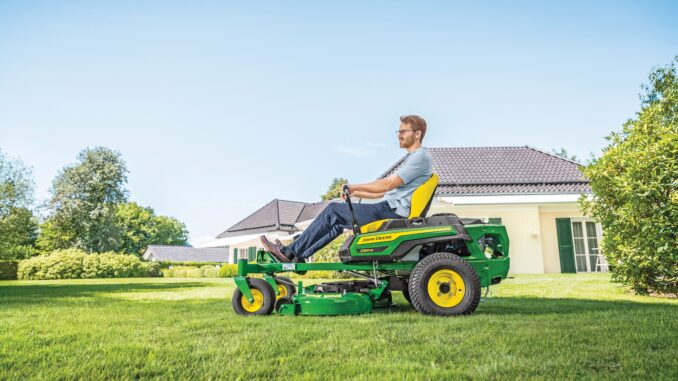
If you own a John Deere lawn tractor or riding mower, your serial number or Product Identification Number (PIN) is the key to choosing the right parts and understanding your machine’s age and configuration.
For Repair Guide, Serial Number Lookup Guide and Winter Maintenance Guide on Specific Models, please click through on the Series Link below:
| 100 Series | |||
| John Deere 100 | John Deere 200 | John Deere 300 | John Deere 400 |
| John Deere 700 | |||
| X300 Series | |||
| John Deere X300 | John Deere X500 | John Deere X700 | |
| F Series | |||
| John Deere F500 | John Deere F900 | ||
| L,GX,RX,LX,S Series | |||
| John Deere L100 | John Deere GX | John Deere RX | John Deere LX |
| John Deere S200 |
This guide explains where to find the serial plate on John Deere lawn tractors and riders, how to read the number, and how to use it when buying parts or checking the model year.
1. What counts as the serial number on a John Deere lawn tractor?
On modern John Deere lawn tractors and riding mowers, the unique ID is usually a 13–17‑character Product Identification Number (PIN) printed on a metal plate or durable sticker. Dealers and parts sites often call this the serial number, serial, VIN, or PIN, but they’re referring to the same code.
Older lawn and garden tractors may have a shorter numeric serial instead of a full 17‑digit PIN. The format can vary by era, but the purpose is the same: uniquely identifying your mower in serial‑range tables and parts catalogs.
Info:
-
If the tag shows a long alphanumeric ID (often 13–17 characters), that is the serial/PIN they need.
-
If it shows a shorter numeric serial on an older lawn tractor, that still serves as the serial number for lookups and year charts.
2. Where to find the serial number on John Deere Lawn Tractors and Riders
The serial/PIN plate on lawn tractors and riders is always mounted on the mower’s frame or body, not on the engine or removable plastic panels. The exact location varies by series, but there are a few common patterns.
Typical serial‑plate locations include:
-
Under or behind the seat
On many residential lawn tractors, the model and serial label is mounted on the fender deck under the seat. Lifting the seat often reveals a plate or sticker with the model and serial number printed together. -
On the rear or side of the frame
Some lawn tractors place the tag on the rear of the frame, just above the hitch plate or rear axle, where you can see it from behind. Others use the frame just above or ahead of a rear wheel. -
Near the front of the frame
A few models have the ID tag on the front frame cross‑member, behind the front bumper or between the front wheels, usually on the left or right side.
A simple step‑by‑step guide:
-
Park on level ground, shut the engine off, and set the parking brake.
-
Lift the seat and look on the fender deck and surrounding metal for a rectangular label with “MODEL” and “PRODUCT ID” or “SERIAL NUMBER”.
-
If nothing is under the seat, check the rear of the frame near the hitch or just behind the rear wheels.
-
If you still don’t see it, look on the main frame rail ahead of a rear wheel or between the front wheels, depending on the model.
Remember to wipe dirt and grass clippings from the label and use a torch; mower tags often hide under dust and dried clippings.
3. How to read a John Deere Lawn Tractor Serial/PIN
Each mower line has slightly different coding, but most modern lawn‑tractor PINs work similarly to tractor PINs:
-
Manufacturer / factory code – one or more characters at the start indicating plant or manufacturer.
-
Model series code – characters that identify the mower family (for example X300, X500, or S‑series riders).
-
Configuration / internal codes – internal options and check digits.
-
Sequential serial number – the final digits, which form the unique serial sequence for that model.
You don’t need to reverse‑engineer every character to use the PIN effectively. For parts and support, what matters is:
-
You record the full ID exactly as printed.
-
You use the model + serial/PIN together when searching parts diagrams or talking to a dealer.
-
If you care about the year, you use the serial in a serial‑range/year chart or a model‑year decoder for that mower series.
On many lawn‑tractor tags you’ll see separate fields:
-
“MODEL” (e.g. X350, S240).
-
“PRODUCT ID” or “SERIAL NUMBER” (the longer alphanumeric string).
The longer Product ID/serial is the number needed for lookups.
4. Using your John Deere lawn tractor serial number for parts and year lookups
4.1 Ordering parts for lawn tractors
John Deere frequently updates components within a lawn‑tractor series. That means two X350 mowers built in different years may require different:
-
Deck belts.
-
Spindles.
-
Steering or brake parts.
-
Electrical components.
In the parts catalog, those changes are marked with notes like:
-
“Used up to serial XXXXX.”
-
“Used from serial XXXXX onward.”
Without the serial, you often can’t tell which version you own.
A practical “parts‑ready” checklist for lawn‑tractor owners:
-
Tractor model (for example X350, D140, S240, LA145).
-
Full serial/PIN from the mower’s ID tag.
-
Deck size and type (e.g. 42‑inch, 48‑inch, 54‑inch Accel Deep deck), and deck model if it has its own tag.
-
Engine brand and model (e.g. Kawasaki vs Briggs & Stratton) if they’re buying engine‑related parts.
-
Old part in hand or clear photos if they’re unsure which variant they need.
This mirrors how dealers and online catalogs work and cuts down on wrong orders.
4.2 Finding the year of your John Deere lawn tractor from the serial
Many owners want to know “what year is my lawn tractor?”. There are two main routes:
-
Serial‑range charts – reference tables list serial ranges for each model and map them to model years. To use them, you find your serial in the right range and read off the corresponding year.
-
Model‑year decoders and online guides – some guides and videos for popular series (like D‑ and X‑series mowers) show how to read the year from specific characters of the Product ID or from a model‑year chart.
5. John Deere Deck, Engine, and Attachment Serial Numbers
Lawn tractors often carry more than one ID tag:
-
The tractor itself has a model and serial/PIN.
-
The mower deck (especially Quick‑Attach or high‑capacity decks) may have its own model/serial tag.
-
The engine has a separate tag and serial from Briggs, Kawasaki, or John Deere Power Systems.
When ordering parts, this matters:
-
Blades, belts, spindles, and deck hardware depend on the deck model and size, not just the tractor model.
-
Engine‑internal parts depend on the engine model and serial, especially on non‑Deere engines that share parts with multiple OEMs.
6. Common mistakes to avoid with John Deere Lawn Tractor Serial Numbers
A few frequent mistakes are worth calling out directly:
-
Reading the engine decal instead of the mower’s ID tag – engine branding is not the mower’s model or serial.
-
Confusing model and serial – people sometimes quote “X350” or “D140” as the serial; the actual serial is the longer code printed elsewhere on the same label.
-
Ignoring the deck model – ordering parts by tractor model alone can get the wrong blades or belt if multiple deck sizes were offered.
-
Guessing the year – using only the purchase year as a proxy for model year can mislead when the mower was bought used or late in the model cycle.
Encourage a simple habit: “Before you order, take photos of the under‑seat tag, the deck tag, and the engine tag, then sit down at a computer.”
| Article title | Short answer 1 (very specific) | Short answer 2 (very specific) | Anchor text |
|---|---|---|---|
| 1. Where Is the Serial Number on a John Deere Lawn Tractor? | On most lawn tractors the serial label is under or just behind the seat on the fender deck. | If it’s not under the seat, it’s usually on the rear frame near the hitch or just above a rear wheel. | lawn tractor serial number location |
| 2. John Deere D‑ and E‑Series Lawn Tractor Serial Number Location Guide | D/E‑Series mowers typically have the ID label under the seat on the plastic or metal fender. | Some models also repeat the tag on the rear frame cross‑member behind the hitch plate. | D Series lawn tractor serial location |
| 3. John Deere X‑Series Lawn Tractor Serial Number Location Guide | X‑Series lawn tractors usually carry the tag under the seat, on the rear fender deck. | If that area has been replaced, check the rear frame behind the hitch area for a second label. | X Series lawn tractor serial location |
| 4. John Deere Lawn Tractor Serial Number Year Lookup | You find the year by matching your serial into a model‑specific serial‑range‑to‑year chart. | Where charts are incomplete, a dealer can confirm the build year from the serial in their system. | lawn tractor year lookup by serial |
| 5. How to Read the Model and Serial Tag on a John Deere Lawn Tractor | The top line normally shows the MODEL (e.g. X350), while the longer Product ID is the serial. | The Product ID/serial may be underlined or set apart in a separate box on the label. | read John Deere lawn tractor tag |
| 6. Deck Model and Serial vs Lawn Tractor Serial: What’s the Difference? | The tractor serial is on the main frame; the deck model/serial is on a tag on the deck shell. | Deck size and model determine which blades and belts fit, even on the same tractor model. | deck serial vs lawn tractor serial |
| 7. What to Have Ready Before Ordering John Deere Lawn Tractor Parts | You should have mower model, serial, deck size/model, and engine brand/model to hand. | A photo of the old part and the under‑seat tag makes it much easier to match parts first time. | lawn tractor parts checklist |
| 8. Common Serial Number Mistakes John Deere Lawn Tractor Owners Make | A common error is quoting “X350” or “D130” as the serial instead of the longer Product ID. | Another is reading the engine code and giving that number when the dealer needs the mower serial. | lawn tractor serial mistakes |
| 9. Lost or Unreadable Serial Label on Your John Deere Lawn Tractor? | If the label is unreadable, you can still identify model and approximate year from decals and layout. | For parts, photos plus deck and engine details let a dealer narrow down the correct serial range. | identify lawn tractor without serial |
| 10. How Serial Number Breaks Affect John Deere Lawn Tractor Parts | When a catalog says “up to serial X” and “from serial X”, the part changed mid‑production. | Ignoring those serial‑break notes is a major cause of wrong belts, spindles, and switches being ordered. | lawn tractor serial break parts |
| 11. Using Your Lawn Tractor Serial Number to Check for Recalls and Campaigns | Recalls and service campaigns are always defined by model and serial‑number ranges. | A dealer can quickly check your serial against any open campaigns on their system. | lawn tractor recall check by serial |
| 12. How to Tell If You’re Reading the Engine Tag or the Lawn Tractor Tag | The mower tag is on the frame/fender, usually under the seat; the engine tag is on the engine itself. | Engine tags list an engine model code and serial, not the mower model like D110 or X350. | engine tag vs mower serial tag |
| 13. Storing Your John Deere Lawn Tractor Serial Number for Future Repairs | The quickest method is snapping a clear photo of the under‑seat label and saving it in a named folder. | Writing the model and serial inside your operator’s manual gives you a paper backup if your phone dies. | store lawn tractor serial safely |
| 14. John Deere Lawn Tractor Serial Number FAQ: Quick Answers for New Owners | The serial is never just the big decal on the hood; it’s on a smaller ID label on the mower. | Decks and engines have their own tags, so you may see three different IDs on one lawn tractor. | lawn tractor serial FAQ |
| 15. How to Help Your Dealer Help You: Sending Lawn Tractor Serials and Photos | Sending model, serial, and a photo of the under‑seat tag lets the dealer confirm everything in seconds. | Including a picture of the part in question avoids miscommunication over left/right or early/late versions. | send lawn tractor serial and photos |
7. John Deere Lawn Tractor Serial Number FAQ
1. Where is the serial number on a John Deere lawn tractor?
On most John Deere lawn tractors, the serial number label is under or behind the seat on the fender deck, or on the frame near the rear of the machine. Lift the seat first; if you don’t see a label, check the rear frame area around the hitch and rear wheels.
2. Is the serial number on the engine the same as the mower serial?
No. The engine has its own model and serial tag, which identifies the engine only. The mower’s serial/PIN is on a separate plate or sticker attached to the tractor frame or body. For chassis and deck parts, you use the mower’s serial; for internal engine parts you use the engine serial.
3. How do I know which number on the label is the serial?
Lawn‑tractor labels usually show both a model (for example X350, S240, D130) and a longer ID labelled “PRODUCT ID” or “SERIAL NUMBER”. The model is the short code; the serial/PIN is the longer alphanumeric string. That longer ID is the one you use for lookups and parts.
4. My mower is older and only has a short number – is that still the serial?
Yes. On older lawn and garden tractors, the serial may be a shorter numeric string rather than a long PIN. It still functions as the serial, and you use it with serial‑range charts or dealer systems to identify the year and parts breaks.
5. Can I find out what year my lawn tractor was built from the serial number?
In most cases, yes. You can use serial‑range charts for your specific model to match the serial range to a production year, or refer to model‑year guides that map serial ranges or Product ID patterns to calendar years. If you struggle, a dealer can usually check the serial and confirm the model year.
6. Why does the deck on my mower have a different serial number?
The deck is treated as a separate attachment with its own model and serial because decks can be swapped or upgraded. Blades, belts, pulleys, and spindles are selected by deck model and size, which is why there’s a separate deck tag.
7. Do I need the deck serial number to order blades and belts?
You at least need the deck size and model, and in some cases the deck serial as well. John Deere often offers multiple deck widths on the same lawn‑tractor model, and parts can differ between deck generations. Having the deck’s tag information helps ensure you get the correct belt length and blade style.
8. Where is the deck serial number on John Deere lawn mowers?
Deck tags are usually mounted on the top side of the deck shell near a corner or by a spindle tower, or on a bracket attached to the deck. You may have to remove the deck or tilt it to see the tag clearly, and you’ll probably need to scrape off dried grass and dirt.
9. Do all lawn tractors use a 17‑digit serial or PIN?
Not all. Many modern lawn tractors use a 13–17‑character Product Identification Number, but older machines and certain series use shorter codes or serial formats. The important thing is to record exactly what’s on your machine’s label rather than trying to match someone else’s format.
10. Can I order lawn‑tractor parts with just the model and no serial?
For basic consumables like blades or filters on common models, you can sometimes get the right parts using just the model and deck size. However, as soon as there are serial‑break notes in the parts catalog, you’re much safer ordering with the serial as well. Long‑term, it’s best to always have the serial to hand.
11. How do I record my lawn‑tractor serial so I don’t lose it?
The easiest method is to take clear photos of the mower serial tag, the deck tag, and the engine tag, and store them in a labelled folder on your phone or computer. It’s also smart to write the serial and model into your operator’s manual or a maintenance notebook.
12. What should I do if the serial label is worn or unreadable?
If the label is damaged, you can:
-
Check any paperwork from the original purchase or service receipts.
-
Look closely for any remaining digits; sometimes part of the label is still legible.
-
Use model markings, engine details, and deck size to narrow down possibilities.
A dealer may be able to help identify your mower from photos and partial information, though it’s harder without a full serial.
13. Is it legal to remove or move the serial label on my lawn tractor?
You shouldn’t move a serial label from one mower to another. If you need to repaint or repair the area around the label, work around it or photograph it thoroughly first. Moving or replacing labels without documentation can cause registration and resale issues and may be treated as tampering in some jurisdictions.
14. Can two John Deere lawn tractors have the same serial number?
The full serial or Product ID for each mower is intended to be unique. Although the numeric portion might repeat between different series, the full combination of factory, model code, and serial sequence is unique to each machine. If two tags look identical but are on different machines, something is wrong.
15. Why is my engine serial different from my mower serial if they came together?
Manufacturers treat the engine as a separate product from the tractor itself, even when they’re sold as one unit. The engine serial helps engine manufacturers track their own production, warranty, and parts changes, while the mower serial ties into mower‑chassis and deck parts.
16. Does the serial number tell me which engine I have?
Not directly in most cases. The mower serial identifies the mower; the engine identity comes from the engine’s own tag. However, dealer systems can sometimes use the mower serial to look up the original engine specification if it hasn’t been swapped.
17. Can I check for recalls or service campaigns using my lawn‑tractor serial number?
Yes. Recalls and service campaigns are usually defined by serial‑number ranges for specific models. You can ask a dealer to check your lawn tractor’s serial against any active campaigns, or watch for manufacturer notices that mention serial ranges.
18. Is there an online database where I can type in my serial and get full mower history?
There isn’t a universal public history database for lawn tractors like there is for some road vehicles. Some regions have equipment‑theft registers or registration systems you can query, and dealers may be able to see limited warranty or service history, but full ownership histories are not usually available.
19. Are serial numbers reused when a lawn‑tractor model is updated?
Internally, number sequences might reset when a new model or series is launched, but the full Product ID—including factory and model codes—is not reused for different machines. This keeps each mower’s identification unique.
20. Can I use my lawn‑tractor serial number to check if it’s stolen?
You can’t always do this yourself, but you can:
-
Check any local or national equipment‑theft registers if they accept serial searches.
-
Ask a dealer whether the serial raises any obvious red flags in their system.
-
Make sure the serial on the machine matches any serial listed on the bill of sale or paperwork.
21. Does John Deere use the same serial format for all lawn‑tractor models?
Not exactly. The principle is the same across models—each mower has a model code and a unique serial or Product ID—but the length and structure of the ID can vary between series and years. Some use full 17‑digit PINs; others use shorter formats specific to that range.
22. How often should I quote my serial when buying parts or asking for help?
Any time you’re ordering more than basic consumables, or any time you’re unsure which variant you have, you should quote the serial. Making it a habit to provide model, serial, deck size, and engine type up front will save you back‑and‑forth emails and returns.