
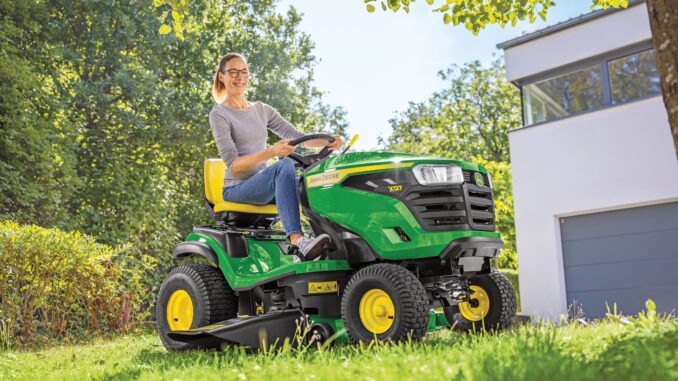
John Deere 100 Series Lawn Tractor Models and Maintenance Guide
The John Deere 100 Series is a long-running family of residential lawn tractors designed for routine grass cutting, seasonal yard work, light hauling, and property maintenance. Across several generations, the series has included the original numbered 100 Series tractors, LA Series machines, D Series tractors, E Series tractors, and today’s S Series models.
This page is a central directory for John Deere 100 Series model-specific guides, maintenance information, mower deck service, common repair procedures, and symptom-based troubleshooting. It is intended for homeowners, rural-property owners, and DIY users working with both current and discontinued machines.
Use this index alongside the General John Deere Lawn and Garden Tractor Guide when identifying a tractor, planning service work, comparing models, or tracing compatible mower decks and attachments.
About the John Deere 100 Series Lawn Tractor Series
The John Deere 100 Series occupies the residential lawn tractor tier of the John Deere mowing lineup. These machines are generally built for mowing maintained lawns, towing light carts and lawn-care attachments, collecting leaves, and completing ordinary seasonal work around suburban, rural, and acreage properties.
Depending on the production generation and model, 100 Series tractors have used single-cylinder and V-twin gasoline engines ranging from roughly 17 to 25 horsepower. Smaller models commonly use 42-inch mower decks, middle models often use 48-inch decks, and the larger machines use 54-inch decks. The exact engine manufacturer, displacement, horsepower rating, deck construction, and transmission design can differ substantially between years.
Older models in the broad 100 Series family included gear-drive, variator-drive, and belt-driven arrangements, while many later D, E, and S Series tractors use two-pedal hydrostatic transmissions. Current S Series models are two-wheel-drive lawn tractors with hydrostatic transaxles. They are not four-wheel-drive machines, so tire condition, terrain, ballast, mowing direction, and safe slope practices have a major effect on traction.
Common features found across different generations include electric PTO mower engagement, cruise control, headlights, spring-assisted deck lift systems, high-back seats, cup holders, wash ports, mower deck leveling adjustments, and bagging options. Larger models may also have heavier-duty transaxles, wider rear tires, V-twin engines, and 48-inch or 54-inch decks.
The 100 Series is generally lighter-duty than the X300 Series lawn tractors, X500 Series garden tractors, X700 Series heavy-duty garden tractors, and classic John Deere 300 or 400 Series garden tractors. It is best suited to regular mowing and light attachment work rather than ground-engaging implements, heavy snow work, repeated heavy towing, or demanding use on rough terrain.
John Deere 100 Series Lawn Tractor Models
And See
| Repair Guide | Serial Number Lookup | Winter Maintenance |
| John Deere 140 | John Deere 140 | |
Exact engine, deck, transmission, and attachment details can vary by production year, serial-number range, and market configuration. Before ordering parts or starting repairs, identify the exact tractor model, serial number, mower deck identification tag, engine model number, and transmission arrangement.
John Deere 100 Series Lawn Tractor Maintenance Guides
John Deere 100 Series maintenance differs by generation, but most long-term reliability problems begin with missed routine service, neglected mower decks, damaged belts, old fuel, loose steering components, or debris buildup around the engine and transaxle.
Routine Service and Checks
Check the engine oil level regularly, particularly before extended mowing, towing, or use in hot conditions. Change engine oil at the recommended interval for the specific model, and replace the oil filter on engines equipped with one. Some later models use simplified oil-change systems, but owners should still follow the correct procedure for the engine and tractor involved.
Inspect air filters and foam pre-cleaners frequently in dusty conditions. A restricted air filter can cause rich running, poor power, black exhaust, increased fuel consumption, and difficult starting. Check the spark plug condition, ignition lead, battery terminals, charging system connections, fuel filter, fuel lines, and fuel tank for contamination or deterioration.
Keep grass, leaves, chaff, and oily debris away from engine cooling screens, engine shrouds, muffler areas, and transaxle cooling fans. Overheating can cause poor running, belt damage, battery problems, and shortened engine or transmission life.
Inspect tire pressure before diagnosing uneven cutting, steering pull, poor traction, or deck-level problems. Check mower belts, drive belts, idler pulleys, belt guides, tensioners, blade brakes, and deck-hanger components for wear.
Useful internal resources include John Deere 100 Series lawn tractor service interval checklist, DIY maintenance for John Deere 100 Series lawn tractors, Engine oil, air filter, and spark plug service for John Deere 100 Series tractors, and Seasonal storage and spring service for John Deere 100 Series lawn tractors.
Mower Deck, Cutting Quality, and Belt Care
A clean, level mower deck is essential for reliable cutting performance. Remove grass buildup after mowing, especially when cutting damp grass or operating in high-growth conditions. Packed debris retains moisture, promotes corrosion, restricts airflow, and reduces the deck’s ability to lift and discharge grass properly.
Inspect blades for dull edges, bends, cracks, damaged lift wings, and imbalance. Dull blades tear grass rather than cutting it cleanly, which can leave brown tips and an uneven finish. Replace cracked or badly worn blades rather than attempting to reshape them.
Check deck level side-to-side and front-to-rear. A mower deck that is out of adjustment can scalp high spots, leave strips, cut unevenly, or place excess load on belts and spindle bearings. Inspect belt condition for cracking, glazing, fraying, stretching, contamination, or missing chunks.
Check spindle bearings, pulleys, belt guards, idler pulleys, and deck wheels. Lubricate serviceable components where grease fittings are fitted, but do not assume every spindle or pulley is greaseable.
Useful internal resources include Mower deck maintenance and cutting quality on John Deere 100 Series tractors, Deck belt and spindle service for John Deere 100 Series lawn tractors, John Deere 100 Series mower deck leveling and blade replacement guide, and Uneven cut and striping diagnosis on John Deere 100 Series lawn tractors.
Steering, Axle, and Chassis Maintenance
Inspect steering-wheel free play, steering gears, tie rods, drag links, front-wheel spindles, axle pivots, and wheel bearings. Excessive looseness can make the tractor difficult to control, cause wandering during mowing, and produce abnormal front-tire wear.
Check front-tire pressure and wear patterns. A low tire, bent wheel, worn bearing, loose steering linkage, or damaged axle bushing can make the machine pull to one side and can affect mower deck cutting height.
Inspect the frame, mower lift linkage, deck-hanger brackets, parking-brake linkage, pedal return springs, and retaining hardware. Loose or corroded components often become more expensive repairs when ignored. Pay particular attention to worn deck lift components, cracked brackets, belt-guide damage, and loose hardware around the mower deck and front axle.
Useful internal resources include Steering and front axle maintenance across John Deere 100 Series lawn tractors, Front wheel, tire, and steering wear diagnosis for John Deere 100 Series models, and Chassis, brake, and mower lift inspection guide for John Deere 100 Series tractors.
John Deere 100 Series Lawn Tractor Troubleshooting Guides
The best troubleshooting process begins with simple checks before replacing parts. Check fuel quality, oil level, battery state, fuses, safety switches, belt condition, blade condition, tire pressure, loose connectors, and visible damage first.
Older numbered models, LA Series machines, D Series tractors, E Series tractors, and current S Series tractors can have very different engine, wiring, deck, PTO, and drive systems. Use the correct model-specific information before assuming that a repair procedure applies across the entire 100 Series family.
Starting, Engine, and Fuel / Ignition Problems
A no-crank condition commonly involves a discharged battery, corroded battery terminals, loose ground connection, blown fuse, faulty ignition switch, starter-solenoid issue, or an open safety-switch circuit. Check that the operator is seated where required, the brake or clutch pedal is correctly applied, the PTO is disengaged, and the shift or direction controls are in the required position.
If the engine cranks but does not start, check fuel freshness, fuel flow, fuel-filter condition, choke position, spark-plug condition, ignition system operation, and carburetor cleanliness. Old gasoline can leave varnish in the carburetor, restrict jets, stick float components, and create surging or hard-start symptoms.
Stalling under load may result from a clogged air filter, restricted fuel flow, failing ignition coil, dirty carburetor, overheating, grass-packed cooling fins, or excessive mower-deck load. A mower deck with dull blades, seized pulleys, a slipping belt, or packed grass can make an otherwise healthy engine appear weak.
Useful internal resources include John Deere 100 Series lawn tractor starting problems – diagnostics and fixes, Engine and fuel system issues across John Deere 100 Series tractors, John Deere 100 Series safety switch, fuse, and electrical troubleshooting guide, and Loss of power and stalling problems on John Deere 100 Series lawn tractors.
Mower Deck, PTO, and Cutting Performance Problems
When the PTO will not engage or the blades will not turn, inspect the PTO switch, fuse, safety circuits, electrical connectors, PTO clutch where fitted, mower belt, belt routing, idler pulley movement, and deck obstruction. Do not reach beneath a mower deck or handle blades unless the engine is off, the key is removed, the parking brake is set, and spark-plug leads are disconnected where appropriate.
A mower belt that repeatedly comes off may be stretched, incorrectly routed, contaminated, damaged, or misaligned. Bent belt guides, worn idler pulleys, damaged spindle pulleys, failing deck bearings, and loose deck-hanger hardware can also cause belt derailment.
Vibration, rumbling, squealing, scraping, or knocking from the deck should be investigated promptly. Possible causes include damaged blades, loose blade hardware, bent pulleys, failing spindle bearings, worn idler pulleys, debris under the deck, or a belt contacting a guard.
Uneven cutting may result from incorrect tire pressure, a deck that is not level, worn blades, bent blades, mowing too fast, improper deck height, loose spindles, or grass conditions that overwhelm the deck.
Useful internal resources include PTO and deck engagement problems on John Deere 100 Series lawn tractors, Cut quality and deck vibration issues on John Deere 100 Series models, John Deere 100 Series mower belt keeps coming off – causes and repairs, and John Deere 100 Series spindle, pulley, and blade troubleshooting guide.
Drive, Transmission, and Traction Problems
A tractor that will not move, moves slowly, loses drive when warm, or struggles on hills may have a worn or damaged drive belt, failed idler pulley, belt-routing problem, brake drag, linkage fault, transmission-control problem, or transaxle issue. Check the drive belt before assuming the hydrostatic transmission has failed.
On hydrostatic models, weak travel response can sometimes be related to a damaged transmission cooling fan, debris buildup, incorrect linkage movement, air in the system after storage or service, or prolonged operation beyond the tractor’s intended workload. Avoid towing loads that exceed the machine’s rating or using a residential lawn tractor for heavy ground-engaging work.
Gear-drive or automatic-drive models may develop shifting problems from worn belts, linkage adjustment issues, clutch-brake faults, or transmission wear. A machine that will not hold its speed may also have a slipping belt, brake drag, low engine speed, or tire-traction issue rather than an internal transmission failure.
Wet grass, slopes, loose soil, worn tires, and uneven ground can sharply reduce traction. Mow up and down slopes only where the manufacturer permits, avoid abrupt changes in direction, and do not treat a two-wheel-drive lawn tractor as a heavy-duty garden tractor.
Useful internal resources include Drive and transmission problems on John Deere 100 Series lawn tractors, Traction and hill performance issues across John Deere 100 Series models, John Deere 100 Series drive belt and idler pulley troubleshooting guide, and Hydrostatic transmission symptoms and checks for John Deere 100 Series tractors.
Individual model articles, including John Deere S120 maintenance & troubleshooting guide, John Deere D130 common problems and fixes overview, John Deere E140 buyer’s guide, and John Deere 115 mower deck and drive belt service guide, can provide more detailed information for a specific machine.
Attachments and Implements for the John Deere 100 Series Lawn Tractor Series
John Deere 100 Series tractors can be equipped with a range of lawn-care and seasonal accessories, but compatibility varies widely by model generation. The most common equipment includes mid-mount mower decks, mulching blades, mulching kits, bagging systems, rear grass collectors, utility carts, lawn sweepers, spreaders, aerators, dethatchers, lawn rollers, and light trailers.
Many owners use a utility cart for moving mulch, leaves, firewood, garden tools, or small loads around a property. However, towing capacity depends on the tractor model, terrain, tire condition, hitch arrangement, and the manufacturer’s limits. Avoid high tongue weights and heavy loads on slopes, rough ground, or wet grass.
Bagging systems are especially useful for leaf collection and formal lawns, but they require the correct deck chute, bagger frame, hopper, belt-driven blower where applicable, and mower-deck configuration. A bagger that fits one D Series or E Series model may not fit an older 100 Series, LA Series, or newer S Series tractor.
Some models can be used with snow blades or snow blowers, but snow equipment compatibility should never be assumed. Check the exact tractor generation, front mounting arrangement, PTO or belt-drive requirements, tire size, electrical connections, attachment brackets, and operator’s manual limitations before purchasing equipment.
Tire chains, wheel weights, and approved ballast can improve traction for winter work or light hauling, but they do not turn a residential lawn tractor into a dedicated snow tractor or heavy-duty garden tractor. Extra traction should be paired with careful operation, especially around slopes, ice, curbs, and uneven ground.