
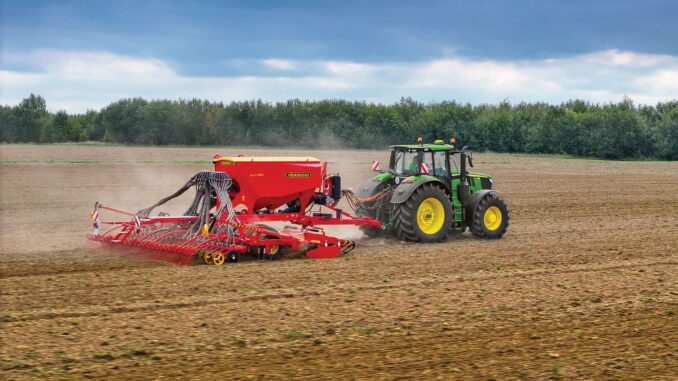
The John Deere 4960 is a large row-crop tractor built for heavier field work rather than small-lawn homeowner duties, so owners usually deal with diesel engine, hydraulic, PTO, drivetrain, cab, and electrical issues instead of mower-deck problems. This guide is written in a practical, symptom-first format so readers can work out what they are seeing, decide what is realistic DIY work, and find the right parts diagrams and manuals before ordering anything.
For USA and Canada owners, the most useful repair strategy is to identify the exact machine by model and PIN first, then separate routine service items from hydraulic, powershift, PTO, and front-wheel-drive jobs that can become expensive quickly if diagnosed badly. The sections below cover overview, troubleshooting, repair priorities, parts, manuals, maintenance, and a long-form FAQ in the same owner-focused style used for practical Deere repair posts.
John Deere 4960 model overview
The John Deere 4960 sits in Deere’s large 60 Series row-crop tractor range and is designed for field tasks that need substantial horsepower, hydraulic capacity, and 3-point lift performance. Published specification summaries describe it as a high-horsepower agricultural tractor with a John Deere 6-cylinder diesel engine, roughly 7.6 litres of displacement, and strong lift and hydraulic output for larger implements.
Typical owner concerns on a John Deere 4960 are not cosmetic problems but working failures that stop field use, such as hard starting, fuel restriction, hydraulic weakness, PTO engagement faults, brake or steering issues, transmission shift concerns, overheating, and cab electrical faults. Because this is a heavier farm tractor, even simple neglect can turn into costly downtime if filters, screens, oil condition, cooling components, and driveline issues are ignored.
General overview of the John Deere 4960
The main systems on the John Deere 4960 include the diesel engine and fuel system, intake and air filtration, cooling system, transmission and hydraulic system, PTO, steering and brakes, front axle or MFWD components where fitted, and the cab electrical and climate-control system. Deere’s manuals and technical publications platform specifically groups operator, technical, diagnostic, and parts-catalog information as the main reference path for these systems.
Common service parts owners regularly buy for the John Deere 4960 include the fuel strainer AR103220, fuel filter AR86745, engine oil filter DZ101880, transmission/hydraulic oil filter AR94510, optional cleanup filter AR98098, return oil manifold screen R27173, charge-pump suction screens AR26375 and R53169, cab fresh-air filter R65450, recirculation filter RE12793, heavy-duty recirculation filter RE67830, and air filters RE46310 and RE46311. Those are the parts most worth cross-checking first before placing any service order, because several are tied directly to routine maintenance intervals.
Troubleshooting approach for the John Deere 4960
The best way to diagnose a John Deere 4960 is to start with the symptom the owner actually sees: no start, crank-but-no-fire, weak hydraulics, PTO not driving correctly, poor steering or brakes, overheating, warning lights, or unusual vibration and noise. That matters because one symptom can have several causes, and large tractors often punish random parts-swapping with wasted money and longer downtime.
Main symptom groups for this model are starting issues, running and power-loss issues, hydraulic and transmission/drive problems, PTO problems, overheating and leaks, electrical and cab-control issues, and vibration or noise from engine, driveline, axle, or hydraulic components. Owners should always check fluid level and condition, filter history, visible leaks, intake restriction, loose wiring, and whether the fault changes when the tractor is hot versus cold before moving toward deeper repair work.
Emergency John Deere 4960 repair needs
Some faults on a John Deere 4960 need immediate attention because they affect safety or can damage major components fast, especially low engine oil pressure, overheating, hydraulic starvation, brake failure, steering loss, serious transmission slipping, fuel leaks, and driveline noise under load. A machine this size can go from a repairable problem to a very expensive failure if it keeps working with contaminated oil, blocked screens, or a failing hydraulic or driveline component.
John Deere 4960 starting issues
Starting problems usually show up as slow cranking, normal cranking with no fire, smoke without starting, or a tractor that starts cold but not hot. On a diesel tractor like this, that often points toward battery and cable condition, fuel delivery restriction, air in the fuel system, shutoff issues, or an engine condition problem rather than a spark-related fault.
-
Weak batteries or poor cable connections.
-
Restricted fuel strainer or fuel filter.
-
Air leaks in fuel supply lines.
-
Faults in the starting circuit or key/start controls.
-
Engine-condition issues that need compression or injector-related diagnosis.
-
Confirm battery voltage, cable tightness, grounds, and starter connection.
-
Check whether the fuel strainer and fuel filter are overdue or contaminated.
-
Inspect for wet fuel fittings, cracked hoses, or signs of air entering the system.
-
Prime or bleed only as the official procedure allows through the operator or technical manual.
-
Move to dealer or diesel-specialist diagnosis if the tractor still will not start or smokes heavily while cranking.
John Deere 4960 running and power-loss problems
A John Deere 4960 with low power may feel flat under load, surge, smoke more than normal, or struggle to hold rpm on PTO or draft work. Fuel restriction, dirty air filters, overdue engine service, cooling issues, or deeper injection and turbo-related faults are common directions to check first.
-
Dirty primary or secondary air filter.
-
Restricted fuel filter or strainer.
-
Poor-quality or contaminated diesel fuel.
-
Overheating that causes reduced performance.
-
Internal engine or fuel-system faults.
-
Inspect and service the air-cleaner elements if restriction is suspected.
-
Replace the fuel filter and inspect the fuel strainer if service history is unclear.
-
Check coolant level, radiator cleanliness, and signs of overheating.
-
Note smoke colour and whether the issue appears only under heavy load.
-
Escalate for injection, turbo, or compression testing if basic service does not restore power.
John Deere 4960 hydraulic and transmission problems
Hydraulic and transmission faults matter immediately because this tractor depends heavily on oil flow and pressure for steering, brakes, remote functions, hitch work, and transmission performance. Symptoms may include noisy hydraulics, weak remote functions, poor hitch lift, delayed steering response, or transmission behaviour that changes when the oil warms up.
-
Low or contaminated transmission/hydraulic oil.
-
Plugged hydraulic filter or dirty suction/return screens.
-
Internal leakage or wear in pumps, valves, or clutch packs.
-
Wrong oil type or neglected service interval.
-
Debris left in the system after a previous failure.
-
Check oil level and visible oil condition before running the tractor further.
-
Inspect filter service history and replace the hydraulic filter if due.
-
Clean the suction and return screens at the listed service intervals or sooner if contamination is suspected.
-
Watch for metal, friction material, or heavy debris during servicing.
-
Stop at the dealer line when pressure testing, clutch-pack diagnosis, or powershift internals are involved.
John Deere 4960 overheating and leaks
Overheating and fluid leaks can damage the engine or hydraulics quickly, especially during sustained field work. Owners should treat rising temperature, coolant loss, hydraulic foaming, or fuel leaks as immediate repair items rather than nuisance issues.
-
Dirty cooling pack or restricted airflow.
-
Low coolant or external coolant leak.
-
Engine oil, fuel, or hydraulic leak onto hot surfaces.
-
Failing hose, clamp, seal, or water-pump related component.
-
Heavy load combined with overdue cooling-system service.
-
Park safely and let the system cool before opening anything pressurised.
-
Check coolant level and inspect hoses, clamps, and radiator area.
-
Clean external debris from the radiator and cooling package.
-
Trace any fluid leak before returning the tractor to service.
-
Use dealer support if overheating repeats after cleaning and basic fluid checks.
John Deere 4960 electrical problems
Electrical faults on an older John Deere 4960 often appear as intermittent starting, dead gauges, warning lights, charging problems, lighting faults, or cab accessories that work only occasionally. Age, vibration, corrosion, and poor grounds are often as important as failed switches or components.
-
Weak batteries or charging fault.
-
Corroded ground straps and cable ends.
-
Damaged connectors in cab or chassis harnesses.
-
Failed relays, switches, or sending units.
-
Water intrusion around wiring or fuse areas.
-
Test battery condition before chasing smaller faults.
-
Clean and tighten grounds and main cable connections.
-
Inspect harness sections that flex, rub, or sit near heat sources.
-
Compare warning-light behaviour with manual guidance where available.
-
Hand off complex harness or module diagnosis when wiring damage spreads beyond a simple repair.
DIY or dealer for the John Deere 4960
With a John Deere 4960, the normal repair line is simple: routine service, inspection, filter changes, and many minor hose, clamp, and cab-filter jobs are realistic DIY work, but hydraulic-pressure diagnosis, transmission internals, PTO clutch issues, steering/brake faults, and major engine work are better treated as advanced jobs or dealer work because the tractor is heavy, high-pressure, and expensive to guess on.
Good DIY jobs
-
Engine oil and engine oil filter replacement.
-
Fuel filter and fuel strainer service.
-
Primary and secondary air-filter replacement.
-
Cab fresh-air and recirculation filter replacement.
-
Basic leak inspection, hose checks, battery service, and connector cleaning.
Advanced DIY or dealer jobs
-
Hydraulic filter and screen service if contamination is present.
-
Cooling-system troubleshooting beyond basic cleaning and hose replacement.
-
PTO engagement faults or driveline noise diagnosis.
-
Steering, brake, or transmission pressure testing.
-
Injector, turbo, engine internal, or clutch-pack repairs.
Skill level guide
-
Beginner: filters, battery terminals, visual inspections, cab filters.
-
Intermediate: fuel-system service, basic cooling-service work, careful hydraulic filter/screen service.
-
Advanced: hydraulic diagnosis, driveline repairs, electrical tracing, and any repair requiring special test procedures or splitting major assemblies.
John Deere 4960 parts and what to confirm before ordering
Before ordering John Deere 4960 parts, collect the full model name, tractor PIN, the exact engine identification, and any configuration details that can affect fitment, because manuals, parts catalogs, and dealer systems rely on those identifiers to separate serial-specific changes and optional equipment. That matters especially on older agricultural tractors where a wrong filter, screen, seal, or hydraulic component can create extra downtime even if it looks close enough online.
OEM parts make the most sense for filters tied to hydraulic cleanliness, fit-sensitive seals, and any safety-critical or serial-number-sensitive component, while quality aftermarket options can be reasonable for some consumables if the cross-reference is exact and the seller clearly lists John Deere 4960 fitment. For large-tractor hydraulic, steering, PTO, and brake-related parts, OEM or a very trusted agricultural supplier is usually the safer route because incorrect fit or media specification can cost far more than the price difference.
John Deere 4960 manuals, diagrams, and publications
The best starting point for manuals is Deere’s official Manuals and Training page, which provides access to operator manuals, technical manuals, and parts catalogs for John Deere equipment. For deeper repair work, Deere also points users to Customer Service ADVISOR, a digital database that includes operator, diagnostic, and technical manuals and supports limited code and calibration work on supported products.
Useful sources to include in a WordPress post are:
-
John Deere Manuals and Training for official operator manuals, technical manuals, and parts-catalog access.
-
John Deere Parts Catalog as Deere’s catalog portal for exploded diagrams and part lookups, although public access flow can vary by region or session.
-
Green Farm Parts John Deere 4960 maintenance guide for a quick service-parts list and maintenance-oriented part references.
-
Jensales John Deere 4960 technical manual listing for a third-party listing that identifies Technical Manual TM1461 for this tractor family.
How to find John Deere 4960 serial and engine numbers
The tractor PIN, engine identification, and any attachment or optional-equipment numbers matter because parts catalogs and dealer systems use them to filter running changes, option groups, and serial breaks. On a machine this age, confirming those numbers before ordering saves time and reduces the risk of buying the wrong hydraulic, electrical, or driveline part.
-
Check the tractor identification plate or tag on the main tractor chassis and record the full PIN exactly as stamped.
-
Record the engine model and engine serial from the engine identification plate before ordering engine-service parts.
-
Note whether the tractor is configured with any option packages or front-drive equipment that could affect parts selection.
-
Compare the recorded numbers against the parts catalog or dealer lookup before purchase.
-
Keep those numbers in your phone or maintenance log so future service orders are faster.
Buying John Deere 4960 parts online and in stores
The safest buying strategy is to identify the OEM number first, then compare reputable sources instead of shopping by a vague product title. For a John Deere 4960, this matters because many listings cover several tractor families at once, and small wording differences can hide serial-number limits or option-specific fitment.
-
Online: use official part numbers, verify PIN-sensitive fitment, and compare images and notes against the catalog description.
-
Dealer counter: best for hydraulic, PTO, brake, steering, transmission, and serial-break items where staff can verify the exact fit from the PIN.
-
Retail stores: acceptable for some oils, batteries, and common consumables only when packaging clearly lists the exact tractor fitment or proper cross-reference.
Useful links:
John Deere 4960 fitting guide for common service parts
These are the most practical DIY jobs for many owners because they solve common restriction and maintenance problems without opening major assemblies. Always park safely, lower implements, shut the tractor down fully, and use the correct manual procedure before servicing any pressurised system.
Replace the John Deere 4960 fuel filter
A new fuel filter can fix hard starting, poor running, or power loss caused by fuel restriction.
-
Park on level ground, shut the tractor off, and clean around the filter area first.
-
Remove the old filter carefully and check the sealing surface.
-
Fit the correct replacement filter, lubricate the seal if the manual specifies it, and tighten correctly.
-
Prime or bleed the fuel system only by the approved procedure for the tractor.
-
Start the engine and inspect closely for leaks or air-entry issues.
Change the John Deere 4960 engine oil and filter
Fresh oil and a new oil filter protect the diesel engine and are one of the highest-value service jobs on this tractor.
-
Warm the engine briefly if safe to do so, then shut it off and allow oil to settle.
-
Drain the old oil into a suitable container and inspect it for metal or coolant contamination.
-
Remove the old oil filter and install the correct replacement filter.
-
Refill with the correct oil specification and quantity from the operator manual.
-
Start the engine, confirm oil pressure, then recheck the level and inspect for leaks.
Service the John Deere 4960 air filters
Air-filter service helps cure power loss, smoke, and intake restriction issues on dusty jobs.
-
Open the air-cleaner housing carefully so dirt does not fall into the intake path.
-
Remove and inspect the primary and secondary elements.
-
Replace elements that are damaged, heavily restricted, or due by condition and service history.
-
Wipe out the housing carefully and check the seals.
-
Reassemble fully so no unfiltered air can bypass the elements.
Replace John Deere 4960 cab air filters
Cab fresh-air and recirculation filters help HVAC performance and make the tractor more comfortable during long field days.
-
Identify whether the tractor uses the standard or heavy-duty recirculation filter setup.
-
Remove the old fresh-air and recirculation filters from their housings.
-
Clean loose dust from the filter compartment and surrounding seals.
-
Install the correct replacement filters in the proper airflow direction.
-
Run the fan and confirm airflow improves without unusual noise.
Maintenance to prevent John Deere 4960 problems
Regular maintenance on a John Deere 4960 is mainly about preventing restriction, contamination, overheating, and wear from turning into major hydraulic or engine failures. Deere-oriented maintenance references for this model highlight repeated attention to filters, screens, air intake, and cab filters rather than waiting for symptoms to force repairs.
Focus areas:
-
Starting reliability: keep batteries, cable ends, fuel filter, and fuel strainer in good condition.
-
Engine performance: service air filters and oil filter on schedule.
-
Hydraulic reliability: change filters and clean screens at the listed intervals.
-
Overheating prevention: keep the cooling package clean and watch fluid levels.
-
Cab comfort and visibility: replace fresh-air and recirculation filters as required.
John Deere 4960 maintenance schedule
The clearest published maintenance intervals available in the retrieved sources for the John Deere 4960 come from the maintenance guide listing common service items and their check or replacement frequency. Owners should still confirm the exact schedule in the official operator manual for their serial-number range before carrying out annual service.
Daily or before each use
-
Check the engine fuel strainer every 10 hours or daily, replacing it as required.
-
Check the engine fuel filter every 10 hours or daily and replace it as required.
-
Walk around the tractor for leaks, loose hoses, visible damage, and tire issues.
-
Confirm fluid levels and watch for warning lights after startup.
Every 250 hours or yearly
-
Replace the engine oil filter every 250 hours or annually.
-
Check the cab fresh-air filter every 250 hours; replace annually and as required.
-
Check the standard recirculation filter every 250 hours; replace annually and as required.
-
Check the heavy-duty recirculation filter every 250 hours if fitted; replace annually and as required.
Annual air-intake service
-
Clean the primary air filter as required and replace annually or as required.
-
Clean the secondary air filter as required and replace annually or as required.
-
Inspect intake tubing and clamps for dust leaks.
-
Check the air-cleaner housing seal condition.
Every 1500 hours
-
Clean the charge-pump suction screen AR26375 at 1500 hours.
-
Clean the nylon suction screen R53169 at 1500 hours where applicable.
-
Clean the return oil manifold screen R27173 at 1500 hours.
-
Replace sealing washer R34733 as required during service.
Seasonal checklist
-
Spring or pre-season: change overdue filters, inspect cooling system, and record any active leaks before heavy use.
-
Mid-season: watch hydraulic response, clean debris from cooling areas, and service air filters if dust conditions are severe.
-
Post-season: replace overdue cab or engine filters, clean the tractor thoroughly, and note any driveline, PTO, or hydraulic issues to address before next use.
Repair, upgrade, or replace a John Deere 4960
For a John Deere 4960, repair usually makes sense when the tractor is structurally sound and the fault is confined to service items, hoses, filters, wiring repairs, cooling components, or a clearly diagnosed subsystem. Upgrade makes more sense when the machine still works well but your workload now demands better cab comfort, easier diagnostics, or more hydraulic or transmission capability than this tractor setup provides, while replacement enters the picture when repeated hydraulic, transmission, or engine failures stack up into chronic downtime and large repair bills.
-
Repair if the issue is routine service-related, isolated, and accurately diagnosed.
-
Upgrade if the tractor still earns its keep but no longer matches the implements or comfort expectations in your operation.
-
Replace if major engine, hydraulic, and transmission problems overlap and the total repair cost starts to outrun the machine’s value or reliability.
John Deere 4960 troubleshooting FAQ
1. Why will my John Deere 4960 not start?
A John Deere 4960 that will not start usually points first to battery or cable problems, fuel restriction, air getting into the fuel system, or a fault in the start circuit. Start with battery condition, grounds, the fuel strainer, and the fuel filter before assuming a major engine failure. If the tractor cranks normally but still does not fire, move toward proper diesel-system diagnosis rather than guessing on parts.
2. Why does my John Deere 4960 crank but not fire?
If the engine cranks well but does not fire, the issue is often fuel delivery, air in the fuel system, or shutoff-related rather than cranking speed alone. Check for overdue filter service, empty or contaminated fuel, and any sign of wet fittings or cracked fuel hoses. Persistent no-fire symptoms after those checks usually justify specialist diesel diagnosis.
3. Why is my John Deere 4960 hard to start when cold?
Cold-start difficulty often means the fuel system is losing prime, batteries are weaker than they seem, or fuel restriction is already building. Older diesel tractors also show cold-start issues sooner when routine service has slipped or cable resistance is high. A full battery and cable check plus filter review is the sensible starting point.
4. Why is my John Deere 4960 hard to start when hot?
Hot-start problems can point to marginal electrical connections, starter weakness, or fuel-system issues that become more obvious after the tractor is warm. Intermittent heat-related faults are common on older machines because resistance increases and tired components show up under stress. If the basics check out, avoid repeated cranking and move to proper circuit testing.
5. Why does my John Deere 4960 lose power under load?
Loss of power under load commonly comes from dirty air filters, fuel restriction, overheating, or a deeper injection or turbo-related problem. Start with the service items because they are cheaper, faster, and more likely than internal engine damage. Note whether the engine smokes more or the temperature rises when the power drops.
6. Why is my John Deere 4960 smoking more than normal?
Extra smoke usually means the engine is not burning fuel as cleanly as it should, often because of intake restriction, fuel issues, or heavy load. The colour and timing of the smoke matter, so note whether it appears only on startup, only under load, or all the time. Basic air and fuel service should come first.
7. Why does my John Deere 4960 surge or run unevenly?
Surging or uneven running often traces back to inconsistent fuel delivery, air leaks in the fuel line, or filter restriction. Contaminated fuel can produce similar symptoms. If fresh fuel and filter service do not help, the next step is deeper fuel-system diagnosis.
8. Why does my John Deere 4960 stall unexpectedly?
Unexpected stalling often points to a supply restriction, contaminated fuel, or an electrical shutoff problem. A tractor that restarts after sitting may be starving for fuel or pulling air into the system. Inspect the filter and strainer first because they are known routine service points.
9. Why are the hydraulics weak on my John Deere 4960?
Weak hydraulics usually mean low or contaminated oil, a restricted hydraulic filter, dirty screens, or wear inside the hydraulic system. Because steering, brakes, remotes, and hitch functions can all depend on the same oil condition, do not keep running the tractor blindly. Service history and contamination clues matter a lot here.
10. Why does the 3-point hitch on my John Deere 4960 lift slowly?
A slow hitch can be part of a wider hydraulic problem rather than a hitch-only fault. Start by checking oil level, oil condition, and filter service status, then look for weak hydraulic performance in other functions too. If several hydraulic functions are slow, dealer-grade testing is usually the right next step.
11. Why are the remote hydraulics on my John Deere 4960 not working properly?
Remote issues can come from low oil, restricted filters, contaminated screens, coupler problems, or internal hydraulic wear. Check whether one remote is affected or all of them. If the problem is system-wide, stop using expensive implements until hydraulic condition is confirmed.
12. Why is the steering heavy on my John Deere 4960?
Heavy steering is a safety issue and should be treated as urgent because it can point to hydraulic supply problems or deeper steering-system faults. Check transmission/hydraulic oil level and filter history immediately. Continued operation is not worth the risk if steering response is inconsistent.
13. Why do the brakes feel weak on my John Deere 4960?
Weak brakes can indicate hydraulic issues, wear, or contamination that needs prompt attention. Because brake performance is safety-critical, basic fluid and filter checks are only the first step. Any persistent brake weakness belongs in the advanced or dealer category.
14. Why does my John Deere 4960 overheat?
Overheating often starts with a dirty cooling package, low coolant, or a leak that reduces system capacity. Heavy field load can make a marginal cooling system show problems quickly. Clean the cooling area, confirm coolant level, and repair leaks before using the tractor again.
15. Why is my John Deere 4960 pushing coolant out?
Coolant loss can come from an overheat event, a weak cap or hose area, or a more serious cooling-system problem. Because repeated coolant loss risks engine damage, treat it as an immediate diagnosis item rather than topping up and carrying on. Look for external leaks first before moving deeper.
16. Why is my John Deere 4960 leaking hydraulic oil?
Hydraulic leaks usually come from hoses, fittings, seals, or components that have seen age and vibration. Even a small leak matters because low oil level and contamination can create larger system damage. Clean the area, identify the exact source, and repair it before hard use.
17. Why does my John Deere 4960 make whining hydraulic noise?
Whining or cavitation-like hydraulic noise often suggests low oil, restriction, contamination, or suction-side trouble. This is exactly the kind of symptom that should push you to review hydraulic filters and screens sooner rather than later. Noise that changes as the oil warms up is especially worth noting for diagnosis.
18. Why does my John Deere 4960 transmission shift poorly?
Poor shifting can come from oil condition, hydraulic-pressure problems, internal wear, or clutch-pack issues. Because powershift diagnosis can get expensive quickly, it is better to gather symptom details than to guess at parts. Note whether the fault is cold only, hot only, or specific to certain ranges or gears.
19. Why does my John Deere 4960 move slowly or feel weak in pull?
If ground performance feels weak, check whether the issue is engine power, transmission behaviour, or an implement load problem before blaming one system. A tractor that revs but does not pull properly may need deeper transmission or driveline diagnosis. A tractor that will not rev under load may simply be fuel- or air-restricted.
20. Why is the PTO on my John Deere 4960 not working right?
PTO problems can involve engagement controls, hydraulic supply, clutch-related issues, or internal driveline faults. Start by checking whether other hydraulic functions are weak too, because that can point to a wider oil-flow problem. Persistent PTO trouble is usually beyond beginner DIY.
21. Why does my John Deere 4960 have battery drain issues?
Battery drain on an older tractor often comes from weak batteries, poor charging, corroded connections, or a wiring fault that stays live when parked. Clean and test the battery system first because corrosion alone can mimic bigger faults. If charging output is wrong, move to proper alternator and wiring checks.
22. Why are the lights or gauges on my John Deere 4960 intermittent?
Intermittent lights and gauges usually point to loose connectors, aged wiring, corrosion, or grounding problems rather than several failed components at once. Vibration and age make those faults common on older tractors. Focus on grounds and connector condition before replacing instruments.
23. Why does the cab fan or HVAC on my John Deere 4960 feel weak?
Weak cab airflow can come from clogged fresh-air or recirculation filters, both of which are listed routine service items for this tractor. Replacing dirty cab filters is one of the easiest ways to improve comfort and reduce blower strain. Check whether the tractor uses the standard or heavy-duty recirculation filter arrangement first.
24. Why does my John Deere 4960 use more fuel than usual?
Higher fuel use often follows restricted air intake, poor engine tune, excessive idling, or a machine working harder because of another fault. If fuel consumption changes suddenly, look for smoke, power loss, and dirty filters together. That pattern often gives a better clue than fuel use alone.
25. Why should I clean the screens in the John Deere 4960 hydraulic system?
The maintenance listing for this tractor includes cleaning the charge-pump suction screens and the return oil manifold screen at 1500 hours, which shows Deere-oriented service sources treat screen cleanliness as important to system health. Dirty screens can restrict flow and make hydraulic problems look worse than they are. Screen service also gives you a chance to spot debris before it becomes a bigger failure.
26. How often should I change the John Deere 4960 oil filter?
The retrieved maintenance guide lists the engine oil filter DZ101880 at every 250 hours or annually. That is a useful working interval for planning service, but the exact oil and filter schedule should still be verified in the official operator manual for your tractor’s serial range. Keeping written service dates makes troubleshooting much easier later.
27. How often should I service the John Deere 4960 air filters?
The primary and secondary air filters are listed as clean as required and replace annually or as required. In dusty conditions, the practical interval can be much shorter than the calendar suggests. Condition, restriction, and work environment matter more than a fixed guess.
28. Can I use aftermarket filters on a John Deere 4960?
Aftermarket filters can be acceptable when the cross-reference is exact and the supplier is reputable, but fit-sensitive and hydraulic-critical items deserve extra caution. This is one case where cheap parts can create expensive contamination or flow issues. Many owners play it safe with OEM for hydraulic service items and use aftermarket more selectively elsewhere.
29. Where can I find a John Deere 4960 operator manual?
The official place to start is John Deere’s Manuals and Training page, which provides access to operator manuals, technical manuals, and parts catalogs for Deere equipment. That should be the first stop before using third-party listings. It is also the safest source for making sure the publication matches the machine family.
30. Where can I find John Deere 4960 parts diagrams?
Deere’s parts-catalog platform is the main source for exploded diagrams and official part lookups, while Deere’s manuals portal is the broader gateway for publications. Third-party Deere parts specialists can also help with common maintenance items. Use the tractor PIN when checking diagram fitment.
31. Is the John Deere 4960 a good DIY tractor to maintain?
It is a good tractor for routine DIY maintenance if you are comfortable with filters, fluids, inspections, and careful service work, but it is not a light-duty beginner machine when hydraulic, transmission, brake, or PTO problems appear. The size and system complexity raise the consequences of mistakes. The best DIY wins here come from good maintenance and early symptom recognition.
32. When should I stop and call the dealer for my John Deere 4960?
Call for dealer or specialist help when the issue involves steering, brakes, transmission behaviour, hydraulic pressure diagnosis, persistent no-start problems, or signs of internal engine trouble. Those jobs need better testing than most owners can do from symptoms alone. Stopping early often saves money on tractors at this size.
33. Is a hydraulic issue or a filter issue more likely on a John Deere 4960?
A neglected filter or dirty screen problem is usually the smarter first check because those items are known scheduled service points on this tractor. That does not rule out pump or internal wear, but simple restriction problems are cheaper and faster to confirm. Always start with service history before assuming a major hydraulic rebuild.
34. What are the most common John Deere 4960 service parts to keep on hand?
The most sensible shelf items are the fuel filter, oil filter, air filters, and cab filters because they appear directly in the published maintenance list for this model. If the tractor works hard, keeping those on hand reduces downtime and avoids delayed seasonal service. Operators who do their own hydraulic service may also keep the correct hydraulic filter and seals ready.
35. Is the John Deere 4960 worth repairing today?
It often is worth repairing when the machine remains sound, the problem is well defined, and the tractor still fits the workload, because the 4960 is fundamentally a serious agricultural tractor rather than a disposable machine.