
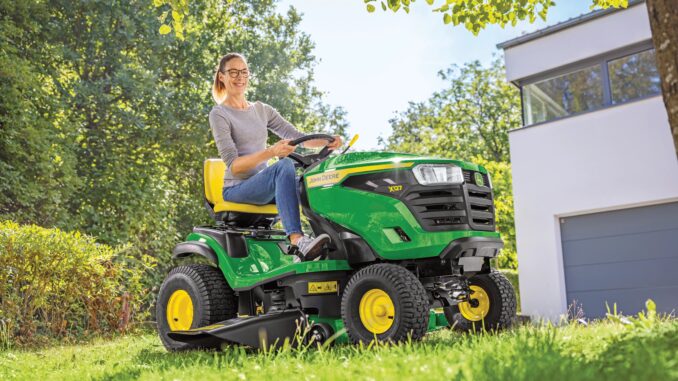
The John Deere RX75 is a compact rear-engine riding mower built for homeowners who want a small machine for routine lawn cutting, light yard work, and straightforward maintenance rather than heavy towing or large-acre mowing. This guide covers John Deere RX75 repair basics, symptom-first troubleshooting, maintenance planning, parts lookup, and realistic DIY limits for owners in the USA and Canada.
John Deere RX75 model overview
The John Deere RX75 is a riding lawn mower from Deere’s older RX rear-engine mower range, and TractorData lists it with a 9 hp Kawasaki 290 cc single-cylinder gasoline engine, two-wheel drive, and a 7-speed mechanical variable transmission. It was sold with a 30-inch mid-mount mower deck, making it best suited to smaller home lawns, tighter gates, and properties where maneuverability matters more than mowing speed.
Owners usually keep a John Deere RX75 running for years because the machine is mechanically simple, parts support is still available through diagrams and aftermarket suppliers, and many service jobs can be handled at home with basic tools. The most common owner concerns are hard starting, poor running after storage, weak cutting performance, belt wear, vibration, and age-related electrical faults.
General overview of the John Deere RX75
In Deere’s lineup, the RX75 sits below larger lawn tractors and is closer to an entry-level homeowner mower than a full garden tractor. That matters for repairs, because its engine, belt drive, mower deck, and electrical system are fairly accessible, but it is still an older machine where wear, corrosion, and previous-owner repairs can complicate diagnosis.
The key systems on a John Deere RX75 are:
-
Engine and fuel system, including the Kawasaki single-cylinder engine, fuel line, in-line fuel filter, carburetion, air intake, and ignition components.
-
Mower system, centered on the 30-inch mid-mount deck, blade drive, deck belt path, spindle and blade condition, and deck cleanliness.
-
Drive system, using a 7-speed mechanical variable transmission setup that depends on belt condition, linkage adjustment, and transmission health.
-
Electrical system, including battery, ignition switch, starter, safety circuits, and wiring that can suffer from age and poor connections.
Common service parts owners often shop for include the in-line fuel filter FF1614, an ignition switch listed by Jacks as 14000963, an ignition key listed as 14000965, and a starter listed as 14000166. Beyond those, RX75 owners commonly look up blades, deck belts, spark plugs, air filters, batteries, and seat or safety-switch related electrical parts through Deere manuals, dealer parts systems, or Deere-focused aftermarket suppliers.
John Deere RX75 troubleshooting approach
The best way to troubleshoot a John Deere RX75 is to begin with the symptom the owner actually sees instead of ordering parts too early. A mower that cranks but will not start points you toward fuel, spark, compression, or safety-switch issues, while a mower that starts but cuts badly points you toward deck setup, blade condition, and belt drive problems rather than engine internals.
Main symptom groups for this model include:
-
Starting issues.
-
Running and power-loss issues.
-
Cut-quality problems.
-
Vibration and unusual noise.
-
Drive or traction problems.
-
Electrical and safety-switch problems.
-
Fuel leaks, overheating, or debris buildup concerns.
Emergency John Deere RX75 repair needs
Some RX75 problems should be handled immediately because they affect safe operation or can rapidly damage other parts. Stop using the mower if you notice severe vibration, fuel leakage, smoke, burning belt smell, dead brakes, damaged blade hardware, or wiring that is heating or melting.
Starting issues on a John Deere RX75
A John Deere RX75 that will not start, starts only with difficulty, or stalls immediately often has a basic fuel, ignition, battery, or connection problem. On an older mower, stale fuel, restricted filters, fouled plugs, weak cranking voltage, and dirty terminals are more common than major engine failure.
Common causes:
-
Weak or discharged 12-volt battery.
-
Dirty, loose, or corroded battery cables and terminals.
-
Faulty ignition switch, key switch contacts, or aging starter circuit components.
-
Clogged in-line fuel filter or stale gasoline.
-
Fouled spark plug, wet plug, or poor spark.
-
Dirty air cleaner or fuel delivery restriction.
Basic checks:
-
Confirm the battery has enough charge to crank the engine at normal speed.
-
Inspect battery terminals and grounds for corrosion or looseness.
-
Check that fresh fuel is reaching the carburetor through the fuel filter and line.
-
Remove and inspect the spark plug for fouling, damage, or heavy carbon.
-
If cranking is inconsistent, inspect the ignition switch and starter circuit before replacing bigger components.
John Deere RX75 cut-quality problems
If the John Deere RX75 leaves uncut strips, tears grass, scalps the lawn, or clumps badly, the deck system needs attention before the engine does. Dull blades, buildup under the 30-inch deck, poor tire pressure, and belt slip are more likely causes than a serious engine fault.
Common causes:
-
Dull, bent, or unbalanced blade.
-
Grass buildup under the deck shell.
-
Worn or slipping deck belt.
-
Uneven tire pressure affecting deck pitch and cut height.
-
Mowing wet or overgrown grass beyond the machine’s ideal workload.
Basic checks:
-
Clean the underside of the deck fully before making other judgments.
-
Inspect the blade for sharpness, balance, and bends.
-
Check the deck belt for glazing, cracks, or looseness.
-
Set tire pressures evenly side to side.
-
Reduce ground speed and avoid mowing wet or excessively tall grass.
John Deere RX75 vibration and noise
Strong vibration on an RX75 is a stop-now symptom because it can damage bearings, loosen hardware, and create a blade safety issue. On older mowers, the usual causes are blade damage, loose mounting hardware, worn spindle or deck parts, and belt problems.
Common causes:
-
Bent or unbalanced blade.
-
Loose blade fasteners or deck hardware.
-
Worn spindle, pulley, or bearing-related deck components.
-
Damaged belt or pulley misalignment.
Basic checks:
-
Shut the mower off immediately and disconnect the spark plug before inspection.
-
Inspect the blade and mounting hardware carefully.
-
Spin deck pulleys by hand to feel for roughness or wobble.
-
Check the belt for fraying, glazing, or cord separation.
-
Do not keep mowing until the vibration source is found.
John Deere RX75 overheating and leaks
Older RX75 mowers can overheat or run poorly when cooling fins are packed with debris, the engine is oil-starved, or fuel leaks create a dangerous fire risk. Even a small fuel seep should be fixed before the mower is used again.
Common causes:
-
Grass and dirt packed around the engine cooling fins.
-
Low or old engine oil.
-
Cracked fuel line or leaking filter connections.
-
Running with a dirty air cleaner that strains the engine.
Basic checks:
-
Clean the cooling area and remove debris around the engine shrouds.
-
Check oil level before every use and correct any low condition.
-
Inspect the fuel line and filter joints for seepage or cracking.
-
Replace dirty filter elements and old fuel as needed.
John Deere RX75 drive problems
If the mower engine runs but the John Deere RX75 moves poorly, hesitates, or loses pulling power, the issue is often in the belt and mechanical drive system rather than the engine itself. Because this model uses a 7-speed mechanical variable transmission, belt wear, linkage adjustment, and transmission condition all affect drive feel.
Common causes:
-
Worn or slipping drive belt.
-
Linkage out of adjustment.
-
Internal transmission wear on a high-hour machine.
-
Tire traction loss or uneven tire pressure.
Basic checks:
-
Confirm the machine shifts positively through all speed ranges.
-
Inspect visible drive-belt condition and tension.
-
Check for stuck or sloppy linkage points.
-
Compare tire pressure and tire condition side to side.
-
If belt and linkage checks do not solve it, a deeper transmission diagnosis is more realistic.
John Deere RX75 electrical problems
Electrical faults on an RX75 often appear as no-crank complaints, intermittent starting, dead lights or accessories, or a mower that behaves differently after hitting bumps. Since the machine is older, bad grounds, tired switches, and brittle wiring are common failure points.
Common causes:
-
Bad battery or poor cable connection.
-
Faulty ignition switch.
-
Starter failure.
-
Broken or corroded wiring connectors.
-
Safety interlock faults.
Basic checks:
-
Load-check or substitute a known-good battery before chasing wiring.
-
Clean grounds and inspect cable ends closely.
-
Test the ignition switch if the symptom is intermittent no-crank.
-
Inspect visible wiring near heat, vibration, and moving parts.
-
Bypass nothing permanently; restore the safety circuit correctly.
DIY or dealer for John Deere RX75 repairs
The John Deere RX75 is more DIY-friendly than many newer machines because of its simple layout, but age can make seized hardware, hidden wear, and previous repairs harder to sort out. Routine service and straightforward bolt-on fixes are realistic for most homeowners, while carburetor rebuilding, internal transmission work, and electrical tracing beyond simple continuity checks are better left to experienced DIY owners or a dealer-quality repair shop.
Good DIY jobs
-
Oil and routine service checks.
-
Fuel filter replacement.
-
Spark plug inspection and replacement.
-
Air filter service.
-
Blade removal, sharpening, balancing, and replacement.
-
Deck cleaning and belt inspection.
-
Battery replacement and terminal cleaning.
Advanced DIY or dealer jobs
-
Carburetor cleaning or rebuild work.
-
Detailed no-spark diagnosis through switches and wiring.
-
Starter circuit testing beyond the ignition switch.
-
Transmission or drive-system tear-down.
-
Welding or structural deck repair.
Skill level guide
-
Beginner: battery service, blade inspection, air filter cleaning, fuel filter replacement.
-
Intermediate: spark plug service, belt replacement, deck leveling checks, switch testing.
-
Advanced: carburetor work, deep electrical diagnosis, drive-system disassembly, engine mechanical testing.
John Deere RX75 parts, OEM numbers, and ordering details
Before ordering any John Deere RX75 parts, gather the full model name, the product identification number, and the engine identification details because serial range and engine-specific differences can matter on older Deere equipment. If the machine has had engine or deck changes over the years, matching only by the hood decal is risky.
Useful information to record first:
-
Full model name: John Deere RX75.
-
Product identification number or serial number from the machine tag.
-
Engine model and serial number from the engine itself.
-
Deck size and any non-original attachments or modifications.
OEM parts are the safer choice for belts, ignition pieces, safety-switch parts, and any fit-sensitive deck components because older routing and hardware differences can cause trouble with generic substitutes. Aftermarket parts are usually acceptable for filters, batteries, tune-up items, and some blades if the cross-reference is exact and the supplier is reputable.
John Deere RX75 manuals and diagrams
The most useful manual and diagram sources for the John Deere RX75 are the official Deere manuals portal, Deere parts resources, and established Deere-focused parts sellers with model diagrams.
-
John Deere Manuals and Training helps you locate official operator, technical, and parts publications by model and publication number.
-
Jacks Small Engines RX75 parts diagrams provides exploded-view category access for RX75 electrical and filter-related parts and is useful for cross-checking part listings.
-
TractorData RX75 page is useful for quick specifications, serial-location guidance, and a basic ownership snapshot before ordering parts.
-
Jensales RX75 manuals and parts page is a helpful secondary source for locating operator manuals and selected replacement items when official publication numbers are known.
For owners who already know the publication reference, the Jensales RX75 listing states the operator manual applies to serial range 420001-750000, which helps when checking whether an older manual listing matches the mower you have. For deeper repairs, use the operator manual first for servicing guidance and the parts diagram second for exploded views and part relationships.
How to find John Deere RX75 serial and engine numbers
Correct identification matters because older Deere machines may have serial-range changes, replacement engines, or mixed parts from previous repairs. Getting these numbers before ordering parts reduces returns and helps a dealer or online supplier narrow down the exact configuration.
-
Park the RX75 safely on a level surface and shut the engine off.
-
Locate the serial number plate on the rear of the mower, to the left of the drawbar, as listed by TractorData for the RX75.
-
Record the full product identification or serial number exactly as stamped.
-
Find the engine identification label directly on the engine and record the model and serial details from that tag.
-
Use those numbers when searching Deere manuals, dealer parts systems, or aftermarket cross-reference listings.
Buying John Deere RX75 parts online and in stores
The most reliable buying strategy is to confirm the OEM number first, then compare sources instead of shopping by a generic description alone. That matters even more on an RX75 because many online listings group several Deere rear-engine riders together.
-
Online: use the official Deere manuals portal, diagram-based parts sites, and reputable Deere-focused sellers; verify serial-sensitive items before checkout.
-
Dealer counter: best for odd hardware, fit-sensitive belts, safety parts, and anything that depends on exact serial or engine information.
-
Retail stores: acceptable for common consumables such as batteries, fuel line, some filters, and tune-up items when the packaging clearly cross-references the RX75 or its exact engine specification.
Useful sources include John Deere Manuals and Training, Jacks Small Engines RX75 diagrams, and Jensales RX75 parts/manuals.
Step-by-step John Deere RX75 fitting guide
These are the most realistic high-impact DIY jobs for most RX75 owners because they directly affect starting reliability, running quality, and cut performance. Always disconnect the spark plug wire and work on a cool machine before servicing cutting or ignition components.
Replacing the John Deere RX75 fuel filter
A fresh fuel filter can cure hard starting, fuel starvation, and rough running when old fuel leaves debris in the line.
-
Clamp or drain the fuel line safely and work in a ventilated area away from sparks.
-
Note the fuel-flow direction on the old filter before removal.
-
Remove the old in-line filter and inspect the hose ends for cracking.
-
Install the replacement filter in the correct direction and secure the line properly.
-
Refill with fresh gasoline, check for leaks, and test-run the mower.
Changing the John Deere RX75 spark plug
Spark plug service helps with hard starting, misfire, rough idle, and weak power under load.
-
Pull the spark plug wire off with the engine cool.
-
Remove the old plug and inspect it for wet fouling, heavy carbon, or damaged electrodes.
-
Confirm the correct replacement plug against the engine specification.
-
Set the gap to the engine-manual specification if needed, then install by hand first to avoid cross-threading.
-
Reattach the plug wire firmly and test-start the mower.
Servicing the John Deere RX75 air filter
Air filter service helps prevent rich running, smoke, reduced power, and extra engine wear.
-
Open the filter housing and remove the filter elements carefully.
-
Clean out loose debris from the housing before installing anything new.
-
Replace a dirty paper element rather than trying to wash it.
-
Service any foam pre-filter according to the engine manual if fitted.
-
Reassemble the cover securely so unfiltered air cannot bypass the element.
Removing and servicing the John Deere RX75 blade
Blade service is one of the fastest ways to fix poor cut quality, tearing, and vibration caused by a worn or damaged blade.
-
Disconnect the spark plug wire and secure the mower so the blade cannot turn unexpectedly.
-
Remove the blade carefully and mark its orientation before taking it off.
-
Inspect for bends, cracks, and badly worn cutting edges.
-
Sharpen and balance the blade, or replace it if damaged.
-
Reinstall with correct hardware tightness and test for smooth operation without vibration.
Preventive John Deere RX75 maintenance
Regular maintenance prevents most repeat RX75 complaints because the mower’s age makes it especially sensitive to stale fuel, dirty filters, loose electrical connections, and neglected belts. A simple service routine is usually cheaper than repeated no-start diagnosis or deck-drive repairs.
Focus areas:
-
Starting reliability, keep the battery charged, terminals clean, fresh fuel in the tank, and ignition parts in good condition.
-
Cut quality, sharpen and balance blades, keep the deck underside clean, and monitor belt wear.
-
Fire and overheating prevention, remove debris from engine cooling areas and fix any fuel leaks immediately.
-
Drive performance, inspect visible drive-belt condition and keep tires properly inflated.
-
Electrical reliability, watch for corroded grounds, aging switches, and brittle wires.
John Deere RX75 maintenance schedule
Because the RX75 is an older model, always cross-check the exact operator manual for your serial range and engine specification before finalizing service intervals. The tasks below follow Deere-style riding mower maintenance practices and the service items commonly highlighted in Deere operator resources such as oil, spark plug, air filter, blade, belt, battery, and cooling-fin service.
Daily or before each use
-
Check engine oil level.
-
Inspect for fuel leaks, loose hardware, and obvious belt or blade damage.
-
Check the mower deck area for packed grass and debris.
-
Confirm tires are in usable condition and reasonably even side to side.
After the first service period
-
Recheck loose hardware after initial use following service or seasonal recommissioning.
-
Inspect blade condition and belt tracking after the first few cuts of the season.
-
Verify the battery is charging and terminals remain clean after storage.
Every 25 hours
-
Inspect the mower blade and sharpen if cutting quality drops.
-
Clean debris from the deck underside and engine cooling area more frequently in dusty or heavy-growth conditions.
-
Check visible belts for cracking, glazing, or fraying.
Every 50 hours or yearly
-
Change engine oil if the manual for your engine specification calls for seasonal or 50-hour oil service.
-
Clean or replace the air filter as required by operating conditions.
-
Inspect spark plug condition and replace if worn or fouled.
-
Check and clean battery terminals.
Every 100 hours or yearly
-
Replace major tune-up items if your engine-specific manual calls for annual replacement intervals.
-
Inspect cooling fins and clean thoroughly.
-
Inspect deck and drive belts closely and replace worn parts before they fail in use.
-
Review the mower for fuel-line aging and cracked rubber components.
Seasonal checklist
-
Spring: fresh fuel, battery charge, oil check, air filter inspection, blade inspection, full deck cleaning.
-
Mid-season: recheck blade sharpness, belt wear, tire pressure, and engine cooling cleanliness.
-
Fall or end of season: clean the mower thoroughly, stabilize or drain fuel as appropriate, inspect the battery, and correct small problems before storage.
Repair, upgrade, or replace the John Deere RX75?
A John Deere RX75 is usually worth repairing when the deck shell, frame, and engine core are sound, because many common faults are still simple service items rather than catastrophic failures. Replacement becomes easier to justify when the machine needs several major systems at once, especially on a mower with heavy rust, bad wiring, and weak compression.
Repair if…
-
The mower mostly needs tune-up parts, a blade, filters, battery work, or belt service.
-
The engine has good basic compression and the transmission still drives consistently.
-
The deck and frame are structurally solid.
Upgrade if…
-
You need a wider deck, faster mowing, or better comfort than a 30-inch rear-engine mower offers.
-
You are repeatedly pushing the RX75 beyond small-lawn homeowner duty.
-
Attachments, dealer support, or modern parts availability matter more than compact size.
Replace if…
-
The mower has major engine wear plus transmission trouble plus deck rust at the same time.
-
Electrical faults are widespread and previous repairs have made the harness unreliable.
-
The repair estimate approaches the value of a cleaner, newer replacement mower in your local market.
John Deere RX75 troubleshooting FAQ
1. Why will my John Deere RX75 not start?
The most common reasons are weak battery voltage, stale fuel, a plugged fuel filter, a fouled spark plug, or a bad connection in the starting circuit. Start with the battery, terminals, fuel supply, and spark plug before assuming the starter or engine is bad.
2. Why does my John Deere RX75 crank but not fire?
That usually means the engine is turning over but missing fuel delivery or spark. Check whether fresh fuel reaches the carburetor, inspect the plug, and confirm the ignition side is producing spark.
3. Why does my John Deere RX75 start and then stall?
A mower that starts briefly and dies often has stale fuel, a restricted filter, carburetor contamination, or a venting problem. Owners should first rule out fuel starvation before replacing electrical parts.
4. Why is my John Deere RX75 hard to start when cold?
Cold-start problems often come from a weak battery, dirty plug, old fuel, or air/fuel mixture issues after storage. A full tune-up and fresh gasoline solve many seasonal complaints on older RX mowers.
5. Why does my John Deere RX75 have no spark?
No-spark issues can come from the ignition switch, safety interlock faults, wiring problems, or the ignition side of the engine system. Confirm the switch and visible wiring condition before assuming the engine ignition component has failed.
6. Why is the John Deere RX75 battery always dead?
Repeated battery discharge usually points to a weak battery, poor cable connections, charging problems, or a machine that sits too long between uses. Clean the terminals first and verify the battery is still holding charge under load.
7. Why does my John Deere RX75 run rough?
Rough running often means stale fuel, a restricted filter, dirty air cleaner, fouled plug, or carburetor deposits. Because the RX75 is older, fuel-system varnish after storage is a frequent cause.
8. Why does my John Deere RX75 lose power while mowing?
Loss of power under load can come from a dull blade, overloaded deck, dirty air filter, weak spark, or fuel restriction. Reduce mowing load and inspect the tune-up items before looking for deeper engine faults.
9. Why is my John Deere RX75 smoking?
Smoke may indicate an over-rich condition, oil burning, debris-packed cooling areas, or an engine problem that needs deeper diagnosis. First clean the engine area, check the air filter, and verify the oil level is correct.
10. Why does my John Deere RX75 cut unevenly?
Uneven cut quality usually comes from blade wear, tire pressure differences, deck buildup, or deck setup issues. Start with the blade and tires because they are the fastest checks and most common causes.
11. Why does the John Deere RX75 leave strips of grass?
That is usually caused by a dull blade, slow blade speed from belt slip, or mowing grass that is too tall or wet for the conditions. Inspect the blade and belt, then slow down and reduce mowing height changes if needed.
12. Why does my John Deere RX75 tear grass instead of cutting cleanly?
A torn cut is a classic sign of a dull blade or heavy deck buildup disrupting airflow. Sharpen and balance the blade, then clean the underside of the deck thoroughly.
13. Why does the John Deere RX75 scalp my lawn?
Scalping can happen when tire pressures are uneven, the ground is irregular, or the deck is set too low for the terrain. Check the basics before assuming the deck hardware is bent.
14. Why does my John Deere RX75 clump grass badly?
Clumping usually means wet growth, an overloaded deck, or grass packed under the shell. Cleaning the deck and mowing more often often helps more than replacing parts.
15. Why is the John Deere RX75 blade not cutting well after sharpening?
Poor performance after sharpening may mean the blade is still bent, out of balance, installed incorrectly, or the belt is slipping. Check the full cutting system rather than judging the blade edge alone.
16. Why does my John Deere RX75 vibrate while mowing?
Vibration commonly comes from a bent blade, blade imbalance, loose deck hardware, or worn rotating deck parts. Stop mowing immediately and inspect the blade first because it is the most safety-critical cause.
17. Why does my John Deere RX75 shake at higher speed?
If the shaking changes with engine or blade speed, suspect rotating parts such as the blade, pulleys, or belts. If it changes mainly with ground travel, inspect tires and drive-related components as well.
18. Why is there a squealing noise from my John Deere RX75?
Squealing usually points to a slipping belt, misaligned pulley, or a bearing-related issue in the mower drive system. Do not ignore it because belt heat can damage adjacent components.
19. Why does the John Deere RX75 smell like a hot belt?
A hot belt smell usually means belt slip, debris interference, or a pulley that is dragging. Shut the mower down and inspect the deck and belt path before using it again.
20. Why does my John Deere RX75 move slowly?
Slow travel speed often comes from drive-belt wear, linkage issues, or general transmission wear on an older machine. Check the simple external causes first because internal transmission repair is much less common than belt-related loss.
21. Why will my John Deere RX75 not go into gear properly?
If shifting feels vague or inconsistent, inspect linkage condition and adjustment before blaming the transmission itself. Older mowers often develop wear in the external controls that changes shift feel.
22. Why does my John Deere RX75 roll poorly or drag?
Dragging can be caused by brake issues, seized components, or mechanical resistance in the drive system. If the mower is hard to move even with the engine off, inspect the rolling chassis and brake side before engine diagnosis.
23. Why does my John Deere RX75 keep fouling spark plugs?
Repeated plug fouling can mean rich running, weak ignition, poor air filtration, or an engine wear issue. Start by checking the air filter and fuel condition because those are simpler and more common than internal engine failure.
24. Why does my John Deere RX75 use a lot of fuel?
High fuel use on a small mower can come from dirty air filters, poor tune-up condition, heavy mowing load, or carburetor issues. Normal operating load matters too, since the RX75 is intended for smaller lawn work rather than heavy brush cutting.
25. Why does my John Deere RX75 overheat?
Overheating often happens when engine cooling fins are packed with debris or the engine is worked with poor airflow and low maintenance. Clean the cooling area and verify oil level before using the mower again.
26. Why is my John Deere RX75 leaking fuel?
Fuel leaks often come from aged fuel line, loose clamps, or issues around the in-line fuel filter connections. Any fuel leak is an immediate repair because of fire risk around a hot engine and mower debris.
27. Why does the John Deere RX75 starter click but not crank?
A click with no cranking often indicates low battery power, poor cable connection, or a failing starter circuit component. Check voltage and cable condition before replacing the starter itself.
28. Why does my John Deere RX75 need frequent belt replacement?
Repeated belt failure usually means misalignment, worn pulleys, buildup, or operating with damaged rotating parts. Replacing only the belt without checking the pulleys and blade system often leads to repeat failures.
29. Why should I use OEM belts on a John Deere RX75?
OEM belts are usually the safer choice because belt length, width, and side profile affect engagement, tracking, and service life. On an older machine with model-specific routing, a close-enough substitute can still perform poorly.
30. How often should I service a John Deere RX75?
Routine checks should happen before each use, while oil, filter, blade, spark plug, and belt service follow the operator manual and real-world condition of the mower. On an older homeowner machine, seasonal service is especially important even if annual hours are low.
31. What maintenance matters most on a John Deere RX75?
The highest-value tasks are fresh fuel management, battery care, clean air filtration, oil checks, blade upkeep, and regular deck cleaning. Those items prevent a large share of no-start, poor-running, and poor-cut complaints.
32. Can I still get John Deere RX75 parts?
Yes, owners can still find RX75 parts information and at least some replacement items through Deere manual resources, diagram-based parts suppliers, and Deere-focused aftermarket sellers. Availability varies by part category, so it is smart to confirm stock before tearing the mower down.
33. Is the John Deere RX75 worth fixing?
It usually is if the mower only needs normal service parts and the core machine is still sound. If the engine, transmission, deck, and wiring all need major work at once, replacement may make more financial sense.
34. Where can I find a John Deere RX75 manual?
The best starting point is Deere’s official manuals portal, with secondary help from established Deere manual sellers and specification sites that identify the correct publication range. Matching the manual to your serial range is important on older Deere equipment.
35. Where can I find John Deere RX75 parts diagrams?
RX75 owners can use diagram-based parts sellers such as Jacks Small Engines for exploded views and category browsing, then cross-check with Deere resources where possible. That is especially useful when the part name is unclear but the location on the machine is known.